Custom Backpack Production Routes for Creators: What a 2026 Sourcing Partner Offers
Which production route should a creator pick for a custom backpack in 2026: direct factory contact, a local agent, or a sourcing partner? For most first campaigns, the sourcing partner route wins because it compresses RFQ turnaround and fixes accountability. Budget against 500 pcs MOQ per style and colourway, 6-10 working days for sampling, 35-50 days for bulk, AQL 2.5 inspection to ISO 2859-1 and T/T 30/70 against FOB Xiamen.
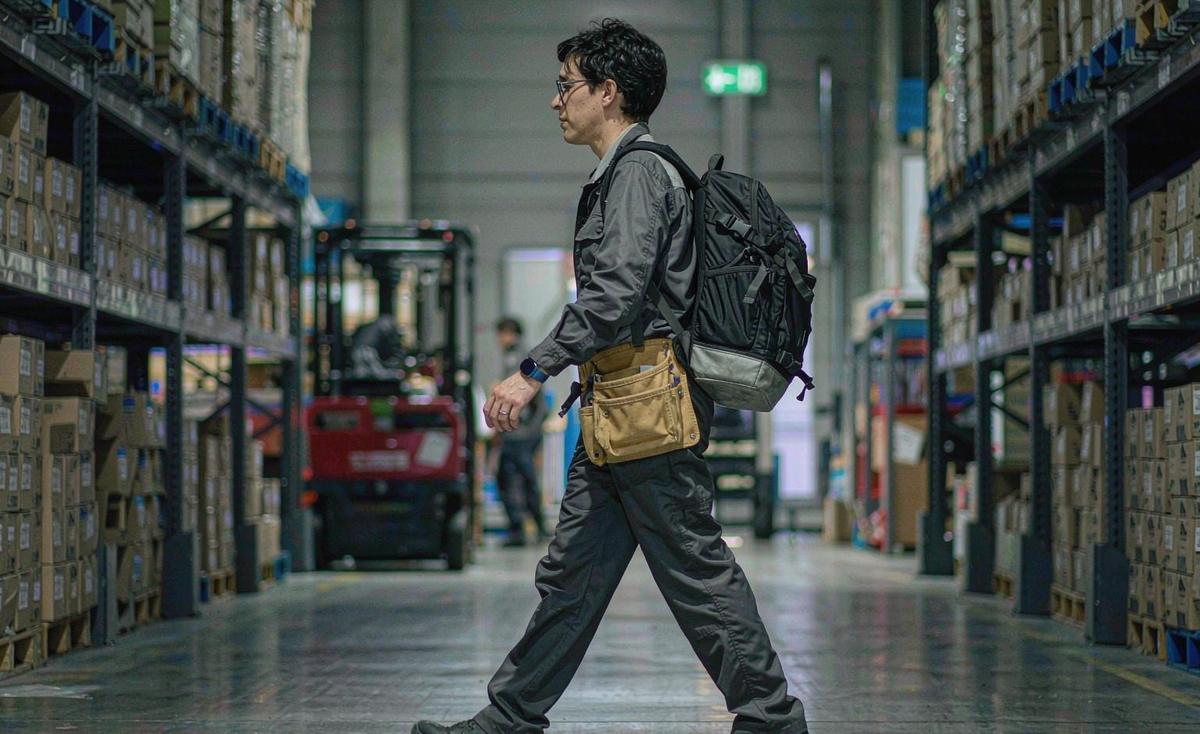
- Backpack production routes creators can choose in 2026
- Planning your 2026 launch calendar backwards
- Direct contact, agent or partner: a side-by-side read
- What a sourcing partner delivers before you commit
- Reading a custom backpack quotation line by line
- Where sampling time actually goes
- Capacity, lines and machines on the first call
- Compliance evidence a backer-facing pack needs
- Freight, trade terms and landed cost
- Payment terms and campaign cash flow
- Inspection checkpoints before reward dispatch
- A five-step RFQ routine for your shortlist
- Warning signs in early sourcing conversations
- Choosing the route that fits your campaign size
Key takeaways
- Every production route offers the same physical inputs; they differ in who absorbs the cost of a specification error.
- The realistic minimum for a custom backpack programme is 500 pcs per style and colourway, not 50 and not 5,000.
- A quotation without a component-level breakdown is unpriceable against alternatives and impossible to renegotiate later.
- Sampling runs 6-10 working days for a standard build and 12-15 for complex constructions with moulded parts or welded seams.
- Ask for the capacity numbers in units: lines, machines, monthly output and booked utilisation in your production window.
- Landed cost, not unit cost, decides whether a reward tier is profitable once freight and duty are added.
Backpack production routes creators can choose in 2026
A creator launching a custom backpack reward has four realistic production routes: go direct to a production facility found through a marketplace or trade fair, appoint a local agent, buy through a general merchandise intermediary, or work with a sourcing partner that specialises in campaign programmes. The production options in front of you all draw on the same sewing lines, the same fabric mills and the same hardware catalogues. What changes is the layer of translation, cost control and error correction between your tech pack and the finished carton.
The distinction matters most when something goes wrong, because in a crowdfunding programme something almost always does. A colourway misses the Pantone reference by two shades. A webbing supplier changes dye lot mid-run. A zipper pull fails a pull-strength spot check. Each of those events carries a cost, and whichever route you choose determines who notices the fault, who pays to fix it, and how many days the fix adds to a delivery date you have already published to backers.
Direct relationships look cheapest on paper because there is no intermediary margin in the unit price. In practice many first-time creators underestimate the specification work required to make a direct route function. Purchasing teams inside large brands employ full-time technical staff to write pattern specifications, review lab dips and audit lines. A solo creator or a three-person startup rarely has that bench, which is why a technically competent partner usually produces a lower total cost per acceptable unit even when its headline unit price is higher.
- Direct relationship: lowest headline unit cost, highest internal workload for you, slowest correction cycle when the spec is ambiguous.
- Local agent: convenient communication and timezone overlap, but variable technical depth and margin layered on every component.
- Merchandise intermediary: fast for simple printed totes, weak for technical packs with load-bearing seams and custom moulding.
- Campaign-focused sourcing partner: single accountable team covering tech pack review, material sourcing, sampling schedule, inspection and freight booking.
For reward programmes between 500 and 20,000 units, the fourth route tends to dominate on total cost of ownership. Our own work as a production partner covers beyond 20 crowdfunding campaigns, and the pattern is consistent: programmes that put one accountable coordinator between creative intent and the sewing floor resolve specification disputes in days rather than weeks.
Planning your 2026 launch calendar backwards
Every serious sourcing conversation should start from the date you promised backers, then work backwards. Assume production 35-50 days after deposit and pre-production approval, add 6-10 working days for the sample that precedes it, add roughly ten days for fabric and trim ordering, then add ocean transit of around 25-40 days to a Western port depending on route and season, plus customs clearance. Working backwards from a backer delivery date in early December therefore puts your tech pack freeze in roughly June.
Seasonality compresses those numbers rather than expanding them. Production slots in the weeks before Chinese New Year fill early, freight rates on peak-season lanes move sharply, and laboratory testing queues lengthen in the autumn compliance rush. A calendar built on best-case figures rather than typical ones leaves you explaining slippage to backers in a comment thread, which is the single most avoidable reputational cost in this business.
A workable rule of thumb for first campaigns is to add a 20% buffer to every stage you have not run before, and to keep 10% of the total budget unallocated until the pre-production sample is physically in your hands. Creators following that discipline generally hit published dates; those spending the entire buffer on tooling and photography usually do not.
Direct contact, agent or partner: a side-by-side read
Treat the comparison below as a scoring framework for your own supplier shortlist rather than a verdict. Weight each row according to your campaign: a creator shipping 600 units to three countries cares far more about freight handling and compliance paperwork than about shaving four cents off a zipper.
| Decision factor | Direct contact | Local agent | Campaign sourcing partner |
|---|---|---|---|
| Quoted unit cost | Lowest headline figure | Headline plus agent margin | Headline plus coordination fee |
| Specification review | You own the risk | Shared, depth varies | Included in tech pack review |
| Sampling turnaround | Unpredictable without leverage | Often 10-20 working days | 6-10 working days standard builds |
| Change control | Negotiated case by case | Relayed, slower to confirm | Documented in one change log |
| Material traceability | Depends on your own records | Depends on the agent's system | Consolidated material certificates |
| Inspection access | You arrange and pay separately | Usually an add-on | Bundled at AQL 2.5 before shipment |
| Typical failure mode | Ambiguous spec becomes your fault | Telephone-game errors on revisions | Higher headline unit price |
Read the rows that describe failure modes with particular care. A route that appears 8% cheaper on unit cost loses that advantage the first time a 500-piece run needs rework. Ask any candidate how a defective batch is handled: who pays for remakes, how quickly replacement material can be sourced, and whether the replacement run jumps the queue or waits behind other bookings.
Quote every candidate against the same scenario: 1,200 units, two colourways, one round of fabric changes after the first sample. Ask for the revised unit price, the revised sampling days and the revised ship date. The answers separate genuine partners from optimistic quotations in about one email exchange.
What a sourcing partner delivers before you commit
Before any deposit changes hands, a competent partner should be able to show you a costed bill of materials, a realistic sampling calendar and a written specification for every component you have drawn. If a candidate cannot produce those three artefacts, you are not looking at a partner, you are looking at an order taker who will discover your product's difficulties alongside you.
- Tech pack review with manufacturability notes: which tolerances are achievable, which seams will need reinforcement, which decorative stitch will slow the line.
- A component-level bill of materials listing fabric denier and coating, lining, webbing, foam density, hardware finish, zipper brand and gauge, and thread type.
- Material sourcing with nominated alternatives, so a second mill or hardware supplier is already qualified if the first fails a test or misses a date.
- A sampling calendar with named milestones: pattern cutting, first sample, internal fit review, photo sample, pre-production sample for sign-off.
- Costed scenario options showing how unit price moves at 500, 1,000, 2,500 and 5,000 units, including how volume pricing changes the picture.
- Compliance mapping for your destination markets, listing which standards apply and which laboratory reports will be needed and when.
That list is also your Request for Quotation template. Send the same package to three shortlisted candidates and compare the answers rather than the promises. Genuine differences in quoted price at this stage usually come from material substitution, so check the fabric line first: a quotation quoting 420D nylon where another quotes 600D polyester is not cheaper, it is simply a different product.
Reading a custom backpack quotation line by line
Most disputes between creators and production teams start with a single-line quotation. A figure such as 11.40 dollars per unit tells you nothing about why it moves. Insist on a breakdown that separates material from conversion cost, because those two categories respond to different pressures: materials track commodity and fabric mill pricing, while conversion tracks labour minutes and line efficiency.
| Cost line | What drives it | Typical share of unit cost |
|---|---|---|
| Shell fabric | Denier, coating type, mill minimums, dye lot size | 22-34% |
| Lining and internal fabric | Weight, colour, branded or generic print | 6-11% |
| Hardware and trims | Buckles, adjusters, zipper pulls, finish quality | 9-16% |
| Zippers | Brand, gauge, coil versus vislon, water-resistant variants | 5-9% |
| Foam and reinforcement | EVA or PE density, back panel construction | 6-12% |
| Cut, make and trim labour | Stitch count, jig requirements, line speed | 18-28% |
| Finishing, labelling and packing | Woven labels, hangtags, polybag, carton spec | 3-7% |
Two lines deserve extra attention. First, tooling: moulded pulls, custom zipper sliders, embossed logo plates and die-cut foam panels carry one-off charges that are quoted separately and can dominate a 500-unit economics. Ask whether tooling is refundable against a re-order and get the answer in writing. Second, fabric minimums: mills impose their own minimum dye quantities, and a colourway below that minimum either carries a surcharge or gets substituted for a stock shade.
You can also read a quotation for honesty. Establish how many units your quoted price assumes, since a quote built on 2,000 units and applied to your 700-unit pilot run will move. Then check whether freight, testing and labelling are inside or outside the figure. The cleanest quotations we issue as a production partner itemise all of them, which makes them easy to compare and easy to renegotiate when your stretch goals change the quantity.
Where sampling time actually goes
Sampling for a standard custom build takes 6-10 working days. Complex constructions with moulded components, welded seams or unusual internal framing take 12-15 working days. Those figures count production days only; international courier time and your own review cycles sit on top of them, and those are the two variables creators most often omit from their launch calendar.
- Pattern making and marker plotting: usually two to three days before any fabric is cut.
- Material pull and cutting: dependent on whether your nominated fabric is in stock or needs a mill order.
- Assembly by a senior sample technician rather than the bulk line, which is slower per unit but higher fidelity.
- Internal review, photography-ready finishing, then courier transit of roughly three to six days depending on service.
- Your own review loop, which for most creators takes longer than the build itself.
The practical lesson is to plan two review loops before tooling and fabric are committed, and to keep the pre-production sample as the contractual reference for the bulk run. Everything downstream of that approval should be measured against it. The mechanics of each round, including what to approve and what to reject, are covered in detail in our crowdfunding bag sample prototyping guide.
Capacity, lines and machines on the first call
Capacity claims are the easiest thing to inflate and the easiest thing to verify. Ask for four numbers: floor area, headcount, line count and monthly output. As a reference point, the production team we coordinate with runs a 4,950 m2 SGS-verified floor with 137 staff across 7 production lines and 149 machines, producing up to 200,000 pieces per month. Those figures tell you something useful only when you translate them into booked utilisation for your window.
Do the arithmetic before you commit. If a single line can output roughly 150 units a day on a mid-complexity backpack, a 5,000-unit order consumes a little over a month of one line's capacity. Ask what percentage of the relevant lines are already booked in your target month, and ask what happens to your slot if you slip by three weeks. A partner that can answer those questions without checking has an actual planning system; one that guarantees any date instantly is guessing.
Capacity also interacts with minimum quantity. Because minimum order quantity sits at 500 pcs per style and colourway, small campaigns often try to compress several colourways into one order and discover that each colourway resets the minimum. The mechanics are set out in our low MOQ bag production notes for creators, including how split shipments and delayed colourways are handled.
Compliance evidence a backer-facing pack needs
Compliance is not a marketing checkbox; it is a condition of customs clearance and marketplace listing. The applicable framework depends on where your backers live and who is in them. A children's backpack heading to the United States is governed by CPSIA lead and phthalate limits, California adds Prop 65 warnings, the European Union applies REACH substance restrictions and now the General Product Safety Regulation, and recycled-content claims invite GRS certification requests.
- CPSIA: relevant for any product marketed towards children in the United States; requires third-party testing documentation.
- Prop 65: California warning obligations driven by material composition and finish.
- REACH: European chemical restrictions applied across all materials including coatings and dyes.
- OEKO-TEX Standard 100: frequently requested by European retail partners even where not legally required.
- GRS: transaction certificates required if you advertise recycled content percentages.
- EU GPSR: product safety documentation and traceability obligations for goods entering the European Union.
Book laboratory testing early. Fabric and trim testing runs separately from your unit build, costs are usually quoted per material rather than per style, and results can take longer than a sample round. Where a test fails, the remedy is material substitution, which means another sample round. Build at least one extra sampling cycle into your calendar if you are using recycled fabrics or unusual coatings for the first time.
Freight, trade terms and landed cost
Standard terms for this kind of programme are FOB Xiamen, which means the price covers goods loaded onto the vessel at the named port. Everything after that point, ocean freight, insurance, destination handling, duty and inland delivery, sits with you or your fulfilment provider. Campaigns that quote retail-equivalent reward tiers using only the FOB number routinely misjudge their margin.
| Component | Who arranges it under each term | Notes for campaign budgeting |
|---|---|---|
| Inland haulage to port | Included in FOB | Already inside your quoted unit price |
| Export clearance | Included in FOB | Documentation prepared by the shipper |
| Ocean freight | EXW / FCA onwards | Quote per cubic metre, not per carton |
| Marine insurance | Buyer | Usually a small percentage of declared value |
| Import duty and taxes | Buyer under DAP / DDP variants | Classified by HS code; verify before pricing |
| Final-mile to backers | Buyer or fulfilment house | See our fulfilment notes for packing rules |
Backpacks are bulky relative to their weight, so volumetric charge often dominates freight cost. A compressed-flat carton strategy can cut your freight bill meaningfully on a 2,000-unit shipment, but only if the compression does not crease foam panels. Test-pack cartons during the pre-production stage, not after bulk finished. Packing density, polybag spec and carton strength for direct-to-backer dispatch are documented in our crowdfunding rewards fulfilment guide.
Payment terms and campaign cash flow
Standard terms here are T/T 30/70: thirty percent deposit to release materials and book the line, seventy percent against the approved pre-production sample and before shipment. Some programmes negotiate staged terms, but any structure should map onto your campaign's cash reality. Platform payouts arrive after the campaign closes, often weeks later, while your deposit is due at or before tooling.
- Deposit stage: typically due when the tech pack and materials are confirmed and before cutting begins.
- Balance stage: typically due before the vessel books, sometimes against a passed inspection report.
- Re-order stage: frequently negotiable to better terms once a style has run successfully once.
- Freight and duty: usually payable near arrival, so they fall outside your production budget entirely.
Plan the gap between paying the deposit and receiving platform funds with real numbers. If your campaign closes on day 30, funds clear around day 45, and you want goods on the water by day 75, then tooling and fabric commitments have to start before you have been paid. That sequencing is normal, and it is exactly why the pre-campaign phase should be spent building relationships rather than merely collecting quotations.
Inspection checkpoints before reward dispatch
Quality control is a process with checkpoints, not a single event at the end. Pre-shipment inspection runs at AQL 2.5 to ISO 2859-1, meaning the sampling plan and accept and reject thresholds are defined by an international standard rather than by whoever happens to be holding the clipboard. Insist on seeing the inspection report, not a pass or fail summary, so you can judge whether failures cluster in one defect class.
- Inline inspection during cutting: catches fabric shade variation and pattern placement faults while there is still time to re-cut.
- Inline inspection during assembly: catches recurring stitch faults before hundreds of units repeat them.
- Final random inspection at AQL 2.5 covering appearance, workmanship, function and packing.
- Functional verification: zipper cycles, strap pull tests, load tests on a sample drawn from finished cartons.
- Carton check: quantity per carton, weight, markings and drop-test readiness for the chosen freight mode.
Defects cluster predictably. On a first bulk run, most falls into three classes: cosmetic variance within tolerance but visible under photography, hardware performance below the tested sample, and packing damage caused by over-tight polybags. Name the acceptable tolerance in writing before bulk starts, since inspectors can only enforce a standard you have documented. The full checkpoint sequence, including AQL sample-size tables for common order quantities, sits in our Kickstarter campaign bag QA and QC reference.
A five-step RFQ routine for your shortlist
Putting the pieces together, this is the routine we recommend to creators who are building their first supplier shortlist. It takes discipline rather than money, and it converts vague conversations into comparable data inside a fortnight.
- Write the tech pack first. A two-dimensional drawing with dimensions, materials and tolerances gets serious answers; a mood board gets a placeholder price.
- Send an identical RFQ package to three candidates, specifying quantity, colourways, destination market and target ship window.
- Demand a component-level quote plus a sampling calendar. Reject single-line pricing as unusable for comparison.
- Score the returned quotes on total landed cost, not unit cost, including tooling, freight estimate and testing.
- Run one paid sample round with your top candidate before discussing bulk terms. Paying for samples is the cheapest diligence available.
Creators looking for a worked example of the whole pathway, from design freeze through to palletised dispatch, can follow the nine-stage sequence in custom bags from idea to backer doorstep, which mirrors the RFQ routine above.
Warning signs in early sourcing conversations
A handful of signals reliably predict trouble later. The strongest is an unwillingness to discuss defects. Any candidate that has produced for crowdfunding campaigns will have stories about rework and will describe how it was resolved. Silence on the subject usually means the cost lands on you. The second is vague compliance language: specific standards and test report numbers, not general assurances of quality.
- Quotations provided without quantities attached, which allows the unit price to move silently after you commit.
- Reluctance to share factory audit documentation or a third-party verification reference such as an SGS report.
- Promises of sampling faster than material lead times physically allow, particularly on custom-dyed fabric.
- No written change-control process, so every revision becomes a fresh negotiation.
- Pressure to skip the pre-production sample approval step to save one week.
A 500-unit run at roughly 12 dollars unit cost represents around 6,000 dollars of committed spend. Skipping one pre-production approval to save a few days exposes that entire sum to a specification misunderstanding that sampling exists to prevent. No promised discount compensates for that ratio.
Choosing the route that fits your campaign size
Match the route to the complexity of the product, not the size of your ambition. A simple cinch sack with one printed logo can go through almost any channel competently. A structured pack with a moulded back panel, water-resistant zippers, an internal frame sheet and a custom-dyed colourway needs engineering support, and the cheapest channel is rarely the least expensive outcome.
If you are deciding between routes right now, start by mapping your product against the categories used by most award-winning campaigns. Our pillar reference on custom backpacks for Kickstarter creators sets out the common constructions, their cost bands and their typical lead-time impact. Pair that with the specification checklist in the crowdfunding bag guide and you will have enough structure to write a supplier-ready RFQ in an afternoon.
- Custom backpacks for Kickstarter creators
- Crowdfunding bag sample prototyping
- Low MOQ bag production for creators
- Kickstarter campaign bag QA and QC
- Crowdfunding rewards fulfilment
- Request a quotation
- Minimum order quantity
- 500 pcs per style / colourway
- Sampling lead time
- 6-10 working days (12-15 days for complex builds)
- Bulk production
- 35-50 days after deposit and approved pre-production sample
- Inspection standard
- AQL 2.5 to ISO 2859-1
- Trade term
- FOB Xiamen
- Payment terms
- T/T 30/70
- Production floor
- 4,950 m2, SGS-verified
- Team and equipment
- 137 staff / 7 production lines / 149 machines
- Monthly capacity
- 200,000 pcs
- Company foundation
- 2014, with trade roots since 2004
- Contact
- service@junyuanbags.com
Get a component-level quote for your backpack programme
Send us your tech pack, target quantity and ship window. Our production team returns a component-level cost breakdown, a sampling calendar and landed cost options within two working days, backed by written terms you can take to your accountant.
Frequently Asked Questions
What is the minimum order quantity for a custom backpack on a crowdfunding campaign?
Minimum order is 500 pcs per style and colourway, which means 500 black units count as one colourway and 500 olive units count as a second. Below that level, fabric mill minimums and line set-up time make unit cost uncompetitive. Creators needing a smaller initial commitment usually run a pilot quantity at 500 units and negotiate re-order terms once the style has been proven.
How long does sampling take before bulk production can start?
A standard custom build takes 6-10 working days for the first sample, while complex constructions involving moulded parts or welded seams take 12-15 working days. Those figures exclude international courier transit of roughly three to six days and your own review loop. Budget at least two review cycles before committing to tooling and bulk materials.
How much of the unit cost should fabric represent in a backpack quote?
Shell fabric typically accounts for 22-34% of unit cost, with hardware and trims adding another 9-16% and labour adding 18-28%. If a quotation does not itemise those lines, you cannot verify whether a competitor is quoting the same product or a lighter one. Always ask for a component-level breakdown before comparing two prices that differ by more than 10%.
Which route is cheapest for a 1,000-unit campaign with two colourways?
For 1,000 units split across two colourways, a campaign-focused sourcing partner usually delivers the lowest cost per acceptable unit even when its headline price is about 8% higher than a direct figure. The difference is the cost of one prevented specification error, which on 1,000 units at roughly 12 dollars each is equivalent to a rework bill in four figures.
What payment schedule should first-time creators expect?
Standard terms are T/T 30/70: thirty percent deposit to release materials and book production capacity, seventy percent against the approved pre-production sample and before shipment. Since platform funds often clear weeks after a campaign closes, plan a cash bridge so deposit timing does not depend on payout timing. Tooling is frequently invoiced with the deposit.
What does AQL 2.5 mean for a 2,000-unit inspection?
AQL 2.5 defines the accept and reject thresholds in a sampling plan built to ISO 2859-1. For a 2,000-unit lot under general inspection level II, the plan draws 125 pieces and accepts up to 7 minor defects while major and critical classes have far tighter thresholds, with zero tolerance for critical faults. Always request the full report rather than a pass or fail.
Which compliance standards apply to backpacks sold into Europe and the United States?
REACH governs chemical restrictions across all materials in the European Union, while the EU GPSR adds traceability and safety documentation duties. In the United States, CPSIA applies to products marketed towards children and California imposes Prop 65 warning obligations. OEKO-TEX Standard 100 and GRS are commonly requested by retail partners even when not legally mandatory.
How should I compare FOB quotations against DDP shipment costs?
A FOB Xiamen price covers goods loaded onto the vessel and nothing beyond that, so add ocean freight, insurance, destination handling and duty to reach landed cost. Because backpacks are bulky relative to weight, freight is charged on volume, and that volume line frequently exceeds 10% of unit cost on sea shipments. Always quote a landed number before setting reward tier prices.
How do I verify a production partner's capacity claims?
Ask for floor area, headcount, line count and monthly output, then convert those into booked utilisation during your window. As a benchmark, our coordinated floor covers 4,950 m2 SGS-verified with 137 staff, 7 lines, 149 machines and up to 200,000 pieces monthly. Ask what share of each line is already committed and what happens if your dates slip by three weeks.
How early should tooling and custom hardware be ordered?
Order tooling at least 15-20 working days before you want the first pre-production sample, since moulded pulls and embossed plates are made externally to the sewing schedule. Confirm in writing whether tooling charges are refundable against re-orders. Fabric with custom dye lots needs similar lead time, so both should be committed immediately after drawing sign-off.
What should a pre-production sample be used for?
The approved pre-production unit is the contractual reference against which bulk output is judged, so build it from final materials, final hardware and final tolerances. Photograph it under 5500K lighting with a scale reference and keep a sealed unit on file. Any complaint across a 500 pcs run is then resolved by comparing delivered cartons against that single reference.
How many units per month can one production line sustain?
A single line typically sustains around 150 units per day on a mid-complexity backpack, which is roughly 3,000-4,000 units per month at full efficiency. Across 7 lines and 149 machines, aggregate capacity reaches up to 200,000 pieces monthly, though real bookings, material availability and style complexity reduce that figure. Always ask for utilisation rather than theoretical maxima.
People Also Ask
Is it cheaper to go direct to a factory for a campaign backpack?
Sometimes, on unit price alone. But the total cost depends on how many times the specification changes and who pays for each correction. Creators without in-house technical staff usually find that a coordinating partner is cheaper once rework, delays and freight mistakes are counted.
Why do two suppliers quote wildly different prices for the same backpack?
Because they are rarely quoting the same product. Differences usually come from fabric denier, coating specification, hardware brand and foam density. Request a component-level breakdown and match line to line before drawing any conclusion from the headline figure.
When should booking production capacity for a campaign?
Book capacity as soon as you have a realistic launch window, ideally four to six weeks before you expect deposit payment. Lines are scheduled months ahead, and a delayed booking often pushes bulk past your published ship date even if everything else runs smoothly.
Can I mix colourways within a single 500-piece order?
No. The 500 pcs minimum applies per style and colourway, so black and olive count separately. Some programmes negotiate a reduced minimum per colourway across a larger combined order, but that must be agreed before the tech pack is costed, not after.
What does a sourcing partner actually do day to day?
A campaign bag specialist reviews your tech pack, sources and qualifies materials, schedules sampling, tracks production, arranges inspection at AQL 2.5 and books freight. In effect, it acts as the single accountable programme coordinator between your design intent and the sewing floor.