Custom Beach Totes: Summer Timing and Design for Campaigns
A beach tote campaign is a calendar problem before it is a product problem. Delivery has to land before the season the campaign is selling, which means sampling has to finish before the page goes live and the production slot has to be booked before the seasonal peak fills. Sampling runs 6 to 10 working days, bulk runs 35 to 50 days, and freight has to be added on top. Minimum order is 500 pcs per style and per colourway. This article sets out the month-by-month calendar and the design decisions that follow from sand, salt and sun.
- The summer campaign calendar, month by month
- Working backwards from the delivery month
- Sampling early enough to photograph the real bag
- Booking a production slot before the seasonal peak
- Freight windows and the peak season surcharge
- What a beach load demands from a tote
- Sand, salt and sun: material choices
- Hardware and closures that survive saltwater
- Colour and artwork for a seasonal product
- Reward tiers for a seasonal campaign
- The second season and the re-order pattern
- A risk register for a seasonal launch
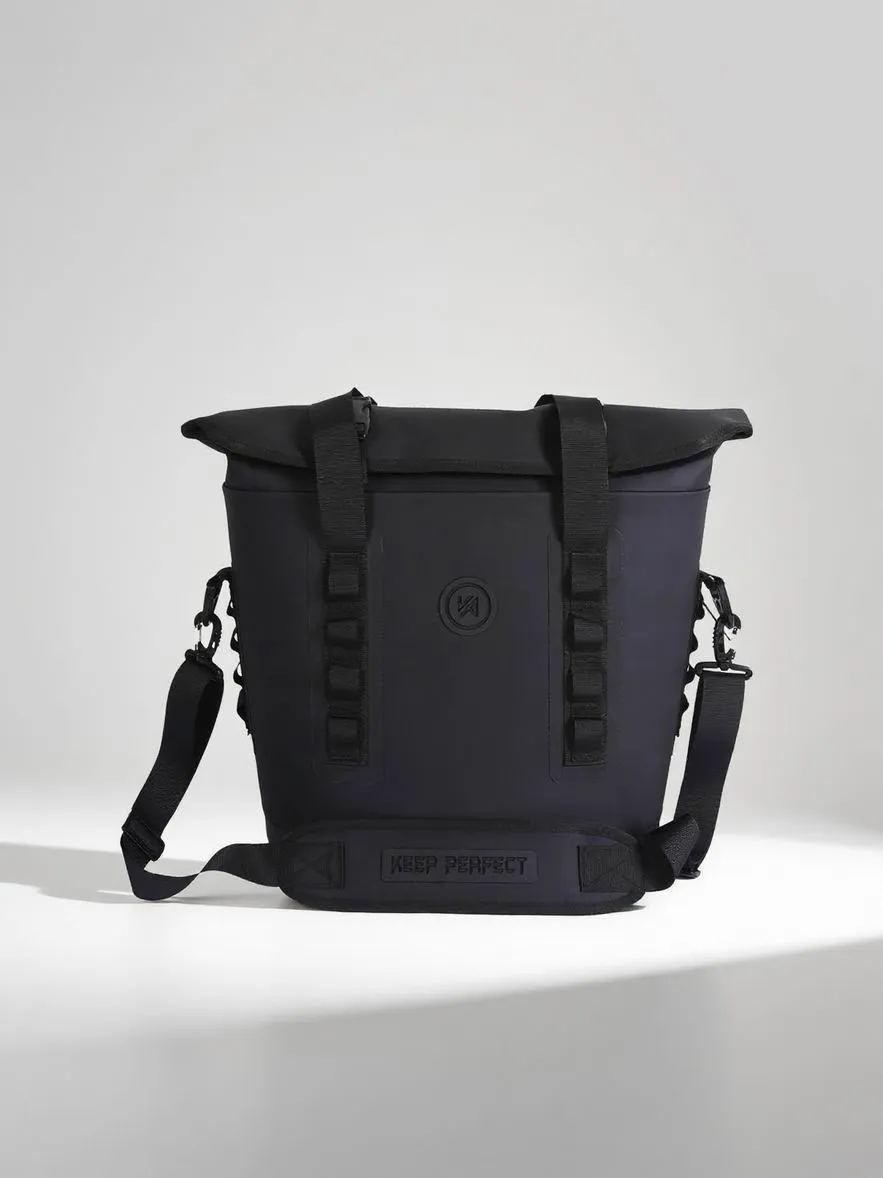
The summer campaign calendar, month by month
A seasonal product has a hard deadline that a normal reward does not. A backpack that arrives three weeks late is an inconvenience; a beach tote that arrives three weeks late is a product that has missed its own season and cannot be sold at the price it was crowdfunded at. The whole programme has to be planned backwards from the date backers expect to use the bag, which in the northern hemisphere means delivery in late spring at the latest, and earlier for a campaign targeting school holiday travel.
The calendar has four blocks that cannot overlap: sampling, bulk production, freight, and fulfilment to backers. Sampling is 6 to 10 working days for a standard build and 12 to 15 for a complex one. Bulk is 35 to 50 days after the deposit and the approved sample. Freight varies by mode and destination, and for a sea shipment it is a substantial block rather than a footnote. Fulfilment to individual backers is another block again. A creator who adds only the first two and assumes the rest will take care of itself is the creator who posts an update apologising in July.
| Phase | Duration | Latest sensible start | What it depends on |
|---|---|---|---|
| Brief and fabric confirmation | 1 to 2 weeks | Around seven months before delivery | Fabric and hardware availability |
| Sampling rounds | 6 to 10 working days each | Around six months before delivery | Print-ready artwork on day one |
| Campaign page and launch | 4 to 8 weeks live | Around four months before delivery | Having a real sample to photograph |
| Bulk production | 35 to 50 days | Around three months before delivery | Deposit and approved sample |
| Freight and customs | Varies by mode and destination | Around two months before delivery | Booking before the peak surcharge |
| Backer fulfilment | 2 to 4 weeks | Around six weeks before delivery | Packing and address data |
Reading that table honestly, the start point is roughly six to eight months before the delivery month. That is longer than most first-time creators expect, and the reason is not that any single step is slow. It is that the steps are sequential: the campaign cannot launch properly without a sample to photograph, bulk cannot start without an approved sample, and freight cannot be booked before the goods exist. The crowdfunding bag guide sets out the same sequence for other bag categories, and the seasonal constraint simply compresses the tolerance for slippage to zero.
Start six to eight months before the delivery month. The steps are sequential, and a seasonal product has no tolerance for slippage at the end.
Working backwards from the delivery month
The discipline that makes a seasonal campaign work is to fix the delivery month first and then fill the calendar backwards, rather than starting when the idea is ready and hoping. Fix a delivery month, subtract the fulfilment block, subtract the freight block, subtract the bulk block, and what remains is the latest date the campaign can close and still hit the season. That date then sets the launch date, because a campaign needs its live window before it closes. Everything else follows.
The exercise also exposes the one variable a creator genuinely controls: the length of the live campaign. A thirty-day campaign needs less calendar than a sixty-day one, and a seasonal product is usually better served by a shorter, tighter window, because a long campaign for a summer product spends its final weeks selling something that arrives with the season half over. Our programme coordinator runs this calculation with creators at briefing stage, because it is the point at which a campaign either has a viable calendar or needs a different delivery promise.
Sampling early enough to photograph the real bag
The single highest-value use of the sample window is photography. A campaign page showing a real beach tote, wet, sandy, loaded with a towel, converts differently from one showing renders, and backers can tell the difference. That means the sample has to exist before the page is designed, not before the goods are needed. In calendar terms, sampling is not a step that happens after the campaign funds; it is a step that happens before the campaign launches, and the cost of it is a pre-launch expense rather than a post-campaign one.
That has a budgeting implication creators should plan for. Sampling happens before any pledge money arrives, so a creator needs to fund the sample rounds from their own resources. It is a modest sum compared with the production run and it is the best money in the campaign, because it de-risks everything downstream. Our team schedules sample prototyping on that basis and issues a photography-ready unit, which is a sample built in the colourway and print the campaign will actually sell.
The second reason to sample early is that a seasonal product cannot absorb a failed first round. A backpack campaign can slip a month and still deliver a product people want in November. A beach tote that slips a month delivers in the wrong season. Building in a second sample round as a planned step rather than a contingency is what protects the calendar, and it is why we quote two rounds as standard rather than one.
Booking a production slot before the seasonal peak
Bag production has a seasonal shape, and the peak for summer goods sits several months before summer, because everything being sold in June was made between January and April. A campaign that funds in March and then looks for a slot is competing with every other seasonal buyer in the same window. The protection is simple: the slot is reserved against a deposit rather than discovered after funding, so the production calendar is committed while there is still room in it.
Capacity across the programme runs to 200,000 pcs per month over seven lines, with 137 staff and 149 machines across a 4,950 square metre SGS-verified facility, so a beach tote order in the low thousands is not large in absolute terms. What it competes for is a position in a queue that is busiest exactly when a summer campaign wants to be in it. Our team holds provisional slots against a brief and converts them to firm bookings on deposit, which is the mechanism that makes a seasonal promise deliverable rather than aspirational.
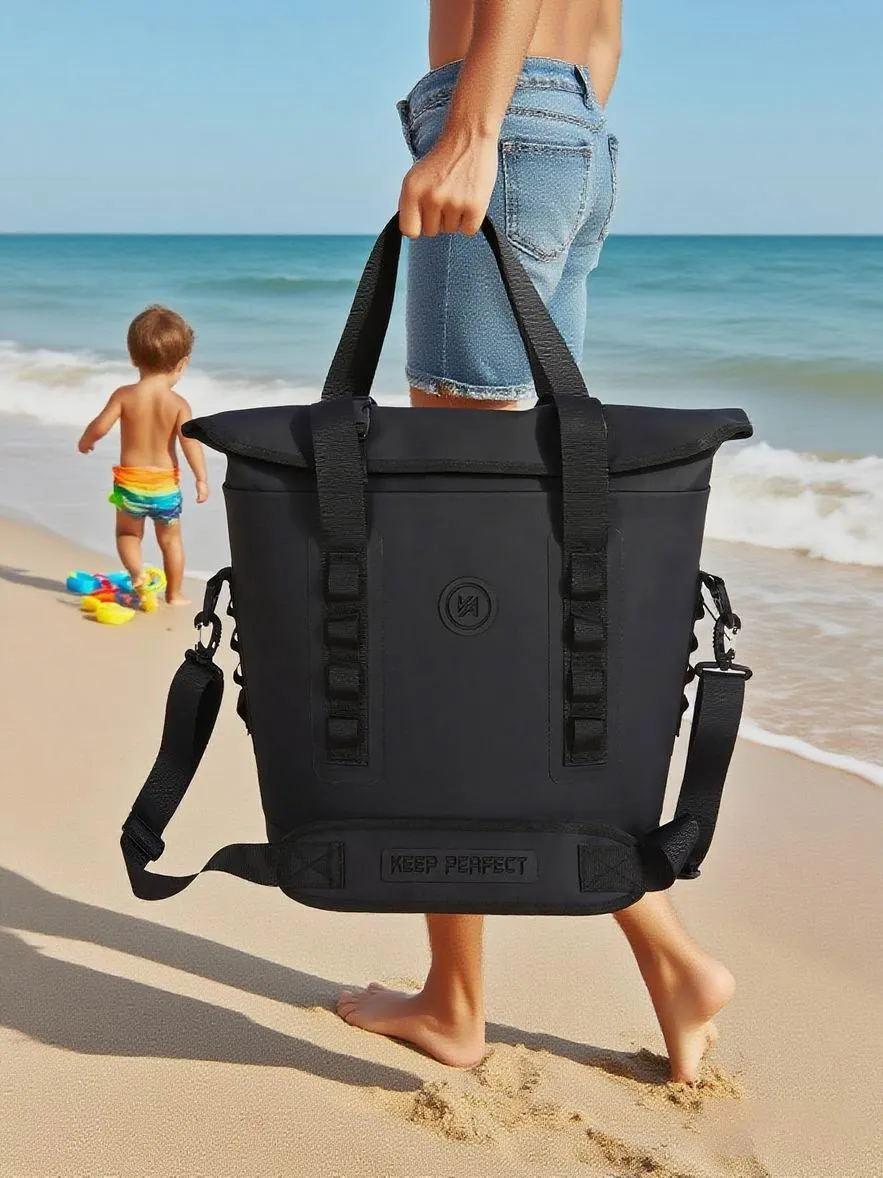
Freight windows and the peak season surcharge
Freight is the block most often omitted from a campaign calendar, and for a seasonal product it is the block most likely to break the promise. Sea freight has a transit time measured in weeks, and the peak season brings both higher rates and less predictable space. A creator who treats freight as a detail to arrange after production finishes will discover that the cheapest and fastest options were booked by someone else weeks earlier. Book freight inside the production window, not after it.
Shipping terms are FOB Xiamen, which means the goods are handed over at the port and the onward leg is the creator's arrangement. Payment is T/T 30/70, with the deposit booking production and the balance due before shipment. For a seasonal campaign, the practical advice is to get a freight quote at briefing stage rather than at production stage, because the quote informs whether the calendar works at all and whether air freight is needed to rescue a compressed schedule. Air freight is the fallback that saves a season, and it is expensive enough that it should be a contingency rather than a plan.
What a beach load demands from a tote
A beach load has a particular character. It is bulky rather than heavy, it is wet, it is sandy, and it includes at least one object that leaks. A towel, a bottle, sunscreen, a phone, a book, a change of clothes and possibly a snorkel set adds up to a large volume at a modest weight, which means the tote should be sized for volume rather than for load-bearing strength. A beach tote built like a work tote is over-engineered in the wrong direction: heavy fabric, narrow handles, and a structure that cannot be crammed into a suitcase.
- Volume first: a beach tote is sized for bulk, typically generous rather than tall
- Wide opening: a top that opens flat makes a bulky load easy to drop in
- Wet separation: one lined pocket for a wet swimsuit is worth more than four dry pockets
- Sand shedding: an open weave or a coated base lets sand fall out rather than collect
- Comfortable handles: a wide drop that clears a shoulder with a towel over it
- Packability: the bag has to flatten into a suitcase, because it travels to the beach
The wet separation pocket is the design feature that most often earns a review mention, and it is a cheap one: a lined pocket with a sealed or water-resistant seam, sized for a rolled swimsuit. The alternative, a fully waterproof internal compartment, costs more and adds bulk. Our recommendation is the lined pocket on most tiers and a fully sealed compartment only on a premium tier, because most backers want a wet swimsuit separated from a book rather than hermetically sealed.
Sizing should be stated in litres and measured rather than guessed. A beach tote in the twenty-five to forty litre band covers a towel, a bottle, sunscreen and a book without becoming a holdall, and it is the range most backers already picture when they read the words beach bag. Below about twenty litres the bag stops being able to take a rolled towel flat, which is the test that matters. Our team measures the finished sample with a known volume and records the figure, so the number on the campaign page is one a backer can verify at home.
Handles on a beach tote deserve a specific note because they are used differently from any other tote. A beach bag is often carried over a shoulder that already has a towel on it, which means the drop has to be generous enough to clear both, and the width has to be enough not to cut in when the bag is loaded with several kilograms of damp fabric. A twenty-five millimetre webbing handle with a drop of around thirty centimetres is the specification that works, and it should be tested with the bag loaded rather than empty.
Salt and sunscreen are the two substances a beach tote has to tolerate that no other bag does, and both are chemical rather than mechanical problems. Sunscreen is oily and it stains some coatings permanently, which is a specification question about the finish rather than the base fabric. A coated face that can be wiped clean solves it, and the test is simple: apply the product to a swatch, leave it for a day, and try to remove it. Our team runs that check on candidate finishes during sampling when a campaign is explicitly positioning the bag for a beach.
The third substance is chlorine, and it matters more than creators expect because a beach tote often doubles as a pool bag. Chlorinated water degrades some elastomers and some coatings faster than salt water does, and a bag that is fine at the beach can stiffen after a season at a pool. If the campaign page mentions pool use, that is the exposure to test against. Naming the use case on the brief is what gets the right test run, and an unnamed use case is an untested one.
Sand, salt and sun: material choices
Material choice for a beach tote is governed by three enemies. Sand works into weaves and stitching and abrades from the inside. Salt corrodes metal and leaves a residue that stiffens fabric. Ultraviolet light fades colour and degrades some coatings. The material responses are respectively an open weave or coated face that sheds sand, non-metallic or corrosion-resistant hardware, and a solution-dyed or UV-stable fabric with a colour fastness rating appropriate to prolonged sun.
| Material | Sand behaviour | Salt and UV | Trade-off |
|---|---|---|---|
| Coated polyester | Sheds sand, wipes clean | Good UV, no corrosion risk | Less breathable, can feel warm |
| Open weave mesh panels | Best sand shedding | Good, but check the UV rating | Lower abrasion resistance |
| Nylon shell | Sheds well, dries fast | Good UV, check coating | Higher fabric cost |
| Untreated cotton canvas | Traps sand in the weave | Fades under strong sun | Premium hand feel, poor performance |
| Laminated non-woven | Wipes clean | Coating can degrade in sun | Lowest cost, shortest life |
Colour fastness is the specification line most often skipped, and it is the one that produces the faded-bag photograph a year later. A rated colour fastness figure, checked against the actual fabric and dye lot, is a reasonable request at sampling stage. Our team asks for it on any product described as a beach or outdoor bag, because a bag that fades unevenly looks defective even when it is structurally fine. The cost of specifying a higher fastness fabric is small. The cost of not specifying it is a campaign's reputation in its second season.
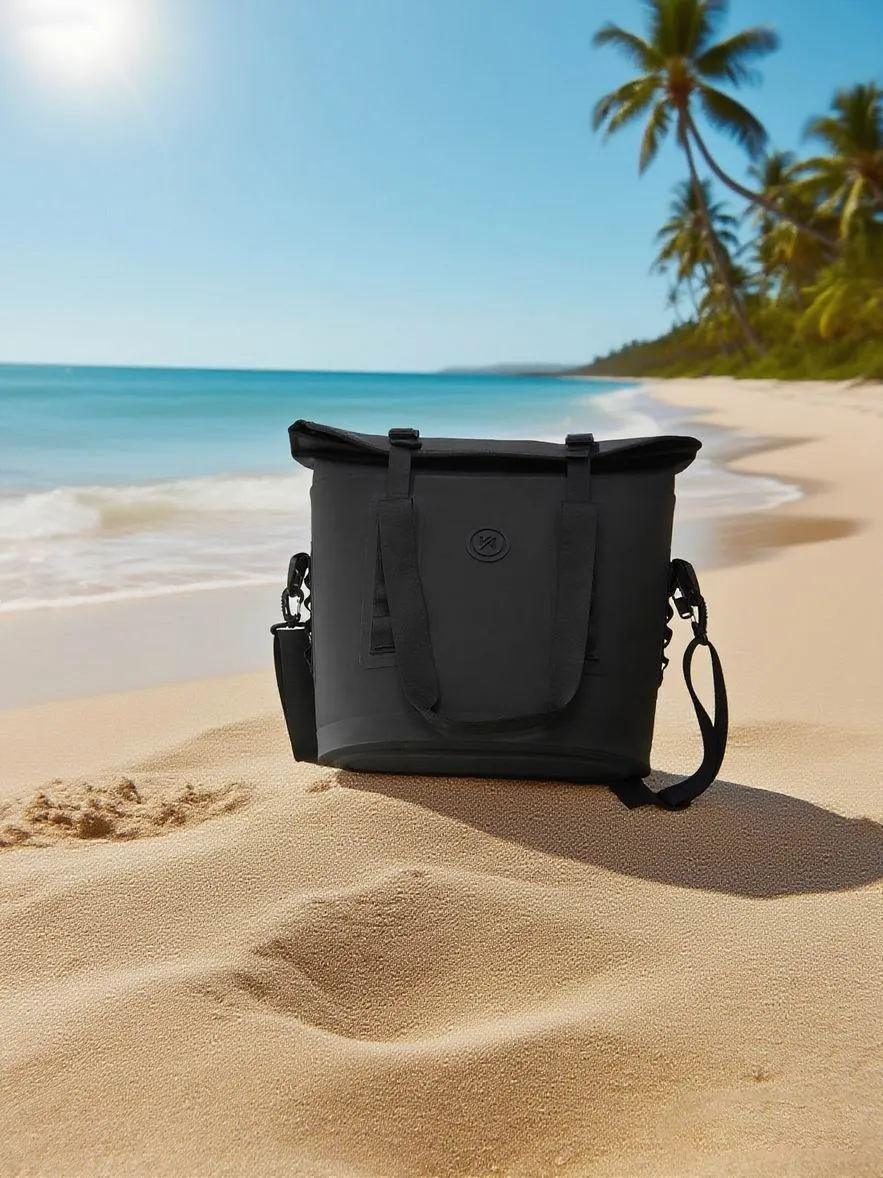
Hardware and closures that survive saltwater
Hardware is where a beach tote quietly fails. A metal eyelet that rusts leaves a stain on the fabric that cannot be removed, and a zip with a metal slider seizes after a day in salt air. The specification response is either to remove metal entirely or to specify corrosion-resistant fittings, and for a beach product the simpler route is usually better. Plastic or acetal hardware, a drawcord or a magnetic closure instead of a metal zip, and a snap rather than a rivet all remove the failure mode at no cost to the design.
Where a zip is genuinely wanted, the specification should name the type: a coil zip with a plastic slider and a non-corrosive pull, tested with a salt spray exposure. That test is quick and it separates hardware that will survive a season from hardware that will stain one. Our sourcing partner runs it on candidate fittings during sampling and keeps the report with the order file, which is also the documentation a marketplace may ask for if a claim is made later.
Colour and artwork for a seasonal product
Seasonal products sell on colour in a way that evergreen products do not, and the colour strategy should be decided early because it interacts with the minimum order. The commitment is 500 pcs per style and per colourway, so a four-colour launch is four commitments. Most seasonal campaigns are better served by one or two colourways at launch with a stretch goal unlocking a third, because demand by colour is hard to predict and unsold stock of a seasonal product has a short shelf life.
Artwork has a seasonal constraint too: it should not date the bag. A beach tote printed with a specific year, or with a graphic that is tied to a single summer trend, has a resale life measured in months, and that limits what a backer will pay. Designers working on custom tote rewards are usually better advised to use a colour story and a motif that survives into next year, which also makes the second-season re-order viable rather than a clearance exercise.
Reward tiers for a seasonal campaign
A seasonal campaign has a narrower pricing window than an evergreen one, because backers implicitly compare the bag against what they could buy in a shop in June. The tier structure should therefore be simple: an early-bird tier, a standard tier, and a bundle that pairs the tote with a smaller item. Complicated ladders are harder to explain and a seasonal campaign has less time to explain them. The bundle is where margin is recovered, because a towel, a pouch or a bottle adds perceived value faster than it adds cost.
| Tier | Contents | Purpose | Note |
|---|---|---|---|
| Early bird | Tote in one colourway | Drive the first 48 hours | Cap the quantity to protect margin |
| Standard | Tote with colourway choice | The volume tier | Unlock extra colours as stretch goals |
| Bundle | Tote plus a towel or pouch | Recover margin | Second item is cheaper to add than to ship alone |
| Add-on | Extra pouch or strap | Raise average pledge | No extra fulfilment complexity |
| Retail or stockist | Case quantities | Optional, for later | Separate packing specification |
The early-bird tier deserves a warning. Capping it protects margin but under-pricing it badly trains the market, and a campaign whose headline price is below its landed cost per unit is funding a loss on every early pledge. Our team runs the unit cost against each tier before a campaign launches, including shipping, platform fees and a contingency, and will say plainly when a tier does not work. Pricing is a reward design question as much as a production one.
The second season and the re-order pattern
The interesting thing about a seasonal product is that the second season is often more profitable than the first. The pattern is known, the specification is frozen, the artwork is approved, and the backer list exists. A re-order skips sampling entirely, needs only a slot and a deposit, and can be sized against actual demand rather than forecast demand. Creators who treat the first campaign as the establishment of a repeatable product, rather than a one-off, are the ones who build a business out of it.
The preparation for a second season happens during the first. Keep the golden sample, keep the specification sheet, keep the artwork files in their original layered form, and record what sold in which colourway. That record is what makes the second run faster and cheaper. Our team retains the specification and pattern against the order reference, so a re-order can be quoted in days rather than re-engineered over weeks, and the sample prototyping step can be dropped entirely when nothing has changed.
A risk register for a seasonal launch
Every seasonal campaign carries the same handful of risks, and naming them makes them manageable. The first is calendar slippage, mitigated by building two sample rounds into the plan rather than treating the second as a contingency. The second is a fabric or hardware delay, mitigated by confirming availability at briefing rather than at sampling. The third is freight, mitigated by quoting early and booking inside the production window. The fourth is demand mis-estimation, mitigated by launching one colourway and holding variants for the re-order.
The fifth risk is the one nobody writes down: a seasonal product that under-delivers damages the next campaign more than an evergreen one, because the backer remembers the summer the bag did not arrive. Inspection holds at AQL 2.5 to ISO 2859-1 for that reason, and the plan for a beach tote should specifically cover hardware corrosion, colour fastness and seam integrity under a wet load. The full inspection checklist is set out in the campaign QA and QC guide.
Key takeaways
- A
- b
- e
- a
- c
- h
- t
- o
- t
- e
- c
- a
- m
- p
- a
- i
- g
- n
- i
- s
- a
- c
- a
- l
- e
- n
- d
- a
- r
- d
- i
- s
- c
- i
- p
- l
- i
- n
- e
- :
- s
- a
- m
- p
- l
- e
- b
- e
- f
- o
- r
- e
- t
- h
- e
- p
- a
- g
- e
- ,
- b
- o
- o
- k
- t
- h
- e
- s
- l
- o
- t
- b
- e
- f
- o
- r
- e
- t
- h
- e
- p
- e
- a
- k
- ,
- q
- u
- o
- t
- e
- f
- r
- e
- i
- g
- h
- t
- b
- e
- f
- o
- r
- e
- p
- r
- o
- d
- u
- c
- t
- i
- o
- n
- ,
- a
- n
- d
- l
- a
- u
- n
- c
- h
- o
- n
- e
- c
- o
- l
- o
- u
- r
- w
- a
- y
- w
- i
- t
- h
- v
- a
- r
- i
- a
- n
- t
- s
- h
- e
- l
- d
- f
- o
- r
- t
- h
- e
- s
- e
- c
- o
- n
- d
- s
- e
- a
- s
- o
- n
- .
Tell us your target delivery month and our production team will build the calendar backwards and quote a beach tote programme for custom tote bags.
Frequently Asked Questions
How far ahead should I start a beach tote campaign?
Roughly six to eight months before the delivery month. Sampling needs 6 to 10 working days per round, bulk needs 35 to 50 days, and freight plus backer fulfilment add further weeks. The steps are sequential, and a seasonal product has no tolerance for slippage at the end of the calendar.
When should the samples be made?
Before the campaign page is designed, not after the campaign funds. A page showing a real, wet, loaded beach tote converts better than one with renders. Treat sampling as a pre-launch expense funded by the creator rather than a post-campaign step paid from pledges.
What is the minimum order for a beach tote?
500 pcs per style and per colourway. A launch in three colourways is three separate commitments, which is why most seasonal campaigns launch one or two and use a stretch goal to unlock a third. Unsold seasonal stock has a short shelf life, so colourway demand should be proven before it is committed.
How long does bulk production take for a summer tote?
35 to 50 days after the deposit and the approved sample. The risk is not the duration but the queue: the production peak for summer goods sits months before summer, so the slot should be reserved against a deposit rather than sought after the campaign funds.
Should I use metal hardware on a beach tote?
Generally no. Metal eyelets rust and leave permanent stains, and metal zip sliders seize in salt air. Plastic or acetal hardware, a drawcord or magnetic closure, and a snap instead of a rivet remove the failure mode at no cost to the design. Where a zip is needed, specify a coil zip with a plastic slider.
What fabric is best for a beach tote?
Coated polyester or nylon, which shed sand, dry fast and resist ultraviolet light. Open weave mesh panels shed sand best of all but abrade faster. Untreated cotton canvas traps sand in the weave and fades in strong sun, which is a poor trade for a beach product despite the premium feel.
How do I stop the colour fading in the sun?
Specify a colour fastness rating on the fabric and dye lot and ask for it to be verified at sampling. A bag that fades unevenly looks defective even when it is structurally sound. Specifying a higher fastness fabric costs a little more and protects the campaign's reputation into a second season.
Does a beach tote need a wet pocket?
A lined pocket sized for a rolled swimsuit is one of the cheapest features that earns a review mention. A fully sealed waterproof compartment costs more and adds bulk, so it is usually reserved for a premium tier. Most backers want a wet swimsuit separated from a book, not hermetically sealed.
How should I price a seasonal tote reward?
Keep the ladder simple: an early bird, a standard tier with colourway choice, and a bundle. Cap the early bird to protect margin and never price below landed cost per unit including shipping and platform fees. A bundle with a towel or pouch recovers margin faster than discounting the tote.
What are the shipping terms?
FOB Xiamen, with payment on T/T 30/70. The deposit books the production slot and the balance is due before shipment. For a seasonal campaign, get a freight quote at briefing stage rather than after production, because the quote determines whether the calendar works at all.
Can I re-order for a second summer?
Yes, and it is usually more profitable than the first run. The specification is frozen, sampling can be skipped entirely if nothing changed, and the quantity can be set against real demand. Keep the golden sample, the specification sheet and the original artwork files from the first run.
What inspection standard applies?
AQL 2.5 to ISO 2859-1. For a beach tote the plan should specifically cover hardware corrosion, colour fastness, seam integrity under a wet load and coating adhesion, rather than a generic count and colour check. A seasonal failure damages the next campaign more than an evergreen one.
People Also Ask
When is the best time to launch a beach bag campaign?
Late winter to early spring for a northern hemisphere summer delivery, so that sampling, bulk, freight and fulfilment all fit before the season. Work backwards from the delivery month rather than forwards from the idea.
How big should a beach tote be?
Sized for volume rather than weight, because a beach load is bulky and light. A generous opening that lies flat matters more than height, and the bag should still flatten into a suitcase because it has to travel to the beach.
Do beach totes need to be waterproof?
No. Water resistant is enough for most use. A coated fabric that sheds sand and dries fast plus one lined wet pocket covers what backers need. Full waterproofing adds cost and bulk that most beach loads do not require.
How many colourways should a seasonal launch have?
One or two at launch, with a third unlocked as a stretch goal. Each colourway carries its own 500 pcs commitment and unsold seasonal stock has a short shelf life, so demand should be proven before it is committed.
Does salt water damage bag hardware?
Yes. Metal eyelets rust and stain the fabric permanently, and metal zip sliders seize. Specify plastic or acetal fittings, or test metal ones with a salt spray exposure during sampling before committing to them.
Should a beach tote have a zip?
Only if the design needs it. An open top is faster to load, cheaper and removes the corrosion risk. If a zip is wanted, specify a coil zip with a plastic slider and a non-corrosive pull, or use a magnetic closure instead.
What is the biggest risk in a summer campaign?
Calendar slippage. Because the steps are sequential and the season is fixed, a two week delay early becomes a missed season late. Build two sample rounds into the plan and book the production slot against a deposit before the peak.