Custom Campaign Bags: MOQ 500, sampling 6-10 working days — What Creators Must Know
Two numbers shape every crowdfunding bag programme: a minimum of 500 pcs per style and colourway, and a sampling window of 6-10 working days. The first determines what you can commit to before funding; the second determines whether your launch calendar holds. Complex builds with welded seams, moulded parts or multi-panel print move sampling to 12-15 working days. production 35-50 days, inspection is AQL 2.5 to ISO 2859-1, and terms are FOB Xiamen on T/T 30/70.
- What the 500-piece minimum is protecting
- Per style and per colourway: how the rule applies
- What counts as a style, and what is only a variant
- Building a reward line inside one minimum
- When a pilot run earns its place
- Inside the 6-10 working days of sampling window
- What moves sampling out to 12-15 working days
- Using two sampling rounds properly
- The approval gate and when the clock starts
- How the minimum interacts with stretch goals
- Re-order economics after the first run
- The planning numbers to write down
What the 500-piece minimum is protecting
A minimum order quantity is not an arbitrary gate. It is the point at which the fixed costs of a run stop dominating the unit price, and it exists on both sides of the transaction. Below it, fabric is bought as a cut lot rather than a dye lot, hardware as a mixed trim pack rather than a production package, and print screens are amortised over too few units to make sense. At 500 pcs those fixed elements become a smaller share of each unit, and the resulting price is one a pledge tier can defend.
There is a second thing the minimum protects, and it matters more to a crowdfunding creator: repeatability. A run of 500 establishes a specification that has been cut, sewn, inspected and packed once. That specification can be run again without re-engineering, which is what makes a post-campaign re-order cheap and fast. A run of 150 establishes nothing except that a prototype can be scaled a little.
- Minimum order quantity
- 500 pcs per style / colourway
- Sampling
- 6-10 working days (12-15 for complex builds)
- Bulk production
- 35-50 days after deposit + approved pre-production sample
- Inspection
- AQL 2.5 to ISO 2859-1
- Trade term
- FOB Xiamen
- Payment
- T/T 30/70
- Facility
- 4,950 m² SGS-verified, 137 staff, 7 lines, 149 machines
- Capacity
- 200,000 pcs per month
- Experience
- 20+ crowdfunding campaigns supported
Per style and per colourway: how the rule applies
The wording matters and it is worth reading slowly: 500 pcs per style, and per colourway. A style is a distinct construction. A colourway is a distinct material and trim package on that construction. One backpack in three colours is three commitments of 500 pcs, not one commitment of 500 spread across three colours. This single rule is the most common source of a budget that collapses after funding.
| Reward line | Styles | Colourways | Committed volume | Comment |
|---|---|---|---|---|
| One backpack, one colourway | 1 | 1 | 500 pcs | The baseline commitment |
| One backpack, three colourways | 1 | 3 | 1,500 pcs | Three dye lots and three trim packages |
| Backpack plus matching pouch, one colourway | 2 | 1 | 1,000 pcs | Two patterns, one shared fabric buy |
| Tote, two colourways, plus a pouch in both | 2 | 2 | 2,000 pcs | Four commitments and four set-ups |
| Backpack plus two accessories in the shared lot | 3 | 1 | 1,500 pcs | Highest perceived value per commitment |
Look at the last two rows. A campaign that offers a backpack with two accessories in one colourway commits 1,500 pcs across three items and reads as a generous reward line. A campaign that offers two colourways of two items commits 2,000 pcs across four dye lots and reads only marginally richer. The first structure is both cheaper and more persuasive, which is why the default advice is one colourway at launch and accessories rather than colour variants.
What counts as a style, and what is only a variant
Not every difference creates a new style. A pattern change does; a branding change usually does not. Understanding which differences carry a new minimum lets a creator offer variety without multiplying commitments, and it is one of the few places where a campaign can be generous at almost no cost.
- New style: a different pattern, a different panel layout, a different closure system or a different internal structure. Carries its own 500-pcs minimum.
- New colourway: a different shell colour, a different lining colour, or a different hardware finish. Carries its own minimum because the dye lot and trim package change.
- Not a new style: a different print placement, a different logo position, or a different hangtag on the same construction.
- Sometimes negotiated: a size variant on the same pattern, for example a 25 L and a 35 L version sharing panels, fabric and hardware.
- Usually counted as a set: nested items sold as one reward, such as three packing cubes in one pouch, provided the counting rule is agreed in writing before quotation.
The size-variant row is genuinely negotiable and worth asking about, because two sizes of one bag is a common reward structure. If both sizes use the same shell fabric, the same hardware and largely the same pattern, the dye lot and trim package are shared and only the panel dimensions change. Whether that counts as one style or two is a commercial question to settle in the RFQ, in writing, before any quotation is issued.
Key takeaways on the minimum
- 500 pcs applies per style and per colourway, so three colours of one bag is a 1,500-piece commitment.
- Print placement and logo position do not create a new style; a different pattern or closure does.
- Size variants on a shared pattern and shared fabric are worth negotiating in the RFQ.
- Sets should have their counting rule agreed in writing before quotation.
Building a reward line inside one minimum
The most efficient campaign structure is one hero style in one colourway, plus accessory items cut from the same fabric buy. Because the dye lot and the print set-up are already paid for on the hero run, the incremental cost of an accessory is typically 30-50% below a standalone equivalent. The accessories raise perceived reward value without creating new dye lots, new trim packages or new patterns with their own minimums.
Choose accessories that use offcut volume. A pouch, a dopp kit, an organiser insert, a strap pad and a packing cube are all small-panel items that can be cut from the same rolls as the hero bag with minimal waste. Avoid accessories that need their own hardware package or their own lining, because those reintroduce exactly the fixed costs the shared fabric buy was meant to avoid.
When a pilot run earns its place
A pilot run is a small first production before the main order, and it is occasionally worth doing. It earns its place when a campaign needs physical units for press or retail conversations before committing the full run, or when a construction is genuinely novel and the creator wants a small number of units tested in the field rather than one sample tested on a desk.
It does not earn its place as a way around the minimum. A pilot does not reduce the committed volume of the main run; it adds a separate small run with its own set-up and its own calendar. If the underlying problem is that 500 pcs feels like too much inventory, the correct answer is not a pilot — it is to re-examine the pledge price, the reward structure, or whether the campaign should launch at all with a custom bag.
The honest test for a first campaign is simple. At 500 pcs per style and colourway, is the landed unit cost inside the pledge once freight, duty, fulfilment handling and platform fees are subtracted? If yes, the minimum is not the problem. If no, a pilot will not fix it, and the specification or the price has to change. Our page on low MOQ bag production for creators explores that arithmetic in more depth.
Inside the 6-10 working days of sampling window
Sampling runs 6-10 working days for standard constructions. The count begins from approved artwork and a settled tech pack, not from the first email, and it ends when a physical prototype is dispatched. It excludes courier transit in both directions, which means a creator planning a calendar must add three to five days each way on top of the working-day figure.
| Day band | Activity | Creator's action |
|---|---|---|
| Days 1-2 | Material and hardware confirmation against the tech pack | Approve substitutions if any lot is unavailable |
| Days 2-4 | Pattern preparation and cutting of the prototype | None; specification is frozen for the round |
| Days 4-7 | Sewing, assembly and finishing on the bulk line | None |
| Days 7-8 | Internal check, photography under neutral light | None |
| Days 8-10 | Dispatch and courier transit | Prepare the review checklist |
| After receipt | Creator review and mark-up | Return written revision notes within 48 hours |
Notice how little of the window is spent sewing. Most of it is confirmation, pattern work and checking, which is why an incomplete tech pack costs more time than a complex specification does. The single fastest way to shorten a sampling round is to arrive with artwork approved, dimensions settled and hardware chosen, rather than deciding those things while the round is running.
Ask whether the prototype is built on the line that will run bulk. A sample sewn in a separate sample room by a different team demonstrates that the design can be made; a sample sewn on the production line demonstrates that it can be made at volume, to tolerance, by the people who will make it. The second is the one a campaign needs. See crowdfunding bag sample prototyping for the full revision loop.
What moves sampling out to 12-15 working days
Complex builds take longer, and the definition of complex is specific rather than subjective. Four features account for most moves from the 6-10 band into the 12-15 band, and each of them is identifiable at the brief stage, which means the longer window can be planned for rather than discovered.
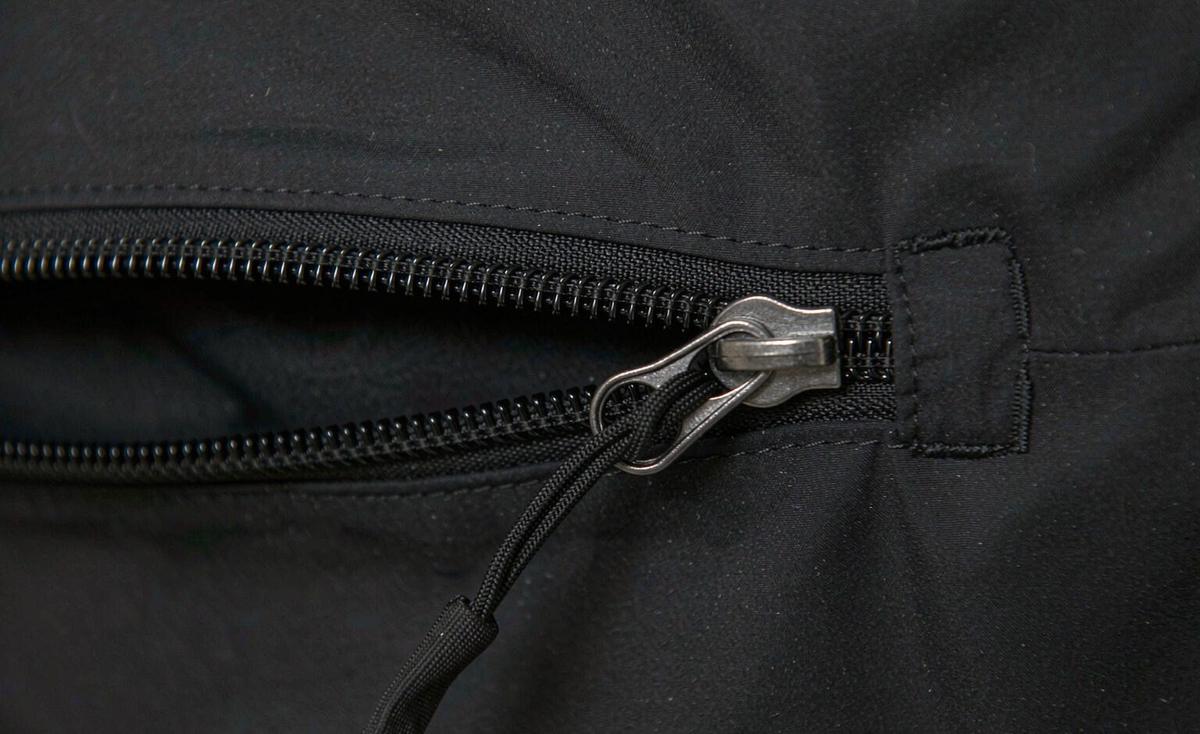
- Custom hardware. A moulded zip pull, a custom buckle or a bespoke label holder needs tooling made before the prototype can be assembled.
- Welded or taped seams. Roll-top closures, wet compartments and insulated liners need jigs and a different assembly sequence.
- Multi-panel or multi-colour print. Each additional placement and each additional colour adds registration work and a separate set-up.
- Structured or moulded panels. A formed back panel or a moulded front shell needs a tooling cycle before the first stitch.
The decision to accept a longer window should be deliberate. Ask what the feature buys: does it change whether someone pledges, or does it only change how the product photographs? A moulded custom pull rarely changes pledging behaviour and always costs tooling and three to five extra days. A genuinely welded wet compartment in a gym bag may well change pledging behaviour, and the extra days are worth having.
A 6-10 working days of sampling window is up to two calendar weeks, and courier transit adds three to five days in each direction. Two rounds plus photography therefore need four to six calendar weeks of pre-launch time, not the two weeks a working-day count suggests. Budget the calendar, not the count.
Using two sampling rounds properly
Most campaigns need two rounds, and they need them for different reasons. Round one settles structure: panel layout, dimensions, compartment depth, strap geometry, closure function. Round two settles surface: colour, print registration, hardware finish and branding placement. Trying to settle both in one round is the most common reason a campaign ends up needing three.
- Review round one against the tech pack, not against your impression. Measure dimensions, check compartment depth, operate every closure under load.
- Write the mark-up as numbered items with a photograph for each, so nothing depends on interpretation.
- Return the notes within 48 hours. Every day the sample sits on a desk is a day of calendar lost.
- Do not introduce new features in round two. Round two is for colour and branding, not for structural change.
- Photograph the approved unit under daylight and keep the images as the inspection reference.
- Confirm the packed carton in round two, so packaging is settled before production rather than after it.
That last step is routinely skipped and routinely regretted. Carton dimensions drive freight cost and determine whether the outbound parcel sits in a cheap tariff band. Settling the carton during sampling costs nothing; changing it after production means repacking finished goods.
The approval gate and when the clock starts
The pre-production sample, or gold sample, freezes the specification. Once it is signed, construction, materials and branding are locked and any later change arrives after fabric has been bought or cut. production 35-50 days, and that window opens only when two conditions are met together: the 30% deposit has been received under T/T 30/70 terms and the sample has been approved in writing.
This is the point where campaign calendars most often break. Funding closes, the creator believes production has begun, and in fact neither the deposit nor the approval has landed. The misunderstanding is worth planning around explicitly: put the deposit inside the funding target as a campaign cost line, and schedule the approval review for the week the campaign closes rather than the week after.
| Stage | Duration | Adds to published delivery date |
|---|---|---|
| Deposit transfer and approval | 1-5 days | Yes |
| Bulk production | 35-50 days | Yes |
| Pre-shipment inspection at AQL 2.5 | 6-10 working days | Yes |
| Balance payment and FOB Xiamen release | 1-3 days | Yes |
| Ocean transit | 30-45 days | Yes |
| Customs clearance and warehouse receipt | 5-12 days | Yes |
| Pick, pack and outbound parcel | 7-20 days | Yes |
| Total after approval | 82-142 days | The figure to publish |
Publish the total, not the production window. A campaign that promises delivery six weeks after close on a first custom run is promising something the calendar cannot deliver, and the resulting late delivery costs more in the next campaign than an honest date costs in this one. Full guidance on the pre-launch schedule sits in how to plan production before you launch.
How the minimum interacts with stretch goals
Stretch goals are the point where a campaign's marketing plan collides with its committed volume. A goal that unlocks a new colourway adds a 500-pcs commitment and a new dye lot. A goal that unlocks a new accessory adds a pattern but can share the existing fabric buy. Both are achievable; only one is achievable inside the original production window, and knowing which is which before launch is what keeps a funded stretch goal from becoming a delayed delivery.
- Accessory stretch goals are the safest. A pouch, organiser or strap pad cut from the hero fabric lot needs no new dye lot and no new trim package, and usually fits inside the same production schedule.
- Colourway stretch goals need a dye lot and a trim package but no new pattern, so they add material lead time rather than engineering time. Pre-cost them and confirm the dye lot is available.
- New-style stretch goals are the risky ones. A second distinct bag needs its own pattern, its own pre-production sample and its own sampling rounds, which cannot be compressed into the original window.
- Volume stretch goals are a cash decision. Payment terms are T/T 30/70, so doubling units doubles the deposit the campaign must finance from cleared funds.
The practical rule is to pre-cost every stretch goal before the campaign launches, so that unlocking one is a pricing event rather than a sourcing event. Write down what each goal commits the campaign to in units, in deposit and in calendar, and publish only the goals whose commitments the funding target can carry. A stretch goal that cannot be financed is worse than no stretch goal, because it converts a successful campaign into a delayed one at exactly the moment backer goodwill is highest.
Re-order economics after the first run
The 500-piece minimum buys something that only becomes visible after the campaign: a documented re-order position. On an approved specification, a re-order needs no second sampling cycle and no repeat charge on tooling, print screens or embroidery digitisation. That is typically worth 8-15% of unit cost before any volume discount is applied, and it is where most campaign margin is actually recovered.
Ask for the re-order position in writing at the close of the first run: the unit price at 1,000 and 2,000 pcs on the same specification, the sampling requirement (usually none), and how quickly a repeat could be scheduled against capacity of 200,000 pcs per month. A campaign that ends with a documented re-order position has converted a one-off reward into a repeatable product line rather than a single transaction.
There is one condition attached. Re-order economics only hold if the specification is genuinely repeatable, which means standard fabric, standard zip chain and standard webbing rather than one-off finds. A fabric that was a lucky remnant or a zip chain sourced for a single run cannot be repeated at the same price, and the re-order becomes a new development instead of a repeat. Choose standard components at specification stage and the second run is cheap. See the crowdfunding bag guide for how spec decisions map to documentation.
The planning numbers to write down
Every campaign bag plan should fit on one page, and it should contain eight numbers. Write them down before the campaign page exists, because each one is a constraint the later decisions have to respect, and because a plan that is written is a plan that can be checked against reality at each milestone.
- Committed volume: 500 pcs per style and per colourway, with the colourway count stated explicitly.
- Sampling window: 6-10 working days per round for standard builds, 12-15 for complex ones, with two rounds budgeted.
- Courier allowance: three to five days each way, added to every sampling round.
- Production window: 35-50 days, starting only when deposit and approval have both landed.
- Inspection standard: AQL 2.5 to ISO 2859-1, with a written report before carton release.
- Trade and payment: FOB Xiamen, T/T 30/70, with the deposit inside the funding target.
- Replacement reserve: 3-5% of units, retained at the fulfilment warehouse.
- Published delivery date: the sum of production, inspection, transit and fulfilment, not the production window alone.
Send those eight numbers with your next RFQ and the conversation starts at a different level. A production partner can tell you immediately whether the committed volume is right for the pledge, whether the specification sits in the standard or complex sampling band, and whether the published date is achievable. Start that conversation through the quote request form, and cross-reference the volume analysis in What Is the MOQ for Custom Bags on a Kickstarter Campaign?.
Take the committed volume of 500 pcs per style and colourway and the sampling window of 6-10 working days, then ask two questions. Does the landed unit cost at 500 fit inside the published pledge after freight, duty, handling and fees? And does the pre-launch calendar contain four to six weeks for two sampling rounds plus photography? If either answer is no, change the plan now, not after funding.
- Custom Bags for Kickstarter — campaign sourcing hub
- Low MOQ bag production for creators
- Sampling and prototyping programme
- Custom bag categories and reward formats
- Kickstarter campaign bag QA and QC
- Crowdfunding rewards fulfilment planning
- Request a campaign bag quotation
- More campaign sourcing articles
Check your numbers against a real quotation
Send bag type, colourway count, launch date and target pledge. You receive the committed volume, the sampling band and a three-tier unit cost within one business day.
Frequently Asked Questions
Why is the minimum order quantity 500 pieces?
Below 500 pcs the fixed costs of a run dominate: fabric is bought as a cut lot rather than a dye lot, hardware as a mixed pack rather than a production package, and print screens are amortised over too few units. At 500 pcs those elements become a smaller share of each unit and the price becomes defensible inside a pledge tier.
Does the minimum apply per colour or per design?
Per style and per colourway. One backpack in three colours is three commitments of 500 pcs, because each colourway needs its own dye lot and trim package. One backpack with two accessories in a single shared colourway is a far more efficient structure than three colourways of the same bag.
What counts as a new style rather than a variant?
A different pattern, panel layout, closure system or internal structure creates a new style with its own 500-pcs minimum. A different print placement, logo position or hangtag does not. Size variants sharing the same pattern, fabric and hardware are negotiable and should be settled in writing before quotation.
How long does sampling take for a simple tote bag?
6-10 working days, counted from approved artwork and a settled tech pack and excluding courier transit. A flat canvas tote with a single print placement sits at the bottom of that band. Add three to five days of courier each way, and budget two rounds, which means four to six calendar weeks before reward photography.
Which features push sampling to 12-15 working days?
Four features account for most of it: custom hardware needing tooling, welded or taped seams on roll-tops and wet compartments, multi-panel or multi-colour print, and structured or moulded panels. Each is identifiable at brief stage, so the longer window can be planned for rather than discovered mid-calendar.
What is the difference between working days and calendar days here?
A 6-10 working day window is up to two calendar weeks before courier is added. With three to five days of transit each way and two rounds budgeted, sampling plus photography occupies four to six calendar weeks of pre-launch time. Plan the calendar rather than the working-day count.
How many sampling rounds should a campaign plan for?
Two. Round one settles structure: panel layout, dimensions, compartment depth, strap geometry and closure function. Round two settles surface: colour, print registration, hardware finish and branding placement. Return revision notes within 48 hours and do not introduce structural changes in the second round.
When does the bulk production clock actually start?
When two conditions are met together: the 30% deposit has been received under T/T 30/70 and the pre-production sample has been approved in writing. Funding alone does not start it. production 35-50 days, with inspection, transit and fulfilment additional to that window.
Is a pilot run a way to avoid the 500-piece minimum?
No. A pilot adds a separate small run with its own set-up and calendar; it does not reduce the committed volume of the main order. Pilot runs earn their place when units are needed for press or retail conversations before the full commitment, not as a route around the minimum.
How much does a re-order save compared with the first run?
Typically 8-15% of unit cost before any volume discount, because tooling, print screens, embroidery digitisation and sampling are not charged again on an approved specification. That saving only holds if the specification is genuinely repeatable using standard fabric, zip chain and webbing.
How should accessories be structured under the minimum rule?
Cut them from the same fabric buy as the hero style. Once the dye lot and print set-up are paid for, an accessory typically costs 30-50% less than a standalone equivalent. Choose small-panel items such as pouches, dopp kits or organisers that avoid needing their own hardware package.
Should the carton be settled during sampling?
Yes, during the second round. Carton dimensions drive freight cost and determine which tariff band the outbound parcel falls into. Settling the carton during sampling costs nothing, whereas changing it after production means repacking finished goods.
How much capacity sits behind a 500-piece campaign order?
A 500-piece run occupies a small fraction of 200,000 pcs per month across 7 production lines and 149 machines on a 4,950 m² SGS-verified floor. That headroom is what allows a stretch-goal top-up or a re-order to be absorbed inside the same production window rather than re-queued.
What eight numbers should a campaign bag plan contain?
Committed volume with colourway count, sampling window per round with courier allowance, production 35-50 days, inspection standard of AQL 2.5, trade term and payment structure of FOB Xiamen and T/T 30/70, a replacement reserve of 3-5%, and a published delivery date covering all legs.
People Also Ask
What is the MOQ for custom bags on Kickstarter?
500 pcs per style and per colourway. That is the point where fixed set-up costs stop dominating unit cost, and it establishes a specification that can be re-ordered later without repeating tooling or sampling.
How long does it take to get a sample bag made?
6-10 working days for standard builds and 12-15 for complex ones, from approved artwork and a settled tech pack. Add three to five days of courier transit each way and budget two rounds.
Can I order fewer than 500 bags for my first campaign?
Not as a standard production run. If 500 feels too large, re-examine the pledge price or the reward structure rather than seeking a smaller run, because a pilot does not reduce the main commitment.
Do different colours count as different orders?
Yes. Each colourway is its own 500-pcs commitment with its own dye lot and trim package. Launch one colourway and use accessories in the shared fabric lot for variety instead.
What happens after I approve my sample?
The specification freezes and production 35-50 days once the 30% deposit has also been received. Inspection at AQL 2.5, ocean transit of 30-45 days and fulfilment follow, so publish the total of 82-142 days.