Custom E-Sports Bag Campaigns: Gamer Merch for Streaming Brands
An e-sports bag campaign works when the bag solves a real transport problem for a player who travels to events, and fails when it is a logo on a generic backpack. Build the specification from the kit list outward: a laptop bay sized to a stated 16-inch machine, a keyboard sleeve with a real internal dimension, peripheral and cable management, and decoration that reads on camera. The minimum is 500 pcs per style and per colourway, sampling runs 6-10 working days, and production 35-50 days after deposit and written sample approval.
- Why e-sports merch behaves differently from general gaming merch
- The kit list that drives every dimension
- Laptop bay sizing is the first thing this audience checks
- Peripherals, cable management and the interior layout problem
- Decoration routes that read on camera
- RGB, reflective and glow elements: worth it or not
- Drop economics and community testing
- The stream-size threshold for a 500 pcs run
- Timing sampling around a tournament or launch window
- QC for a bag carrying hardware
- What gamer audiences actually pay
- Building the RFQ for an e-sports bag programme
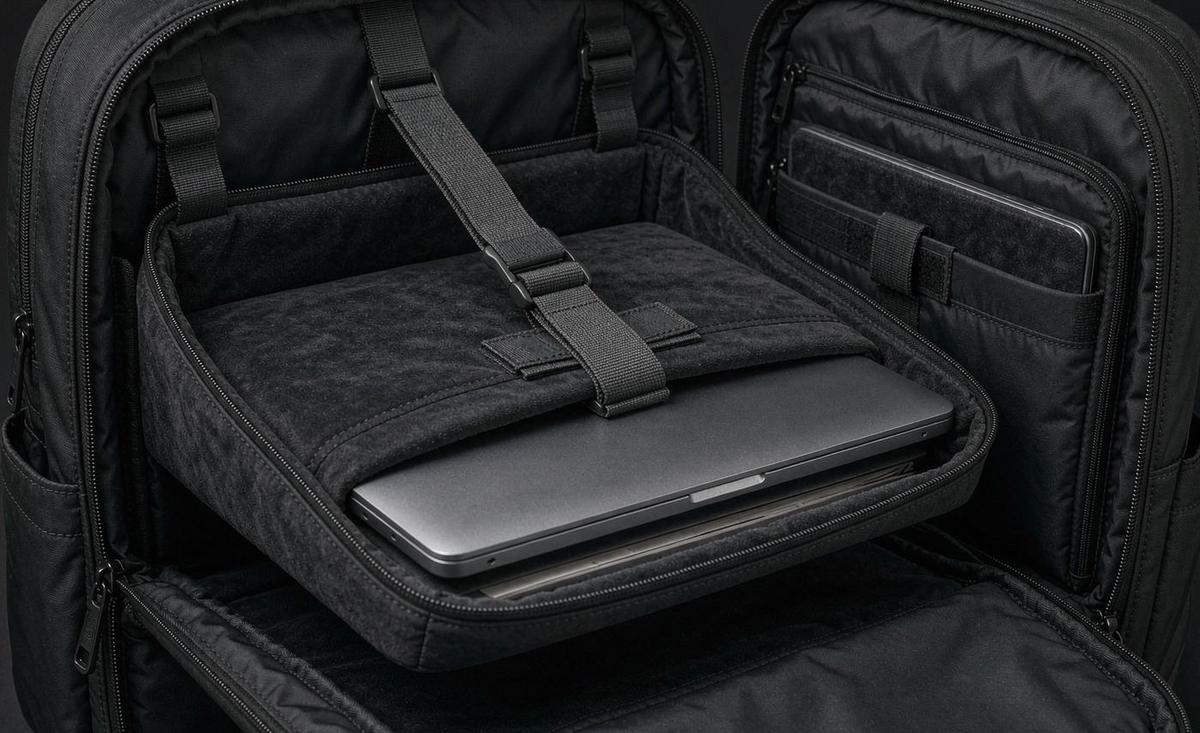
Gaming merchandise has a credibility problem that most categories do not. The audience can tell, usually within seconds of seeing a product photograph, whether a bag was designed for a player or whether a logo was applied to an existing backpack. That sensitivity comes from experience: this is a group that has bought a lot of licensed merchandise and has learned to spot it. It means the design has to be driven by the kit, and it means the reward description has to carry real dimensions rather than adjectives. The custom bags for Kickstarter overview explains where a niche brief like this enters the sourcing process.
- Minimum order quantity
- 500 pcs per style / colourway
- Sampling
- 6-10 working days (12-15 for complex builds)
- Bulk production
- 35-50 days after deposit + approved pre-production sample
- Inspection
- AQL 2.5 to ISO 2859-1
- Trade term
- FOB Xiamen
- Payment
- T/T 30/70
- Production floor
- 4,950 m2 SGS-verified, 137 staff, 7 lines, 149 machines
- Monthly capacity
- 200,000 pcs per month
- Programme contact
- service@junyuanbags.com
Why e-sports merch behaves differently from general gaming merch
Three structural differences separate an e-sports bag programme from general licensed merchandise. The first is that the buyer is often also a traveller. Players move between home, a team house, a studio and a tournament venue, and they do it with a laptop, a keyboard, a headset, a mouse, controllers and a tangle of cables. That is a transport problem, and a bag that solves it has a functional reason to exist beyond branding.
The second difference is the camera. A streaming brand lives on video, and merchandise gets unboxed on video. That has a direct specification consequence in two areas: decoration has to hold up under bright key lighting and close inspection, and the interior has to look deliberate in a flat-lay shot. A bag whose interior is a single black cavity photographs badly and reads as cheap regardless of how good the exterior is.
The third difference is community structure. A streaming audience is not a passive buyer list; it is a chat that reacts in real time and expects to be consulted. That makes it unusually good for variant testing, because you can poll a colourway or a logo placement and get a few thousand responses in an afternoon. It also makes it unforgiving of a product that ignores what the chat asked for, which is a reason to run the poll early rather than to present a finished product late.
These three differences point in the same direction. Build the bag around the kit list, photograph the interior as carefully as the exterior, and use the community for variant decisions before the technical pack is signed. Done in that order, an e-sports bag becomes one of the more defensible rewards in the custom laptop bag family, because it sits at the intersection of a real transport need and a strong identity purchase.
The kit list that drives every dimension
Work the specification from the objects outward. Capacity figures in litres tell a backer nothing useful here, because the governing constraint is not volume but the longest rigid object and the flattest fragile object. The longest rigid object is usually a full-size or tenkeyless keyboard. The flattest fragile object is the laptop. Both have to be stated as internal dimensions with a tolerance, and both have to be verified on a physical sample rather than assumed from a retail listing.
| Kit item | Governs | Starting allowance |
|---|---|---|
| Laptop, 15.6 or 16 inch | Laptop bay internal width, depth and height | State all three with tolerance; verify on sample |
| Mechanical keyboard, full size | Keyboard sleeve internal length | Confirm actual keyboard length plus 2-3 cm |
| Mechanical keyboard, TKL | Sleeve length on a compact variant | Roughly 8 cm shorter than full size |
| Headset | Top cradle pocket or side pocket depth | Allow for earcup width, not headband length |
| Mouse and mousepad | Flat accessory pocket | Mousepad rolls; allow a sleeve or strap |
| Controller, 1-2 units | Accessory pocket with padded divider | Allow for analogue stick height, not body depth |
| Cables, charger, power brick | Cable organiser panel | Separate the brick; it is heavier than cables |
The power brick is the item that most specifications omit and most backers notice. A laptop charger brick is small, dense and heavy, and when it is packed loosely it migrates to the bottom of the bag and presses against the laptop panel. Give it a dedicated slip pocket with a stated dimension, ideally adjacent to the laptop bay rather than at the far end of the bag. It is a small cost and a recurring point of praise in reviews.
One more dimension decision belongs here because it changes everything downstream: is the bag built for a full-size keyboard or a tenkeyless one? Full-size support adds roughly 8 cm of internal length, which increases the panel size, the foam requirement and the finished footprint. If your audience skews competitive, they are more likely to carry a TKL, and the smaller bag will feel more deliberate. Publish whichever you choose in the reward description, because a backer who owns a full-size board will ask immediately.
Laptop bay sizing is the first thing this audience checks
The laptop bay is the specification that decides whether a gaming bag is taken seriously. State the internal dimensions in millimetres, state the machine size it is designed for, and state the padding build-up. A claim of fits 16-inch laptops with no dimension and no padding figure is unverifiable, and an audience that has been burned by stretched marketing claims will read it as a warning rather than as a feature.
| Element | What to state | Why it matters |
|---|---|---|
| Internal dimensions | Width, depth and height in mm with tolerance | The only claim an inspector can measure with a tape |
| Padding build-up | Foam thickness and density per face | Decides drop protection; usually 6-10 mm per face |
| Suspension | Whether the base is raised off the bag floor | Prevents corner impact when the bag is set down |
| Closure | Elastic strap, Velcro tab or magnetic flap | A bay that opens on impact defeats the padding |
| Lining | Non-abrasive liner material | Prevents scuffing from repeated insertion |
| Separation | Whether the bay is structurally isolated | Stops the keyboard pressing into the lid |
Suspension is the most commonly omitted of these and the most consequential. Padding on the sides of a bay does nothing if the bottom of the bay rests directly on the base panel of the bag, because the most common impact is the bag being set down on a hard floor with the machine inside. Raising the bay base by 15-25 mm with a closed-cell foam block or a suspended sleeve costs little and removes the most frequent cause of a damaged corner.
The second specification point is separation between the laptop bay and the keyboard sleeve. A mechanical keyboard is rigid and heavy, and when the bag is carried it presses against whatever is behind it. If that is the laptop bay, you have created a pressure point against a screen. Put a structural divider or a foam laminate between the two compartments, and make sure the divider is specified in the pack rather than left to the sample maker's judgement. The custom laptop bags for Kickstarter pillar covers the same principle across office and commuter formats.
Peripherals, cable management and the interior layout problem
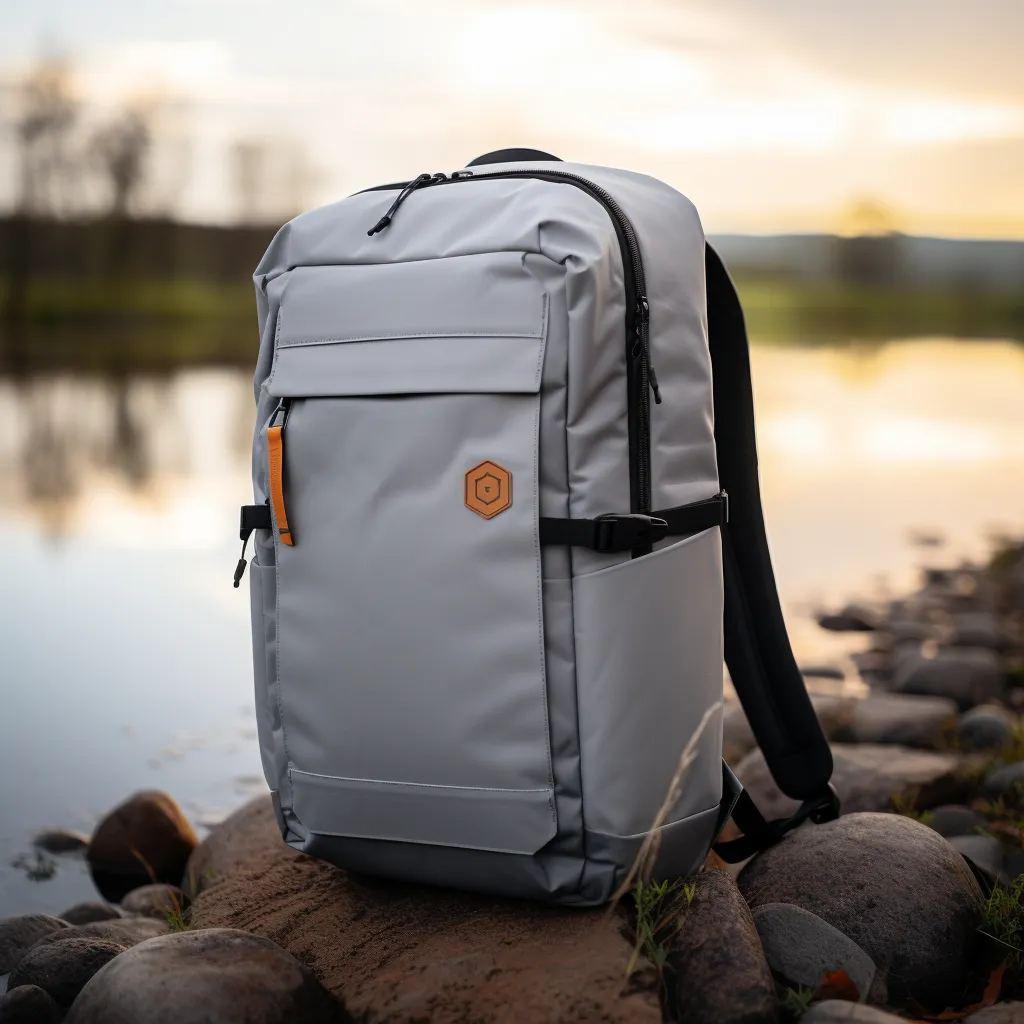
The interior of a gaming bag has to solve a problem that a commuter backpack never meets: it has to hold a mix of rigid, fragile, heavy and tangle-prone objects, and it has to let the owner find each one quickly in a dark venue. That is a layout problem rather than a capacity problem, and it is the area where a purpose-built bag separates itself most visibly from a rebranded generic.
- Give the keyboard its own flat sleeve with a stated internal length, positioned flat against the back panel rather than rolled.
- Build a cable organiser panel with elastic loops of at least three different widths, because USB-C, HDMI and power cables differ substantially in diameter.
- Add a dedicated slip pocket for the power brick, positioned near the laptop bay so the weight sits close to the back.
- Provide a lined top pocket for the headset with enough depth for the earcups, not just for the headband.
- Use a light-coloured or contrasting interior liner; a black-on-black cavity reads as cheap on camera and makes contents hard to find.
The contrasting liner deserves an explicit defence, because it is the detail most likely to be cut for cost and the one most likely to be praised in an unboxing video. A player unpacking in a poorly lit venue is trying to find a specific cable among four similar ones. A grey or branded-pattern liner makes that possible; a black liner does not. The cost difference is a small increment on the lining material, and it is visible in every interior photograph the product ever appears in.
There is also an access question that shapes the whole pattern. A bag that opens only from the top forces the owner to dig past the keyboard to reach the cables at the bottom. A clamshell or a three-quarter zip opening lets the bag lie flat and present everything at once, which is better in use and dramatically better on camera. It costs more in zip length and in pattern complexity, typically adding labour minutes, and it is usually worth it for this audience specifically.
Decoration routes that read on camera
Decoration on gaming merchandise has to survive two conditions that normal branded merchandise does not: close-up video inspection under strong lighting, and an audience that will screenshot and enlarge it. That rules out some routes and elevates others. The decision is usually between embroidery, woven labels, heat transfer, silicone or PVC patches, and sublimation printing, and the right answer depends on where the logo sits and how large it is.
| Route | Best for | Camera behaviour | Relative cost |
|---|---|---|---|
| Embroidery | Small to medium logos on fabric panels | Reads as premium; catches key light well | Medium-high; stitch count drives it |
| Woven label | Wordmarks and interior branding | Crisp at close range; good for flat-lay shots | Low-medium |
| Silicone or PVC patch | Mascots and complex marks | Strong dimensional read; very durable | High; tooling per design |
| Heat transfer | Large graphics and gradients | Good flat colour; can crack at flex points | Low-medium |
| Sublimation | All-over prints and patterns | Excellent for liners and full panels | Medium; needs polyester base |
Two practical warnings. Heat transfer on a flex point will crack, and bag exteriors have more flex points than creators expect: the strap attachment zone, the top grab handle and the zip garages are all high-movement areas. Keep transfer graphics away from them or switch to embroidery there. And sublimation requires a polyester base fabric, which constrains your shell material choice; if you have already specified a nylon face fabric, sublimation is off the table for that panel.
Colour accuracy is the third issue and it is specific to this audience. A brand colour that is slightly off is a serious problem for a streaming brand, because the audience sees the correct colour on screen every day. Approve decoration against a physical reference under standard lighting, specify the thread or ink reference in the pack, and require a decoration sample on the actual production fabric rather than on a swatch card. Shade approval is one of the items covered in our campaign bag QA and QC planning.
RGB, reflective and glow elements: worth it or not
Lighting elements are the most requested feature in gaming bag briefs and the one we most often advise against on a first programme. The objections are practical rather than aesthetic. An illuminated panel needs a power source, a cable route, a switch, and a way to remove the electronics for washing and for air freight. It adds cost, adds a failure mode, adds a compliance question around batteries in transit, and adds a defect class that is invisible until the unit is switched on.
| Option | Unit cost impact | Risk | Audience impact |
|---|---|---|---|
| Reflective piping or print | Low | Very low; no power required | Moderate; visible under flash and low light |
| Glow-in-the-dark print or thread | Low-medium | Low; degrades slowly over years | Moderate; novelty read |
| Woven reflective label | Low | Very low | Subtle; good for a secondary mark |
| Integrated LED strip | High | High; power, wiring, transit rules | High if executed well |
| Removable LED module | Medium-high | Medium; module is a loose part | High; washable and shippable |
If a lighting element is central to the concept, the removable module is the safer route. It keeps the electronics out of the wash cycle, it lets the bag be shipped without a lithium cell in the product where the carrier requires it, and it means a failed module is a replaceable part rather than a returned bag. The cost penalty is real but it is smaller than the cost of a warranty programme on an integrated strip.
Reflective elements, by contrast, are close to free in risk terms and deliver most of the perceived effect. Reflective piping along a zip line, a reflective woven label, or a reflective print that only appears under flash all read on camera without any power. For a first programme we would usually steer a creator here, and keep integrated lighting for the second run if the audience asks for it after using the first.
Drop economics and community testing
Streaming audiences support a drop structure better than almost any other community, because they are already trained to respond to limited releases. That is an advantage, but it interacts badly with a 500 pcs per style and per colourway minimum if it is handled casually. The trap is announcing three colourways as limited drops and then discovering that each one is its own 500 pcs commitment.
| Structure | Total commitment | Suits | Risk |
|---|---|---|---|
| Single hero drop | 500 pcs | First programme, unproven conversion | Lowest; leaves variant data untested |
| Two sequential drops | 500 + 500 | Strong community signal, 6-12 month horizon | Second drop needs its own production window |
| Three colourways at launch | 1,500 pcs | Large established channel | High; inventory concentration |
| Variant swap on one run | 500 pcs total | Testing two shades or two logos | Depends on shared materials and line schedule |
| Core bag plus accessory drop | 500 + accessory run | Extending the programme without a second bag | Lowest incremental risk |
The variant swap row is the one worth asking about at quotation stage. Where two colourways share materials and can be produced in the same run, you get variant data for a single minimum. It is not always feasible, and it depends on the line schedule and the materials, but it costs one line in the request for quotation to find out. Ask the question in writing before you commit, not after.
Sequential drops carry a timing trap that catches a lot of programmes. A second drop announced after the first has shipped needs its own production 35-50 days plus transit, and that is rarely compatible with the momentum a drop is supposed to create. If a second drop is part of the plan, reserve the slot in the original request for quotation and treat the drop as a release decision rather than a production decision. That means committing to the second colourway earlier than feels comfortable, which is precisely the trade-off the single-hero-drop structure exists to avoid.
Community testing is where this audience gives you something no focus group can. Poll the colourway, poll the logo placement, poll whether the keyboard sleeve should support full-size or TKL. Run those polls before the technical pack is signed, because after that point a change to panel geometry is a re-sample rather than a decision. The crowdfunding bag guide sets out how those early decisions feed into the pack.
The stream-size threshold for a 500 pcs run
A 500 pcs minimum is a conversion problem before it is a production problem. The question is not whether you can sell 500 bags eventually, but whether your launch audience will buy 500 within a campaign window of 30-45 days. Working from typical merchandise conversion in creator communities, where a engaged audience converts somewhere in the 0.3 to 1.5 per cent range into a physical reward, the arithmetic gives a rough threshold worth checking before you commit.
| Community scale | At 0.3% conversion | At 0.8% conversion | At 1.5% conversion |
|---|---|---|---|
| 20,000 followers | 60 units | 160 units | 300 units |
| 50,000 followers | 150 units | 400 units | 750 units |
| 100,000 followers | 300 units | 800 units | 1,500 units |
| 250,000 followers | 750 units | 2,000 units | 3,750 units |
| 500,000 followers | 1,500 units | 4,000 units | 7,500 units |
Read that table as a screening tool, not as a forecast. It says that a channel below roughly 50,000 engaged followers is unlikely to clear 500 units from a single drop without either a second audience source or a longer selling window, and that a channel above 250,000 should be planning for more than one run. It also explains why many successful e-sports bag programmes involve a team or an organisation rather than an individual creator: the aggregated audience of a roster clears the threshold comfortably.
If your own channel sits below the threshold, there are three legitimate routes rather than one. Aggregate with another creator or a team, which is the most common. Sell the remainder through a webshop over six to twelve months, which works if you have steady traffic and fails if you do not. Or start with a smaller item and build to the bag on a second programme, which is the route we would usually recommend; our low minimum bag production page sets out what is realistic at the entry point.
Timing sampling around a tournament or launch window
E-sports programmes carry a timing constraint that general merchandise does not: the calendar. A bag tied to a tournament season, a major event or a game launch has a date that cannot move, and that date is usually set long before the technical pack is written. Work backwards from it. Sampling at 6-10 working days per round, or 12-15 for a complex build with moulded elements, then 35-50 days of bulk, then inspection, then transit.
- Fix the event or launch date first, then subtract transit of 25-40 days for ocean to the US or EU.
- Subtract 35-50 days of bulk production, and note it starts on deposit plus written approval, not on campaign close.
- Subtract two sampling rounds at 6-10 working days each, or 12-15 for a structured build.
- Subtract 2-4 weeks for the technical pack and quotation, which is the block you control most.
- Whatever date that lands on is the latest date to sign the pack. Add two weeks of contingency.
If that arithmetic produces a start date in the past, the honest answer is to change the format rather than to compress the schedule. Moving from a structured build with moulded corner protection to a soft build with foam laminate protection moves sampling from 12-15 working days to 6-10 and can remove two to three weeks. Moving from ocean to air removes transit time but adds freight cost, and on a gaming bag with a heavy hardware load the air premium is significant.
The other timing lever is to complete sampling before the campaign opens. It costs the same amount of calendar time but it consumes pre-launch time, which is usually less constrained, and it removes four to six weeks from the post-campaign path. It also lets the reward photography show a real unit, which on a product whose main selling point is internal layout is close to essential. Our sample prototyping route sets out the measurement record to capture at that gate.
QC for a bag carrying hardware
A bag that carries a laptop and a mechanical keyboard is carrying a load that is heavier, more rigid and more fragile than anything a normal backpack is designed for. That changes the inspection plan. Pre-shipment inspection to AQL 2.5 under ISO 2859-1 draws a statistically determined number of units and measures them against classes you define, and for this product the classes have to include functional checks on the protection systems rather than visual checks on the shell.
| Defect | Class | Check method |
|---|---|---|
| Laptop bay internal dimension out of tolerance | Critical | Measure all three internal dimensions on every unit drawn |
| Padding missing or displaced in the bay | Critical | Manual inspection of every bay face |
| Divider between bay and keyboard sleeve absent | Critical | Confirm structural separation on every unit drawn |
| Strap attachment pull-out | Critical | Load test plus visual check of bar-tack or box stitch |
| Zip separation under load | Critical | Run every zip end to end under light load |
| Decoration misregistration or colour deviation | Major | Measure against stated coordinate; compare to approved sample |
| Elastic loop detached in cable organiser | Major | Pull check on each loop |
The first three rows are the ones that separate a real inspection from a decorative one, and they all require a tape measure and thirty seconds per unit. A bay that is 3 mm short on internal width will not accept the stated machine, and it will not be caught by a visual check. A missing foam insert in the bay is invisible from outside and defeats the entire protection claim. And a missing divider means a keyboard pressing into a screen, which is the failure mode most likely to generate a damaged-goods claim.
- Name the standard, the inspection level and the defect classes in the purchase order before production starts.
- Require the inspection report to be issued before the 70% balance under T/T 30/70 is released.
- Agree in advance who pays for re-inspection; rework typically adds 10-15 days.
- Keep the approved pre-production sample as the physical reference for shade and dimension checks.
- Request an in-line check during the sewing window, when a defect trend can still be corrected.
There is one inspection item unique to this category that is worth naming separately: the loaded fit test. Measure the empty bay, then insert the actual laptop model you specified and confirm it seats and removes without forcing. A bay that measures correctly but has a tight zip radius around the opening will still frustrate the owner daily. That is a fifteen-minute check at sampling and again at inspection, and it prevents the most common complaint in this product family. The same principle is set out in our team bag QC guidance.
What gamer audiences actually pay
Price acceptance in gaming merchandise is set by comparison against branded peripheral and apparel products, which means the band is narrower and better defined than in most bag categories. A bag that reads as generic will not sell at USD 129 regardless of cost. A bag that reads as purpose-built, with real dimensions, a keyboard sleeve and credible protection, will. The specification is what earns the price, not the logo.
| Cost line | Indicative share of unit cost | What moves it |
|---|---|---|
| Face fabric, lining and reinforcement | 18-26% | Denier, coating, water resistance, liner colour |
| Padding and internal structure | 12-20% | Foam thickness, divider laminates, suspended bay |
| Cutting and sewing labour | 28-38% | Panel count, cable organiser, clamshell opening |
| Decoration | 10-18% | Method, stitch count, placements, set-up amortisation |
| Hardware and trims | 10-16% | Zip references, buckles, webbing grade, pullers |
| Packing and cartons | 4-8% | Pieces per carton, polybag, retail insert |
| Overhead, QC and margin | 8-16% | Inspection level, defect allowance, testing |
The lever structure here is different from most bag categories. Labour is the largest line, driven by panel count and by the internal organiser, which means simplifying the interior is the fastest route to a lower unit cost. But the interior is also the reason the product earns its price. The right conclusion is not to strip the interior but to rank its features by use: a cable organiser and a keyboard sleeve are used every day, while a decorative molle grid is used never and costs almost as much to sew.
Volume pricing works in the creator's favour on the second run in a way worth planning for. The first 500 pcs carries sampling and set-up; the re-order does not. If your channel sits near the upper end of the audience table, quote the likely re-order quantity in the original request for quotation so a second drop later is a confirmation rather than a fresh negotiation. That is the difference between a re-order that takes a week to arrange and one that takes a month.
Building the RFQ for an e-sports bag programme
A quotation is only as accurate as the request behind it, and in this category the request needs more interior detail than almost any other bag brief. Send it as one document and you will receive a unit cost, a sampling estimate and a production window in a single exchange. Send it in pieces and you will spend three weeks discovering that the keyboard sleeve was never quoted.
- Laptop bay internal dimensions in millimetres with tolerance, plus the padding build-up per face and whether the base is suspended.
- Keyboard sleeve internal length, and explicitly whether it is sized for full-size or tenkeyless.
- Cable organiser specification: loop count, widths, and whether the power brick has a dedicated pocket.
- Face fabric, lining and reinforcement named by denier, weave and coating, including the liner colour.
- Hardware references with material grade, especially zips on the main clamshell opening and the strap webbing.
- Decoration method per placement, with stitch count or print area, thread or ink reference, and a measured coordinate.
- Packing specification: pieces per carton, carton dimensions, polybag, inserts and carton marking.
- Quantity per style and colourway, with 500 pcs per style and colourway as the minimum, plus any planned re-order.
Two items belong at the end of that list because they are the ones most often forgotten and most likely to move the schedule. The first is the destination market and any compliance documentation required; a bag sold into the EU needs REACH substance compliance and EU GPSR safety and traceability obligations, and a bag marketed to younger players in the US triggers CPSIA component requirements. The second is the delivery date and whether it is fixed, because a fixed date changes the freight mode and therefore the landed cost.
Once the request goes out, the sequence is stable: quotation, sampling at 6-10 working days per round, a numbered revision list against pack clauses, a written pre-production sample approval, the 30% deposit, 35-50 days of bulk, inspection at AQL 2.5, the 70% balance, and loading at FOB Xiamen. Where a programme wants to see how other sports and gaming categories structured the same path, the sports bag success data analysis breaks down what funded campaigns had in common.
- Custom laptop bags for Kickstarter campaigns
- Custom bags for Kickstarter: programme overview
- Crowdfunding bag sample prototyping
- Kickstarter campaign bag QA and QC
- Low MOQ bag production for creators
- Custom Team Bag QC: 20,000 Flex Tests
- Crowdfunding rewards fulfilment
- Request a quotation
Turn a streaming brand into a bag that players actually carry
Send us the kit list, the laptop model, the keyboard size, the decoration coordinate and your target quantity. As your production partner we will return a unit cost, a sampling estimate at 6-10 working days and a booked 35-50 day production window. Write to service@junyuanbags.com.
Frequently Asked Questions
What is the MOQ for custom e-sports bags on a crowdfunding campaign?
The minimum is 500 pcs per style and per colourway. Two colourways means two separate 500 pcs commitments unless a variant swap within one production run is agreed at quotation stage. Most first programmes open with one hero colourway and add a second on a confirmed re-order, because a drop structure needs its own production window to work. Ask at quotation stage whether a variant swap within one run is possible, because it changes the whole colourway commitment.
How much does a custom gaming backpack cost per unit at 500 pcs?
A backpack with a padded laptop bay, a keyboard sleeve, a cable organiser and branded decoration typically lands in the USD 14-28 range FOB Xiamen at 500 pcs. Labour is the largest single line, because the internal organiser drives panel count and assembly minutes. Hardware grade and decoration route are the next two largest. Volume pricing improves on the second run, so quote the likely re-order quantity in the original request for quotation.
Should the keyboard sleeve fit a full-size or a tenkeyless keyboard?
Tenkeyless for a competitive-leaning audience, because those players overwhelmingly carry TKL boards and the smaller bag feels more deliberate. Full-size adds roughly 8 cm of internal length, which increases panel size, foam requirement and finished footprint. Publish whichever you choose in the reward description, because a backer with a full-size board will ask. Confirm the sleeve internal length on a physical sample rather than trusting a published keyboard dimension.
How should the laptop bay be specified for a gaming bag?
State internal width, depth and height in millimetres with a tolerance, the padding build-up per face at typically 6-10 mm, and whether the base is suspended 15-25 mm off the bag floor. Suspension matters most, because the common impact is the bag being set down with the machine inside. Also specify structural separation from the keyboard sleeve. Add a loaded fit test with the actual laptop model, because a correct measurement can still have a tight opening radius.
Are RGB or LED elements worth adding to a gaming bag?
Usually not on a first programme. An integrated strip needs a power source, a cable route, a switch and a way to remove it for washing and freight, and it adds a defect class that is invisible until switch-on. Reflective piping, reflective woven labels and glow-in-the-dark thread deliver most of the camera effect at a fraction of the risk. If lighting is central to the concept, use a removable module so the electronics stay out of the wash cycle.
How big does my channel need to be to sell 500 bags?
Merchandise conversion in creator communities typically runs 0.3 to 1.5 per cent of an engaged audience. At 0.8 per cent, a 50,000-follower channel converts around 400 units and a 100,000-follower channel around 800. Below roughly 50,000, aggregate with a team or another creator, or start with a smaller item and build up. If the channel sits below the threshold, aggregating with a team is usually better than discounting the reward.
What inspection standard applies to an e-sports bag programme?
AQL 2.5 to ISO 2859-1 at general inspection level II, single sampling plan. Define critical, major and minor classes before production, including laptop bay internal dimension checks on three axes, padding presence checks, structural divider confirmation and a strap attachment load test on every unit drawn. Add a loaded fit test with the actual laptop model. Classify laptop bay failures as critical so that a single finding can stop the shipment rather than being counted.
How long does an e-sports bag programme take?
Sampling runs 6-10 working days per round for a standard build and 12-15 for a structured build. production 35-50 days after deposit and written sample approval. Add 2-4 weeks for the technical pack and 25-40 days of ocean transit, and plan the whole sequence backwards from the tournament or launch date rather than forwards from today. Book compliance testing during sampling so it runs in parallel rather than adding days after production.
Which decoration method is best for a gaming brand logo?
Embroidery for logos on fabric panels, because it reads as premium and catches key light well under a streaming setup. Use a silicone or PVC patch for complex mascots, a woven label for wordmarks and interior branding, and keep heat transfer away from flex points where it will crack. Approve the shade on the production fabric. Always approve the decoration shade on the production fabric rather than on a swatch card.
Can I run two colourways as sequential drops?
Yes, but plan the second drop's production window in the original request for quotation. A drop announced after the first ships needs its own 35-50 days plus transit, which rarely matches the momentum a drop is meant to create. Reserve the slot at quotation stage and treat the drop as a release decision rather than a production decision. Set the release trigger at 250 or 500 units so the second drop remains economically viable.
What compliance documentation applies to bags sold into the EU and US?
EU-bound goods need REACH substance compliance and EU GPSR safety and traceability obligations. Where a product is marketed to children in the US, CPSIA requirements apply to components and materials, and California Prop 65 warnings apply where a listed substance is present. State the destination market in the RFQ so testing is booked during sampling. A certificate reference requested during procurement is far easier to supply than one requested afterwards.
Should sampling finish before the campaign page goes live?
Yes, particularly when the selling point is internal layout. Two rounds at 6-10 working days each fit into a pre-launch calendar, remove four to six weeks from the post-campaign path, and let reward photography show a real unit with the laptop and keyboard in place rather than a render of an empty cavity. The loaded measurement is the last cheap moment to change the internal geometry.
People Also Ask
Are e-sports bags a viable crowdfunding reward?
Yes, when the bag solves a real transport problem. Players travel with a laptop, a keyboard, a headset and cables, so a bag built around that kit list has a functional reason to exist beyond branding, which is what this audience rewards.
What size laptop bay should a gaming backpack have?
Size it to a stated machine, typically 15.6 or 16 inch, and publish the internal dimensions in millimetres with a tolerance. Add 6-10 mm of padding per face and suspend the base 15-25 mm off the bag floor.
Do gaming bags need RGB lighting?
No. Integrated LED strips add a power source, a failure mode and a battery-in-transit question. Reflective piping, reflective woven labels and glow-in-the-dark thread deliver most of the camera effect at a fraction of the risk.
How many followers do I need to sell 500 bags?
At a typical 0.8 per cent merchandise conversion, roughly 50,000 to 70,000 engaged followers. Below that, aggregate with a team or another creator, or start with a smaller item and build to the bag on a second programme.
What makes a gaming bag look generic?
A black-on-black interior with no organiser, a stretch laptop claim with no dimensions, and a logo on an existing pattern. A contrasting liner, a cable organiser panel and real published dimensions are what separate a purpose-built bag.
Should the interior of a gaming bag be light-coloured?
Yes. A player unpacking in a poorly lit venue needs to find a specific cable among four. A grey or branded-pattern liner makes that possible, it photographs far better in a flat-lay, and the material cost increment is small.
Can I test colourways with my community before ordering?
Yes, and you should. Poll the colourway, the logo placement and the keyboard size before the technical pack is signed. After that point a change to panel geometry becomes a re-sample rather than a decision.