Custom Team Bag QC: Why 20,000 Flex Tests Matter for Campaigns
A team bag is the hardest-working product in the sports category: it is carried by people who do not own it, packed by whoever is nearest, dragged across a pitch-side surface and left wet in a locker. That is why cycle testing matters and why the number alone means nothing. Twenty thousand flex cycles is only a valid specification once you have defined the load, the frequency, the component under test and the failure criteria. This guide sets out how to write a flex test that a workshop can execute and an inspector can verify, and how to fold it into an AQL 2.5 inspection plan.
- Why team bags fail differently from individual bags
- What a flex test actually measures
- Deconstructing the 20,000-cycle figure
- The four tests that matter most on a team bag
- Writing a test specification that can be enforced
- Sampling tests versus production tests
- What AQL 2.5 actually samples
- Defect classes for a team bag programme
- Materials that survive the cycle count
- Hardware, zips and strap attachments under repeated load
- Documenting results for institutional buyers
- Folding QC into the campaign timeline
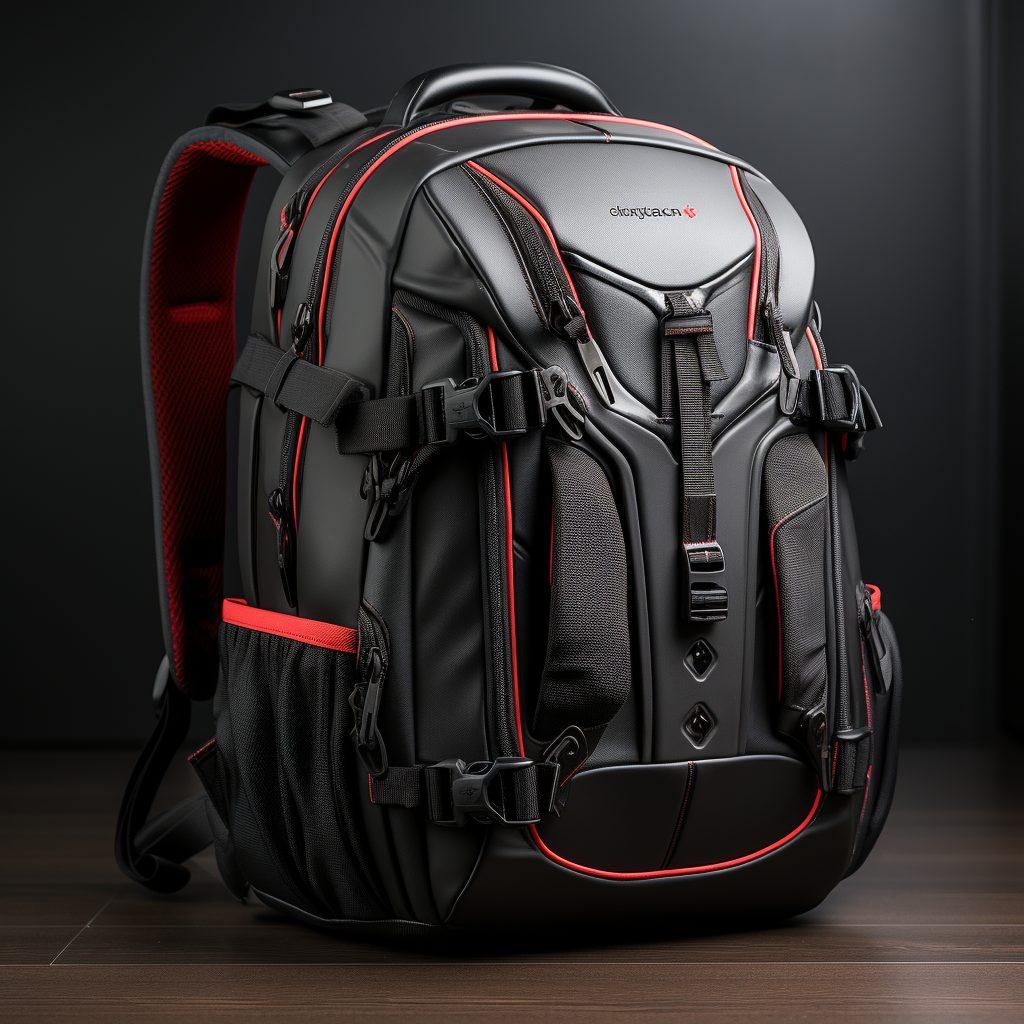
There is a sentence that appears in a lot of bag briefs and it costs creators money: tested to 20,000 cycles. On its own it commits nobody to anything. Twenty thousand cycles of what, under how much weight, at what rate, on which component, and what counted as a failure? Without those four answers the figure is marketing language, and the defect it was supposed to catch will reach backers in month three instead of being caught on a bench in week two.
- Minimum order quantity
- 500 pcs per style / colourway
- Sampling
- 6-10 working days (12-15 for complex builds)
- Bulk production
- 35-50 days after deposit + approved pre-production sample
- Inspection
- AQL 2.5 to ISO 2859-1
- Trade term
- FOB Xiamen
- Payment
- T/T 30/70
- Production floor
- 4,950 m2 SGS-verified, 137 staff, 7 lines, 149 machines
- Monthly capacity
- 200,000 pcs per month
- Programme contact
- service@junyuanbags.com
Why team bags fail differently from individual bags
A bag bought by an individual is used by someone with a stake in its condition. It gets packed carefully, carried by the handle it was designed to be carried by, and emptied at the end of the day. A team bag has none of those protections. It is shared, it is packed in a hurry by whoever is nearest, it is dragged rather than carried, it sits wet in a locker between sessions, and nobody in the chain has any incentive to treat it gently.
That difference changes the failure profile in three specific ways. Dynamic loading goes up, because the bag is thrown into a vehicle and dragged across a surface rather than lifted. Moisture exposure goes up, because wet kit goes back into the bag and stays there. And load concentration goes up, because a shared bag is routinely packed beyond its design weight by someone who is not going to be carrying it for long.
The specification response is not simply to make everything heavier. It is to identify the four or five points where those three factors concentrate, and to test those points specifically. On most team bags that means the strap attachment, the grab handle roots, the main zip line, the base panel and the wet compartment seam. Everything else can be built to a normal standard. Spending the test budget on the whole bag equally is how programmes end up with a bag that passes everywhere and fails at the handle.
The commercial context matters too, and it is the reason team bag QC deserves more attention than a general run. A team or club order is a repeat order if the bag survives and a lost account if it does not, and the person making that decision is a coach or a club secretary who will remember a strap that tore in October. Our Kickstarter campaign bag QA and QC pillar sets out how these requirements move from a brief into a purchase order.
What a flex test actually measures
Flex testing in this context means repeatedly loading a component or an assembly through a defined range of movement and counting cycles until something fails or until the target count is reached. The point is not to prove a bag is indestructible. It is to find the failure mode early enough that the construction can be changed while changing it is still cheap, which means during sampling rather than after the deposit has been released.
Two variants matter for bags. The first is a strap or handle flex test, where a load is applied to the strap or handle and cycled, usually by raising and lowering the bag or the load, while the attachment is observed. The second is a material or seam flex test, where a fabric or a welded seam is folded repeatedly under a defined pressure to assess cracking, delamination or coating failure. Both are useful and they answer different questions: the first is about construction, the second is about material.
| Variant | What is cycled | Failure mode it finds |
|---|---|---|
| Strap attachment flex | Shoulder strap or harness under static load, cycled | Stitch pull-out, webbing tear, anchor deformation |
| Grab handle flex | Handle under load, raised and lowered | Root stitch failure, handle webbing delamination |
| Seam flex | A sewn or welded seam folded under pressure | Stitch break, coating crack, delamination |
| Fabric fold-flex | A coated or laminated fabric folded repeatedly | Coating crazing, waterproof layer failure |
| Zip cycle | A slider run end to end repeatedly | Slider wear, tooth separation, tape fraying |
It is worth being clear about what flex testing does not do. It does not predict abrasion life, which is a separate test. It does not predict colour fastness, UV degradation or hydrolysis of a coating over years. And it does not substitute for a loaded drop test, which is the right test for a laptop bay or a rigid internal frame. A complete plan uses several methods, each aimed at a specific failure mode, rather than one number applied to everything.
The other thing it does not do is guarantee production. This is the point most creators miss. A test on a sampling unit tells you the construction can survive. It does not tell you that five hundred units were built to the same construction. That is what pre-shipment inspection at AQL 2.5 is for, and the two activities are complementary rather than interchangeable: the test validates the design, the inspection validates the run.
Deconstructing the 20,000-cycle figure
Take the number apart. Twenty thousand cycles sounds like a lot until you translate it into use. A bag carried to training four times a week, loaded and unloaded twice each session, sees roughly four hundred cycles a year. Twenty thousand cycles is therefore around fifty years of that pattern, which is clearly not what the figure is calibrated against. What it is really calibrated against is a comparison baseline, and that is fine as long as everyone is comparing the same thing.
| Variable | Why it matters | Typical starting figure |
|---|---|---|
| Load | A strap cycled empty bears no relation to one cycled at 12 kg | 8-15 kg for a team kit bag |
| Frequency | Rate affects heat build-up in webbing and coatings | 15-30 cycles per minute |
| Component | Strap, handle, seam and zip are four different tests | Name each one separately |
| Failure criteria | Without this, any result can be called a pass | Stitch break, tear, deformation beyond a stated mm |
| Sample size | One unit is an anecdote, not a result | 3-5 units minimum, drawn from the run |
Take the first variable, load, because it is where most specifications are silent. A strap attachment tested at 3 kg will comfortably pass twenty thousand cycles. The same attachment at 12 kg, which is closer to a realistic team kit load, may fail at four thousand. If the specification does not state the load, the test can be run at whatever load produces the desired answer, and the resulting certificate is worth nothing.
Failure criteria are the second silent variable and they matter just as much. Deformation of 2 mm at an anchor point might be acceptable; a torn stitch is not; a cracked coating is somewhere in between. Write the criteria as observable statements with a measurement attached: no stitch break visible at 10x magnification, no webbing tear exceeding 3 mm, no permanent deformation greater than 2 mm at the anchor. An inspector can execute that. An inspector cannot execute the bag must remain serviceable.
Sample size is the third gap. A result from one unit tells you about one unit. Three to five units drawn from the production run, tested to the same protocol, gives you something closer to a distribution, and if one of five fails you have learned something important about consistency that a single-unit pass would have hidden. This is the same reasoning that sits behind statistical sampling in inspection, and it is why the two disciplines should be planned together.
The four tests that matter most on a team bag
If the test budget only stretches to four methods, spend it here. These are the four that correspond to the failure modes that actually generate returns and complaints in the team and club channel, and each one is cheap enough to run at sampling and to repeat on drawn units at pre-shipment inspection.
- Strap attachment cyclic load: cycle the shoulder strap or harness under a stated load, typically 8-15 kg for a kit bag, and inspect the anchor and the webbing at intervals.
- Grab handle cyclic load: cycle the handle under a stated load, because the handle is what gets used when the bag is thrown into a vehicle.
- Main zip cycle: run the slider end to end under a light lateral load for a stated number of cycles, then inspect the tape, the teeth and the slider.
- Wet compartment seam integrity: fill or pressurise the compartment and check for leakage at the seam, then repeat after a fold-flex cycle on the same seam.
The handle test deserves a note because it is the one most often skipped. A kit bag is lifted by the handle far more often than by the strap in the team context, and the handle roots are typically shorter and less reinforced than a strap anchor. A bag that passes a strap test and fails a handle test is a common outcome, and it is entirely preventable by specifying box-stitch or bar-tack reinforcement at the roots and then testing it.
The wet compartment test is the one that generates the most backer complaints and the fewest pre-emptive specifications. A lined wet compartment is only as good as its seam, and the seam is the part that is stressed when a heavy wet kit is dropped in and the bag is then carried. Test the seam when it is new, and test it again after a fold-flex cycle, because a seam that is watertight at rest can open under repeated flexing at the corner where the liner meets the shell.
Writing a test specification that can be enforced
A test specification is enforceable when two people reading it independently would run the same test and reach the same conclusion. That sounds obvious and it is rare, because most briefs describe an intention rather than a procedure. The fix is structural: write each test as a short numbered protocol with the same six elements, and put the protocols into the technical pack so they can be referenced by clause number in the purchase order.
| Element | Worked example | Typical figure |
|---|---|---|
| Component under test | Shoulder strap attachment, both sides | Named per component |
| Load | 12 kg distributed in the main compartment | 8-15 kg for a kit bag |
| Cycle definition | Raise 150 mm, lower, at 20 cycles per minute | 15-30 cycles per minute |
| Target count | 20,000 cycles | 20,000 cycles |
| Inspection intervals | Visual and measurement check at 5,000 / 10,000 / 20,000 | Three checks across the run |
| Failure criteria | No stitch break, no webbing tear over 3 mm, no deformation over 2 mm | Stated in millimetres |
Two clauses turn that from a procedure into an enforceable obligation. The first is a sampling clause: tests run on three units drawn from the production run, not on a single retained prototype. The second is a consequence clause: what happens if a unit fails. Does the run get re-inspected, does it get reworked, does it get rejected, who pays, and how many days does that add. Without the consequence clause the test is advisory, and an advisory test gets ignored the first time the schedule tightens.
There is also a practical question about who runs the test and where. Three arrangements are common and they differ in credibility. The workshop runs the test and reports it, which is fast and cheap but is a self-declaration. An independent laboratory runs it, which costs more and takes longer but produces a report a third party will accept. Or the buyer witnesses it, which is credible but expensive in travel. For a crowdfunding programme the usual answer is the first for iteration during sampling, and the second for the final pre-production validation if an institutional buyer is in the chain.
Write a consequence clause into the purchase order: what happens if a drawn unit fails the cycle test, who pays for re-inspection or rework, and how many days the remedy adds. Without it, a test is advisory, and advisory tests are the first thing dropped when the schedule tightens.
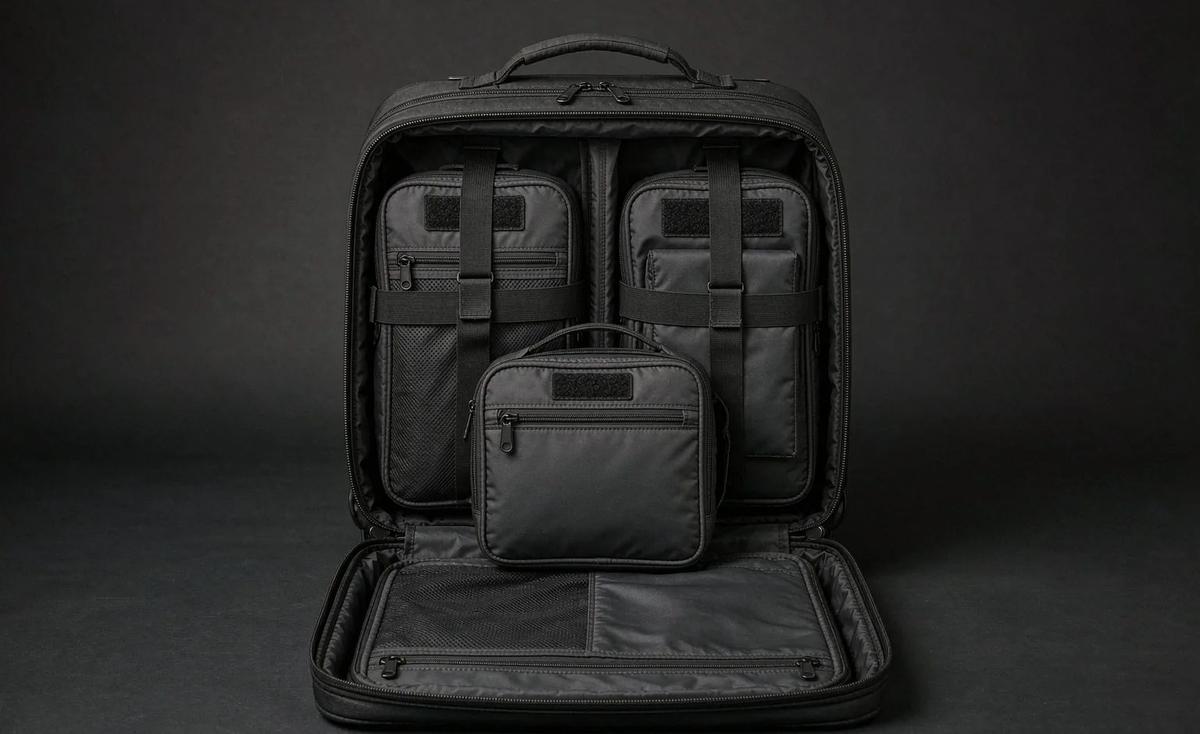
Sampling tests versus production tests
The two stages answer different questions and they need different protocols. At sampling, the question is whether the design can survive, and the useful output is a diagnosis: if a strap anchor fails at six thousand cycles, you want to know that, and you want to know whether it was the stitch, the webbing or the anchor geometry. Run the test to failure rather than to a target count, because the failure mode is the information.
At production, the question is different. The design has been validated; now the question is whether five hundred units were built to it. The useful output is a pass or fail against the validated criteria, which means run the test to the target count and stop. Running production units to destruction is wasteful and does not tell you anything useful about the other four hundred and ninety-five.
| Aspect | Sampling stage | Production stage |
|---|---|---|
| Question | Can the design survive? | Was the run built to the validated design? |
| Protocol | Run to failure | Run to target count and stop |
| Sample size | 1-2 units | 3-5 units drawn from the run |
| Useful output | Diagnosis of the failure mode | Pass or fail criteria |
| Timing | Before written sample approval | During or after AQL 2.5 inspection |
| Cost impact | Change is cheap; rework a pattern | Change is expensive; rework or reject a run |
The timing column is the one that determines the value of the whole exercise. A strap anchor that fails during sampling costs a pattern revision and a re-sample, which at 6-10 working days per round for a standard build is a manageable delay. The same anchor failing at pre-shipment inspection means either a rework decision that typically adds 10-15 days or a decision to ship and absorb the returns. That difference is the entire return on investment of specifying tests properly.
There is a third stage worth adding where a club or institutional buyer is involved, which is a retained reference test. Keep the approved pre-production sample and test it again alongside a unit drawn from the production run, using the same protocol. If the production unit performs materially worse than the reference, you have a consistency problem rather than a design problem, and that points at the line rather than at the pattern. Our sample prototyping route covers the retention record that makes this comparison possible.
What AQL 2.5 actually samples
AQL 2.5 to ISO 2859-1 is the inspection default on our programmes, and it is worth being precise about what it does and does not mean. AQL stands for acceptable quality limit. It is not a guarantee that 2.5 per cent of units are defective, and it is not a promise that the run is 97.5 per cent good. It is the defect rate at which a sampling plan will usually accept a lot, and the plan defines how many units are drawn and how many defects trigger a rejection.
| Lot size | Sample size | Accept | Reject |
|---|---|---|---|
| 151-280 | 32 | 2 | 3 |
| 281-500 | 50 | 3 | 4 |
| 501-1,200 | 80 | 5 | 6 |
| 1,201-3,200 | 125 | 7 | 8 |
| 3,201-10,000 | 200 | 10 | 11 |
| 10,001-35,000 | 315 | 14 | 15 |
On a 500 pcs run at general inspection level II the sample is 50 units, with acceptance at 3 defects and rejection at 4. That is the reality of a first campaign: fifty units drawn, three defects tolerated. It is a reasonable plan, but it is a sampling plan, and the important consequence is that the defect classes matter more than the sample size. Drawing eighty units and checking them for the wrong things produces a worse outcome than drawing fifty and checking them for the four things that actually fail.
The second consequence is about critical defects. In a well-constructed plan a critical defect is not counted against the accept number; a single critical finding can reject the lot outright. That is why the classification matters so much. If a strap attachment failure is classed as major rather than critical, three of them in a sample of fifty can ship. If it is classed as critical, one of them stops the shipment, which is the correct outcome for a defect that will injure someone or destroy the product in service.
Tightened and reduced inspection are the two switches worth knowing about. Under ISO 2859-1, a run of rejections can move a programme to tightened inspection, which draws more units for the same lot size, and a run of clean acceptances can move it to reduced inspection. For a single campaign neither matters much, but for a programme with a club re-order every season it is worth stating the switching rules in the purchase order so both sides know what happens after a rejection.
Defect classes for a team bag programme
The classes below are written for a shared-use team bag, which is the harshest environment in the sports category. Each critical item requires a functional check rather than a visual one, because the whole point is to catch what a photograph will not show. Adapt the list rather than copying it: a bag with a moulded base needs a base check, a bag with a wet compartment needs a seam check, and a bag with neither needs neither.
| Defect | Class | Check method |
|---|---|---|
| Strap attachment stitch failure | Critical | Load test plus visual check of bar-tack coverage |
| Grab handle root separation | Critical | Load test on both roots |
| Main zip separation under load | Critical | Run every zip end to end under light lateral load |
| Wet compartment seam leakage | Critical | Fill test on the compartment, inspect the seam |
| Base panel abrasion through to the lining | Critical | Visual inspection of the base on every unit drawn |
| Shade variation within a colourway | Major | Compare with the approved sample under standard light |
| Stitch density below the stated specification | Major | Count stitches per inch at a named seam |
Stitch density is the row that catches the most and is specified the least. A seam built at six stitches per inch instead of the specified nine looks identical in a photograph and carries meaningfully less load. State the density at the named load-bearing seams, not globally, and have the inspector count it at those specific seams on drawn units. It is a thirty-second check that catches the most common production shortcut there is.
- Name the standard, the inspection level and the defect classes in the purchase order before production starts.
- Require the inspection report to be issued before the 70% balance under T/T 30/70 is released.
- Agree in advance who pays for re-inspection; rework typically adds 10-15 days.
- Keep the approved pre-production sample as the physical reference for shade, dimension and construction checks.
- Request an in-line check during the sewing window, when a defect trend can still be corrected rather than sorted.
That last item deserves emphasis because it is the highest-value QC activity in the whole programme and the one most often omitted. Pre-shipment inspection happens after the run is packed, which means a defect trend can only be sorted, not corrected. An in-line check during the sewing window happens while there is still time to change a machine setting, reinforce a seam or re-cut a panel. On a 35-50 day production window, a check around day twelve to fifteen can save the entire run.
Materials that survive the cycle count
Construction is the usual suspect when a bag fails a cycle test, and material is the usual accomplice. The three material decisions that most affect cycle life on a team bag are the face fabric denier, the coating type, and the webbing grade. Each has a cost consequence and each has a point beyond which spending more produces nothing.
| Element | Lower specification | Higher specification | Effect on cycle life |
|---|---|---|---|
| Face fabric | 420D polyester | 600D or 900D polyester | Improved abrasion; limited effect on flex cycles |
| Coating | PVC coating | PU or TPU coating | PU resists cracking under fold-flex far better |
| Webbing | Standard polyester webbing | High-tenacity webbing by stated breaking strength | Direct effect on strap attachment life |
| Thread | Standard polyester thread | Bonded nylon or high-tenacity polyester | Direct effect on seam life under cyclic load |
| Base | Single-layer shell fabric | Reinforced panel or coated base material | Extends life at the highest-wear point |
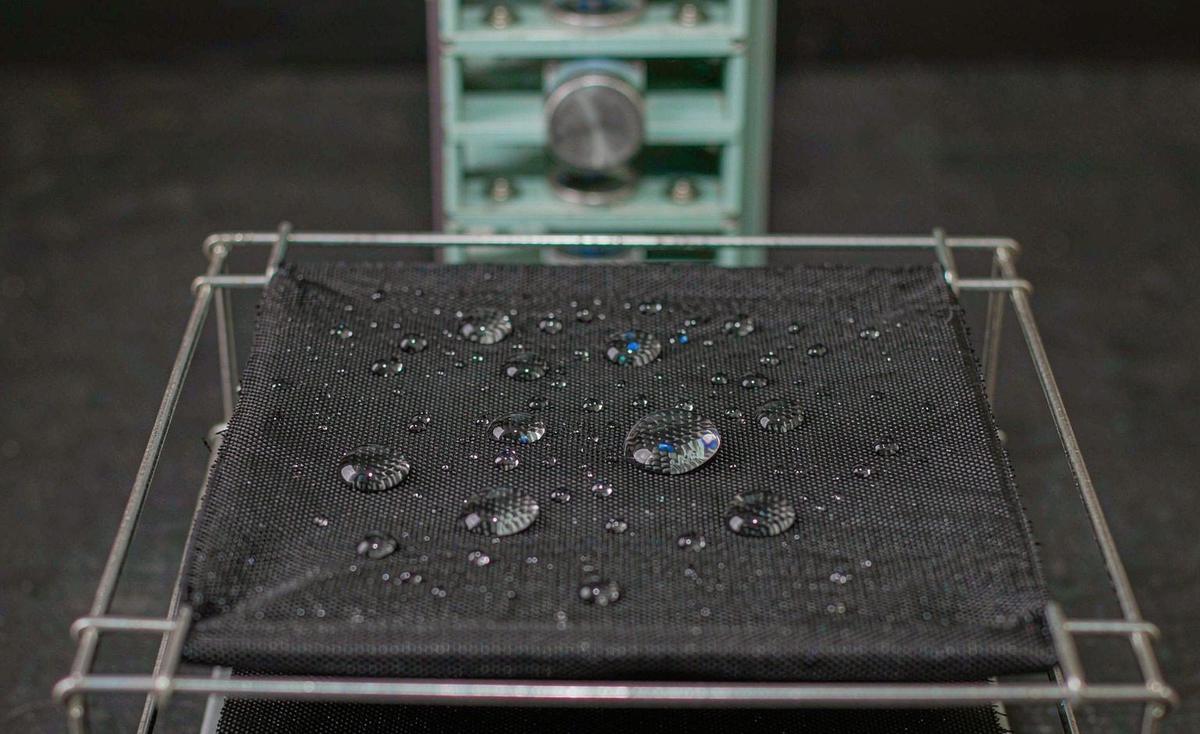
The coating row is the one most creators get wrong. PVC coating is cheap and waterproof and it cracks. Under a fold-flex test a PVC-coated fabric will typically show crazing well before a PU-coated equivalent, and in service that crazing becomes a leak path in a bag that is stored wet. Specifying PU or TPU costs more per metre and removes a failure mode that no amount of extra stitching will fix.
Webbing and thread are the two lines where spending more is almost always justified on a team bag, because both sit directly in the load path. Specify webbing by breaking strength rather than by width, and specify thread type at the load-bearing seams rather than leaving it to the workshop default. The incremental cost on a 500 pcs run is small relative to the unit price, and it moves the failure point from the stitch to the fabric, which is where you want it. The custom sports bags pillar covers how these choices interact with the unit cost target.
Hardware, zips and strap attachments under repeated load
Hardware is where a cycle test earns its keep, because hardware failure is binary. A coating crazes gradually and a fabric thins over months, but a zip either separates or it does not, and a buckle either fractures or it does not. That makes hardware the most testable element in the bag and, oddly, the one most often specified by description rather than by reference.
- Specify zips by reference, not by gauge description. A number 8 zip from one maker is not a number 8 zip from another.
- Test the zip under lateral load, not just unloaded. Zips fail when the bag is overpacked and the tape is pulled apart.
- Specify buckles by material and by a stated load rating, and confirm the rating applies at low temperature if the bag is used outdoors in winter.
- Require corrosion-resistant sliders and pulls; a wet compartment and a locker room will find a plated slider that was never rated for it.
- Confirm the strap adjuster holds under cyclic load; a slider that creeps back under load generates daily complaints rather than returns.
The strap adjuster is worth isolating, because it is the single most complained-about component on a shared bag and the least often tested. A cam or ladderlock adjuster that creeps under cyclic load means a user re-tightening the strap every ten minutes, and it reads as cheapness even though the strap itself is fine. A simple cyclic load test with a measurement of strap length before and after catches it in the workshop rather than in the reviews.
Attachments deserve the same specificity. State the reinforcement method at each load point: bar-tack, box stitch, or a reinforced panel behind the anchor. State the coverage in millimetres, because a bar-tack of 8 mm and one of 20 mm are both bar-tacks and they behave very differently under load. Then have the inspector measure coverage on drawn units. This is the single most effective defect class in the plan, because it is visible, measurable and directly correlated with the failure mode the cycle test was designed to catch.
Documenting results for institutional buyers
If your campaign reaches clubs, schools or corporate teams, the test data stops being internal quality control and becomes a procurement asset. A club secretary comparing two suppliers will take the one that can produce a dated test report with a stated protocol over the one that says the bags are strong. That is a genuine competitive advantage and it costs almost nothing to assemble if it was collected properly in the first place.
| Document | What it should state | Who uses it |
|---|---|---|
| Test protocol | Load, frequency, component, target count, failure criteria | The buyer's technical reviewer |
| Test report | Date, units tested, results, pass or fail per unit | Procurement |
| Inspection report | AQL standard, level, sample size, defects found by class | Procurement |
| Material declarations | Fabric, coating, webbing and thread references | Compliance |
| Compliance certificates | REACH for the EU, CPSIA and Prop 65 where applicable | Compliance |
| Approved sample record | Sample identification and pack revision reference | Re-order reference |
Two compliance points sit alongside this and they are frequently discovered too late. Bags sold into the European Union need REACH substance compliance and EU GPSR safety and traceability obligations. Bags marketed to younger players in the United States trigger CPSIA component requirements, and California Prop 65 warnings apply where a listed substance is present. State the destination market and any youth positioning in the request for quotation so the testing is quoted and booked during sampling rather than after production, when it adds days to a calendar that has no slack.
Sustainability claims belong in the same discipline. A recycled-content claim is defensible with GRS certification for the specific material, and a textile-safety claim with OEKO-TEX Standard 100. Institutional buyers increasingly ask for the certificate reference during procurement rather than after it, and a claim that cannot be substantiated on request is worse than no claim at all. For a programme that expects a club re-order every season, that documentation is the difference between a repeat customer and a lost account.
Folding QC into the campaign timeline
QC takes calendar time and it sits at the end of the programme, which is exactly where there is least slack. The fix is to schedule it explicitly rather than to treat it as something that happens alongside production. Build four QC gates into the plan and give each one a date, because a gate without a date is a gate that gets skipped when the run is three days behind.
- Gate one, during sampling: run the cycle tests to failure on the sampling unit and record the failure mode. Costs 2-3 working days.
- Gate two, at pre-production approval: confirm the revised construction against the approved protocol and retain the reference unit. Costs 2-3 working days.
- Gate three, in-line around day 12-15 of production: check stitch density, reinforcement coverage and hardware on units from the line. Costs 1-2 working days.
- Gate four, pre-shipment: full AQL 2.5 inspection including the functional checks, with the report issued before the 70% balance is released. Costs 2-4 working days.
Total QC allowance is roughly seven to twelve working days across the programme, of which the pre-shipment inspection is the longest single block. The point of scheduling gates one and two is that they make gate four predictable: a run that has been tested twice before production starts rarely surprises at pre-shipment. The point of gate three is that it is the only one where a problem can still be fixed rather than sorted.
And budget for failure. A rejection at gate four triggers rework or re-inspection, and the realistic allowance is 10-15 days. Agree in the purchase order who pays for the re-inspection and who pays for the delay, because that clause is the one that determines how a disagreement gets resolved when a shipment is late and a backer update is due. Programmes that write it in advance resolve these in a day; programmes that do not lose a fortnight. Where a campaign wants to see how QC fits the wider path from sketch to re-order, the crowdfunding bag guide sets out the full sequence, and the golf bag sourcing decision analysis shows how structural formats change the QC plan.
- Kickstarter campaign bag QA and QC
- Custom sports bags for Kickstarter campaigns
- Crowdfunding bag sample prototyping
- Kickstarter Golf Bags: Source or Skip
- Custom E-Sports Bag Campaigns
- Crowdfunding rewards fulfilment
- Request a quotation
Write a cycle test that actually protects your backers
Send us the bag type, the realistic load, the components you want cycled and your target quantity. As your production partner we will return a test protocol with load and failure criteria, a unit cost, and a booked 35-50 day production window with QC gates dated. Write to service@junyuanbags.com.
Frequently Asked Questions
What does 20,000 flex cycles actually mean for a bag?
On its own, nothing. It becomes a specification only when you state the load, the cycle rate, the component under test and the failure criteria. A strap cycled at 3 kg will pass 20,000 cycles; the same strap at 12 kg, closer to a realistic team kit load, may fail at 4,000. Always write the load into the protocol. Write the failure criteria as observable measurements rather than as a general statement about serviceability.
What load should a team bag strap attachment be tested at?
A realistic starting range for a shared team kit bag is 8-15 kg distributed in the main compartment, cycled at 15-30 cycles per minute. State the load in the protocol, because without it the test can be run at whatever load produces the desired result. Confirm the figure against what a loaded kit actually weighs. Confirm the figure against what a loaded kit actually weighs rather than against a convenient round number.
How many units should be cycle tested from a production run?
Three to five units drawn from the run. One unit is an anecdote rather than a result. If one of five fails you have learned something about consistency that a single-unit pass would have hidden, which is the same logic that sits behind statistical sampling in pre-shipment inspection. A result from a single unit tells you about one unit and nothing about the consistency of the run.
What is the difference between a sampling test and a production test?
At sampling you run to failure, because the failure mode is the information and changing the design is still cheap. At production you run to the validated target count and stop, because the question is only whether the run was built to the approved construction rather than how far it can be pushed. Running production units to destruction is wasteful and says nothing useful about the rest of the lot.
How many units are inspected on a 500 pcs run at AQL 2.5?
Fifty units at general inspection level II under ISO 2859-1, with the lot accepted at 3 defects and rejected at 4. Lot sizes of 501 to 1,200 draw 80 units with acceptance at 5. A single critical defect can reject the shipment outright regardless of the count. Classify load-path failures as critical so that one finding stops the shipment rather than counting towards acceptance.
What counts as a critical defect on a team bag?
Anything that will fail in service or cause injury: strap attachment stitch failure, grab handle root separation, main zip separation under load, wet compartment seam leakage and base panel abrasion through to the lining. Classify them as critical so that one finding stops the shipment rather than counting against the accept number. Adapt the list to the bag: a moulded base needs a base check and a wet compartment needs a seam check.
Why should stitch density be specified and checked?
Because a seam built at six stitches per inch instead of nine looks identical in a photograph and carries meaningfully less load. State the density at named load-bearing seams and have the inspector count it on drawn units. It is the highest-yield check available in a plan, because it catches the most common production shortcut. It is a thirty-second check that catches the most common production shortcut in the whole category.
Which coating should I specify for a bag that gets stored wet?
PU or TPU rather than PVC. PVC is cheap and waterproof but it crazes under fold-flex, and in a bag stored wet that crazing becomes a leak path. Specifying PU costs more per metre and removes a failure mode that no amount of extra stitching will fix. Specify PU or TPU by type and by weight, and require a fold-flex check on whichever coating you choose.
When is the best time for an in-line production check?
Around day 12 to 15 of a 35-50 day window. It is the only gate where a defect trend can still be corrected rather than sorted, because a machine setting can be changed and a panel re-cut while the run is still on the line. Pre-shipment inspection happens too late for that. Pre-shipment inspection happens after packing, when a defect trend can only be sorted rather than corrected.
How much time should I allow for QC in the production schedule?
Roughly seven to twelve working days across four gates: 2-3 days at sampling, 2-3 at pre-production approval, 1-2 for an in-line check and 2-4 for pre-shipment inspection. Budget a further 10-15 days in case a rejection triggers rework, and agree in advance who pays for the re-inspection. Programmes that write the clause in advance resolve a rejection in a day rather than losing a fortnight.
What documentation do club buyers ask for?
A dated test protocol and report, an AQL inspection report, material declarations for fabric, coating, webbing and thread, and compliance certificates: REACH and EU GPSR for the EU, CPSIA and California Prop 65 where youth marketing applies in the US. Assemble it during sampling rather than after production. Assemble the set during sampling, when it costs nothing in calendar time.
How do I make a cycle test enforceable in a purchase order?
Write it as a numbered protocol with component, load, cycle definition, target count, inspection intervals and failure criteria, stated as observable measurements. Then add two clauses: tests run on three units drawn from the run, and a stated consequence if a unit fails, including who pays and how many days the remedy adds. Without a consequence clause the test is advisory, and advisory tests are dropped when the schedule tightens.
People Also Ask
What is a flex test on a bag?
It cycles a component or assembly through a defined range of movement under a stated load until it fails or reaches a target count. The point is to find the failure mode during sampling, when changing the construction is still cheap.
Is 20,000 cycles a lot for a bag strap?
It sounds like a lot but it is a comparison baseline rather than a service life. A bag carried four times a week sees roughly 400 load cycles a year, so the number only means something alongside a stated load and failure criteria.
What is AQL 2.5 on a 500 pcs order?
Fifty units drawn under ISO 2859-1 general inspection level II, with the lot accepted at 3 defects and rejected at 4. A single critical defect can reject the shipment regardless of the count.
Why do team bags fail faster than personal bags?
They are shared, packed in a hurry by whoever is nearest, dragged rather than carried, and left wet in a locker. Dynamic loading, moisture exposure and load concentration all go up, and nobody in the chain has a stake in the bag's condition.
What fails first on a kit bag?
The grab handle roots, followed by the shoulder strap attachment and the main zip. All three are load-path components, all three are cheap to reinforce at pattern stage, and all three are measurable at inspection.
Should I test to failure or to a target count?
Test to failure during sampling, because the failure mode is the information you need. Test to the target count at production, because there the question is only whether the run was built to the approved construction.
How long does rework add to a bag order?
Typically 10-15 days, plus re-inspection. Agree in the purchase order who pays for the re-inspection and the delay, because that clause decides how a disagreement resolves when a shipment is late.