Kickstarter Golf Bags for Campaigns: When to Source vs When to Skip
Source a golf bag for a Kickstarter campaign only if three conditions hold at once: you can commit to 500 pcs per style and per colourway, your calendar allows 12-15 working days of sampling plus 35-50 days of bulk production, and your landed freight model absorbs an oversized carton. If your campaign is projected to fund below 400 units, or your launch date sits inside 120 days, skip the golf bag and build the reward ladder around a duffel or a backpack instead. This guide sets out the decision tree, the cost stack and the timeline arithmetic behind that recommendation.
- What counts as a golf bag in a reward ladder
- The five formats and what each one commits you to
- The decision tree: five questions before you commit
- When sourcing a golf bag is the right call
- When you should skip the golf bag entirely
- MOQ, colourways and the 500-piece floor
- Timeline math against your campaign calendar
- The cost stack behind a golf bag reward tier
- QC points unique to golf bags
- Freight, dimensional weight and the oversize penalty
- Packaging and fulfilment for an oversized reward
- A 90-day plan if you decide to source
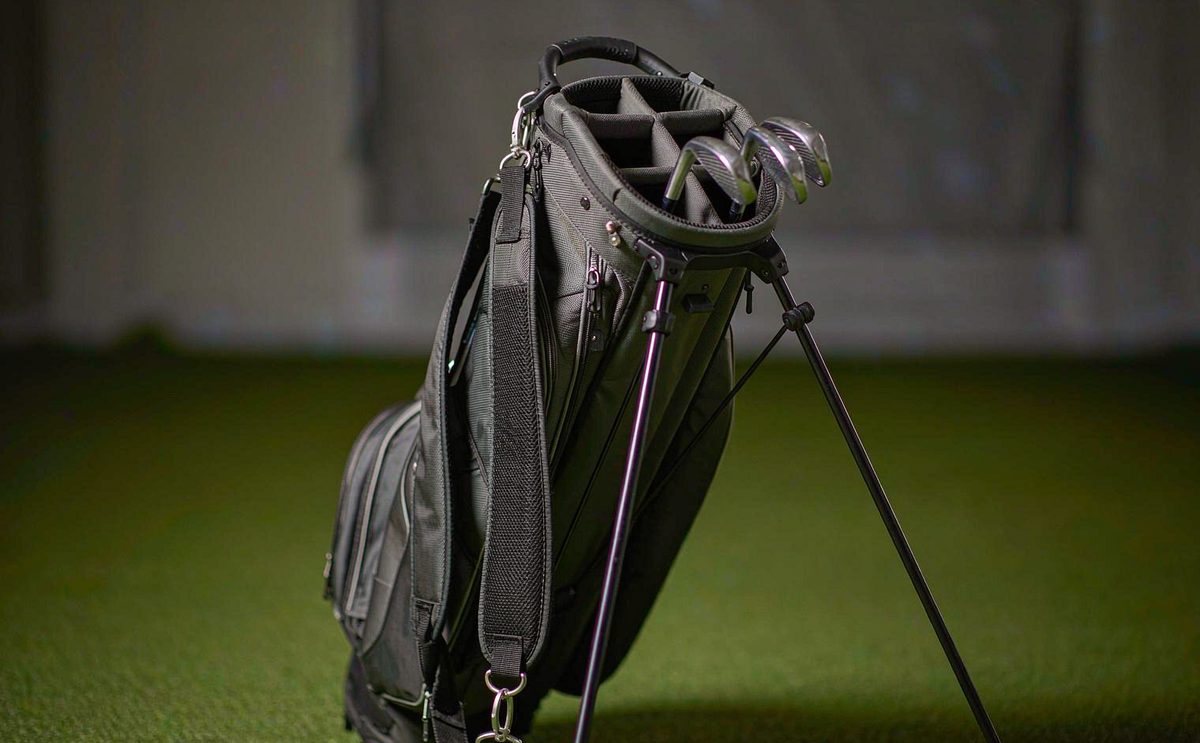
Golf is one of the few sports where the audience already understands what the equipment should cost. That is a genuine advantage for a crowdfunding reward, because you are not educating backers about price; you are positioning against a retail anchor they carry in their heads. It is also a trap, because the product they are comparing you against is engineered to a standard that a first-time creator usually underestimates. A golf bag is not a tall backpack.
- Minimum order quantity
- 500 pcs per style / colourway
- Sampling
- 6-10 working days (12-15 for structured builds)
- Bulk production
- 35-50 days after deposit + approved pre-production sample
- Inspection
- AQL 2.5 to ISO 2859-1
- Trade term
- FOB Xiamen
- Payment
- T/T 30/70
- Production floor
- 4,950 m2 SGS-verified, 137 staff, 7 lines, 149 machines
- Monthly capacity
- 200,000 pcs per month
- Programme contact
- service@junyuanbags.com
What counts as a golf bag in a reward ladder
In crowdfunding terms a golf bag is any carry product whose primary job is transporting a set of clubs. That definition matters because it separates the category from two adjacent products creators often confuse it with. The first is a golf-themed backpack, which is a general carry product with golf branding. The second is a golf travel cover, which is a padded protective shell that goes on an aircraft rather than on a course. All three can live in a reward ladder, but only the middle one carries the engineering load.
The engineering load comes from four subsystems that a normal bag does not have. There is a top collar with a club divider system, typically 4-way or 14-way. There is a structural element, either an aluminium or composite stand mechanism on a carry bag or a moulded base on a cart bag. There is a dual strap system designed to distribute 10-14 kg across both shoulders. And there is a lower shell that has to resist abrasion from being set down on gravel, concrete and cart floors hundreds of times per season.
Each subsystem adds a tooling or fixture requirement, assembly minutes and a distinct failure mode. That is why our production team treats a golf bag as a hard-good programme rather than a soft-good one, and why the sampling window for a structured build runs 12-15 working days rather than the standard 6-10. Creators arriving from a custom sports bag programme background are usually surprised by that difference, because a duffel of the same external volume samples in the shorter window.
The practical consequence for your campaign page is that you cannot iterate a golf bag the way you iterate a pouch. Pocket layout can change cheaply between rounds. Stand geometry, divider moulding and base tooling cannot. Once those are set, a change is a re-tool and a re-sample, which means weeks rather than days. Budget your revision rounds accordingly and put the structural decisions first.
The five formats and what each one commits you to
Format choice is the single biggest determinant of your unit cost, your sampling window and your freight bill. It is also the decision most creators make last, usually by picking a photograph they like. Work the other way round: choose the format from the reward price you need to defend, then design within it. The table below sets out the five routes we see on campaign briefs and what each one commits you to in practice.
| Format | Structure | Sampling window | Suits |
|---|---|---|---|
| Sunday or pencil bag | Minimal frame, soft body, single strap | 6-10 working days | Entry tier, add-ons, stretch goals |
| Golf backpack hybrid | Dual strap, soft structure, no stand | 6-10 working days | Sim-golf and urban golf audience |
| Stand or carry bag | Aluminium or composite stand, 4-way top | 12-15 working days | Walking golfers, mid tier |
| Cart bag | Moulded base, 14-way divider, strap pass-through | 12-15 working days | Riders, premium tier above USD 220 |
| Travel cover | Padded shell, internal stabiliser, no frame | 12-15 working days | High tier above USD 300 |
Two patterns are worth naming. First, the Sunday bag and the golf backpack are the only formats that sample in the standard 6-10 working day window, because neither carries a frame or a moulded base. If your calendar is tight, these are the only golf-adjacent rewards that fit. Second, the travel cover looks like the easy option because it is soft, but it is large: the dimensional weight on a travel cover carton frequently exceeds the actual weight by a factor of three or more, which we return to in the freight section.
The hybrid deserves a note of its own. It has grown with the simulator and urban golf audience, and it suits a crowdfunding campaign better than a traditional bag in one specific respect: it is usable off the course. A bag that gets carried to work is a bag that gets seen, and a bag that gets seen is marketing. If your audience is younger or city-based, the hybrid may well outperform a stand bag on both reward appeal and post-campaign re-order. The custom bags for Kickstarter overview sets out how niche formats like this enter a sourcing brief.
The decision tree: five questions before you commit
Before any specification work starts, run five questions in order. They are arranged so that a single no in the first three ends the project, which is the point: the cheapest moment to abandon a golf bag reward is before you have written a technical pack. Roughly a third of the golf enquiries we receive stop at question two or three, and those conversations are genuinely useful, because a creator who skips a golf bag and launches a duffel six weeks earlier is in a better position than one who spends four months on a programme that cannot be funded.
- Can you commit to 500 pcs per style and per colourway? If your realistic backer count is 400 or below, the answer is no and the programme stops here.
- Is your launch date at least 120 days away? Sampling at 12-15 working days plus production 35-50 days plus transit does not compress below roughly 100 days from a signed pack.
- Does your landed freight model survive an oversized carton? A golf bag ships at its dimensional weight, not its actual weight, and the difference can add USD 12-25 per unit to a US or EU delivery.
- Do you have one structural decision owner? Golf bag programmes slip when the stand, the divider and the branding are decided by three people in three rounds.
- Is there a re-order story? Golf audiences buy again, usually for a playing partner. If the answer is no, you are buying a single 500 pcs run with no second act.
Question three is the one that most often gets skipped, and it is the one that most often turns a profitable campaign into a marginal one. Reward pricing on crowdfunding is usually built backwards from a perceived retail value, and freight is treated as a fulfilment problem to be solved later. On an oversized product that assumption fails. Model the landed cost before you publish the tier, not after, and use the crowdfunding rewards fulfilment route to understand what a fulfilment partner will charge for an item that does not fit a standard carton.
A structured golf bag cannot go from a signed technical pack to a backer doorstep in under about 100 days, and 120 is the honest planning figure once sample revisions and transit are included. If your launch date is closer than that, choose a Sunday bag or a hybrid that samples in 6-10 working days.
When sourcing a golf bag is the right call
There are four situations where the golf bag is not just viable but the strongest reward you could choose. The first is an audience with an existing golf identity: a simulator brand, a golf media channel, a course, an instructor with a following, or a golf-adjacent app with an engaged community. In these cases the bag is not merchandise, it is membership, and backers will pay a premium that a general audience would reject.
The second is a campaign where the reward ladder needs a high anchor. A ladder with tiers at USD 45, USD 89 and USD 149 has a clear ceiling. Adding a golf bag at USD 279 moves the average pledge value in a way that add-ons rarely do, because it gives a segment of your audience something they actually wanted at that level rather than a bundle of things they did not. The bag does not need to sell in volume to justify itself; it needs to lift the average.
The third is a corporate or institutional angle. Golf bags are bought by companies for client gifts, tournament prizes and membership packages, and those orders are larger and more predictable than individual pledges. If your campaign can reach even two or three corporate buyers, the volume maths changes completely, because a single tournament order can absorb 200-300 units of a 500 pcs run. Build the tier explicitly for it, with a stated logo dimension and a stated quantity break.
The fourth is a campaign with a credible re-order path. Golf is a gift category: bags get bought for playing partners, for fathers, for retiring colleagues. That produces a repeat purchase pattern roughly six to twelve months after the first delivery, which is exactly the window in which a re-order at the same tooling makes commercial sense. If you can see that second act, the 500 pcs minimum becomes an investment in a programme rather than a bet on one drop.
Signals that say source the golf bag
- The audience already identifies as golfers, or the brand already sells into golf.
- The reward ladder needs a high anchor tier to lift average pledge value.
- Corporate, tournament or membership buyers are reachable, absorbing 200-300 units at a time.
- A gift-driven re-order is credible within six to twelve months of first delivery.
- The calendar allows 120 days from a signed technical pack to first delivery.
When you should skip the golf bag entirely
Now the harder half of the brief. Skip the golf bag if your projected backer count sits below 400. The arithmetic is blunt: the minimum is 500 pcs per style and per colourway, and unsold inventory on a USD 60 unit is USD 30,000 of working capital sitting in a warehouse. Some creators plan to sell the remainder through a webshop after the campaign. That works occasionally and fails often, because the campaign audience has already bought and the webshop has no traffic.
Skip it if your launch date is inside 120 days. We have taken briefs where a creator wanted a stand bag delivered eight weeks after a campaign that had not yet opened. The honest answer is that the programme cannot be delivered in that window without either skipping sample revisions, which is how structural defects reach backers, or shipping air freight, which on an oversized carton can exceed the unit cost of the bag itself.
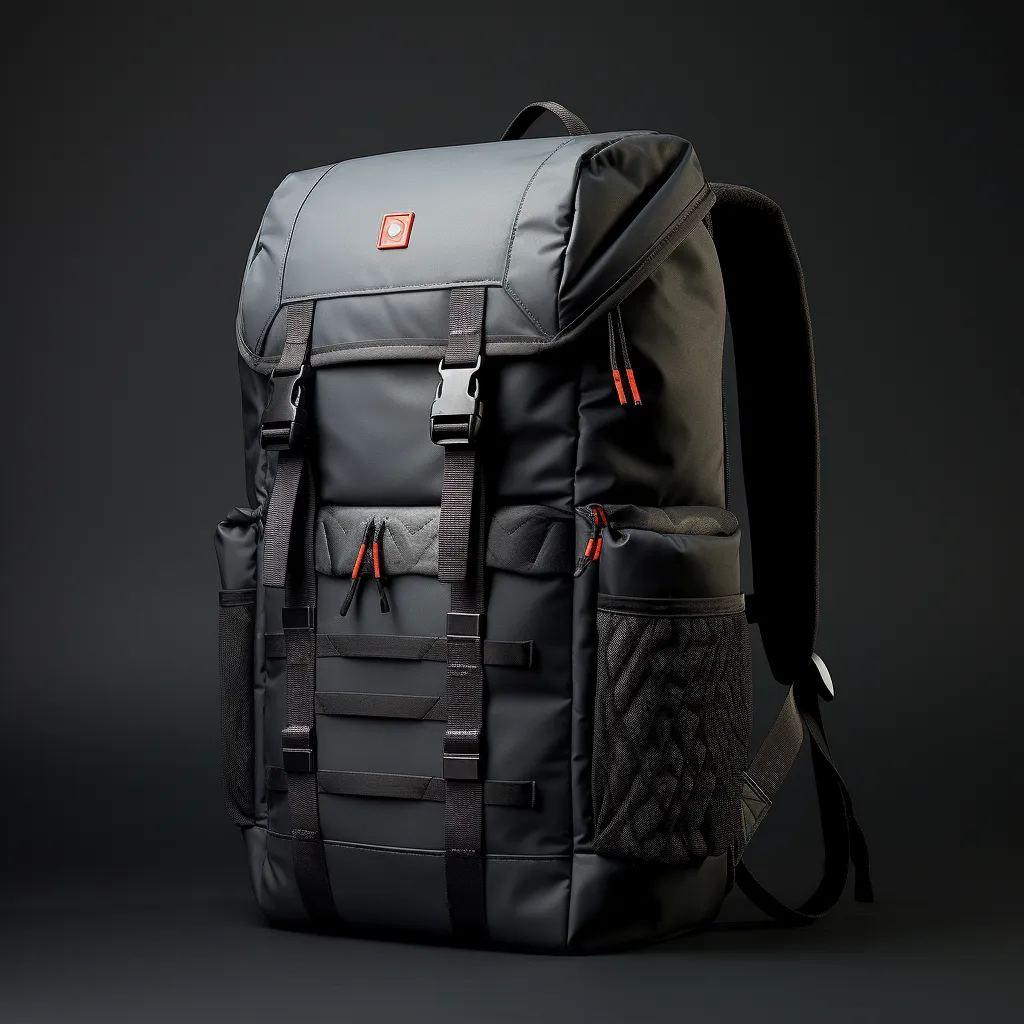
Skip it if golf is decoration rather than identity. A golf bag offered by a brand with no golf connection reads as generic merchandise, and backers who are not golfers will not pay a premium for a product they cannot use. In that situation a duffel or a backpack at a lower price point will convert better and will carry a higher margin, because it has a broader use case and a smaller carton.
Skip it, finally, if the product is a solo reward with no second act and no corporate angle. A one-off 500 pcs run of a large, slow-moving, high-unit-cost item is a difficult inventory position for a first-time creator. The better structure in that case is to prove the audience with a smaller item, gather real pledge and re-order data, and approach the golf bag as the second programme. Our low minimum bag production route explains what can be produced at the entry point while that data is being collected.
MOQ, colourways and the 500-piece floor
The minimum is 500 pcs per style and per colourway, and on a golf bag the colourway question is sharper than on most products because golfers have strong preferences. Black, navy and grey are safe. Anything more expressive splits demand across variants, and each split carries its own 500 pcs commitment. Two colourways on a golf bag is a 1,000 pcs commitment at a unit cost that is typically two or three times a duffel, which puts the working capital requirement in the region most first campaigns cannot support.
| Structure | Total commitment | Suits | Risk |
|---|---|---|---|
| Single hero colourway | 500 pcs | First golf programme, unproven demand | Lowest capital; leaves variant demand untested |
| Two colourways | 1,000 pcs | Strong pre-launch signal | Moderate; inventory concentration |
| Three colourways | 1,500 pcs | Established brand, corporate buyers | High; rarely justified on a first run |
| Hero plus corporate variant | 500 + 200 | Tournament or client-gift channel | Depends on a confirmed buyer, not a hoped-for one |
| Colourway split within one run | 500 pcs total | Testing two shades | Feasibility depends on shared materials |
The corporate variant row is the interesting one, because it is where a golf programme can de-risk itself. If a tournament or client-gift buyer has confirmed 200 units in writing, a second colourway stops being a speculation and becomes a sold order. That is the only circumstance in which we would encourage a first-time golf creator to run two colourways, and even then the confirmation has to exist before the technical pack is signed rather than being a verbal intention.
There is also a decoration point that interacts with colourways. Embroidery is the default for golf because it reads as premium and survives outdoor use, but each logo carries a set-up cost and a digitising charge, and those charges do not amortise well across small split runs. If you plan more than one logo, more than one colourway, or both, say so in the request for quotation so the set-up is quoted once against the total rather than discovered per variant.
Timeline math against your campaign calendar
The timeline for a structured golf bag programme runs in four blocks, and they do not overlap as much as creators hope. The first is specification and technical pack, which is yours to control and typically takes two to four weeks if you have dimensions and the second block if you do not. The second is sampling at 12-15 working days per round for a structured build. The third is production 35-50 days. The fourth is transit and fulfilment, which depends entirely on your destination and service level.
| Block | Duration | Starts when | Can it compress |
|---|---|---|---|
| Technical pack and quotation | 2-4 weeks | Dimensions and materials decided | Partly; depends on decision speed |
| Sampling round one | 12-15 working days | Signed pack and sampling fee | No |
| Revision and round two | 12-15 working days | Numbered revision list returned | Only if round one is accepted |
| Bulk production | 35-50 days | 30% deposit + written sample approval | No; volume-dependent |
| Inspection to AQL 2.5 | 2-4 days | Production complete, cartons packed | No |
| Ocean transit to US or EU | 25-40 days | 70% balance released, vessel loaded | Only by paying for air |
Add those blocks honestly and you land at roughly 110 to 140 days from a signed pack to a backer doorstep on ocean freight. Two of them are commonly misread. Bulk production starts only when the 30% deposit under T/T 30/70 has landed and the pre-production sample has been approved in writing; neither condition alone starts the clock. And inspection is not a formality that runs in parallel with packing; it needs the run packed and available for drawing, which is why it sits after production rather than inside it.
The consequence for campaign planning is straightforward and worth stating plainly: finish sampling before the campaign page goes live, not after it closes. Two rounds at 12-15 working days each fit comfortably into a pre-launch calendar, and doing them there removes four to six weeks from the post-campaign path. It also lets your reward photography show a real unit rather than a render, which matters more on a golf bag than on almost any other reward, because backers are judging structure they cannot see in a drawing. Our sample prototyping route sets out the measurement record to capture at that gate.
The cost stack behind a golf bag reward tier
Reward pricing on a golf bag fails in a predictable way: the creator anchors on a retail comparison, subtracts a margin, and discovers during bulk that the landed cost is fifteen to twenty-five per cent higher than the model. The gap is almost always in three lines that a first budget understates. Those lines are structural hardware, labour minutes on the divider and strap assembly, and freight. Fabric, which is what creators spend the most time choosing, is usually the smallest of the four.
| Cost line | Indicative share of unit cost | What moves it |
|---|---|---|
| Face fabric, lining and reinforcement | 16-24% | Denier, coating, abrasion panels, waterproof rating |
| Structural hardware and frame | 18-28% | Stand mechanism grade, moulded base, divider system |
| Cutting and sewing labour | 26-36% | Divider way count, strap assembly, pocket count |
| Decoration | 6-12% | Embroidery stitch count, logo placements, set-up amortisation |
| Packing and cartons | 5-9% | Pieces per carton, carton strength, polybag, inserts |
| Overhead, QC and margin | 8-16% | Inspection level, defect allowance, functional testing |
Two levers do most of the work when a quote comes in above target. The first is divider count: moving from a 14-way top to a 4-way top removes separator rods, reduces assembly minutes and typically takes eight to twelve per cent out of the unit cost with little perceived loss outside the cart-bag segment. The second is pocket count. Each external pocket is a panel, a zip, a lining and labour minutes, and a bag with nine pockets can cost fifteen per cent more than the same bag with six.
The lever that does not work is downgrading the frame. A stand mechanism that fails in month two generates returns, negative reviews and a support burden that costs more than the saving, and it does so after the campaign money has been spent. Where cost has to come out, take it from decoration complexity, pocket count and internal lining grade, and hold the structural components at specification. That is the same trade-off logic we apply on custom team bag QC programmes, where the load-bearing elements are never the place to save.
QC points unique to golf bags
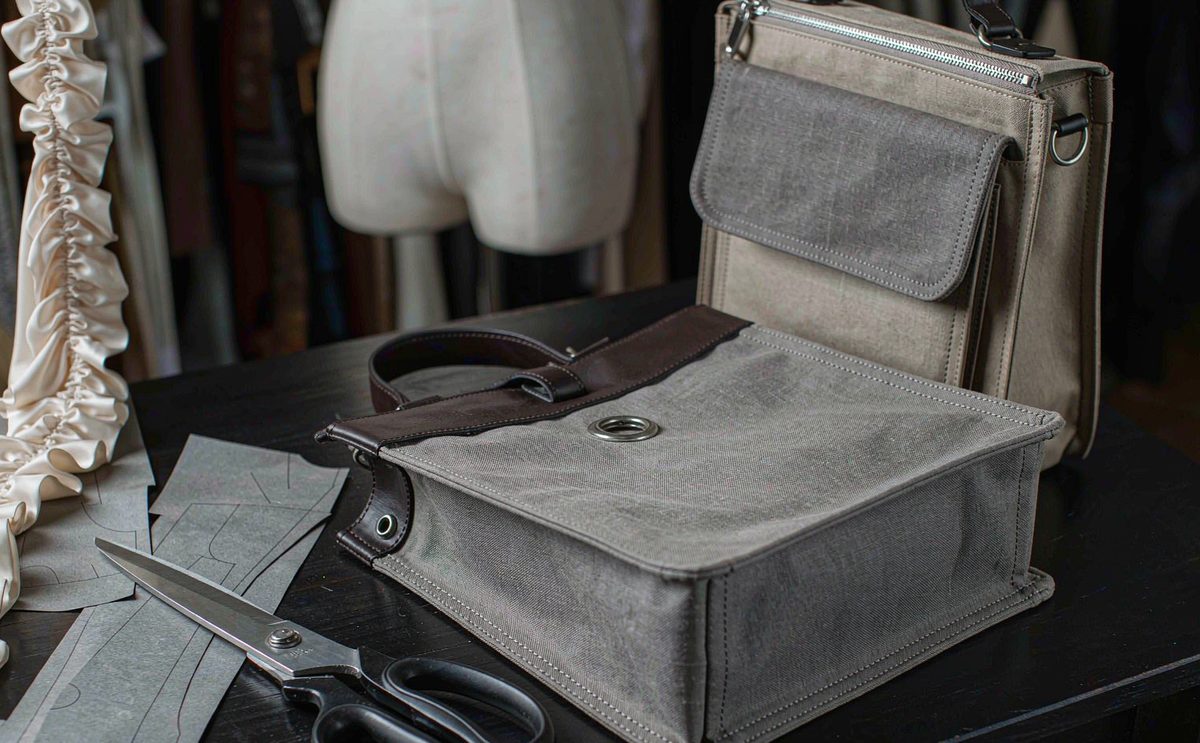
Pre-shipment inspection to AQL 2.5 under ISO 2859-1 draws a statistically determined number of units and measures them against defect classes you define. Its value is entirely a function of how well those classes describe this product. A generic apparel checklist will pass a golf bag whose stand collapses on the fourteenth cycle, because a generic checklist does not cycle stands. The classes below are the ones we write into golf programmes, and each one requires a functional check rather than a visual one.
| Defect | Class | Check method |
|---|---|---|
| Stand mechanism fails to deploy or retract | Critical | Cycle the stand 20 times on every unit drawn |
| Divider rod separation or sharp edge | Critical | Manual inspection of every divider channel |
| Strap attachment pull-out | Critical | Load test plus visual check of bar-tack or box stitch |
| Base deformation under loaded stand test | Critical | Load bag to stated club weight, stand, measure base |
| Zip separation on apparel pocket | Major | Run every zip end to end under light load |
| Shade variation within a colourway | Major | Compare with approved sample under standard light |
| Embroidery misregistration or puckering | Major | Measure against the stated coordinate |
The stand cycle test is the one that matters most and the one most often omitted. A mechanism that deploys cleanly by hand on a packing table can bind under load once clubs are in the bag, and the failure appears in month two rather than on day one. Twenty cycles per drawn unit takes under two minutes and costs nothing beyond the inspector's time, which is why it belongs in the plan rather than in an ad-hoc check. The same reasoning applies to the divider: rods that separate from the collar are uncomfortable at best and damaging to graphite shafts at worst.
- Name the standard, the inspection level and the defect classes in the purchase order before production starts.
- Require the inspection report to be issued to you before the 70% balance under T/T 30/70 is released.
- Agree in advance who pays for re-inspection; rework typically adds 10-15 days to the schedule.
- Keep the approved pre-production sample as the physical reference for shade and measurement checks.
- Request an in-line check during the sewing window, when a defect trend can still be corrected rather than sorted.
One structural note on testing. Where a campaign brief mentions a flex or cycle test, define what it means before quoting rather than after: how many cycles, under what load, on which component, and what counts as a failure. A cycle count without a load figure is not a test, it is a gesture. Written into the technical pack it becomes something an inspector can execute and a buyer can verify. Our Kickstarter campaign bag QA and QC pillar covers how to write these requirements so they are enforceable.
Freight, dimensional weight and the oversize penalty
A golf bag is the clearest example in the bag category of a product that ships at its dimensional weight rather than its actual weight. A stand bag might weigh 3.2 kg and occupy a carton of 95 x 35 x 28 cm. At the standard air divisor of 6,000 that carton bills at roughly 15.5 kg, near five times its actual weight. On ocean freight the same carton is billed on volume in cubic metres, where an oversized shape means fewer units per container and a higher effective cost per unit.
| Format | Carton volume | Ocean cost per unit | Air cost per unit |
|---|---|---|---|
| Sunday or pencil bag | Low | USD 4-8 | USD 14-22 |
| Golf backpack hybrid | Low | USD 4-8 | USD 14-22 |
| Stand or carry bag | Medium-high | USD 9-16 | USD 38-60 |
| Cart bag | High | USD 13-22 | USD 55-85 |
| Travel cover | Highest | USD 16-26 | USD 70-110 |
These are planning ranges rather than quotes, and they move with fuel, season and carrier. Their purpose is to make one point: the difference between the cheapest and most expensive format on this table is roughly USD 12-18 per unit on ocean and USD 30-55 per unit on air. On a reward priced at USD 199 with a target margin, that difference is the entire margin. Model it before you fix the tier price, and model it again if you decide to ship a portion by air to hit a delivery promise.
- Ask your fulfilment partner for a dimensional-weight quote on the actual carton, not an estimate on the product weight.
- Reduce carton height where possible; a flatter pack with the strap detached can cut volume by 10-15 per cent.
- Compare one carton per bag against two bags per carton; the second is usually cheaper per unit but needs a stronger carton.
- Ship ocean as the default and reserve air for a defined contingency, not as a plan.
- State the delivery promise in the reward description in weeks, not in a calendar date.
That last point is a campaign-page decision rather than a logistics one, but it has a direct cost consequence. A reward description promising delivery in October is a commitment you have to meet with air freight if anything slips. A description promising delivery within a stated number of weeks of the campaign closing gives you the room to ship ocean, hold the margin, and still communicate honestly. The crowdfunding rewards fulfilment route covers how the two models compare on total landed cost.
Packaging and fulfilment for an oversized reward
Golf bag packaging has three jobs that a normal reward carton does not. It has to protect a rigid structure from crushing in a stacked container. It has to protect the stand mechanism, which is the most damage-prone component and the one most likely to arrive bent. And it has to be openable by a backer without a knife, because a backer who damages the product while unpacking it will report it as a defect rather than as an unpacking accident.
- Specify carton burst strength or edge-crush rating in the packing specification rather than accepting a standard carton.
- Protect the stand mechanism with a formed or folded insert; a bent stand is the most common transit damage claim in this category.
- Bag the unit in a polybag to protect light-colourways from scuffing against the carton wall during transit.
- Use a pull-tab or tear-strip opening so no blade is needed to reach the product.
- Print the carton with the campaign name and the reward tier so a warehouse can pick without opening.
There is a warehouse economics point here too. An oversized reward is charged by a fulfilment partner on either weight or volume, and most charge on whichever is greater, so a golf bag is billed near its dimensional figure. Some partners apply an oversize surcharge above a stated longest edge, commonly in the region of 90-120 cm depending on the network. Ask specifically whether your carton crosses that threshold, because crossing it can add a flat per-unit fee that was never in the campaign budget.
The mitigations are unglamorous and effective. Ship the strap detached and coiled if the design allows it. Pack two units per carton where the carton strength supports it, which halves the per-unit volumetric figure. And confirm the fulfilment partner's receiving requirements before production, because a carton that does not match their labelling or stacking rules generates a repacking charge at the destination warehouse that is far more expensive than getting it right at origin.
A 90-day plan if you decide to source
If the decision tree says go, the sequence below is the one that keeps a golf programme on schedule. The underlying principle is that decisions move earlier than feels natural. On a 6-10 working days of sampling product you can decide as you go. On a 12-15 working day structured build with a 35-50 day bulk window, every decision deferred is a decision taken under time pressure, and time pressure is where structural shortcuts come from.
- Days 1-14: fix the format, the reward price and the landed freight model. Confirm the 500 pcs commitment per colourway is fundable.
- Days 15-28: build the technical pack with dimensions, materials, frame references, divider specification and branding coordinate.
- Days 29-43: sampling round one at 12-15 working days. Measure the unit loaded, not empty.
- Days 44-58: return a single numbered revision list tied to pack clauses; run sampling round two.
- Days 59-70: approve the pre-production sample in writing and reserve the production slot before the campaign closes.
- Days 71-90: open the campaign with the approved unit photographed, then release the 30% deposit at close.
The loaded measurement in step three is the one creators skip and the one that prevents the most expensive class of defect. A sample measured empty passes. A sample measured with a full set of clubs in the divider, a water bottle in the pocket and the strap under tension sometimes does not, because the load changes how the collar sits and how the stand deploys. Twenty minutes with a real set of clubs tells you more than any photograph, and it is the last cheap moment to change the geometry.
After close, the remaining path is mechanical: 35-50 days of bulk from deposit and written approval, inspection at AQL 2.5, release of the 70% balance, loading at FOB Xiamen, then transit and fulfilment. Where a campaign wants to understand what separated the golf and sports programmes that reached this stage cleanly from the ones that struggled, the sports bag success data analysis breaks down the patterns across funded campaigns in this category.
- Custom sports bags for Kickstarter campaigns
- Custom bags for Kickstarter: programme overview
- Low MOQ bag production for creators
- Crowdfunding bag sample prototyping
- Kickstarter campaign bag QA and QC
- Crowdfunding rewards fulfilment
- Sports bag success data across funded campaigns
- Request a quotation
Get a golf bag programme assessed before you commit
Send us the format, the target reward price, the quantity per colourway and your launch date. As your production partner we will tell you whether the programme clears the 500 pcs and 120-day tests, and return a unit cost with a booked 35-50 day window. Write to service@junyuanbags.com.
Frequently Asked Questions
What is the MOQ for custom golf bags on a Kickstarter campaign?
The minimum is 500 pcs per style and per colourway. Two colourways means two separate 500 pcs commitments unless a split within one production run is agreed at quotation stage. On a golf bag, where the unit cost typically runs two to three times that of a duffel, most first programmes open with a single hero colourway and add a second only against confirmed corporate volume.
How long does a custom golf bag programme take from brief to delivery?
Plan 110 to 140 days from a signed technical pack to a backer doorstep on ocean freight. That breaks into 2-4 weeks of specification, two sampling rounds at 12-15 working days each for a structured build, 35-50 days of production 35-50 days of inspection and 25-40 days of transit. Do not plan a golf bag launch inside 120 days of the pack being signed.
How much does a custom golf bag cost per unit at 500 pcs?
A structured stand bag at 500 pcs typically lands in the USD 55-95 range FOB Xiamen, depending on divider count, frame grade and decoration. Structural hardware and labour are the two largest lines, together usually accounting for 45-65 per cent of unit cost. Fabric is typically the smallest line, which surprises most creators working on their first structured programme.
Which golf bag format should a first campaign choose?
A Sunday bag or a golf backpack hybrid, because both sample in the standard 6-10 working day window and both ship in a smaller carton. Choose a stand bag only if the reward price supports the structural hardware and the calendar allows 12-15 working days of sampling plus 35-50 days of bulk production. The hybrid also works off the course, which suits a younger audience.
Why does a golf bag take longer to sample than a backpack?
Because it carries structure. The stand mechanism, the moulded base and the club divider system each require a fixture or a tooling trial before a sample can be assembled, which is why structured builds run 12-15 working days rather than the standard 6-10. Soft formats without a frame or a moulded base sample in the shorter window, which is one reason the Sunday bag suits a tight calendar.
How much does freight add to a golf bag reward?
Plan USD 9-16 per unit ocean and USD 38-60 per unit air for a stand bag, with cart bags and travel covers higher. A golf bag bills at dimensional weight rather than actual weight, so a 3.2 kg bag in a 95 cm carton can bill near 15.5 kg. Model the landed cost before you fix the tier price, not after the campaign has closed.
What is the most common defect on a golf bag production run?
Stand mechanism failure, followed by divider rod separation and strap attachment pull-out. All three are critical in service and all three are cheap to prevent: cycle the stand 20 times on every unit drawn, inspect every divider channel manually, and load-test strap attachments at sampling and again at pre-shipment inspection. Stand failure usually presents as binding under load rather than as an outright break.
Should I finish golf bag sampling before the campaign page goes live?
Yes. Two rounds at 12-15 working days each fit comfortably into a pre-launch calendar, remove four to six weeks from the post-campaign path, and let your reward photography show a real unit rather than a render. On a structural product that difference matters more than on any other reward type, because backers are judging a frame geometry they cannot see in a drawing.
Can I offer a corporate or tournament quantity tier on a golf bag?
Yes, and it is the strongest de-risking move available in this category. Golf bags are bought for client gifts, tournament prizes and membership packages, and a single confirmed tournament order can absorb 200-300 units of a 500 pcs run. Get the quantity in writing before the technical pack is signed, and note that corporate buyers tend to re-order annually.
How many colourways should a first golf bag run include?
One. Each colourway carries its own 500 pcs minimum, and at a golf bag unit cost two colourways is a 1,000 pcs commitment in the region of USD 55,000-95,000. The exception is a corporate variant where a buyer has confirmed 200 units in writing, which turns a speculation into a sold order. Ask at quotation stage whether two shades can share one production run.
What inspection standard applies to a golf bag programme?
AQL 2.5 to ISO 2859-1 at general inspection level II, single sampling plan, is the default. Define critical, major and minor classes in the purchase order before production, including a 20-cycle stand test, a divider channel inspection and a strap attachment load test on every unit drawn. Classify stand and strap failures as critical so one finding can stop the shipment.
How do I take cost out of a golf bag quote that is above target?
Reduce divider count from 14-way to 4-way, which typically saves 8-12 per cent, and reduce pocket count, which can save up to 15 per cent. Take cost from decoration complexity and internal lining grade as well. Do not downgrade the frame or the strap hardware, because those failures appear after the campaign money has been spent and cost more in returns than the saving returned.
People Also Ask
Is a golf bag a good Kickstarter reward?
It is, but only for a golf-identified audience with a high anchor tier. Golfers understand the retail price anchor, so the reward reads as credible. The constraints are a 500 pcs per colourway minimum and a 120-day runway from signed technical pack to delivery.
What is the minimum order for custom golf bags?
500 pcs per style and per colourway. At a typical stand bag unit cost that is a substantial working capital commitment, so most first programmes run one colourway and add variants only on a confirmed re-order.
How long do custom golf bags take to produce?
Sampling runs 12-15 working days per round for a structured build and production 35-50 days after deposit and written sample approval. Add ocean transit of 25-40 days and you should plan roughly 110-140 days from a signed pack.
Why are golf bags expensive to ship?
They bill at dimensional weight rather than actual weight. A bag weighing 3.2 kg in a 95 cm carton can bill near 15.5 kg on air freight, which is why ocean is the default and air is reserved for a defined contingency.
What fails first on a custom golf bag?
The stand mechanism, usually by binding under load rather than by breaking. Cycle the stand 20 times on every unit drawn at inspection, and load-test it with clubs in the bag rather than testing it empty.
Should a first campaign use a stand bag or a Sunday bag?
A Sunday bag or a golf backpack hybrid. Neither carries a frame or a moulded base, so both sample in 6-10 working days and both ship in a materially smaller carton, which reduces the freight penalty.
Can golf bags be sold to corporate buyers?
Yes, and it is the most reliable de-risking route in the category. Tournament prizes, client gifts and membership packages buy in quantities of 200-300 units, which can absorb most of a 500 pcs minimum run.