Custom Gift Bags for Kickstarter: Premium Unboxing on a Budget
How do you make a custom gift bag feel premium without breaking the reward budget? Choose a simple format, spend on one tactile detail such as a rope handle or a foil hit, and keep decoration to one method. Sampling runs 6-10 working days and production 35-50 days at a 500 pcs minimum per style and colourway. This article sets out the formats, materials and cost drivers.
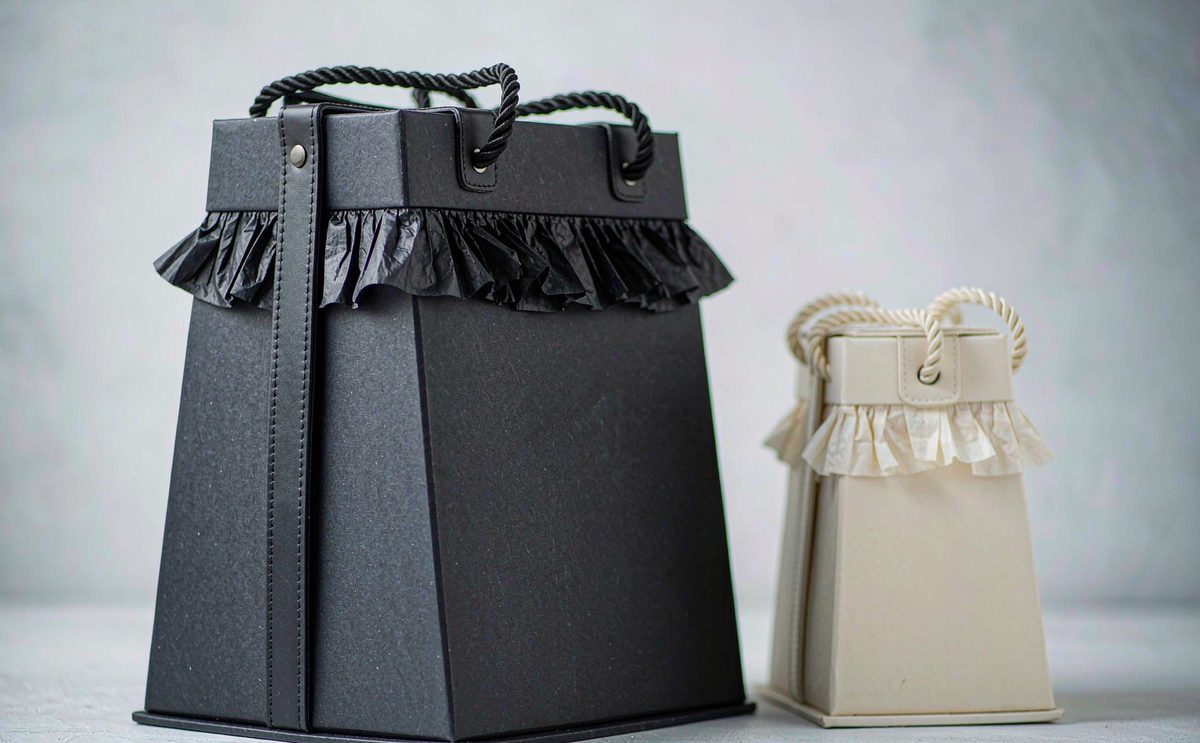
- What a gift bag reward has to achieve
- Choosing the format: flat bag, drawstring, mini tote or box style
- Materials and finishes that read premium on a budget
- The three decoration choices that matter
- Handles, closures and the details backers touch
- Packaging and the unboxing sequence
- Cost model: where to spend and where to save
- Size and volumetric weight for gift bags
- Quality control checks specific to gift bags
- Gift bags as tiers, add-ons and stretch goals
- Compliance and labelling for gift bags
- Gift bag checklist for the RFQ
What a gift bag reward has to achieve
A gift bag on a crowdfunding campaign is doing a specific job that a normal reward bag is not. It is not the hero product; it is the vessel that makes the hero product feel considered. That changes the specification priorities. Structural durability matters less than it would on a commuter backpack, while surface quality, handle feel and print crispness matter considerably more, because the bag is judged in the first ten seconds of an unboxing and rarely judged again.
It also changes the economics. A gift bag sits at a low unit cost and a low price point, which means every added operation is a large percentage of the cost. A $0.40 detail that would be invisible on a $60 backpack is 8% of a $5 gift bag. The discipline is to identify the one or two details that carry the perception and to strip everything else out. The custom bag categories page shows where gift formats sit alongside the larger reward categories.
- Minimum order quantity
- 500 pcs per style / colourway
- Sampling
- 6-10 working days (12-15 for complex builds)
- Bulk production
- 35-50 days after deposit + approved pre-production sample
- Inspection
- AQL 2.5 to ISO 2859-1
- Trade term
- FOB Xiamen
- Payment
- T/T 30/70
- Production floor
- 4,950 m² SGS-verified, 137 staff, 7 lines, 149 machines
- Monthly capacity
- 200,000 pcs per month
- Programme contact
- service@junyuanbags.com
Key takeaways on custom gift bags
- Gift bags are judged in ten seconds: prioritise surface, handle feel and print crispness over structure.
- Spend on one tactile detail, usually the handle or a foil hit, and strip the rest.
- Keep decoration to one method; a second method is a large percentage of a low unit cost.
- Lightweight materials matter, because freight and per-backer shipping dominate at low price points.
- A single card insert and one hang tag deliver most of the perceived unboxing value.
- Order at 500 pcs per style and colourway and reuse the artwork on re-orders.
Choosing the format: flat bag, drawstring, mini tote or box style
Four formats cover nearly every gift bag use case, and they differ mainly in how much structure they have and how they ship. A flat gift bag with a paper or card base is the cheapest and ships flattest. A drawstring bag in fabric is soft, reusable and folds to almost nothing. A mini tote reads as a product in its own right and gets used again, which extends brand exposure. A box-style bag with a reinforced base stands upright and photographs best but costs more and ships at higher volume.
| Format | Unit cost index | Freight profile | Best use |
|---|---|---|---|
| Flat gift bag | 1.0 (baseline) | Excellent; ships flat | Event gifting, high-volume tiers |
| Drawstring bag | 1.1-1.5 | Excellent; folds flat | Reusable gift, festival or launch kits |
| Mini tote | 1.6-2.4 | Good; folds flat | Premium add-on, retail presentation |
| Box-style bag | 2.2-3.4 | Poor; ships upright | Luxury tier, product launch kit |
| Pouch with zip | 1.4-2.0 | Excellent | Cosmetic or tech accessory gift |
For most campaigns the drawstring and the mini tote are the two best options. The drawstring is the cheapest reusable format and folds to nothing, which keeps international shipping viable. The mini tote costs more per unit but gets kept and reused, which means the brand leaves the house. A flat paper-based gift bag is the right answer only when volume is very high and reuse is not part of the story.
Materials and finishes that read premium on a budget
Material choice on a gift bag is about perceived quality per dollar. Heavier is not automatically better; what reads as premium is usually a combination of consistent surface, a considered handle and a crisp logo. A mid-weight cotton or a well-coated recycled polyester can both look expensive when the finish is right, and both can look cheap when the handle is a narrow webbing tape and the print is misaligned.
| Material | Perception | Cost index | Notes |
|---|---|---|---|
| 8-10 oz cotton canvas | Natural, craft, honest | 1.4 | Prints beautifully; heavier to ship |
| Recycled rPET, 210-420D | Technical, sustainable | 1.0 | Lightest option; document recycled claims |
| Non-woven polypropylene | Promotional, disposable | 0.5 | Cheapest; avoid if the story is premium |
| Coated paper or kraft laminate | Retail gift, crisp | 1.2 | Ships flat; limited durability |
| Satin or polyester sheen | Luxury, event | 1.8 | Best for box-style and launch kits |
| Recycled cotton blend | Sustainable craft | 1.6 | Good story; check certification |
- Match the material to the story rather than to the price: a disposable-looking bag undermines a premium reward.
- Choose the lightest material that carries the perception, because freight dominates at low price points.
- Check the surface is smooth enough for the chosen print; textured weaves break up fine detail.
- Consider a coating for water resistance if the bag may carry food, cosmetics or chilled items.
- Ask for swatches in the actual shade before committing, since perception is visual.
- Avoid non-woven materials where the campaign positions the reward as reusable or premium.
The three decoration choices that matter
On a gift bag, three decoration decisions carry almost all of the perceived value: the method, the placement and the finish. Everything else is refinement. Get these three right on a modest material and the bag reads expensive; get them wrong on a costly material and it reads cheap. This is the single highest-return area of the specification.
| Method | Look | Cost index | Best on |
|---|---|---|---|
| Screen print, one colour | Clean and matte | 1.0 | Canvas and rPET |
| Foil or metallic hot stamp | Reflective, luxury | 2.2-3.0 | Coated paper, satin, coated fabric |
| Heat transfer | Detailed, multi-colour | 1.4-2.0 | Smooth synthetics |
| Embroidery | Textural, crafted | 2.0-3.2 | Canvas and heavier fabrics |
| Woven label | Retail, authentic | 1.2-1.8 | Any fabric bag |
| Deboss or emboss | Subtle, tactile | 2.4-3.6 | Coated and synthetic surfaces |
- Choose one method; on a low unit cost, a second method is a large percentage increase.
- A single foil hit on a plain bag often outperforms a full-colour print on the same bag.
- Placement matters more than size: a centred mark 40 mm above the base reads deliberate.
- Give placement as a measurement from a named seam, with a tolerance, so it can be inspected.
- Ask for a printed strike-off on the actual material before approving the pre-production sample.
- Check the minimum detail size for the method: foil and deboss lose fine lines below about 1 mm.
On a gift bag, restraint reads as expense. A single metallic foil mark on a well-chosen stock looks more premium than a four-colour print on the same bag, and it usually costs less. Spend the budget on the finish rather than on the colour count.
Handles, closures and the details backers touch
If there is one place to spend money on a gift bag, it is the handle. It is the part a backer grips, it is visible in every photograph, and a cheap handle undermines an otherwise good bag faster than any other element. A rope, ribbon or flat cotton tape handle in a considered colour costs cents more than a narrow webbing tape and changes the entire perception of the object.
| Option | Perception | Cost index | Watch out for |
|---|---|---|---|
| Cotton rope handle | Premium, tactile | 1.8 | Needs a reinforced attachment |
| Ribbon or grosgrain | Retail, gift | 1.5 | Check abrasion on the fold |
| Flat cotton tape | Natural, craft | 1.3 | Width below 15 mm reads cheap |
| Webbing tape | Utility, technical | 1.0 | Cheapest look; avoid on premium |
| Die-cut hand hole | Minimal, modern | 0.8 | Needs reinforcement or it tears |
| Drawstring cord | Soft, reusable | 1.1 | Cord quality drives perception |
- Bar-tack or reinforce every handle attachment; a pulled handle is the most common gift bag failure.
- Match the handle colour to the shell or make the contrast deliberate rather than accidental.
- On drawstrings, specify the cord material and the toggle; a poor toggle ruins a good bag.
- Keep the handle width proportional: a narrow tape on a large bag looks under-specified.
- Test the handle loaded with the intended contents, not empty.
- Consider a reinforced base, since gift bags are often set down while loaded.
Packaging and the unboxing sequence
The unboxing is a sequence, not an object, and the bag is only one step in it. Order matters: the outer carton, the bag, the tissue or filler, the insert card, and finally the product. Each step is an opportunity to spend a few cents on perceived value, and each step also adds packing labour that is multiplied by unit count. The goal is the fewest steps that still produce a deliberate feel.
| Element | Added cost index | Perceived value | Verdict |
|---|---|---|---|
| Single card insert | 1.0 | High | Always include |
| Hang tag with string | 1.0 | High | Always include |
| Tissue wrap | 1.5 | Medium-high | Include on premium tiers |
| Sticker or seal | 0.6 | Medium | Cheap and effective |
| Printed belly band | 1.6 | Medium | Only if the bag is boxed |
| Custom printed mailer | 2.4 | Medium | Only at higher volumes |
| Rigid gift box | 4.0-6.0 | High | Luxury tiers only |
- Start with a card insert and a hang tag; they deliver most of the perceived value at minimal cost.
- Add tissue only where the price point supports it, since it adds material and packing seconds.
- Keep the number of packing steps low: each second is multiplied by units and by destination count.
- Make the insert useful, not decorative: care instructions or a story card gets kept.
- Confirm the outer carton protects the bag, since a creased gift bag destroys the unboxing.
- Test pack a full carton before bulk so the sequence is proven rather than assumed.
Where the reward ships internationally, remember that the outer carton travels much further than the unboxing moment lasts. A gift bag that arrives creased has already failed, regardless of what is inside it. That is a packing specification question, and it belongs in the RFQ alongside the bag specification. The rewards fulfilment page covers packing and dispatch in more depth.
Cost model: where to spend and where to save
Because the unit cost is low, percentage thinking is more useful than absolute thinking. A $0.30 upgrade on a $4.50 bag is under 7%, and if it is the handle it may be the difference between a reward that delights and one that disappoints. The table below maps the common upgrade decisions to their cost and to their effect on perception, which is the ratio that should drive the choice.
| Upgrade | Added cost per unit | Perception gain | Verdict |
|---|---|---|---|
| Rope handle instead of webbing | $0.25-0.45 | High | Spend |
| Foil instead of a standard print | $0.20-0.40 | High | Spend |
| Heavier material grade | $0.35-0.70 | Medium | Spend if it ships affordably |
| Second print colour | $0.15-0.30 | Low-medium | Save |
| Woven label | $0.15-0.45 | Medium-high | Spend |
| Tissue and sticker set | $0.30-0.60 | Medium | Premium tiers only |
| Rigid box | $1.50-3.00 | High | Luxury tiers only |
| Custom printed mailer | $0.60-1.20 | Low-medium | Save at low volume |
The pattern is that tactile and finish upgrades outperform quantity upgrades. A second print colour adds cost without changing how the bag feels, while a rope handle changes how it feels every time it is picked up. Where the budget is tight, cut colour count and packaging complexity first and protect the handle and the primary finish.
Size and volumetric weight for gift bags
Size matters on a gift bag for two reasons that pull in opposite directions. The bag has to be large enough to hold the reward comfortably, because a bag that fits tightly looks mean and risks tearing. It also has to be compact enough to ship economically, because freight is charged on volume or mass whichever is greater, and at a low unit price the shipping line is a large share of the total delivered cost.
| Size band | Dimensions | Ships | Typical contents |
|---|---|---|---|
| Small | 20 × 14 × 6 cm | Flat | Cosmetics, small tech, jewellery |
| Medium | 28 × 22 × 10 cm | Flat, nested | Apparel item, book, boxed product |
| Large | 38 × 30 × 12 cm | Flat, folded | Apparel bundle, multiple items |
| Bottle | 38 × 12 × 12 cm | Flat | Beverage, cosmetics bottle |
| Box style | 30 × 24 × 12 cm | Upright | Launch kit, premium presentation |
- Design the bag to the largest item it must hold, plus 10-15 mm of clearance in each dimension.
- Prefer formats that ship flat; an upright box-style bag multiplies carton volume.
- Ask for pieces per carton and carton dimensions at quotation stage.
- Model the per-backer shipping charge on volumetric weight, not actual weight.
- Consider whether the bag can be folded in the outer carton without creasing the print.
- Check that the bag stands acceptably when filled; a collapsing gift bag looks under-specified.
Quality control checks specific to gift bags
Gift bags fail in ways that larger bags do not, mainly because they are judged on surface rather than on structure. Print alignment, handle symmetry, adhesive residue and creasing are the defects that matter, and they are cheap to prevent if they are named as defect classes before inspection. Under AQL 2.5 to ISO 2859-1 these are measurable; without a definition they are arguments.
- Print alignment: define the permitted deviation from the stated placement coordinate, typically ±2 mm.
- Handle symmetry: both handles the same length and attached at the same measured points.
- Adhesive and residue: no visible glue at seams, hems or label edges on inspected units.
- Creasing and packing: units flat-packed or nested as specified, with no permanent crease through the print.
- Colour consistency: shade within one Pantone step of the approved strike-off.
- Insert and tag completeness: one insert and one tag per bag, correctly oriented, in every sampled carton.
- Stitching: no skipped stitches or loose threads at handle attachments and hems.
Because gift bag defects tend to be systematic rather than random — one mis-set jig produces fifty identical crooked prints — an in-line check during production catches them far cheaper than a single pre-shipment gate. Our QA and QC page sets out the defect classes and sampling plan used on campaign runs.
Take-up on a gift bag add-on is usually higher inside the pledge manager than on the campaign page, because backers decide on extras once the main pledge is made. Offer it there, price it during the original RFQ, and the add-on becomes margin rather than a new development.
Gift bags as tiers, add-ons and stretch goals
A gift bag is rarely the hero, which is precisely what makes it useful. It is the cheapest way to raise the perceived value of a tier without changing the product inside it, and it is the safest stretch goal available because it reuses materials and artwork from the main reward. Used well, it converts a flat tier structure into one with a visible upgrade path at minimal development cost.
| Placement | What it does | Development cost |
|---|---|---|
| Included at a mid tier | Raises perceived value of an existing tier | Low; one new SKU |
| Add-on in the pledge manager | Increases average pledge value | Low; reuses artwork |
| Stretch goal unlock | Creates a campaign news moment | Low if priced in the original RFQ |
| Premium tier upgrade | Justifies a higher pledge | Medium; better materials |
| Retail presentation | Makes the product shelf-ready | Medium; packaging spec |
| Event or launch kit | Supports press and influencer seeding | Low; small quantity |
- Price the gift bag during the original RFQ so a stretch unlock is a confirmation rather than a negotiation.
- Reuse the artwork and colourway from the main reward so perception is consistent.
- Remember the 500 pcs minimum applies to the gift bag as its own style and colourway.
- Offer the bag as an add-on in the pledge manager, where take-up is usually higher than on the campaign page.
- Keep the gift bag format simple so it samples inside the standard 6-10 working days.
Compliance and labelling for gift bags
A gift bag is still a textile article in most markets, and that means labelling obligations apply even when the bag is only a vessel. Fibre content, country of origin and care instructions are the usual requirements, and if the bag is intended for children or will carry food or cosmetics, further rules may apply. Setting this text into the label artwork before bulk is far cheaper than adding it afterwards.
- Include fibre content and country of origin in the label artwork before production starts.
- Add care symbols appropriate to the material; they differ between cotton, polyester and coated paper.
- Check whether the bag is classed as a children's product in your destination market, which triggers CPSIA.
- For cosmetics or food contents, confirm any specific contact-material requirements.
- Request REACH and Prop 65 declarations where the destination requires them, covering inks as well as fabric.
- Keep the compliance file with the tech pack, because it is needed per shipment.
Gift bag checklist for the RFQ
Send this list with the tech pack and artwork and the gift bag will be quoted accurately in one exchange. If a line is unknown, flag it rather than leaving it blank, because a flagged unknown prompts a question before cutting while a blank invites an assumption you may not want.
- Format named: flat bag, drawstring, mini tote, pouch or box style.
- Material named with grade: ounces for canvas, denier for rPET, or the coated paper specification.
- Dimensions stated in centimetres with tolerances, plus the largest item the bag must hold.
- Handle specified: type, width, material, colour, attachment and reinforcement method.
- Decoration method named, with artwork attached, Pantone or foil reference given and placement measured from a seam.
- Packaging specified: insert card, hang tag, tissue, sticker, and whether units are flat-packed or nested.
- Quantity per style and colourway, remembering the 500 pcs minimum per style and colourway.
- Destination market named so compliance documentation can be requested.
- Defect classes defined for print alignment, handle symmetry, adhesive and creasing.
- Re-order price requested, so an add-on restock is a confirmation rather than a negotiation.
When the list is complete, request a quotation with your tech pack and artwork attached. As your production partner we will confirm which materials are stock, quote the handle and finish options side by side, and return a unit cost, a sampling estimate and a production window. The print and embroidery page covers decoration choices in more depth, and the low minimum production page explains how the 500 pcs minimum applies to a gift bag SKU.
- Custom bag categories
- Print and embroidery for custom bags
- Crowdfunding rewards fulfilment
- Kickstarter campaign bag QA and QC
- Low minimum bag production for creators
- Custom cosmetic bags for Kickstarter
- Request a quotation
Make the unboxing work on a reward budget
Send your gift bag format, dimensions, handle preference and artwork. As your production partner we will quote material and finish options side by side and return a unit cost, a sampling estimate and a production window you can publish. Write to service@junyuanbags.com or use the quotation form.
Frequently Asked Questions
What is the cheapest way to make a gift bag look premium?
Spend on one tactile detail rather than on several small ones. A rope or grosgrain handle at $0.25-0.45 per unit and a single foil or metallic hit at $0.20-0.40 change the perception more than a second print colour or extra packaging does.
What material is best for a custom gift bag?
Eight to ten ounce cotton canvas reads natural and craft and prints beautifully, while 210-420D recycled rPET is lighter, cheaper to ship and carries a documented recycled claim. Avoid non-woven polypropylene if the reward is positioned as premium or reusable.
How much does a custom gift bag cost per unit?
At the 500 pcs minimum, a simple drawstring or flat gift bag typically lands in the low single digits in USD, with a mini tote or box style costing 1.6 to 3.4 times that. Handle type, decoration finish and material grade are the three largest cost drivers.
What is the minimum order for custom gift bags?
500 pcs per style and per colourway, the same as any other bag programme. A gift bag offered in three colours is three separate commitments unless a single run with an agreed colour split is negotiated at RFQ stage.
How long does it take to produce custom gift bags?
Sampling takes 6-10 working days per round for a standard build and production 35-50 days after the deposit and the approved pre-production sample. Stock materials and catalogue handles keep the standard window; custom handles or dyed fabric add days.
Should a gift bag use foil or screen printing?
Foil reads more premium and suits coated paper, satin and coated fabrics, costing roughly 2.2 to 3.0 times a single-colour screen print. Screen printing is cheaper and better on canvas and uncoated rPET. Choose foil when the perception is worth the premium.
How do I stop gift bags arriving creased?
Specify the packing method in the tech pack: flat-packed, nested or folded, with the carton dimensions and pieces per carton stated. Test pack a full carton before bulk, because a crease through the print destroys the unboxing regardless of the bag quality.
What handle is best for a premium gift bag?
A cotton rope or grosgrain ribbon handle, roughly $0.25-0.45 per unit more than webbing tape. It is the part a backer grips and it appears in every photograph, so it carries more perception per dollar than any other element on the bag.
Do gift bags need compliance labelling?
Usually yes. Fibre content, country of origin and care instructions apply to textile articles in most markets, and children's products trigger CPSIA in the US. Set the text into the label artwork before bulk, since adding it later means a second pass on finished goods.
Can a gift bag be a stretch goal?
Yes, and it is one of the safest stretch goals available because it reuses materials and artwork from the main reward. Price it during the original RFQ so unlocking it is a confirmation rather than a fresh negotiation, and remember it carries its own 500 pcs minimum.
What size gift bag should I choose?
Design to the largest item it must hold plus 10-15 mm of clearance in each dimension, then choose the smallest band that fits. Common bands are 20 × 14 × 6 cm, 28 × 22 × 10 cm and 38 × 30 × 12 cm, all of which ship flat.
How do I check gift bag quality before shipping?
Define defect classes for print alignment at ±2 mm, handle symmetry, adhesive residue, creasing and shade consistency, then inspect at AQL 2.5 to ISO 2859-1. Because gift bag defects are usually systematic, add an in-line check during production.
People Also Ask
Is a gift bag worth adding to a reward tier?
Usually yes. It is the cheapest way to raise perceived value without changing the product, typically costing a small fraction of the tier price while materially improving the unboxing and the review photographs.
Should gift bags be reusable?
Yes, where the unit cost allows. A reusable drawstring or mini tote keeps the brand in circulation, while a disposable format is remembered as packaging. Reuse is also the better sustainability story.
How many print colours should a gift bag use?
One, ideally, plus a foil or metallic finish if the budget allows. On a low unit cost a second colour is a meaningful percentage increase for a small perception gain, while restraint tends to read as expense.
Can I use the same artwork as my main reward bag?
Yes, and you should. Reusing the artwork keeps perception consistent, avoids a second pre-flight cycle and means the re-order reuses the same screens and files.
Do gift bags ship cheaper than other bag types?
Generally yes, because most formats ship flat or nested. A flat-packed gift bag can be dozens per carton, while a box-style bag ships upright and can cost several times more per unit to freight.