Custom Gym Bags for Indiegogo: A Cross-Platform Reward Strategy
Running a gym bag campaign on Indiegogo rather than Kickstarter changes three things that matter to production: the funding model, when shipping is collected, and whether the campaign continues after it closes. Flexible funding means you must decide in advance what happens if the campaign lands at 60 per cent. InDemand means a rolling order rather than a single one. And backer geography is typically wider, which changes freight planning. This guide sets out how to structure a gym bag programme that works across both platforms without a second sampling round.
- How Indiegogo differs from Kickstarter for a bag programme
- Flexible versus fixed funding and what it does to your commitment
- InDemand and the rolling order
- Backer geography and freight planning
- Reward tier architecture for a global audience
- Currency, VAT and duties: who carries what
- Shipping collection timing
- One bag, two platforms: when a shared programme works
- Production planning for a rolling order
- QC consistency across two production windows
- Compliance by destination market
- A cross-platform launch sequence that protects the schedule
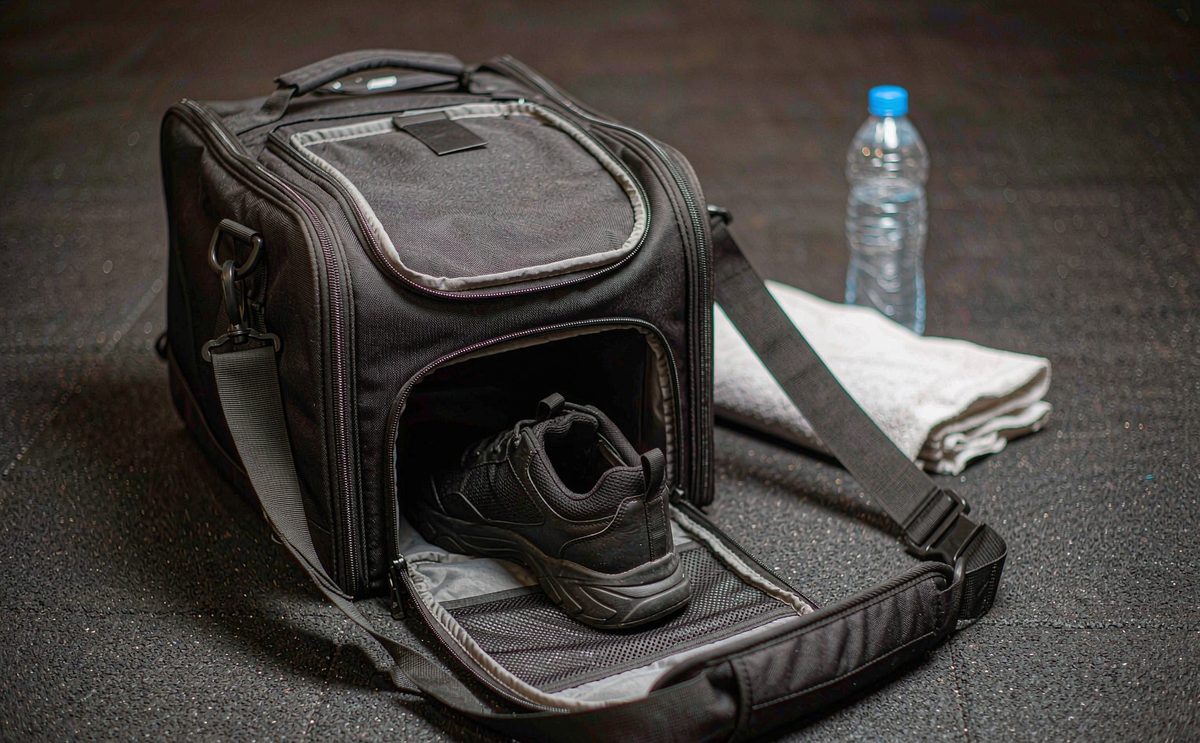
Most bag campaigns are planned for one platform and adapted to the other if at all. That is backwards for a product with a 500 pcs minimum and a 35-50 day production window, because the platform determines when money arrives, when quantities are known and whether the order is one batch or several. Those three variables decide the production plan, and they are decided at launch rather than at close. A gym bag is well suited to cross-platform work because the category converts on both, but it only works if the differences are handled in the original request for quotation.
- Minimum order quantity
- 500 pcs per style / colourway
- Sampling
- 6-10 working days (12-15 for complex builds)
- Bulk production
- 35-50 days after deposit + approved pre-production sample
- Inspection
- AQL 2.5 to ISO 2859-1
- Trade term
- FOB Xiamen
- Payment
- T/T 30/70
- Production floor
- 4,950 m2 SGS-verified, 137 staff, 7 lines, 149 machines
- Monthly capacity
- 200,000 pcs per month
- Programme contact
- service@junyuanbags.com
How Indiegogo differs from Kickstarter for a bag programme
Strip away the interface differences and four structural distinctions matter to anyone planning production. The first is the funding model: Kickstarter campaigns are all-or-nothing, while Indiegogo offers a choice between fixed and flexible funding. The second is sales continuation: Indiegogo InDemand lets a finished campaign keep selling, which turns a single order into a rolling one. The third is when shipping is collected, which differs between the two and changes what you know and when. The fourth is audience geography, with Indiegogo typically drawing a broader international mix.
Each of those has a direct production consequence. The funding model determines whether you have a confirmed quantity at close or a range. InDemand determines whether one production window suffices or whether you need two. Shipping collection timing determines whether you know the destination split before you pack. And geography determines how many destination markets your compliance documentation has to cover and how your cartons get split at the fulfilment warehouse.
None of this makes one platform better. It makes them different, and the differences are manageable if they are handled at quotation stage rather than discovered at close. A gym bag is a forgiving product in this respect: it has no frame, no electronics and no rigid internal structure, so it samples in the standard 6-10 working day window and packs efficiently. That gives you more room to absorb platform differences than a structured product would. The Indiegogo crowdfunding bags pillar covers the platform mechanics in more depth.
One more practical point before the detail. Whichever platform you choose, finish sampling before the page goes live. Two rounds at 6-10 working days each fit comfortably into a pre-launch calendar, and doing them there removes four to six weeks from the post-campaign path. On a cross-platform programme that matters more, not less, because you may be running two close dates rather than one and each one needs a production decision behind it.
Flexible versus fixed funding and what it does to your commitment
Under fixed funding, a campaign that does not reach its goal collects nothing and you owe nothing. Under flexible funding, a campaign that reaches 60 per cent of its goal collects 60 per cent of the pledges and you owe 60 per cent of the rewards. That second sentence is where gym bag programmes get into trouble, because the commitment was built for the full quantity and the money is built for a fraction of it.
| Scenario | Pledges | Cash collected | Position on 500 pcs |
|---|---|---|---|
| Fixed funding, goal met at 100% | 500 units | Full reward revenue | Clean; one production run |
| Fixed funding, goal missed at 70% | 350 units | Nothing returned to backers | Clean; no order, no obligation |
| Flexible funding at 100% | 500 units | Full reward revenue | Clean; one production run |
| Flexible funding at 60% | 300 units | 60% of reward revenue | Shortfall of 200 units to fund |
| Flexible funding at 40% | 200 units | 40% of reward revenue | Below the 500 pcs minimum entirely |
The two awkward rows are the last two. At 60 per cent you have 300 units of revenue and a 500 pcs minimum, which means finding the capital for 200 units yourself or negotiating something you did not plan for. At 40 per cent you are 300 units below the minimum, and the honest options are to refund, to find 300 more units of demand through InDemand, or to abandon and refund.
Plan for both in advance rather than improvising at close. The three legitimate pre-commitments are: a written arrangement with your production partner on what happens between 250 and 500 units; a realistic view of whether InDemand can close the gap over three to six months; and a reserve or a credit line sized to the shortfall you would actually tolerate. Deciding these during the quiet pre-launch period is straightforward. Deciding them in the week after a close that underperformed is not.
There is a pricing countermeasure too, and it is the one we recommend most often. Price the flexible campaign so that a 60 per cent outcome still covers the 500 pcs run. That usually means a reward price roughly 15-25 per cent above the fixed-funding equivalent, which is defensible on Indiegogo because backers understand they are supporting a project that will proceed regardless. It converts the worst funding scenario from a capital problem into a margin reduction. Where the custom gym bags for Kickstarter route assumes a clean all-or-nothing close, the cross-platform version has to survive the partial one.
InDemand and the rolling order
InDemand is the feature that most changes the production plan, and it is the one most often treated as a marketing afterthought. Once the live campaign closes, an InDemand campaign continues to sell indefinitely, which means orders arrive continuously rather than in one batch. For a product with a 35-50 day production window and a 500 pcs minimum, that is a fundamentally different supply problem from a single close.
- Decide whether InDemand is a genuine second sales channel or a courtesy for late backers. The answer determines the production model.
- If it is a channel, plan a re-order cadence rather than a single re-order; monthly or quarterly are the common patterns.
- Quote the re-order quantity bands in the original request for quotation so each re-order is a confirmation rather than a negotiation.
- Hold the approved pre-production sample as the reference for every subsequent run, because without it each batch drifts.
- Set a minimum re-order trigger, typically 250-500 units, below which the per-unit cost makes the batch uneconomic.
The re-order cadence point is where the economics live. Sampling and set-up are carried by the first 500 pcs; the re-order does not carry them again. That means the second batch is cheaper per unit, typically by 5-12 per cent depending on the decoration route, and it means the marginal economics of InDemand improve as volume accumulates. It also means each re-order needs its own 35-50 day window, so an InDemand sale made today is a delivery roughly two to three months out.
Communicate that honestly on the InDemand page. A late backer who is told delivery takes eight to twelve weeks and receives it in ten is satisfied. A late backer who is promised four weeks and receives it in twelve is not, and the negative feedback lands on the same page that is still selling. State the window in weeks from order rather than as a calendar date, and update the stated window whenever the production queue changes.
State the InDemand delivery window in weeks from order, not as a calendar date, and update it whenever the production queue changes. A late backer promised four weeks who waits twelve will leave feedback on the page that is still selling.
Backer geography and freight planning
International backers are the norm rather than the exception on a crowdfunding campaign, and the split has a direct effect on freight. A campaign with 70 per cent US backers has a simple logistics answer: one shipment to one fulfilment warehouse. A campaign split across the US, the EU, the UK, Canada and Australia has five destinations, five duty regimes and five last-mile cost structures, and the per-unit difference between the cheapest and the most expensive is substantial.
| Destination | Ocean freight per unit | Typical duty treatment | Planning note |
|---|---|---|---|
| United States | USD 3-7 | Bag categories vary; confirm the HTS code | Largest single market; one warehouse usually suffices |
| European Union | USD 4-8 | Duty plus import VAT at the destination rate | GPSR traceability obligations apply |
| United Kingdom | USD 5-9 | Duty plus import VAT | Separate from the EU post-2020 |
| Canada | USD 5-10 | Duty plus GST or PST | Smaller volume; consider consolidated shipping |
| Australia and New Zealand | USD 6-12 | Duty plus GST above a threshold | Longest transit; quote in weeks, not days |
These are planning ranges rather than quotes, and they move with fuel, season and carrier. Their purpose is to show the shape of the problem: the spread between the cheapest and most expensive destination is roughly USD 3-5 per unit on ocean freight alone, before duty and before last-mile delivery. On a reward priced at USD 89 with a target margin, that spread is a meaningful fraction of the contribution.
Three structural answers exist. Charge region-specific shipping, which is the most accurate and the most work. Build a blended global shipping price, which is simpler and quietly loses money on the long-haul destinations. Or restrict the reward to a defined set of regions and refund the rest, which is the cleanest and the most restrictive. Most cross-platform programmes end up with region-specific shipping for the top three destinations and a blended price for everywhere else.
Whichever you choose, decide before the page goes live, because shipping price is the single largest driver of cart abandonment on a crowdfunding reward. And get a dimensional-weight quote on the actual carton rather than an estimate on the product weight. A gym duffel is a bulky but light product, and it bills closer to its volume than its weight on most carriers. A carton that is 10 cm shorter can change the per-unit figure by several dollars across a 500 pcs run.
Reward tier architecture for a global audience
A tier ladder designed for a single-market audience usually has three or four levels and a clear price progression. A cross-platform ladder needs the same clarity with two additional considerations: a tier that works after the campaign closes through InDemand, and a bundle structure that raises the average order value enough to absorb long-haul shipping. The second point is the one that most affects the production plan, because bundling changes what goes in the carton.
| Tier | Contents | Production implication |
|---|---|---|
| Early bird, limited | Single bag, hero colourway | Concentrates demand in one colourway; simplest run |
| Standard reward | Single bag, choice of colourway | Splits demand; each colourway is 500 pcs |
| Bundle tier | Bag plus towel plus shaker | Multi-component packing; second supplier lead time |
| Team or gym tier | 6-12 bags, one logo | Larger pledge; confirm logo dimension |
| InDemand tier | Single bag at a higher price | Rolling re-order; confirm the re-order band |
The bundle tier is worth a specific warning. A bag plus a towel plus a shaker means three suppliers, three lead times and a packing specification that has to be defined at the destination warehouse. It also means the bundle has to be assembled somewhere, and if that is the fulfilment warehouse rather than the packing line, you are paying a repacking charge per unit. Ask whether the accessory items can be packed into the carton at origin; on a 500 pcs run that decision is worth several thousand dollars.
The team or gym tier is the most valuable one on a cross-platform programme and the least used. Gyms, CrossFit boxes, martial arts clubs and studio chains buy kit in quantities of 6 to 20 units and they re-order annually. A tier that offers 6 or 12 bags with a single club logo converts a handful of pledges into 100 or more units, and it creates the institutional relationship that makes an InDemand channel sustainable. State the maximum logo dimension and the quantity break in the reward description.
Currency, VAT and duties: who carries what
Three money questions determine whether a cross-platform programme is profitable, and all three are decided by the page copy rather than by the production plan. The first is which currency the reward is priced in. The second is whether that price includes or excludes import VAT and duty. The third is who is liable if a destination changes its de minimis threshold while the campaign is running.
- Price in one currency and state it explicitly. A campaign priced in USD with EU backers carries an exchange risk that sits with you, not with them.
- State whether the price is delivered duty paid or delivered duty unpaid, and be consistent across the page and the FAQ.
- Where a backer is liable for import charges, say so in the reward description, not only in the shipping section.
- Confirm the commodity classification for a gym bag with your fulfilment partner before you commit to a duty figure on the page.
- Build a 3-5 per cent contingency into the landed cost for currency and duty movement between launch and delivery.
The de minimis point is worth isolating because it is the one that changes without notice. Several markets have adjusted the value threshold below which imports enter free of duty or VAT over the past few years, and a threshold change between launch and delivery can turn a profitable EU shipment into a marginal one. You cannot control it, but you can avoid quoting a duty figure on the page that you would then have to honour, and you can build the contingency into the landed cost model.
On the production side, the trade term is fixed and simple: FOB Xiamen with payment at T/T 30/70. That means the unit price covers goods loaded onto the vessel at Xiamen, and everything after that point is yours to plan. It is a clean arrangement and it is the same on both platforms, which is one of the genuine advantages of keeping production with one partner while selling on two. The crowdfunding rewards fulfilment route covers the downstream side of that boundary in detail.
Shipping collection timing
The timing of shipping collection differs between the platforms and it has a production consequence that catches creators out. Where shipping is collected at the point of pledge, you know the destination split and the revenue per unit while the campaign is running. Where shipping is collected after the campaign closes, you know neither until the survey process is complete, and the survey process can take several weeks if backers are slow to respond.
| Data point | Shipping collected at pledge | Shipping collected after close |
|---|---|---|
| Destination split | Known at close | Known after the survey closes |
| Revenue per unit | Known at close | Estimated until the survey closes |
| Final unit quantity | Known at close | Known, but address data pending |
| Freight quote accuracy | High | Lower until addresses are confirmed |
| Production start | Immediately after close | Usually after the survey closes |
The difference sounds administrative and it is not. production 35-50 days after the deposit and written sample approval, so a three-week delay in knowing your destination split is three weeks of production calendar consumed by waiting. If the survey process is slow, the choice is to start production without knowing where the goods are going, which is usually fine because cartons can be split at the destination warehouse, or to wait and lose the window.
The mitigation is to pack for flexibility. Specify carton marking that identifies the campaign and the tier rather than the destination, so a carton can be routed to whichever warehouse needs it once the split is known. Confirm with your fulfilment partner that they accept split shipments and can hold inventory regionally. And keep the packing list structured by tier and colourway rather than by backer, which makes the final allocation a warehouse task rather than a repacking task.
There is also a communication duty that is easy to discharge and often missed. Tell backers in the final campaign update exactly when the survey closes, what happens if they do not respond, and what the consequence is for their delivery date. A survey that closes on time because backers understood the deadline is worth two weeks of production calendar, which on a cross-platform programme is the difference between one window and two.
One bag, two platforms: when a shared programme works
The obvious efficiency of a cross-platform programme is that one sampling round and one technical pack serve two sales channels. That is real, and it is the main reason to consider it. The condition is that the product specification has to be identical on both, which sounds trivial and is not, because platform conventions push creators toward different page copy, different tier contents and sometimes different colourways.
| Structure | Efficiency | Risk | Suits |
|---|---|---|---|
| Identical product, identical colourways | Highest; one pack, one sample | Lowest | Almost every programme |
| Identical product, platform-exclusive colourway | High; one pack, one extra colourway | Second 500 pcs commitment | Large audiences only |
| Platform-exclusive bundle contents | Medium; packing spec differs | Accessory lead times diverge | Mature programmes |
| Different products per platform | Lowest; two packs, two samples | Highest; doubles sampling | Rarely justified |
The platform-exclusive colourway is the trap. It looks like clever marketing and it is a second 500 pcs commitment, because the minimum is per style and per colourway. If you want an exclusive, use an exclusive bundle or an exclusive accessory rather than an exclusive bag, because an accessory does not carry the bag minimum. That single decision can remove tens of thousands of dollars from the working capital requirement of a cross-platform launch.
The other condition for a shared programme is a single version of the truth on specification. Keep one technical pack with a revision number, and require every quotation, sample and production order to reference it. When the Kickstarter page says the shoe compartment fits a US 13 and the Indiegogo page says it fits a US 12, one of them is wrong and the error will be discovered by a backer rather than by an inspector. Our sample prototyping route sets out the record structure that prevents this.
Production planning for a rolling order
A rolling InDemand order has a different shape from a single campaign order, and planning it as a sequence of one-off batches is the most expensive way to run it. The efficient structure is a reserved slot model: a standing arrangement for a defined number of production windows per year, each with a band of quantities quoted in advance, released against a trigger rather than negotiated each time.
| Element | Typical figure | Why it matters |
|---|---|---|
| Slot frequency | Monthly or quarterly | Matches the InDemand re-order cadence |
| Quantity band | 250 / 500 / 1,000 pcs | Unit cost quoted per band in advance |
| Release trigger | Accumulated orders hit the band | Avoids sub-economic batches |
| Lead time per release | 35-50 days | Same window as the first run |
| Reference sample | Retained pre-production unit | Prevents drift between batches |
| Inspection | AQL 2.5 per release | Consistency across the programme |
The release trigger is the mechanism that makes this work. Rather than releasing a batch every time an order arrives, accumulate orders until they reach a quoted band. Below roughly 250 units the per-unit cost rises materially because set-up and line changeover are spread across fewer pieces, and below that the batch is rarely worth the administrative overhead. Setting the trigger at 250 or 500 units converts a chaotic stream of small orders into a predictable quarterly rhythm.
Two operational details make the difference between a rolling programme that runs smoothly and one that constantly surprises. First, book the slot before the trigger is hit, because a 35-50 day window starts when the deposit lands and the pre-production reference is confirmed, not when you decide you need stock. Second, hold inventory of a buffer: most rolling programmes find that keeping 10-15 per cent of a batch back for warranty replacements and late claims removes a whole category of emergency. That buffer is the cheapest insurance in the programme.
QC consistency across two production windows
The failure mode of a cross-platform programme is not a bad first batch. It is a second batch that differs from the first. Backers compare, InDemand buyers read the earlier reviews with the product in hand, and a shade variation or a lighter webbing grade between batches generates a complaint that is harder to answer than a straightforward defect. Consistency is therefore a specification task rather than an inspection task, and it starts with what is retained from the first run.
- Retain the approved pre-production sample as the physical reference for every subsequent release.
- Reference the technical pack revision number on every production order, not just on the first one.
- Record the fabric lot and the thread and webbing references used on run one, and require the same on run two.
- Approve decoration against the retained unit under standard lighting, not against a photograph or a swatch card.
- Run AQL 2.5 inspection on every release, including the small ones.
The fabric lot record is the one most often missing and the one that matters most for shade. Dye lots vary between production runs even from the same mill, and a shade difference that is invisible under warehouse lighting is obvious in a backer's photograph next to the bag their training partner bought six months earlier. If the first run's lot is recorded, the second run can be matched against it deliberately rather than hopefully.
| Check | Why it drifts | Method |
|---|---|---|
| Shell fabric shade | Dye lot variation between runs | Compare to the retained unit under standard light |
| Webbing and thread grade | Substitution when a reference is out of stock | Confirm the reference on the production order |
| Padding density | Foam batch variation | Measure thickness and compress by hand |
| Decoration registration | New set-up on the second run | Measure against the stated coordinate |
| Zip reference | Substitution for an equivalent | Confirm the reference, not the gauge |
| Carton specification | New carton supplier or size | Confirm dimensions and pieces per carton |
Padding density is the quiet one. Foam batches vary in density and in recovery, and a gym bag that feels slightly less substantial than the one in the review video generates a complaint that no measurement in the inspection report will have caught. Include a hand-feel comparison against the retained unit in the inspection protocol. It is subjective, which is exactly why it needs to be done by someone holding both units rather than by a checklist. Our Kickstarter campaign bag QA and QC pillar covers how to write these comparisons into a plan.
Compliance by destination market
A wider backer geography means a wider compliance obligation, and it is the area where cross-platform programmes most often discover a cost they did not budget. The requirement is not uniform: it depends on destination and, in some cases, on how the product is positioned. State the destination markets and any youth positioning in the original request for quotation so testing is quoted and booked during sampling rather than after production.
- European Union: REACH governs restricted substances, and the EU GPSR sets general safety and traceability obligations including a responsible economic operator.
- United Kingdom: UK REACH applies separately from the EU regime, with its own substance list and obligations.
- United States: CPSIA applies where a product is marketed to children; California Prop 65 warnings apply where a listed substance is present.
- Canada and Australia: general product safety obligations apply, with textile labelling rules in both markets.
- Recycled-content claims: substantiate with GRS certification for the specific material.
- Textile-safety claims: substantiate with OEKO-TEX Standard 100 for the specific article.
The GPSR traceability obligation deserves specific attention for a cross-platform programme, because it requires product identification and a responsible economic operator in the EU, and that information has to appear on the product or its packaging. Decide during sampling how and where it will be applied: a sewn-in label, a printed carton marking, or a hangtag. Retro-fitting a compliance label after production is a repacking exercise at the destination warehouse and it is far more expensive than adding a label at origin.
The timing point is the practical one. Compliance testing booked during sampling runs in parallel with the 6-10 working day window and costs nothing in calendar terms. The same test booked after production adds days to a schedule that has no slack, and it is the single most common avoidable delay we see on cross-platform programmes. Where a campaign is planning two platforms and five destination markets, build the testing list into the technical pack before sampling starts.
A cross-platform launch sequence that protects the schedule
The sequence below is the one that keeps a cross-platform gym bag programme on schedule. The underlying principle is that everything platform-specific happens after the specification is frozen, so that no page copy decision can force a production change. Work backwards from the earliest delivery date you have committed to, and note that the production window starts on the deposit and written approval, not on the close date.
- Weeks -12 to -8: freeze the technical pack for a single shared product; decide colourways, dimensions and materials; confirm 500 pcs per colourway is fundable.
- Weeks -8 to -6: sampling round one at 6-10 working days. Book compliance testing for every destination market in parallel.
- Weeks -6 to -4: sampling round two; approve the pre-production sample and retain it as the reference unit.
- Weeks -4 to -1: build the tier ladder, the shipping table and the region list; confirm the bundle packing specification at origin.
- Launch: release the 30% deposit against the reserved production slot, not against the close date.
- Close: run the survey with a stated deadline, confirm the destination split, release the 70% balance after AQL 2.5 inspection.
The step that most protects the schedule is the fifth one. Reserving the production slot before launch means the 35-50 day window starts the moment the deposit lands, rather than starting whenever the post-close administration finishes. On a cross-platform programme with a survey process in the middle, that reservation is typically worth three to four weeks of calendar time, which is often the difference between delivering on the stated window and delivering late.
Where a programme wants to understand how the other categories handled the same planning problem, the sports bag success data analysis breaks down what funded campaigns had in common, and the golf bag sourcing decision guide shows how a longer-lead structural product changes the same sequence. Both start from the same place: a frozen specification, a booked window, and a written approval reference.
- Indiegogo crowdfunding bags
- Custom gym bags for Kickstarter campaigns
- Crowdfunding rewards fulfilment
- Crowdfunding bag sample prototyping
- Kickstarter campaign bag QA and QC
- Sports bag success data across funded campaigns
- Request a quotation
Plan one production programme across two platforms
Send us the bag specification, the colourway plan, the destination markets and your launch dates. As your production partner we will return a unit cost with re-order bands, a sampling estimate at 6-10 working days and a reserved 35-50 day window. Write to service@junyuanbags.com.
Frequently Asked Questions
What is the MOQ for custom gym bags on an Indiegogo campaign?
The minimum is 500 pcs per style and per colourway, the same as on any other platform. The platform does not change the minimum, but flexible funding changes whether you can fund it, so plan the shortfall scenario before launch rather than discovering it at close. Ask the shortfall question at quotation stage, when it is a planning exercise rather than a crisis.
What happens if a flexible funding campaign only reaches 60 per cent?
You collect 60 per cent of the pledges and owe 60 per cent of the rewards, against a commitment built for a full 500 pcs run. Price the campaign roughly 15-25 per cent above the fixed-funding equivalent so a partial outcome is a margin reduction rather than a capital shortfall you have to cover yourself. Agree the arrangement in writing before launch, not in the week after an underperforming close.
How should I plan production for InDemand?
Use a reserved slot model: quote quantity bands of 250, 500 and 1,000 pcs in advance, set a release trigger when accumulated orders hit a band, and book the slot before the trigger lands. Each release still needs its own 35-50 day window, so an InDemand sale today delivers two to three months out. State the delivery window in weeks from order and update it whenever the production queue changes.
Should I offer a platform-exclusive colourway?
Usually not. Each colourway carries its own 500 pcs minimum, so an exclusive colourway is a second full commitment. If you want an exclusive, use an exclusive bundle or accessory instead, because neither carries the bag minimum and both can be quoted in the same request for quotation. An exclusive accessory gives the same marketing effect without a second full bag commitment.
How much does freight add per unit by destination?
Plan roughly USD 3-7 to the US, USD 4-8 to the EU, USD 5-9 to the UK, USD 5-10 to Canada and USD 6-12 to Australia and New Zealand on ocean freight, before duty and last-mile delivery. Get a dimensional-weight quote on the actual carton, because a bulky duffel bills on volume. Confirm the figure with your fulfilment partner before you publish the shipping table on the page.
What does FOB Xiamen with T/T 30/70 mean for my budget?
The unit price covers goods loaded onto the vessel at Xiamen; freight, duty and last-mile delivery are yours to plan. Payment is 30 per cent deposit and 70 per cent balance, and the 35-50 day production window starts only when the deposit has landed and the pre-production sample is approved in writing. Reserve the slot before launch so the window opens at close rather than after the survey finishes.
How do I stop a second batch differing from the first?
Retain the approved pre-production sample, record the fabric lot and the thread and webbing references from run one, require the same on run two, and inspect every release at AQL 2.5 including a shade comparison against the retained unit under standard light. Include a hand-feel check on padding density too. Include a hand-feel check on padding density, because foam batches vary in ways a tape measure misses.
What compliance documentation applies across five destination markets?
REACH and EU GPSR for the EU, UK REACH separately for Britain, CPSIA and California Prop 65 where youth marketing applies in the US, plus general product safety and textile labelling for Canada and Australia. Book the testing during sampling so it runs in parallel rather than adding days after production. Testing booked after production adds days to a schedule that has no slack left to give.
When should the EU GPSR traceability label be decided?
During sampling. The regulation requires product identification and a responsible economic operator in the EU, shown on the product or its packaging. Deciding after production means a repacking exercise at the destination warehouse, which costs far more than adding a label at origin. Decide whether it is a sewn-in label, a printed carton marking or a hangtag during sampling.
How long does a gym bag take to produce?
Sampling runs 6-10 working days per round for a standard build and 12-15 for a complex one. production 35-50 days after the deposit and written sample approval. Add 25-40 days of ocean transit plus fulfilment, and plan roughly 100-130 days from a signed technical pack. Finish sampling before the page goes live to remove four to six weeks from the post-campaign path.
Should bundle accessories be packed at origin or at the warehouse?
At origin wherever possible. Assembling a bag, towel and shaker at the fulfilment warehouse means a repacking charge per unit, and on a 500 pcs run that decision is worth several thousand dollars. Confirm the bundle packing specification in the original request for quotation. Ask the question in the original request for quotation rather than discovering it at the warehouse.
When does the production window start on a cross-platform order?
The 35-50 days start only when the 30% deposit has landed and the pre-production sample has been approved in writing. Neither alone starts the clock. Reserve the slot before launch so the window opens at close rather than after the backer survey process has finished. Book the slot before the campaign opens so production is not waiting on post-close administration.
People Also Ask
Is Indiegogo or Kickstarter better for a gym bag campaign?
Neither is better in the abstract. Indiegogo offers flexible funding and InDemand, which suits a rolling programme with international backers. Kickstarter offers an all-or-nothing close, which gives a clean quantity at a known date and suits a single-batch plan.
What is flexible funding on Indiegogo?
You keep whatever is pledged even if the goal is not reached, and you owe the rewards for it. A campaign that lands at 60 per cent collects 60 per cent of the revenue against a commitment built for 100 per cent.
What is Indiegogo InDemand?
A continuation phase that lets a closed campaign keep selling indefinitely. It turns a single production order into a rolling one, which means planning re-order bands and reserved slots rather than one batch.
How much is shipping to EU and Australian backers?
Plan roughly USD 4-8 per unit to the EU and USD 6-12 to Australia and New Zealand on ocean freight, before duty and last-mile. Get a dimensional-weight quote on the actual carton, because a bulky duffel bills on volume.
Can one bag programme serve two platforms?
Yes, and it is the main efficiency available. The condition is that the specification is identical on both, with one technical pack and one revision number referenced by every quotation, sample and production order.
How do I avoid a second batch looking different?
Retain the approved pre-production sample, record the fabric lot and trim references from run one, require them on run two, and compare shade under standard light at every inspection.
What duty applies to gym bags imported into the EU?
Duty depends on the commodity classification, plus import VAT at the destination rate. Confirm the classification with your fulfilment partner before quoting a figure on the campaign page, and build a 3-5 per cent contingency for movement.