Custom Heavy-Duty Totes for Crowdfunding: 12oz Canvas vs 600D Polyester
12oz canvas and 600D polyester are the two fabrics that dominate heavy-duty campaign totes, and they fail in opposite ways. Canvas wins on hand feel, print richness and perceived value; 600D polyester wins on tear strength per gram, water resistance and colour consistency across re-orders. This guide compares them across ten measurable criteria: fabric mass, tear and tensile strength, abrasion, water behaviour, print and embroidery results, dimensional stability, unit cost at 500, 1,000 and 2,000 pieces, weight-driven freight, wash care and inspection risk. Minimum order is 500 pcs per style and per colourway, sampling takes 6-10 working days and production 35-50 days.
- What heavy duty actually means when the bag is a reward
- Fabric mass, weave and how each fabric is actually built
- Tear and tensile strength: the numbers behind load claims
- Abrasion, pilling and what a grocery run does to a bag
- Water, stain and drying behaviour in real backer use
- Print, embroidery and branding results on each fabric
- Dimensional stability, shrinkage and why it matters at 2,000 pcs
- Unit cost and freight weight at 500, 1,000 and 2,000 pieces
- Wash care, labelling and what backers will actually do
- QC risk profile: how each fabric fails inspection
- Choosing by campaign type and reward tier price
- The fabric specification sheet to send with your RFQ
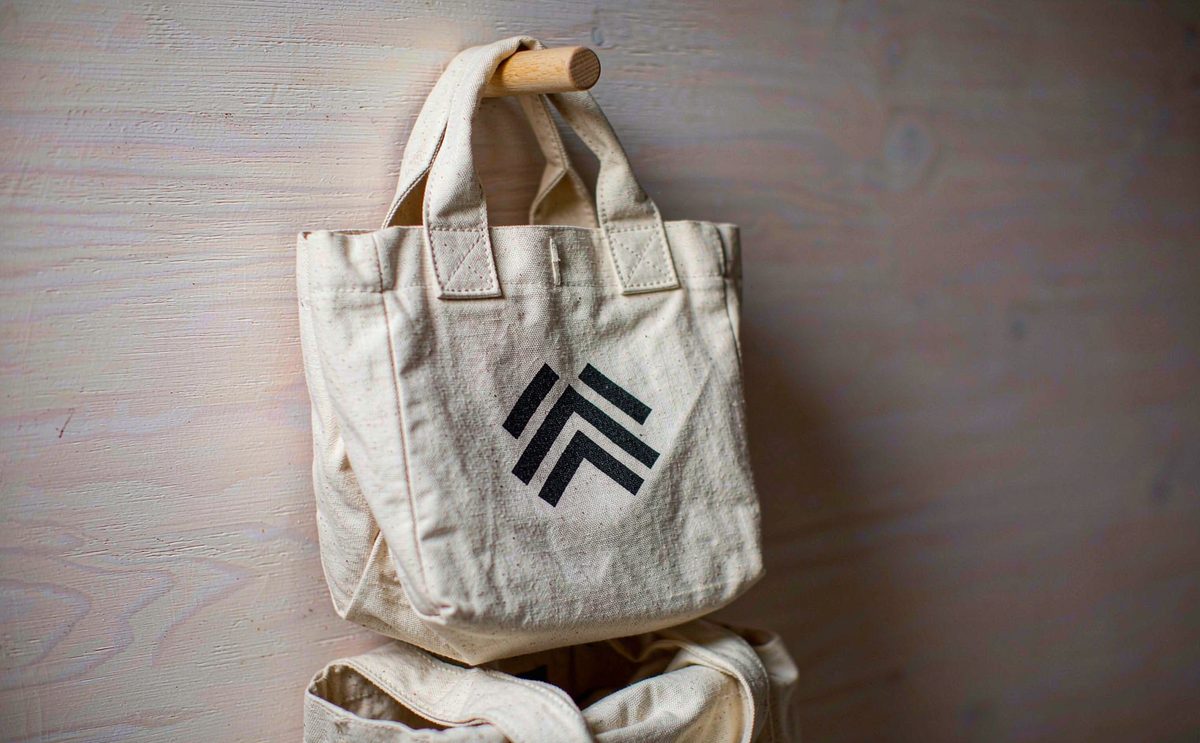
Heavy duty is the most overused phrase in the tote category, and it is the one that gets a creator into trouble. Backers read it as a promise about load, and if the bag tears under a laptop and a week of shopping, the comment section will say so. The honest way to use the phrase is to attach it to a number: a fabric mass in ounces or denier, a seam strength in newtons, a cycle count on an abrasion test. Choose between custom tote bags for Kickstarter built on canvas or on polyester and you are choosing two different failure modes, not two grades of the same thing.
What heavy duty actually means when the bag is a reward
On a retail tote, heavy duty usually means the bag survives a season. On a crowdfunding reward it means something stricter: the bag has to survive long enough to be photographed, gifted and talked about, which is a window of roughly twelve to twenty-four months after delivery. That is the period in which a reward either builds your brand or quietly damages it. A fabric that looks perfect on unboxing day and frays by month nine fails that test, even if it passed every inbound inspection.
So define heavy duty as a set of four measurable commitments before you pick a fabric. First, a load commitment: the bag holds a stated weight without seam failure. Second, a cycle commitment: it survives a stated number of carry cycles without visible abrasion at the stress points. Third, a care commitment: it survives the washing method your care label recommends. Fourth, a consistency commitment: a re-order made twelve months later matches the first run in shade and hand feel. Canvas and polyester score differently on all four.
For most campaign totes, a working definition is a bag that carries 8 to 10 kg repeatedly, survives 200 carry cycles without visible wear at the handle roots and the base corners, tolerates a cold machine wash, and matches shade within Delta E 2.0 on re-order. Write those four lines into your technical pack. They cost nothing to state and they convert an argument about fabric into a checklist that our production team can quote against and be held to at inspection.
Fabric mass, weave and how each fabric is actually built
12oz canvas is a plain-woven cotton, sometimes cotton-rich, with a finished mass of roughly 12 ounces per square yard, equivalent to about 400 grams per square metre. It is a natural fibre, woven from relatively coarse yarns, and it is usually sold either unbleached with a natural fleck or bleached and dyed. Because cotton is a staple fibre, no two production lots are absolutely identical: shade drifts slightly, and the hand softens with washing. That variability is part of the appeal and part of the risk.
600D polyester is a filament yarn fabric where 600 denier describes the linear mass of the yarn, giving a finished fabric mass in the region of 220 to 280 grams per square metre depending on the weave and any coating. It is normally woven as an Oxford or a plain weave and then finished with a polyurethane or PVC backing, or with a durable water-repellent treatment on the face. Because it is a continuous filament with a controlled extrusion, lot-to-lot consistency is much tighter than on canvas.
The practical consequence is that the two fabrics deliver similar perceived toughness at very different weights. A 600D polyester tote that feels as substantial as a 12oz canvas tote typically weighs 25 to 35 percent less. That difference shows up directly in your freight invoice, because a tote shipment is bulky and charged on volume but still has a mass break-point on air freight. It also changes the carrying experience: polyester totes pack smaller when empty, which matters if you are selling a foldable or packable reward.
| Property | 12oz canvas | 600D polyester |
|---|---|---|
| Finished mass | approx. 400 gsm | approx. 220-280 gsm |
| Fibre type | Cotton staple, natural | Polyester filament, synthetic |
| Tear strength | Moderate, propagates once started | High, resists tear propagation |
| Abrasion resistance | Good, fuzzes then wears through | Very good, resists surface wear |
| Water behaviour | Absorbs, slow to dry | Sheds water, dries fast |
| Print result | Rich, matte, excellent for screen | Smooth, needs low-bleed ink |
| Embroidery result | Excellent, stable | Good, may pucker if uncoated |
| Shade consistency | Drifts slightly between lots | Tight, repeatable |
| Hand feel | Softens and improves with use | Stable, can feel technical |
| Typical unit cost | Higher per metre | Lower per metre |
Tear and tensile strength: the numbers behind load claims
Tear strength is the force required to propagate an existing cut, and it is the property that decides whether a small nick becomes a ruined bag. Polyester filament fabric resists tear propagation far better than cotton canvas, because the continuous filaments distribute load across the weave. Canvas, made from shorter staple fibres, holds well under static load but once a tear starts it travels. In practice a 600D tote survives a puncture-and-drop accident that would open a canvas bag.
Tensile strength, the force needed to pull the fabric apart in one direction, is where canvas performs better than its reputation suggests. A 12oz canvas in good condition has high tensile strength and low stretch, which is why it has been used for load-bearing applications for centuries. The weakness is not the fabric in isolation; it is the combination of the fabric with a sewn seam. Seam efficiency on canvas is typically lower than on a coated polyester, because the needle perforates a coarser weave and the yarns can slip at the stitch line.
That is why the seam specification matters more than the fabric specification. On either fabric, a heavy-duty tote should use a box-X or bar-tack reinforcement at every handle root, a turned and double-stitched top hem, and a bound or turned internal seam rather than a raw overlock. Specify the stitch density in stitches per inch, the thread in a bonded polyester or a corespun, and the seam allowance in millimetres. A strong fabric with a weak seam fails at the seam, which is where almost every tote return originates.
Key takeaways
- F
- a
- b
- r
- i
- c
- c
- h
- o
- i
- c
- e
- s
- e
- t
- s
- t
- h
- e
- c
- e
- i
- l
- i
- n
- g
- ;
- s
- e
- a
- m
- c
- o
- n
- s
- t
- r
- u
- c
- t
- i
- o
- n
- s
- e
- t
- s
- t
- h
- e
- f
- l
- o
- o
- r
- .
- M
- o
- s
- t
- h
- e
- a
- v
- y
- -
- d
- u
- t
- y
- t
- o
- t
- e
- f
- a
- i
- l
- u
- r
- e
- s
- a
- r
- e
- s
- e
- a
- m
- f
- a
- i
- l
- u
- r
- e
- s
- ,
- n
- o
- t
- f
- a
- b
- r
- i
- c
- f
- a
- i
- l
- u
- r
- e
- s
- .
Abrasion, pilling and what a grocery run does to a bag
Abrasion is the failure mode backers actually experience. A tote rubs against a hip, a car door frame, a desk edge and the inside of a washing machine. On canvas, abrasion first raises a surface fuzz, then thins the yarns, then breaks them. The bag looks tired before it fails, which is arguably a fair warning system. On coated polyester, abrasion tends to scuff the coating first, which shows as a shiny or grey patch, and then the weave underneath begins to show.
The standard laboratory measure is a Martindale or Wyzenbeek cycle count. A useful budget for campaign totes is a minimum of 10,000 Martindale cycles on the body fabric and a higher figure on the base panel, because the base takes the punishment. If your reward is aimed at a market that will use the bag daily for commuting, ask for the base to be reinforced with a second layer or a higher-denier panel rather than simply increasing the whole bag specification, which adds cost and weight everywhere for a benefit needed only at the bottom.
Pilling behaves differently too. Cotton canvas does not pill in the synthetic sense; it fuzzes. Blended canvas with a polyester component can pill at the surface, which looks cheap in photographs. If you are considering a cotton-rich blend to save cost, ask for a pilling grade result at sampling. A fabric that pills after five washes will generate the kind of close-up backer photo that no campaign wants, and no amount of good design will recover from it.
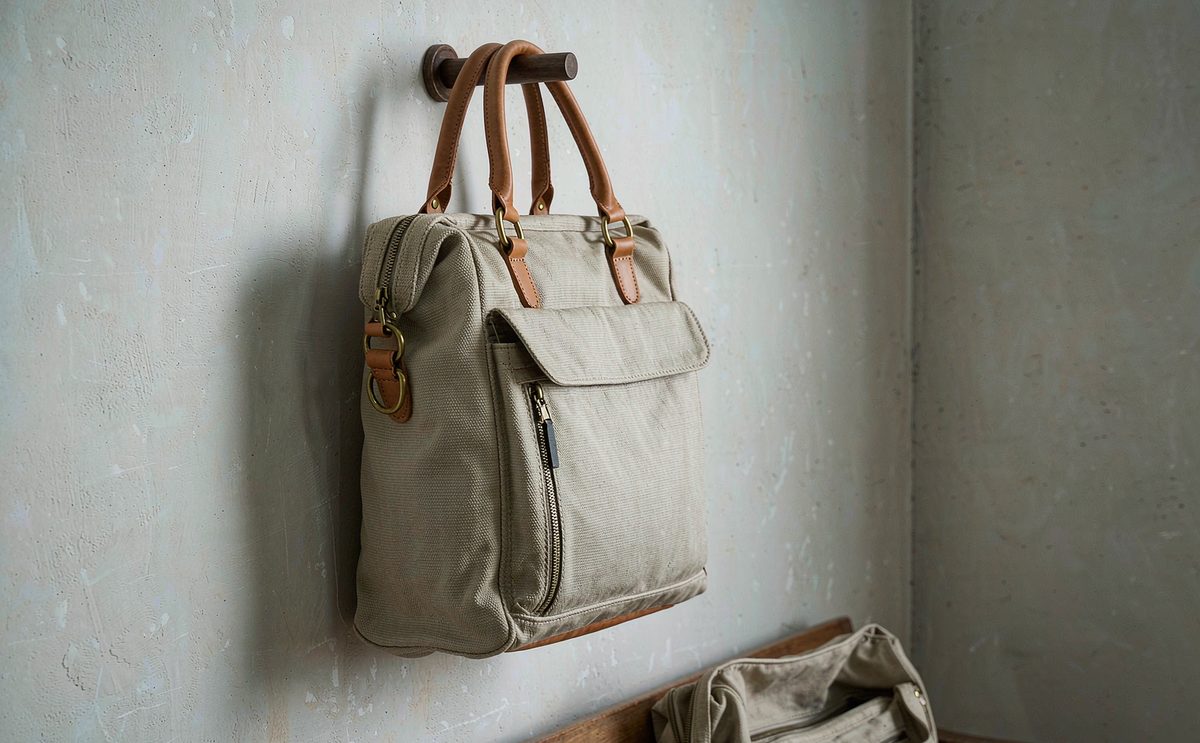
Water, stain and drying behaviour in real backer use
Water behaviour is the clearest dividing line. Cotton canvas absorbs water. A wet canvas tote becomes heavy, takes many hours to dry, and can develop a musty smell if it is folded and stored damp. It also stains readily from oils and from dark liquids. For a beach, market or gym reward that will get wet, that is a genuine product weakness, and backers will find it on their own within a week.
Polyester sheds water. With a durable water-repellent finish and a PU backing, a 600D tote sheds a shower, wipes clean from most spills and dries in a fraction of the time canvas takes. That makes it the natural choice for outdoor, travel, gym and lunch rewards. The trade-off is breathability and feel: a heavily coated polyester can feel plasticky and can make a rustling sound, which reads as cheap in a video even when the bag is objectively tougher.
There is a middle path that works well for campaign totes: a mid-weight canvas with a light water-repellent finish, or a polyester with a lighter coating and a softer hand. Both are available, both cost a little more than the untreated base cloth, and both let you make an honest claim in the campaign copy. Be precise in that copy. Saying water-resistant is defensible with a spray-test result; saying waterproof requires seam sealing or a welded construction and is a much bigger engineering commitment.
Print, embroidery and branding results on each fabric
Canvas is the better printing surface for most campaigns. Its matte, slightly absorbent face takes plastisol and water-based inks beautifully, giving a rich, saturated result that photographs well and feels like part of the bag rather than a sticker on top. Fine detail spreads slightly, so keep strokes above roughly 1.5 mm. Embroidery on canvas is excellent: the dense weave supports stitches without puckering and the result looks premium.
Polyester gives a smoother, sharper print with finer detail, but it introduces two risks. The first is dye migration, where fabric dye moves into the ink and dulls light colours, particularly on reds and navies; the fix is a low-bleed underbase. The second is adhesion on a coated face, because some coatings resist ink bonding and the print can lift; the fix is a pre-treatment or a coating-compatible ink system. Ask for a cross-hatch tape adhesion result on the exact production fabric.
Embroidery on polyester is fine but more prone to puckering on an uncoated, lighter fabric, so use a backing stabiliser and keep the design compact. For both fabrics, the most robust branding choices remain the ones that do not depend on an ink layer: woven labels, silicone badges and embroidery. If you want the detailed reasoning, our Kickstarter tote branding guide compares every method by cost and durability.
Dimensional stability, shrinkage and why it matters at 2,000 pcs
Cotton canvas shrinks. Unsanforised canvas can shrink 3 to 8 percent on the first wash, and a poorly controlled lot can shrink unevenly between panels, which twists the bag. At 500 pieces a 5 percent shrink is an annoyance. At 2,000 pieces it is a systematic problem, because a bag that arrives at the stated size and then shrinks below it generates a wave of size complaint comments at exactly the moment you need goodwill.
The controls are straightforward and should be written into your tech pack. Specify sanforised or pre-shrunk canvas, or require a pre-wash of the bulk fabric before cutting. State a maximum shrinkage figure in both warp and weft, typically 3 percent, and require a wash-test report on the bulk fabric lot before cutting begins. Require also that all panels of one bag come from the same fabric lot, which prevents panel-to-panel shade and shrink variation within a single unit.
Polyester is dimensionally stable by comparison, with shrinkage typically under 1 percent and excellent recovery from creasing. That stability is one of the reasons it is preferred for bags with tight tolerances, structured bases or fitted interiors. If your design includes an internal laptop sleeve with a precise fit, or a base panel that must sit flat, polyester removes a whole category of tolerance risk. Canvas can do both, but it needs more careful specification and more generous tolerances.
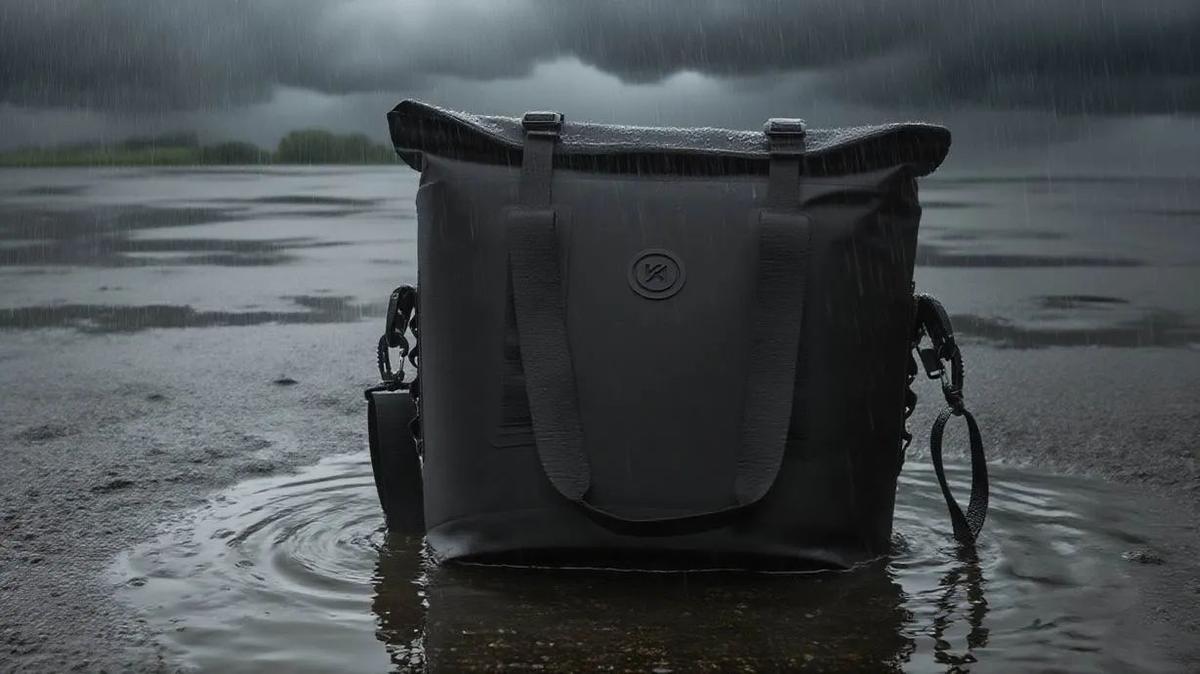
Unit cost and freight weight at 500, 1,000 and 2,000 pieces
Fabric is typically 35 to 55 percent of the ex-works cost of a tote, so the choice moves the headline number. Indicative ex-works unit cost bands for a comparable heavy-duty tote construction, without decoration, run roughly as follows. These are planning bands from our production programme, not a fixed price list; the final figure depends on dimensions, hardware, lining and finish, and every project is quoted individually against a technical pack.
| Fabric | 500 pcs | 1,000 pcs | 2,000 pcs | Empty bag weight |
|---|---|---|---|---|
| 12oz canvas, unlined | 5.80 - 9.40 USD | 4.90 - 7.80 USD | 4.30 - 6.90 USD | approx. 380-480 g |
| 12oz canvas, lined | 7.40 - 11.80 USD | 6.30 - 9.80 USD | 5.60 - 8.70 USD | approx. 480-600 g |
| 600D polyester, unlined | 4.90 - 7.90 USD | 4.10 - 6.60 USD | 3.60 - 5.80 USD | approx. 250-340 g |
| 600D polyester, lined with PU backing | 6.20 - 9.90 USD | 5.30 - 8.30 USD | 4.70 - 7.40 USD | approx. 320-420 g |
| Typical freight impact per 1,000 units | + 130-190 kg | + 130-190 kg | + 130-190 kg | Canvas heavier by this margin |
Two things follow from that table. First, the absolute saving from choosing polyester is larger than the percentage saving suggests once you multiply it by 2,000 units; the difference between the mid-points at 2,000 pieces is well over 1,000 USD before freight. Second, the weight difference is material on air freight. A 1,000-unit canvas run can carry 130 to 190 kg more chargeable mass than the polyester equivalent, and on an air shipment that can equal or exceed the entire fabric saving.
So do the calculation both ways before you commit. If you are shipping sea freight on a comfortable schedule, the fibre saving decides it. If you are air-freighting against a hard delivery promise, the weight saving may favour polyester even where canvas is the better product. Our sourcing partner will quote both scenarios against the same technical pack so you can compare landed cost rather than unit cost, which is the only comparison that matters. Terms are FOB Xiamen with T/T 30/70 by default.
Never compare fabrics on unit cost alone. Compare landed cost per delivered reward, including freight, duty and the cost of any replacement units.
Wash care, labelling and what backers will actually do
Plan for misuse. Whatever your care label says, a share of backers will machine wash a tote, and some will tumble dry it. Canvas tolerates this reasonably well but will shrink and may stain if washed with dark items. Polyester tolerates washing well but can delaminate if tumble dried on high heat, because the coating softens. Specify a care label that reflects the weakest component in the bag, not the strongest: if the patch is the limiting factor, the label must say so.
Ask for a wash test on the finished bag, not just the fabric. A bag can pass every fabric test and still fail as an assembly, because the interlining, the webbing, the thread and the patch all behave differently in water. A three-cycle domestic wash test at 30 degrees with a line dry, followed by a visual inspection for shrinkage, seam pucker, print cracking and patch delamination, costs almost nothing at sampling stage and prevents the most expensive category of post-delivery complaint.
The care information itself needs a home. Putting it on an inside-pocket label removes a printed insert from the pack-out and keeps the information with the bag for its whole life. Include fibre content, country of origin, wash symbol set and your brand URL. If you sell into the EU, check the fibre-labelling requirements for your specific blend, because a mis-stated percentage is a compliance issue rather than a marketing one.
QC risk profile: how each fabric fails inspection
Every fabric has a characteristic defect profile, and knowing it lets you write a sharper inspection plan. Canvas defects cluster around shade variation between panels and between lots, slubs and weave irregularities, oil or dirt marks on natural undyed cloth, shrinkage beyond tolerance after wash, and loose slubs that break into holes. Natural canvas in particular shows marks more readily than a dyed fabric, so specify a shade range and a cleanliness standard in writing.
Polyester defects cluster around coating defects such as pinholes, bubbles and uneven backing, delamination after heat or wash, colour migration into light prints, and a shiny or crushed appearance after compression packing. Coating defects are the ones to watch, because they are hard to see until the bag is filled and the coating is put under tension. Ask for a coating adhesion check and a visual inspection of the coated face under raking light at incoming inspection.
Our production programme inspects finished totes to AQL 2.5 to ISO 2859-1. A useful refinement for a heavy-duty reward is a critical-defect list that is separate from the general AQL: any seam failure, any handle-root detachment, any broken stitch at a stress point is critical and is rejected at zero tolerance regardless of the sample plan. Fabric shade and cosmetic issues stay under the 2.5 general level. You can read more about how we structure that in our Kickstarter campaign bag QA and QC guide.
Choosing by campaign type and reward tier price
Match the fabric to the promise in your campaign copy. If your story is about craft, natural materials, artisan process, sustainability or a printed illustration, canvas supports the narrative and photographs in a way polyester cannot. If your story is about performance, commuting, travel, gym or outdoor use, polyester is the honest choice and will survive the use case you are selling. A mismatch between story and fabric is noticed within days of delivery.
Tier price matters too. Below roughly 40 USD, the fabric cost difference is a meaningful share of the reward cost and polyester will usually let you offer a better-finished bag for the same money. Above roughly 60 USD, backers expect a natural or premium hand feel and canvas, or a heavier canvas blend, meets that expectation. Above roughly 90 USD, consider a hybrid: a canvas body with a polyester-reinforced base, which puts the tougher fabric exactly where the wear happens.
There is also a re-order consideration. Campaigns that fund well often re-order within a year, and polyester will match shade far more reliably across runs. If you plan a retail or evergreen follow-on, standardise on the fabric with the tighter lot-to-lot consistency and keep the lab dip on file. Our team has supported more than 20 crowdfunding campaigns and the ones that plan the second run at the same time as the first are the ones that avoid the shade-matching problem entirely.
The fabric specification sheet to send with your RFQ
Send a one-page fabric specification and you will get a quote you can plan against. Include: fibre composition and construction; finished mass in gsm or oz per square yard with a tolerance; weave type; finish, coating or treatment; colour reference with a tolerance such as Delta E 2.0; minimum tear and tensile strength; minimum abrasion cycles; maximum shrinkage in warp and weft; colour fastness to rubbing and to washing, given as grades; and any certification you require.
- Fibre composition, for example 100 percent cotton or 100 percent polyester, with any blend percentages stated.
- Finished mass in gsm and in oz per square yard, with a plus or minus tolerance.
- Weave type and construction, for example plain weave or Oxford, and ends and picks per inch.
- Finish, coating or treatment: PU backing, PVC backing, DWR, sanforised, enzyme washed.
- Colour standard: Pantone or lab dip reference with an agreed Delta E tolerance.
- Minimum tear strength and tensile strength in newtons, in both warp and weft.
- Minimum abrasion resistance in Martindale or Wyzenbeek cycles.
- Maximum shrinkage percentage in warp and weft measured after a defined wash cycle.
- Colour fastness grades for rubbing, washing and light.
- Any certification: OEKO-TEX, GRS for recycled content, or REACH compliance where required.
With that sheet attached, sampling can begin on a confirmed material rather than a guess, which protects the 6-10 working day sampling window and the 35-50 day bulk window behind it. If you are genuinely undecided, ask for both fabrics to be sampled on the same pattern; seeing and handling two finished bags settles in ten minutes what a week of email will not. Send us a brief with your dimensions, target quantity and use case, and we will return costed options in both fabrics.
Send us a brief with your tote dimensions, target quantity and intended use, and our production team will return costed options in 12oz canvas and 600D polyester.
Frequently Asked Questions
Which is stronger, 12oz canvas or 600D polyester?
They are strong in different ways. 600D polyester resists tear propagation far better, so a small puncture is less likely to become a ruined bag. 12oz canvas has high tensile strength and low stretch but once a tear starts it travels further. For most reward totes, seam construction matters more than either fabric: bar-tacked handle roots and bound seams prevent most real failures.
Is 12oz canvas heavy duty enough for a laptop and shopping?
Yes, for a load in the region of 8 to 10 kg, provided the seams are specified properly. Use a turned and double-stitched top hem, box-X or bar-tack reinforcement at every handle root, and a bound internal seam. Specify bonded polyester or corespun thread and a stitch density in stitches per inch. Canvas fails at the seam far more often than in the panel.
How much lighter is a polyester tote than a canvas tote?
A 600D polyester tote delivering similar perceived substance typically weighs 25 to 35 percent less than the 12oz canvas equivalent. On a 1,000-unit order that is roughly 130 to 190 kg of difference in shipped mass, which can equal or exceed the entire fabric cost saving if you are air freighting against a tight delivery date.
Does cotton canvas shrink after washing?
Yes. Unsanforised canvas can shrink 3 to 8 percent on the first wash, which is why you should specify sanforised or pre-shrunk cloth, or require a pre-wash of the bulk fabric before cutting. State a maximum shrinkage of about 3 percent in both warp and weft in your tech pack and require a wash-test report before production cutting begins.
Which fabric prints better for a campaign logo?
Canvas prints better for most campaigns. Its matte, slightly absorbent face gives a rich saturated result that photographs beautifully and feels integrated with the bag. Polyester prints with sharper detail but risks dye migration into light inks and adhesion problems on coated faces, both of which need a low-bleed underbase and a pre-treatment.
Is 600D polyester waterproof?
It is water-resistant, not waterproof, unless the seams are sealed or welded. A PU-backed 600D with a durable water-repellent finish sheds showers and wipes clean from spills, and it dries far faster than canvas. Use water-resistant in your copy unless you are prepared to invest in seam sealing, because backers will test the claim literally.
What is the MOQ for a heavy duty tote?
The minimum order is 500 pcs per style and per colourway. A 1,000-piece order in two colourways is two compliant runs. A 1,000-piece order split across four colourways is not, and each colourway will be quoted at a higher unit cost because it falls below the efficient run length.
How long does production take for 2,000 tote bags?
Sampling takes 6-10 working days, or 12-15 working days for a complex construction, starting from a complete technical pack and confirmed material. production 35-50 days before freight. Work backwards from your promised delivery date and add two weeks of buffer for a second sample round.
Which fabric has fewer quality defects?
Polyester has fewer shade and shrinkage defects because it is a controlled filament with a stable finish. Canvas shows more shade drift, slubs and marks, especially on natural undyed cloth. Polyester compensates with coating risks: pinholes, bubbles, uneven backing and delamination, which need inspection of the coated face under raking light.
Can I mix canvas and polyester in one bag?
Yes, and it is often the smartest spec. A canvas body with a polyester-reinforced base puts the tougher, more abrasion-resistant fabric exactly where the wear happens while keeping the natural hand feel and print quality on the visible panels. Budget a little extra for the panel seam and the additional material handling.
What inspection standard should I require on tote bags?
Finished totes are inspected to AQL 2.5 to ISO 2859-1. For a heavy-duty reward, add a separate critical-defect list with zero tolerance covering seam failure, handle-root detachment and broken stitches at stress points, while leaving cosmetic and shade issues under the general 2.5 level.
Which fabric is better for an eco-focused campaign?
Recycled polyester with GRS documentation gives a verifiable recycled-content claim and better durability per gram. Organic or responsibly sourced cotton canvas gives a natural-fibre story but uses more water in production and is heavier to ship. Whichever you choose, get the certification documents before you make the claim in campaign copy, not after.
People Also Ask
What does 600D mean in bag fabric?
600D is the denier of the yarn, meaning the linear mass of the filament. A 600D polyester fabric typically finishes at 220 to 280 gsm depending on weave and coating. Higher denier means thicker yarn and generally better abrasion resistance.
What does 12oz canvas mean?
12oz refers to ounces per square yard of finished fabric, roughly 400 gsm. It is a plain-woven cotton or cotton-rich fabric. Higher ounce counts mean heavier, stiffer and generally more durable canvas.
Is canvas or polyester better for tote bags?
Canvas is better for print richness, hand feel and a natural brand story. Polyester is better for tear resistance, water shedding, weight and shade consistency. Match the fabric to the promise in your campaign copy rather than picking the cheaper one.
Do canvas tote bags shrink in the wash?
Yes, typically 3 to 8 percent on the first wash unless the cloth is sanforised or pre-shrunk. Specify a maximum shrinkage of around 3 percent and require a pre-wash of the bulk fabric before cutting.
Which tote fabric is cheapest?
600D polyester is generally cheaper per metre and produces a lighter bag, lowering freight. At 2,000 pieces the mid-point saving versus canvas is typically over 1,000 USD before freight, though canvas often justifies itself on perceived value at higher reward tiers.
Can you print on 600D polyester?
Yes, and detail is sharper than on canvas, but you need a low-bleed underbase to prevent dye migration on dark colours and a pre-treatment or compatible ink for coated faces. Always request a tape adhesion test on the production fabric.
How do I make a tote bag heavy duty?
Specify the seams, not just the fabric: bar-tacked handle roots, a turned and double-stitched top hem, bound internal seams, bonded thread and a stated stitch density. Add a reinforced base panel and require a stated abrasion cycle count.
What is AQL 2.5 on tote bags?
AQL 2.5 to ISO 2859-1 sets the acceptable number of minor and major defects in a random sample of the shipment. It is the standard inspection level in our production programme, and it should be paired with a zero-tolerance critical-defect list covering seams and handle attachment.