Custom Laptop Bag MOQ: What a 500-Piece Order Includes for Creators
A 500-pcs minimum on a custom laptop bag means 500 pieces per style and per colourway, and understanding exactly what sits inside that number is what separates a workable campaign budget from a surprise. The order covers fabric, hardware, labour, standard packaging, one sampling round structure and pre-shipment inspection at AQL 2.5 to ISO 2859-1. Set-up charges, specialist hardware, branded packaging and additional colourways sit outside it. production 35-50 days after deposit and approved sample, on FOB Xiamen terms with T/T 30/70.
- What the 500-pcs figure actually measures
- Style and colourway: how the count is applied
- What a 500-pcs laptop bag order includes
- What is not included, and what carries a surcharge
- Set-up, sampling and one-off charges at this volume
- Fabric and hardware minimums behind the number
- Splitting 500 across sizes, colours and tiers
- Packaging, labelling and logistics at 500
- Re-order economics after the campaign
- Planning quantity against the funding target
- A 500-pcs planning checklist for tech creators
What the 500-pcs figure actually measures
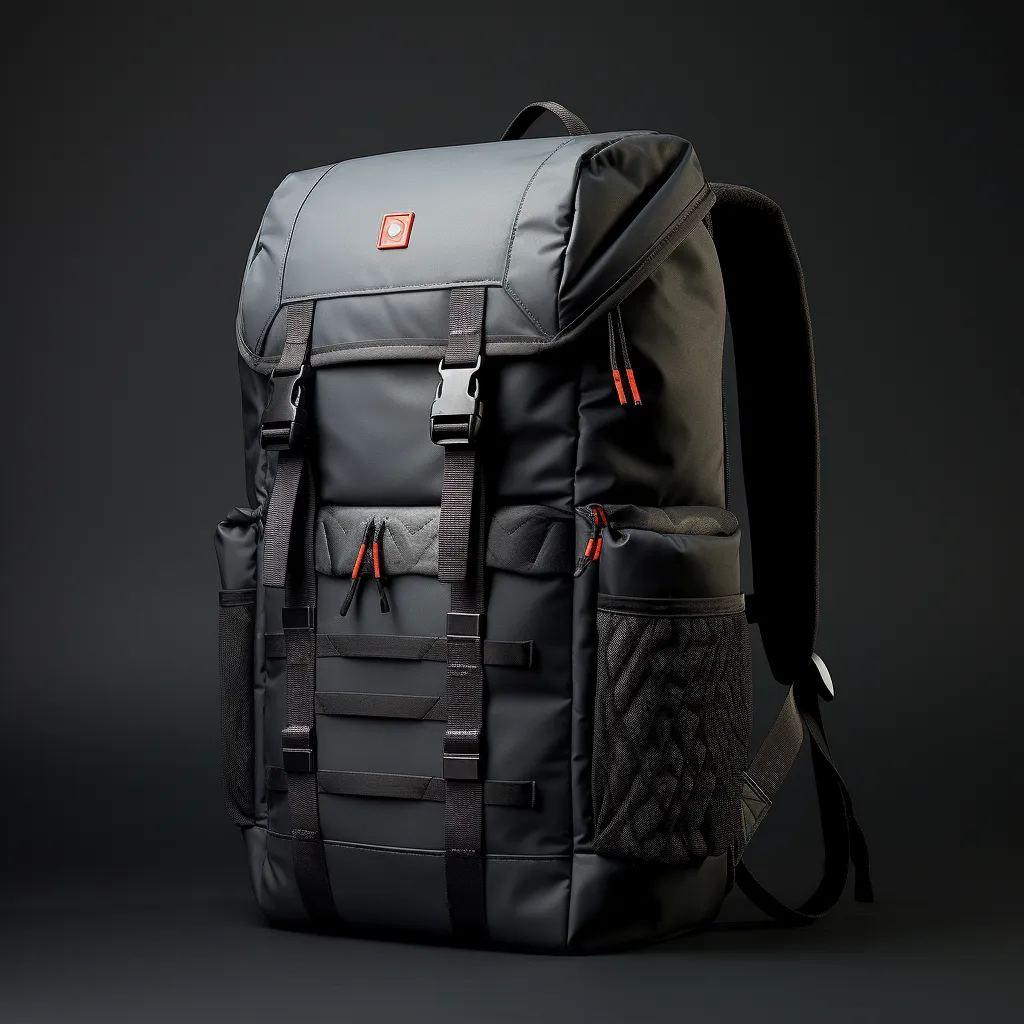
The minimum order quantity is 500 pcs per style and per colourway, and every one of those four words carries weight. It is 500 pieces, not 500 units of value and not 500 dollars. It applies per style, meaning per distinct design, not per order. And it applies per colourway, meaning per distinct colour combination of that design. A creator ordering one bag in one colour commits to 500 pieces; a creator ordering the same bag in two colours commits to two style-colourway combinations unless a split is agreed in advance.
The reason the number exists is set-up economics rather than profit. Every production run carries fixed costs that do not scale with quantity: a pattern is checked, cutting markers are laid, a line is set up, machines are threaded, operators are briefed and the first pieces are inspected until the line is stable. On a structured laptop bag that stabilisation consumes a meaningful share of the first two hours of a run regardless of whether 500 or 5,000 pieces follow. Below roughly 500 pieces those fixed costs dominate the unit cost to the point where the price stops making sense for either party.
For a tech creator, the practical consequence is that 500 is the planning unit. Reward tier maths, stretch goals and re-orders should all be modelled in multiples of 500 per style-colourway, because that is the granularity at which cost actually changes. Modelling in arbitrary numbers such as 620 or 780 produces a budget that does not match any quotation, and the mismatch always resolves in the same direction.
It is also worth understanding what the number is not. It is not a maximum, and it is not a commitment to a single shipment. A campaign that funds at 1,200 units orders 1,200, and a campaign that needs two delivery waves can often schedule them within one order. The flexibility is in the scheduling rather than in the quantity. Our low MOQ bag production for creators page sets out where the minimum sits across formats and how a pilot run differs from a full campaign run.
Style and colourway: how the count is applied
Style and colourway are the two axes that multiply. A style is a distinct design: a different pattern, a different panel layout, a different size or a materially different construction. A colourway is a distinct colour combination of the same style. Two sizes of the same bag are usually two styles, because they need different patterns and different cutting markers. Two colours of the same size are two colourways of one style.
| Order | Styles | Colourways | Commitment |
|---|---|---|---|
| One bag, one colour | 1 | 1 | 500 pcs |
| One bag, two colours | 1 | 2 | Two 500-pcs colourway commitments, unless a split is agreed before the fabric order |
| Two sizes, one colour each | 2 | 1 each | Two style commitments |
| Two sizes, two colours each | 2 | 2 each | Four commitments; the most expensive planning error in this category |
| One bag plus one matching pouch | 2 | 1 each | Two style commitments, but the pouch shares the fabric order |
| One bag, one colour, re-ordered later | 1 | 1 | A second 500-pcs order at a lower unit cost |
There is a distinction that catches creators out: a colourway is not only the shell colour. If the zip tape, the lining, the webbing and the binding all change with the colour, that is clearly a new colourway. If only the shell fabric changes and all trim stays black, it may be possible to treat the run as one production schedule with two fabric lots, which is cheaper. Declare the full trim specification for each colour, because the answer depends on how much of the bill of materials actually changes.
The cheapest legitimate way to add visual variety is to change what does not require a separate fabric purchase. A contrast zip tape, a different pull, a woven label colour or a binding colour can often be varied within a single run at little or no cost. That gives a campaign two visually distinct rewards without two commitments, and it is the first option a programme coordinator will suggest when a creator asks for a second colour.
Where a campaign genuinely needs two sizes, treat them as two products with two budgets rather than as one order with a variation. The unit cost will be quoted separately and the saving is in the shared material order, not in a shared minimum.
What a 500-pcs laptop bag order includes
Creators ask what the money buys, and the honest answer is worth setting out item by item, because most of the confusion in this category comes from assumptions about what is bundled. A standard 500-pcs custom laptop bag order covers the materials, the labour, standard packaging, the sampling programme structure and pre-shipment inspection. It does not cover tooling, specialist hardware sourcing, branded retail packaging or freight.
| Element | Included? | Comment |
|---|---|---|
| Shell fabric, lining, foam and webbing | Yes | Purchased against the approved specification |
| Standard hardware: zips, buckles, sliders | Yes | Stock items in standard finishes |
| Cutting, sewing, assembly and finishing | Yes | The production run itself |
| Standard polybag and export carton | Yes | Plain packaging suitable for bulk shipment |
| Sampling programme | Yes | 6-10 working days standard, 12-15 for complex builds |
| Pre-shipment inspection | Yes | AQL 2.5 to ISO 2859-1 |
| Custom tooling, dies or moulds | No | Separate one-off charge where required |
| Specialist or branded hardware | No | Surcharge plus a longer sourcing lead time |
| Printed retail packaging or header cards | No | Quoted separately per unit |
| Third-party laboratory testing | No | Booked and billed by the laboratory |
| Freight and duties | No | FOB Xiamen; onward carriage is the buyer's account |
Two inclusions deserve emphasis because they are the ones creators assume are extras. Sampling is part of the programme rather than a bolt-on, which means the 6-10 working day window is planned into the schedule rather than added to it. And pre-shipment inspection at AQL 2.5 to ISO 2859-1 is standard, which means a campaign does not have to negotiate separately for the right to have the run checked.
The exclusions are equally worth stating plainly. Freight is not included because the term is FOB Xiamen: the goods are delivered to the port, and onward carriage, insurance, duties and last-mile delivery are on the buyer's account. That is standard, but it is the single most common source of a budget overrun on a first campaign, because per-unit freight on a structured bag is substantial and is easy to underestimate.
It is also worth asking what happens to offcuts and surplus. Fabric waste on a structured bag runs 8 to 15 percent, and whether that waste is billed as material or absorbed into the unit price is a legitimate question that affects the comparison between two quotations.
Finally, ask for the quotation to state the packing ratio. Two quotes at the same unit price are not equivalent if one packs 8 bags per carton and the other packs 12, because the freight difference across 500 units is larger than most specification savings.
What is not included, and what carries a surcharge
Surcharges are not penalties; they are the honest price of things that fall outside a standard run. The list is short and predictable, and knowing it in advance turns an unwelcome surprise into a planning decision. Most surcharges fall into one of three groups: items that require a separate purchase, items that require extra operations, and items that require a third party.
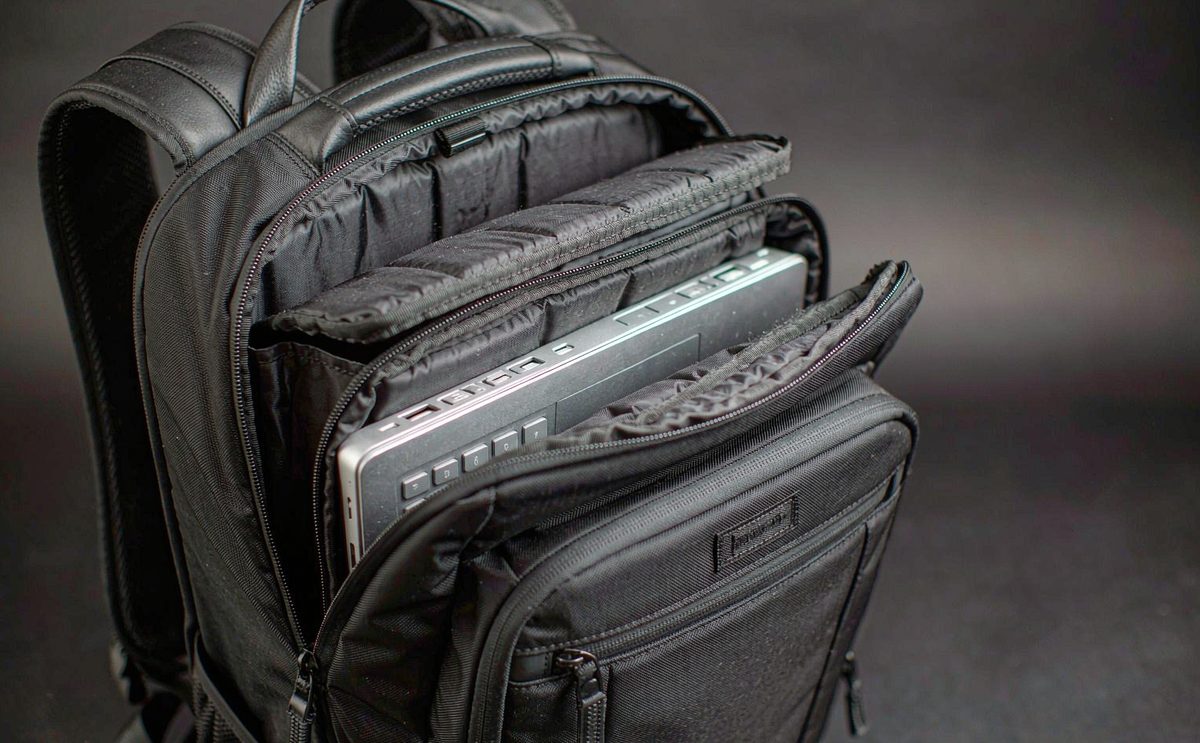
- Custom tooling. A moulded panel, a die for a foam insert or a debossing plate is a one-off charge, not amortised into 500 units.
- Specialist hardware. A branded zip, a metal badge or a custom-moulded buckle carries a surcharge and a sourcing lead time.
- Non-standard fabric. A mill colour or a custom weave has its own minimum, often several hundred metres, which is separate from the bag MOQ.
- Retail packaging. A printed box, a header card or a barcode label is quoted per unit and may carry its own print minimum.
- Third-party testing. Laboratory reports are billed by the laboratory and booked during the sampling window.
- Rush scheduling. Compressing bulk below 35 days is sometimes possible and always carries a premium.
Custom fabric is the surcharge that most often surprises tech creators, because laptop bags frequently need a specific coated weave or a recycled content certification. A mill will typically impose its own minimum order, and if a campaign needs less than that, the surplus is either paid for or stored. Ask about stock alternatives in the same specification, because a stock fabric in the right denier and coating usually performs identically and removes the mill minimum entirely.
Rush scheduling is worth a paragraph of its own because campaigns ask for it constantly and it is rarely the right lever. production 35-50 days and the range reflects real capacity planning rather than padding. Compressing it means displacing another order or running overtime, and the premium is real. The cheaper alternative is to compress the sampling window instead, which is often possible when the specification is complete at the RFQ stage.
Set-up, sampling and one-off charges at this volume
Understanding the shape of the cost curve helps creators make better decisions than simply asking for a discount. At 500 pcs the unit price carries a fixed component and a variable component. The variable component is fabric, hardware and labour, and it falls modestly with volume. The fixed component is set-up: pattern checking, marker making, line set-up, machine threading and first-piece stabilisation, and it does not fall at all.
| Volume | Set-up cost per unit | Variable cost per unit | Indicative total index |
|---|---|---|---|
| 500 pcs | Highest | Baseline | 100 |
| 1,000 pcs | Roughly half of the 500 figure | Slightly lower | Typically 85-92 |
| 2,000 pcs | Roughly a quarter | Lower again | Typically 78-86 |
| 5,000 pcs | Negligible per unit | Lowest of the four | Typically 72-80 |
Read that table as the argument for stretch goals. The largest single drop in unit cost happens between 500 and 1,000 pcs, because the set-up component halves. A campaign that designs a stretch goal capable of doubling the core volume is not just selling more bags; it is moving into a materially better cost position, and the margin on the additional units is higher than the margin on the first ones.
Set-up charges that do appear separately are mostly tooling, and on a laptop bag the candidates are a moulded back panel, a debossing plate for a logo and any die for a foam insert. Each is a one-off and each should be quoted as a line item rather than buried in the unit price, because buried tooling makes a re-order comparison impossible. Ask for tooling as a separate line and the second-order economics become transparent.
Deposits and payment timing belong in the same conversation. T/T 30/70 means 30 percent to release the order and 70 percent before shipment, so most of the cash leaves before any backer receives anything, which is worth modelling in campaign cash flow rather than discovering.
Fabric and hardware minimums behind the number
Behind the 500-pcs bag minimum sits a set of component minimums that are invisible to the creator and decisive for the production team. Fabric is bought by the metre, usually in roll quantities. Hardware is bought in lots set by the supplier. Foam, webbing and thread have their own purchase units. A run of 500 bags consumes all of these in quantities that are close to, and sometimes below, what suppliers will sell.
That is the mechanical reason the number is what it is. A laptop bag uses roughly 1.2 to 2.0 metres of shell fabric depending on size and panel layout, so 500 bags consume 600 to 1,000 metres before waste. Add lining, foam and webbing and the purchase is substantial enough to be worth a mill's attention. Below that the material buying becomes inefficient and the price per metre rises, which is passed straight through.
- Shell fabric. Bought by the roll; a mill colour carries its own minimum, often several hundred metres.
- Lining and foam. Bought by the roll or sheet; waste allowance runs 8-15 percent on a structured bag.
- Zips. Bought in length lots; a non-standard length or colour carries a minimum and a lead time.
- Buckles and sliders. Bought in component lots, typically in the hundreds or thousands of pieces.
- Webbing and binding. Bought by the roll; a non-standard width or colour has its own minimum.
The practical advice is to specify standard components wherever the design allows. A stock zip in a stock colour and a standard length avoids a component minimum and a sourcing delay. A stock webbing width in black avoids the same. Where a custom component genuinely matters to the product, it is worth the surcharge, but the decision should be made item by item rather than applied across the whole bill of materials.
Splitting 500 across sizes, colours and tiers
The most common planning question from tech creators is whether 500 can be split. The answer depends entirely on what is being split. Splitting one production run across two delivery addresses is usually fine. Splitting across two colours is sometimes possible if declared before the fabric order. Splitting across two sizes is generally not, because two sizes are two styles with different patterns and different cutting markers.
Where a split is possible, the mechanism is a single production schedule. Two colourways scheduled together share the line set-up, the pattern and the labour briefing, so the fixed cost is incurred once rather than twice. That is what makes a split economically viable, and it is why the request has to be made before the fabric order is placed rather than after the first sample is approved. Once the fabric is bought for one colour, the schedule is set.
- Decide the split at RFQ stage. Sizes, colours and quantities declared before fabric is ordered.
- Keep the trim common. Shared zip, lining, webbing and hardware makes a colour split easier to schedule.
- Accept a tolerance. A colour split usually carries a tolerance of plus or minus 5-10 percent per colour.
- Do not split across patterns. Two sizes need two patterns and are two styles.
- Confirm before sample approval. After approval the schedule is fixed and a change is a new order.
There is one exception worth knowing. A second colourway introduced as a stretch goal after funding is technically a new commitment, but because the fabric and hardware decisions are already made, the sampling window for it is much shorter. A second colour on an existing style can often be sampled faster than the original was, which makes it a realistic stretch goal in a way a second size is not.
Packaging, labelling and logistics at 500
Standard packaging is a plain polybag and an export carton, and it is adequate for a campaign shipping to a fulfilment partner. Retail packaging is a separate decision with separate economics: a printed box or a header card is quoted per unit and usually carries a print minimum of its own, often 500 to 1,000 pieces, which happens to align conveniently with the bag MOQ.
Carton planning is where money is won or lost on a structured bag, because freight is charged on volume. A laptop bag ships at its own volume whether or not it is compressed, so the two variables are how many units fit per carton and whether the carton dimensions are efficient. Agreeing the packing ratio and the carton size before production, rather than discovering them at the warehouse, can change per-unit freight by a meaningful margin on 500 units. Our crowdfunding rewards fulfilment page covers how carton planning is modelled against per-unit freight before a run is booked.
| Bag format | Units per carton | Carton weight | Freight sensitivity |
|---|---|---|---|
| Slim 14-inch laptop sleeve | 20-30 | 12-18 kg | Low; packs efficiently |
| Unstructured laptop tote | 12-20 | 14-20 kg | Moderate |
| Structured 25-30 L laptop backpack | 8-12 | 16-24 kg | High; volume-driven |
| Backpack with a moulded panel | 6-10 | 18-26 kg | Highest; cannot be compressed |
Labelling is the last item and it is cheap to get right. A carton marking scheme, a barcode if the fulfilment partner requires one, and any country-of-origin marking should be specified before packing rather than applied afterwards. Retrospective labelling at a warehouse costs several times what it costs on the production floor, and it is the kind of avoidable expense that appears only in the final invoice.
On timing, remember that FOB Xiamen means the clock stops at the port. Onward carriage, customs and last-mile delivery are the buyer's account and can easily add more time than production did. A campaign that quotes a delivery date based on the 35-50 day production window alone will be wrong by however long the shipping leg takes.
Re-order economics after the campaign
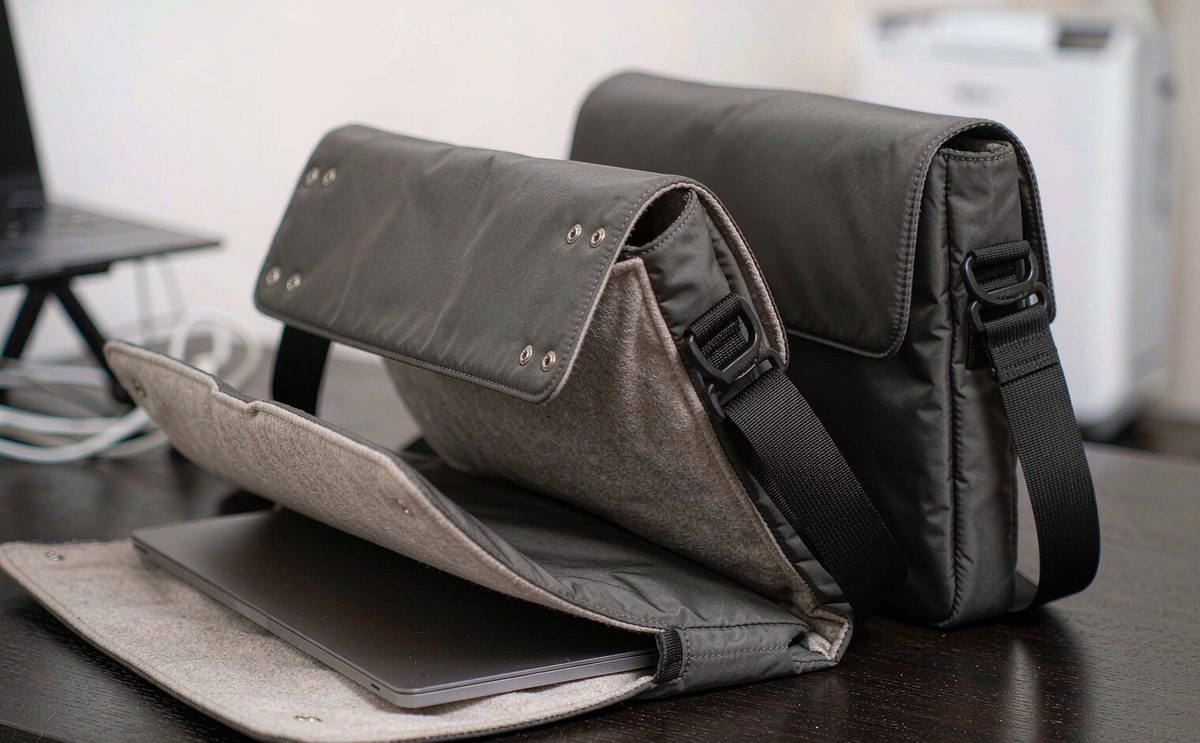
Most tech campaigns that succeed go on to sell retail, and the second order is where the economics get interesting. A re-order of an existing style and colourway has no pattern checking, no marker making and no sampling by default, because all of that was done the first time. The pattern exists, the fabric is known, the hardware supplier is identified and the line has run the style before.
What that means in practice is a faster quote, a shorter pre-production window and a lower unit cost. The reduction is not dramatic on the variable side, but the set-up component largely disappears, which is the same effect the volume table showed. A re-order at 500 pcs often lands at a better price than the first order did at the same quantity, and a re-order at 1,000 pcs lands better again.
- No new tooling. Any die, plate or mould from the first run is reused; keep the tooling agreement in writing.
- No new sampling by default. A repeat of an approved specification needs confirmation, not a full round.
- Fabric lot variation. Expect a small shade variation between lots and agree an acceptable tolerance in writing.
- Shorter quote turnaround. The specification is known, so a quotation returns quickly.
- Retain a physical reference. Keep one unit from the first run as the shade and construction standard.
The one caution is shade. Fabric is a dyed product and lots vary slightly, so a re-order will not be a perfect match to the first run. Agree an acceptable tolerance before the re-order rather than discovering the difference on arrival, and keep a retained sample from the first run as the reference. This is a normal, manageable issue and not a defect, but it is much easier handled by agreement than by dispute.
Planning quantity against the funding target
Quantity planning is where the funding model and the production model meet, and the two use different units of account. A campaign thinks in backers; production thinks in style-colourway commitments. Converting between them is a four-step exercise that every tech creator should do before publishing a tier structure, because the result determines whether the campaign can actually be fulfilled at the quoted price.
- Estimate tier mix. What share of backers take the bag tier versus a smaller reward; tech campaigns often see 40-60 percent in the bag tier.
- Convert backers to units. Remember that a bundle tier containing one bag is one unit, not two.
- Round to the commitment granularity. 500 per style-colourway, with any second colour as its own commitment.
- Add a contingency. Order 3-5 percent above the expected unit count for damage, defects and survey changes.
The contingency step is the one creators skip and later regret. A campaign that orders exactly its expected unit count has no buffer for a damaged shipment, an inspection failure rate at the upper end of the AQL tolerance, or backers who change their survey answer. Three to five percent is cheap insurance, and on a 500-pcs order it is 15 to 25 units, which is a trivial cost compared with a shortfall discovered during fulfilment.
There is also a strategic reason to think about quantity early. Because unit cost falls between 500 and 1,000 pcs, a campaign that expects to land near 600 units should consider whether a stretch goal or a modest early commitment at 1,000 would be better economics. Ordering 1,000 when 600 are needed is not automatically wasteful if the campaign intends a retail re-order, because the surplus is inventory rather than loss.
A 500-pcs planning checklist for tech creators
The checklist below is what a programme coordinator needs in order to return a firm number rather than a range. Every item on it is something that changes the quotation, and every missing item is a question that will be asked during the quote process anyway. Sending it complete is the single fastest way to compress the pre-production calendar on a laptop bag campaign.
| Item | Why it changes the quote | Status if missing |
|---|---|---|
| Largest device to fit, in millimetres | Sets the sleeve and panel dimensions | Quotation returns a range |
| Quantity per style and colourway | Sets the set-up amortisation | Cannot quote a firm unit price |
| Fabric specification or target | Stock versus mill minimum | Assumed stock fabric |
| Hardware grade and finish | Stock versus sourced component | Assumed stock hardware |
| Branding method and artwork | Tooling or print setup | Sampling cannot start |
| Delivery window and Incoterm | Scheduling and freight | Assumed FOB Xiamen, 35-50 days |
With those six items, a production partner can return fabric and hardware options, a unit cost band at three volumes and a confirmed sampling window of 6-10 working days for a standard build or 12-15 for a complex one. Without them, the honest answer is a range, and a range cannot support a funding target. Our page on custom laptop bags for Kickstarter covers how the device compartment specification is written, which is the item most often missing from this list.
One closing point on timing. Sampling at 6-10 working days plus production 35-50 days plus the shipping leg is the real calendar, and it should be published on the campaign page rather than replaced with an optimistic date. Backers who understand the sequence are patient; backers who were promised a date that ignored production are not. If the schedule is genuinely tight, the lever is a complete specification at RFQ stage, not a compressed production window.
One last item belongs on the list even though it is not a specification: the delivery window. A campaign that states when the bags are needed, rather than asking how long they take, gets a schedule it can publish and a production slot it can rely on.
Turn a quantity into a quotation
Send the device fit, quantity per style and colourway, fabric and hardware targets and your delivery window. You get a unit cost band at three volumes and the confirmed sampling window within one business day. Write to service@junyuanbags.com or use the quote form.
- Minimum order quantity
- 500 pcs per style / colourway
- Sampling
- 6-10 working days (12-15 for complex builds)
- Bulk production
- 35-50 days after deposit + approved pre-production sample
- Inspection
- AQL 2.5 to ISO 2859-1
- Trade term
- FOB Xiamen
- Payment
- T/T 30/70
- Capacity
- 200,000 pcs per month
- Production floor
- 4,950 m2, SGS-verified
- Team
- 137 staff / 7 production lines / 149 machines
Frequently Asked Questions
What does 500 pcs per style and colourway mean on a laptop bag?
It means 500 pieces of one design in one colour combination. A second colour is normally a second commitment and a second size is a second style, because it needs a different pattern and cutting marker. The number reflects set-up economics: pattern checking, marker making, line set-up and first-piece stabilisation are fixed costs that dominate below 500 units.
Can I split a 500-pcs order across two colours?
Sometimes, if the split is declared before the fabric order is placed. Two colourways scheduled in one production run share the line set-up, which is what makes a split viable. Keeping the zip, lining, webbing and hardware common makes it easier, and expect a tolerance of plus or minus 5 to 10 percent per colour.
Is two sizes of the same bag one order or two?
Two. Two sizes require two patterns and two cutting markers, so they are two styles under the standard minimum. If a campaign needs two sizes, think of it as two 500-pcs commitments. A second colour is usually the cheaper way to add variety, because it shares the pattern.
What is included in a 500-pcs laptop bag order?
Materials, labour, standard polybag and export carton, the sampling programme and pre-shipment inspection at AQL 2.5 to ISO 2859-1. Not included are custom tooling, specialist or branded hardware, printed retail packaging, third-party laboratory testing and freight, because the term is FOB Xiamen.
Why is freight not included in the unit price?
Because the trade term is FOB Xiamen: goods are delivered to the port and onward carriage, insurance, duties and last-mile delivery are on the buyer's account. Per-unit freight on a structured bag is substantial because carriers charge on volume, so it should be quoted separately and modelled before the pledge price is set.
Are there one-off charges at 500 pcs?
Yes, mostly tooling. A moulded back panel, a debossing plate for a logo and any die for a foam insert are one-off items. Ask for tooling quoted as a separate line rather than buried in the unit price, because that makes the re-order comparison transparent and lets you see what a second run actually costs.
How much does unit cost fall between 500 and 1,000 pcs?
The largest drop happens in that band because the set-up component halves. Indicatively a 1,000-pcs run lands around 85 to 92 percent of the 500-pcs unit cost, and 2,000 pcs around 78 to 86 percent. That is why a stretch goal capable of doubling core volume improves margin rather than just adding revenue.
Does custom fabric carry its own minimum?
Yes. A mill colour or custom weave has its own minimum, often several hundred metres, separate from the bag MOQ. A laptop bag uses roughly 1.2 to 2.0 metres of shell fabric per unit, so 500 bags consume 600 to 1,000 metres before waste. A stock fabric in the same denier and coating usually removes the mill minimum entirely.
What packaging is included at 500 pcs?
A plain polybag and an export carton, which is adequate for shipping to a fulfilment partner. A printed box, header card or barcode label is quoted separately per unit and usually carries its own print minimum, typically 500 to 1,000 pieces, which happens to align with the bag minimum.
How many laptop bags fit in an export carton?
A slim 14-inch sleeve packs 20 to 30 per carton, an unstructured tote 12 to 20, and a structured 25-30 L backpack 8 to 12. That ratio drives per-unit freight because carriers charge on volume, so agree the packing ratio and carton dimensions before production rather than discovering them at the warehouse.
Is a re-order cheaper than the first order?
Usually yes. The pattern exists, the fabric and hardware are known and the line has run the style before, so the set-up component largely disappears and the quote returns faster. Expect a small shade variation between fabric lots and agree an acceptable tolerance in writing, keeping one unit from the first run as the reference.
How much contingency should I order above my expected unit count?
Three to five percent. On a 500-pcs order that is 15 to 25 units, which covers transit damage, an inspection failure rate at the upper end of the AQL 2.5 tolerance and backers who change survey answers. A campaign that orders exactly its expected count has no buffer for any of these.
People Also Ask
Can I order 300 custom laptop bags for a small campaign?
The standard minimum is 500 pcs per style and colourway, because set-up costs dominate below that volume. If 300 is the real requirement, ask about a pilot run structure and be prepared for a higher unit cost rather than an exception to the minimum.
Does one order cover two colours?
Only if the split is declared before the fabric order is placed and both colours run in one schedule. Otherwise each colourway is its own 500-pcs commitment, because fabric is purchased per colour.
Is sampling included in the 500-pcs price?
Yes, the sampling programme is part of the order. Standard builds take 6-10 working days and complex builds 12-15. Tooling, if the design needs a die, plate or mould, is a separate one-off charge.
Why does unit cost drop so much at 1,000 pieces?
Because set-up is a fixed cost. Pattern checking, marker making and line stabilisation cost the same whether 500 or 1,000 units follow, so doubling the volume halves that component per unit.
Do I pay for inspection separately?
No. Pre-shipment inspection at AQL 2.5 to ISO 2859-1 is included in a standard order. Third-party laboratory testing, such as a drop or abrasion report, is booked and billed directly by the laboratory.
Should I order extra bags above my backer count?
Yes, three to five percent. It covers damage, defects and survey changes, and on a 500-pcs run it costs far less than a shortfall discovered during fulfilment.