Custom Laptop Totes for Campaigns: The Office-to-Cafe Bag That Funds
A laptop tote is the highest-value tote reward because it replaces a product backers already pay real money for. The specification is governed by the device: sleeve dimensions cut to the largest laptop the page claims to fit, a suspended sleeve with reinforced corners, padding under the base, and structure that stands up on a table. Minimum order is 500 pcs per style and per colourway, sampling runs 6 to 10 working days, bulk runs 35 to 50 days, and inspection holds at AQL 2.5 to ISO 2859-1.
- Why a laptop tote funds better than most rewards
- Device sizing: the numbers behind the sleeve
- Padding, corner protection and the drop case
- Sleeve construction: floating, suspended and fixed
- Organisation for a working day
- Structure that stands up on a table
- Materials for a professional aesthetic
- Closures, security and quiet access
- Weight, comfort and the daily commute
- Cost and the case for a premium tier
- Sampling and drop testing a laptop tote
- QC and what the protection claim means
Why a laptop tote funds better than most rewards
Most tote rewards compete against other totes, which is a crowded comparison with low price expectations. A laptop tote competes against laptop bags, which is a category where people routinely spend real money and where a well-made product is expected to cost a meaningful amount. That shift in the comparison set is the entire commercial argument for this product, and it is why a laptop tote can sit at a pledge level two or three times higher than a market tote and still feel reasonably priced to a backer.
The second reason is that it is used every working day. A beach tote is used for a season, a market tote once or twice a week, and a laptop tote five days a week for years. That intensity of use means the backer notices quality, and it means the product justifies its price through use rather than through novelty. It also means the failure modes are more visible, so the specification has to be built for daily use rather than for a photograph.
The third reason is audience fit. Campaigns with a professional, creative or technical audience convert well here, because the backer is someone who carries a laptop and is not satisfied with the bag they have. That is a large and specific group, and it is reachable through the same channels a tech or design campaign already uses. Our team has supported 20 plus crowdfunding campaigns and this is one of the categories where the custom laptop bags audience overlaps most strongly with an existing campaign audience.
A laptop tote competes against laptop bags, not against other totes. That comparison is what supports a pledge level two or three times higher.
Device sizing: the numbers behind the sleeve
Everything starts with the device. A laptop tote is sold by the size of laptop it holds, and the claim on the campaign page is the promise that has to be engineered. The practical approach is to take the external dimensions of the largest device the page will claim, not the screen size, because screen size does not determine footprint. Two 14 inch laptops from different manufacturers can differ by more than a centimetre in width and depth, and a sleeve cut to one will not take the other.
The sleeve is then cut to those external dimensions plus clearance for padding, which usually means adding around ten to fifteen millimetres in each direction. The padding has to compress slightly to grip the device, so the arithmetic is device dimension plus padding thickness minus a small compression allowance. Get this wrong in either direction and the product fails: too tight and the laptop will not go in, too loose and it slides around and the corner protection stops working.
| Device class | Typical external size | Sleeve implication | Note |
|---|---|---|---|
| 13 inch laptop | Around 300 x 210 mm | The compact case | Fits most tote widths easily |
| 14 inch laptop | Around 320 x 220 mm | The common reference | Check the actual model |
| 15 and 16 inch laptop | Around 350 x 245 mm | Sets the main panel width | Heavier, needs a wider handle |
| Tablet or e-reader | Smaller, varies | A secondary sleeve | Often a separate slip pocket |
| Laptop plus charger | Adds a block of volume | Needs a separate pocket | Keep the charger out of the sleeve |
The claim on the page should be conservative and specific. Naming the largest device that fits comfortably, and ideally naming a couple of example models, is better than a vague statement about size ranges, because it lets a backer check before pledging. Our team records which devices passed the fit test on the sample and provides that list, which turns a marketing claim into a verifiable one and reduces the return rate considerably.
Padding, corner protection and the drop case
Padding on a laptop tote has a specific job, which is to absorb the energy of the bag being set down rather than dropped from height. The realistic event is a backer putting the bag down on a hard floor a little more quickly than intended, with a two kilogram laptop inside. The padding that addresses that is a closed-cell foam of a few millimetres on the base and the lower corners, plus a denser foam in the sleeve walls, and it is far more effective than uniform thick padding everywhere.
Corner protection matters more than face protection, because a laptop that lands on a corner concentrates all the force into the chassis at one point. The specification response is an extra layer of foam at the two lower corners of the sleeve, sewn in rather than inserted loose, and a base pad that runs the full width. It is a small amount of extra material in exactly the right place. Our team treats corner reinforcement as a line on the tech pack rather than a finishing detail.
- Base pad: closed-cell foam across the full width of the base
- Lower corners: an extra layer of foam, sewn in rather than loose
- Sleeve walls: denser foam that grips without bulking the bag
- Dividers: keep the charger out of the sleeve so it cannot press on the lid
- Test: set the loaded bag down hard on a hard floor and inspect
The claim discipline here matters. Padding reduces risk; it does not make a laptop indestructible, and a campaign that promises drop protection is promising something a soft bag cannot deliver. The honest and still compelling claim is protection against the knocks of daily commuting, plus organisation and a professional appearance. A backer choosing between two bags will believe the honest claim and distrust the exaggerated one.
Sleeve construction: floating, suspended and fixed
There are three ways to build the sleeve and the difference between them is the most important structural decision on this product. A fixed sleeve is stitched directly to the bottom seam of the bag, which is cheap and means the laptop rests on the base of the bag. A floating sleeve is attached only at the sides or the top, so the laptop hangs clear of the base. A suspended sleeve goes further, with the sleeve bottom held a centimetre or two above the base of the bag by its own panel, so nothing transmits a set-down shock into the device.
Suspended is the correct construction for a laptop tote and the cost difference over a fixed sleeve is small, because it is one extra panel and a different seam arrangement. The benefit is disproportionate: the device never rests on the base, so setting the bag down hard does not transmit directly into the chassis. Our team recommends suspended construction on every laptop tote, and regards a fixed sleeve on a premium-priced bag as a specification that will generate complaints.
Organisation for a working day
A laptop tote is an office-to-cafe bag, which means it carries a predictable set of objects: the laptop, a charger, a phone, a notebook or a document folder, a pen, keys, a card holder and a water bottle or a coffee cup. Each of those has a natural place and a natural pocket, and the design job is to give them that place rather than a generic set of pouches. A backer can tell within a week whether the pockets were designed by someone who works like they do.
The specific pockets that matter are a document slip at the back that takes a folder without bending it, a charger pocket separate from the sleeve, a pen loop or two, a small zip pocket for cards and keys, and a bottle pocket that is actually wide enough. That is five features and it is achievable without inflating the cost beyond reason. The pockets to avoid are the ones that compete with the laptop for space, because anything placed inside the main compartment against the sleeve adds pressure to the lid.
| Feature | Position | Why it matters | Cost impact |
|---|---|---|---|
| Document slip | Back panel, full height | Takes a folder without bending it | Low, one panel |
| Charger pocket | Front interior, separate from sleeve | Keeps a hard block off the laptop lid | Low to medium |
| Pen loops | Interior wall | Cheap and used constantly | Very low |
| Zip valuables pocket | Interior, upper third | Keys and cards in a known place | Medium, needs a zipper |
| Bottle pocket | Exterior side or interior end | Sized to a real bottle, not the narrowest | Medium, extra panel |
| Key clip | Interior webbing tab | Stops keys scratching the device | Very low |
Structure that stands up on a table
A laptop tote that collapses when it is set down is the most common disappointment in this category, because the whole point of a tote rather than a backpack is that it is set down and opened repeatedly at a desk or a cafe table. Structure comes from three things: a rigid base board, body panels with enough weight or interfacing to hold a shape, and a gusset deep enough to give the bag a footprint rather than a fold line. All three are specified rather than incidental.
The base board on a laptop tote should be heavier than on a market tote, because the load is both heavier and more valuable. A rigid board in a sleeve, cut to the full internal footprint, with a bound seam around it, is the standard. Body structure is achieved either with a heavier fabric or with an interfacing bonded to the panels, and the choice affects the hand feel: heavier fabric gives a natural structure, interfacing gives a crisper one at lower weight. Our team recommends heavier fabric for a premium product and interfacing where freight weight matters.
- Sleeve clearance
- Device dimensions plus 10 to 15 mm each direction
- Sleeve type
- Suspended, held clear of the bag base
- Base
- Rigid board in a sleeve, full internal footprint
- Corner padding
- Extra foam layer at the two lower corners
- Gusset depth
- Deep enough to give a footprint, not a fold line
- Load test
- Set the loaded bag down hard and inspect the device
Materials for a professional aesthetic
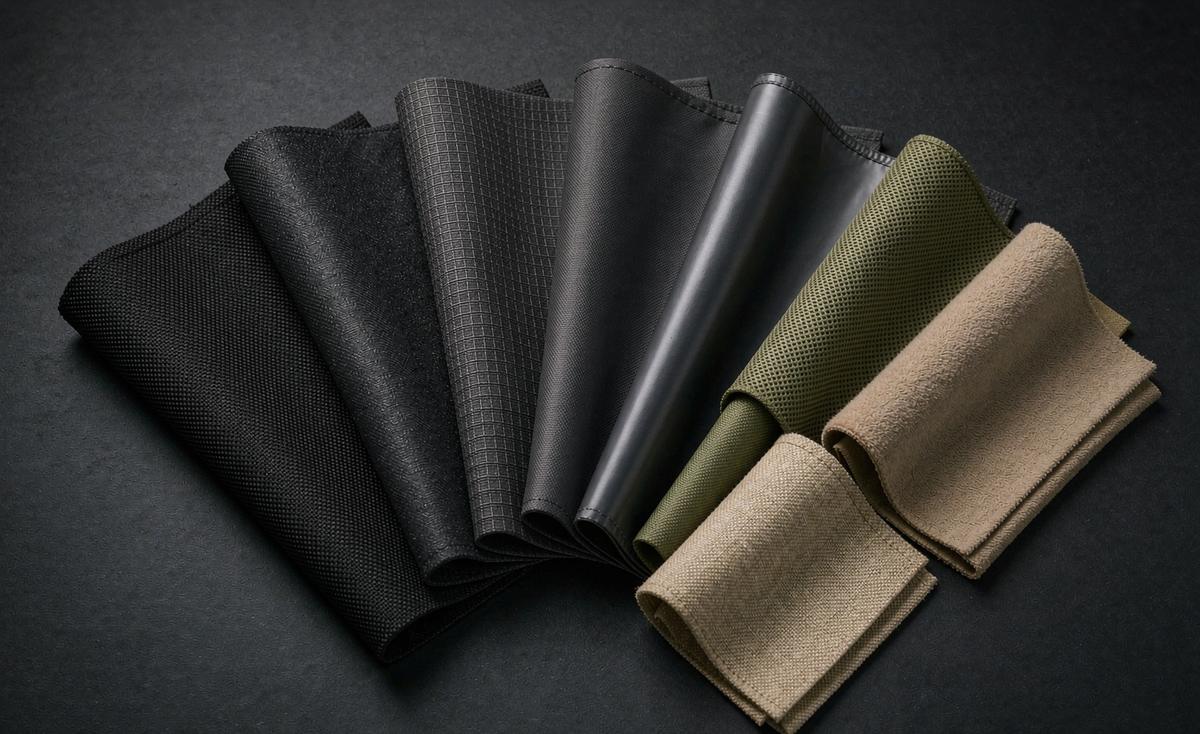
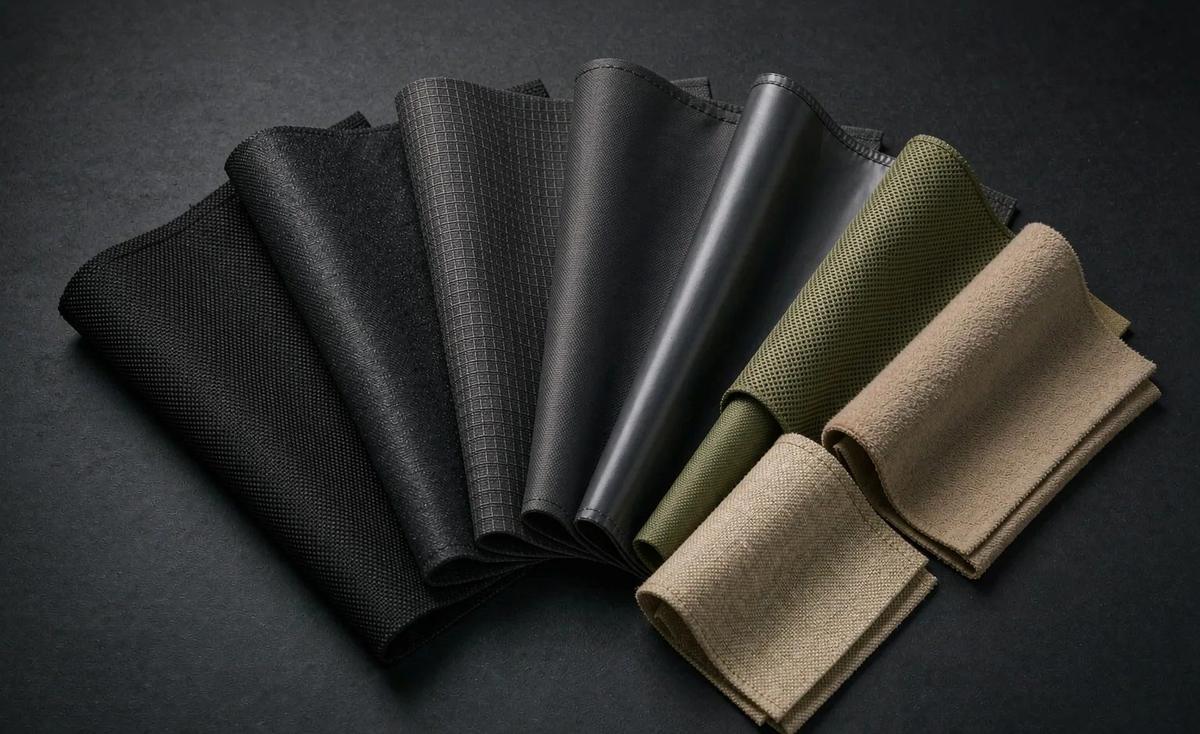
Material choice on a laptop tote is an aesthetic decision as much as a technical one, because the bag is carried into meetings. The two families that work are a heavy coated canvas or cotton blend, which reads as considered and ages well, and a structured synthetic such as a coated polyester or a laminated weave, which reads as technical and resists weather better. Both are legitimate; the choice should follow the campaign's brand rather than a preference for one material.
Weather resistance deserves a specific mention, because a commute involves rain and a laptop is the one thing in the bag that cannot get wet. A coated or laminated shell, a water-resistant zip where a zip is specified, and a base made from a material that does not wick water upward are the three lines that deliver it. None of them require a fully waterproof construction, and claiming waterproofness would set an expectation the bag cannot meet. Water resistant is the honest and sufficient claim.
Colour and finish matter commercially in this category in a way they do not elsewhere. A professional bag in a neutral colour, black, charcoal, navy or a muted earth tone, sells more broadly than one in a bright colour, and a backer who will carry it to client meetings will not choose a bright one. Our recommendation is a neutral hero colourway with a brighter option held as a stretch goal, which is also the pattern that works best against the 500 pcs per colourway minimum. Creators weighing this against other rewards in the family will find the custom bags for Kickstarter overview useful for comparing landed cost, and the book tote guide covers a lighter, print-led alternative.
Closures, security and quiet access
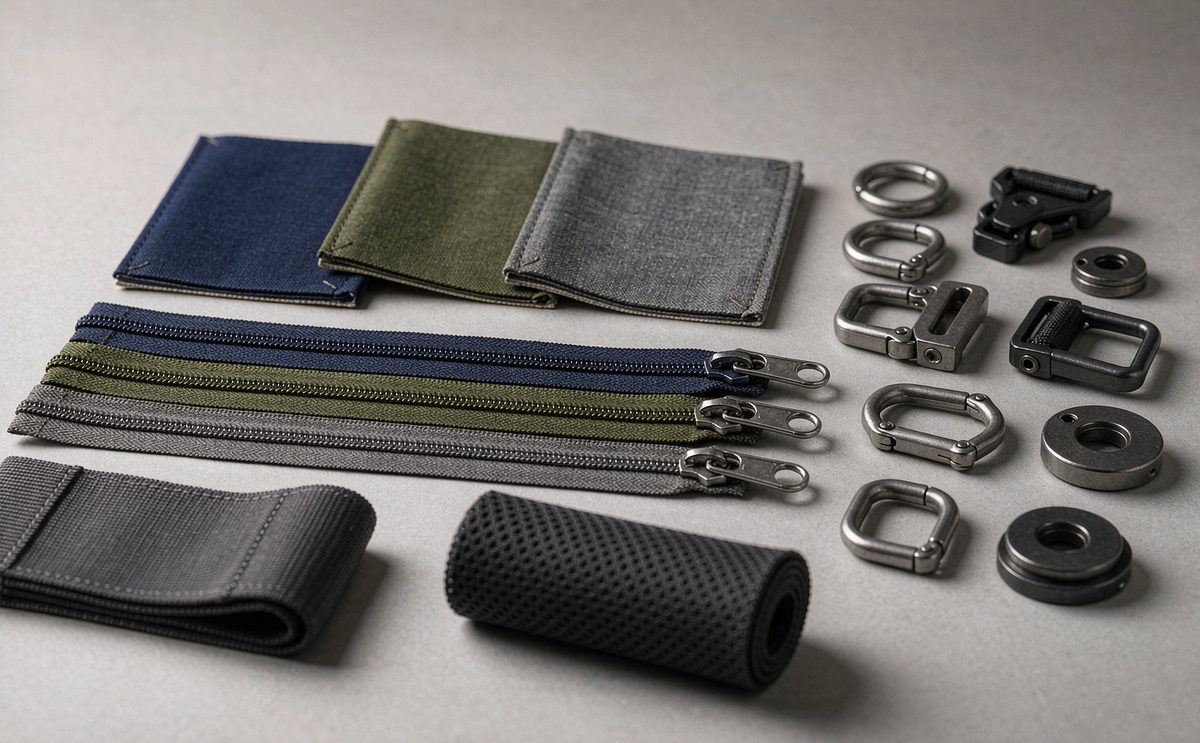
Closure on a laptop tote has to balance three things: keeping the contents in if the bag tips, allowing quiet access in a meeting, and not scratching the device. A magnetic closure satisfies the first two and is the most popular choice on premium totes, because it opens silently. A zip is the most secure and the most weather resistant but it is noisier and it can scratch a laptop lid if the pull is metal. A hook and loop tab is quiet to close but loud to open.
Our usual recommendation is a magnetic closure on the main opening with a zip on the internal valuables pocket, which gives quiet access and secure storage where it matters. Where a full zip is wanted, for weather resistance or for commuting by bike, specify a coil zip with a non-scratching pull and a garage at the end so the pull does not rest against the device. Every one of these details is cheap at specification stage and impossible to retrofit after bulk.
Weight, comfort and the daily commute
A laptop tote carries a real load every day, and the numbers are worth stating: a 14 inch laptop is around 1.5 kilograms, a charger adds another half kilogram, and a notebook, a bottle and the usual pocket contents take the total past 2.5 kilograms before the bag itself is counted. Carried by hand across a station or to a cafe, that load makes handle design the difference between a bag that is used and one that is tolerated.
The specification answer is a handle wide enough to distribute the load, padded if the bag sits at a premium price, with a drop that allows both hand and shoulder carry. Twenty-five millimetres of webbing is the minimum at this load and a padded wrap is worth the small cost. Some designs add a detachable shoulder strap, which our team recommends for anything above 15 inch capacity, because the weight of a large laptop makes hand carry uncomfortable over any distance.
Cost and the case for a premium tier
A laptop tote costs more to make than any other tote in this family, and it should, because it is sold at a higher price. The additional cost sits in the padding, the base board, the heavier fabric, the extra pockets and the hardware. Those are the components that justify the price to a backer, so they are not the place to economise. The place to economise is the print, which can be a single-colour mark, because a professional bag does not need a large printed image.
| Cost line | Share of the increase | Backer sees it as | Economise? |
|---|---|---|---|
| Padding and corner foam | Significant | Protection for the device | No, this is the product promise |
| Base board and structure | Significant | A bag that stands up | No |
| Heavier or coated fabric | Significant | Professional appearance | Only to a midweight |
| Pockets and organisation | Medium | A bag designed for work | Keep the five that matter |
| Hardware and closure | Medium | Quality in the hand | Choose well, do not downgrade |
| Small | Branding | Yes, one colour is enough |
The tier case follows from that. A laptop tote belongs in the upper half of a reward ladder, priced above the point where a backer compares it with a cheap tote and below the point where they compare it with a luxury briefcase. It is a strong anchor for a bundle, paired with a pouch or a cable organiser, and it is the product most likely to justify a stretch goal unlocking a second colourway. Our team runs the unit cost against the proposed tier before a deposit, because the margin has to survive platform fees and shipping to several regions. Creators planning a modest first run should read the low minimum production guide before setting the quantity, and the crowdfunding bag guide sets out how the bag programme fits into the wider launch calendar.
Sampling and drop testing a laptop tote
Sampling runs 6 to 10 working days for a standard build and 12 to 15 for a structured bag with a suspended sleeve, a base board and multiple pockets, which is the realistic case for this product. The sample should be reviewed with the actual device or a weighted dummy of the same dimensions, not empty, because every judgement that matters on this product is a judgement under load.
The test sequence our team runs is short and specific. Load the bag with the device and a realistic complement of contents. Carry it across a room by the handle and then, if there is one, by the strap. Set it down hard on a hard floor, twice. Stand it on a table and check that it stays upright and opens usefully. Then remove the device and check the sleeve for distortion. Those five steps take ten minutes and they find almost everything that will go wrong in the field.
- Confirm the largest device the campaign will claim to fit and get its external dimensions
- Cut the sleeve to those dimensions plus padding clearance and test the real device
- Load the bag with a realistic weight and carry it by handle and strap
- Set the loaded bag down hard on a hard floor and inspect the device
- Stand the bag on a table and check that it stays upright and opens usefully
- Approve and hold the sample as the golden reference for bulk
One more sampling note specific to this product: order the sample in the colourway that will actually be sold and photograph it in a working context, at a desk or a cafe table, rather than on a white background. A professional bag sells on how it looks in the environment a backer will use it in. That is also the argument for completing sample prototyping before the page is designed rather than after.
QC and what the protection claim means
Inspection holds at AQL 2.5 to ISO 2859-1, and the plan for a laptop tote should be built around the device rather than around the bag. The checks are sleeve dimensions against the approved sample, padding presence and placement at the base and the two lower corners, suspended sleeve attachment, base board fit, and closure function. A generic inspection that counts cartons and checks colour will not catch a missing corner pad, which is the defect that matters most.
The fit check is repeated on bulk units with the real device, because a sleeve that is a few millimetres tight on the sample is a sleeve that will not accept a laptop at the top of the dimensional tolerance. Our team samples units from the bulk lot and repeats the fit test, and where a device is near the limit we report it rather than assume. That is the check that protects the campaign page claim, and the claim is the thing a backer will test first.
The protection claim itself should be written before production rather than after, and it should say what the bag actually does: padded and suspended protection against the knocks of daily commuting, a rigid base, and organisation designed for a working day. It should not say drop protection. A campaign that states the honest claim and then delivers a bag that exceeds it is the campaign that gets the five-star review. The full inspection checklist is set out in the campaign QA and QC guide.
Key takeaways
- S
- p
- e
- c
- i
- f
- y
- a
- l
- a
- p
- t
- o
- p
- t
- o
- t
- e
- a
- r
- o
- u
- n
- d
- t
- h
- e
- l
- a
- r
- g
- e
- s
- t
- d
- e
- v
- i
- c
- e
- t
- h
- e
- p
- a
- g
- e
- c
- l
- a
- i
- m
- s
- t
- o
- f
- i
- t
- ,
- w
- i
- t
- h
- a
- s
- u
- s
- p
- e
- n
- d
- e
- d
- s
- l
- e
- e
- v
- e
- ,
- c
- o
- r
- n
- e
- r
- p
- a
- d
- d
- i
- n
- g
- a
- n
- d
- a
- r
- i
- g
- i
- d
- b
- a
- s
- e
- ,
- a
- n
- d
- t
- e
- s
- t
- i
- t
- l
- o
- a
- d
- e
- d
- r
- a
- t
- h
- e
- r
- t
- h
- a
- n
- e
- m
- p
- t
- y
- .
Send us the largest laptop the bag must hold and our production team will build the sleeve specification and quote a laptop tote programme for custom tote bags.
Frequently Asked Questions
What is the minimum order for a custom laptop tote?
500 pcs per style and per colourway. A neutral hero colourway is the usual recommendation, with a brighter option held for a stretch goal, because a professional bag in a neutral colour sells more broadly and the second colourway carries its own commitment.
How do I size the sleeve for a laptop?
Use the external dimensions of the largest device the campaign claims to fit, not the screen size, because two laptops with the same screen size can differ by more than a centimetre. Add roughly 10 to 15 millimetres in each direction for padding, then test the real device in the sample.
What is a suspended sleeve and why does it matter?
The sleeve base is held clear of the bag base by its own panel, so the device never rests on the bottom of the bag. When the bag is set down hard, the shock is not transmitted into the chassis. It costs one extra panel and a different seam arrangement, and it is the correct construction for any laptop bag.
Does padding protect a laptop from a drop?
No soft bag does. Padding protects against the knocks of daily commuting, particularly the bag being set down hard on a hard floor. The honest claim is commuting protection with corner reinforcement, and a campaign that promises drop protection is promising something the product cannot deliver.
Which closure is best for a laptop tote?
A magnetic closure on the main opening is usually best, because it is secure enough to keep contents in and opens silently in a meeting. Pair it with a zip on the internal valuables pocket. If weather resistance matters, use a coil zip with a non-scratching pull and a garage at the end.
How much weight does a laptop tote carry?
A 14 inch laptop is around 1.5 kilograms, a charger adds roughly half a kilogram, and contents take the total past 2.5 kilograms before the bag itself. At that load a 25 millimetre padded handle is the minimum, and a detachable strap is recommended above 15 inch capacity.
Should the bag be waterproof?
Water resistant is the realistic and sufficient claim. A coated or laminated shell, a water-resistant zip and a base that does not wick water upward deliver what a commute needs. Full waterproofing is a different construction and claiming it sets an expectation the bag cannot meet.
What fabric suits a professional laptop tote?
Either a heavy coated canvas or cotton blend, which reads as considered and ages well, or a structured coated polyester, which reads as technical and resists weather. Choose the one that matches the campaign brand. A midweight to heavy fabric also helps the bag hold its shape.
How long does sampling take for a laptop tote?
6 to 10 working days for a standard build and 12 to 15 for a structured bag with a suspended sleeve, a base board and multiple pockets, which is the realistic case. Review the sample with the actual device or a weighted dummy, because every judgement on this product is a judgement under load.
What pockets should a laptop tote have?
Five that matter: a full-height document slip at the back, a charger pocket separate from the sleeve, pen loops, a zip valuables pocket, and a bottle pocket sized to a real bottle. Avoid pockets that compete with the laptop for space inside the main compartment.
How is a laptop tote inspected before shipment?
At AQL 2.5 to ISO 2859-1, with the plan built around the device: sleeve dimensions, padding presence and placement at base and corners, suspended sleeve attachment, base board fit, closure function, and a repeated device fit test on sampled bulk units.
Why is a laptop tote more expensive than other totes?
The extra cost sits in padding, the base board, heavier fabric, extra pockets and hardware, all of which are the components that justify the higher price to a backer. Print is the one line worth economising on, because a professional bag does not need a large printed image.
People Also Ask
Are laptop totes a good crowdfunding reward?
Yes, because they compete against laptop bags rather than against other totes. That supports a much higher pledge level, and the bag is used five days a week, so backers perceive the value through daily use.
What size laptop should the bag hold?
Size to the largest device the campaign claims to fit, using external dimensions rather than screen size. A 14 inch model is around 320 by 220 millimetres, and a 15 or 16 inch model around 350 by 245 millimetres.
Do I need padding on the base?
Yes. The realistic accident is the bag being set down hard on a hard floor, and base padding plus reinforced lower corners absorbs that. Uniform thick padding everywhere is less effective than targeted foam in the right places.
Can a tote really replace a laptop backpack?
For a commute that involves a desk or a cafe rather than a long walk, yes. A tote opens and closes faster and looks professional in a meeting. For long walks or cycling, a backpack distributes the load better and is the right choice.
Should a laptop tote have a shoulder strap?
Above 15 inch capacity, yes. A large laptop plus charger and contents makes hand carry uncomfortable over any distance. Specify a detachable, adjustable strap attaching at reinforced points rather than at the top seam.
What colour sells best for a work bag?
Neutral colours: black, charcoal, navy or a muted earth tone. A backer who carries the bag to client meetings will not choose a bright colour. Launch one neutral hero colourway and hold brighter options for a stretch goal.
How do I stop a zip scratching the laptop?
Specify a coil zip with a non-scratching pull and a garage at the end so the pull does not rest against the device. Better still, use a magnetic closure on the main opening and reserve the zip for an internal pocket.