Custom Tote Bags: Building the $29 Perk With 1,000+ Backers
A 29 dollar custom tote is the most reliable entry perk in crowdfunding because it is cheap to make, flat to ship and visible in use. Indicative FOB unit cost at 1,000 pcs is USD 2.50 to 6.00 depending on fabric and print, and landed to a backer the same tote typically costs USD 9 to 16 including freight, duty and the final parcel. That leaves real contribution at a 29 dollar pledge after platform fees, which is why the tier scales past 1,000 backers without destroying margin. This guide sets out the economics, the specification that survives the price point, and the decisions that turn a perk into a campaign growth engine.
- Why the entry perk decides a campaign's backer count
- What a 29 dollar tote actually costs
- Margin and contribution at the entry tier
- Why totes convert better than other entry perks
- Specification that survives at a low price point
- Fabric weight and handle choices
- Print, embroidery and artwork economics
- MOQ and volume planning for a perk at 1,000
- Using the tote as an add-on instead of a tier
- Bundling the tote to lift average pledge value
- Fulfilment economics of a flat-packing perk
- The quality floor: what not to cut
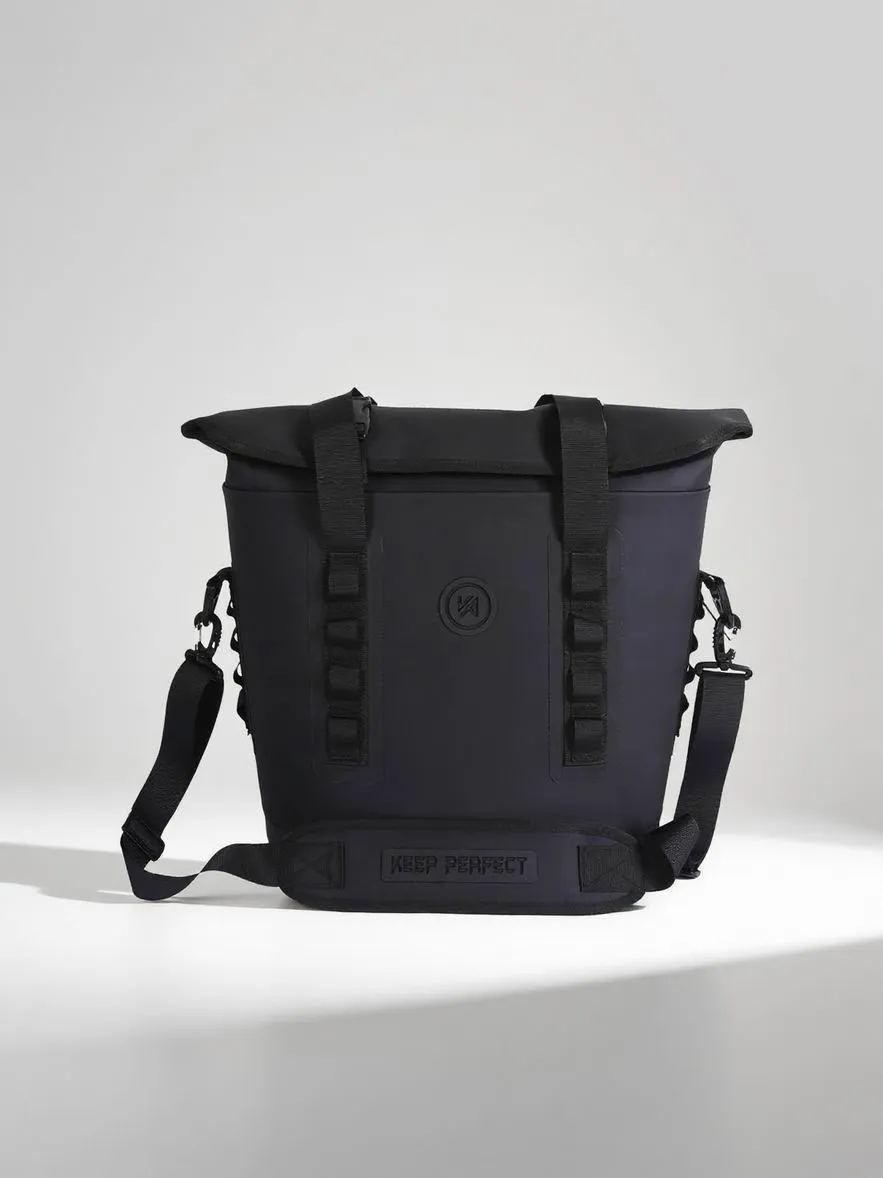
Why the entry perk decides a campaign's backer count
Backer count matters on a crowdfunding platform for a mechanical reason as well as a social one: it drives visibility. Platforms surface campaigns that are attracting many backers, and the count itself becomes social proof to the next visitor. That makes the entry perk the most important tier on the page, because it is the tier that determines how many people can say yes. A campaign with a brilliant 199 dollar hero product and no accessible entry point will convert fewer people than the same campaign with a well-designed 29 dollar tier.
The entry perk has to satisfy three conditions at once. It must be cheap enough to be an impulse decision, useful enough that the backer feels they received something real, and cheap to deliver so that volume does not destroy margin. Very few products satisfy all three. Stickers and prints are cheap but feel insubstantial. Apparel is useful but introduces sizing, returns and fit complaints. A tote satisfies all three: it is inexpensive, it is genuinely useful, and it ships flat in a light parcel.
- It converts browsers into backers, which raises the count and improves platform visibility.
- It creates the first cohort of people with a financial interest in the campaign succeeding, who then share it.
- It produces a second wave of orders later, because add-ons are frequently purchased after the initial pledge.
- It carries the campaign's artwork into public spaces, which is marketing that continues after the campaign closes.
- It does all of this without sizing, without fit risk and without a returns profile.
There is a second-order effect that creators frequently miss. A backer who pledges at the entry tier is not a lost sale at the hero tier; they are a lead for the next campaign. They have given the creator their contact details, their money and their attention, and the campaign update list is one of the few marketing assets a creator owns outright. That is why the entry perk should be good enough that the backer is pleased rather than merely satisfied. A disappointing 29 dollar tote does not simply cost a margin; it removes that backer from the next launch. Category background sits on custom tote bags for Kickstarter.
What a 29 dollar tote actually costs
Cost begins with fabric weight, which for totes is measured in ounces per square yard in the cotton convention or in grams per square metre in the synthetic convention. A lightweight promotional tote might use 6 oz cotton canvas, a standard retail-quality tote 10 to 12 oz, and a heavy structured tote 14 to 16 oz. At 1,000 pcs, indicative FOB Xiamen unit cost runs roughly USD 2.50 to 4.00 for a 6 to 8 oz printed tote, USD 4.00 to 6.00 for a 10 to 12 oz canvas tote with a screen print, and USD 6.00 to 9.00 for a heavy canvas tote with a lined interior or a pocket.
Those are production costs and they are the smaller half of the story. Landed cost adds inbound freight, duty, clearance, warehousing, pick and pack, and the final parcel. Because a tote is light and flat, the freight per unit is low relative to most rewards, but the final parcel has a floor cost set by the carrier's minimum charge rather than by the weight, so a very light parcel still costs a meaningful amount to send. Indicative landed cost to a backer for a mid-weight printed tote is USD 9 to 16, depending on destination band and fulfilment model.
| Cost line | 500 pcs | 1,000 pcs | 2,000 pcs |
|---|---|---|---|
| FOB Xiamen unit cost | USD 3.00-6.50 | USD 2.50-6.00 | USD 2.20-5.40 |
| Inbound freight and insurance per unit | USD 0.60-1.20 | USD 0.50-1.00 | USD 0.45-0.90 |
| Duty and clearance per unit | USD 0.30-0.80 | USD 0.25-0.70 | USD 0.22-0.65 |
| Warehouse handling and pick per unit | USD 1.20-2.50 | USD 1.00-2.20 | USD 0.90-2.00 |
| Parcel to backer | USD 5-11 | USD 5-11 | USD 5-11 |
| Landed to backer, indicative | USD 10-22 | USD 9-21 | USD 9-20 |
Notice that the last row barely moves across volumes. On a light product the final parcel is the dominant cost and it does not scale, because the carrier's minimum and the handling step are the same whether the campaign produced 500 or 2,000. That has a direct implication: the best way to improve the economics of a tote perk is not a bigger order, it is a better fulfilment arrangement. Consolidating into a regional warehouse so the final leg is a domestic parcel, and shipping in a mailer rather than a carton where the product allows it, each reduce the largest single line.
Margin and contribution at the entry tier
Contribution is what is left after every cost that varies with the unit, and it is the number that decides whether a perk helps or hurts. Take a mid-weight printed tote at 1,000 pcs with an FOB of USD 4.50 and a landed cost to the backer of USD 13. At a 29 dollar pledge, platform fee and payment processing at roughly 10 percent take USD 2.90, leaving USD 13.10 of contribution before any fixed campaign overhead. At a 19 dollar pledge the same product leaves about USD 4.10, which is thin once photography, samples and support are counted.
That arithmetic explains the price point. Twenty-nine dollars is not a number chosen by convention; it is roughly the level at which a decent tote leaves enough contribution to be worth producing while still reading as an impulse purchase. Below it, the contribution collapses because the fixed parcel floor does not fall with the price. Above it, the perk stops converting at entry-tier rates. The band of roughly USD 25 to 35 is where the economics and the psychology agree, and a campaign can move within it on the basis of fabric weight and print quality.
- Model contribution per unit, not revenue, because the parcel floor means cost does not scale down with price.
- Keep platform and processing at 8-12 percent of the pledge in the model, not of the cost.
- Set the price from landed cost plus target contribution, then check it still reads as an impulse figure.
- Remember that a 1,000-backer tier at USD 13 contribution is USD 13,000 toward fixed campaign overhead.
- Do not price the perk to break even in the hope of add-on revenue, because add-on take-up is uncertain.
On a light product the final parcel dominates landed cost and does not scale with volume or fall with price. That is why a tote perk priced below about USD 25 usually leaves too little contribution to be worth producing.
One more number belongs in the model: the replacement reserve. Even a simple tote generates a small defect and damage rate, and a campaign promising 1,000 or more units should hold a reserve, typically 1 to 2 percent for a simple product rather than the 1 to 3 percent appropriate for wheeled goods. That is 10 to 20 units on a 1,000-unit run, which costs far less than the alternative of telling a disappointed backer that no replacement exists. Our programme coordinators build the reserve into the production quantity rather than hoping to have leftovers.
Why totes convert better than other entry perks
Four properties make a tote unusually effective as an entry reward, and all four are practical rather than aesthetic. It has no sizing, which removes the single largest source of returns and complaints in apparel. It is unisex and age-neutral, so it does not narrow the audience. It is flat and light, which keeps fulfilment cost low and delivery reliable. And it is visibly branded, so it advertises the campaign and the creator every time it is carried.
Compare that with the usual alternatives. A printed t-shirt introduces sizing, fit preference and a returns profile that multiplies support work. A sticker pack is cheap but feels like a receipt rather than a reward. A digital reward costs nothing to deliver but produces no object, and an object is what makes a backer feel the campaign was real. An enamel pin is cheap and collectible but small enough that the value perception is weak at 29 dollars. A tote is the only common entry reward that is simultaneously substantial, cheap to deliver and free of fit risk.
| Perk | Sizing risk | Delivery cost | Perceived value | Verdict |
|---|---|---|---|---|
| Printed tote | None | Low, flat and light | High for the cost | Best all-round entry perk |
| Printed t-shirt | High | Low | Medium | Adds returns and fit complaints |
| Sticker or print pack | None | Very low | Low | Too insubstantial at 29 dollars |
| Enamel pin | None | Very low | Low to medium | Better as an add-on than a tier |
| Digital reward | None | Zero | Low by definition | No object, weak backer feeling |
| Small accessory pouch | None | Low | Medium | Good bundle component |
The branding property deserves a specific note, because it is the one creators undervalue. A tote is carried in public, in a way a t-shirt is not, and its print area is large. That makes it the cheapest outdoor advertising a campaign will ever buy, and it continues after the campaign closes. A creator who treats the tote artwork as a marketing asset rather than as a logo placement gets a second benefit from the same spend. Practically, that means commissioning artwork worth carrying, which is a design decision rather than a production one and costs nothing extra at the production end.
Specification that survives at a low price point
A low price point does not mean a vague specification. In fact it demands a tighter one, because there is no margin to absorb rework. The specification for an entry-tier tote should fix seven things: fabric type and weight, fabric colour and colourfastness, dimensions with tolerance, handle material, width and length, handle attachment construction, print method and artwork placement, and finishing and packing. Each is measurable, and each is where a cheap quote quietly diverges from a good one.
Handle attachment is the item that most often separates an acceptable tote from a returned one. A handle stitched to the bag body with a single line of stitching will tear out under a full load, while a handle that runs the full height of the bag body, or that is bar-tacked at the stress points, will not. This costs a few cents in labour and it is the difference between a bag that lasts and a bag that fails in the first month. Specify the construction with the stitch pattern and the reinforcement stated, and check it on the sample by loading it.
- Fabric type and weight: cotton canvas in ounces, or polyester in grams per square metre, with the finish stated.
- Colour and colourfastness: name the reference and require a rubbing fastness result, since dark prints on light bags transfer.
- Dimensions: width, height and gusset with a tolerance, commonly plus or minus 5 mm on a tote.
- Handle: material, width, drop length and attachment construction, including reinforcement.
- Print method and placement: method, colour count, position and a placement tolerance in millimetres.
- Interior: whether there is a pocket or lining, since each adds operations and cost.
- Packing: folded flat, individually bagged or bulk packed, which affects warehouse handling cost.
Keep the specification narrow on purpose. Every additional feature adds operations, and operations are minutes, and minutes are the largest controllable cost after fabric. An entry-tier tote should be simple enough that a line can run it at speed, because that is what keeps the unit cost inside the band that makes 29 dollars work. Complexity is what pushes a tote from USD 3 to USD 8, and at that point the tier either loses money or needs a higher price. Simplicity is not a compromise here; it is the mechanism that makes the price point achievable.
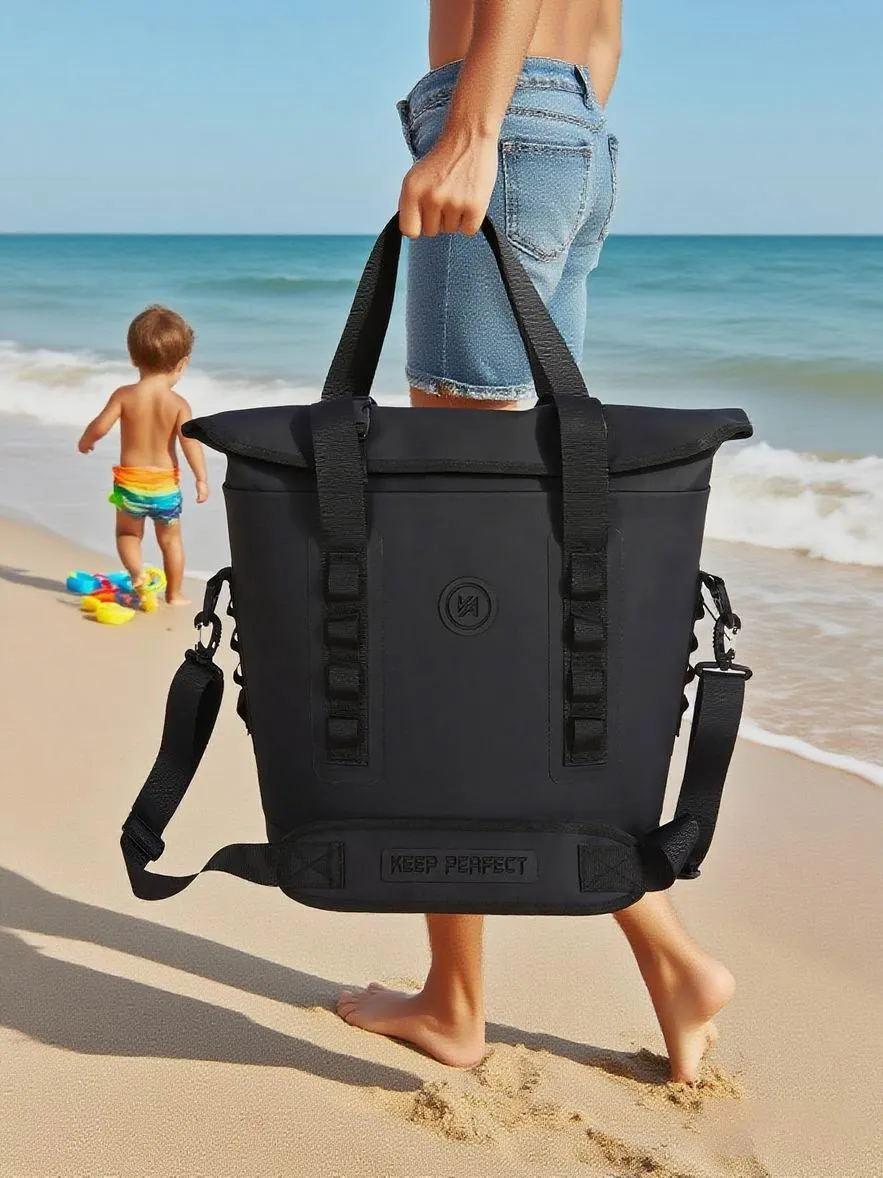
Fabric weight and handle choices
Fabric weight is the decision that most visibly separates a premium-feeling tote from a disposable one, and it is also the largest single cost lever. In cotton canvas the common weights are 6 oz for a light promotional tote, 10 oz for a standard retail tote, and 12 to 16 oz for a heavy structured tote. Moving from 6 oz to 10 oz typically adds a meaningful but manageable amount per unit and changes how the bag feels in the hand and how it drapes when carried. For a 29 dollar perk, 10 oz is usually the point at which the product stops feeling like a giveaway.
Cotton is not the only option and it is not always the right one. Polyester and recycled polyester totes cost less, dry faster, hold print differently and appeal to campaigns with a recycled-content story. A recycled polyester tote at a stated grammage can be positioned as an environmental choice, which is a genuine value argument for some audiences, and it typically costs less than heavy cotton canvas. The trade-off is perception: cotton reads as more premium to many buyers, and heavy canvas reads as more durable. Match the material to the campaign's story rather than to a default.
| Option | Typical weight | Indicative feel | Best for |
|---|---|---|---|
| Cotton canvas, light | 6-8 oz | Soft, folds small | Lowest price point, mass giveaway feel |
| Cotton canvas, standard | 10-12 oz | Substantial, holds shape | The 29 dollar sweet spot |
| Cotton canvas, heavy | 14-16 oz | Structured, premium | Higher price points and artist editions |
| Polyester | 180-300 gsm | Smooth, light, quick drying | Recycled-content and low-cost campaigns |
| Recycled polyester | 200-350 gsm | Smooth with a sustainability story | Environmentally positioned campaigns |
| Laminated or coated | Varies | Wipe-clean, structured | Beach, market and wet-use positioning |
Handle choice interacts with fabric. A heavy canvas bag needs a wider webbing or a fuller cotton handle to feel balanced, and a light bag with heavy handles looks mismatched. Drop length matters more than creators expect: a short drop carries the bag in the hand, a longer drop allows it over the shoulder, and over-the-shoulder carry is how most people actually use a tote. A drop of roughly 25 to 30 cm allows shoulder carry for most people. Specify the drop and check it on a sample by loading the bag and carrying it, because a tote that cannot be carried comfortably will not be carried at all.
Print, embroidery and artwork economics
Decoration is where the cost structure of a tote diverges sharply by method. Screen printing carries a setup cost per colour and a low per-unit cost, so it is economical at volume and expensive at low quantity. Digital or heat transfer printing carries little setup and a higher per-unit cost, which suits multi-colour artwork and smaller runs. Embroidery carries a digitising setup fee and the highest per-unit cost, and it reads as premium. For a 1,000-unit perk with a one or two colour design, screen printing is usually the cheapest and most durable option.
Colour count is the lever that matters. In screen printing each colour is a separate screen and a separate pass, so a design moving from two colours to four adds both setup and per-unit cost. That does not mean the artwork must be simple; it means the artwork should be designed for the method. A two-colour design with strong shapes reads better on a tote than a four-colour design with fine gradients, and the printing will also hold up better in use. Brief the designer with the print method and the colour limit before the artwork is drawn rather than afterwards.
- Screen print: setup per colour, low unit cost, best for one to three colours at volume.
- Digital or heat transfer: little setup, higher unit cost, best for multi-colour or photographic artwork.
- Embroidery: digitising setup, highest unit cost, premium read, and limited in fine detail.
- Woven label: small setup, low unit cost, and a cheap way to add a perceived quality signal.
- Placement tolerance: state it in millimetres, because print drift is the most common visual defect on totes.
Print durability is a specification item, not an assumption. A print that cracks after the first wash or that transfers colour onto clothing generates complaints that are entirely avoidable. Ask for a colourfastness to rubbing result, typically to ISO 105-X12, and for a wash or abrasion check appropriate to the method. On dark prints on light fabric, and on prints placed where the bag folds, these checks matter most. Our sourcing partner runs them on the production fabric and ink combination rather than on a generic sample, because the combination is what fails.
MOQ and volume planning for a perk at 1,000
The minimum is 500 pcs per style and per colourway, and that interacts with a perk tier in a specific way. A campaign expecting 1,000 backers at the entry tier comfortably clears one colourway, but if the tier offers two colourways the campaign is buying two 500-unit runs rather than one 1,000-unit run, and the unit cost is set accordingly. The cheapest structure is usually one colourway at the combined quantity, with the second colourway offered only if that colourway alone can clear the minimum.
Forecasting the perk tier is harder than forecasting the hero tier, because entry-tier demand is more elastic and more sensitive to campaign momentum. A campaign that funds in 48 hours will sell far more entry perks than the same campaign that grinds to its goal on the final day. That argues for ordering the perk in two stages where the schedule allows: a base run that clears the minimum, and a top-up run once the final count is known. Because a tote has no tooling and a short sampling cycle, a top-up run is far more feasible here than on a complex product.
| Scenario | Recommended structure | Why |
|---|---|---|
| Confident 1,000+ backers | One colourway at 1,000+ | Reaches the better price band and simplifies packing |
| Two colourways wanted | Consolidate unless each clears 500 | Each colourway carries its own minimum |
| Uncertain demand | Base run plus top-up | A tote has no tooling, so a second run is cheap to start |
| Add-on only, no tier | Order after the campaign closes | Demand is known and there is no forecast risk |
| Bundle component | Order with the hero product | Shared freight and one production window |
Timing is the practical constraint on the two-stage approach. Sampling takes 6 to 10 working days and bulk takes 35 to 50 days, so a top-up run ordered after the campaign closes adds roughly two months before those units exist. If the campaign promises a single delivery month for all backers, the top-up has to be ordered before the count is final, which reintroduces forecast risk. The resolution is usually to order a generous base quantity and to accept a small surplus, because surplus totes are the easiest product in the catalogue to sell later, through the creator's own store or as a future add-on. Minimums are explained further on low MOQ bag production for creators.
Using the tote as an add-on instead of a tier
A tote does not have to be a reward tier at all. Offered as an add-on, it appears in the checkout flow for backers at any tier, and it is purchased in addition to their pledge rather than instead of a higher one. That structure has a real advantage: it raises average pledge value without cannibalising the hero tier. A backer who would have pledged 129 dollars for the hero product may add a 29 dollar tote, and the campaign gains the full contribution on the tote without losing anything on the hero.
Add-ons also improve the forecasting problem described above, because add-on purchases continue after the campaign and are often collected through a pledge manager. That means the final quantity is known before the order is placed, which removes forecast risk entirely. For a first campaign, where the demand curve is genuinely unknown, making the tote an add-on rather than a tier is often the safest structure, and it costs nothing in conversion because the add-on appears wherever the backer is already committing.
- Offer the tote as an add-on at a price that reflects landed cost plus contribution, not as a nominal upsell.
- Show the add-on in the checkout flow and in campaign updates, since visibility drives take-up.
- Order add-on quantities after the campaign closes, because demand is then known.
- Keep the add-on artwork consistent with the hero product, so the range looks deliberate.
- Consider a second add-on, such as a pouch or a pin, since multiple small add-ons compound without much operational cost.
The one caution is operational rather than commercial. Add-ons collected after the campaign close through a pledge manager add a data-handling step, and add-on units must be matched to the right backer at fulfilment. That is manageable, but it requires one consolidated dataset with a clear field for add-ons, and a validation pass before dispatch. Duplicate or missing add-on records produce the worst fulfilment error available, which is a backer who receives their hero product and not the thing they added to it.
Bundling the tote to lift average pledge value
The highest-value use of a tote is as a bundle component. A bundle tier offering the hero product plus a tote, or a tote plus a pouch plus a pin, raises the pledge by more than it raises the cost, because the incremental cost of a tote inside an existing parcel is very low. Where the tote ships inside the same carton as another product, the incremental parcel cost is close to zero, and the landed cost of the bundle approaches the production cost of the tote alone. That is the most efficient margin in a campaign.
Design the bundle so that the perceived value exceeds the stated price of the components. A backer comparing a 129 dollar hero tier with a 159 dollar hero-plus-tote tier will take the bundle if the tote appears to be worth more than the 30 dollar difference, which it usually does at retail-equivalent pricing. The campaign is effectively selling the tote at a discount while raising the pledge, and both sides feel they gained. This is why bundles are the standard answer to a campaign whose average pledge value is coming in below plan.
| Placement | Effect on average pledge | Forecast risk | Operational complexity |
|---|---|---|---|
| Entry tier | Raises backer count, may lower average pledge | High, demand is momentum-driven | Low |
| Add-on | Raises average pledge without cannibalising | Low, quantity known after close | Medium, needs data consolidation |
| Bundle component | Raises average pledge most efficiently | Medium, tied to hero tier demand | Low, ships in the same carton |
| Stretch goal unlock | Raises perceived value mid-campaign | High, unlocked quantity is unknown | Low |
| Post-campaign store item | No campaign effect, useful for surplus | None | Low |
There is one placement to use with care: the stretch goal unlock. Announcing that all backers receive a free tote if the campaign passes a threshold is a powerful motivator, but it converts a discretionary purchase into an obligation across the entire backer base, and the quantity is unknown until the moment the threshold is passed. If a campaign uses this, it should have a production plan that can absorb the full backer count at short notice, which usually means a pre-arranged top-up slot rather than a fresh quotation. Our production team will reserve such a slot when a creator tells us the stretch structure in advance.
Fulfilment economics of a flat-packing perk
Fulfilment is where a tote earns its place, because it is the cheapest physical reward to move. A folded tote is flat and light, so it can ship in a mailer rather than a carton, which avoids the dimensional weight penalty that dominates bulky rewards. A mailer of roughly 35 x 25 x 5 cm has a dimensional weight well under 1 kg at a 5,000 divisor, so the parcel bills close to its actual weight and the cost sits near the carrier's minimum. That is the structural advantage that makes 1,000 or more units of a 29 dollar perk commercially viable.
The choice between a mailer and a carton matters more than it appears. A carton of 40 x 30 x 10 cm has a dimensional weight of about 2.4 kg at the same divisor, so the same tote in a box can cost significantly more per parcel than the same tote in a mailer, across every unit in the campaign. Where the product does not need rigid protection, and a tote usually does not, ship in a mailer. Confirm the mailer is strong enough for the parcel network, since a burst mailer is worse than a carton, and validate it if the campaign is shipping at volume.
- Ship in a mailer rather than a carton wherever the product allows, because dimensional weight scales with the carton.
- Consolidate into a regional warehouse so the final leg is a domestic parcel at a lower rate.
- Fold flat and pack to a standard, so warehouse handling is fast and predictable.
- Use the lightest protective packaging that survives the network, and validate it before dispatch.
- Track the per-parcel cost by destination band, since the carrier minimum dominates on light goods.
Consolidation still applies even at this weight. Shipping 1,000 totes as one consolidated import into a regional warehouse, then dispatching domestic parcels, is usually cheaper than 1,000 international parcels, because the international leg is the expensive part and it is shared. The saving is smaller in absolute terms than for a suitcase, but as a percentage of a low-value perk it is just as important. The model choice is developed on crowdfunding rewards fulfilment.
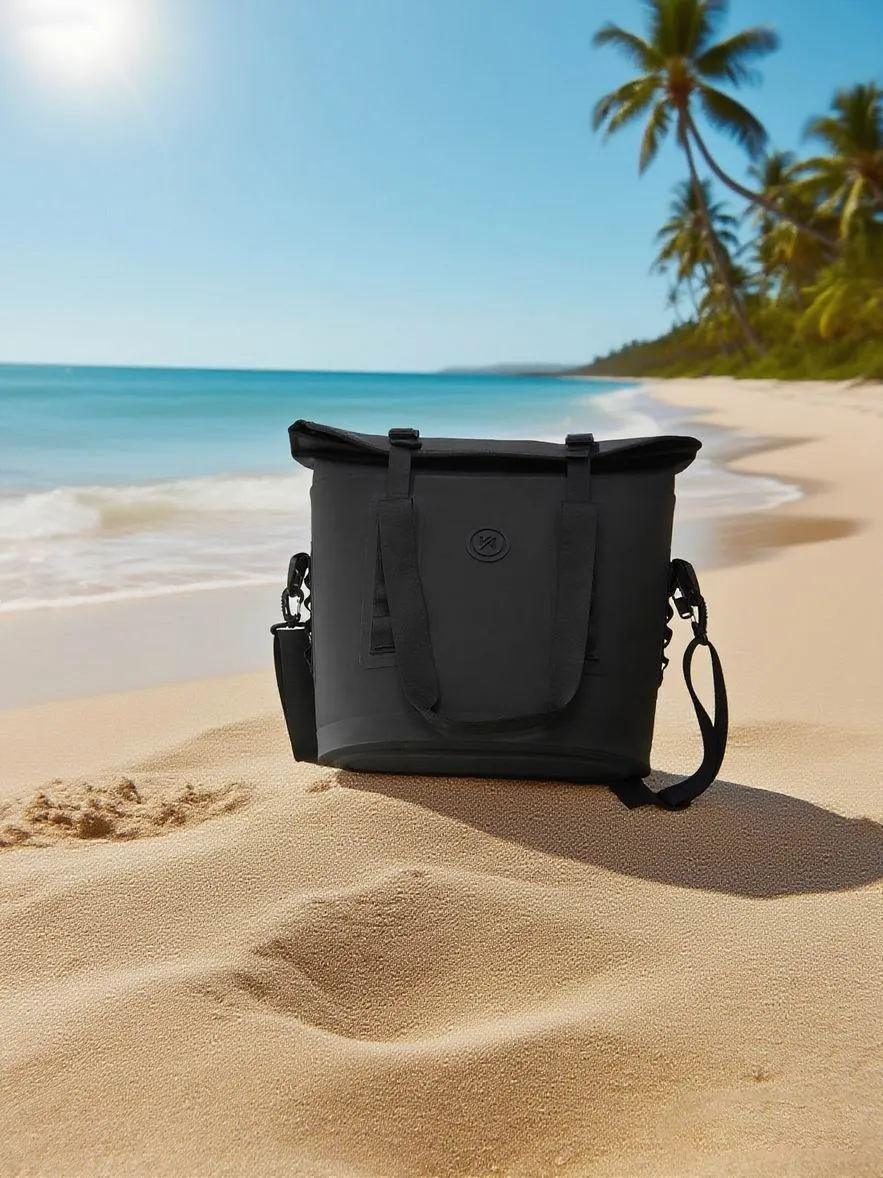
The quality floor: what not to cut
A low price point invites cost cutting, and three cuts do more damage than they save. The first is handle attachment, where removing reinforcement or shortening the handle run saves cents and produces tear-outs. The second is fabric weight, where dropping below the weight the tier was positioned on produces a product that feels cheaper than the campaign promised. The third is print durability, where a cheaper ink or an uncured print transfers colour or cracks. Each generates complaints that cost more than the saving, and each is visible to every backer who received one.
The cuts that are safe are the ones nobody notices. Simplifying the interior, removing a pocket, reducing the print colour count, using a standard woven label rather than a custom printed one, and packing bulk rather than individually, all reduce cost without reducing perceived quality. Reduce invisible complexity, not visible substance. That is the rule that lets a tote hold a 29 dollar price point and still arrive as a product the backer is pleased with, and it is the rule our team applies when a creator asks how to hit a target price.
| Element | Save or hold | Why |
|---|---|---|
| Handle reinforcement | Hold | Tear-out is the most common tote failure and the most visible |
| Fabric weight versus the campaign promise | Hold | A bag lighter than promised reads as a downgrade |
| Print durability and colourfastness | Hold | Transfer and cracking generate complaints and returns |
| Interior pockets and lining | Save | Invisible to most users, and each adds operations |
| Print colour count | Save | Two strong colours read better and cost less than four |
| Custom label and hangtag | Save | A standard woven label reads almost as well |
| Individual polybagging | Save | Not needed for a tote, and adds handling |
| Sampling rounds | Hold, budget two | The only cheap point at which the specification can be corrected |
Inspection applies at this price too. AQL 2.5 to ISO 2859-1 is the appropriate release gate, and on a 1,000-unit tote order at General Inspection Level II the sample is 80 units with 5 major defects accepted and 6 rejecting. The defect dictionary should cover the things that actually go wrong on totes: handle attachment, print registration and placement, seam openings at the base, fabric shade variance between rolls, and dimension drift. Those are cheap to check and they are the difference between a perk that builds a backer base and one that erodes it.
A 29 dollar tote perk is the most efficient growth tool available to a campaign, provided it is specified tightly, priced from landed cost and shipped in the cheapest packaging that survives the network. Get those three right and the tier scales past 1,000 backers while still contributing to fixed campaign overhead. Get them wrong and the campaign acquires a thousand mildly disappointed backers, which is worse than acquiring none. Category guidance is on custom tote bags for Kickstarter and custom bags for Kickstarter, and the volume mechanics are in custom tote bag MOQ at 500 pieces.
The entry perk is not the cheapest thing you can make. It is the cheapest thing you can make that a backer is pleased to own.
Programme coordinator, perk tier briefing
- Minimum order quantity
- 500 pcs per style / colourway
- Indicative FOB at 1,000 pcs
- USD 2.50-6.00 by fabric and print
- Indicative landed to backer
- USD 9-16
- Sweet-spot price band
- USD 25-35
- Recommended canvas weight
- 10-12 oz cotton canvas
- Handle drop
- 25-30 cm for shoulder carry
- Sampling
- 6-10 working days
- Bulk production
- 35-50 days
- Inspection
- AQL 2.5 to ISO 2859-1, 80 units on a 1,000 lot
- Replacement reserve
- 1-2% for simple products
- Trade term
- FOB Xiamen
- Payment terms
- T/T 30/70
Get your perk tier costed before the page goes live
Send your artwork, target fabric weight and expected backer count to service@junyuanbags.com. Our production team will return an FOB and landed cost for the tote at 500, 1,000 and 2,000, plus the contribution at your intended pledge.
Frequently Asked Questions
What does a custom tote bag cost per unit at 1,000 pcs?
Indicative FOB Xiamen ranges are USD 2.50-4.00 for a 6 to 8 oz printed tote, USD 4.00-6.00 for a 10 to 12 oz canvas tote with a screen print, and USD 6.00-9.00 for a heavy canvas tote with a pocket or lining.
Why is 29 dollars the right price for a tote perk?
Because the final parcel has a floor cost that does not fall with price. A mid-weight tote landing at about USD 13 leaves roughly USD 13 of contribution at a 29 dollar pledge after fees, but only about USD 4 at 19 dollars, which is too thin to be worth producing.
What fabric weight should I use for a 29 dollar tote?
10 to 12 oz cotton canvas is usually the point at which the bag stops feeling like a giveaway. 6 to 8 oz reads as promotional, and 14 to 16 oz is premium and better suited to a higher price point or an artist edition.
How many units are inspected on a 1,000 pcs tote order?
At General Inspection Level II with single sampling and normal inspection, a 501 to 1,200 pcs lot takes code letter J and a sample of 80 units. At AQL 2.5 the acceptance number is 5 and the rejection number is 6 for major defects.
Should I offer one colourway or two on the entry tier?
One, unless each colourway can clear the 500 pcs minimum on its own. Two colourways at 500 each are priced as two 500-unit runs rather than as one 1,000-unit run, which costs more per unit.
Is it better to make the tote a tier or an add-on?
An add-on raises average pledge value without cannibalising the hero tier, and the quantity is known after the campaign closes, which removes forecast risk. A tier raises backer count and platform visibility. Many campaigns benefit from both.
Why does the landed cost barely change between 500 and 2,000 units?
Because the final parcel dominates and does not scale. The carrier minimum and the handling step are the same at any volume, so the improvement from a larger run is small. Fulfilment arrangement matters more than order size here.
Should a tote ship in a carton or a mailer?
A mailer wherever the product allows. A mailer of 35 x 25 x 5 cm has a dimensional weight well under 1 kg, while a 40 x 30 x 10 cm carton bills at about 2.4 kg, so the same tote costs meaningfully more per parcel in a box.
What is the most common failure on a cheap tote?
Handle tear-out. A handle stitched to the body with a single line and no reinforcement will fail under a full load, while a full-height handle with bar-tacks at the stress points costs cents more and lasts.
How much of a replacement reserve should I hold for a tote perk?
1 to 2 percent is appropriate for a simple product, which is 10 to 20 units on a 1,000-unit run. Hold the reserve inside the production quantity rather than hoping for leftovers.
Which print method is cheapest for a 1,000-unit tote?
Screen printing for one to three colours at volume, because setup is per colour and the unit cost is low. Digital or heat transfer suits multi-colour artwork and smaller runs, and embroidery costs most but reads as premium.
Can I order the tote quantity after the campaign closes?
Yes if the tote is an add-on or a bundle component, because demand is then known. Sampling takes 6-10 working days and production 35-50 days, so a post-campaign order adds roughly two months before the units exist.
People Also Ask
Is a tote bag a good crowdfunding perk?
It is the best all-round entry perk: no sizing risk, low delivery cost, high perceived value for the money and a large visible print area that keeps promoting the campaign after it closes.
How do I keep a tote cheap without making it feel cheap?
Cut invisible complexity, not visible substance. Remove interior pockets, limit print colours, use a standard woven label and pack bulk. Keep the handle reinforcement, the fabric weight and the print durability.
Should the entry perk be cheaper than 29 dollars?
Usually not. Below about USD 25 the contribution collapses because the parcel cost floor does not fall with price, so the tier adds backers but little or no margin.
What handle drop should a tote have?
About 25 to 30 cm, which allows shoulder carry for most people. A short drop forces hand carry, and a tote that cannot be carried comfortably will not be used.
Do totes need laboratory testing?
They need less than luggage, but colourfastness to rubbing is worth commissioning, especially for dark prints on light fabric and prints placed where the bag folds.
Can a tote ship inside the hero product parcel?
Yes, and it should when it is a bundle component. The incremental parcel cost is close to zero, so the landed cost of the bundle approaches the production cost of the tote alone.
What is the risk of a stretch goal unlock?
It converts a discretionary purchase into an obligation across the whole backer base, and the quantity is unknown until the threshold passes. Arrange a top-up production slot in advance rather than quoting fresh at that point.