Custom Wine Tote Bags: A Niche Perk for Lifestyle Campaigns
A wine tote is a narrow, high-margin perk that suits lifestyle, food and travel campaigns. The specification is driven by one constraint: a glass bottle inside the bag. That decides bottle geometry, divider construction, base stability and whether insulation is worth the cost. Minimum order is 500 pcs per style and per colourway, sampling runs 6 to 10 working days, bulk runs 35 to 50 days, and inspection holds at AQL 2.5 to ISO 2859-1. This article sets out the decisions in the order a creator makes them.
- Why a wine tote works as a perk
- Bottle geometry: what the bag has to hold
- Does it need to be insulated
- Divider construction for one, two or three bottles
- Base and stability with glass inside
- Materials: neoprene, polyester, canvas and laminate
- Handles and closures for a glass load
- Print and branding on a small surface
- What a campaign can and cannot claim
- Gifting season and campaign timing
- Cost and reward tier placement
- Drop testing and QC on a glass load
Why a wine tote works as a perk
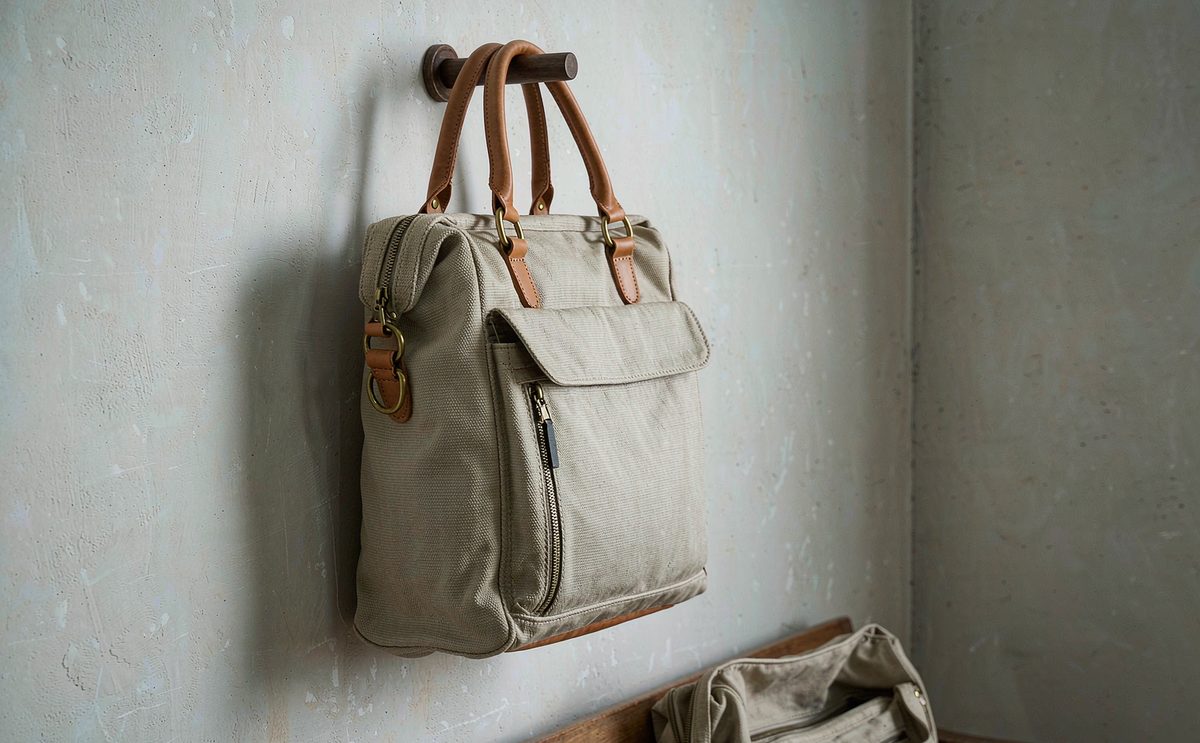
A wine tote occupies a useful position in a reward ladder that few other products do. It is small, so it is cheap to ship. It is perceived as premium, because it is associated with gifting and with a particular lifestyle. It is genuinely useful, so it does not end up in a drawer. And it is not the hero product of any campaign, which means it can be added as a mid-tier perk or an add-on without competing with what the campaign is actually about. For a creator, that combination is unusual.
The campaigns that use it well are the ones where the fit is thematic: a cookbook, a food or drink project, a travel or picnic product, a homewares range, a wedding or events brand, or a regional tourism campaign. In those contexts the wine tote is not a random merchandise item, it is part of the story, and backers understand immediately what it is for. Where it works less well is as a generic perk bolted onto an unrelated project, where it reads as filler and converts accordingly.
There is also a practical gifting argument. A wine tote is frequently bought to be given again, often with a bottle inside. That makes it one of the few perks with a second life as a present, which raises its perceived value above its cost. Our production team sees this reflected in the orders: campaigns that position it as a gift item tend to sell through more colourways than campaigns that position it as a utility bag. The custom gift bags for Kickstarter page covers the wider gifting category, and the custom bags for Kickstarter overview sets out how a small perk like this compares with larger reward products on landed cost.
There is one more practical advantage that tends to decide it for creators weighing the options: a wine tote is a small bag, so fabric consumption is low and the components that add cost are the padding, lining and base rather than the shell. That keeps the unit cost well below a full-size tote while the perceived value stays high, which is a rare combination in a reward ladder. Creators comparing the family of tote rewards can see how the market tote and beach tote options differ in cost structure.
A wine tote is cheap to ship, reads as premium and gets given away again. That combination is why it earns a place in a reward ladder.
Bottle geometry: what the bag has to hold
Everything about a wine tote follows from one object: a standard wine bottle, roughly 30 centimetres tall and around 7.5 centimetres in diameter at its widest, weighing between 1.2 and 1.5 kilograms when full. Those numbers set the minimum internal dimensions, and the padding adds to them. A single-bottle tote therefore has an internal height of about 32 to 34 centimetres and an internal width that depends on whether one, two or three bottles sit side by side.
The complication is that standard is not universal. Sparkling wine bottles are wider in the body, some regional styles are taller or slimmer, and a growing number of producers use non-standard glass. A bag cut exactly to a Bordeaux bottle will not take a Champagne bottle, and a backer who discovers that will say so. The specification response is to cut to the widest common case plus clearance, and to state on the campaign page which bottle shapes the bag is designed for. Our team asks which bottles the creator expects and cuts the divider to the widest of them.
| Bottle style | Body diameter | Height | Pattern implication |
|---|---|---|---|
| Standard still wine | Around 75 mm | Around 300 mm | The baseline case |
| Sparkling wine | Wider in the body | Similar height | Sets the widest divider dimension |
| Slim or modern styling | Narrower | Can be taller | Sets the minimum height |
| Half bottle | Narrower and shorter | Around 240 mm | Needs a divider or a filler |
| Large format | Much wider | Much taller | Usually a separate product |
Clearance matters as much as dimension. A divider cut exactly to the bottle diameter makes the bag hard to load and hard to remove a bottle from, and it puts the glass in contact with the seam. A few millimetres of clearance on each side, filled with padding rather than left empty, gives a bag that is easy to use and protects the bottle. That is the difference between a bag that is technically the right size and one that works in the hand.
Does it need to be insulated
Insulation is the first question a creator asks and the answer is usually qualified. A thermal lining genuinely helps if the bag is used to carry a chilled bottle to a picnic or a dinner party, which is the most common use, and it costs a lining panel plus a small amount of labour. It does not make the bag a cooler, and a campaign that implies it will keep wine cold for hours is making a claim the product cannot support. The honest positioning is insulation that slows temperature change over a journey of an hour or two.
The practical construction is a foil or metallic-faced foam laminate bonded to the lining, with the seams sealed where possible. Reflective facing does more work than thickness at this scale, because the bag is not being asked to hold ice for a day. A lining of a few millimetres of closed-cell foam with a reflective face is enough and does not bulk the bag out. Thicker foam makes the bag stiff and harder to fold away, which costs more than the thermal benefit is worth.
- Insulated lining: reflective faced foam, a few millimetres, sealed seams where possible
- Claim discipline: slows temperature change over a journey, does not hold ice
- Leak containment: a sealed lining also contains a broken bottle, which is a real benefit
- Bulk trade-off: thicker foam stiffens the bag and stops it folding flat
- Test it: put a chilled bottle in the bag, leave it for two hours, measure
There is an underrated second benefit to a sealed lining that creators rarely put on the page: containment. If a bottle does break, a sealed lining keeps the glass and the liquid inside the bag rather than leaking onto a car seat or a hallway floor. That is a safety feature rather than a performance one, and it is worth stating, because it is the reason a backer will choose an insulated wine tote over a padded one at the same price.
Divider construction for one, two or three bottles
The divider is the component that defines the product, and the choice is between fixed dividers and removable ones. Fixed dividers are stitched into the bag, hold their shape, protect bottles from touching each other, and mean the bag cannot be used for anything else. Removable dividers, usually a padded panel on a hook and loop or a snap fixing, let the bag convert to a general tote and cost slightly more. Most wine totes use fixed dividers, because the product promise is protection.
Bottle count is the other decision. A single-bottle tote is the classic gift format and the cheapest to make. A two-bottle tote is the practical everyday format and the most useful, because it suits bringing a bottle and taking one home. A three-bottle tote starts to become heavy to carry, and the load is the limiting factor rather than the space: three full bottles weigh over four kilograms, which is a lot for a tote with a narrow handle. Our recommendation is two bottles as the hero product.
Base and stability with glass inside
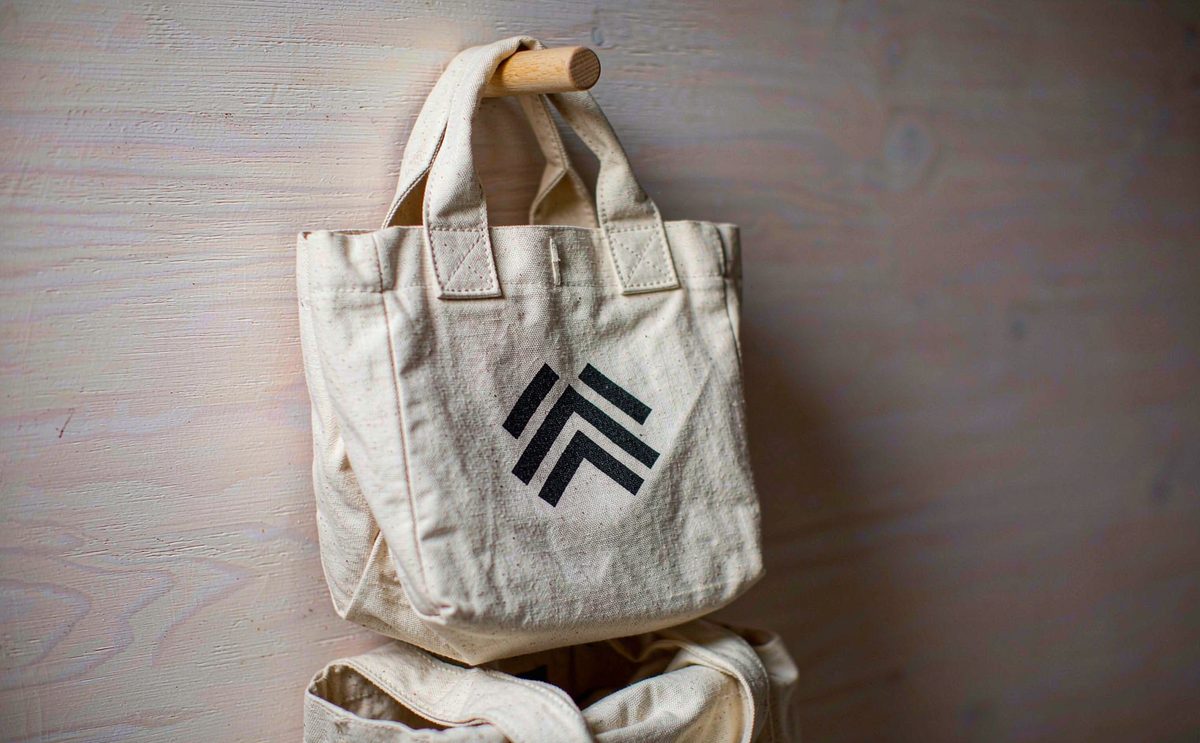
A wine tote carrying glass has to stand up, and the base is what makes that happen. The load is dense and concentrated in a narrow footprint, and a soft base lets the bottles lean until the bag tips. A rigid base board in a sleeve, sized to the full internal footprint, is the standard answer. It is a cheap component, it keeps the bag upright when it is set down, and it spreads the load so the fabric is not carrying the whole weight at a single point.
The second half of stability is the base-to-body junction. The board sits in a sleeve at the bottom and the body of the bag rises from it, and that seam carries the entire weight of the bottles every time the bag is lifted. It should be a bound or double-stitched seam, reinforced rather than plain, and the stitching should be specified for density rather than left to the operator. Our team treats this seam as a structural line on the tech pack, because it is the seam that fails when a wine tote fails.
- Bottle height allowance
- Around 320 to 340 mm internal
- Bottle diameter allowance
- Cut to the widest expected bottle plus clearance
- Padding
- A few millimetres of foam on divider faces
- Base
- Rigid board in a sleeve, full internal footprint
- Base seam
- Bound or double stitched, specified stitch density
- Load test
- Carry and set down repeatedly with full bottles inside
Materials: neoprene, polyester, canvas and laminate
Four material families appear in this category and each has a clear position. Neoprene is the classic wine tote material: it stretches to fit, cushions the bottle, insulates modestly and folds flat. It is more expensive than fabric and it has a synthetic hand feel that some backers love and others do not. Polyester is the workhorse: cheap, printable, washable, and dependent on added padding and lining for protection. Canvas is the premium option: beautiful, heavy, poor at insulation, and it needs a padded lining to protect glass at all.
| Material | Protection | Insulation | Cost and print |
|---|---|---|---|
| Neoprene | Excellent, cushions naturally | Modest inherent insulation | Higher cost, limited print methods |
| Padded polyester | Good with foam padding | Good with a foil faced lining | Lowest cost, prints well |
| Canvas with lining | Depends entirely on the lining | Poor without a lining | Mid cost, premium look, print friendly |
| Laminated non-woven | Fair, minimal cushioning | Fair with a reflective face | Lowest cost, shortest life |
| Recycled polyester | Good with padding | Good with lining | Premium over virgin, supports a claim |
The print implication is worth flagging, because it catches campaigns out. Neoprene takes a sublimation print well but is a poor surface for a detailed screen print, while polyester and canvas both print beautifully. If the brand mark matters as much as the product, that is an argument for padded polyester or canvas over neoprene. The print method decision should be made at the same time as the material, because the two constrain each other.
Handles and closures for a glass load
A wine tote handle carries a dense, fragile load, and the specification is different from a grocery tote. The load is heavier per unit of volume and it must not swing, because a swinging bottle strikes the ground or a door frame. The handle should therefore be relatively short, so the bag hangs close to the body, and wide enough not to cut into the hand under three kilograms. A padded handle wrap is a cheap addition that makes a real difference to comfort on this product.
The other handle consideration specific to this product is how the bag behaves when it is carried with one hand. A wine tote is frequently carried alongside a coat, a bag of shopping or a child's hand, and a handle that forces the bag to swing makes that awkward and risky. A short drop of around twelve to fifteen centimetres keeps the load close to the body and stable, and it is the reason a wine tote handle should not be specified like a shoulder tote handle. Test it by carrying the loaded bag at walking pace rather than standing still with it.
Where a shoulder strap is wanted, usually on a larger three-bottle or picnic format, it should be detachable and adjustable, and it should attach at reinforced points on the body rather than at the top seam. A detachable strap also solves a packing problem: it lets the bag ship flat without a strap folded awkwardly inside it. Our team specifies the strap attachment as a structural line on the tech pack for the same reason the base seam is, because it carries the same load.
Closure matters more here than on any other tote, because an open bag lets a bottle tip out. The options are a hook and loop strap across the top, a snap tab, a drawcord, or a zip. A zip gives the most secure closure and the cleanest look, and it is the option our team recommends for a two-bottle bag, because the bottles are restrained at the top as well as at the base. A snap is acceptable on a single-bottle bag where the bottle sits in a snug sleeve.
The handle join deserves the same treatment as on any load-bearing tote: webbing run down the body of the bag, stitched through a reinforcement panel, with bar-tacks at the stress corners. On a wine tote the consequence of failure is not just an inconvenience, it is broken glass, so the margin should be generous. We test these joins to roughly three times the intended load, which for a two-bottle bag means testing around twelve kilograms.
Print and branding on a small surface
A wine tote has less printable area than a full-size tote, and that changes the design approach. The front face of a two-bottle bag is roughly the height of the bottle by the width of two bottles, which is a tall, narrow panel. A logo that works on a wide tote can look lost or awkwardly scaled on it. The practical guidance is to design for the actual panel proportions rather than resizing the tote artwork, and to consider whether the brand mark belongs on the front face or on a smaller tab.
Because the surface is small, the print method matters less on cost and more on quality. A single-colour screen print on canvas is crisp and premium and suits a wine product. A sublimated polyester panel allows a full illustration and suits a lifestyle campaign with artwork. Both are viable and the choice follows the material. Our team supplies the printable panel dimensions at briefing so the designer works to real numbers rather than guessing, which avoids the common problem of artwork that has to be redrawn for the actual bag.
What a campaign can and cannot claim
Two claims come up repeatedly on this product and both have limits. The first is thermal performance. A padded, lined bag slows temperature change; it does not refrigerate. A campaign should describe it in those terms, with a realistic figure derived from a test rather than an invented one. Our team will run a simple test on the sample: a chilled bottle in the bag, ambient temperature recorded, and the bottle temperature measured after one and two hours. That gives a defensible sentence for the campaign page.
The second is breakage protection. A padded bag reduces the risk of a bottle breaking, and it contains the mess if one does, but no soft bag makes glass unbreakable. The honest claim is protection against contact and knocks during normal carry, not protection against a drop. The useful thing a campaign can actually promise is containment, because a sealed lining does deliver that, and it is a benefit backers care about more than an exaggerated protection claim they would not test anyway.
One more compliance point: a wine tote is a bag, not a drinks product, and a campaign should not imply that alcohol is included. Where a campaign is run by a winery or a drinks brand, the rules on marketing alcohol vary by market and are outside the scope of a bag specification, but the practical guidance is to keep the bag copy about the bag. Our programme coordinator flags this because it is the sort of detail that affects how the page can be worded.
Gifting season and campaign timing
A wine tote is a seasonal product in the gift sense, and the calendar is driven by the gifting peak rather than by weather. Demand concentrates in the run-up to the end-of-year holidays, with secondary peaks around spring gifting occasions. That means the delivery promise has to land before the peak, and the calendar works backwards from it in the same way as any seasonal product: sampling first, then the campaign window, then bulk, then freight.
Creators working out the full sequence from brief to delivery will find it set out in the sample prototyping guide, which also covers how many rounds to budget.
Sampling runs 6 to 10 working days per round and should be completed before the page goes live so the campaign can be photographed with a bottle in the bag. Bulk runs 35 to 50 days after the deposit and the approved sample. For an end-of-year delivery that puts the start point in the middle of the year, and creators who begin in autumn are already late. Our team builds the calendar backwards at briefing and will say plainly when a delivery promise cannot be met rather than accepting a date that will slip.
Cost and reward tier placement
A wine tote sits well as a mid-tier perk or an add-on, and its cost structure is favourable. It is a small bag, so fabric consumption is low, and the components that add cost are the padding, the lining and the base board rather than the shell. That means a premium-feeling product can be produced at a unit cost below a full-size tote, which leaves healthy margin inside a modest pledge level. It is one of the better margin-per-pledge products in the tote family.
| Placement | Contents | Purpose | Note |
|---|---|---|---|
| Add-on | Single bottle tote | Raise average pledge | Cheapest entry, easy to fulfil |
| Mid tier | Two bottle tote | The hero perk format | Best balance of usefulness and cost |
| Bundle | Tote plus a stopper or opener | Increase perceived value | Small accessories add margin |
| Premium | Insulated two bottle tote in canvas | Top of the ladder | Premium material, premium claim |
| Retail pack | Case quantities for stockists | Post campaign sales | Separate packing specification |
The bundle is where the real margin sits. A wine stopper, an opener or a set of coasters costs little, ships inside the tote, and lifts the perceived value of the reward well above the added cost. Because the tote already has to be packed and shipped, the accessory adds almost nothing to fulfilment cost. Our team plans the packing specification for bundles as part of the rewards fulfilment conversation, not as an afterthought.
Drop testing and QC on a glass load
Inspection holds at AQL 2.5 to ISO 2859-1, and a wine tote needs two checks that a general tote does not. The first is a drop test on the sample: load the bag with full bottles, lift it to a realistic height, and set it down hard rather than gently. Not to destruction, but to the level of a backer putting a bag down on a hard floor a little too quickly. The bottle should not contact the ground through the base, and the base seam should not distort.
The second is a fit check across bottle shapes. Take the widest bottle the campaign claims to fit, load it, close the bag, and remove it again. If it is a struggle on the sample it will be worse in bulk, because bulk fabric has slight dimensional variation. Our team runs the fit check with the actual bottles a creator names on the brief and records which shapes passed, which is also the evidence behind any claim on the campaign page.
The standard checks still apply and should not be skipped: handle pull test at roughly three times the intended load, stitch density at the base seam and the handle join, dimensional consistency against the golden sample, and lining integrity on insulated builds. A sealed lining that has a pinhole defeats its own purpose, so lined bags get a simple water test on a sampled unit. The full inspection checklist is set out in the campaign QA and QC guide.
Key takeaways
- S
- p
- e
- c
- i
- f
- y
- a
- w
- i
- n
- e
- t
- o
- t
- e
- a
- r
- o
- u
- n
- d
- t
- h
- e
- w
- i
- d
- e
- s
- t
- b
- o
- t
- t
- l
- e
- i
- t
- m
- u
- s
- t
- h
- o
- l
- d
- ,
- g
- i
- v
- e
- i
- t
- a
- r
- i
- g
- i
- d
- b
- a
- s
- e
- a
- n
- d
- a
- b
- o
- u
- n
- d
- b
- a
- s
- e
- s
- e
- a
- m
- ,
- a
- n
- d
- t
- e
- s
- t
- i
- t
- l
- o
- a
- d
- e
- d
- r
- a
- t
- h
- e
- r
- t
- h
- a
- n
- e
- m
- p
- t
- y
- .
Tell us which bottle shapes the bag must hold and our production team will build the pattern and quote a wine tote programme for custom tote bags.
Frequently Asked Questions
What is the minimum order for a custom wine tote?
500 pcs per style and per colourway. A single-bottle and a two-bottle version are two styles and therefore two commitments, so most campaigns choose one hero format at launch and add the second on a re-order once demand by format is known.
How many bottles should a wine tote hold?
Two is usually the right hero format. One is the classic gift size and cheap to make. Three full bottles weigh over four kilograms, which turns a space problem into a load problem and makes the bag uncomfortable to carry with a narrow handle.
Will a wine tote fit a Champagne bottle?
Only if the divider is cut for it. Sparkling wine bottles are wider in the body than standard still wine bottles, so a bag cut exactly to a still bottle will not take one. Cut the divider to the widest bottle the campaign claims to fit, plus clearance for padding.
Does a wine tote need thermal insulation?
It helps if the bag carries a chilled bottle to a picnic or a dinner party, which is the common use. A reflective faced foam lining of a few millimetres is enough. Describe it as slowing temperature change over a journey rather than holding ice, because that is what it does.
What is the benefit of a sealed lining?
Containment. If a bottle breaks, a sealed lining keeps glass and liquid inside the bag rather than leaking onto a car seat or a floor. It is a safety benefit rather than a thermal one, and it is often the reason a backer chooses an insulated bag over a padded one at the same price.
Which material is best for a wine tote?
Neoprene cushions and insulates naturally but costs more and limits print options. Padded polyester is the cheapest and prints well. Canvas looks premium but insulates poorly and needs a padded lining. Choose printed polyester or canvas if the brand mark matters as much as the product.
How much does a loaded wine tote weigh?
A full bottle weighs between 1.2 and 1.5 kilograms, so a two-bottle bag carries roughly 2.5 to 3 kilograms plus the bag. Three bottles take the load past four kilograms. Handle join testing should run at roughly three times the intended load, around twelve kilograms for a two-bottle bag.
Should a wine tote have a zip closure?
Yes for a two-bottle bag. A zip restrains the bottles at the top as well as at the base and gives the cleanest look. A snap tab is acceptable on a single-bottle bag where the bottle sits snugly in its own sleeve and cannot tip.
How long does sampling take for a wine tote?
6 to 10 working days for a standard build, and 12 to 15 for a complex one with insulation, a structured base and a new fabric. Sampling should finish before the campaign page goes live so the bag can be photographed with a bottle inside it.
Can a wine tote claim to protect bottles from breaking?
It can claim protection against contact and knocks during normal carry, and containment if the lining is sealed. No soft bag makes glass unbreakable, so a drop protection claim would overstate the product. The defensible claims are padding, containment and thermal slowdown.
When should I start for an end-of-year delivery?
Around the middle of the year. Bulk runs 35 to 50 days, sampling needs 6 to 10 working days per round before the page launches, and freight and fulfilment sit on top. A campaign started in autumn is already too late for a pre-holiday delivery promise.
What inspection applies to a wine tote order?
AQL 2.5 to ISO 2859-1, plus two product-specific checks: a set-down test with full bottles inside and a fit check across the bottle shapes the campaign claims to fit. Lined bags also get a water test on a sampled unit, because a pinhole defeats the lining.
People Also Ask
Are wine totes a good crowdfunding perk?
Yes for lifestyle, food, drink, travel and homewares campaigns. They are small so they ship cheaply, they read as premium, and they often get given away again as a gift. They work less well as generic merchandise on an unrelated project.
What size is a wine tote?
Internal height of around 32 to 34 centimetres and a width set by the bottle count. Cut to the widest bottle the campaign claims to fit plus a few millimetres of clearance, which the padding fills.
Is neoprene better than polyester for wine bags?
Neoprene cushions and insulates naturally but costs more and limits print methods. Padded polyester is cheaper, prints better and performs well with a foam lining. Choose neoprene for protection and polyester for branding.
Can I put a logo on a wine tote?
Yes. Screen print suits canvas and polyester, sublimation suits polyester and neoprene. Design for the actual printable panel, which is tall and narrow on a two-bottle bag, rather than resizing artwork made for a wide tote.
Do wine totes need a rigid base?
Yes. A dense glass load in a narrow footprint needs a rigid base board to stand up and to spread the weight. The base-to-body seam then carries the full load every time the bag is lifted, so it should be bound and reinforced.
How should a wine tote be positioned in reward tiers?
As an add-on, a mid-tier perk or part of a bundle. A single-bottle tote works as a cheap add-on, a two-bottle tote as the hero format, and a bundle with a stopper or opener as the margin builder.
Can a wine tote be washed?
A polyester or canvas tote with a removable base board can be wiped or cool washed depending on the lining. Neoprene wipes clean but should not be machine washed hot. Always check the lining seam after washing, because a sealed lining is what contains a breakage.