Custom Zippered Totes for Crowdfunding: Security Backers Notice
A zippered tote outsells an open tote at the same pledge because backers judge a bag by what keeps their things in it. The specification that matters is chain type and gauge, recessed or covered main opening, a zip garage at the pull end, hidden rear pocket placement, and interior organisation that stops rummaging in public. Minimum order is 500 pcs per style and per colourway, sampling runs 6 to 10 working days, bulk runs 35 to 50 days, and inspection holds at AQL 2.5 to ISO 2859-1.
- Why closure is the first question backers ask
- Zipper chain types: coil, reverse coil and metal
- Gauge and chain size: what number 5 actually means
- Main opening geometry: full, three-quarter and recessed
- Zip garages, storm flaps and the rain path
- Hidden pockets, rear panels and placement rules
- Interior organisation that stops rummaging
- Anti-theft claims: what is honest and what is not
- Puller design, silent operation and one-handed use
- What security features actually cost
- Testing closures during the sampling window
- QC checkpoints for zippers, pockets and hardware
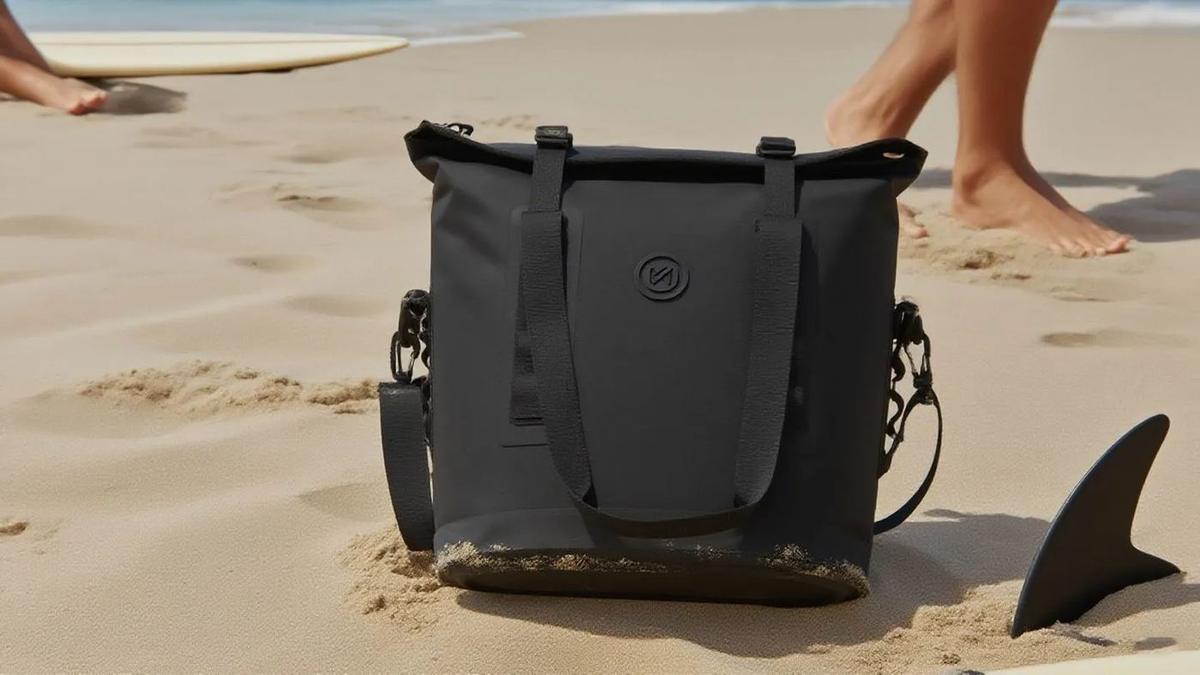
Why closure is the first question backers ask
Campaign comment sections are a reliable specification document. When a creator posts a tote reward, the questions that arrive within the first day are almost always about the same things: does it close, where does it close, and can someone reach into it on a train. Backers are not being fussy. An open tote is a bag you can only use when you are willing to watch it, and a closed tote is a bag you can put down. That difference is worth real money to anyone who commutes, travels or works from a cafe.
This is why a zippered tote can sit at a pledge 40 to 70 percent above an open tote of the same fabric and still read as better value. The closure is the single highest-leverage line in the specification. It is also one of the cheapest relative to its effect, because a reverse-coil zip with a covered opening adds a small amount to unit cost and a large amount to perceived security. Our team advises spending here before spending on a heavier fabric, because backers feel the zip before they feel the canvas.
There is a second, less obvious reason. A closed tote signals that the creator specified a product rather than sourced a blank. An open tote with a print on it is the default merchandise object, and backers know what it costs. A tote with a considered closure, a garage and a hidden pocket reads as a designed bag. That perception supports the pledge and it also reduces the number of backers who ask whether the reward is worth the money. If you are weighing open against closed, start with the custom tote bag specification options.
Backers feel the zip before they feel the canvas. Spend on the closure before spending on a heavier fabric.
Zipper chain types: coil, reverse coil and metal
A zipper has three parts that matter in a specification: the chain, the tape and the slider. The chain is the interlocking element and it comes in three families. Coil chain is a spiral of polyester or nylon sewn onto tape. It is the default for bags because it is light, flexible, quiet and cheap, and it tolerates being sewn around a curve. Reverse coil, also called invisible coil, puts the spiral on the underside so that the face shows only a clean line of tape. It looks more refined and it is harder to pick open with a pen, which is a genuine if modest security gain.
Metal chain is individual teeth crimped onto tape. It reads as premium, it is heavier, it is noisier and it costs more. Metal also has a failure mode that coil does not: teeth can separate under a burst load and, once separated, a metal zip usually has to be replaced rather than coaxed back. For a campaign reward that will be shipped to several hundred backers, that matters, because a metal zip failure is a replacement case rather than an annoyance.
Our production team specifies reverse coil for the main opening of a security-led tote and standard coil for interior pockets, which keeps cost sensible while putting the visible refinement where backers see it. Metal is reserved for a heritage or leather-accent design where the aesthetic argument outweighs the service risk. Whatever the choice, the brand of chain matters: unbranded coil varies widely in tooth consistency, and inconsistent teeth are the root cause of sliders that catch halfway.
Gauge and chain size: what number 5 actually means
Chain size is written as a number, most commonly #3, #5, #8 and #10, and the number is the approximate width of the closed chain in millimetres. A #3 is a light dress or pocket zip. A #5 is the standard bag zip and the right default for a tote main opening. A #8 is heavier, sits well on a large travel tote or a structured work tote, and reads as substantial in a photograph. A #10 is a statement hardware choice and rarely necessary on a tote.
Gauge interacts with use. A #5 reverse coil with a good slider will survive years on a tote that carries a laptop and a water bottle. The same #5 on an overpacked tote that is habitually forced closed will eventually split at the tape seam, because the load goes into the stitching rather than into the chain. The specification fix is not a bigger chain, it is a correctly sized opening and a tape that is sewn with the right seam allowance. Our team checks tape attachment separately from chain performance during sampling.
For backers, gauge is a visual cue as much as a functional one. A #8 chain photographed close up tells a viewer the bag is serious. This is why creators who photograph the reward well see higher conversion on the same specification: the proof of quality is in the detail shots. When we prepare a sample for a campaign shoot, our programme coordinator includes a hardware close-up in the shot list, because it is the cheapest credibility available.
Main opening geometry: full, three-quarter and recessed
Where the zip sits changes how the bag behaves. A full-length zip across the whole top panel makes the tote fully closable and easy to pack, because the opening is as wide as the bag. It also makes the bag harder to reach into while carrying it, which is a real trade-off for a market or shopper tote. A three-quarter zip leaves part of the opening free, which keeps quick access but leaves a gap that a determined hand can exploit and that rain can enter.
A recessed zip is set down from the top edge rather than flush with it, so the chain sits below the line of the bag's opening. This is the strongest of the three for perceived security because the zip cannot be reached without deliberately opening the flap above it, and it is the configuration our team recommends for a commuter or travel reward. It costs slightly more in labour because the panel is built in two layers, and it requires a slightly longer chain for the same opening width.
The choice should follow the reward's promise. If the campaign page says the tote is for the office commute, a recessed or covered zip is the right answer and a full-length exposed zip is acceptable. If the page says it is a market bag, an open top with a single magnetic snap is arguably the more honest and more usable design, and forcing a zip onto it makes the product worse. Totes that try to be everything usually end up being compared to a shop product in a category they do not win.
Zip garages, storm flaps and the rain path
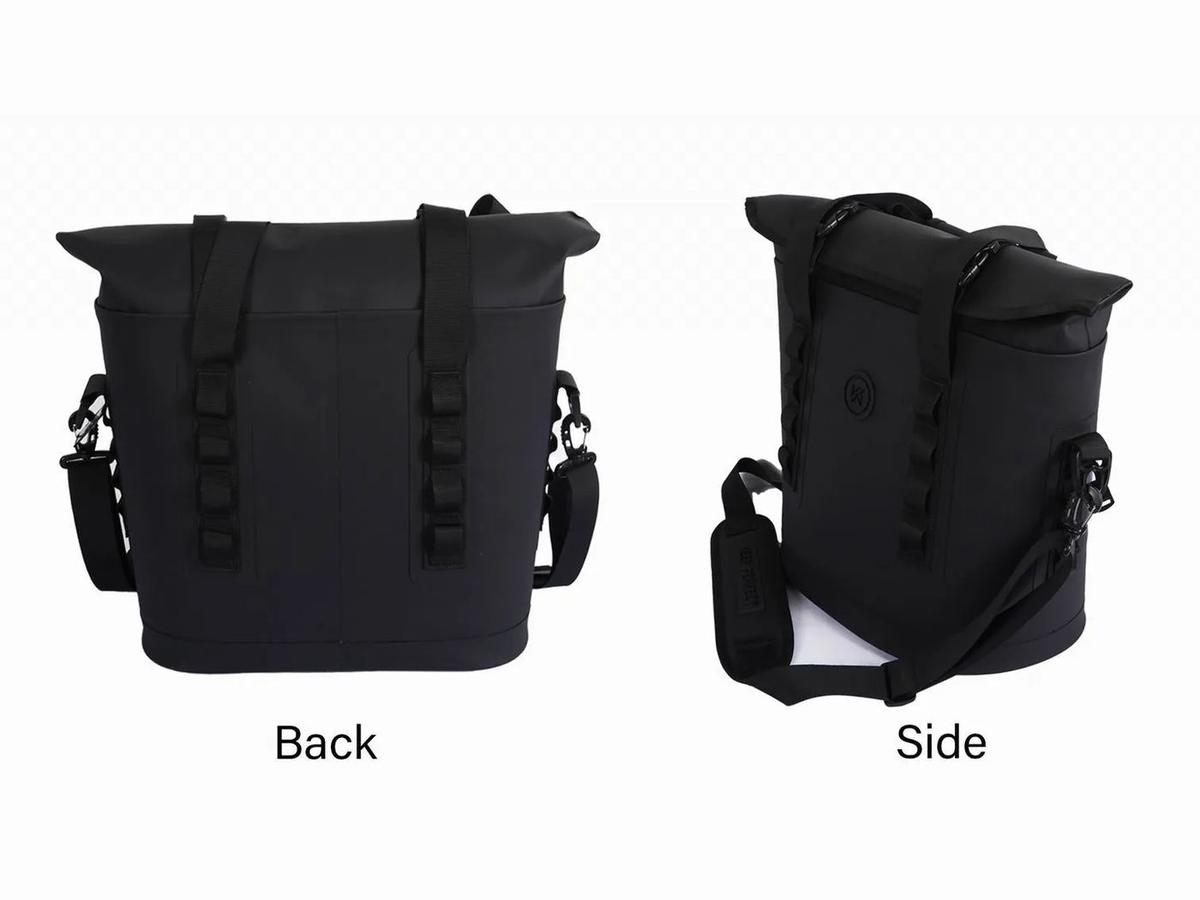
A zip garage is a small fabric hood that covers the chain at the end where the slider parks. It costs a few cents and it solves two problems: it stops the slider sitting exposed where it can be opened by pressure, and it stops the metal puller rattling against things. Every zippered tote our production team builds has one. Omitting it is a false economy that shows up in the comment section, because the parked slider is the first thing a backer touches.
A storm flap is a fabric panel that lies over the zip line. It does the same job at scale, keeping rain off the chain and hiding it from view. A flap needs a fastening of its own or it will curl, and the usual choices are a low-profile snap, a magnetic closure or a hook-and-loop tab. Magnetic closures are quiet and feel considered; hook-and-loop is cheap and wears out; snaps are durable but audible. For a work tote, a magnetic closure under a flap is the combination most backers describe as premium.
Be honest about what these do. A covered zip and a flap give weather resistance and opportunistic-theft resistance. They do not make a bag waterproof, because a zip chain is not a sealed seam. If the campaign page claims water resistance, the specification needs a coated fabric and a durable water repellent finish as well, and the copy should say water resistant rather than waterproof. Our team reviews claim language against the build before launch, because overclaiming here is the fastest route to a refund request.
Hidden pockets, rear panels and placement rules
A hidden pocket is only useful if it is genuinely hard to reach while the bag is being worn. The effective location is against the back panel, meaning the face that sits against the body when the bag is carried on a shoulder. A pocket there is covered by the wearer, which is the entire point. The ineffective location is on the outer face, where a pocket described as hidden is simply a pocket.
Depth and orientation matter next. A rear pocket should be deep enough to swallow a passport or a phone completely, which in practice means 16 to 18 centimetres of usable depth, and it should be a horizontal zip rather than a vertical one so that gravity does not help the contents slide out when the bag is set down. Width should be at least 20 centimetres so a large phone lies flat rather than diagonally.
Interior security pockets are a different job. Their purpose is separation rather than concealment, so the useful specification is a zippered pocket sized for a passport or a wallet plus one open slip pocket sized for a phone. Two interior pockets is usually enough; four is a sign that nobody decided what the bag is for. Our team sizes interior pockets against the objects named on the campaign page, so if the page says the tote holds a 14-inch laptop and a water bottle, the pockets are cut to those.
One further rule prevents a common mistake: a rear pocket should never be so deep that it sits behind the laptop sleeve on a tote that has one. The two compete for the same space, and a loaded rear pocket pushes against the device. Our production team checks pocket depth against the sleeve position on the sample, and where there is a conflict we reduce pocket depth rather than let both be compromised. A pocket that holds a passport and a phone is doing its job; one that holds a paperback is not.
Interior organisation that stops rummaging
Security in daily use is mostly about not opening the bag in public. A backer who has to open a tote on a street corner to find a card has a worse experience and a more exposed one than a backer who can reach a known slot without looking. That is the argument for interior organisation, and it is why a key clip is one of the highest-value two-cent components in any bag specification. A key clip on a short webbing strap near the top of the lining means keys never need a search.
Beyond the clip, the pattern that works is one zippered pocket, two slip pockets and a pen slot. This is enough for a phone, a cardholder, a pair of glasses and a pen, and it is few enough that each pocket has an obvious purpose. Adding a fourth and fifth pocket makes the bag heavier and makes the interior busier without adding perceived value, because backers do not count pockets, they check whether there is an obvious home for the things they carry.
Lining colour is an underrated part of this. A light lining makes the interior readable in a dim room; a black lining makes it a hole. For a security-led tote aimed at commuters, our production team specifies a mid-grey or tan lining so contents are visible. That single choice generates more positive unboxing comments than most hardware upgrades, and it costs nothing beyond the fabric choice.
Anti-theft claims: what is honest and what is not
There is a vocabulary in this category that creators should handle carefully. Slash resistant implies a reinforced layer in the fabric, usually a bonded steel mesh or a high-tenacity panel. If the bag does not have that layer, the claim is false and it is a compliance and reputation risk. Lockable implies a slider with a hole that accepts a small padlock or that can be clipped to a D-ring, which is a real and inexpensive feature if it is specified.
RFID blocking is the most frequently overclaimed. It requires a shielding layer with measured attenuation, and the honest way to sell it is to specify the material and state the frequency range it is tested against. Most totes do not need it, because card skimming is a low-frequency event compared with a phone being lifted from an open pocket. Our team generally advises creators to spend the money on a rear pocket that works rather than on an RFID layer that is hard to substantiate.
The safe language is descriptive rather than absolute: a recessed zip, a covered main opening, a rear pocket against the back panel, and a lockable slider. Each of those is a fact about the product that a backer can verify when the bag arrives. Claims that cannot be verified on arrival are the ones that generate disputes, and platforms take a dim view of rewards that do not match the page.
| Feature | Build implication | Cost impact | Honest claim |
|---|---|---|---|
| Reverse coil #5 main zip | Standard bag chain, spiral underside | Low | Covered closure, harder to pick open |
| Upgrade to #8 reverse coil | Heavier chain, larger slider | Low to moderate | Substantial closure, visible proof of quality |
| Zip garage | Small fabric hood at slider park | Very low | Slider protected when parked |
| Storm flap with magnetic closure | Two-layer panel plus magnet hardware | Moderate | Weather resistance for the zip line |
| Rear hidden pocket, 20 x 17 cm | Against back panel, horizontal zip | Low to moderate | Pocket sits against the body when carried |
| Lockable slider with D-ring | Slider with eyelet, anchor webbing | Low | Slider accepts a small padlock |
| Bonded slash-resistant layer | Reinforced panel in body fabric | High | Slash resistant, only if the layer is specified |
| RFID shielding layer | Shielding laminate with tested attenuation | High | Only with a stated tested frequency range |
Puller design, silent operation and one-handed use
The puller is the part of a zip a backer touches every single time they use the bag, and it is where cheap specification is most obvious. A flat stamped puller with a sharp edge feels like a budget bag. A moulded or cast puller with a rounded edge and a little weight feels considered. The difference in unit cost is small and the difference in daily experience is large, which is why our team treats puller selection as a design decision rather than a hardware default.
Noise is the second factor. Metal pullers on a metal chain rattle when the wearer walks, and on a tote carried against the body that rattle is audible to the wearer all day. Coil chain with a moulded puller is quiet. Where a design calls for metal, a silicone or leather wrap on the puller damps it, and adding a small webbing loop that lets the puller be tucked under the flap does the same job at no hardware cost.
One-handed use is the third factor and it is a genuine accessibility point. A tote with a recessed zip under a flap needs two hands unless the bag is stabilised, which is fine on a desk and awkward on a train. Adding a small webbing grab loop on the opposite side of the opening lets a wearer hold the bag and pull the slider with the other hand. It is a two-cent addition that solves a daily annoyance and it is the sort of detail that gets mentioned in reviews.
What security features actually cost
Cost in this category is driven by three things: the chain itself, the labour to install it, and any additional panel or hardware. Chain is the least of it. Moving from a #5 coil to a #8 reverse coil changes unit cost by a small amount. Labour is the bigger line, because a recessed or covered zip takes longer to sew than a flush one and cannot be done on the simplest machines. Panels and hardware are the biggest line, because a storm flap adds a cut part and a magnet or snap.
Against that, the pledge effect is large. In our experience a zippered tote with a covered opening, a garage and a rear pocket supports a pledge 40 to 70 percent above an open tote of otherwise identical specification, which dwarfs the added unit cost. The guardrail is the standard reward-budget rule: total landed cost including freight, duty and a returns reserve should sit at or below 30 to 35 percent of the pledge. Security features comfortably clear that bar.
The place not to spend is on features that cannot be demonstrated. An RFID layer that no backer can test, or a slash-resistant panel that adds weight and stiffness to a bag bought for its softness, are both cases where money goes into a claim rather than into an experience. Our team would rather put that money into a heavier fabric and a better puller, because those are felt every day.
Testing closures during the sampling window
Sampling runs 6 to 10 working days for a standard zippered tote and 12 to 15 working days when the build includes a moulded base, a bonded lining or a storm flap with hardware. That window is when closure decisions should be validated, because changing a chain specification after bulk has started is expensive and changing it after delivery is impossible. Our sample and prototyping programme builds the closure test into the first sample rather than leaving it to the second.
The test regime is simple and it can be run by the creator at a desk. Cycle the main zip 500 times with the bag loaded to a realistic weight and check for tooth separation, tape fraying and slider polish wear. Pull the slider sideways at the parked end to test the garage. Load the bag and lift it by the puller alone to confirm the tape attachment holds. Run the rear pocket zip with the bag worn on the shoulder to confirm it is genuinely hard for a second person to reach.
Then do the weather test. Hold the assembled bag under a shower for two minutes with the flap closed and check the interior for damp along the zip line. Expect some moisture at the chain, because a zip is not a seam seal. If the campaign page will claim water resistance, the pass condition is that no moisture reaches the main compartment, and that requires a coated fabric and a durable water repellent finish in addition to the flap.
QC checkpoints for zippers, pockets and hardware
Inspection on our programmes holds at AQL 2.5 to ISO 2859-1, which fixes sample size and accept and reject numbers rather than leaving it to opinion. Within that framework, closures get specific attention because they are the highest-frequency failure point in any bag. The checkpoints are chain alignment along the whole run, slider smoothness through the full travel, tape stitching at both ends, garage coverage at the parked position, and puller attachment.
Pocket checkpoints are separate: zip length versus opening, pocket depth against the stated dimension, and bar-tack reinforcement at both ends of every pocket zip. A pocket zip that is 5 millimetres short of the opening will not close fully, and it is a defect that is invisible in a photograph and obvious in use. Bar-tacks at the ends are what stop a pocket zip splitting after a month, and they are the single most commonly skipped reinforcement on budget production.
Hardware finish is checked as a batch rather than per unit, because a mixed finish across a run is the defect that most damages a campaign. Our production team pulls hardware from a single scheduled batch for a programme and holds a reference set from that batch. Where a reward is part of a wider bag manufacturing programme with several items, the same hardware schedule is applied across every item so the finishes match.
Send your zippered tote specification to service@junyuanbags.com and a campaign bag specialist will return a costed closure schedule with sampling and bulk dates.
Closure defects also have a seasonal pattern worth planning for. Metal pullers produced and packed in a humid period can show corrosion within weeks of dispatch, which arrives as a backer complaint rather than as an inspection failure. Our production team specifies a protective finish on metal hardware and packs a desiccant sachet in the polybag for programmes shipping to humid markets, which is a low-cost defence against a defect that inspection at dispatch cannot see.
Frequently Asked Questions
Is a zippered tote worth more than an open tote as a campaign reward?
Yes. A zippered tote with a covered opening, a garage and a rear pocket typically supports a pledge 40 to 70 percent above an open tote of otherwise identical specification. The added unit cost is small relative to that, so it comfortably clears the standard reward-budget guardrail of 30 to 35 percent landed cost against pledge.
What zipper size should a campaign tote use?
Number 5 is the default bag zip and the right choice for a standard tote main opening. Number 8 suits a large work or travel tote and reads as substantial in photography. Number 3 is a pocket or dress zip, and number 10 is a statement hardware choice that is rarely necessary on a tote.
What is the difference between coil and reverse coil zipper chain?
Coil chain has a spiral sewn onto the tape with the spiral visible on the face. Reverse coil puts the spiral on the underside so the face shows a clean line of tape. Reverse coil looks more refined and is harder to lever open with a pen, which is a modest but genuine security gain for a modest cost increase.
Should a campaign tote use a metal zipper?
Only when the design argument outweighs the service risk. Metal reads as premium but it is heavier, noisier and, once teeth separate under burst load, it usually has to be replaced rather than coaxed back. For a reward shipped to several hundred backers, a replaced zip is a replacement case, so our team defaults to reverse coil and reserves metal for heritage designs.
What is a zip garage and why does it matter?
A zip garage is a small fabric hood covering the chain where the slider parks. It stops the slider sitting exposed where pressure can open it, and it stops a metal puller rattling. It costs a few cents, it is the first thing a backer touches when they use the bag, and omitting it is a false economy that shows up in comments.
Where should a hidden pocket be placed on a tote?
Against the back panel, meaning the face that sits against the body when the bag is worn on a shoulder. Usable depth of 16 to 18 centimetres, width of at least 20 centimetres, and a horizontal rather than vertical zip so gravity does not help contents slide out when the bag is set down.
Can a creator claim the tote is anti-theft or slash resistant?
Only if the corresponding layer is actually in the build. Slash resistant implies a reinforced bonded panel. Lockable implies a slider with an eyelet and an anchor point. RFID blocking implies a shielding layer with a tested attenuation range. Safer language is descriptive: recessed zip, covered opening, rear pocket against the body, lockable slider.
Does a storm flap make a tote waterproof?
No. A flap gives weather resistance for the zip line, but a zip chain is not a sealed seam. To claim water resistance honestly the build also needs a coated fabric and a durable water repellent finish, and the copy should say water resistant rather than waterproof. Overclaiming here is the fastest route to a refund request.
How long does sampling take for a zippered tote?
6 to 10 working days for a standard build and 12 to 15 working days when the specification includes a moulded base, a bonded lining or a storm flap with hardware. Closure decisions should be validated inside that window, because changing a chain specification after bulk starts is expensive.
How should a zipper be tested on a sample?
Cycle the main zip 500 times with the bag loaded to a realistic weight and check for tooth separation, tape fraying and slider wear. Pull the slider sideways at the parked end to test the garage. Lift the loaded bag by the puller alone to confirm tape attachment, and run the rear pocket zip with the bag worn to confirm reach.
What does AQL 2.5 inspection check on closures?
Chain alignment along the run, slider smoothness through full travel, tape stitching at both ends, garage coverage at the parked position, puller attachment, pocket zip length versus opening, and bar-tack reinforcement at every pocket zip end. Bar-tacks are the most commonly skipped reinforcement on budget production and the cause of pocket splits after a month.
What are the minimum order and payment terms for a zippered tote?
Minimum order is 500 pcs per style and per colourway, bulk runs 35 to 50 days from approved sample and deposit, and terms are FOB Xiamen with T/T 30/70. Capacity of 200,000 pcs per month across 7 lines means reward volumes of a few thousand units never constrain the schedule.
People Also Ask
Do backers prefer zippered totes over open totes?
For commute, travel and work use, yes. A closed tote is a bag you can put down, and that is worth a higher pledge. For a market or shopper tote an open top with a snap is often the better design.
What is the most important security feature on a tote?
A covered or recessed main opening with a zip garage, followed by a rear pocket against the back panel. Both are inexpensive and both are felt every day, unlike an RFID layer nobody can test.
How much does adding a zip to a tote cost?
Chain is the smaller part of the cost. Labour to install a recessed or covered zip and any added flap panel are larger. Against a 40 to 70 percent pledge uplift, the added cost is comfortably worthwhile.
What zipper brand should I specify?
Specify a named chain brand rather than generic coil, because unbranded chain varies in tooth consistency and inconsistent teeth are the root cause of sliders that catch. The brand matters more than the gauge.
Should pockets be horizontal or vertical zips?
Horizontal for anything valuable, so gravity does not help contents slide out when the bag is set down. Vertical zips are fine for quick-access items like a phone on an outer face.
How deep should a hidden pocket be?
16 to 18 centimetres of usable depth and at least 20 centimetres wide, so a passport or a large phone disappears completely and lies flat rather than diagonally.
Can I lock a tote zipper?
Yes, if the slider has an eyelet and the bag has an anchor D-ring. That is a low-cost feature and an honest claim, unlike unsubstantiated slash-resistance language.