How to Estimate Shipping Weight for Custom Bags (and Save Money)
How do you estimate shipping weight for custom bags before you have a physical unit? Multiply shell GSM by panel area, add lining, hardware and packaging, then compare actual against volumetric weight using the 6,000 divisor. On a 500 pcs run the gap between a good and a careless estimate is usually 15-30% of the freight line. Our production team samples in 6-10 working days and runs production 35-50 days, with FOB Xiamen loading.
- The two weights that govern your freight bill
- Building a unit weight estimate from the spec
- Volumetric weight and the crossover point
- Carton maths: pieces per carton and gross weight
- Where weight is actually saved in a bag build
- Packaging choices that add grams
- Freight mode comparison and cost per unit
- Tolerance: how accurate can an estimate be?
- A worked estimate for a 500 pcs run
- Verifying weight before cargo is released
- The weight-estimate RFQ checklist
The two weights that govern your freight bill
Every freight quotation is built from two numbers, and carriers bill on whichever is greater. Actual weight is the mass on the scale. Volumetric weight, sometimes called dimensional weight, is the packed volume converted into a notional mass using a divisor. Understanding which of the two governs your shipment is the single most useful thing a creator can learn about freight, because it determines which specification changes actually reduce cost.
Bags sit near the crossover. A heavy structured backpack packed tightly will bill on actual weight. A packable tote or a drawstring bag folded loosely can bill on volume even though it is light, because the carton is full of air. That is why two products with identical unit masses can have very different freight costs, and why packing specification belongs in the quotation rather than in the warehouse.
The commercial consequence runs through the whole pledge model. Freight is usually the second-largest line in a reward cost breakdown after the unit cost itself, and it is the line most often estimated by guesswork. Getting it within 10% before the campaign launches is the difference between a tier that funds properly and one that quietly loses money on every pledge.
- Minimum order quantity
- 500 pcs per style / colourway
- Sampling
- 6-10 working days (12-15 for complex builds)
- Bulk production
- 35-50 days after deposit + approved pre-production sample
- Inspection
- AQL 2.5 to ISO 2859-1
- Trade term
- FOB Xiamen
- Payment
- T/T 30/70
- Production floor
- 4,950 m² SGS-verified, 137 staff, 7 lines, 149 machines
- Monthly capacity
- 200,000 pcs per month
- Programme contact
- service@junyuanbags.com
Key takeaways on estimating freight
- Carriers bill on the greater of actual weight and volumetric weight.
- Volumetric weight is packed volume divided by a divisor, commonly 6,000 for air and 5,000-6,000 for ocean.
- Unit weight is shell GSM multiplied by panel area, plus lining, hardware and packaging.
- Most freight savings come from carton specification, not from shaving fabric weight.
- Verify carton count and gross weight before releasing the balance payment.
Why the crossover matters commercially
When a shipment bills on volume, reducing fabric weight saves nothing. The carton is the same size, the container fills at the same rate, and the freight line is unchanged. This is the single most common reason a well-intentioned lightweighting exercise fails to move the budget. Conversely, when a shipment bills on mass, reducing packed volume saves nothing either. Identify which side of the crossover you are on before choosing which specification to change, and the savings follow.
A quick way to test it is to compute both figures for your packed carton and compare. If volumetric exceeds actual, the lever is carton density and folding. If actual exceeds volumetric, the lever is material and hardware. Programmes that ship a mix of SKUs frequently straddle the line, which is a good argument for modelling each SKU separately rather than averaging.
Building a unit weight estimate from the spec
A unit weight estimate before sampling is arithmetic rather than guesswork. Shell fabric is specified in GSM, grams per square metre; multiply by the total panel area in square metres to get the shell mass. Add the lining on the same basis, then add hardware — a zip, a slider, a cord lock, a buckle — which is usually specified per piece and can be summed directly. Add packaging last.
The number that surprises people is how small the hardware contribution usually is and how large the packaging contribution can be. A zip and slider might be 15-25 g. A polybag is 5-10 g. An insert card is 8-15 g. But the carton itself, amortised across the pieces it contains, can be 30-60 g per unit on a low-density pack — often more than the hardware.
| Component | Basis | Indicative weight |
|---|---|---|
| Shell, 300D polyester | 0.35 m² at 150 GSM | 52 g |
| Lining, 210D polyester | 0.30 m² at 90 GSM | 27 g |
| Webbing and trim | 1.2 m at 12 g/m | 14 g |
| Zip, slider and puller | 1 unit | 22 g |
| Interlining and stiffener | 0.08 m² | 12 g |
| Branding application | Embroidery or print | 3 - 8 g |
| Polybag and insert card | 1 unit | 13 - 25 g |
| Carton share | 1/120 of carton | 35 - 55 g |
| Indicative packed unit | Sum of above | 178 - 215 g |
Turning GSM into grams you can plan with
Denier and GSM are related but not interchangeable, and most tech packs name one without the other. Denier is filament mass per 9,000 metres; GSM is areal mass. A 300D polyester typically lands around 140-170 GSM depending on weave and coating, and a 600D around 260-320 GSM. Where a supplier quotes only denier, ask for the GSM figure, because it is the number the weight estimate needs and the number that determines how the fabric behaves.
Coating is the usual source of error. A PU coating can add 20-40 GSM depending on application weight, and a TPU laminate can add more. That is a meaningful share of a pouch shell and a smaller share of a heavy backpack shell, which is why coating weight matters more on lightweight formats. Include it in the estimate rather than treating it as a finishing detail.
Volumetric weight and the crossover point
Volumetric weight converts volume into a notional mass so that a carrier is not penalised for carrying feather-light cargo that fills a container. The calculation is length times width times height in centimetres, divided by the divisor. For a carton of 60 x 40 x 40 cm, the volume is 96,000 cm³, which at a divisor of 6,000 computes to 16 kg of volumetric weight.
Compare that with the actual weight. If the same carton weighs 12 kg, the carrier bills 16 kg. If it weighs 20 kg, the carrier bills 20 kg. The crossover is the point at which the two are equal, and everything you do to the packing specification moves you across it. Divisors vary by carrier and mode, so confirm the figure your forwarder uses rather than assuming a standard.
| Carton size (cm) | Volume (cm³) | Volumetric at 6,000 | Bills on volume when actual is below |
|---|---|---|---|
| 50 x 40 x 30 | 60,000 | 10.0 kg | 10.0 kg |
| 60 x 40 x 40 | 96,000 | 16.0 kg | 16.0 kg |
| 60 x 50 x 40 | 120,000 | 20.0 kg | 20.0 kg |
| 70 x 50 x 50 | 175,000 | 29.2 kg | 29.2 kg |
| 80 x 60 x 50 | 240,000 | 40.0 kg | 40.0 kg |
Unit weight tells you almost nothing about your freight bill. Packed carton dimensions, pieces per carton and gross weight are what your forwarder needs. Request all three with the quotation, then re-confirm them at the pre-shipment inspection before the balance is released.
Carton maths: pieces per carton and gross weight
Pieces per carton is the variable with the largest effect on freight per unit, and it is determined by how the bag folds rather than by how much it weighs. A structured backpack with a moulded back panel nests badly and can drop a carton to 8-12 pieces. A flat tote folded once can reach 80-120. The same sewing effort produces a four-fold difference in freight cost per unit. This is why the packing specification belongs in the RFQ: two builds that cost the same to sew can differ by 25-30% in freight per unit purely because of how they fold.
Hardware placement changes nesting too. A bag with a buckle or a D-ring on the face panel will not lie flat against the next unit, and the gap compounds across a stack. Where hardware is required, position it so it sits in a recess or against a soft area, and confirm the packed profile with a physical carton test rather than a calculation.
- Ask for pieces per carton as a line item in the quotation, not as an afterthought.
- Confirm carton dimensions rather than assuming a standard export size.
- Check whether an inner pack is used and whether it changes the carton count.
- Model freight per unit, not freight per carton, when comparing specifications.
- Verify the actual packed count at inspection before releasing the balance.
Where a programme is comparing two specifications, run the freight calculation on both before deciding. The gap in unit cost is often smaller than the gap in freight per unit once packed profiles diverge, so the apparently cheaper build can be the more expensive one landed.
Carton strength interacts with density as well. Packing more units into a carton raises the stack load at the bottom of a container, and a single-wall carton that was adequate at 60 pieces may crush at 120. Where density is being increased to save freight, specify double-wall board and confirm it against the stacking height in the container rather than treating carton specification as a fixed default.
Compression, nesting and the folded profile
The folded profile is what determines pieces per carton, and it is set by structure rather than by size. A bag with a moulded back panel, a frame sheet or a stiff interlining does not compress, so its folded profile is close to its assembled thickness. A bag with no structure compresses to the thickness of its folded fabric, which is a fraction of that. Two bags of identical dimensions can differ by 3x in carton count for this reason alone.
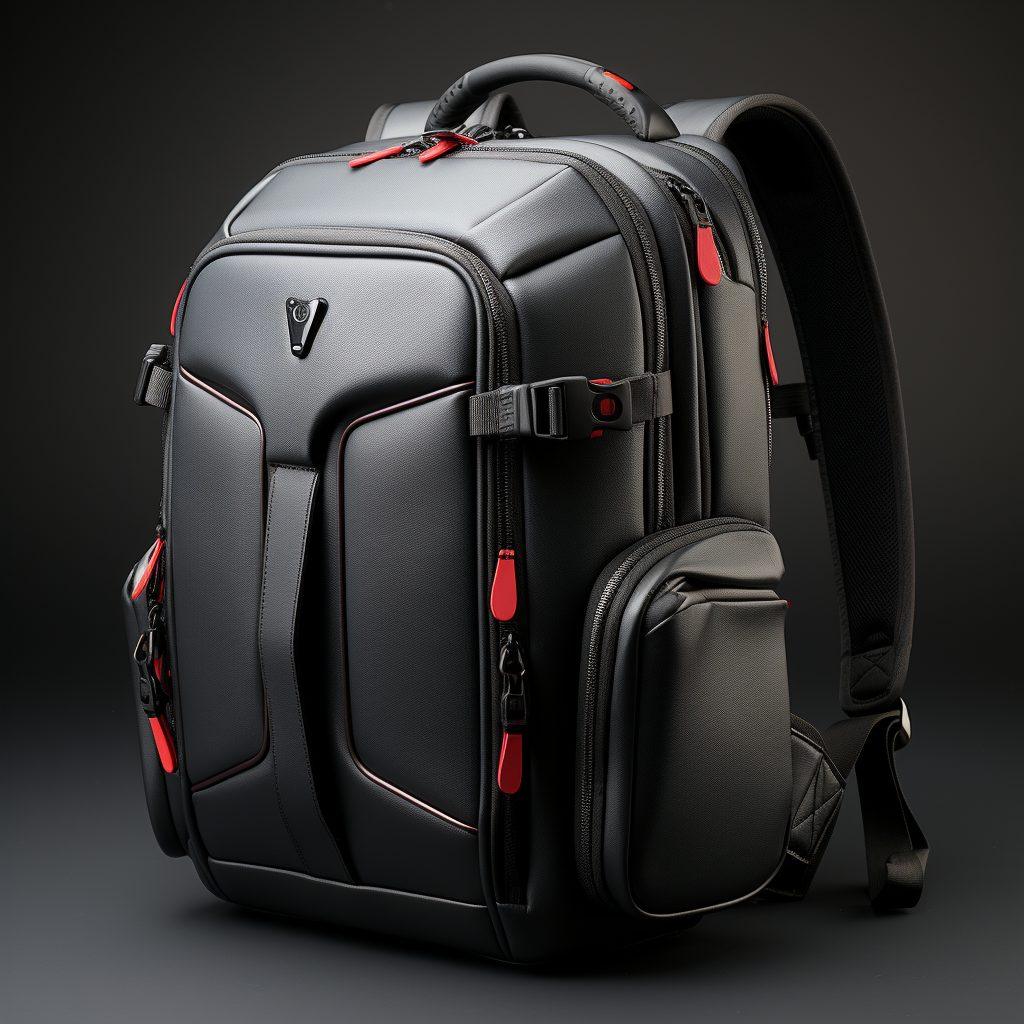
The structured formats — a custom backpack with a moulded back panel, or a duffle with a base board — carry the structural weight that makes them what they are. Removing it saves grams and costs the product its reason to exist. The softer formats are where weight can be reviewed with far less consequence.
Where weight is actually saved in a bag build
The instinct is to save weight in the fabric, and it is usually the wrong lever. Dropping a shell from 600D to 300D saves perhaps 40-60 g on a medium bag but changes the durability story the campaign is built on. The larger, cheaper savings are in lining grade, hardware selection and structural components, none of which the backer evaluates as carefully as the face fabric.
| Lever | Typical saving | Risk to the reward |
|---|---|---|
| Reduce interlining and stiffener | 15 - 40 g | Low if the panel is not structural |
| Lighter lining grade | 10 - 25 g | Low |
| Smaller or fewer metal components | 10 - 30 g | Low to medium |
| Thinner webbing specification | 5 - 15 g | Medium on load-bearing points |
| Reduce shell denier | 40 - 60 g | High: changes durability story |
| Remove structured back panel | 60 - 120 g | High: changes the product |
| Optimise packing density | 10 - 30% of freight | Lowest |
Packaging choices that add grams
Packaging is where programmes add weight without noticing. A polybag is small in itself, but it prevents units from nesting tightly, which increases the effective volume of every unit in the carton. An insert card adds mass directly and adds a packing labour operation. A retail-ready belly band prevents compression entirely, which can halve the piece count per carton.
None of this means packaging is wrong. It means packaging decisions should be made against a freight model rather than in isolation. A 12 g insert card on a 500-unit order is 6 kg of actual weight plus whatever volume it prevents from compressing — worth roughly a few cents per unit in freight, which is almost always acceptable for the unboxing benefit it delivers.
Freight mode comparison and cost per unit
Mode choice is a schedule decision with a cost consequence. Ocean freight is the baseline and suits a programme with a fixed delivery month and no event deadline. Air freight costs several times more per kilogram but compresses the transit leg from weeks to days, which is why it is used for partial shipments ahead of an event or to cover a delayed first run.
| Mode | Transit to US West Coast | Transit to Northern Europe | Cost index |
|---|---|---|---|
| Ocean, standard | 18 - 30 days | 28 - 38 days | 1.0 (baseline) |
| Ocean, express service | 14 - 20 days | 24 - 30 days | 1.4 - 1.6 |
| Air, consolidated | 5 - 8 days | 5 - 8 days | 4.0 - 5.5 |
| Air, priority | 3 - 5 days | 3 - 5 days | 6.0 - 8.0 |
| Rail to EU where available | Not applicable | 18 - 24 days | 1.8 - 2.2 |
Under FOB Xiamen, packing, port delivery and loading are handled on the production side; ocean or air freight, insurance, customs clearance and inland delivery to your fulfilment warehouse are yours. Budget two further days for clearance and inland haulage at the destination, and add a week of contingency where a programme has a fixed event date rather than assuming the first available sailing. It is also worth asking your forwarder to quote the consolidated shipment rather than the per-carton rate, because consolidation frequently changes which of the two weights governs and therefore the total.
Where a programme ships a mix of SKUs, the weight that matters is the blend. A consolidated container carrying structured backpacks alongside flat pouches will have a packed density somewhere between the two, and freight per unit should be allocated by volume rather than split evenly. That allocation is what tells you which SKU is actually carrying the freight cost.
Building a carton test into the sampling round
The most reliable way to validate a packing plan is to pack a physical carton during sampling. Fold ten units the way the warehouse will fold them, pack them into the nominated carton, measure the filled height, and scale it to the full piece count. That single test replaces an estimate with a measurement, and it typically reveals a piece-count difference of 10-25% versus the theoretical calculation.
It also settles the packing method question before it becomes a warehouse problem. Banding versus loose packing, individual polybags versus bulk, cords tucked versus coiled — each has a measurable effect on the filled height, and the effect is visible immediately in a physical test in a way that it never is in a spreadsheet. Our rewards fulfilment team uses it as a standard step.
Tolerance: how accurate can an estimate be?
A pre-sample estimate built from GSM and panel area should land within roughly 10-15% of the eventual physical unit weight. Most of the error comes from two places: trim and thread, which are easy to underestimate, and coating weight, which varies between finishing houses. Once a physical sample exists, weigh it, and the estimate becomes a confirmation rather than a projection. Where shell GSM is not yet confirmed, ask your material customisation shortlist contact for the figure rather than inferring it from denier.
It is worth being explicit about tolerance on the campaign page. Stating 180 g when the production unit comes in at 205 g is a small discrepancy that a backer will still notice if the page said 180 g. Either quote a range or quote the figure once the pre-production sample has been weighed.
A worked estimate for a 500 pcs run
Take a medium backpack with a packed unit weight of 195 g including polybag and insert, packed 20 pieces per carton. Carton gross weight is therefore roughly 4.4 kg including the carton itself. At 60 x 40 x 40 cm, the volumetric weight at a 6,000 divisor is 16 kg, so the shipment bills on volume, not mass. Reducing the packed carton to 60 x 40 x 30 cm computes to 12 kg of volumetric weight and cuts the freight line by roughly 25%.
- Weigh the approved pre-production sample including all packaging.
- Multiply by pieces per carton and add the carton tare weight.
- Compute volumetric weight from the packed carton dimensions using the forwarder's divisor.
- Bill on the greater figure and divide by pieces per carton for freight per unit.
- Re-verify carton count and gross weight at the pre-shipment inspection.
A worked comparison makes the point. Two backpack builds with identical external dimensions and a 40 g difference in unit mass will usually bill identically if both are volume-governed. Change the packing so the structured build nests flat and the piece count per carton rises from 12 to 18, and the freight line per unit falls by roughly a third with no change to the product at all.
Verifying weight before cargo is released
Pre-shipment inspection runs at AQL 2.5 to ISO 2859-1, general inspection level II, single sampling plan, and it is the last point at which the freight model can be corrected before cargo leaves. Ask the inspector to record carton count, carton dimensions and gross weight alongside the defect findings, then compare those figures with what was quoted.
If the packed volume is larger than quoted, the freight line moves before the goods have left the port, and it is much easier to resolve at inspection than after the container is loaded. Where a programme ships to more than one fulfilment region, check the carton specification against each destination, because the mode and the divisor both change with the market.
A unit can pass every construction check and still blow the freight budget because the carton was packed at the wrong density. Require the packing list and carton dimensions at inspection, and make carton count and gross weight part of the release criteria, not an administrative afterthought.
The inspection is also the point at which a weight discrepancy is still correctable. If packed volume exceeds the quotation, the remedy is repacking, which is possible before loading and impossible after. Make carton dimensions, count and gross weight part of the release criteria, and require them in the inspection report alongside the defect findings at AQL 2.5 to ISO 2859-1.
Where the programme is shipping to multiple fulfilment regions, request the carton specification per destination. Different regions imply different modes, different divisors and different typical container utilisation, and a single global carton specification is often a compromise that costs money in every market. The crowdfunding bag guide covers multi-region reward planning in more detail, and the crowdfunding rewards fulfilment page sets out how carton data is handed to the warehouse.
The carton data also determines what the warehouse can promise. Pick and pack rates, shelf utilisation and the cost of a re-pack all follow from carton dimensions and pieces per carton, so the number you need from the quotation is the packed carton specification, not the unit weight. Hand that specification to your forwarder and your rewards fulfilment partner at the same time, so both are planning against the same figures.
The weight-estimate RFQ checklist
A freight-accurate quotation depends on packing information that most RFQs omit. Send the packing specification with the tech pack rather than after approval, and the freight line in your quotation will be worth modelling against.
- Shell and lining by GSM or denier, with coating specification.
- Full hardware list with per-piece weights where available.
- Packing method: per polybag, per inner, per carton.
- Carton dimensions and pieces per carton, quoted not assumed.
- Whether an insert card or retail packaging is included.
- Quantity per style and colourway against the 500 pcs minimum.
- Destination market and mode, so the correct volumetric divisor is applied.
- Custom bags for Kickstarter campaigns
- Custom backpacks for Kickstarter
- Crowdfunding rewards fulfilment
- Material customisation for Kickstarter bags
- QA, QC and inspection on campaign bag runs
- Low minimum bag production for creators
- Crowdfunding bag guide
- Request a quotation
Model your freight before you publish a tier
Send us the bag specification and your destination market. As your production partner we will return a unit cost with a packed carton specification you can hand to your forwarder. Write to service@junyuanbags.com.
Frequently Asked Questions
How do I estimate the shipping weight of a custom bag before sampling?
Multiply shell GSM by total panel area in square metres, add the lining on the same basis, then add hardware per piece and packaging last. Expect to land within 10-15% of the eventual physical weight. Weigh the approved pre-production sample to replace the projection with a measurement.
What is volumetric weight and how is it calculated?
Volumetric weight converts packed volume into a notional mass so carriers are not penalised for light cargo that fills space. It is length times width times height in centimetres divided by a divisor, commonly 6,000. A 60 x 40 x 40 cm carton computes to 16 kg of volumetric weight.
Which weight do carriers actually charge?
The greater of actual and volumetric weight. If a carton weighs 12 kg but computes to 16 kg volumetrically, you are billed 16 kg. If it weighs 20 kg, you are billed 20 kg. Confirm the divisor your forwarder uses, because it varies by carrier and mode.
How much does packaging add to a bag's shipping weight?
A polybag is roughly 5-10 g, an insert card 8-15 g, and a retail belly band prevents compression entirely. The carton share is often the largest line at 30-60 g per unit on a low-density pack, so confirm pieces per carton and carton dimensions rather than estimating.
How can I reduce freight cost on a 500 pcs bag order?
Optimise packing density first; it is usually worth 10-30% of the freight line and carries the lowest risk. Then review lining grade and hardware. Reducing shell denier saves 40-60 g per unit but changes the durability story, so treat it as a last resort rather than a first move.
What does FOB Xiamen mean for freight planning?
Goods are delivered on board the vessel at Xiamen and risk transfers there. Packing, port delivery and loading are handled on the production side; freight, insurance, clearance and inland delivery are yours. Budget 18-30 days ocean transit to the US West Coast and 28-38 days to Northern Europe.
How many bags fit in a standard export carton?
It depends on how the bag folds, not on its mass. A flat tote folded once can reach 80-120 pieces per carton. A structured backpack with a moulded back panel may only reach 8-12. Always ask for pieces per carton and carton dimensions as quotation line items.
Is ocean freight always cheaper than air freight for bags?
Per kilogram, yes, by a factor of roughly 4 to 8 depending on the service. But air freight compresses the transit leg from 18-30 days to 3-8 days, which is why programmes use it for partial shipments ahead of an event or to cover a delayed first run.
How accurate is a GSM-based weight estimate?
Typically within 10-15% of the physical unit once hardware and packaging are included. Most of the error comes from trim, thread and coating weight, which vary between finishing houses. Once a sample exists, weigh it and the estimate becomes confirmation rather than projection.
What should I verify at inspection before releasing payment?
Carton count, carton dimensions, gross weight and the packing list, alongside the defect findings at AQL 2.5 to ISO 2859-1. If the packed volume exceeds what was quoted, the freight line moves before loading, and it is far easier to resolve then.
Does reducing shell denier meaningfully cut freight cost?
Usually less than expected. It saves 40-60 g per unit, but on a volume-billed shipment the carton size is unchanged, so the freight line barely moves. Optimise packing density first, then review lining and hardware, before touching the face fabric.
How long does ocean transit take from Xiamen?
Roughly 18-30 days port to port to the US West Coast and 28-38 days to Northern Europe, with express ocean services a few days faster. Add two days for clearance and inland haulage, plus a week of contingency where the programme has a fixed event date.
People Also Ask
Why is my freight quote higher than my unit weight suggests?
Because the shipment is probably billing on volumetric weight. Carriers charge the greater of actual and volumetric, and bulky low-density cartons compute to a higher notional mass than they weigh. Confirm the divisor and check your packed carton dimensions.
How do I lower freight cost without changing the bag?
Change the packing specification. Higher packing density, consistent folding, and cartons sized to the folded unit rather than the default can be worth 10-30% of the freight line, with no change to the product. Confirm the packed carton dimensions before paying any premium for speed.
Should I ship part of my order by air?
Yes if a subset of backers or an event needs units early. Air costs 4-8x ocean per kilogram but compresses transit from 18-30 days to 3-8 days, which makes it a scheduling tool rather than a default mode.
What is the most common freight estimation mistake?
Estimating from unit weight alone. Freight is billed on packed carton volume or mass, whichever is greater, so carton dimensions and pieces per carton drive the number. Always request both with the quotation, not just the unit figure.
Does packaging affect landed cost per unit?
Yes, twice: it adds mass directly, and it prevents compression, which raises the volume every unit occupies. A polybag plus insert card is usually worth a few cents per unit in freight, which is normally acceptable for the unboxing benefit.