Packing 101: How to Fold and Polybag Custom Bags Efficiently
How should a crowdfunding creator pack custom bags so fulfilment runs fast and units arrive undamaged? The answer is a written packing specification, not a folding habit. Specify the fold method per bag format, set the polybag gauge in microns, choose the carton board by stacking strength, and calculate volumetric weight before the carton order is placed. Packing occupies the final three to seven days of the 35-50 day bulk window, immediately before inspection at AQL 2.5.
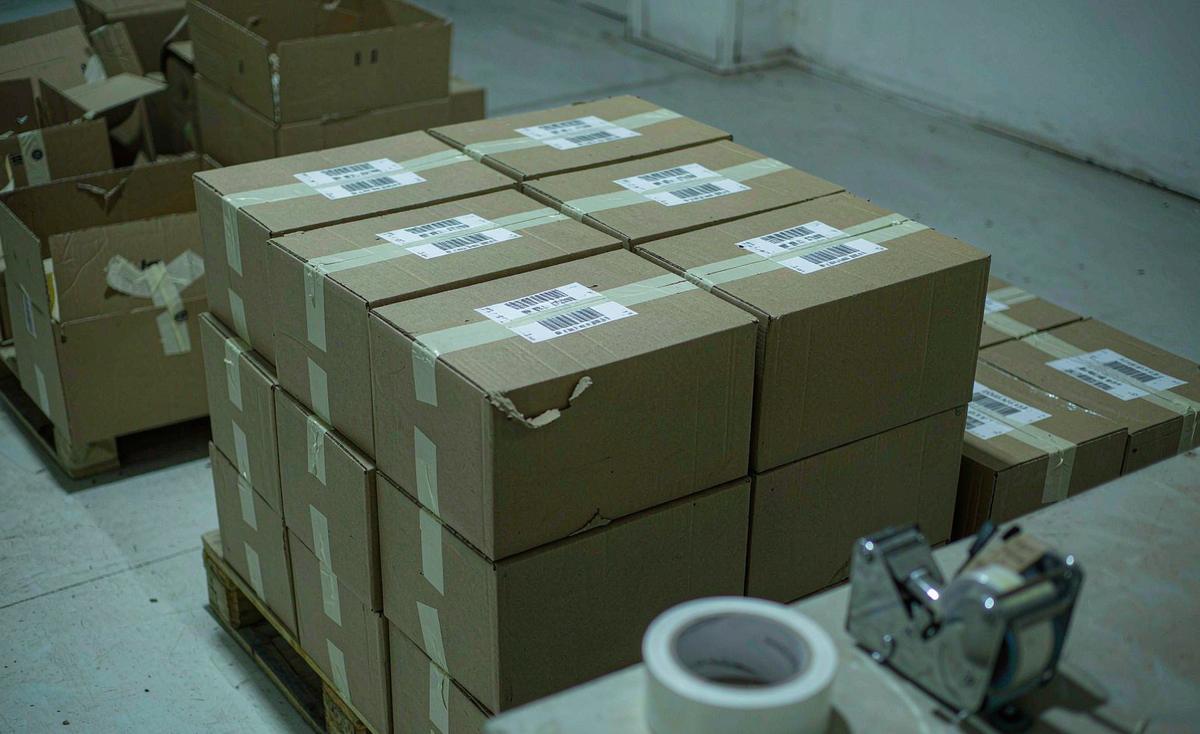
- Why packing is a cost line, not an afterthought
- The packing SOP: six stations that beat ad-hoc folding
- Folding method by bag format
- Polybag specification: film, gauge, closure and venting
- Suffocation warnings and market compliance for polybags
- Labelling: unit, carton and pallet levels
- Carton selection: board grade, flute and size
- Packing density and volumetric weight
- In-line packing checks before the carton closes
- Retail-ready packaging versus fulfilment packaging
- Where packing sits inside the 35-50 day window
- The packing detail to include in your RFQ
Why packing is a cost line, not an afterthought
Packing sits at the end of the schedule, so it is usually the part a campaign team thinks about last. That is precisely why it causes damage. A packing specification written after five hundred units are already finished produces cartons that are too large, polybags too thin to survive a container, and pack-out patterns that fail under compression during transit. Every one of those failures converts into a backer ticket, a replacement unit, and a handling charge at the fulfilment warehouse that nobody had budgeted for.
There are three places a reward programme quietly loses money on packing: carton volume, damage rate, and pick error rate. Carton volume is the largest and the least visible, because it is billed as freight rather than as packing. A tote folded flat to 4 cm instead of 3 cm, multiplied across a 500 pcs run, adds real cubic metres to a shipment, and ocean freight is quoted on cubic metres rather than on units. The saving from cheaper board is normally repaid several times over in the freight line.
The remedy is unglamorous and cheap: write the packing specification at the same time as the tech pack, and quote it as part of the same RFQ. A production partner reading a complete pack can return a unit cost, a sampling estimate, a production window and a packing cost in a single exchange. A packing decision taken after the goods are sewn cannot be changed without re-handling finished units. The same logic applies to the QC gate, which is why our bag QA and QC process is written into the pack rather than negotiated afterwards.
There is a second reason to write the packing specification early: it is the cheapest place to fix a freight problem. Changing a fold method on paper costs nothing. Changing it after four hundred cartons are sealed costs a re-handling operation, a second packing pass, and a delay that lands on the published delivery month. Packing is specified once and paid for on every unit, which is the definition of a decision worth taking slowly and confirming on a real sample.
- Minimum order quantity
- 500 pcs per style / colourway
- Sampling
- 6-10 working days (12-15 for complex builds)
- Bulk production
- 35-50 days after deposit + approved pre-production sample
- Inspection
- AQL 2.5 to ISO 2859-1
- Trade term
- FOB Xiamen
- Payment
- T/T 30/70
- Production floor
- 4,950 m² SGS-verified, 137 staff, 7 lines, 149 machines
- Monthly capacity
- 200,000 pcs per month
- Programme contact
- service@junyuanbags.com
Key takeaways on packing efficiency
- Write the packing specification alongside the tech pack, not after bulk is finished.
- Carton volume, not unit weight, drives most of the freight line on a bag programme.
- Specify the fold method per bag format; one rule across formats causes creasing or crushing.
- Polybag gauge, venting and suffocation warnings are compliance items, not cosmetic choices.
- A six-station packing SOP with in-line checks removes most pick and pack errors.
The packing SOP: six stations that beat ad-hoc folding
Ad-hoc packing is what happens when a team folds units on a table and fills cartons until they are full. It produces inconsistent pack counts, mixed colourways inside a single carton, and labels applied to the wrong boxes. A station-based SOP costs nothing to specify and removes most of that variance. Each station has one job, one pass or fail test, and one record, which is what makes a packing error traceable after the container has left.
- Station 1, verification: scan the unit and confirm style, colourway and size against the packing list before it enters the line.
- Station 2, fold: fold to the written method for that format, using a template or jig wherever a flat thickness is specified.
- Station 3, insert: add desiccant, tissue, care card or retail insert in the stated order and orientation.
- Station 4, polybag: insert to the stated gauge with the closure on the stated edge, then align the printed warning.
- Station 5, label: apply the unit barcode and any market labelling, then scan-verify against the packing list.
- Station 6, cartonise: pack the stated count, seal, weigh, apply the carton number and record it on the packing list.
Layout matters less than sequence. What makes the SOP work is that each station hands a verified unit to the next one, so a colourway error is caught at station 1 rather than discovered at goods-in three weeks later. A line that doubles up stations, folding and polybagging at the same bench for example, is where most of the variance returns and where pack counts start to drift between cartons.
Two numbers make the SOP measurable: units packed per operator per hour, and pack-out accuracy. In campaigns we support, a simple flat fold on a tote or a pouch runs at a considerably higher rate than a structured backpack that must be stuffed and shaped, and that difference belongs in the packing cost line rather than hidden inside a general labour figure. It also belongs in the plan for crowdfunding rewards fulfilment, where pick time is charged back to you.
Folding method by bag format
A single folding rule applied across every format is the most common packing error on a multi-SKU reward programme. A tote wants a flat fold along its natural crease with the handles laid inside. A structured backpack wants light internal stuffing so the back panel keeps its shape, then a fold that does not press the shoulder straps into a hard crease. A duffle wants a roll that protects the base panel, and a drawstring wants to be flattened and rolled rather than folded twice.
Material behaviour decides whether a fold is reversible. Uncoated cotton canvas relaxes, and a fold line disappears after a day of use. A polyurethane or TPU laminate takes a crease that can crack the coating permanently. Non-woven polypropylene holds a fold line and can crease white at the fold. Specify the fold with the material in mind, and test it on the approved sample unit rather than on a flat fabric swatch, because a swatch will not show how a panel corner behaves.
| Format | Fold method | Target flat thickness | Failure prevented |
|---|---|---|---|
| Flat tote | Fold along the side gusset crease, handles laid flat inside | 25-35 mm | Hard handle crease and corner wear |
| Structured backpack | Light tissue stuff in the main body, straps coiled not folded | 60-90 mm | Back panel collapse and strap creasing |
| Duffle | Roll from the end panel, base last | 70-100 mm | Base panel deformation |
| Drawstring | Flatten and roll from the base | 20-30 mm | Cord imprint on the face fabric |
| Flat pouch | Fold once on the zip line with the puller protected | 15-25 mm | Zip puller pressure marks |
| Cosmetic bag | Fold with the lining outward, insert a soft card | 30-45 mm | Lining crease set-in |
- Specify the fold in the pack with a photograph of the reference unit, not a written description alone.
- Set a flat thickness tolerance in millimetres so the packer has a clear pass or fail test at the bench.
- Protect hardware: zip pullers, buckles and metal feet should never sit directly against the face fabric.
- Avoid folding coated or laminated fabrics on the same line twice; a crease set into a TPU laminate rarely recovers.
- Where a structured format is involved, budget the stuffing material and the extra seconds it adds per unit.
- Match the fold method to the custom bag category rather than to a house standard.
Polybag specification: film, gauge, closure and venting
The polybag is the cheapest component in the pack and the one most often left to chance. Three variables matter: film type, gauge, and closure. LDPE is soft, quiet and tear resistant. HDPE is crisper and rustles more, with better clarity. Cast PP gives the clearest, stiffest presentation and is the usual choice for a premium retail pack. Gauge is stated in microns, and the difference between 30 micron and 50 micron film is felt immediately once cartons are stacked inside a container.
| Film | Typical gauge | Hand and behaviour | Best use |
|---|---|---|---|
| LDPE | 40-60 micron | Soft, quiet, good tear resistance | Fulfilment packing and mailers |
| HDPE | 30-50 micron | Crisp, rustles, higher clarity | Value-tier presentation |
| Cast PP | 30-40 micron | Very clear, crisp, stiff | Premium retail presentation |
| Recycled LDPE (GRS) | 50-70 micron | Slightly cloudy, softer hand | Sustainability-led programmes |
| Compostable film | 40-60 micron | Softer, limited shelf life | Programmes with a compostability claim |
Venting is not optional. A polybag sealed around a folded bag traps air, and trapped air inside a container crossing an equatorial route becomes a compression and humidity problem by the time it is discharged. Specify vent holes at a stated diameter and spacing, positioned so they do not break the printed warning. Name the closure too: a self-adhesive flap on a stated edge is the most common fulfilment choice, while a resealable closure suits a pouch that is meant to be reused by the backer.
Size the bag to the folded unit plus clearance. A polybag that is too tight tears at the corners in transit and stresses the taped seam; one that is too loose creates a slack fold that abrades print against print. A working allowance is roughly 20-30 mm of extra width and 30-50 mm of extra length over the folded unit, with the closure sitting on the edge that faces away from the printed panel. Where a hangtag or header card is used, the polybag must be sized over it rather than around it.
Suffocation warnings and market compliance for polybags
Any flexible plastic bag large enough to fit over a child's head must carry a suffocation warning in the language of the destination market. This is a compliance requirement rather than a design preference, and it is checked at goods-in by a number of fulfilment warehouses and by retail buyers. The warning text, its minimum font height and its permitted placement differ by market, which is why the requirement has to sit in the packing specification rather than in a single generic artwork file. Confirm it before the polybag order is placed, because film is printed in a minimum run and cannot be corrected cheaply afterwards.
Confirm three things before the polybag order goes in: the warning text in each destination language, the minimum printed font height, and whether the warning must be printed on the film or may be applied as a label. Printed warnings survive handling; labels are more flexible when one unit ships into several markets. Either way, the packing station must never cover the warning with a barcode label.
- United States: printed warning in English, with a minimum print height specified by the applicable standard.
- United Kingdom and European Union: warning in the local language, alongside the product safety information required under EU GPSR.
- Multi-market runs: either print a combined multi-language warning block or hold separate polybag stock per destination.
- Keep the polybag specification inside the compliance file so it can be produced on request by a warehouse or a retail buyer.
- Confirm whether the destination requires a recycling symbol or film identification mark printed on the bag itself.
Labelling: unit, carton and pallet levels
Labelling operates at three levels and each level carries different data. The unit label is what the fulfilment warehouse scans to pick the right colourway for each backer. The carton label is what the warehouse scans to find that unit without opening boxes. The pallet label is what the freight forwarder and the receiving dock use to move the shipment. Getting the data hierarchy right at specification stage is what makes a container reconcile in minutes rather than hours.
| Level | Data carried | Format and note |
|---|---|---|
| Unit | SKU, colourway, size, barcode, country of origin | Scan-verify at station 5 before cartonising |
| Carton | Carton number, contents, quantity, net and gross weight, dimensions | Printed on two adjacent faces, never the top |
| Pallet | Pallet number, carton range, destination, total weight | One label per face, repeated on all four sides |
| Container | Booking reference, seal number, total carton count | Matches the packing list and commercial invoice |
Carton numbering matters more than it appears. Number cartons sequentially as 1 of 42, 2 of 42 and so on, and carry that numbering into the packing list. A warehouse receiving a shipment with a mismatched count can reconcile in minutes against a numbered list, or in hours against an unnumbered one. Mixing colourways inside a single carton is the other avoidable error: it saves a little packing time and costs a great deal of pick time later, which is where bag manufacturing for campaign creators separates a smooth run from a noisy one.
Carton selection: board grade, flute and size
Carton choice is a compression problem before it is a cost problem. A carton at the bottom of a stack inside a container carries the weight of everything above it for the length of the transit, in humidity, with vibration. Choosing board on price alone produces crushed corners and, in a bad season, entire collapsed stacks. The specification should therefore name three things: the board construction, the flute profile, and a measurable strength value that can be verified on receipt.
| Construction | Flute | Typical use | Note |
|---|---|---|---|
| Single wall 3-ply | B or C | Light units, low stack height | Cheapest; adequate for short transits |
| Single wall, high performance | C | Standard reward cartons up to about 15 kg | Good balance of cost and stacking strength |
| Double wall 5-ply | BC | Heavy or structured units, long ocean transit | Specify for humid or long container routes |
| Double wall, export grade | BC with a stated burst or ECT value | Retail palletised shipments | Requires a named strength figure, not a description |
| Triple wall 7-ply | ABA | Very heavy or high-value cargo | Rarely justified on a bag programme |
- Name a strength value in the spec: either a bursting test figure or an edge crush test figure, never vague wording such as heavy duty.
- Set a gross weight limit per carton; a common working limit for manual handling sits around 15-20 kg.
- Choose carton dimensions from the pack-out maths first, then round to a standard size a forwarder can palletise efficiently.
- Specify the tape width and sealing method; a single strip on the top seam only is a frequent failure point.
- Avoid void space: an under-filled carton collapses. Use void fill or reduce the carton size.
- Confirm the carton print method: flexo, screen or pre-printed liners each carry different minimum quantities.
Void fill is the other half of the compression problem. A carton packed to 90 per cent of its volume will settle in transit, lose stacking strength and arrive with crushed corners. Options range from recycled paper void fill and honeycomb wrap to moulded pulp end caps and corrugated dividers. Dividers earn their cost on multi-unit cartons because they carry load vertically rather than letting units press on each other, which matters most when the units are structured rather than flat.
Packing density and volumetric weight
Freight is billed on whichever is greater, actual weight or volumetric weight, and on a bag programme volumetric almost always wins. Air freight applies a divisor to the product of the three dimensions; ocean freight is quoted per cubic metre. This is why fold method and carton size are freight decisions rather than warehouse decisions, and why they belong in the same conversation as the unit cost and the production window.
The practical test is simple and should be run during sampling, on a real unit, before any carton order is placed. Pack one carton the way the specification says, measure it, weigh it, and multiply by the number of cartons the run will produce. If the total cubic metres exceed what your freight quote assumed, the difference comes straight out of the reward margin. Most creators discover this the expensive way, after the container has already been booked.
Container utilisation is worth calculating before the carton size is fixed. A standard 40 ft high cube container offers roughly 65-68 cubic metres of usable volume, so a 500 pcs run in cartons of 0.12 cubic metres occupies about one cubic metre and is a rounding error; a 5,000 pcs run in the same cartons occupies roughly ten cubic metres and becomes a real line in the freight budget. The carton decision scales with the order, which is why it should be priced at both volumes in the RFQ.
In-line packing checks before the carton closes
Packing is the last point at which a defect can be caught cheaply. Once a carton is sealed and a container is loaded, the only remedy is a replacement shipment, which costs multiples of the original unit. A short in-line check at the packing station catches the failures that actually generate backer tickets: wrong colourway, wrong size, missing insert, unreadable barcode, damaged polybag, and units that have picked up soil or creasing in the finishing area.
- Scan-verify every unit against the packing list before it goes into the polybag.
- Check the first and last unit of every carton for print quality and logo placement.
- Confirm insert and card orientation, particularly where several language variants are in the same run.
- Reject any unit with a soil mark, loose thread or hardware scratch before it is packed.
- Record pack-out by carton number so a later query traces to a specific box rather than the whole shipment.
- Photograph the first sealed carton of each SKU and keep it as the packing reference.
Keep one sealed, fully labelled carton from the first production run as the packing reference. It is the fastest way to resolve a dispute about fold method, insert set or carton marking with a fulfilment warehouse months later, and it costs one unit of inventory.
Retail-ready packaging versus fulfilment packaging
A reward bag shipped directly to a backer and the same bag shipped into a retail channel need different packing. Fulfilment packing optimises for protection and scan accuracy: a plain or lightly printed polybag, a unit barcode, a sealed and numbered carton. Retail packing optimises for shelf presentation: a printed or branded bag, a header card or hangtag, fibre content and care labelling, and usually an individual retail barcode that differs from the fulfilment SKU.
| Element | Fulfilment packing | Retail-ready packaging |
|---|---|---|
| Polybag | Plain or minimal print, vented | Printed, branded, may be resealable |
| Labelling | SKU barcode only | Retail barcode, fibre content, care symbols, origin |
| Insert | Optional care card | Header card, hangtag, brand insert |
| Carton | Maximum density, sequentially numbered | Case pack to retail quantity, clearly marked |
| Cost impact | Lowest unit packing cost | Adds material and labour to every unit |
Most first campaigns should pack for fulfilment and hold retail packing for the re-order, once channel volumes are known. If you intend to do both from the first run, say so in the RFQ, because the packing line, the labelling and the carton specification differ and the difference is priced separately. The same applies where you are using print or embroidery that needs protection from abrasion inside the carton.
Where packing sits inside the 35-50 day window
Packing is usually the last three to seven days of the bulk window, immediately before the pre-shipment inspection. Because inspection is carried out on packed cartons, a packing delay delays inspection, and an inspection delay delays the balance payment and the cargo release. Packing is therefore on the critical path even though it looks like an end-of-run task, and it is the stage most often underestimated in a campaign update.
- Days 1-7: material purchase, receipt and shade checking against the approved standard.
- Days 5-35: cutting, branding application, sewing and assembly across the allocated production lines.
- Days 25-40: in-line quality control, finishing, thread trimming and final cleaning.
- Days 35-45: packing, carton marking, weighing and container planning.
- Days 42-50: pre-shipment inspection at AQL 2.5 to ISO 2859-1 and cargo release.
The packing specification has to be complete before packing starts, not during it. Carton board, carton dimensions, pieces per carton, polybag film and gauge, insert set, label data and carton numbering all need to be agreed at sample approval, because that is the point at which packing materials are ordered alongside bulk materials. A change requested later means either a delay while film or board is reprinted, or an acceptance that the goods will ship in a pack you did not choose.
The packing detail to include in your RFQ
A packing quotation is only as accurate as the information behind it. Send the folded unit dimensions, the target pieces per carton, the carton board and strength requirement, the polybag film and gauge, the insert and label set, the destination market and the trade term, and the packing cost can be quoted together with the unit cost in one round. Send a sketch and a quantity and you will receive three rounds of questions instead. Our custom bags for Kickstarter page sets out the full pack structure, and the low minimum production page explains how the 500 pcs minimum interacts with packing choices.
- Folded unit dimensions in centimetres, with the fold method described or photographed.
- Target pieces per carton and the maximum acceptable carton gross weight.
- Carton board construction and a stated strength value, either burst or edge crush test.
- Polybag film type, gauge in microns, closure type and venting specification.
- Insert and label set, including any market-specific care, origin or fibre content labelling.
- Destination country, so volumetric weight and compliance requirements are quoted correctly.
- Confirmation that packing is included in the unit cost or priced as a separate line.
- Custom bags for Kickstarter campaigns
- Crowdfunding rewards fulfilment
- Kickstarter campaign bag QA and QC
- Custom bag categories
- Bag manufacturing for campaign creators
- Request a quotation
Specify packing before you place the order
Send us your tech pack, target quantity, packing requirements and destination market. As your production partner we will return a unit cost, a sampling estimate, a packing specification and a booked production window. Write to service@junyuanbags.com or use the quotation form.
Frequently Asked Questions
What is the minimum order quantity for a custom bag reward?
The minimum is 500 pcs per style and per colourway. A backpack offered in black, navy and olive counts as three separate 500 pcs commitments unless it is negotiated as one colourway split within a single production run. Most creators launch a single hero colourway at 500 pcs and add further variants on re-order.
How long does sampling take before packing can be specified?
Sampling runs 6-10 working days for a standard build and 12-15 working days for a complex one. The folded dimensions taken from the approved sample are what the carton size, pieces per carton and polybag gauge are calculated from, so packing should not be quoted until a sample round is complete.
Which polybag gauge should I use for a reward bag?
A common working range is 30-60 micron depending on film. LDPE at 40-60 micron suits fulfilment packing, cast PP at 30-40 micron suits premium retail presentation, and recycled LDPE usually needs 50-70 micron for equivalent strength. Always specify vent holes to stop trapped air during a long transit.
Are suffocation warnings required on polybags for crowdfunding rewards?
Yes, in most major markets. Any flexible bag large enough to fit over a child's head needs a printed warning in the destination language, usually at a minimum printed height of around 3 mm. Several fulfilment warehouses check this at goods-in, and retail buyers may request the specification, so confirm text, size and placement before the film order is placed.
How many units should go in one master carton?
Work from a gross weight limit rather than a unit count. A common manual handling limit is around 15-20 kg per carton, so a 400 g folded tote might pack 30-40 units while a 1.2 kg structured backpack packs 10-15. Always number cartons sequentially and carry that numbering into the packing list.
What carton board should I specify for ocean freight?
For a long ocean transit, specify double wall 5-ply with a BC flute and a named strength value, usually a bursting test or edge crush test figure. Single wall is adequate for light units on short routes, but bottom-of-stack cartons carry the full load for weeks in humidity, which is where single wall fails.
Does folding method really change freight cost?
Yes, because freight is billed on the greater of actual and volumetric weight, and bags are low density cargo. Reducing a folded tote from 4 cm to 3 cm thick changes the carton dimensions, which changes cubic metres, which changes the ocean freight line. Test this during sampling with a real unit.
Should I use retail packaging for my first campaign run?
Usually not. Pack the first run for fulfilment: plain vented polybag, unit barcode, sealed numbered carton. Retail packing adds a printed bag, header card, hangtag and care labelling, plus roughly 30-60 seconds of extra labour per unit. Hold it for the re-order, when you know which channels you are serving and at what volume.
What labelling data belongs on the unit versus the carton?
The unit carries the SKU, colourway, size, barcode and country of origin. The carton carries its sequential number, for example 1 of 42, plus contents, quantity, net and gross weight and dimensions, printed on two adjacent faces rather than the top. Pallets carry the pallet number, carton range, destination and total weight on all four faces.
When does packing happen inside the production window?
Packing typically occupies days 35-45 of the 35-50 day bulk window, immediately before inspection. Because inspection at AQL 2.5 is carried out on packed cartons, any packing delay pushes inspection, which in turn pushes the 70% balance payment and the cargo release at FOB Xiamen.
How do I stop colourways being mixed inside a carton?
Scan-verify each unit at the labelling station before it is cartonised, pack one colourway per carton, and record the pack-out against the carton number. Mixed cartons save packing minutes and cost pick hours at the warehouse: a single mixed carton in a 42-carton shipment can hold up an entire goods-in reconciliation.
Does packing affect the AQL inspection result?
It can. At AQL 2.5 to ISO 2859-1, packing defects such as a wrong barcode, a missing insert or a damaged polybag are counted against the shipment, usually as minor or major. A high packing defect rate can fail a run that is otherwise sound, so run in-line packing checks before the carton is sealed.
People Also Ask
What is the fastest way to pack custom bags for fulfilment?
Use a six-station line: verify, fold, insert, polybag, label, cartonise. Each station has one pass or fail test. This removes most pick and pack errors and makes any error traceable to a specific carton number, which is what cuts replacement cost.
Can I reuse the same carton size across bag formats?
Rarely. A folded pouch is 15-25 mm flat while a structured backpack is 60-90 mm, so one carton size means either crushed backpacks or wasted void space on pouches. Size cartons per format from the pack-out maths, then round to a standard palletisable size.
How much packing time should I budget per unit?
It depends on structure. A flat fold on a tote or pouch runs at a much higher units-per-operator-hour rate than a structured backpack needing stuffing and shaping. Measure it on the approved sample during the sampling window rather than estimating.
Do I need desiccant sachets in every polybag?
For ocean freight into humid destinations, yes, on most programmes. A sachet per unit plus moisture barrier protection at carton level prevents mould and hardware tarnish. Specify the sachet size and confirm it is compliant for the destination market.
Should packing be quoted with the unit cost?
Ask for it as a named line, included or separate. Packing covers polybag, insert set, labelling, carton and labour, and it varies with format and market. A quotation with packing bundled hides the cost driver you most need to control.