Kickstarter Brush Roll Bags: The Artist's Reward That Converts
A brush roll converts because it completes a set the backer already owns: brushes without a home, pencils without a case, tools without an order. At 500 pcs per style and colourway, sampling in 6 to 10 working days and bulk in 35 to 50 days, a roll typically costs USD 3.80 to 7.40 per unit FOB Xiamen and supports a reward tier USD 25 to 45 above the bare product. This guide covers loop sizing, materials, closures, bundle economics, the QC checkpoints that matter on a roll, and how to write the brief.
- Why a brush roll converts better than another pouch
- The anatomy of a brush roll and the six decisions
- Sizing loops for real brush diameters
- Materials: canvas, vegan leather, suede and wipe-clean linings
- Closure systems: tie, snap, elastic and magnetic
- Bundling the roll with brushes, palettes and the hero product
- Pricing the tier: cost, perceived value and margin
- Photographing and describing the roll on the campaign page
- QC checkpoints that are specific to brush rolls
- Packing and freight notes for a flat, rollable item
- Writing the brief that gets quoted in one round
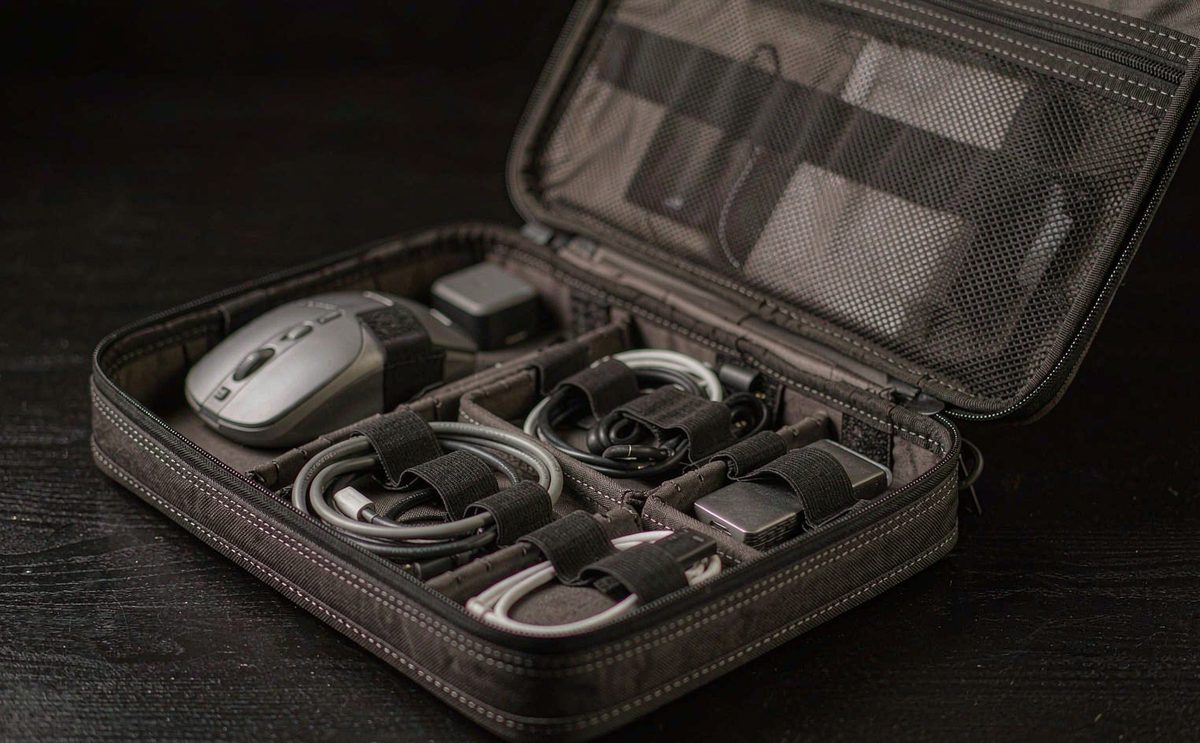
Ask any creator who has run two beauty or art campaigns which perk generated the most upgrade comments, and the answer is rarely the product itself. It is the thing that organises the product. A brush roll sits in that category alongside custom cosmetic bags and travel cases, but it behaves differently in the pledge maths, and the reason is psychological rather than technical. A pouch holds things. A roll displays them, arranges them and makes a collection feel intentional. That difference shows up in conversion rates, in average pledge value, and in the number of backers who move up one tier.
Why a brush roll converts better than another pouch
Three mechanisms are at work. The first is completion. A backer who owns fourteen brushes and no way to carry them has an unfinished problem, and a roll finishes it visibly. That is a stronger purchase trigger than capacity, because capacity is a specification while completion is a feeling. The second is photography. An unrolled brush roll with twelve brushes fanned out is one of the most shareable images available to an art or beauty campaign, and campaign pages live or die on shareable images.
The third mechanism is margin shape. A roll is a low panel-count construction with no frame, no moulding and usually no hardware beyond a tie or a snap. That keeps unit cost low while the perceived value stays high, because the backer compares it against a retail brush roll at USD 28 to 65 rather than against a pouch at USD 12. On a campaign we supported, moving the brush roll from an optional add-on to the default mid tier lifted the share of backers on that tier by roughly a fifth without any change to the hero product.
There is a catch, and it is worth stating plainly. A roll only converts if the loops actually fit the brushes the backer owns or is being sold. A roll with twelve loops of identical width looks tidy in a render and fails in the hand, because a fan brush, a liner and a kabuki have completely different diameters. Getting the loop schedule right is the single highest-value engineering decision in the whole item, and it costs nothing to specify correctly.
Key takeaways
- A
- r
- o
- l
- l
- s
- e
- l
- l
- s
- c
- o
- m
- p
- l
- e
- t
- i
- o
- n
- ,
- n
- o
- t
- c
- a
- p
- a
- c
- i
- t
- y
- .
- T
- w
- e
- l
- v
- e
- l
- o
- o
- p
- s
- o
- f
- m
- i
- x
- e
- d
- w
- i
- d
- t
- h
- c
- o
- n
- v
- e
- r
- t
- ;
- t
- w
- e
- l
- v
- e
- i
- d
- e
- n
- t
- i
- c
- a
- l
- l
- o
- o
- p
- s
- d
- o
- n
- o
- t
- .
The anatomy of a brush roll and the six decisions
A brush roll is a rectangular panel with a flap, a set of loops stitched across the width, and a closure. That is the whole product, and it is why the sampling round is fast. The six decisions that define it are: unrolled dimensions, loop count and schedule, loop material, face and lining fabric, closure type, and trim finishing such as binding, label and print. Everything else is decoration. Creators who send a brief covering those six decisions get a quote in one exchange; creators who send a mood board get three rounds of questions.
Unrolled dimensions follow the brush set rather than fashion. A typical artist roll is 45 to 50 cm wide by 30 to 36 cm tall unrolled, rolling to a cylinder of roughly 8 to 11 cm diameter. A makeup brush roll is smaller, commonly 36 to 42 cm wide by 24 to 28 cm tall, because cosmetic brushes are shorter. The relationship that matters is width against loop count: each loop needs its own share of width, plus the travel of the brush handle, so a roll carrying 16 brushes has to be wider than one carrying 10 or the handles will foul each other.
The flap is where most first designs go wrong. A flap that is too short lets the top of the brushes protrude above the rolled edge, which looks unprofessional and lets dust in. A flap that is too long doubles over and hides the branding. The working rule is that the flap covers the top 25 to 30 percent of the unrolled height, which for a 32 cm roll means 8 to 10 cm, and that measurement should be verified on a physical sample with the actual brushes inserted rather than on a drawing.
Sizing loops for real brush diameters
Loop sizing is arithmetic, and it is cheap to get right. Measure the handle diameter at the widest point where the loop will grip, add 2 to 3 mm of ease, and that is the flat width of the loop before it is stitched. A slim liner brush has a handle of roughly 6 to 7 mm, a standard shader 9 to 11 mm, a powder or kabuki brush 16 to 22 mm, and a fan brush needs a slot rather than a loop because the ferrule is flat and wide. Published dimensions from the brush set you are bundling will get you most of the way there.
| Slot group | Brush type | Handle diameter | Flat loop width | Slots |
|---|---|---|---|---|
| Group A | Liner, brow, detail | 6-7 mm | 10 mm | 3 |
| Group B | Shader, blending, concealer | 9-11 mm | 14 mm | 5 |
| Group C | Foundation, powder | 13-15 mm | 18 mm | 3 |
| Group D | Kabuki, large powder | 18-22 mm | 26 mm | 1 |
| Spare | Mixed or tools | 11-14 mm | 18 mm | 2 |
Two structural notes follow from that table. First, loops should be arranged in ascending order across the roll, small to large, because it makes the roll tighter and stops the widest brush from pushing against its neighbour when rolled. Second, elastic loops tolerate diameter variation better than fixed fabric loops, because they stretch. If the bundle includes brushes from more than one supplier, or if backers will add their own, elastic is the safer choice, while fixed woven loops look cleaner and hold shape better when the set is known and consistent.
Loop attachment is a QC-sensitive point. Each loop is stitched at its base with a bar tack or a box stitch, and a roll with 12 loops has 24 attachment points that all have to hold. A loop that pulls free under load is the most common field failure on a brush roll, more common than any fabric fault. Specify a bar tack at every loop base and confirm it on the pre-production sample by pulling each loop firmly by hand. Our production team treats loop attachment as a critical defect class, which means it is checked at AQL 2.5 and not treated as cosmetic.
Materials: canvas, vegan leather, suede and wipe-clean linings
Material choice carries both the look and the cost. Cotton canvas in the 10 to 16 oz band is the default for artist rolls: it is inexpensive, it takes print and embroidery well, and it develops a patina that art buyers like. Waxed canvas costs roughly 25 to 40 percent more and adds water resistance plus a distinctive hand feel. Vegan leather, usually polyurethane coated, wipes clean and reads as premium, which suits beauty campaigns better than art ones. Suede-look microfibre is the option when the roll must protect delicate ferrules, but it shows marks.
The lining matters more on a brush roll than on almost any other small bag, because brushes go into it damp. A roll used by a makeup artist after a job will hold brushes that have been cleaned minutes earlier, and an absorbent cotton lining will wick that moisture into the face fabric and eventually through to whatever the roll is sitting on. A wipe-clean polyester or TPU-coated lining costs roughly USD 0.35 to 0.70 more per unit at 500 pcs and removes the entire class of complaint. On a beauty roll it is not optional.
Stiffness is the hidden variable. A roll that is too floppy will not hold its cylinder and will unravel in transit; a roll that is too stiff will not roll at all around a full set of brushes. Interlining, a thin non-woven layer between face and lining, is how that is tuned, and it is usually specified as light, medium or heavy. Ask for the sample to be made at the stiffness you intend to ship rather than at whatever is quickest, because stiffness is invisible in photographs and completely obvious in the hand.
Closure systems: tie, snap, elastic and magnetic
Four closures dominate. A ribbon or webbing tie is the cheapest, roughly USD 0.10 to 0.25 per unit, and it suits art and craft positioning, but it requires two hands and backers either love it or find it fussy. A snap is fast, adds about USD 0.20 to 0.45 including the setting die, and needs reinforcement behind the face fabric or it will tear out within months. An elastic loop over a button is the traditional artist solution and costs about the same as a snap while being repairable.
A magnetic closure is the premium option at roughly USD 0.60 to 1.20 per unit installed, and it is the one to choose when the roll is a gift-tier item and the opening experience matters. Two cautions apply. Magnets add weight and can interfere with nothing much in a brush roll, but they do need to be fully enclosed so they cannot scratch a metal ferrule. And a weak magnet on a full roll will pop open in a bag, so specify the pull force in the brief rather than leaving it to chance.
Whichever closure is chosen, add a secondary retention point. A roll that opens in transit dumps brushes into the bottom of a kit bag, and that is the complaint that generates the most photographs from unhappy backers. A simple interior flap or a second tie at the opposite end costs under USD 0.30 and converts a plausible failure into a non-event. This is the kind of specification a campaign bag specialist will raise unprompted, and it is worth listening to, because it costs almost nothing and protects the whole reward.
Bundling the roll with brushes, palettes and the hero product
A brush roll is at its strongest as the organising element of a bundle rather than as a standalone perk. The arithmetic works because the bundle reads as a system: brushes plus a roll plus the hero product is worth more to a backer than the same three items listed separately. On campaigns we have supported, attaching a roll to a brush set moved the mid tier from USD 55 to USD 79 with a unit cost increase of roughly USD 4.20, which is the kind of trade a creator can take without thinking.
- Roll plus brush set: the natural pairing. Size the loops to the brushes you ship, and ship them in the roll so the unboxing is immediate.
- Roll plus palette or pan set: the roll carries the brushes, a flat pouch or sleeve carries the palette. Two items, one tier, one carton.
- Roll plus hero product: works when the hero is a formula or a device. The roll becomes the storage solution the backer did not know they needed.
- Roll as the early-bird marker: identical roll in a different trim colour for the first 200 backers. Costs nothing extra on the minimum and creates urgency without discounting.
- Roll as the add-on: priced at USD 18 to 29 against a USD 4.50 unit cost, it is the highest-margin line on most beauty ladders.
One operational point decides whether the bundle ships smoothly: the brushes and the roll have to arrive at the fulfilment warehouse at the same time. Brushes are frequently sourced separately with a different lead time, and a roll that arrives six weeks early sits in storage while a roll that arrives late holds up every parcel. Build both to the same date, and if the brush supplier cannot confirm, book the roll slot to arrive slightly early rather than slightly late. Storage is cheap; a delayed wave is not.
Pricing the tier: cost, perceived value and margin
Work backwards from the retail comparison. A backer does not evaluate a roll against its bill of materials; they evaluate it against the roll they could buy on Amazon or at a beauty retailer, which for a 12-slot canvas or vegan leather roll runs USD 28 to 65. A campaign roll landing at USD 4.50 to 7.40 FOB, or roughly USD 7 to 11 once freight and duty are in, therefore supports a tier USD 25 to 45 above the bare product while still reading as good value. That spread is the whole argument for choosing a roll over another pouch.
| Line | Add-on tier | Mid tier | Gift tier |
|---|---|---|---|
| Roll FOB unit | USD 4.20 | USD 4.60 | USD 7.40 |
| Landed per unit | USD 6.80 | USD 7.30 | USD 10.90 |
| Other tier content | USD 3.00 | USD 14.00 | USD 26.00 |
| Fulfilment and handling | USD 4.50 | USD 6.50 | USD 8.00 |
| Tier price | USD 29 | USD 59 | USD 109 |
| Contribution after platform fees | USD 11.00 | USD 24.50 | USD 51.00 |
Read that table sideways rather than down. The add-on tier carries a contribution of about USD 11 on a USD 29 price, which is respectable but thin; the gift tier carries roughly USD 51 on USD 109, which is where the margin actually lives. The lesson for campaign design is that a roll is a better upgrade lever than a discount lever. Giving backers a reason to move up tiers beats giving them a reason to wait for a cheaper one, and the 500 pcs minimum is the same whether the roll is an add-on or the centrepiece.
Do not forget the platform cut and the tax. Kickstarter and payment processing together take roughly 8 to 10 percent of gross pledges, and reward shipping is usually charged separately. A tier priced at USD 59 therefore nets around USD 53 before content and fulfilment. Creators who model contribution net of those fees make decisions that hold up; creators who model gross pledges do not. Our team will sanity-check a tier ladder against landed unit cost if you send it with the brief, and it costs nothing to ask.
Photographing and describing the roll on the campaign page
A roll photographs well, but only if it is shot in three states and two contexts. The three states are unrolled and empty, unrolled and loaded, and rolled and closed. The two contexts are flat on a surface and held or in a kit bag. Campaigns that shoot only the loaded flat state leave backers guessing about the closed size, which is the dimension that matters when the roll goes into a suitcase. Include a closed-cylinder shot next to a common object for scale, and state the rolled dimensions in the reward description.
Description writing follows the same discipline as the specification. Say how many slots, what diameters they take, what the roll is made of, whether the lining wipes clean, and how it closes. Avoid adjectives that cannot be verified. A line reading twelve elastic slots from 10 mm to 26 mm, wipe-clean lining, snap closure, rolls to 24 x 9 cm outsells three sentences of lifestyle copy, because the buyer is comparing against a real drawer of brushes and the only question they have is whether their brushes will fit.
There is a sequencing advantage too. Because sampling takes only 6 to 10 working days, a creator can have a physical roll in hand before the campaign page is finalised, which means the photography can be of the actual reward rather than a render. Campaigns that shoot real samples consistently outperform those that shoot renders on physical products, and on a roll the difference is stark because stiffness and drape are exactly what a render cannot convey. Book the sample round before the page build, not after.
QC checkpoints that are specific to brush rolls
Brush rolls fail in predictable ways, and inspection to AQL 2.5 to ISO 2859-1 should be extended with roll-specific checks rather than relying on the general list. The five that matter are loop attachment strength, loop dimension accuracy, closure function, roll circumference consistency, and edge binding continuity. Each is checkable in seconds on the line, and each is the kind of fault that a backer notices in the first week rather than the first year, which means it lands as a review rather than as a warranty claim.
- Loop pull test: grip each loop and pull firmly. Any detachment is a critical defect, not a minor one. Check a minimum of 20 loops across the inspection sample.
- Loop width gauge: measure flat loop width against the specification with a ruler or gauge. A 14 mm loop cut at 11 mm will not take the brush it was designed for.
- Closure cycle: open and close 10 times. Snaps must align within 2 mm; ties must not fray at the exit point; magnets must hold under the weight of a loaded roll.
- Rolled circumference: roll five units with a standard brush set inserted and measure. Variation above 8 mm between units indicates inconsistent interlining or loop placement.
- Binding continuity: run a finger along every bound edge. A skipped stitch or an open binding end will unravel within weeks of professional use.
Add a functional test that most creators skip: insert the actual brush set that ships with the campaign, roll it, and hold it closed for 60 seconds. This is the only test that catches the interaction faults, such as handles fouling each other, the flap failing to cover tall brushes, or the closure sitting under tension and gradually pulling open. Our production team runs this test on the pre-production sample as standard and photographs the result, so the approval decision is made on evidence rather than on a drawing.
For a deeper framework on how inspection is structured, the campaign bag QA and QC guide sets out how AQL sampling, defect classification and pre-shipment reporting fit together. The short version for a roll: treat loop attachment and closure as critical, treat print placement and colour as major, and treat loose threads and minor creasing as minor. Classification is what decides whether a lot ships, so it is worth agreeing in writing before production starts rather than after inspection.
Packing and freight notes for a flat, rollable item
A brush roll is one of the friendliest items in the catalogue from a freight perspective, because it ships flat and packs dense. A 45 x 32 cm roll folded once fits a polybag of roughly 25 x 34 cm, and 60 to 80 units fit a standard export carton depending on fabric weight. That density means freight per unit is low, commonly USD 0.35 to 0.90 by sea at these volumes, and it means a 500-unit run costs a fraction of what a structured case of the same value would cost to move.
The packing decision that affects the unboxing is whether to ship the roll flat or rolled. Flat is cheaper, denser and creases less in transit. Rolled takes roughly 40 percent more carton volume but arrives looking exactly as the campaign photography showed it, which matters on a gift tier. A good compromise is to ship flat with a printed belly band or a folded card around the roll, which restores the presentation without the volume penalty, at roughly USD 0.15 to 0.35 per unit.
Carton and freight planning should also account for the brush set if it is bundled. Brushes are light but bulky and often arrive in their own retail packaging, which does not nest with a folded roll. If both are being kitted at the fulfilment warehouse rather than at origin, ask for the roll to be packed in inner counts of 10 or 20 so the kitting line can pull quantities without opening and recounting cartons. It is a small request that saves hours on a 500-unit kit-out. If the bundle is likely to grow into a wider range after the campaign, it is worth reading how a roll sits alongside the other formats in the custom bag programme for crowdfunding before locking the tier ladder, because the same roll frequently becomes the entry product of a permanent line.
Writing the brief that gets quoted in one round
The fastest brief is a numbered specification, not a paragraph. Give unrolled dimensions in centimetres, the loop schedule as a list of count times width, the loop material, the face fabric and its weight or finish, the lining requirement including whether it must wipe clean, the interlining stiffness, the closure type with pull force if a magnet, the branding method and placement, the quantity per colourway, the destination, and the date the goods must land. That is ten items and it is enough to quote.
Then ask for four things in return: unit price at 500, 1,000 and 2,000 pcs, sample lead time and fee, carton dimensions with units per carton, and confirmation that loop attachment testing is included in inspection. Add one request that pays for itself: ask for a second sample made in the alternative stiffness so you can choose on evidence. It adds a few days and removes the most common source of disappointment on a roll, which is a sample that looks right and feels wrong. Whichever specification you settle on, record it in writing with dimensions, loop schedule, materials and closure, because that record is what the bulk lot is inspected against and what the reorder is held to.
Send us your loop schedule, dimensions and quantity per colourway, and our campaign bag specialist will return a costed brush roll quotation plus a 6 to 10 working day sampling plan.
Key takeaways
- S
- p
- e
- c
- i
- f
- y
- t
- h
- e
- l
- o
- o
- p
- s
- c
- h
- e
- d
- u
- l
- e
- f
- r
- o
- m
- r
- e
- a
- l
- b
- r
- u
- s
- h
- d
- i
- a
- m
- e
- t
- e
- r
- s
- ,
- i
- n
- s
- i
- s
- t
- o
- n
- b
- a
- r
- t
- a
- c
- k
- s
- ,
- c
- h
- o
- o
- s
- e
- a
- w
- i
- p
- e
- -
- c
- l
- e
- a
- n
- l
- i
- n
- i
- n
- g
- f
- o
- r
- b
- e
- a
- u
- t
- y
- r
- o
- l
- l
- s
- ,
- a
- n
- d
- m
- o
- d
- e
- l
- t
- h
- e
- t
- i
- e
- r
- n
- e
- t
- o
- f
- p
- l
- a
- t
- f
- o
- r
- m
- f
- e
- e
- s
- .
Frequently Asked Questions
What is the minimum order for custom brush roll bags?
500 pcs per style and per colourway. One silhouette in one approved fabric, lining, loop tape and closure combination. A second colourway or a second size of roll is another 500 units. Where two colourways share the same base fabric and differ only in trim such as binding or tie colour, a split inside one run can sometimes be negotiated, but it has to be confirmed at quotation stage rather than assumed.
How much does a custom brush roll cost per unit?
At 500 pcs, expect USD 3.80 to 7.40 FOB Xiamen depending on material and closure. A 12-slot cotton canvas roll with elastic loops, a polyester lining and a snap typically sits near USD 4.20 to 4.80. The same roll in vegan leather with a wipe-clean lining and a magnetic closure sits nearer USD 6.80 to 7.40. Doubling to 1,000 pcs generally reduces the unit cost by 8 to 15 percent, and landed cost adds roughly USD 2.50 to 4.00 per unit for freight, duty and handling.
How many brush slots should a roll have?
Between 10 and 16 for a makeup roll and 12 to 24 for an artist roll. The constraint is not the number of brushes but the width available: each slot needs its own share of unrolled width plus handle travel. A 12-slot makeup roll works at roughly 38 to 42 cm unrolled width, while a 16-slot version needs 46 to 50 cm. Ask for the loop schedule to be laid out small to large so the roll tightens evenly.
Should brush roll loops be elastic or fixed fabric?
Elastic when the brush set varies or backers will add their own brushes, because it stretches across a range of diameters. Fixed woven loops when the bundled set is known and consistent, because they hold shape better and look cleaner. Either way, specify a bar tack at every loop base and test by pulling each loop firmly on the pre-production sample. Loop detachment is the most common functional failure on a roll.
How long does brush roll sampling and production take?
Sampling runs 6 to 10 working days for a standard roll once the specification is agreed. Bulk production runs 35 to 50 days after the deposit clears and the pre-production sample is approved. If you want a second sample in an alternative interlining stiffness, add roughly 4 to 6 working days. From brief to warehouse, plan 10 to 13 weeks plus transit, and longer if the roll is being kitted with brushes sourced elsewhere.
What lining should a makeup brush roll use?
A wipe-clean polyester or TPU-coated lining. Makeup brushes are often put away shortly after cleaning, and an absorbent cotton lining wicks that moisture into the face fabric and onto whatever the roll rests on. The upgrade costs roughly USD 0.35 to 0.70 per unit at 500 pcs and removes an entire category of backer complaint. For dry media such as pencils and charcoal, a brushed cotton lining is acceptable and slightly cheaper.
Which closure works best on a brush roll?
A snap at roughly USD 0.20 to 0.45 installed for speed and simplicity, an elastic loop over a button for a traditional artist feel, a webbing tie for craft positioning at USD 0.10 to 0.25, and a magnetic closure at USD 0.60 to 1.20 for a premium gift tier. Whichever you choose, add a secondary retention point such as an interior flap, because a roll that opens in transit empties brushes into the bottom of a kit bag.
How should I price a brush roll reward tier?
Anchor against retail rather than cost. A comparable 12-slot roll retails at USD 28 to 65, so a roll landing at USD 7 to 11 supports a tier USD 25 to 45 above the bare product and still reads as good value. Deduct platform and payment fees of roughly 8 to 10 percent before calculating contribution. A USD 59 mid tier carrying USD 7.30 of roll and USD 14 of brushes nets around USD 24.50 of contribution after fulfilment and fees.
What QC checks matter most on a brush roll?
Five: loop pull strength, loop width against specification, closure function over 10 cycles, rolled circumference consistency within 8 mm, and binding continuity along every edge. Treat loop detachment and closure failure as critical defects, print placement and colour as major, and loose threads as minor. Also run a functional test by inserting the actual brush set, rolling it and holding it closed for 60 seconds. Inspection is run to AQL 2.5 to ISO 2859-1.
Does a brush roll ship flat or rolled?
Flat is the default because it is denser and cheaper: 60 to 80 units per export carton and roughly USD 0.35 to 0.90 per unit by sea. Rolled looks better on arrival but takes about 40 percent more carton volume. The compromise is shipping flat with a printed belly band or folded card, which restores presentation at roughly USD 0.15 to 0.35 per unit without the freight penalty.
Can a brush roll be an add-on rather than a tier?
Yes, and it is usually the highest-margin line on a beauty ladder. Priced at USD 18 to 29 against a landed unit cost of roughly USD 7, the contribution is strong and the risk is low because the quantity is driven by backer choice. Model demand conservatively, because add-on uptake is typically 15 to 35 percent of backers, and remember that the 500 pcs minimum still applies to the roll as a separate style.
Can the roll be made to fit brushes I do not supply?
Yes, but specify generously. Use elastic loops, spread the schedule across a wider diameter range, and add two spare slots of medium width. The failure mode to avoid is a roll sized exactly to one brush set that backers then cannot use for anything else. A mixed schedule from 10 mm to 26 mm flat loop width covers almost every makeup brush on the market and costs nothing extra to specify.
People Also Ask
What is a brush roll bag?
A flat rectangular panel with loops stitched across the width and a flap and closure, which rolls into a cylinder around a set of brushes. It is the lowest panel-count way to organise and carry tools, which is why it costs less than a structured case.
Why do brush rolls convert on Kickstarter?
They sell completion rather than capacity. Backers with brushes and nowhere to put them respond to a solution, the unrolled product photographs well, and the perceived value anchors against retail rolls at USD 28 to 65.
How wide should brush roll loops be?
Measure the widest part of the handle and add 2 to 3 mm of ease. A 6 to 7 mm liner handle needs a 10 mm flat loop, a 13 to 15 mm foundation handle needs 18 mm, and an 18 to 22 mm kabuki needs about 26 mm.
What is the MOQ for a custom brush roll?
500 pcs per style and per colourway, the same as other small bag categories. Sampling takes 6 to 10 working days and bulk production 35 to 50 days after deposit and approved sample.
Are elastic loops better than fabric loops?
Elastic tolerates variation in brush diameter and is safer when backers add their own brushes. Fixed woven loops look cleaner and hold shape better when the bundled set is fixed. Both need a bar tack at the base.
How much should a brush roll add-on cost backers?
USD 18 to 29 is the usual band. Against a landed unit cost of roughly USD 7 and fulfilment of USD 4.50, a USD 29 add-on leaves about USD 11 of contribution after platform fees of 8 to 10 percent.
Can I get a brush roll sample before the campaign launches?
Yes, and you should. Sampling takes 6 to 10 working days, which fits easily before a page build, and shooting the real sample rather than a render consistently improves conversion because stiffness and drape cannot be rendered.