Low Minimum Order Custom Bags: When 500 Pcs Is the Right Number
Five hundred pieces is the right number when four conditions hold: demand is unproven or modest, the specification may still change, the 30% deposit and 70% balance can be funded without the marketing reserve, and holding one lot is safer than holding two. The minimum is 500 pcs per style and per colourway, sampling takes 6-10 working days or 12-15 for complex builds, production 35-50 days, inspection is AQL 2.5 to ISO 2859-1, payment is T/T 30/70 and the trade term is FOB Xiamen. Where those conditions do not hold, the alternatives are a staged programme, a shared construction or a larger first run.
- What right means in a quantity decision
- Four conditions that make 500 pcs right
- When 500 is right: a first product
- When 500 is right: a pre-sold campaign
- When 500 is right: a niche or seasonal item
- When 500 is too many
- When 500 is too few
- Alternatives to a single 500-pcs decision
- Three scenarios, three quantities
- Record the decision for next time
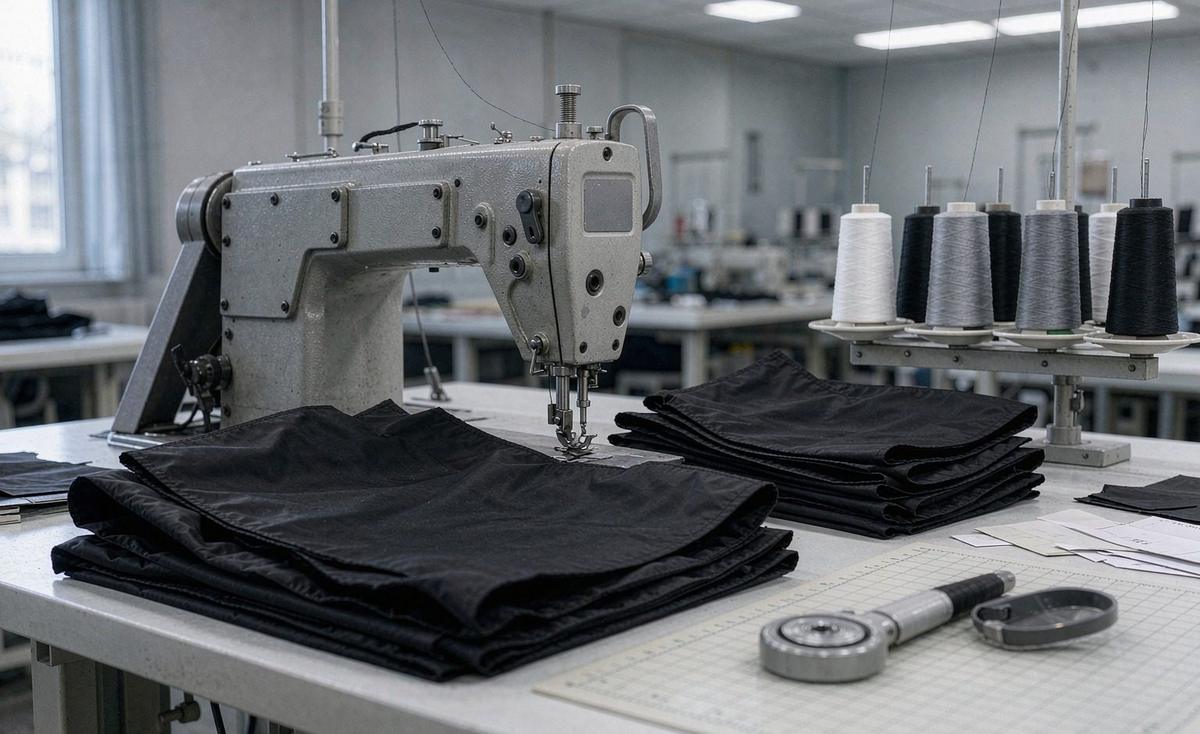
What right means in a quantity decision
Right is not the lowest number and not the largest number a founder can imagine selling. It is the quantity that matches four variables: demand evidence, cash timing, specification stability and inventory risk. Those four pull against each other, and the 500-pcs minimum sits at the point where an unproven product can be produced without a founder betting a year of cash on a single guess.
Demand evidence is the first variable, and it is usually the weakest. A render, a waitlist and a campaign page are interest, not demand. Interest converts at a rate that only a published price can reveal. Where evidence is thin, the quantity should be small enough that being wrong is survivable, which is exactly the argument for 500 pcs per style and per colourway.
Cash timing is the second. Under T/T 30/70, a 500-pcs order requires a 30% deposit when the sample is approved and the order is released, then a 70% balance at the inspection gate before cargo release. Both dates can be wrong-footed by platform payout schedules, failed pledges and marketing spend. A quantity that is affordable in total can still be unaffordable in the week the deposit falls due.
Specification stability is the third. A bag whose pattern is still moving should not be produced in a large lot, because a late correction strands every unsold unit. The fourth is inventory risk: unsold stock is cash that cannot be spent on the next decision. The low-MOQ production guide covers the mechanics of the minimum; this article is about the choice.
Four conditions that make 500 pcs right
Five hundred pieces is the right number when these four conditions hold together. First, demand is unproven or modest, so the downside of being wrong must be capped. Second, the specification may still change, so the lot must be small enough to correct. Third, the deposit and balance can be funded without touching the marketing reserve. Fourth, one lot is safer than two, meaning the product does not need several colourways to be credible.
When all four hold, 500 is not a compromise, it is the answer. It gives a genuine custom construction with its own patterns, materials, hardware and branding; it spreads the fixed preparation work across a real run; and it leaves a second decision available at a later date. The second decision is the part founders routinely undervalue: ordering twice with evidence beats ordering once with hope.
The conditions also explain why 500 is the right number for crowdfunding specifically. A campaign concentrates demand into a short window, pays out on a schedule the creator does not control, and often reveals colour preference only after the survey closes. A single 500-pcs lot in one colourway is the structure most compatible with those three facts.
| Condition | If it holds | If it fails | Effect on quantity |
|---|---|---|---|
| Demand unproven or modest | 500 caps the downside | Wait for evidence before ordering | Do not increase the quantity |
| Specification may change | Small lot is correctable | Changes strand a large lot | Keep the run at 500 |
| Deposit and balance fundable | Calendar is safe | Cash timing is the constraint | Reduce quantity or delay release |
| One lot beats two | Single SKU and single colourway | Several colourways needed | Price each colourway separately |
Our team runs this test with founders before a quotation is issued, because it changes what we ask for. If demand evidence is thin, we push for a narrower specification and a conservative allocation. If the specification is unstable, we push for two sampling rounds at 6-10 working days each, or 12-15 working days for complex builds, before any deposit discussion.
When 500 is right: a first product
The clearest case is a first product from a new brand. There is no sales history, no return-rate baseline and no evidence about which colour or size customers will choose. In that situation the purpose of the first order is information as much as inventory. Five hundred units is enough to launch, to supply reviewers, to sample a wholesale conversation and to learn the real landed cost per usable unit.
A first product also benefits from the structure of the minimum in a specific way: it forces the founder to choose one hero colour and one construction. That constraint improves the product. A first run of one colour in one size, with alternatives presented as renders or survey choices, produces cleaner data than a run split across variants, because the founder can attribute what sold to a single decision.
There is a psychological benefit too. A first-time founder carrying 1,500 units of an unproven bag makes defensive decisions: discounting early, avoiding worthwhile advertising, or refusing to change the product because the stock is already paid for. At 500 units, the founder can hold the price, fund the marketing and treat the first run as an experiment with a scheduled review date.
The startups pilot-run guide develops this case in full, including the six questions a pilot should answer and the re-order file that makes the second run cheaper. For the quantity decision itself, the conclusion is simple: with no history, 500 pcs is not a small order, it is a correctly sized one.
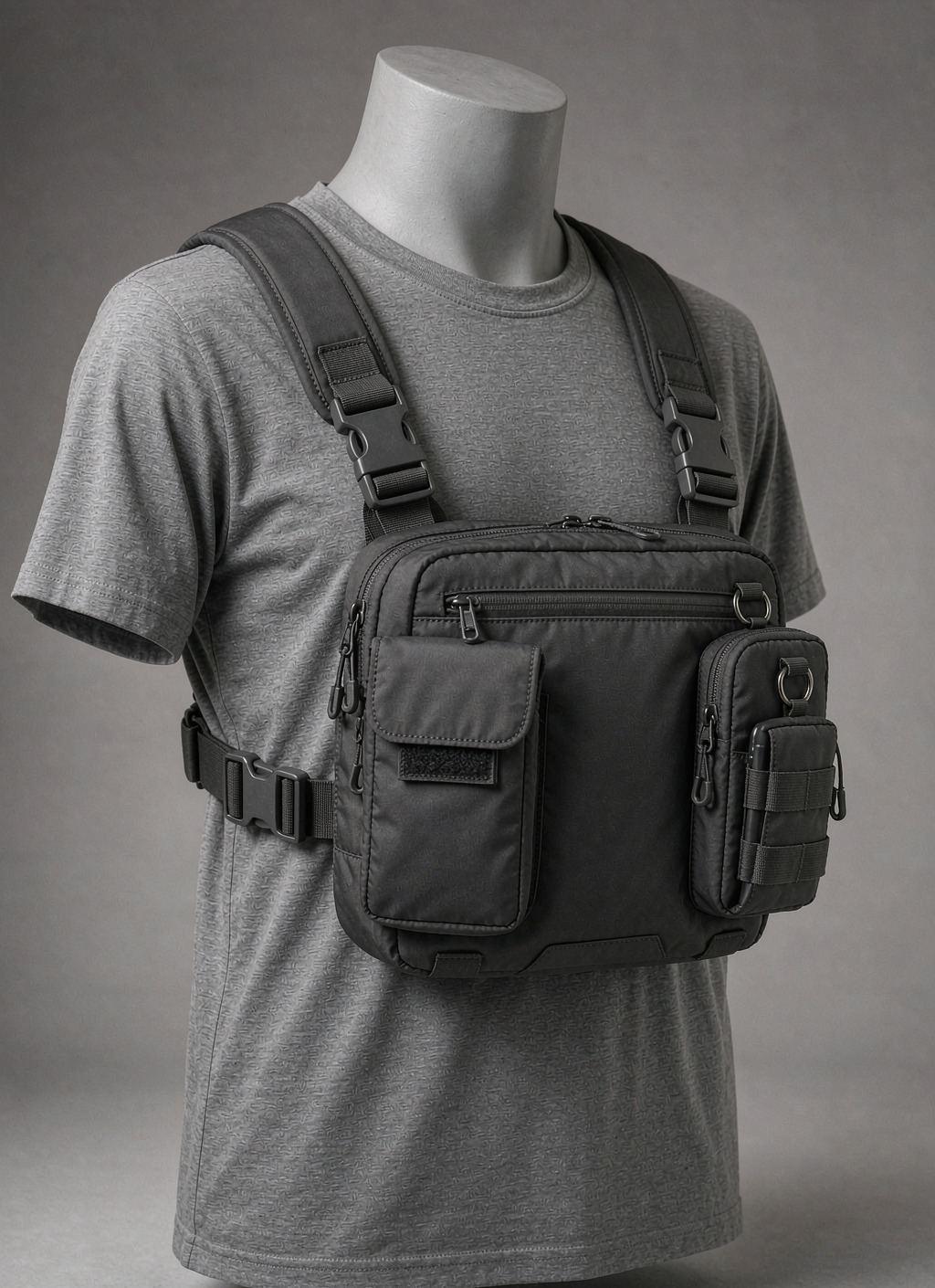
When 500 is right: a pre-sold campaign
A crowdfunding campaign is a pre-sale, and pre-sold demand looks stronger than it is until three deductions are applied: failed or reversed pledges, platform and payment fees, and tax plus marketing spend. A campaign showing 700 pledges may yield materially fewer funded units. Modelling the quantity from the gross total is how a creator ends up with a deposit obligation the campaign cannot cover.
For a pre-sold campaign, 500 pcs is right when the modelled reward demand, after those deductions, sits at or below about 450-470 units. That range deliberately leaves room for media units, retained references, late pledges and a replacement reserve inside the same lot. A campaign that models 620 usable rewards needs more than one 500-pcs commitment, and the decision then becomes 1,000 pieces or two colourways, priced separately.
The calendar reinforces the choice. production 35-50 days from deposit and approved sample, and the deposit cannot fall until the sample is approved. A campaign that closes in month three and promises delivery in month five has assumed a schedule with no sampling, no inspection, no transit and no fulfilment inside it. Right-sizing the quantity is easier when the delivery promise is a month rather than a date.
Where a campaign clearly exceeds the single lot, the better structure is usually a staged programme rather than a bigger first order: 500 pieces now, with a pre-agreed re-order price, material assumption and validity period recorded before the first shipment. That keeps the deposit small while preserving the ability to serve the demand the campaign actually generated.
When 500 is right: a niche or seasonal item
Niche products are the quiet case for a low minimum. A bag designed for a specific sport, a particular profession or a narrow use case may have a total addressable market of a few thousand buyers a year. For such a product, an order of 2,000 units is several years of inventory, and storage cost plus obsolescence will consume the volume discount long before the units sell.
Seasonality argues the same way. A summer tote, a ski-season duffel or a holiday gift pouch has a selling window measured in weeks. The right quantity is the one that clears inside the window with a small deliberate surplus, not the one with the lowest unit price. A 500-pcs run ordered to arrive 6 weeks before the season opens can be replenished if the season is strong; a 2,000-pcs run that misses the window cannot.
For these products the calendar matters more than the price breaks. Working backwards: the selling window opens on a date, so goods must be received 3-4 weeks earlier, so freight must be booked, so inspection must pass, so the 35-50 day bulk window must start, so sampling must finish, so the technical file must be settled. That chain typically puts the start of work 4-6 months before the season.
The crowdfunding bag guide covers campaign timing in detail. For a niche or seasonal product, the practical rule we give founders is to buy the quantity that can be sold once, then use the re-order file to buy again with evidence. Repetition with data beats one large bet, especially when the selling window is short.
When 500 is too many
The minimum becomes a burden in three situations. The first is weak demand evidence combined with a high unit cost: if the landed cost per usable unit is high, 500 pieces may be more cash than the founder can post before any revenue arrives. The second is a product that needs several colourways to be credible, because each colourway is its own 500-pcs commitment. The third is a specification that is still moving, where a large lot will freeze a design that should be corrected.
In those cases the answer is rarely to negotiate the minimum. It is to change the product plan. Simplify the construction so the unit cost falls. Use stock materials rather than a custom dye, avoiding a separate mill minimum. Reduce the number of variants to one hero version. Present additional colours as a survey or a pre-priced re-order rather than as stock. Each change reduces the cash the same 500 pieces require.
- Share the construction across future variants to keep one base pattern.
- Use stock materials and stock colours where a custom dye is not essential.
- Reduce pocket count, hardware count and decoration positions.
- Publish one colourway and treat the rest as a future re-order.
- Lower the carton cube by adjusting the packing rule before bulk.
- Delay the order by one cycle rather than cutting the sampling rounds.
Delaying deserves emphasis. A founder whose cash is thin is often better served by waiting one cycle, strengthening the launch and then ordering, than by compressing the calendar to place an unaffordable order. The 35-50 day window and the 6-10 working days of sampling rounds will still be there. What waiting buys is a deposit that arrives from evidence rather than from optimism.
For the terminology behind those choices, the MOQ explained article separates units, colourways and SKUs, which is the distinction that determines whether a proposed change actually reduces the commitment.
When 500 is too few
There is a genuine case for ordering more. It holds when demand is evidenced, the specification is stable and the cash is available. A second or third product from a brand that has already measured its landed cost, return rate and colour split is the strongest version: the unknowns have been converted into numbers, and the larger order buys a lower unit cost and avoids a re-order cycle during a selling season.
Three tests should be passed before increasing the quantity. The demand test: can you name the buyers for the incremental units, not merely hope for them? The cash test: can the deposit and the 70% balance be paid without the marketing reserve? The stability test: if a defect appears in month two, will a large lot strand more cash than the volume saving is worth? Failing any one argues for 500.
The strongest practical version of scaling is a staged increase rather than a jump: 500, then 1,000, then 1,500, with each step justified by the previous one's data. Each step keeps the lot small enough to correct and the deposit small enough to fund, while the re-order file makes every subsequent step cheaper to quote. Volume pricing improves at each tier, and the founder earns it with evidence.
| Test | Question to answer | Pass looks like | Fail looks like |
|---|---|---|---|
| Demand | Who buys the incremental units? | Named channels or a converted waitlist | Hope and a growing market |
| Cash | Can deposit and balance be funded? | Both without the marketing reserve | Deposit funded, balance uncertain |
| Stability | What if a defect appears in month two? | Correction absorbed by one lot | Correction strands a large lot |
Capacity context is secondary but relevant to scheduling. The production programme behind our work reports 200,000 pcs per month across 7 lines with 149 machines and 137 staff on a 4,950 m² SGS-verified floor. That supports the calendar; it does not answer the demand, cash or stability tests, which remain the founder's decision.
Alternatives to a single 500-pcs decision
The quantity choice is not only 500 versus 1,000. Four alternatives exist, and each solves a different problem. A staged programme splits the commitment across two orders with a pre-agreed re-order. A shared construction keeps one base pattern across several variants, so decoration or colour changes do not restart development. A bundle structure adds value through accessories rather than through variants. And a delayed release keeps the specification open while demand evidence improves.
The shared-construction route is the most useful and the least understood. If two bags share shell geometry, panel layout and internal architecture while differing in decoration or in one panel material, they may be treated as one style for development purposes. That reduces the minimum exposure and keeps the inspection plan on a single approved bill of materials. The classification must be confirmed in writing, because assumptions differ between quotations.
Bundling has its own arithmetic. An accessory such as a pouch, a strap or a packing cube may carry its own minimum and its own sampling, but it can add reward value without creating a second bag style. Kitting it at origin saves a warehouse handling step; kitting it at destination keeps flexibility if the bundle splits change after the survey closes.
The 500-pcs scope article explains what is included in the order and what the buyer owns afterwards, which is the other half of these alternatives. A staged programme only works if the saved cash is genuinely available later, which means the freight, duty and fulfilment costs of two shipments must be modelled rather than assumed to be the same as one.
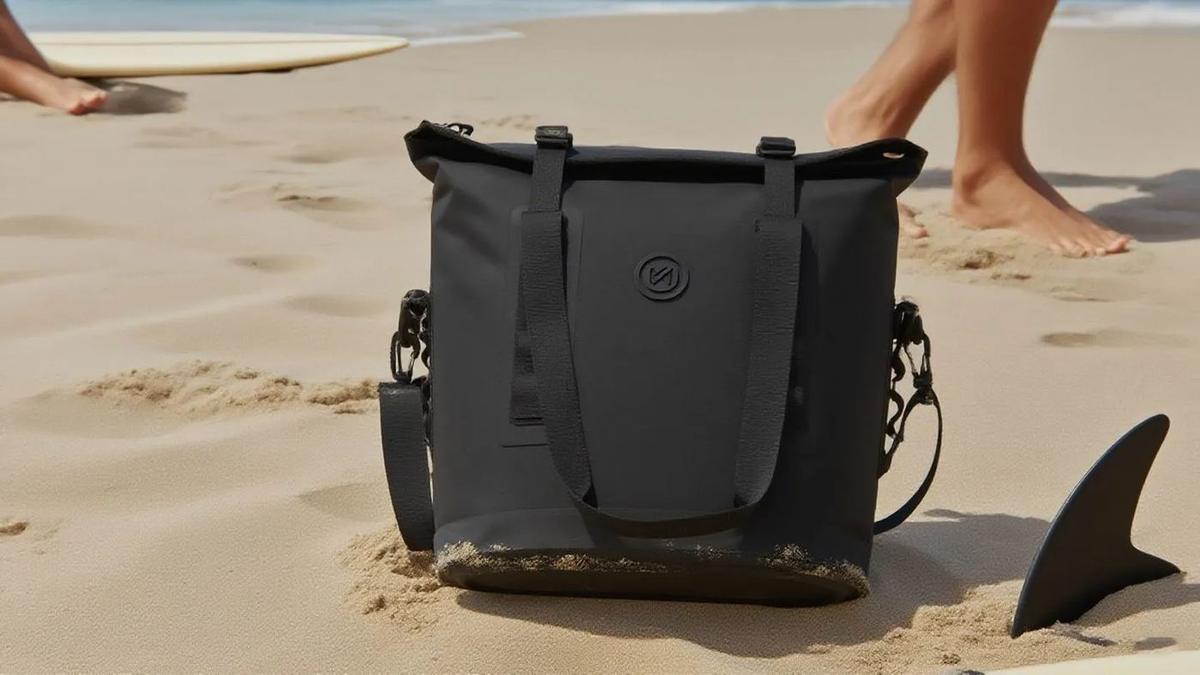
A delayed release is the fourth alternative and the one founders forget exists. A technical file can be completed, sampled and approved while the order itself waits for better demand evidence. That costs sampling time and sample fees but no deposit, and it means the 35-50 day window starts from a stronger position. For a founder with a thin cash position and a good product, waiting one cycle is frequently the most valuable option on the list.
Three scenarios, three quantities
Consider three illustrative founders. The first has a new commuter backpack, a render, a 900-name email list and no sales. The second has a completed campaign with 620 usable rewards after deductions. The third has a brand, a measured landing cost, a 2-year return rate and a retail buyer asking for 800 units. Each should order differently, and the minimum is the same for all three.
| Scenario | Demand evidence | Best first quantity | Reason |
|---|---|---|---|
| New product, list only | Interest, no sales | 500 pcs, one colour | Caps downside, produces evidence |
| Campaign closed, 620 usable rewards | Modelled and funded | 1,000 pcs or a staged 500 plus re-order | Serves demand, keeps a decision open |
| Existing brand with retail order | Measured history and a purchase order | 1,000-1,500 pcs | Lower unit cost, known buyers |
The first founder should treat the run as a pilot, review it on a scheduled date 60-90 days after delivery, and use the re-order file for the second decision. The second should compare the deposit and balance cash at both options, not only the unit price, and check that the incremental 500 units have named buyers. The third can scale because all three tests pass at once.
Notice what none of them should do: negotiate the minimum downward, publish a tier that promises more units than the order contains, or treat the 35-50 day calendar as flexible because the order feels small. The quantity decision is a planning decision, and the tools are evidence, cash modelling and a scheduled review.
Record the decision for next time
Every quantity decision should leave a file. Record the demand evidence used, the deposit and balance calculations, the alternatives considered, the reason for the choice, the planned review date and the re-order conditions agreed. Six months later that file is the fastest way to make the next decision, because the assumptions are visible and their outcomes are known.
- Save the demand evidence and its date, not the conclusion alone.
- Record the deposit and 70% balance calculations with their dates.
- Note the alternatives considered and why each was set aside.
- Store the agreed re-order conditions: period, material assumption, quantity.
- Set a review date 60-90 days after delivery and keep it.
- Update the file with the actual outcomes before the next order.
That file also makes the next quotation faster and more accurate. When a founder can say what sold, at what price, with what return rate and what landed cost, a sourcing partner can return a realistic volume comparison in one pass instead of a range. Our production team asks for those numbers because they turn a quotation into a plan.
The arrangement behind all of it stays constant: 500 pcs per style and per colourway, sampling at 6-10 working days or 12-15 for complex builds, production 35-50 days, AQL 2.5 to ISO 2859-1 inspection, FOB Xiamen and T/T 30/70. Right-sizing the quantity is how a founder puts those fixed terms to work instead of arguing with them.
Not sure whether 500 or more is right for your bag? Send the demand evidence, the target price and the launch date through the contact quotation form or to service@junyuanbags.com, and we will model the deposit, the balance and the landed cost at each quantity.
Frequently Asked Questions
When is 500 pcs the right order quantity for custom bags?
When four conditions hold: demand is unproven or modest, the specification may still change, the 30% deposit and 70% balance can be funded without the marketing reserve, and one lot in one colourway is safer than two. It is the standard answer for a first product, a first campaign and a niche or seasonal item. Where all four hold, 500 is the answer rather than a compromise, because it caps the downside and leaves a second decision available.
Is a low minimum order always the better choice?
No. When demand is evidenced, the specification is stable and the cash is available, a larger run lowers the unit cost and avoids a re-order during a selling season. Pass three tests first: named buyers for the incremental units, deposit and balance funded without the marketing reserve, and a lot small enough that a defect does not strand cash. If even one condition fails, the staged route with a pre-agreed re-order is usually the better structure.
Can I negotiate below 500 pieces?
Rarely, and it is usually the wrong lever. Below 500 pcs the fixed work of a custom bag distorts the unit cost. If the order is unaffordable, change the product plan instead: share the construction, use stock materials, reduce variants to one hero colour and lower the carton cube. Each reduces the cash the same 500 units require. The minimum is a cost structure rather than a negotiating position, so the energy is better spent on the product plan.
How do I calculate the deposit on a 500-pcs order?
Multiply the quoted unit cost by 500, add packing and any one-time charges, then apply 30% for the deposit under T/T 30/70. The remaining 70% falls at the inspection gate before cargo release. Reserve separate cash for freight, duty, receiving and postage, because FOB Xiamen excludes all destination costs. Then reserve the 70% balance for the inspection gate, which falls before cargo release at FOB Xiamen.
What if my campaign sells more than 500 rewards?
Model the usable reward count first, after failed pledges, fees and tax, then compare two structures: one 1,000-piece order, or a staged 500 plus a re-order. The staged route keeps the first deposit smaller and preserves a decision. Either way, name the buyers for the incremental units before committing. Compare the deposit and balance cash at both options, not only the unit price at each tier.
What if my campaign sells fewer than 500 rewards?
The commitment remains 500 pcs, so allocate the balance deliberately: late pledges, media units, retained references, replacement stock, wholesale samples and later direct sales. Agree that allocation before launch rather than discovering the shortfall after the tiers are public. A useful split is 410 rewards, 25 late pledges, 12 media, 8 references, 30 replacements and 15 reserve, adjusted to your warranty promise.
Does ordering more reduce the unit cost much?
Usually it does, through larger material lots, markers spread over more units, amortised setup and denser packing. The saving has to be compared with the extra deposit, the extra 70% balance, the extra freight volume and the extra inventory risk. A 10% unit saving is not useful if it doubles unsold stock. Compare the two figures against the extra deposit, the extra balance, the extra cube and the extra inventory before deciding.
How long does a 500-pcs bag order take?
Sampling takes 6-10 working days per round, or 12-15 for complex builds, plus courier and review time. production 35-50 days after the deposit and the approved sample. Then add inspection, freight transit, import clearance, inland delivery and warehouse receiving. Plan in months, not in the 35-day figure. Add two sampling rounds at 6-10 working days each, or 12-15 for complex builds, plus inspection, transit and clearance.
What is a staged programme?
Two orders instead of one: 500 pieces now, with a pre-agreed re-order price, material assumption, minimum quantity and validity period recorded before the first shipment. It keeps the deposit small while preserving the ability to serve proven demand. It requires a complete re-order file to work well. It keeps the deposit small while preserving the ability to serve the demand the campaign actually generated.
What is a shared construction?
Two or more variants that share shell geometry, panel layout and internal architecture while differing in decoration or one panel material. They may be treated as one style for development, reducing minimum exposure and keeping the inspection plan on a single bill of materials. Always confirm the classification in writing. Shared geometry, panel layout and internal architecture let decoration or colour change without restarting development.
How many colourways should I order at 500 pcs each?
Only as many as the demand evidence supports. Each colourway is a separate 500-pcs commitment with its own deposit, balance, carton cube and inventory position. For a first run, one hero colour with the others presented as renders or a pre-priced re-order is the safer structure. Two colourways at 500 pcs each are two deposits, two balances and two inventory positions after delivery.
What should I record after choosing a quantity?
The demand evidence and its date, the deposit and balance calculations with their dates, the alternatives considered and why they were set aside, the agreed re-order conditions, a scheduled review date 60-90 days after delivery, and the actual outcomes. That file makes the next quantity decision fast and defensible. Update it with the actual outcomes before the next order, so the assumptions and their results sit together.
People Also Ask
Is 500 pieces enough for a first bag run?
Usually yes. It caps the downside, funds a real launch and produces evidence. It is the correctly sized first order, not a compromise.
When should I order more than 500 bags?
When demand is evidenced, the specification is stable and the deposit and balance can be funded without the marketing reserve. A later product from an existing brand is the strongest case.
Can I negotiate the 500-piece minimum?
Rarely. It is more productive to simplify the product: shared construction, stock materials, one hero colour and a denser carton.
What is the deposit on 500 bags?
30% under T/T 30/70, on the product order after the sample is approved. The 70% balance follows at the inspection gate before cargo release.
What if my campaign undershoots 500 units?
The commitment stays at 500. Allocate the surplus to late pledges, media, retained references, replacements, wholesale samples and later direct sales.
Is a staged order better than one large one?
Often, for a first or second product. Two decisions with evidence beat one large bet, provided the re-order file is complete.
How does quantity affect the calendar?
It does not change sampling or production windows, but a larger lot usually means more cartons, a bigger freight booking and more receiving time at the warehouse.