Custom Bags for Startups: Pilot Runs, Test Markets and Stretch Goals
For a startup, a 500-pcs bag order is a pilot run rather than a final commitment. The minimum is 500 pcs per style and per colourway, which is small enough to fund and large enough to produce real evidence: conversion at a published price, colour preference, defect rate at AQL 2.5 to ISO 2859-1, freight cost per unit and the true landed cost per usable item. Sampling takes 6-10 working days, or 12-15 for complex builds, production 35-50 days, payment is T/T 30/70 and the trade term is FOB Xiamen. Used deliberately, that one run tells a founder whether to scale, adjust or stop.
- Why a startup needs a pilot run
- What a 500-pcs pilot can and cannot test
- Designing the pilot to produce usable evidence
- Choosing a test market for the first 500
- Price and tier testing inside the pilot
- Stretch goals that add demand without new SKUs
- Stretch goals that break the production plan
- From pilot to scale: the re-order file
- Cash and calendar for a startup pilot
- When to skip the pilot and scale directly
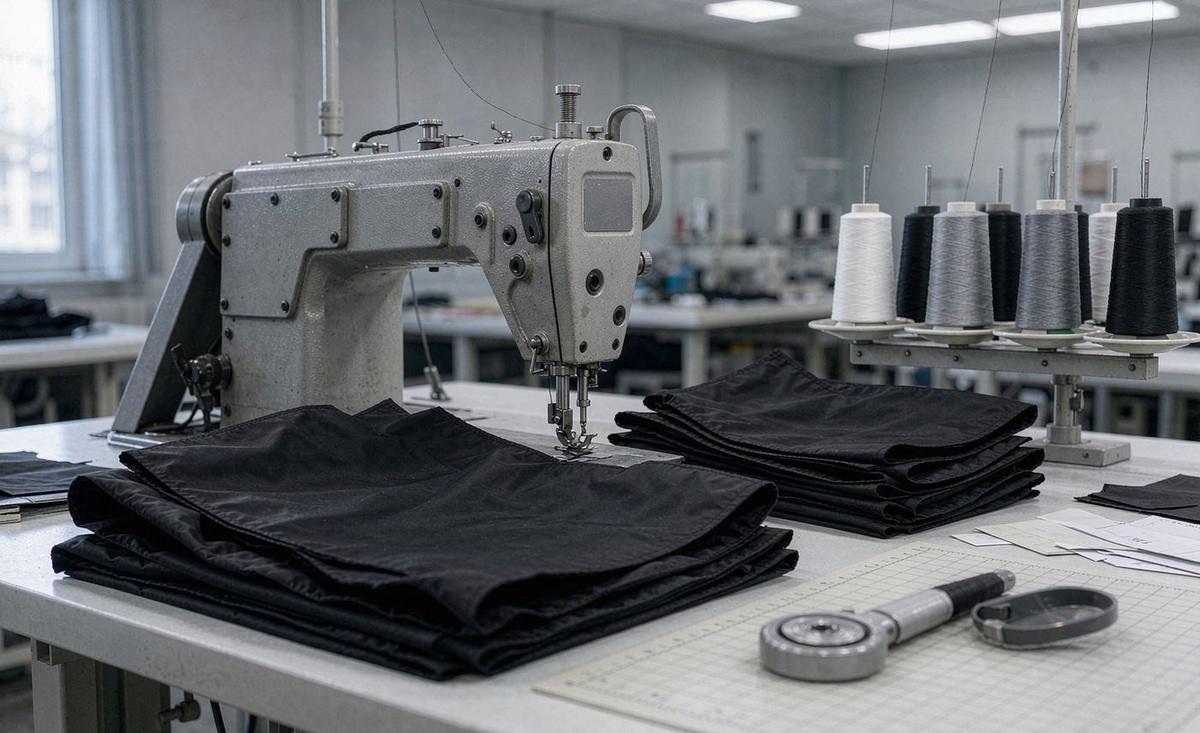
Why a startup needs a pilot run
A startup selling bags has one advantage over a retail buyer: it can learn in public. A pilot run converts a hypothesis into inventory that customers can handle, and the handling produces data. The alternative is to place a scale order on the strength of a render and a landing page, which is the most expensive way to discover that the market wanted a different size, a different closure or a different price.
The number that makes this possible is the minimum. At 500 pcs per style and per colourway, a genuine custom bag with its own patterns, materials, hardware and branding is reachable for a founder without institutional capital. That is a structural change from a decade ago, when a first custom order often meant several thousand units and a warehouse decision before any demand existed.
A pilot is not only a risk control; it is also a marketing asset. Five hundred units can supply a launch campaign, a reviewer pool, a wholesale sample set and a direct channel at the same time. The same physical run that tests demand can produce the photography, the unboxing content and the first retail conversations, so the development cost is spread across two purposes.
Our work with early-stage brands is usually this sequencing: define the product, sample it, run 500, measure, then decide. The crowdfunding bag guide covers the campaign version of that path; this article stays with the startup logic, where the same 500 pieces might be sold through a crowdfunding campaign, a direct store, a marketplace listing or all three.
What a 500-pcs pilot can and cannot test
Be honest about the instrument. A 500-pcs run can validate six things well: whether the product can be built consistently at the specified quality, the real landed cost per usable unit, the conversion rate at a published price, the split of demand between colourways and sizes, the freight and handling cost per carton, and the defect and return rate in actual use. Those six are exactly what a scale decision needs.
It cannot validate three things. It cannot prove sustained demand over 12 months, because a launch spike is not a baseline. It cannot test a second construction in the same run, because a different capacity or a different frame is a separate style with its own minimum. And it cannot produce the unit cost of a 3,000-piece order, because that price depends on material lots and line efficiency that the pilot does not reveal.
| Question | Validated by the pilot? | How the evidence is captured | What is still unknown |
|---|---|---|---|
| Can it be built consistently? | Yes | AQL 2.5 inspection and in-line checks | Consistency at 3,000 units |
| What is the true landed cost? | Yes | FOB price plus freight, duty, handling | Cost at higher volumes |
| Will it convert at this price? | Yes | Published price against units sold | Long-run price elasticity |
| Which colour sells? | Yes, with one stocked colour | Order split and post-campaign data | Preference among unstocked colours |
| What is the return rate? | Partly | First 60-90 days of use | Warranty behaviour over a year |
| Is there 12-month demand? | No | Not available from one run | Repeat purchase and seasonality |
The discipline is to write down the six questions before the purchase order is released, then collect the answers deliberately. Without that habit, the run produces anecdotes: a few customers liked the strap, one review mentioned the zip. With it, the run produces a decision document that a founder, an investor or a later sourcing conversation can read.
One practical caution. A pilot launched through a crowdfunding campaign measures a special kind of demand: backers who support an idea early. That is valuable but not identical to retail or marketplace demand, where the customer sees a finished product and a competitor's price. Read the campaign result as evidence of interest, and the post-campaign direct channel as evidence of repeatable demand.
Designing the pilot to produce usable evidence
The pilot must be instrumented. That means the product, the packaging and the paperwork are all designed to return data. Put one SKU identity on the base product, one on each colourway and one on each bundle, then match those identities to the sales channels so the first month's data can be read without guesswork. Recording the lot number alongside each SKU also lets a defect cluster be traced to a production week.
- Define six measurable questions before the purchase order is released.
- Give each colourway and bundle its own SKU identity.
- Record the production lot number against the SKU.
- Log the packed carton data, freight cost and duty per unit.
- Capture reasons for every return or replacement in one list.
- Review the evidence 60-90 days after delivery, on a scheduled date.
Sampling is where the instrument is calibrated. Standard sampling takes 6-10 working days per round, or 12-15 for complex builds, and each round should end with a physical unit, a measurement sheet and a component list. Those artefacts do more than approve the design: they define what the AQL 2.5 to ISO 2859-1 inspection will check, so a defect measured in month one can be compared with the approved standard.
Then decide what will be measured in use. If the bag is sold for commuting, ask a small panel to report on access, strap comfort and zip behaviour after 30 days. If it is sold for travel, measure how it performs on a real trip. Those reports are qualitative, but a pattern across 20 users is more informative than a hundred unprompted reviews.
The sample prototyping guide explains how to turn a marketing claim into a measurable acceptance test, which is the same discipline a startup needs before its first production run. Approved evidence, not approved enthusiasm, is what makes a scale decision defensible.
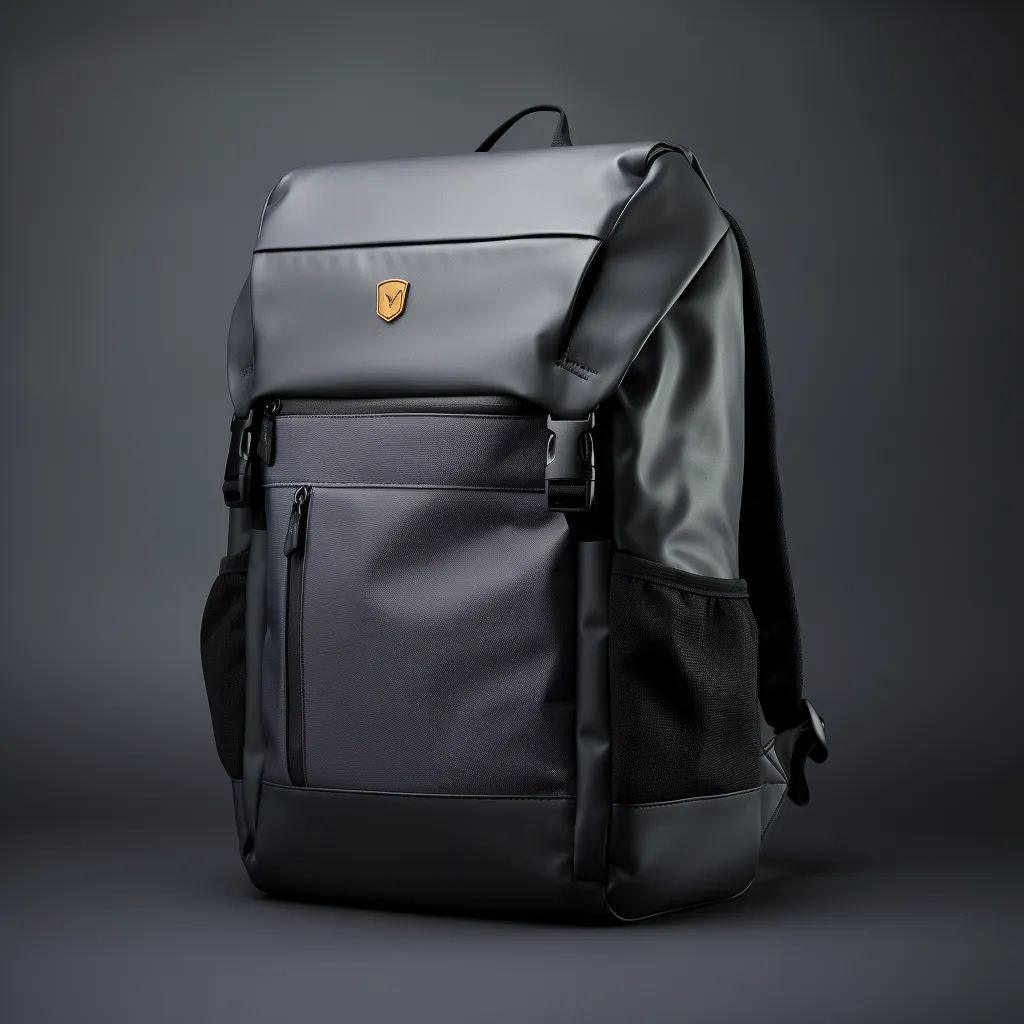
Choosing a test market for the first 500
A test market is the channel and geography in which the first 500 units are sold. The right choice depends on what the founder needs to learn. A crowdfunding campaign teaches interest and price tolerance before the product exists, and it funds the run. A direct store teaches conversion and margin at a known price. A marketplace listing teaches search behaviour and competitive price pressure. A wholesale or corporate conversation teaches whether the product can be sold through someone else's channel.
Most startups benefit from a primary channel plus a reserve. The primary channel absorbs the bulk of the run and generates the evidence; the reserve is held for the second channel and for service stock. A common structure is a campaign or direct launch taking 400-440 units, with 20-30 held for wholesale samples, media and replacements. Those are illustrative, not fixed, and the right split depends on the warranty promise.
Geography changes the economics, and under FOB Xiamen the buyer carries all of it. Duty rates, inland distance, parcel postage by zone and the availability of a suitable 3PL differ by destination. A founder planning to test two markets should model both before ordering, because a carton specification that works for one fulfilment route can be inefficient for another, and 500 units split across two countries create two clearance events.
Keep the first test narrow. One country, one primary channel and one colour is the cleanest instrument. Each additional variable makes the result harder to interpret: if a two-colour, two-country launch underperforms, the founder does not know which variable failed. The low-MOQ production article explains why a single colourway is also the cheapest structure, which aligns the evidence discipline with the cash discipline.
Price and tier testing inside the pilot
A pilot is the last cheap moment to learn what customers will pay. Price from landed cost per usable unit: the FOB Xiamen unit price, plus freight per carton, duty and clearance, receiving, pick-and-pack, postage by zone, and a deliberate replacement allocation. Divide by the number of units that can actually be sold, not by 500, because media units, retained references and service stock never become revenue. Skipping that denominator is why a launch that looks profitable on a spreadsheet ends with no cash.
Tier testing is the campaign version of the same question. A single tier with one clear reward is the cleanest read; two tiers with a bundle at the top can reveal willingness to pay for accessories. What a pilot cannot cleanly test is three prices at once, because traffic, timing and page position confound the result. Where a founder wants to test price, do it in two sequential windows with the same creative rather than simultaneously.
| Cost input | Source | Common error | Correction |
|---|---|---|---|
| Product unit price | Quotation at 500 pcs | Using a future volume price | Quote the quantity being ordered |
| Freight per carton | Trial carton cube and weight | Estimating from a render | Pack a trial carton from the sample |
| Duty and clearance | Classification and destination rate | Assuming one rate for all markets | Confirm the code per destination |
| Receiving and storage | 3PL rate card | Ignored entirely | Add per carton and per month |
| Pick-and-pack and postage | Parcel rate by zone | Using one average postage | Model the real zone mix |
| Replacement reserve | Warranty plan | Assumed at zero | Reserve 20-30 units illustratively |
Because the payment structure is T/T 30/70, price also has a timing dimension. The 30% deposit falls when the sample is approved and the order is released; the 70% balance falls at the inspection gate before cargo release. A price that works at the unit level can still fail if the deposit lands before the campaign pays out. Build the weekly cash calendar alongside the price model.
Stretch goals that add demand without new SKUs
A stretch goal is a public promise that unlocks at a funding threshold. The best ones increase the value of the reward without increasing the number of production SKUs. An upgraded component across the whole run, an extra internal pocket, better retail packaging or a bonus removable accessory that shares the construction can all be absorbed inside the existing 500-pcs commitment, provided each change is costed and approved before the deposit.
The reason this matters is that the minimum applies per style and per colourway. A stretch goal that adds a colourway adds a 500-pcs commitment, its own 30% deposit, its own 70% balance, its own carton cube and its own inventory position. A stretch goal that improves the existing product across all 500 units adds cost but not a second lot, which is a completely different cash shape.
- Component upgrade applied to every unit: one SKU retained, cost per unit rises.
- Additional internal pocket: pattern revision, sampled before approval.
- Retail packaging improvement: printed carton or hangtag with its own print minimum.
- Removable accessory in the same materials: separate accessory minimum, one bundle SKU.
- Kitting at origin instead of destination: saves a handling step in the warehouse.
- Extended warranty funded from the reserve: a service promise, not a production change.
Each of those still requires discipline. A component upgrade must be sampled and approved, and the approval must happen before the pre-production sample is signed, because that sample defines the lot. A printed carton has a print minimum and a lead time of its own. An accessory has its own minimum. The stretch goal is cheap only relative to a new colourway, not free.
Timing converts a good stretch goal into a safe one. Set a decision deadline before material ordering: if the threshold is not met by that date, the campaign defaults to the approved core specification. That rule protects the 35-50 day window, because material and line reservations cannot stay open until the last late pledge arrives. Our programme coordinator role includes holding those deadlines with the creator.
Stretch goals that break the production plan
Three stretch goal types reliably damage a first run. The first is a new colourway, which multiplies the minimum. The second is a new capacity or construction, which is a new style with new patterns, and often needs the longer 12-15 working day sampling window. The third is a late feature change that alters the pattern after the pre-production sample is signed, which can move the reserved slot and force a re-approval of the whole file.
The public problem is that these are the most exciting goals. A campaign page showing four colours and two sizes looks generous; a production file behind it shows three or four separate commitments, three or four deposits and three or four unsold positions if demand splits differently from the forecast. The excitement is bought with the founder's cash, not with the backer's pledge.
| Stretch concept | MOQ exposure | Sampling impact | Verdict for a first run |
|---|---|---|---|
| Improved component across all units | No new commitment | Focused re-approval | Good, if costed before launch |
| Bonus removable accessory | Accessory minimum applies | Can be sampled separately | Good, with a bundle SKU |
| Better retail packaging | Print minimum applies | Artwork approval only | Good, if scheduled early |
| Second shell colour | New 500-pcs colourway | Colour and trim approval | Keep as a re-order option |
| Second capacity or construction | New style minimum | New patterns and full tests | Do not promise in run one |
| Personalised mark per backer | Decoration feasibility question | Artwork handling per unit | Confirm before publishing |
A safer structure is to present the tempting options as a survey choice or a pre-priced re-order. Backers see the alternatives; the production plan carries one approved specification until the evidence says otherwise. If a second colour is genuinely part of the brand, it belongs in the second run, when the first run's data shows which colour to produce alongside it.
There is also a fulfilment consequence. Every new colourway or capacity is a new SKU in the warehouse system, a new pick path and a new opportunity for a mispick. The rewards fulfilment guide covers the handling side, and its conclusion for stretch goals is the same as ours: fewer SKUs, fewer errors, fewer reshipments.
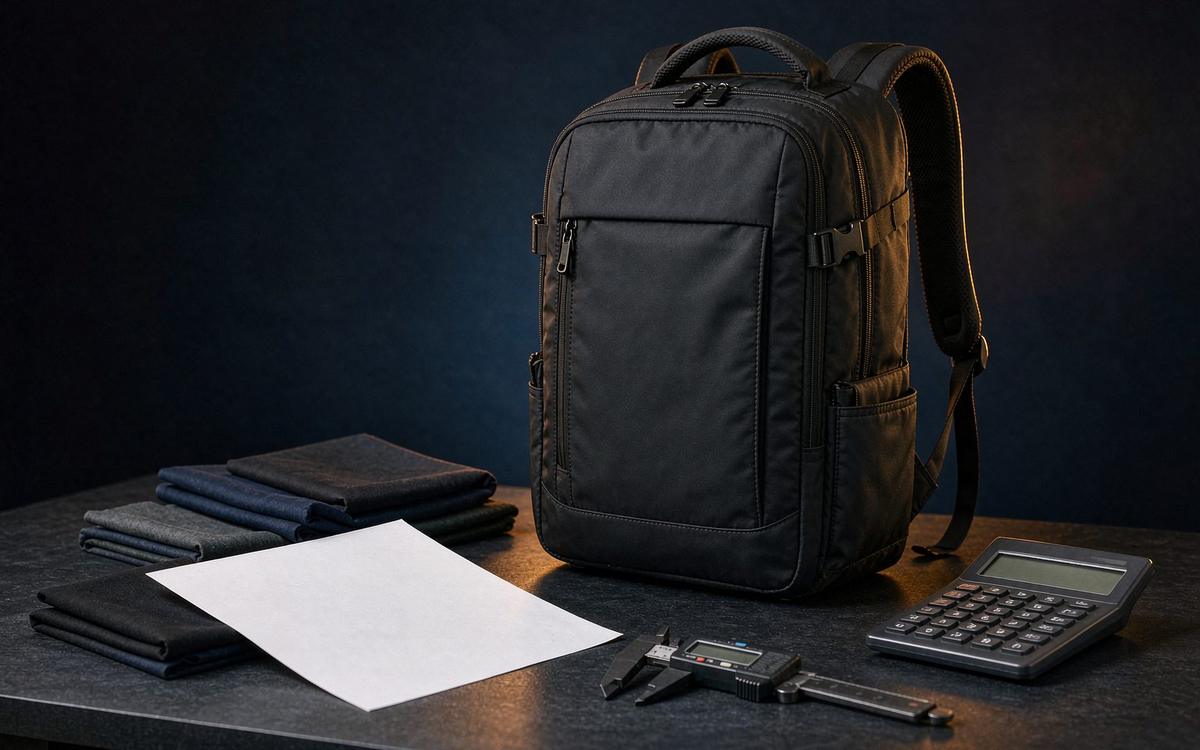
From pilot to scale: the re-order file
The transition from pilot to scale is a documentation task. If the second order can be quoted from an existing file, it is a commercial conversation about quantity, timing and price. If it cannot, it becomes a second development cycle with new sampling, unclear references and a longer calendar. Assembling the re-order file during the first run costs nothing and removes the most common cause of delay in the second.
- Signed pre-production sample, stored away from light and humidity.
- Tech pack with its revision history and the date of each revision.
- Component list with material, trim and hardware references.
- Approved artwork, coordinates and colour references.
- Carton specification with pieces per carton and gross weight.
- Inspection checklist and the AQL 2.5 report from the first lot.
- Corrective-action log and the evidence from in-use returns.
With that file, a scale conversation can be specific. Ask for volume pricing at named quantities under identical material, construction, decoration, packing and inspection assumptions, and ask for the re-order conditions to be recorded: validity period, material assumption, minimum quantity and whether sampling is needed after a component change. Then compare the deposit and balance at each quantity, not only the unit price.
The scale decision itself has three gates: demand evidenced beyond the launch spike, cash for the larger deposit and balance, and a specification stable enough that a correction will not strand a big lot. Missing any one of them argues for a second 500-pcs run rather than a jump to 1,500. The when 500 pcs is right article takes that decision further from the quantity side.
Cash and calendar for a startup pilot
A startup pilot is usually funded from four sources at different times: pre-orders or campaign pledges, founder capital, a small credit line, and post-campaign revenue. The production calendar does not wait for them to align. Under T/T 30/70 the 30% deposit is due when the sample is approved and the order is released; the 70% balance is due at the inspection gate before cargo release. Both dates are knowable in advance and should be in the founder's cash calendar from day one.
The full calendar is longer than the production window. Sampling takes 6-10 working days per round, or 12-15 for complex builds, and sits before the 35-50 day bulk window. After release come freight transit, import clearance, inland delivery, warehouse receiving and the pick-and-pack phase. A founder who plans 8 weeks from approval to delivery is planning to skip several stages that will happen anyway.
Two reserves protect the pilot. The first is a cash contingency for freight and duty variance, because both are estimates until the goods are booked and classified. The second is a service reserve of physical units, held for replacements and warranty cases, typically 20-30 pieces from a 500-unit run, adjusted to the construction and the route. Neither reserve is waste; both are the cost of a plan that survives contact with reality.
Programme context is useful here only as reassurance that a 500-piece order can be absorbed: capacity stands at 200,000 pcs per month across 7 lines with 149 machines and 137 staff on a 4,950 m² SGS-verified floor. The founder's own protection still comes from the deposit date, the approved sample and the AQL 2.5 to ISO 2859-1 inspection, which are the three things that move a schedule in practice.
When to skip the pilot and scale directly
There is a case for going straight to a larger first run. It requires four conditions to be true at once: demand is already evidenced, usually through a converted waitlist or a prior campaign; the product specification is stable, ideally because it has been sampled and revised in a previous cycle; the deposit and balance can be funded without the marketing reserve; and a channel exists for the surplus if the market is slower than forecast.
The strongest version of this case is a second product from an existing brand. A founder who has already run one 500-pcs bag, kept the file, learned the landed cost and knows the return rate can reasonably order more of the next one, because the unknowns have been measured. What they are buying with the larger quantity is a lower unit cost and fewer re-order cycles, not a guess.
The weakest version is a first product with a strong render and no sales history. In that situation the larger order does not reduce risk; it concentrates it. The 500-pcs minimum is deliberately sized for the founder's situation, and the 35-50 day calendar, the sampling rounds and the inspection standard all work the same at 500 as they do at 1,500. The difference is entirely in how much a wrong assumption costs.
A pilot run buys information, and information is only worth its price if someone reads it on a scheduled date and then changes a decision because of it.
Whatever the decision, the sequence stays the same: settled technical file, physical sample approval, a purchase order stating quantity per style and colourway, the deposit, the production window, the inspection, then the freight and fulfilment that the buyer owns under FOB Xiamen. Founders who follow that sequence spend less time firefighting and more time on the two decisions that actually compound: the product and the price.
Planning a first 500-pcs bag run? Send the product specification, the test market, the launch channel and the target date through the contact quotation form or to service@junyuanbags.com, and we will return a pilot plan with the sampling path, the cash calendar and the re-order file structure.
Frequently Asked Questions
What is a bag pilot run for a startup?
A pilot run is a first production order of 500 pcs per style and colourway, used to validate the product before a scale commitment. It tests whether the bag can be built consistently, the true landed cost, conversion at a published price, colour preference, freight cost per carton and the defect rate in use. Six weeks of scheduled review turns those answers into a scale decision.
Why not start with 100 bags and grow from there?
Below 500 pcs the fixed work of a custom bag, including pattern and marker preparation, material lots, colour and trim coordination, decoration setup, line changeover and inspection documentation, distorts the unit cost. A custom construction at 100 pieces is rarely economic. The 500-pcs minimum is the entry point at which that preparation can be distributed across a real run. Below that point the same preparation costs more per unit than most reward tiers can carry.
How long does a 500-pcs pilot take from start to delivery?
Sampling takes 6-10 working days per round, or 12-15 for complex builds, plus courier and review time. production 35-50 days after the deposit and the approved sample. Then add inspection, freight transit, import clearance, inland delivery and warehouse receiving. A realistic plan is measured in months, not in the 35-day figure alone. Freight mode, clearance and receiving then decide the last third of the calendar, and none of them is inside the production number.
Can a pilot test two colours at once?
It can, but each colourway carries its own 500-pcs minimum, its own deposit and balance, and its own inventory position. A cleaner instrument is one hero colour in the first run, with the second colour recorded as a pre-priced re-order. If two colours are essential, model the split of demand before the purchase order is released. Each is a separate 500-pcs commitment with its own deposit, its own 70% balance and its own inventory position.
Which stretch goals are safe for a first run?
Those that add value to the existing 500 units without creating a new SKU: a component upgrade across the whole run, an extra internal pocket, better retail packaging or a removable accessory with its own minimum. Each still needs costing and sample approval before the pre-production sample is signed. A second colour or a second capacity is not safe in run one.
When should a stretch goal decision be made?
Before material ordering. Set a published deadline for each unlock; if the threshold is not met by that date, the campaign defaults to the approved core specification. That rule protects the reserved production slot, because material reservations and the line sequence cannot stay open until the last late pledge arrives. Publish the deadline in the campaign terms, so backers know when an unlock resolves either way.
How should a startup price its first bag?
From landed cost per usable unit: the FOB Xiamen unit price plus freight per carton, duty and clearance, receiving, pick-and-pack, postage by zone and a deliberate replacement reserve. Divide by the units that can actually be sold, not by 500, because media units, retained references and service stock are not revenue. Add a contingency for freight and duty, because both remain estimates until the goods are booked and classified.
What evidence should be collected after delivery?
Six items: conversion at the published price, the colour split, the defect and return rate with reasons logged, the freight and duty cost per unit, the fulfilled-landed-cost variance against the estimate, and the in-use reports from a small panel. Review them on a scheduled date 60-90 days after delivery. A scheduled review date matters more than the metrics themselves, because unread data changes nothing.
What is in a re-order file?
The signed pre-production sample, the tech pack with revision history, the component list with references, approved artwork and coordinates, the carton specification with pieces per carton and gross weight, the AQL 2.5 inspection report, and the corrective-action log. With that file, a scale order is a commercial conversation rather than a second development cycle. Stored together, those seven records make the next 500-pcs order a quotation rather than a development cycle.
When is a larger first order justified?
When demand is already evidenced through a converted waitlist or a prior campaign, the specification is stable, the deposit and balance can be funded without the marketing reserve, and a channel exists for any surplus. A second product from an existing brand is the strongest case; a first product with only a render is the weakest. Failing any one of the four conditions argues for a second 500-pcs run instead of a larger first one.
How much cash is needed to start a 500-pcs pilot?
The 30% deposit under T/T 30/70, plus sample fees and any tooling or print charges, with the 70% balance reserved for the inspection gate. Also keep separate money for freight, duty, receiving, pick-and-pack and postage, because FOB Xiamen does not include any destination costs. Model the deposit and balance dates in a weekly calendar, because a solvent plan can still miss the deposit week.
Does the pilot change the inspection standard?
No. The standard is AQL 2.5 to ISO 2859-1 on every lot, including a pilot. Its report is doubly useful in a pilot: it controls the 70% payment decision, and it records the baseline defect rate that later runs must improve on. The report also supports the 70% payment decision, which falls before cargo release at FOB Xiamen. Use that baseline to compare later lots rather than relying on memory or photographs.
People Also Ask
What is a pilot run in bag production?
A first 500-pcs production order used to validate the product, the price and the landed cost before a larger commitment.
Can a startup order fewer than 500 bags?
Not for a genuine custom construction. The minimum is 500 pcs per style and colourway, and below that the fixed preparation work distorts the unit cost.
Should a first run have one colour or several?
One. Each additional colourway is a separate 500-pcs commitment with its own deposit and inventory position.
Which stretch goals are safest?
Upgrades applied across the whole run: a better component, an extra pocket, improved packaging or a removable accessory. Avoid new colours and new capacities.
How do I know the pilot worked?
You have six numbers: conversion, colour split, defect rate, freight per unit, landed-cost variance and in-use feedback, reviewed on a scheduled date.
What happens after a successful pilot?
Use the re-order file to request volume pricing at named quantities under identical assumptions, then compare deposit and balance cash, not only unit price.
Do I need a pilot if I already have a waitlist?
Possibly not. With evidenced demand, a stable specification and funded cash, a larger first run can be justified. Without those three, 500 remains the safer number.