Press Kit Bags for Creators: What to Include and Why
What should go inside a press kit bag, and which bag should carry it? The sourcing answer comes before the creative one: pick the format from the contents, not the reverse. A press kit run is planned against a 500 pcs minimum per style and colourway, sampling in 6-10 working days, production 35-50 days and inspection at AQL 2.5 to ISO 2859-1. This article sets out the contents list, the format decision, the branding method and the calendar that gets kits into reviewers' hands before launch coverage closes.
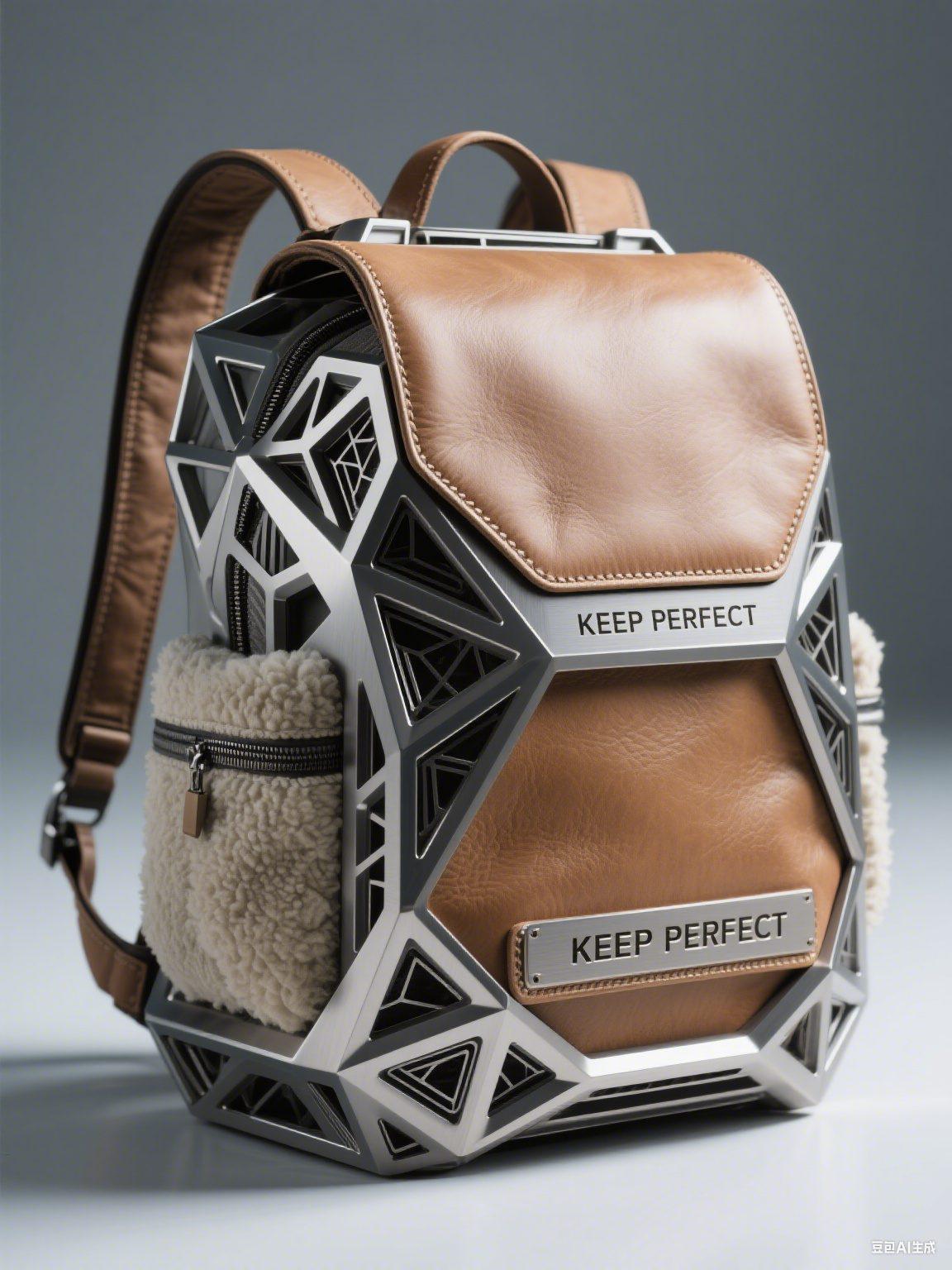
- What a press kit bag actually does for a campaign
- Choose the format from the contents, not the reverse
- The contents list that earns coverage
- Inserts, cards and spec sheets that survive the courier
- Quantities, MOQ and the 500 pcs question
- Branding method for a short, highly visible run
- Where the unit cost actually goes
- Sampling and approval before the seeding date
- Packing spec and shipping to a press list
- Compliance and claims on gifted units
- A twelve-week press kit calendar
- Measuring whether the kit worked
What a press kit bag actually does for a campaign
A press kit bag is not a reward tier and it is not merchandise. It is a procurement line with a hard deadline, and it is judged by a person who has no relationship with your campaign and roughly fifteen seconds of patience. That person opens a courier satchel, sees a bag, and decides whether the object inside is worth photographing. Everything you spend on the kit is spent buying those fifteen seconds, which is why the specification discipline matters more here than on a reward bag that goes to a backer who already wants it.
The bag itself carries three jobs. It protects the contents in transit. It presents the brand at the moment of opening, which is the only moment a reviewer's camera is guaranteed to be pointed at it. And it has to be believable as a product in its own right, because a journalist who receives a bag that looks like a giveaway tote will treat the product inside as a giveaway too. A media seeding programme that ships 80 units to three publications is spending the same money per unit as a premium tier backer would, and it should be specified accordingly.
That reframing changes the questions you ask during sourcing. You stop asking what the cheapest bag is and start asking which format photographs well flat, which branding method reads at thumbnail size, which insert stock survives a courier network without creasing, and which packing specification means the kit arrives uncreased. The crowdfunding bag guide covers the wider reward sourcing path; this article stays on the kit specifically, from contents list through to the seeding calendar.
- Minimum order quantity
- 500 pcs per style / colourway
- Sampling
- 6-10 working days (12-15 for complex builds)
- Bulk production
- 35-50 days after deposit + approved pre-production sample
- Inspection
- AQL 2.5 to ISO 2859-1
- Trade term
- FOB Xiamen
- Payment
- T/T 30/70
- Production floor
- 4,950 m² SGS-verified, 137 staff, 7 lines, 149 machines
- Monthly capacity
- 200,000 pcs per month
- Programme contact
- service@junyuanbags.com
Key takeaways on press kit bags
- Choose the bag format from the contents list; volume decides the format, not aesthetics alone.
- The production minimum is 500 pcs per style and colourway, so kit runs are usually folded into the reward run or built on a stock base.
- Sampling takes 6-10 working days per round; budget two rounds before the seeding date.
- Inserts carry the information the bag cannot; spec card, care card and contact card are the minimum three.
- Ship kits to arrive two to three weeks before the coverage window, not on the day the campaign opens.
Choose the format from the contents, not the reverse
Creators usually start with a picture of a bag and then try to fit the contents into it. That order produces kits that bulge, crease or need a second insert to explain what the first one could not. Start instead with a physical contents list, measure the assembled kit, and add 15-20% internal clearance. Only then does the format choice become obvious, and it is usually a flatter, simpler bag than the one in the mood board.
| Format | Usable internal volume | Branding area | Packing note |
|---|---|---|---|
| Flat tote, 10-12 oz canvas | 8-14 litres, lies flat | Large front panel, both faces usable | Packs flat; lowest volumetric weight per unit |
| Zipper pouch, medium | 1-3 litres | One face plus woven label on the side | Nests inside a larger bag as a two-part kit |
| Drawstring bag | 6-10 litres, soft sides | Centre front panel, curved surface | Compresses well; print must be placed clear of the channel |
| Small backpack | 12-18 litres | Front pocket panel and shoulder strap | Highest volumetric weight; air freight cost rises sharply |
| Cosmetic or tech pouch | 0.5-2 litres | Small face; label does most of the work | Best as the inner element of a kit, not the outer bag |
Two practical constraints narrow this list fast. First, the outer bag has to lie flat enough to be packed without void fill, because a structured kit is charged on volumetric weight at somewhere between four and six times the cost of the same mass shipped by sea. Second, the outer bag has to survive being placed inside a courier satchel with no additional protection, which rules out unlined paper-based materials and anything with an exposed uncoated print. If you want a category-by-category view of the options, the custom bag categories page sets out the standard formats and their construction notes.
The contents list that earns coverage
A reviewer needs four things from a kit: the product, a reason it exists, a way to describe it accurately, and a way to reach you before publication. Everything else is decoration. Kits fail when they contain five branded items and no specification, because the journalist then has to guess at materials and capacity, and a guess that turns out wrong becomes an error in print that you cannot retract.
- The product itself, in the configuration you want photographed, with any protective film removed.
- A single-page spec card stating dimensions in centimetres, material composition, capacity and weight.
- A care or use card with three to five instructions, written as imperatives rather than paragraphs.
- A founder or programme note, one paragraph, with a direct email and a response-time commitment.
- One brand element that is not printed: a woven label, a hang tag or a debossed puller.
- A packing slip or kit manifest, so a reviewer who receives a partial kit can tell what is missing.
| Item | Job it does | Sourcing consequence |
|---|---|---|
| Product unit | Is the story; gets photographed | Comes from the main reward run, so kit timing follows bulk completion |
| Spec card | Prevents factual errors in coverage | Printed on 250-300 gsm stock; must be specified with the insert pack |
| Care card | Signals durability and aftercare | Same print run as the spec card to avoid a second set-up charge |
| Founder note | Gives a human contact for follow-up | Plain stock; no minimum print issue at short-run digital quantities |
| Woven label or hang tag | Carries brand without a print face | Woven labels carry their own minimum and are ordered with bulk |
| Manifest | Protects against partial-kit complaints | Produced by the packing team; add it to the packing SOP |
Weight is the constraint that catches kits out. A assembled kit of bag, product, three cards and a hang tag typically lands between 400 and 900 grams, and once you cross roughly 500 grams the per-unit courier cost steps up a band. Consider splitting the kit into a two-part shipment only if the product itself is heavy; otherwise keep one satchel, one opening moment, one photograph.
Inserts, cards and spec sheets that survive the courier
Inserts do the work the bag cannot do, and they are the cheapest place to buy credibility. A spec card that states 600D recycled polyester, 28 x 38 x 12 cm, 18 litres and 640 grams tells a reviewer everything they need to write an accurate paragraph, and it removes the most common source of error in launch coverage: an invented capacity figure.
| Insert | Recommended stock | Cost driver | Failure mode to avoid |
|---|---|---|---|
| Spec card | 300 gsm uncoated board, A5 or A6 | One print set-up, shared across all inserts | Text below 8 pt disappears in photographs |
| Care card | 250 gsm, same run as spec card | Additional fold or die-cut adds a set-up | Coated stock cracks at the fold line |
| Founder note | 120 gsm uncoated, digital print | Variable data printing if personalised | Personalised notes add a packing step per unit |
| Hang tag | 350 gsm board with string or rivet | Die-cut, eyelet and string attachment | Tag tears free in transit without an eyelet |
| Thank-you card | 250 gsm, single colour | Colour count and plate charges | Full-bleed dark ink scuffs on uncoated stock |
Specifying the spec card, care card and thank-you card on the same stock, in the same print run, removes two of three set-up charges and keeps colour consistent across the kit. It also means a single approval covers all three, which typically saves three to five days in the sampling and approval window.
Quantities, MOQ and the 500 pcs question
Here is the friction every press kit programme hits. A media seeding list is usually 60-200 names. The production minimum for a custom bag build is 500 pcs per style and colourway. Those two numbers do not meet, and pretending otherwise is how creators end up with 400 bags in a garage and a unit cost that never made sense.
| Scenario | Quantity | Unit cost effect | When it is the right call |
|---|---|---|---|
| Folded into the reward run | 500 pcs total, kits drawn from it | Best unit cost; kit units are free at the margin | When the kit bag is the same style as a reward tier |
| Stock base with branded label | 100-300 pcs on a stock body | Higher unit cost, no custom tooling, faster start | When the kit must exist before the reward run is approved |
| Standalone custom kit build | 500 pcs dedicated | Full custom cost on a run you will not consume | Rarely justified; only for a large-scale PR push |
A dedicated 500 pcs run for a seeding list of 80 names leaves 420 units with no destination and converts a low-cost outreach line into one of the largest cash items in the campaign budget. Either draw the kits from the reward run or use a stock body with a woven label and a hang tag, and revisit a custom build on re-order if the kit proves out.
The cleanest structure is the first row of that table: the kit bag is the same style as a reward tier, produced in the same run, and 60-200 units are diverted to the seeding programme before the rest go to backers. That way the kit inherits the reward's unit cost, the reward's approved pre-production sample and the reward's QC reference, and the only incremental cost is the insert pack and the courier spend. Our low minimum production page explains how the 500 pcs minimum applies when a programme wants to start smaller.
Branding method for a short, highly visible run
Press kit branding has one requirement that reward branding does not: it has to read at thumbnail size on a phone, because the first photograph a reviewer posts is usually taken quickly and viewed small. That rules out fine detail, small type and anything that depends on close inspection. It favours one bold mark, high contrast, and a placement that sits on a flat unwrinkled panel.
| Method | Reads at thumbnail size | Set-up and lead time | Best use in a kit |
|---|---|---|---|
| Screen print, one or two colours | Strongly, on flat panels | Films and screens, 3-5 days in sampling | Outer bag front panel, bold mark |
| Heat transfer, full colour | Well, including gradients | Print and press test, 3-5 days | Photographic or multi-colour artwork |
| Woven label | No, but adds perceived quality | Woven run, ordered with bulk | Side seam, zip garage or inner pocket |
| Embroidery | Moderately; small text fails | Tape digitising, 3-5 days | Tote front panel at 40 mm or larger |
| Hang tag | Only in hand, not in a wide shot | Die-cut and string, with the insert run | Carries the spec and the brand story |
One branding method on the bag plus one non-printed brand element is the right default. Two print methods on a kit bag almost always reads as clutter in a photograph and adds a second set-up charge for no gain. If you need guidance on artwork preparation for either method, the print and embroidery page sets out file requirements, minimum type sizes and placement tolerances.
Where the unit cost actually goes
A press kit budget has more lines than a reward budget, and the ones creators forget are the ones that inflate it: the insert print run, the personalised packing step, and the courier spend, which on an international seeding list frequently exceeds the cost of the bag itself. Model the whole kit as one landed line rather than quoting a bag and discovering the rest later.
| Cost line | Typical share of kit cost | Note for the budget |
|---|---|---|
| Bag unit cost | 25-40% | Falls sharply if drawn from the reward run rather than standalone |
| Insert pack print | 5-10% | One shared print run keeps this at the low end |
| Kit assembly labour | 5-12% | Personalised notes roughly double this line |
| Outer courier satchel | 8-15% | Sized to the kit; volumetric weight dominates |
| Courier to press list | 30-50% | International seeding is usually the largest single line |
| Contingency for re-sends | 5% | Budget for damaged and undeliverable units |
The cash planning point follows from the payment structure. Under T/T 30/70 the 30% deposit falls due when the pre-production sample is approved, which on a folded-in kit run means the kit cash is inside the main reward deposit rather than a separate spend. That is another reason to avoid a standalone kit build: it creates a second deposit, a second approval gate and a second inspection, on a quantity you will not consume.
Sampling and approval before the seeding date
Kit bags are approved in the same way as any other build, and the same discipline applies: one variable per round. If round one changes the bag size, the fabric and the print placement at once, a problem with any one of them cannot be attributed, and round two becomes a guess. Sampling runs 6-10 working days for a standard build and 12-15 working days for a complex one.
- Release a complete specification: dimensions, fabric, hardware, branding method, coordinates, insert pack and packing unit.
- Round one sample arrives in 6-10 working days; measure it against the pack and photograph it flat under the lighting you will use for seeding.
- Write the revision list as a numbered document tied to pack clauses, not as a paragraph of impressions.
- Round two confirms the corrections and becomes the reference unit for bulk.
- Approve the pre-production sample in writing; this is the gate that releases the deposit and the production slot.
- Confirm the insert print proof at the same approval, so the kit and the cards are released together.
One kit-specific step belongs in that list: a drop test of the assembled kit in its courier satchel. Pack one sample exactly as it will ship, drop it once from waist height on each of its six faces, and open it. That single exercise finds creased cards, scuffed print and hang tags torn free, all of which are cheap to fix in sampling and expensive to discover after 150 kits have been dispatched. Our sample prototyping page sets out the full checkpoint structure.
Packing spec and shipping to a press list
The packing specification for a kit run is different from a reward run because the unit of dispatch is one, not a carton of twenty. Kits ship individually, so the packing SOP has to define the sequence: bag opened and aired, inserts placed in a fixed order, product seated, hang tag attached last, satchel sealed. Written as a sequence with a photograph at each step, it is trainable in an afternoon and repeatable across a hundred units.
- Fix the insert order and photograph it; a card placed behind the product is a card nobody reads.
- Specify the satchel size to the kit, not to the carton; oversized satchels are charged on volume.
- Require the manifest to be checked against the seeding list before the courier collection, not after.
- Ship to arrive on a Tuesday or Wednesday; kits delivered on a Friday sit unopened through a weekend.
- Track every unit and follow up on silent deliveries after five working days.
- Hold 10% of the kit quantity as re-send stock for damaged or undeliverable units.
Fulfilment for a press list is closer to a direct-to-consumer dispatch than to reward fulfilment, and it should be planned with whoever runs your backer shipping. If that is the same partner, the kit dispatch can ride on the same account and the same tracking process, which is the arrangement we recommend on campaign programmes. Details of the reward side are on the rewards fulfilment page.
Compliance and claims on gifted units
A gifted unit is still a placed product. If the kits ship into the US, the same CPSIA and Prop 65 considerations that apply to a backer reward apply to a reviewer's unit, and into the EU the General Product Safety Regulation applies regardless of whether money changed hands. Journals occasionally ask for documentation, and a programme that cannot produce it loses the placement at the point where it matters most.
- State fibre composition on the spec card as a percentage, matching the label sewn into the bag.
- Keep one compliance file per style: material declaration, test report reference and the label artwork as approved.
- Do not make environmental claims on the kit that you cannot substantiate; GRS or OEKO-TEX Standard 100 certificates are the evidence, not adjectives.
- Include the importer or responsible economic operator details if the destination market requires them on-pack.
- Treat a gifted unit as in-scope for any warranty or replacement commitment you publish.
A twelve-week press kit calendar
Kit timing works backwards from the coverage window, not forwards from the campaign launch. Reviewers on monthly titles work four to eight weeks ahead of publication; weekly and online outlets work three to ten days ahead. If you want coverage in the week the campaign opens, the kit has to be in hand two to three weeks before that, which places the specification lock roughly twelve weeks out.
| Week | Milestone | Gate |
|---|---|---|
| Week 0 | Contents list measured; format and spec locked | Quotation issued with sampling estimate |
| Week 1-2 | Sampling round one, 6-10 working days | Sample measured and photographed flat |
| Week 3 | Revision list returned | Single numbered document |
| Week 4-5 | Sampling round two and insert proof | Pre-production sample approved in writing |
| Week 6 | Deposit under T/T 30/70; production slot booked | Start and completion dates confirmed |
| Week 6-12 | production 35-50 days | Weekly status; in-line QC logged |
| Week 12-13 | Inspection at AQL 2.5, packing and release | Report issued before balance payment |
| Week 14-16 | Transit from FOB Xiamen and kit assembly | Kits in hand at the dispatch point |
| Week 17-18 | Seeding dispatch and follow-up | Kits land before the coverage window |
Measuring whether the kit worked
The point of a kit is coverage, and coverage is measurable if you decide what to measure before dispatch. Tag every kit destination in your tracker, record the dispatch date, and log any resulting mention against the outlet, the date and whether the specification in the article matched the spec card you sent. That last column is the useful one: it tells you whether the kit did its job of preventing factual errors.
- Coverage rate: mentions divided by kits dispatched; 10-20% is a normal band for a cold list.
- Accuracy rate: the share of mentions whose dimensions and materials match your spec card.
- Time to mention: median days from delivery to publication, which sets your seeding lead time next time.
- Cost per mention: total kit spend divided by mentions, compared against your paid acquisition cost.
- Kit-derived pledges, tracked with a plain URL or code on the founder note rather than a discount.
- Custom bags for Kickstarter campaigns
- Custom tote bags for Kickstarter
- Custom bag categories
- Print and embroidery for custom bags
- Crowdfunding bag sample prototyping
- Low minimum bag production for creators
- Crowdfunding rewards fulfilment
- Request a quotation
Specify a press kit bag that survives the courier
Send us your contents list, target quantity and seeding date. As your production partner we will return a format recommendation, a unit cost and a sampling window that fits the coverage calendar. Write to service@junyuanbags.com or use the quotation form.
Frequently Asked Questions
What is the minimum order quantity for a press kit bag?
The production minimum is 500 pcs per style and colourway. Because most seeding lists run to 60-200 names, the usual solution is to draw kit units from the main reward run rather than commission a standalone build, or to brand a stock body with a woven label and hang tag.
How long does it take to produce press kit bags before a launch?
Plan roughly twelve weeks from specification lock to kits in hand. That covers two sampling rounds at 6-10 working days each, 35-50 days of bulk production after deposit and approved pre-production sample, inspection at AQL 2.5, packing, and transit from FOB Xiamen.
Which bag format works best for a press kit?
A flat tote in 10-12 oz canvas is the default, because it holds 8-14 litres, packs flat for the lowest volumetric weight and gives a large unwrinkled front panel for branding. A zip pouch works as the inner element when the product itself is small.
What should be printed on a press kit spec card?
State external dimensions in centimetres, capacity in litres, weight in grams and fibre composition as a percentage. Four facts on a 300 gsm card prevent most specification errors in coverage, and they match what the sewn-in label must legally declare.
How many sampling rounds should a press kit bag budget for?
Budget two rounds at 6-10 working days each. Round one confirms proportion and print placement; round two becomes the reference unit for bulk. A drop test of the assembled kit in its courier satchel should be run during round two.
Is it cheaper to make the press kit bag the same as a reward tier?
Yes. Drawing kits from the reward run means they inherit the reward unit cost, the approved pre-production sample and the QC reference, and the incremental cost is only the insert pack plus courier spend. It also avoids a second deposit under T/T 30/70.
How much does it cost to ship a press kit internationally?
Courier spend is typically the largest single line at 30-50% of total kit cost, because kits ship individually and are charged on volumetric weight. A kit of 400-900 grams crossing one border usually costs more than the bag inside it.
When should press kits arrive relative to the campaign launch?
Kits should arrive two to three weeks before the coverage window you are targeting. Monthly titles work four to eight weeks ahead of publication, while weekly and online outlets work three to ten days ahead. For launch-week coverage, that usually means dispatching five to eight weeks before the campaign opens.
Which branding method reads best in reviewer photographs?
A one or two colour screen print on a flat panel reads best at thumbnail size. Avoid type below 8 pt and fine detail. Add a woven label or hang tag as the second brand element rather than a second print method.
Do gifted press kit units need compliance documentation?
Yes. A gifted unit is still a placed product, so CPSIA and Prop 65 apply in the US and the General Product Safety Regulation applies in the EU. Keep one compliance file per style with the material declaration, test report reference and approved label artwork.
How many kits should be held back for re-sends?
Hold 10% of the dispatch quantity as re-send stock. Courier damage, undeliverable addresses and late additions to the media list typically consume 5-8% of a seeding run, and re-sending from held stock is far cheaper than commissioning a second run at the 500 pcs minimum.
Should press kit inserts be printed with the bag or separately?
Specify all cards on the same stock in one print run, approved at the same time as the pre-production sample. This removes two of three set-up charges, keeps colour consistent across the kit, and saves roughly three to five days in the approval window.
People Also Ask
Are press kit bags worth the cost for a small campaign?
They are worth it when the kit bag is drawn from the reward run rather than commissioned separately. Folded into an existing 500 pcs order, the incremental cost is the insert pack plus courier spend, which is usually 30-50% of the total, against coverage you could not otherwise buy.
What size bag do I need for a press kit?
Measure the assembled contents and add 15-20% clearance. Most launch kits land between 1 and 14 litres, which is a zip pouch for a small product or a flat tote for a larger one. Do not choose the bag before you have measured the contents.
Can I personalise press kit bags for each journalist?
Yes, but it adds a packing step per unit and roughly doubles assembly labour. A personalised founder note on 120 gsm digital stock achieves most of the effect at a fraction of the cost of personalising the bag itself.
How do I stop press kit bags arriving creased?
Specify 300 gsm board for cards, avoid coated stock at fold lines, size the courier satchel to the kit, and run a six-face drop test on one packed sample during the second sampling round before any bulk dispatch.
Should the press kit bag match the reward bag exactly?
Usually yes. A reviewer who receives the same unit a backer will receive writes about the actual product, which protects you from accuracy complaints after funding and removes a separate sourcing decision from the critical path.