Small Batch Backpack Production: Realistic Lead Times and Costs
A small batch backpack order at 500 pcs per style and colourway takes longer and costs more than a flat bag of the same size, because a backpack is a structured assembly. Sampling takes 6-10 working days per round, or 12-15 working days for complex builds, and two rounds are normal for a padded, multi-panel bag. production 35-50 days after the deposit and the approved sample. Add inspection, transit, clearance and fulfilment and the plan is measured in months. This article breaks the calendar into stages and the cost into drivers, so a creator can plan a launch date that survives contact with the schedule.
- Why backpacks take longer than a tote
- The backpack calendar, stage by stage
- Sampling a backpack: two rounds and what they cover
- Material and hardware inside the 35-50 days
- The cost drivers that actually matter
- Where volume pricing comes from
- Packing cube and freight for a structured bag
- Inspection points specific to backpacks
- What can be compressed and what cannot
- Planning backwards from a launch date
Why backpacks take longer than a tote
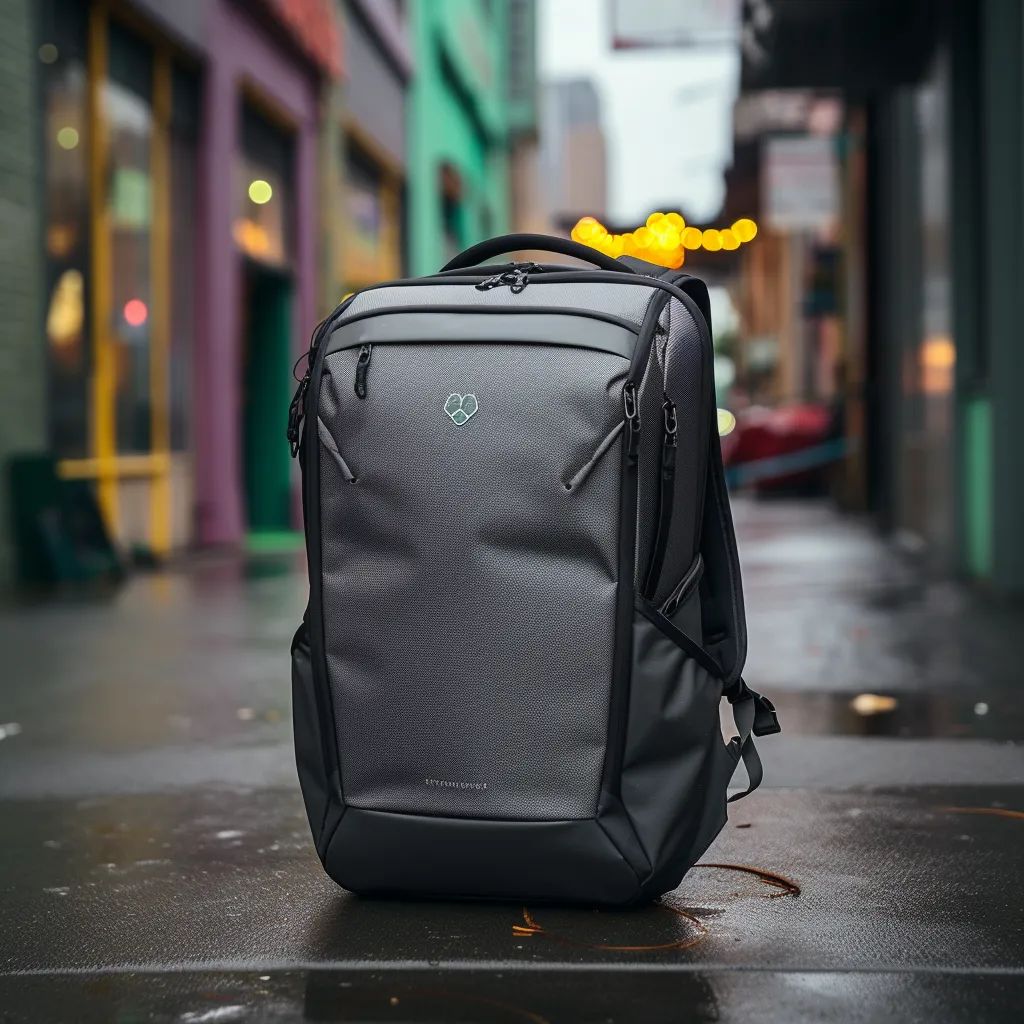
A tote is largely a cutting and sewing job. A backpack is an assembly job. It combines a shaped back panel with foam and often board, contoured shoulder straps with foam and webbing, a load path that has to be reinforced, multiple compartments with their own zips and linings, and frequently a structured base. Each of those elements is a component with its own preparation and its own failure mode.
The consequence is a longer operation list and more interfaces between them. Where a tote might involve a dozen operations, a backpack can involve several times that number, and the operations are not interchangeable: a strap assembly line, a panel preparation step, a lining assembly step and a closing sequence. Each interface is a place where a small error becomes a visible defect on a finished bag.
That structure also lengthens development. A pattern adjustment on a flat bag moves two or three panels; on a backpack it can move the relationship between the back panel, the straps, the base and the lining. This is why complex builds use the longer sampling figure of 12-15 working days rather than the standard 6-10, and why two rounds are normal for a padded, multi-compartment bag.
None of this argues against making backpacks. It argues for planning them as assemblies. Creators who understand the structure ask better questions: where the load path is reinforced, how the strap attaches, what the foam density is, and how the lining is closed. Those are the questions that determine both the cost and the quality of a 500-pcs run.
The backpack calendar, stage by stage
The number most creators quote is 35-50 days. That is the bulk production window, and it begins only when two conditions are met: the deposit has been received and the pre-production sample has been approved. Everything before and after it is additional. Reading the whole chain is the difference between a delivery month that holds and one that has to be walked back in a campaign update.
| Stage | Working basis | Controlled by | What can slip it |
|---|---|---|---|
| Technical file and RFQ | Creator's own schedule | Creator | Unsettled dimensions or materials |
| Sampling round one | 6-10 days, or 12-15 complex | Shared | Pattern and foam questions |
| Creator review and courier | Outside working days | Creator | Review time, public holidays |
| Sampling round two if needed | 6-10 days, or 12-15 complex | Shared | Revision scope |
| Sample approval | Dated written sign-off | Creator | Unapproved substitutions |
| Bulk production | 35-50 days | Production programme | Deposit timing, material arrival |
| Inspection | AQL 2.5 to ISO 2859-1 | Programme coordinator | Rework and re-inspection |
| Freight, clearance, inland | Mode and destination dependent | Buyer | Booking space, documentation |
Notice that the two sampling rounds are separated by the creator's own review and by courier transit, neither of which is inside the working-day figures. A realistic sample-approval period for a backpack is therefore several weeks, not the 6-10 working days printed on a quotation. That is the first place a launch date is usually lost.
The second is the deposit. Under T/T 30/70, the 30% deposit releases the materials and the production slot. Because the deposit falls at a date the creator can calculate, the calendar can be planned; the failure mode is not a missing number but a missing reserve. Map the deposit week against platform payout timing, failed pledges and marketing spend before publishing a delivery month.
The low-MOQ production article covers the quantity mechanics behind this calendar. For a backpack, the important adjustment is that the longer sampling figure and the two-round norm both apply before the 35-50 day window even starts.
Sampling a backpack: two rounds and what they cover
The first round answers proportion and construction. It tells the creator whether the bag sits as intended, whether the panels hold their shape, whether the compartments are usable, and whether the strap geometry is comfortable at the stated load. It is built to production intent, but it will usually reveal revisions: a panel that pulls, a strap that twists, a lining that bunches at the closing seam.
The second round answers repeatability. It uses the revised patterns and production-intent components to confirm that the corrections hold and that the build can be repeated. For a 500-pcs order, that second round is not a luxury. The lot will be inspected against the approved sample, so the approved unit has to be one the line can reproduce consistently rather than a hand-finished one-off.
- Approve exterior and internal dimensions at named measurement datums.
- Confirm capacity with the published packing list, not by eye.
- Load the stated weight and check the strap attachment points.
- Operate every zip through a defined cycle count for the feature.
- Check panel shape with the bag empty and again when loaded.
- Confirm foam density and board presence against the specification.
- Sign the physical unit, the measurement sheet and the component list.
Those seven artefacts matter because they convert the approval into something inspectable. A creator who approves by saying it looks good has no standard to measure the lot against, and an AQL 2.5 to ISO 2859-1 inspection without a standard is a checklist without a reference. The sample prototyping guide shows how to record these routines so they can be repeated at inspection.
Material and hardware inside the 35-50 days
The bulk window is often imagined as 35-50 days of sewing. In practice it contains a material phase, a preparation phase, an assembly phase and a finishing phase, and the material phase can be a large share when components are not stock items. A backpack draws on more material types than a flat bag: shell, lining, foam, board, webbing, binding, zip tape, sliders, buckles, adjusters and labels.
Stock references usually arrive within the standard schedule. A custom dyed shell, a specific weave of webbing, a moulded puller or a special foam density can extend it, and each may carry its own minimum expressed in metres, kilograms or pieces. The point of asking in the RFQ is not to avoid custom materials but to know their cost in calendar before the slot is booked.
Decoration sits inside the same window. The setup for the chosen method has to be prepared, approved against the actual material, and then applied in the sequence. If the logo sits on a curved panel or on the strap, the application position and the assembly order interact, which is why decoration coordinates belong in the technical file rather than in an email.
Inspection is then scheduled inside the same calendar, not after it. The pre-shipment inspection has a queue of its own, and a rework loop after a failed inspection adds days that cannot be recovered later. Booking it before the target completion date is one of the simplest schedule protections available to a creator.
The cost drivers that actually matter
A backpack quotation is the sum of several drivers, and they do not move equally. Construction complexity is the largest: panel count, compartment count, the presence of a frame or board, and the number of reinforced joins. Materials are next: shell weight and coating, lining, foam density and thickness, webbing specification and hardware finish. Decoration adds a setup plus a per-unit operation. Quantity then moves the total through the efficiencies that volume pricing creates.
| Driver | Direction of impact | Questions to ask | Planning note |
|---|---|---|---|
| Panel and compartment count | High | How many separate panels and zips? | Each adds cutting and assembly time |
| Structural elements: frame, board, base | High | Is a frame or board included? | Affects both cost and packing cube |
| Foam density and thickness | Medium to high | What density and where? | Affects comfort, shape and cube |
| Hardware specification | Medium | Stock or custom sliders and buckles? | Custom adds tooling and lead time |
| Shell and lining material | Medium | Weight, coating, origin? | Stock references keep the calendar |
| Decoration method and positions | Low to medium | How many positions and artworks? | Each is a setup and approval |
| Packing specification | Low to medium | Pieces per carton and compression? | Drives freight more than product cost |
The useful way to read a quotation is as a cost breakdown rather than a single number. A breakdown shows where the money sits, so a creator who needs to reduce cost can target the highest driver instead of asking for a discount. Removing one compartment or one hardware type often saves more than a percentage negotiation, and it does so without weakening the materials that backers will feel.
Quantity then sets the level. The minimum is 500 pcs per style and per colourway, and the deposit under T/T 30/70 is 30% of that order. A creator can compute it directly: quoted unit cost multiplied by 500, plus packing and any one-time charges, then 30%. The 70% balance follows at the inspection gate. Arithmetic at 500 pieces is simple; the discipline is reserving the balance separately from marketing spend.
Where volume pricing comes from
Volume pricing is not a favour. At 1,000 or 2,000 pieces, materials can be bought in larger lots, markers spread over more units, the setup amortised further, and the line holds its sequence longer without a changeover. The per-unit fixed cost falls and the quotation reflects it. That is genuine, and it is also the reason a larger order is not automatically the better decision.
For a backpack the effect is often stronger than for a flat bag, because the fixed preparation is larger: more patterns, more components, more setup. The corresponding risk is also larger, because a structured bag occupies more warehouse space and is more expensive to hold. A saving per unit has to be compared with the extra deposit, the extra balance, the extra cube and the extra inventory.
The practical advice is to request volume pricing at named tiers only for quantities the campaign can plausibly fund, and to require identical assumptions at every tier: the same materials, hardware, decoration, packing and AQL 2.5 to ISO 2859-1 inspection. Comparing a 2,000-piece price built on lighter materials with a 500-piece price built on the approved specification is not a comparison at all.
A staged programme is the alternative that usually wins for a first backpack: 500 pieces now, with re-order conditions recorded before the first shipment, including the validity period, the material assumption and the minimum quantity. The custom backpacks programme works this way with creators who are launching a first structured product.
Packing cube and freight for a structured bag
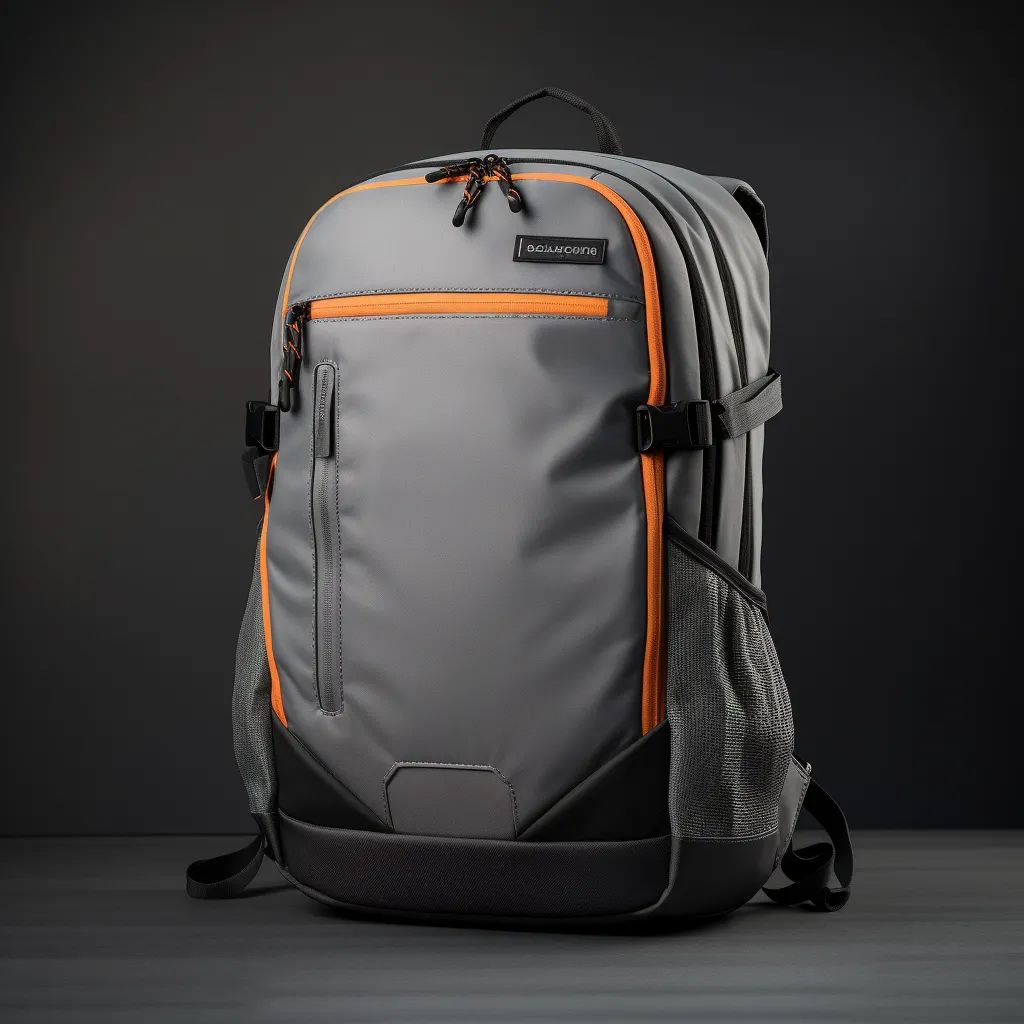
Backpacks are the classic volumetric cargo. Foam, board and shaped panels resist compression, so a carton of 20 structured backpacks can occupy far more space than its weight suggests. Since freight is commonly charged on the larger of volume and weight, the cube drives the cost, and the cube is a design and packing decision rather than a shipping detail.
The control is a trial carton built around the approved sample, from which four numbers are recorded: pieces per carton, exterior dimensions, gross weight and net weight. Those numbers drive the freight quotation, the pallet plan, the warehouse receiving cost and the pick-and-pack rate. A small change in packing method, such as nesting bags or compressing them within a stated limit, can change the cube materially across 500 units.
| Packing choice | Effect on cube | Effect on product risk | When to decide |
|---|---|---|---|
| Flat packed, straps tucked | Lower cube | Possible creasing, check appearance | Before the packing rules are written |
| Nested pairs in one polybag | Lower cube | Contact marks on shells | After a trial packing test |
| Individually boxed | Higher cube | Best presentation for retail | When retail packaging is required |
| Compression within a stated limit | Lower cube | Foam recovery must be verified | Only after a recovery test |
| Carton size reduced by 2 cm | Material across 500 units | No product effect | Before cartons are ordered |
Under FOB Xiamen, those decisions are made at origin but paid for by the buyer. Main freight, insurance, import clearance, duty and inland delivery all sit outside the production order. A packing specification agreed early lets the freight estimate be made from real carton data rather than from a render, which is where most freight surprises begin.
The 500-pcs scope article sets out the inclusion boundary in full. For a structured bag, the practical addition is that carton data should be requested as a sampling deliverable, so the freight and receiving costs are visible before the deposit is released.
Inspection points specific to backpacks
A generic bag checklist does not cover a backpack adequately. The standard is still AQL 2.5 to ISO 2859-1, with a named sampling plan and defect classification, but the checklist itself has to address the assembly. A critical defect in a backpack is usually a load-path failure: a strap attachment that pulls free, a buckle that releases, or a seam that opens under the stated weight.
- Strap attachment and reinforcement, checked at the stated load.
- Load path through the webbing, bar-tacks and panel joins.
- Zip function on every compartment, plus alignment of the tape.
- Panel symmetry and shape with the bag loaded and empty.
- Lining finish at the closing seam and inside each compartment.
- Foam and board presence against the approved sample.
- Decoration placement against the recorded coordinates.
Appearance matters differently for structured bags, because a shell crease or a twisted strap is visible in a photograph and in a review. Minor defects should be defined in advance so that inspectors and creators are not arguing about the same unit from different standards. Where a defect is found, the in-line check after the first 50-100 units is what prevents it becoming a lot-wide problem.
Inspection also guards the money. The 70% balance under T/T 30/70 falls at the inspection gate before cargo release, so the report is the authorisation for the largest payment in the programme. The QA and QC process explains how the inspection is structured and how its records support a later claim.
What can be compressed and what cannot
Creators ask where time can be saved, and the honest answer is that the calendar has flexible and rigid parts. What can be compressed: the creator's own review time, the RFQ cycle, the decision on decoration, and the use of stock materials instead of custom ones. Each of those saves real days without weakening the product, because they are administrative or specification decisions rather than production steps.
What cannot be compressed without risk: the two sampling rounds, the material preparation, the assembly sequence, the in-line check and the pre-shipment inspection. Each exists because skipping it moves the risk from a controlled stage to a finished lot. A backpack that skips its second sample round may still arrive on time, and it may also arrive with a strap geometry that has never been tested at load.
There is a particular trap in compressing the packing phase. If cartons are closed before the carton data has been verified, the freight estimate is based on an assumption, and any correction afterwards means handling 500 finished bags again. Recording pieces per carton, dimensions and gross weight during sampling avoids that entirely.
The final compression attempt is usually the delivery promise. Our advice is unchanged: publish a month, not a day, and hold the later part of it in reserve. Backers rarely remember a campaign that delivered a week early; they remember one that promised a date, missed it, and explained the miss in three updates. A calendar that absorbs early approvals and stock materials is realistic; one that absorbs them by removing inspection or by forcing the assembly sequence is how a campaign update gets written under pressure.
Planning backwards from a launch date
The most reliable way to plan a backpack is to start from the date the product must be sellable and work backwards through the chain. Assume a selling date, subtract receiving and inland delivery, subtract freight transit and clearance, subtract inspection and its possible rework loop, subtract the 35-50 day bulk window, subtract two sampling rounds with review and courier time, and subtract the technical-file period. What remains is the date the project must start.
- Fix the selling date first, then subtract every downstream stage.
- Add a contingency block for rework and for freight booking delays.
- Confirm material choices that affect the calendar before the RFQ goes out.
- Reserve the production slot when the sample is released for approval.
- Book the inspection before the target completion date.
- Publish a delivery month to backers, not a specific day.
Working through that list typically puts the start of work 4-6 months before the intended selling date, and the bulk of it is not sewing. Recognising that early changes what a creator does first: settle the technical file, choose stock materials where possible, and freeze the decoration. Those three actions save more calendar than any conversation about speed.
The arrangement behind the plan stays constant for every backpack we handle: 500 pcs per style and per colourway, sampling at 6-10 working days or 12-15 for complex builds, production 35-50 days, AQL 2.5 to ISO 2859-1 inspection, FOB Xiamen and T/T 30/70. A realistic calendar is built from those figures rather than negotiated against them.
Planning a structured backpack run? Send the drawings, the material plan, the target quantity and the launch date through the contact quotation form or to service@junyuanbags.com, and we will return a stage-by-stage calendar and a cost breakdown at 500 pcs.
Frequently Asked Questions
How long does small batch backpack production take?
production 35-50 days after the deposit and the approved sample. Before that, sampling takes 6-10 working days per round, or 12-15 for complex builds, and two rounds are normal for a padded backpack. After that come inspection, freight transit, import clearance, inland delivery and warehouse receiving. The full chain is typically measured in months. Two sampling rounds at 6-10 working days each, or 12-15 for complex builds, sit before the production window.
Why do backpacks need two sampling rounds?
The first round answers proportion and construction; the second confirms the corrections hold and that the build can be repeated. A 500-pcs lot is inspected against the approved sample, so the approved unit must be one the line can reproduce consistently rather than a hand-finished one-off. The second round also confirms that the corrected patterns can be repeated on the line, not merely built once.
What makes a backpack more expensive than a tote?
Construction complexity: panel count, compartment count, a frame or board, reinforced load paths, foam density, and the number of zips and hardware items. Materials and decoration follow, then quantity. A cost breakdown shows where the money sits, so reductions can target the largest driver instead of a flat discount. Materials, decoration and quantity follow, and the ranking tells you where a reduction will actually work.
When does the 35-50 day window start?
When the deposit has been received and the pre-production sample has been approved in writing. Campaign close, a draft purchase order or informal approval does not start it. Ask for four dates in writing: line start, target completion, inspection booking and the FOB Xiamen handover. A draft purchase order, a campaign close or an informal approval does not start the clock.
How is the deposit calculated on a 500-pcs backpack order?
Under T/T 30/70 the deposit is 30% of the product order. Multiply the quoted unit cost by 500, add packing and any one-time charges, then apply 30%. The 70% balance follows at the inspection gate before cargo release. Reserve separate cash for freight, duty, receiving and postage. Reserve the 70% balance separately, because it falls at the inspection gate before cargo release.
How much does a custom backpack cost per unit?
It depends on panel and compartment count, structural elements, foam density, hardware specification, shell and lining materials, decoration and quantity. Ask for a cost breakdown at 500 pcs rather than a single figure, then request volume pricing at named tiers under identical assumptions. Ask for a cost breakdown at 500 pcs rather than a single figure, so a reduction targets the largest driver.
Why is freight high for backpacks?
Structured backpacks are volumetric cargo: foam, board and shaped panels resist compression, so the cube usually exceeds the weight in chargeable terms. Get a trial carton built around the approved sample and record pieces per carton, exterior dimensions, gross weight and net weight before booking freight. A trial carton also tells the 3PL what to expect for receiving and storage.
What is inspected on a backpack run?
AQL 2.5 to ISO 2859-1 with a checklist covering strap attachment and reinforcement, the load path, zip function on every compartment, panel symmetry, lining finish, foam and board presence, and decoration placement against recorded coordinates. An in-line check after the first 50-100 units catches repeated errors early. Define critical, major and minor defects before the inspection is booked, so the report is not negotiable later.
Can the lead time be shortened?
Administrative stages can: the RFQ cycle, the creator's review time, the decoration decision and the choice of stock materials. The sampling rounds, material preparation, assembly sequence, in-line check and pre-shipment inspection cannot be skipped without moving risk into the finished lot. Administrative stages can be shortened; sampling, material preparation, assembly and inspection cannot. Publishing a conservative month is the cheapest schedule protection available to a creator.
Should I use custom materials on a first backpack?
Only if the material is central to the product. A custom dye, a special webbing weave or a moulded puller can add a mill or tooling minimum and extend the calendar. Stock references keep the schedule and reduce the chance of a substitution later. Stock references also make a later substitution less likely, because availability is broader. Confirm availability in the RFQ, because a late substitution can move the calendar.
How should I publish a delivery date to backers?
Publish a month rather than a day, and hold the later part of it in reserve. Plan backwards from the selling date through receiving, freight, clearance, inspection, the 35-50 day window and two sampling rounds. A conservative month survives early approvals; a tight date does not survive a rework loop. Work backwards through receiving, transit, clearance, inspection, the 35-50 day window and two sampling rounds.
What is the minimum order for a custom backpack?
500 pcs per style and per colourway. Two colourways of the same backpack are two commitments, and two capacities are two styles. Each carries its own deposit, its own 70% balance, its own inspection lot and its own inventory position. Two colourways of one backpack are two commitments, not one order with a mixed box. Each also has its own sampling, its own approval and its own carton specification to plan.
People Also Ask
How long does a 500-pcs backpack order take?
production 35-50 days, plus two sampling rounds at 6-10 working days each, or 12-15 for complex builds, plus inspection, transit, clearance and receiving.
Why do backpacks cost more than flat bags?
More panels, more compartments, structural elements, foam, hardware and a reinforced load path. Complexity, materials, decoration and quantity are the four drivers.
Do I need two samples for a backpack?
Usually yes. The first identifies construction issues, the second confirms the corrections and that the build can be repeated consistently.
When is the deposit due?
When the pre-production sample is approved and the order is released. It is 30% under T/T 30/70; the 70% balance falls at the inspection gate before cargo release.
How do I reduce backpack freight cost?
Improve the packing cube with a trial carton. Nesting, strap placement and carton size affect the volume, and volume usually sets the charge.
Can I skip the second sample round to save time?
It saves weeks and risks a lot. The approved sample is the inspection reference for 500 units, so it should be a repeatable production-intent build.
What is the biggest schedule risk?
Material choices made late. Custom dyes, special webbing and moulded hardware extend the calendar, so confirm them in the RFQ.