Bespoke Custom Bags for Kickstarter
What does bespoke bag development actually cost a campaign in time and money? A fully bespoke style with a new pattern, custom tooling and proprietary hardware needs 12-15 working days for sampling rather than the standard 6-10, then 35-50 days of bulk production after the deposit and approved pre-production sample. The minimum order stays at 500 pcs per style and colourway. This page sets out the development sequence, the cost drivers, the one-off charges buyers forget and the quality gates that keep a launch date intact.
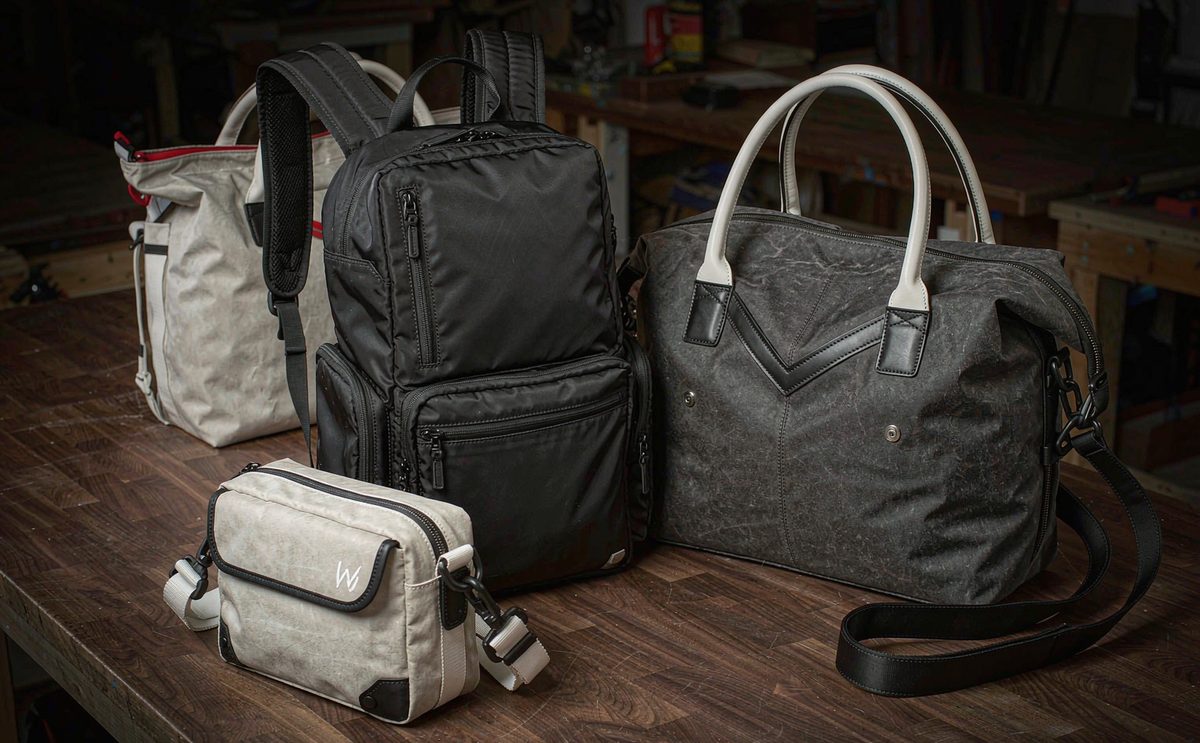
- What bespoke means in campaign sourcing
- Bespoke against modified stock: four depths
- Where the money goes in a bespoke programme
- From sketch to tech pack: the sequence
- Two-stage sampling and what each stage proves
- Material and hardware decisions that survive scale-up
- One-off charges buyers forget to budget
- Lead-time arithmetic for a bespoke launch
- Quality gates before and during bulk
- Compliance documentation for premium builds
- When bespoke is the wrong answer
- How to brief a bespoke RFQ
What bespoke means in campaign sourcing
In a crowdfunding sourcing context, bespoke does not simply mean a logo on an existing shape. It means the bag has no catalogue equivalent: a new pattern is drafted, panels are cut to a geometry that no stock tool already produces, and at least one component — a moulded shell, a machined buckle, a custom divider system, a branded zipper puller — is made for this programme alone. That is a fundamentally different commercial proposition from decoration, and it changes the quotation structure, the sampling window and the risk profile of the whole campaign.
Creators arrive at bespoke for three reasons. The first is product truth: the reward only works if the geometry is new, as with a camera insert layout or a golf stand mechanism. The second is defensibility: a shape nobody else sells is harder to copy once the campaign is public. The third is positioning, where a premium pledge tier needs a silhouette that photographs unlike anything in the category. All three are legitimate, but each one has to be paid for in development time, and the campaign timeline has to absorb that before the first backer sees a delivery estimate.
- Minimum order quantity
- 500 pcs per style / colourway
- Sampling
- 6-10 working days; 12-15 working days for complex bespoke builds
- Bulk production
- 35-50 days after deposit + approved pre-production sample
- Inspection
- AQL 2.5 to ISO 2859-1
- Trade term
- FOB Xiamen
- Payment
- T/T 30/70
- Production floor
- 4,950 m² SGS-verified, 137 staff, 7 lines, 149 machines
- Monthly capacity
- 200,000 pcs per month
- Programme contact
- service@junyuanbags.com
Key takeaways on bespoke bag development
- Bespoke adds development time, not just unit cost: budget 12-15 working days for sampling instead of 6-10.
- The 500 pcs minimum per style and colourway applies to bespoke builds exactly as it does to catalogue adaptations.
- Tooling, digitising, moulds and plates are one-off charges that sit outside the unit price and are usually quoted separately.
- Freeze the pattern and the hardware before the pre-production sample; changes after that point restart the clock.
- One hero SKU in one colourway is the safest way to run a first bespoke production window.
Bespoke against modified stock: four depths
Most creators who ask for bespoke do not need full bespoke. There are four recognisable depths of development, and moving down one level often saves three to five weeks without costing the campaign anything a backer would notice. The table below is the framework we use when a creator sends a sketch and asks what it will take to build.
| Depth | What actually changes | Sampling window | Right for |
|---|---|---|---|
| Stock plus decoration | Logo print, embroidery, woven label, hang tag on an existing shape | 6-10 working days | Entry tiers, add-ons, fast launches |
| Modified base pattern | Dimensions, pocket layout, handle length, lining colour adjusted on a proven base | 6-10 working days | Mid tiers where fit matters more than novelty |
| Semi-bespoke | New panel geometry on a proven construction platform, one custom trim | 10-12 working days | Premium tiers with a genuine functional claim |
| Full bespoke | New pattern from scratch, dedicated tooling, custom hardware, bespoke internal structure | 12-15 working days | Hero products where the shape is the invention |
The decision is rarely about ambition and almost always about the calendar. A campaign that closes in late November and promises March delivery can absorb a 12-15 day bespoke sampling slot plus 35-50 days of bulk. A campaign that closes in June and promises September delivery cannot absorb two sampling rounds on top of that. Choose the depth that fits the promise you are about to publish, because the promise is the part you cannot renegotiate later.
Where the money goes in a bespoke programme
A bespoke quotation has two halves: the unit price that scales with quantity, and the non-recurring engineering that does not. Creators who compare only the unit price routinely under-budget a first run by 8-15%, because the non-recurring half arrives as separate line items on a pro-forma invoice and is easy to miss. The table sets out the drivers that move a bespoke unit cost and the lever you actually control on each one.
| Cost driver | Effect on unit cost | Lever you control |
|---|---|---|
| Pattern and grading complexity | High — new patterns mean new cutting markers and slower first runs | Limit to one size; grade a second size only after the campaign closes |
| Custom hardware | High — moulded or machined parts carry tooling amortisation | Use a stock component with a custom finish instead of a custom shape |
| Material selection | Medium to high — technical fabrics and coatings cost more per metre | Pick one body fabric; use contrast material as a small panel only |
| Colourway count | Medium — each colourway carries the 500 pcs minimum | Launch one colourway, offer a second as a stretch goal |
| Decoration method | Low to medium — embroidery stitch count drives cost more than area | Keep stitch counts under roughly 8,000 and limit print colours |
| Internal structure | Medium — dividers, frames and padding add both material and labour | Simplify the internal layout before the pre-production sample |
| Packaging specification | Low to medium — retail cartons and inserts add per-unit cost | Decide packaging after the freight estimate, not before |
| Inspection and testing | Low — fixed cost per inspection day | Consolidate inspections into one pre-shipment visit at AQL 2.5 |
The pattern is worth a second look. Every additional size or colourway is not a variation of the same order; under the 500 pcs per style and colourway minimum it is effectively a second order with its own material buy, its own cutting marker and its own share of the line. A creator who launches one colourway and adds a second as a stretch goal keeps the first production window clean and converts the stretch goal into a genuine second run rather than a mid-production change.
From sketch to tech pack: the sequence
The gap between a good sketch and a buildable product is a tech pack. Until measurements, tolerances, stitch density, material codes and hardware references exist in one document, every quotation is an estimate and every sample is a guess. The sequence below is the order we run when a creator brings a bespoke idea to a production partner for the first time.
- Concept review: confirm the functional claim, the target pledge price and the target market, and kill any feature that cannot be built inside the price.
- Reference gathering: collect 3-5 reference images, plus any competitor product whose dimensions, weight or closure behaviour you want to match or beat.
- Dimensional brief: define external dimensions, volume in litres, weight target and the load the bag has to carry.
- Material shortlisting: nominate a body fabric, a lining, a webbing specification and a hardware finish, and confirm each is available at volume.
- Pattern development: the production team drafts the pattern and cutting markers, then flags any geometry that will not sew cleanly at speed.
- Prototype build: one unit is cut and sewn by hand, usually in a substitute fabric, to prove the construction.
- Structure sample: the prototype is rebuilt in the nominated production materials so fit, stiffness and closure behaviour can be judged.
- Pre-production sample: the final specification is built on the actual line, with production tooling, and becomes the approval reference for bulk.
Steps five to eight are where bespoke programmes either hold their schedule or lose it. A pattern that looks correct on screen frequently fails at the sewing station because a panel cannot be fed under a presser foot at the angle drawn. That is not a quality failure, it is a design-for-manufacture failure, and it is exactly why the structure sample exists. Budget one round of correction into the plan rather than assuming the first structure sample will be right.
Two-stage sampling and what each stage proves
Sampling is not a single event. In a bespoke programme each stage exists to answer a different question, and collapsing them into one sample is the most common cause of a slipped launch. The table sets out what each stage is for, what it proves and who needs to sign it off.
| Stage | Physical output | What it proves | Typical window |
|---|---|---|---|
| Concept and material review | Swatch card, hardware card, costed spec outline | The material and hardware direction is available and affordable | 2-3 working days |
| Prototype in substitute fabric | One hand-cut unit | The geometry can be assembled at all | 4-6 working days |
| Structure sample in production material | One unit in the nominated fabric | Fit, stiffness, closure behaviour and load path | 6-10 working days |
| Pre-production sample | One unit built on the line with production tooling | Bulk repeatability and the approval reference | Included in the 12-15 day window for complex builds |
| Campaign photo sample | Finished unit with final decoration and packaging | What backers will see on the campaign page | Shipped with or immediately after the PPS |
| Transit and pack test | Packed master carton | Carton survives the freight route to the fulfilment warehouse | 1-3 working days |
Every change requested after the pre-production sample is approved restarts part of the clock: a new fabric restarts material procurement, a new buckle restarts hardware procurement, and a new panel shape restarts the cutting marker. Treat approval as a contractual moment, not a preference.
Creators often ask whether they can skip the prototype and go straight to a structure sample. In practice that trades one week of calendar for a meaningful probability of a second full sampling round, because a geometry error discovered in production material costs the same material lead time as the prototype would have. Skipping the cheap stage is rarely the fast route. The sample prototyping page covers the same sequence from the sampling side.
Material and hardware decisions that survive scale-up
Bespoke programmes fail at scale more often than they fail in the sample room. A fabric that behaves beautifully in a hand-cut single unit can creep, curl or refuse to feed when 5,000 panels have to be cut and sewn in a week. That is why material selection for a bespoke build should be led by availability and repeatability at volume, not by the swatch that looked best on a mood board. Full canvas, nylon, recycled and vegan leather grades are compared on the material customisation page.
Hardware deserves the same discipline. A custom zipper puller, a machined buckle or an engraved metal plate is a tooling commitment with its own minimum and its own lead time, and it is the component most likely to arrive late. Where the budget allows only one bespoke element, spend it on the part a backer touches every day and keep the rest on proven stock components. Decoration choices follow the same logic; the compatibility of each method with each fabric family is set out on the print and embroidery page.
One-off charges buyers forget to budget
The non-recurring half of a bespoke quotation is the part that surprises first-time creators. These are not hidden charges; they are simply outside the unit price and therefore outside the mental model most people bring to a quotation. Ranges below are typical of programmes we coordinate and vary with complexity and material.
| Charge | Typical range | Notes |
|---|---|---|
| Pattern development and grading | USD 80-300 per pattern | Higher for multi-panel or framed constructions |
| Cutting die or laser tooling | USD 150-600 | Per distinctive panel shape; shared panels avoid repeat charges |
| Embroidery digitising | USD 80-250 per logo | Stitch count and size drive the price; rework is charged again |
| Print screens or plates | USD 40-120 per colour | Screen printing charges per colour per position |
| Custom hardware tooling | USD 300-1,200 | Moulded or die-cast components; amortised into unit price at volume |
| Metal plate or deboss tooling | USD 120-400 | One-off per artwork, reusable on re-orders |
| Pre-production sample units | Charged at sample-unit rate | Usually credited or absorbed against the bulk order |
| Compliance testing | USD 150-800 per material | Depends on target market and the standard invoked |
Most of these charges are recoverable in the sense that they are not paid twice: a digitised embroidery file, a cutting die and a deboss plate all remain available for a re-order. What is not recoverable is the calendar time. Ordering tooling late is the single most reliable way to lose three weeks, because hardware and moulded components sit upstream of the 35-50 day bulk window rather than inside it.
Lead-time arithmetic for a bespoke launch
Work backwards from the delivery promise rather than forwards from the campaign close. A bespoke programme needs 12-15 working days of sampling, one round of correction if the structure sample is not right first time, 35-50 days of bulk after the deposit and approved pre-production sample, one pre-shipment inspection at AQL 2.5, and then freight and inbound handling at the fulfilment warehouse. Add the ocean transit and customs clearance for the destination market before you publish a month, not a date.
The practical implication is that a bespoke reward needs its sampling slot booked before the campaign launches, not after it funds. Creators who wait for funding before starting development spend the first six weeks of the funded period on sampling and then discover the bulk window alone consumes the remaining schedule. Pre-booking the sampling slot against a refundable deposit is the cheapest insurance available on a bespoke programme. The campaign bag guide walks through the same timeline for mixed catalogues.
Quality gates before and during bulk
Bespoke builds carry more inspection risk than catalogue adaptations because there is no historical defect profile to work from. Everything is new: the pattern, the tooling, the operator learning curve. That argues for more checkpoints in the first run, not fewer, and for checkpoints that are defined in the tech pack so both sides are measuring the same thing.
- Incoming material check: fabric weight, colour shade band and coating adhesion verified against the approved swatch before cutting starts.
- First-piece approval: the first unit off the line is measured against the tech pack and signed off before the run continues.
- In-line stitching audit: stitch density, seam allowance and bar-tack placement checked at defined intervals on each of the 7 lines.
- Hardware function test: zips cycled, buckles loaded, strap adjusters pulled to a defined load, on a sample drawn from the run.
- Decoration inspection: registration, colour match and adhesion checked against the approved strike-off under consistent lighting.
- Pre-shipment inspection at AQL 2.5 to ISO 2859-1: the statistical gate that decides whether the shipment is released.
The full inspection protocol, including how to read an AQL 2.5 result and what happens at a borderline fail, is documented on the QA and QC page. What matters for a bespoke brief is that tolerances are written down before the first unit is cut. A bespoke bag with no stated tolerance is a bag where every disagreement becomes a negotiation.
Compliance documentation for premium builds
Premium and bespoke rewards attract more scrutiny from marketplaces, backers and, in some jurisdictions, regulators. Documentation should be planned in parallel with sampling rather than requested after bulk, because a test report on a material that later changes makes the report worthless. Build the documentation set into the RFQ so the cost and the lead time are visible from the start.
- CPSIA and Prop 65 documentation where the reward is shipped into the United States, particularly for items a child could access.
- REACH and EU GPSR conformity documentation for rewards delivered into the European Union.
- OEKO-TEX Standard 100 certificates for body fabrics and linings that sit against skin.
- GRS transaction certificates where a recycled content claim appears on the campaign page.
- Care labelling and fibre composition declarations that match the actual materials used in bulk.
There is a commercial angle here too. A substantiated claim is a marketing asset and an unsubstantiated one is a liability. If the campaign page says recycled, waterproof or vegan, the corresponding certificate or test method should exist as a document before the page goes live, and it should be named in the tech pack so the bulk build uses the tested material.
When bespoke is the wrong answer
Bespoke is a tool, not a virtue. There are campaigns where the honest recommendation is to take a proven shape, change three things and spend the saved weeks on photography and backer communication. The list below describes the situations where we steer creators away from full bespoke.
- The delivery promise leaves less than roughly 90 days between campaign close and the first shipment.
- The reward is an add-on or a stretch goal rather than the hero product.
- The differentiating feature is a print, a colour or a lining pattern, none of which need a new pattern.
- The pledged volume is close to the 500 pcs minimum, so tooling amortisation would dominate the unit cost.
- The creator has not yet validated that backers want the product at the target price.
- The functional claim can be met by a modified base pattern at a third of the development time.
The most expensive mistake in a bespoke programme is paying for tooling on a product that has not yet been validated with backers. Sample the concept, run the campaign against a rendered or prototype visual, and commit to tooling once the pledge volume justifies it.
How to brief a bespoke RFQ
A bespoke quotation is only as accurate as the brief behind it. The difference between a two-day quote turnaround and a two-week one is almost always whether the RFQ contained dimensions, materials and quantities, or just a rendering. The checklist below is what a production partner needs in order to price a bespoke build without guessing.
- Sketches or reference images, with a note on which features are mandatory and which are negotiable.
- Target dimensions in centimetres and target volume in litres, plus a target empty weight.
- Nominated body fabric, lining, webbing and hardware finish, or a request for recommendations.
- Decoration method, artwork files and logo placement for each position.
- Quantity per style and colourway, and the best estimate of total campaign volume.
- Target landed unit cost in USD and the intended retail or pledge price.
- Destination market, delivery window and any compliance standard that applies.
- Packaging requirement: polybag only, retail carton, or fulfilment-ready master pack.
If half of that list is unknown, say so in the RFQ rather than leaving it blank. An explicit unknown gets a recommendation attached to it; a blank gets an assumption, and assumptions are what turn into change orders. Send the brief to our sourcing team for a costed development plan, or browse the full category map first if the shape is still open.
Get a bespoke development plan and quotation
Send sketches, dimensions, target quantity and your delivery window. As your sourcing partner we will return a development depth recommendation, a non-recurring charge schedule, a sampling plan and a unit-cost band at 500 pcs. Email service@junyuanbags.com or use the quote form.
- Custom bags for Kickstarter
- Bag manufacturing programme for campaign creators
- Low MOQ bag production for creators
- Crowdfunding rewards fulfilment
- Indiegogo crowdfunding bags
- Crowdfunding bag guide
Frequently Asked Questions
How long does bespoke bag sampling take for a Kickstarter campaign?
Bespoke builds with a new pattern or custom hardware run 12-15 working days, against the standard 6-10 working days for a modified stock shape. That window covers the prototype, the structure sample and the pre-production sample. If the structure sample needs a correction round, add roughly another week before the 35-50 day bulk window can start.
What is the minimum order quantity for a bespoke custom bag?
The minimum is 500 pcs per style and colourway, the same as a catalogue adaptation. A second colourway is treated as a second order rather than a variation, so it carries its own 500 pcs minimum and its own material buy. Launching one colourway and holding a second as a stretch goal keeps the first production window clean.
Does bespoke development cost more per unit than a modified stock bag?
Usually yes, by two mechanisms. New patterns mean slower first runs and higher cutting waste, and custom hardware carries tooling amortisation across only 500 pcs. Expect the gap to narrow sharply on a re-order, because the pattern, digitising, dies and plates are already paid for and only the unit cost remains.
What one-off charges should a creator budget for on a bespoke bag?
Budget for pattern development at USD 80-300, cutting dies at USD 150-600, embroidery digitising at USD 80-250 per logo, print screens at USD 40-120 per colour, and custom hardware tooling at USD 300-1,200. Compliance testing adds USD 150-800 per material depending on the target market and standard.
Can a bespoke bag be sampled before the campaign launches?
Yes, and it is strongly recommended. Booking the 12-15 day sampling slot before launch means the funded period starts with an approved pre-production sample rather than with development. Creators who wait for funding typically spend the first six weeks on sampling and then find the 35-50 day bulk window alone consumes the remaining schedule.
Which inspection standard applies to a first bespoke production run?
Pre-shipment inspection runs at AQL 2.5 to ISO 2859-1, covering appearance, construction, function and packing. Bespoke runs also warrant a first-piece approval and an in-line stitching audit, because there is no historical defect profile for a new pattern. Tolerances should be written into the tech pack before the first unit is cut.
How many colourways should a bespoke bag launch with?
One. Each colourway carries the 500 pcs minimum, so two colourways at launch means 1,000 units before a single backer has pledged. Launch the hero colourway, then release a second as a stretch goal; that converts the stretch into a genuine second production run instead of a change order inside the first one.
What files are needed to quote a bespoke bag accurately?
Send sketches or reference images, dimensions in centimetres, target volume in litres, nominated fabric and hardware, artwork files with placement, quantity per colourway, target landed cost in USD and the destination market. A brief carrying all 8 items typically turns around in 2 working days; a rendering on its own adds 1-2 weeks of clarification.
Is a bespoke build realistic for a first-time campaign creator?
It is realistic if the calendar allows roughly 90 days or more between campaign close and first shipment, and if the reward is the hero product rather than an add-on. For a first campaign we usually recommend semi-bespoke: new panel geometry on a proven construction platform, one custom trim, sampled in 10-12 working days.
Can custom hardware be avoided on a bespoke bag?
Yes, and it is often the smartest saving. A stock buckle, slider or puller with a custom finish, colour or laser mark delivers most of the brand impression at a fraction of the cost and usually 2-3 weeks faster, because it removes the mould lead time that sits upstream of the 35-50 day bulk window.
What compliance documents are needed for a premium bespoke reward?
For the United States, plan on CPSIA and Prop 65 documentation; for the European Union, REACH and EU GPSR conformity documentation. OEKO-TEX Standard 100 certificates cover fabrics against skin, and GRS transaction certificates substantiate any recycled content claim. Request these during sampling so the bulk build uses the tested material.
How does bulk production timing work after a bespoke sample is approved?
production 35-50 days after the deposit and the approved pre-production sample, on FOB Xiamen terms with T/T 30/70 payment. Material procurement and any custom hardware sit immediately after approval, so changes requested at that point restart the clock. Pre-shipment inspection at AQL 2.5 follows, then ocean freight and inbound handling.
People Also Ask
Is bespoke worth it for a small Kickstarter bag campaign?
It depends on whether the shape is the invention. If the differentiating feature is a print, colour or lining, a modified stock pattern sampled in 6-10 working days delivers the same backer experience weeks faster. Bespoke earns its 12-15 day window when the geometry itself is the product claim.
Why do bespoke bag samples take longer than catalogue samples?
Because there is no existing pattern, cutting marker or tooling. Each of those has to be created and validated before bulk, and custom hardware has a procurement lead time that sits upstream of the 35-50 day production window rather than inside it.
Can I change the design after the pre-production sample?
Technically yes, commercially it is expensive. A new fabric restarts material procurement, a new panel restarts the cutting marker, and a new buckle restarts hardware procurement. Treat pre-production sample approval as the contractual freeze point for the specification.
How much should I budget for tooling on a custom bag?
A realistic allowance for a first bespoke run is USD 800-2,500 in total non-recurring charges, covering pattern development, cutting dies, digitising, print screens and one custom hardware item. Most of it is reusable on a re-order, so the second run carries unit cost only.
What happens if a bespoke sample fails the structure test?
The pattern is corrected and a second structure sample is built, typically adding 4-6 working days. This is normal and is why the plan should carry one correction round. Discovering the same issue in bulk instead costs the full material lead time plus a production slot.