Bag Campaign Video Script: The 90-Second Pitch That Converts Backers
A bag campaign video converts when it runs six beats in 90 seconds: a five second hook on the problem, fifteen seconds establishing who has it, twenty seconds revealing the bag, twenty-five seconds proving it works, fifteen seconds on the ask, and a ten second close. Longer videos lose the viewer before the reveal and shorter ones skip the proof, which is the beat that actually moves a pledge. This article gives you the beat structure with timings, an on-screen shot list for each beat, the caption and voiceover rules, and a full script template you can adapt.
- Why 90 seconds and how backers actually watch
- The six-beat structure with timings
- Beat one, 0 to 5 seconds: the hook
- Beat two, 5 to 20 seconds: the problem and who has it
- Beat three, 20 to 40 seconds: reveal the bag
- Beat four, 40 to 65 seconds: proof, not adjectives
- Beat five and six, 65 to 90 seconds: the ask and the close
- The on-screen shot list for each beat
- Voiceover and caption discipline
- Script mistakes that lose backers
- Social cuts and how to tell whether the video works
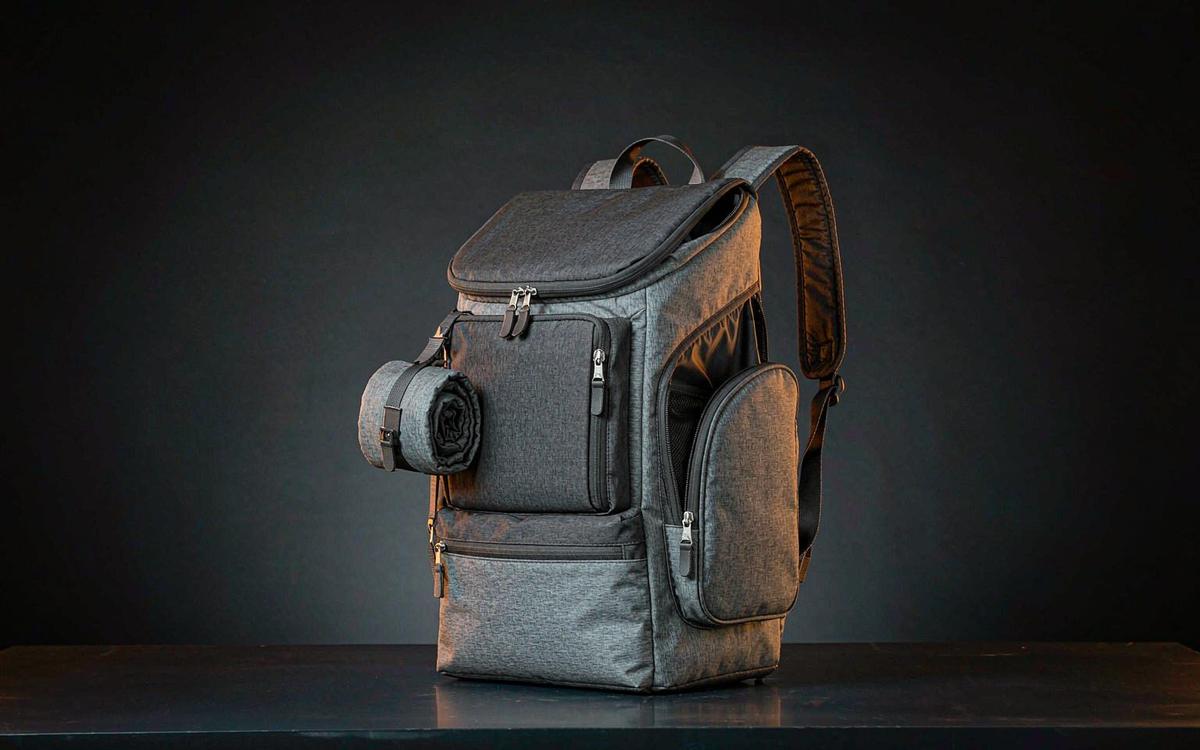
Most campaign videos fail for a structural reason rather than a production one. They open with the creator, spend forty seconds on the origin story, reveal the product at the halfway point, and run out of time before showing anything that would convince a sceptic. Fixing the structure is free. This article gives you a beat sheet with timings, so the video does the work of a sales page in the order a viewer can actually follow.
Why 90 seconds and how backers actually watch
Ninety seconds is not an aesthetic preference, it is a compromise between two observed behaviours. The first is abandonment: a large share of viewers decide within the first 5 to 8 seconds whether to keep watching, and the drop-off continues steeply through the first thirty seconds. The second is the need for evidence: a viewer will not pledge on a bag they have only seen from one angle, and establishing that the pocket layout works takes real screen time.
Below 60 seconds you can hook and reveal but you cannot prove, and an unproven bag converts badly among anyone who is not already a friend of the creator. Above 120 seconds the completion rate falls away and the extra time buys you material that almost nobody reaches. Between 80 and 100 seconds you can fit all six beats, which is the shortest structure that includes a genuine proof section. If your script runs long, cut the origin story rather than the proof.
- First 5 seconds decide everything, so the hook must be the problem, not your name or your logo.
- Completion rate matters more than view count; a video watched to the end by 30 per cent of viewers outperforms one clicked by twice as many.
- Sound off is the default, so every claim has to survive with the audio muted.
- Mobile is the majority, so text must be legible at half screen width and details must be shot close.
One more practical point about the window: the platform's own guidance and most successful campaigns converge on the short end, and the reason is that the video is usually watched once, in a feed, on a phone, by someone who has not decided to care yet. You are not making something to be studied. You are making something to be understood at a glance and then confirmed on the page, where the detail lives and where the reader is already self-selected.
The six-beat structure with timings
The structure is a beat sheet, not a script: it tells you what has to happen in each window and how many seconds it gets. Once the beats are fixed, the words are much easier to write, because you are no longer staring at a blank page, you are filling six defined boxes. The six beats are hook, problem, reveal, proof, ask and close. The reveal sits at roughly a quarter of the way through rather than at the halfway point, which is the single biggest difference between this structure and a typical first-time campaign video.
| Beat | Window | Purpose | On screen | Words |
|---|---|---|---|---|
| 1 Hook | 0:00 to 0:05 | Name the problem in one image | The failure, not the product | 8 to 12 |
| 2 Problem | 0:05 to 0:20 | Show who has it and why it persists | Two or three frustrating real moments | 35 to 45 |
| 3 Reveal | 0:20 to 0:40 | Present the bag and its one idea | Slow rotation, then worn on body | 45 to 55 |
| 4 Proof | 0:40 to 1:05 | Demonstrate the claim physically | Load it, wear it, stress it, measure it | 55 to 70 |
| 5 Ask | 1:05 to 1:20 | Tiers, price and what backing funds | Tier cards and the production fact | 35 to 45 |
| 6 Close | 1:20 to 1:30 | One sentence and the pledge prompt | Product plus campaign name | 10 to 15 |
The word counts are deliberate. Spoken English runs at roughly 130 to 150 words per minute, so a 90 second script has room for about 190 to 220 words of voiceover in total. That is far less than most first drafts contain, and the usual cause is trying to say everything about the product in the reveal beat. The discipline is to give each feature exactly one sentence in the reveal and to save the detailed demonstration for the proof beat, where showing replaces telling.
Beat one, 0 to 5 seconds: the hook
The hook is a single image with a single line, and it must be the problem your bag solves rather than the bag itself. A backpack hanging on a door hook with a strap visibly frayed. A commuter trying to close a bag that is 2 cm too small for their laptop. A gym bag with a wet towel sitting against a clean shirt. The viewer should recognise their own experience in under two seconds, because recognition is what buys you the next thirty.
Three openers work consistently and everything else underperforms. The visible failure: show the thing that annoys people, unbranded and everyday. The impossible choice: present two things the backer wants that no current product gives them together, such as a bag that fits a 16 inch laptop and still goes under an airline seat. The number: open on a measurement that reframes the category, such as a 900 gram bag that carries 18 litres. What does not work is an origin story, a logo animation, or a shot of the creator talking to camera.
If your first five seconds contain your brand name, you have spent the only seconds you were guaranteed on information nobody asked for.
Write three hook options and test them. This is the cheapest test available to you: run each as a six second pre-roll or a social clip to a few hundred people from your waitlist, and measure the click-through to the campaign preview. Hooks vary far more than any other part of the video, and a hook that doubles click-through is worth more than any amount of polishing later in the script. Our article on bag campaign product validation covers how to run that kind of small test properly.
Beat two, 5 to 20 seconds: the problem and who has it
The problem beat earns the right to show a product. It needs to do three things: establish that the problem is common, that it is persistent, and that the viewer is the person who has it. The most efficient way to do all three is to show two or three specific moments rather than to describe the problem abstractly. Not bags are badly designed, but the pocket is 18 cm wide and your phone is 16 cm tall, so you dig for it at the bus stop every morning.
Specificity is the whole mechanism here. A general complaint is forgettable and a specific one is recognisable, and recognition is what makes the viewer feel the product was built for them. If you are building for a niche, this beat is where you signal membership: use the vocabulary the community actually uses, show the specific object they carry that generic bags ignore, and name the situation they have all complained about. Niche audiences detect a generalist script instantly, and the proof of that is in the comments rather than in the pledges.
- Show two or three moments, not one long explanation; each should be under four seconds of screen time.
- Name a measurement where possible, because numbers are remembered and adjectives are not.
- Use the community's vocabulary if you are in a niche, and avoid category-generic language.
- Do not blame a competitor by name; describe the failure, and let the viewer supply the brand.
Beat three, 20 to 40 seconds: reveal the bag
Now the product, and the discipline is one idea. A bag video that lists nine features in twenty seconds lands none of them, because the viewer retains roughly one thing from any short sequence. Choose the single claim that separates your bag from what the viewer carries now, state it in one sentence, and then show it. Everything else is either supporting detail inside that claim or material for the proof beat.
The visual grammar is simple and reliable: a slow rotation on a neutral background to establish the object, then a cut to it worn on a body to establish scale, then a cut to the interior to establish capacity. Three shots, roughly six seconds each, and the viewer now knows what it is, how big it is and what goes inside. Resist the temptation to add a fourth establishing shot; the rotation, the worn shot and the interior are the three questions the viewer actually has.
State the scale explicitly in this beat, in words and on screen. Say the volume in litres, say the laptop size it fits, and say the weight in grams. Scale is the most common unanswered question in bag campaigns and it is the easiest one to answer, and answering it in the video removes a large share of the comments you would otherwise spend the campaign answering by hand.
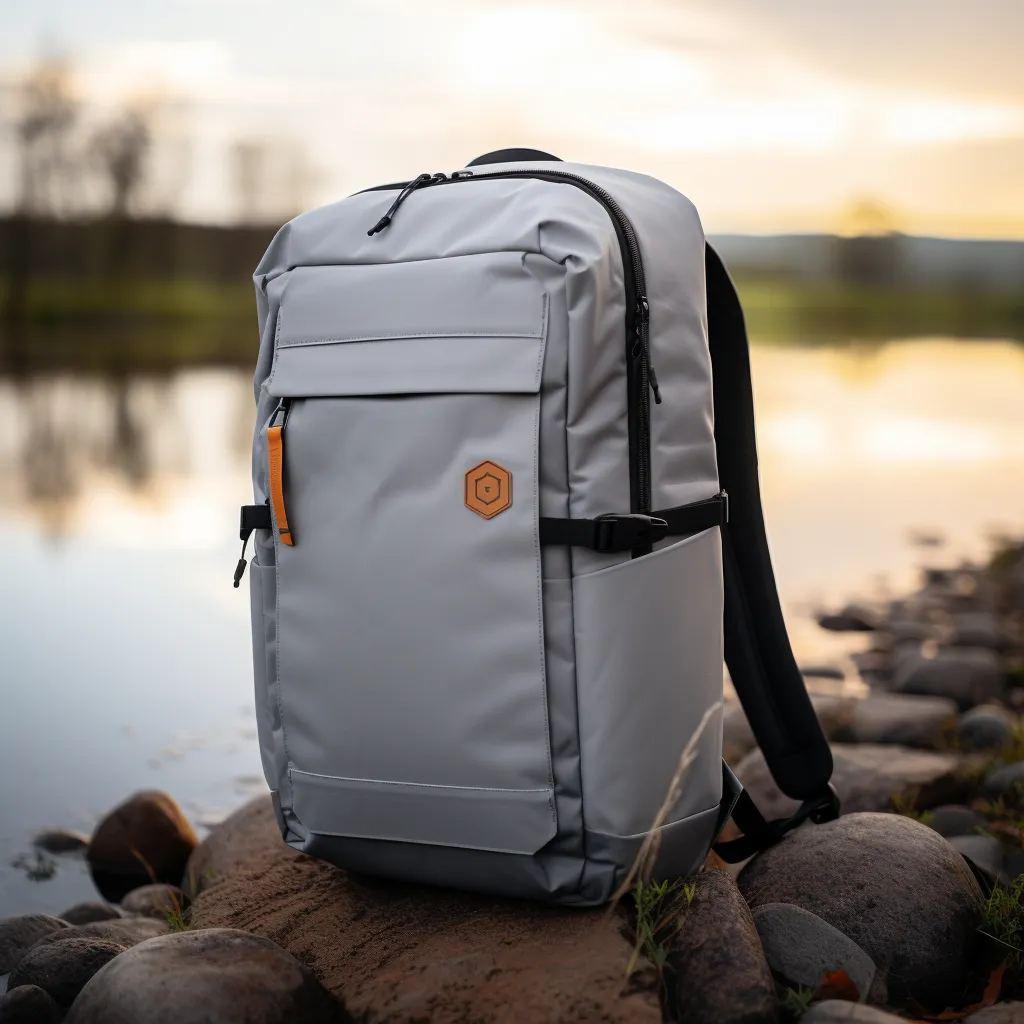
Beat four, 40 to 65 seconds: proof, not adjectives
The proof beat is the longest and the most important, and it is the beat that gets cut when a script runs long. It exists because nobody believes a creator's adjectives about their own product. What they believe is demonstration. If the bag is water resistant, put it under a tap. If the strap is comfortable, load it with 8 kg and wear it. If the pocket layout works, empty the contents onto a table and put them back in one motion. Each demonstration takes about five seconds and replaces a sentence nobody would have trusted.
- Pick three claims to prove, not eight. Three demonstrations that land beat eight that blur.
- Prove the claim physically: under a tap, loaded with weight, opened and closed repeatedly, measured against a stated object.
- Show the mechanism, not just the result. A cross-section or a close-up of the seam construction proves more than a wet bag.
- Use a real sample, because a render cannot be demonstrated and a prototype may not represent the production bag.
- State the standard: if you reference testing or inspection, name it, such as AQL 2.5 to ISO 2859-1.
One of the three demonstrations should be about durability, because durability is the unspoken doubt behind every crowdfunded bag. Backers are not primarily worried that the bag will not be comfortable, they are worried it will fall apart in six months. Showing a strap being pulled, a zip being cycled twenty times, or a seam being stressed addresses that doubt directly. If you have a production sample rather than a hand-finished prototype, say so on screen, because informed backers know the difference and it is a credibility signal.
Beat five and six, 65 to 90 seconds: the ask and the close
The ask beat is where most videos go vague, because creators are uncomfortable asking for money on camera. Be specific: name the entry price, name what the money funds, and name the delivery window. Backers are not put off by a direct ask, they are put off by uncertainty about what they are buying and when it arrives. A sentence that says 89 dollars funds the first production run of 500 units, shipping in March is doing three jobs at once and none of them is offensive.
The production fact is the most under-used line in campaign videos. Saying that backing funds a first production run tells the viewer this is a real manufacturing commitment rather than a concept, and naming the quantity implies you have done the planning. If you have already completed sampling, say it: the bag you have been looking at is a production sample, not a render. That single clause answers the largest unspoken objection to any hardware campaign.
- Name the entry price and what it includes, on screen and spoken, so there is no ambiguity.
- Name the delivery window, because a video that avoids dates creates doubt rather than avoiding commitment.
- State the production fact: sampling complete, first run at 500 pcs per style and per colourway, shipping window stated.
- Close with one sentence and the pledge prompt; do not add a new argument in the final ten seconds.
If you offer more than one tier, resist showing all of them. Name the entry price and the most popular tier, and let the page carry the rest, because a viewer who has to choose between four prices inside ten seconds will usually choose to decide later, and later rarely arrives.
The on-screen shot list for each beat
A 90 second video needs roughly 18 to 24 distinct shots, which sounds like a lot and is achievable in a single shooting day if you plan the list in advance. The list below assumes one location, one model, one bag and a small table of props. Shoot in the order of the list rather than the order of the script where it saves setup time, and slate each take with the beat number so the edit is mechanical rather than creative.
| Beat | Shots | Setup | Duration |
|---|---|---|---|
| 1 Hook | One failure shot | Practical lighting, hand-held is fine | 4 to 5 sec |
| 2 Problem | Three moment shots | Two locations maximum, natural light | 12 to 15 sec |
| 3 Reveal | Rotation, worn, interior | Neutral background, turntable or slow pan | 18 to 20 sec |
| 4 Proof | Three demonstration shots | Close-up lens, tripod, props prepared | 22 to 25 sec |
| 5 Ask | Tier cards plus one product shot | Graphic overlay, product static | 12 to 15 sec |
| 6 Close | One hero shot plus end card | Same setup as reveal, add campaign name | 8 to 10 sec |
Two practical notes on the shoot. Use a close-up lens for the proof beat, because demonstration shots fail when they are framed too wide to see the detail that matters. And shoot the interior sequence with the bag open and lit from inside, which usually means a small light placed inside the main compartment, because an interior shot lit from outside is almost always too dark to read on a phone screen.
Slate every take with its beat number and shoot a few seconds of handle at each end, so the edit has room to breathe and the cut does not feel clipped. It also helps to shoot the whole list twice: once at the intended pace and once held roughly two seconds longer per shot, which gives the editor options when a line runs long in the final narration.
Voiceover and caption discipline
Assume the video is watched muted, because for most viewers it is. That means every factual claim needs to appear as on-screen text at the moment it is spoken, and the text must be legible at half screen width. Use a single font, a minimum effective size of around 5 per cent of frame height, and high contrast against the footage. Burn the captions in rather than relying on platform auto-captioning, which is often inaccurate on technical terms and hardware names.
On voiceover, write for the ear rather than the eye. Short sentences, concrete nouns, no subordinate clauses. Record at a consistent pace of about 140 words per minute, which is slower than natural conversation and gives the viewer time to read the caption and watch the image at the same time. If you are narrating yourself, record standing up and do several full takes rather than patching sentence by sentence, because patched narration has audible seams that viewers notice without being able to name them.
Music sits under all of this and deserves one decision rather than a long debate. Choose something with a steady mid-tempo pulse and no vocal, because a vocal competes with the narration for the same cognitive channel and viewers will retain neither. Keep the level well below the voice, around 15 to 20 per cent of the voiceover level, and duck it further under any line that carries a number. If you are using licensed material, confirm the licence covers commercial campaign use, which is a different right from personal or non-commercial use.
Finally, produce one version with open captions and one without, rather than one version and a separate subtitle file. Open captions guarantee legibility on every placement, while the clean version is what you want for anything embedded on your own page where the viewer is more likely to have sound on. The two versions are a single render setting apart, and having both avoids the common problem of a burned-caption version looking cluttered when it is embedded at large size.
Script mistakes that lose backers
The most common mistake is the origin story in the first fifteen seconds. Founders care deeply about why they started the project and backers care almost not at all, at least not until they have decided whether the product is worth their money. Move the origin to the campaign page where a curious visitor can choose to read it. The second mistake is listing features instead of proving them, which produces a video that feels like a spec sheet read aloud.
The third mistake is the unrevealed product, where the bag first appears at 0:45 because the first half was context. By then a large share of viewers have gone. The fourth is inconsistent scale, where the bag looks large in one shot and small in another because the framing changed; shoot all scale comparisons with the same reference objects in the same positions. And the fifth is the soft close, where the final ten seconds apologise for asking instead of stating the price and the date plainly.
There is a sixth mistake that is specific to bags and worth calling out separately: shooting the bag empty and structured. A bag stuffed with filler for the shoot looks structured and substantial, and arrives at the backer's door flat and slouchy, and the difference is a legitimate complaint. Shoot it as it will be delivered, with realistic contents at most, and if you want a fully packed look, say on screen that the bag is shown packed. The same principle applies to colour: grade the footage honestly rather than pushing saturation, because an over-saturated bag is the most common cause of it looks different in person.
The fix for all six is the same process, and it is cheap: show the finished edit to three people who are not friends of the project and ask each one to say, in one sentence, what the bag does and when it ships. If any of them cannot, the script has not done its job, and the failure will be in one of the six places above. That test takes fifteen minutes and reliably catches the difference between a video that feels good to the creator and one that works on a stranger.
Key takeaways
- H
- o
- o
- k
- o
- n
- t
- h
- e
- p
- r
- o
- b
- l
- e
- m
- ,
- r
- e
- v
- e
- a
- l
- b
- y
- 0
- :
- 2
- 0
- ,
- p
- r
- o
- v
- e
- t
- h
- r
- e
- e
- c
- l
- a
- i
- m
- s
- p
- h
- y
- s
- i
- c
- a
- l
- l
- y
- ,
- a
- n
- d
- s
- t
- a
- t
- e
- t
- h
- e
- p
- r
- i
- c
- e
- a
- n
- d
- t
- h
- e
- d
- e
- l
- i
- v
- e
- r
- y
- w
- i
- n
- d
- o
- w
- o
- u
- t
- l
- o
- u
- d
- .
Social cuts and how to tell whether the video works
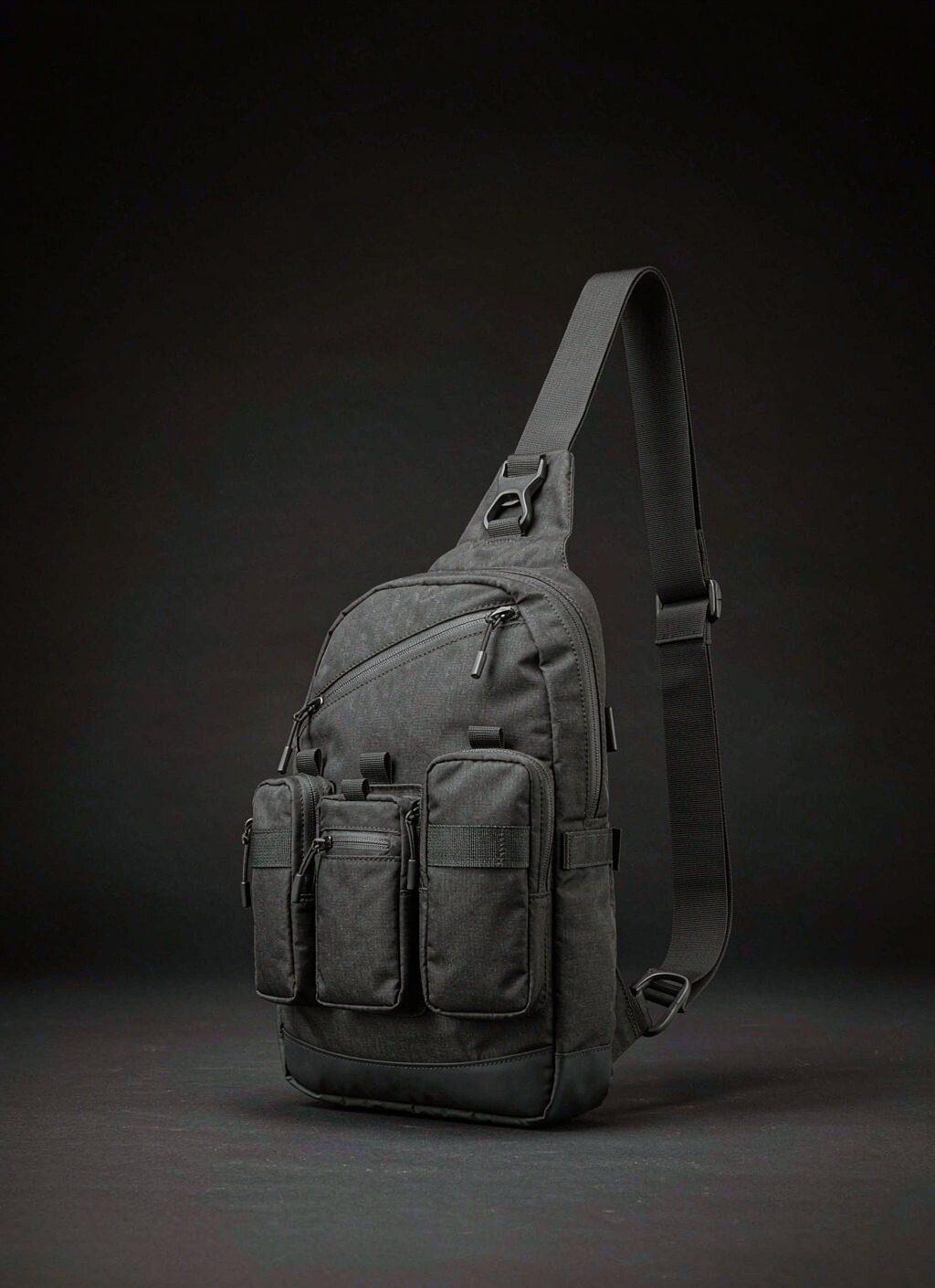
One shoot should produce more than one asset. Cut a 6 second hook clip for pre-roll and story placement, a 15 second proof clip showing the single most convincing demonstration, and a 30 second mid-campaign clip that opens on the proof rather than the problem, for people who have already seen the full video. Each cut needs its own caption pass, because a clip that was designed to be understood with 85 seconds of context usually is not.
Measurement is straightforward if you set it up before launch. Track completion rate to the end, click-through from the video to the pledge flow, and the ratio of pledges to video views. A completion rate above 35 per cent and a view-to-pledge ratio above 3 per cent are reasonable targets for a warm audience. If completion is high and conversion is low, the problem is in the ask beat or the pricing, not in the video. If completion is low, the problem is in the hook, and a new hook is a half-day of work rather than a reshoot.
Plan the shoot around the sample rather than around the calendar. Sampling runs 6 to 10 working days for a standard style and 12 to 15 working days for complex constructions, and the video should be shot on the production sample rather than a prototype or a render. If you are still at the specification stage, our custom bags for Kickstarter page explains what goes into a specification that can be sampled, and the crowdfunding bag guide places the video in the wider pre-launch timeline.
Send us your script and your specification, and we will tell you which claims are provable on the production sample and how quickly we can get one to you.
Frequently Asked Questions
How long should a bag campaign video be?
Between 80 and 100 seconds. Below 60 seconds you cannot fit a proof section, and above 120 seconds completion rates fall away. Spoken English runs at 130 to 150 words per minute, so budget 190 to 220 words of voiceover.
What should the first five seconds of a campaign video show?
The problem, not the product and not your brand. A visible failure works best: a frayed strap, a bag that will not close, a phone lost at the bottom of a pocket. Test three hook options on your waitlist before committing.
When should the bag first appear in the video?
By 0:20 at the latest. Videos that reveal the product at 0:45 have already lost a large share of viewers. The standard structure puts the reveal at roughly a quarter of the way through.
How many features should the reveal beat cover?
One idea. Viewers retain roughly one thing from a short sequence, so state the single claim that separates your bag from what they carry now, then show it. Detail belongs in the proof beat.
What counts as proof in a bag campaign video?
Physical demonstration: put it under a tap, load it with 8 kg, cycle the zip twenty times, empty and repack it in one motion. Three demonstrations that land beat eight that blur, and one should address durability.
Should I say the price in the video?
Yes. Name the entry price, what backing funds and the delivery window. Vagueness about money and dates creates doubt, while a direct ask with a stated delivery month does three jobs at once and offends nobody.
How many shots does a 90 second bag video need?
Roughly 18 to 24 distinct shots, achievable in one shooting day with one location, one model and a small prop table. Use a close-up lens for the proof beat and light interiors from inside the compartment.
Do I need captions if the voiceover is clear?
Yes. Most viewers watch muted, so every factual claim needs on-screen text at the moment it is spoken, burned in rather than auto-generated, at roughly 5 per cent of frame height for phone legibility.
Should the video be shot on a prototype or a production sample?
The production sample. Sampling runs 6 to 10 working days for standard styles and 12 to 15 for complex ones, which is fast enough that shooting a render or a hand-finished prototype is a choice rather than a necessity.
What is a good completion rate for a campaign video?
Above 35 per cent to the end is a reasonable target for a warm audience, with a view-to-pledge ratio above 3 per cent. High completion with low conversion points to the ask beat or pricing; low completion points to the hook.
How many social cuts should I make from one shoot?
Three: a 6 second hook clip for pre-roll, a 15 second proof clip built on the strongest demonstration, and a 30 second mid-campaign clip that opens on the proof for people who have already seen the full video.
Can I mention the production minimum in the video?
Yes, and it helps. Saying that backing funds a first run at 500 pcs per style and per colourway signals real manufacturing planning, and noting that inspection sits at AQL 2.5 to ISO 2859-1 answers a durability doubt.
People Also Ask
What is the best length for a Kickstarter bag video?
80 to 100 seconds. Long enough for a real proof section, short enough that viewers reach the end.
What are the six beats of a campaign video?
Hook, problem, reveal, proof, ask and close. Hook gets 5 seconds, reveal starts by 0:20, and proof gets the longest window at 25 seconds.
How many words of voiceover fit in 90 seconds?
About 190 to 220 words, recorded at roughly 140 words per minute so viewers can read captions and watch the image at the same time.
Should I open the video with my brand?
No. Open with the problem. Brand and origin story belong later or on the campaign page, where a curious visitor can choose to read them.
What proves a bag is durable on video?
Show a strap being pulled, a zip cycled twenty times, or a seam stressed. Durability is the unspoken doubt behind every crowdfunded bag.
Do I need a real sample to film the video?
Yes. A render cannot be demonstrated. Sampling takes 6 to 10 working days for standard styles and 12 to 15 for complex ones.
Should captions be burned in?
Yes. Most viewers watch muted and platform auto-captioning is often wrong on technical terms and hardware names.
How do I know if my video is working?
Track completion rate above 35 per cent and view-to-pledge above 3 per cent. Low completion means a weak hook; high completion with low conversion means a weak ask or price.