CPSIA Rules for Custom Bags: Lead, Phthalates and Children's Products
CPSIA compliance for bags depends on one question: is your reward bag a children's product. If it is marketed to or intended for children 12 years and younger, two substance limits apply, set at 100 ppm total lead in accessible substrates and 0.1 percent for six phthalates, plus third-party testing at a CPSC-accepted laboratory and a Children's Product Certificate. If it is not, most of that obligation disappears and only general rules apply. This article explains the age-grading decision that determines which side you are on, the specific bag components that fail, and how testing fits inside a 6 to 10 day sampling window and a 35 to 50 day production window.
- The only question that matters: is your bag a children's product
- Age grading: how a bag becomes a children's product
- Lead limits: 100 ppm in substrates and coatings
- Phthalates: which six and where they hide in a bag
- Which components actually need testing
- Third-party testing and the Children's Product Certificate
- Tracking labels and permanent marking
- Where bag constructions actually fail
- Cost, lead time and the campaign calendar
- What to write into the tech pack
- When backers are outside the United States
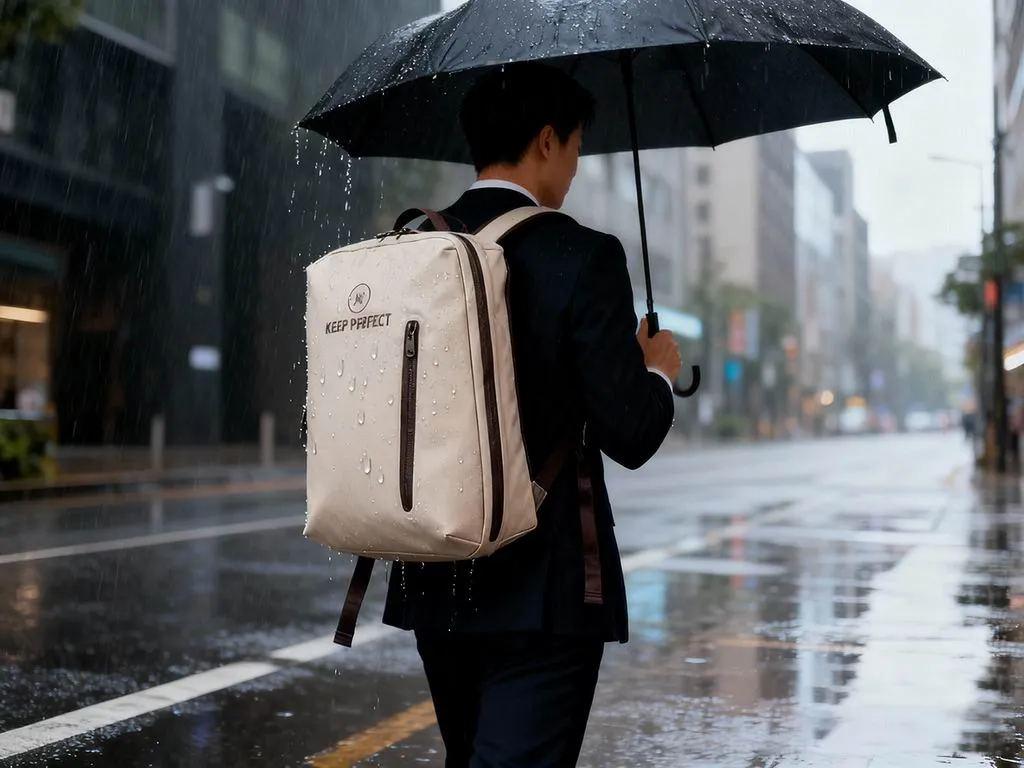
Most creators arrive at this subject expecting a checklist and leave with a single decision. The Consumer Product Safety Improvement Act does not impose one uniform obligation on every sewn product; it imposes a heavy set of obligations on children's products and a comparatively light set on everything else. A reward duffel sold to adults carries almost none of the testing burden described below, while the same silhouette marketed as a children's backpack carries a substantial one, and the difference is made by how you describe and present the product rather than by what it physically is. This article sets out that decision, the two substance limits at its centre, and the paperwork that follows, alongside the wider Bag QC and Compliance programme that governs how these records are kept.
The only question that matters: is your bag a children's product
By statute, a children's product is a consumer product designed or intended primarily for children 12 years of age or younger. Note the words designed or intended, because nothing in that sentence depends on how somebody would classify your item in the abstract. It depends on evidence: your own marketing, your packaging, the sales channel you use, and the functional characteristics of the product itself.
Two consequences follow. First, a product can become a children's product purely through how you talk about it. A school bag aimed at families with primary-age children, photographed with children, sized at 30 cm rather than 45 cm, and described using language about school runs and little ones, is a children's product in every practical sense. Second, a product can avoid that classification while still being bought for children, provided design intent, marketing and sizing genuinely address a general audience.
This matters commercially because the cost differential is real. Testing every material and colour in a five-component bag, across several units plus retesting when a component changes, costs a material fraction of most campaign budgets but it is not zero, and it has to be spent before any certificate can honestly be completed. Our campaign bag specialist asks every creator this question at quotation stage precisely because the answer changes both unit cost and calendar.
Do not resolve the question optimistically. If your reward tiers, campaign copy or stretch goals point at children, plan for the full children's product obligation from the beginning. The reason is enforcement asymmetry: treating an adult product as a children's product costs you some unnecessary testing, whereas treating a children's product as an adult one exposes you to recalls, customs holds and platform delisting that no amount of later testing undoes.
Age grading: how a bag becomes a children's product
Age grading is the formal process of deciding the intended age group, and it should be done deliberately rather than by accident. Practical factors used in age determination include whether the item is represented in its packaging, display, promotion or advertising as appropriate for children, whether it is commonly recognised as being intended for children, whether a named children's character or licence is used, and its size, price and sales channel.
- Size and proportion: a bag sized for a five-year-old, with shortened straps, a small grab handle and a 30 cm body, points at children even without any explicit claim.
- Decoration and colourway: cartoon artwork, animal motifs, glitter finishes and named children's licences are strong evidence of child intent.
- Language: words such as kids, little ones, school, nursery and playground in the listing or on hang tags are treated as representations.
- Channel: placement in a children's category on a retail platform, or sale through a school supply distributor, is evidence in its own right.
- Function: items whose only plausible user is a child, including changing-mat-style organisers and small nursery drawstring sacks, are graded for children by default.
Record the decision. A one-page age-grade memo in the campaign file, dated and signed by whoever made the call, costs fifteen minutes and is the first document anybody asks for when a question is raised later. It should state the intended age range, the factors relied upon, and the consequently applicable rules. Where our team administers the file, we prepare that memo using your campaign copy as the primary evidence, because your own marketing is the strongest indicator of intent.
Be alert to drift during a campaign. Stretch goals and add-ons are invented while the campaign is live, frequently without revisiting compliance assumptions. A mini version of your hero bag unlocked as a stretch goal may silently convert part of your product line into a children's product, and the testing calendar will not stretch to absorb it if the decision is only noticed after the units have been made. Any new size or character variant deserves a fresh look at the age-grading memo.
Lead limits: 100 ppm in substrates and coatings
Where a bag is a children's product, the total lead content of accessible component parts is limited. The present limits are 100 ppm for most substrates and 90 ppm for paint or surface coatings, figures introduced stepwise between 2008 and 2011 and unchanged since. Accessible means reachable by a child during reasonably foreseeable use and abuse, which in practice means most of the outside of a bag plus reachable linings and components.
Note that this is total lead content, not lead migration or bio-accessibility, so a finding is about the presence of lead in the material rather than about how much a child would be exposed to. That distinction explains otherwise puzzling failures: a brass-plated eyelet or a painted rivet containing lead deep within its alloy fails on composition, even though no realistic exposure pathway exists. It is a conservative standard and it should be treated as such when selecting components.
| Requirement | Limit | Typical bag location | Practical control |
|---|---|---|---|
| Total lead in substrates | 100 ppm | Metal hardware, zipper teeth, coated fabrics | Specify lead-free finishes on hardware |
| Lead in paint and coatings | 90 ppm | Screen print ink, PU coating, painted rivets | Require compliant ink set per colour |
| Phthalates, six specified | 0.1 percent | PVC patches, flexible prints, artificial leather | Avoid PVC entirely where possible |
| Tracking label | Permanent marking | Inside seam or care label area | Add a dedicated compliance label |
| Third-party testing | CPSC-accepted lab | Whole construction, by component | Test at sample stage, retest on change |
The table deliberately lists controls rather than just limits, because the cheapest way to comply is almost always substitution at specification stage rather than testing afterwards. Choosing a lead-free plating system for hardware costs nothing at scale and removes the most common failure point. Choosing a phthalate-free print ink removes the second. Testing then confirms what you already expect rather than discovering surprises six weeks from shipment.
One warning about certificates of analysis inherited from component makers. A mill or trim vendor's own test report may be useful, but for children's products the statute generally requires testing at a laboratory accepted by the regulator, using the regulated test methods, on samples representative of production. A generic compliance letter with no method reference, no date and no batch identity carries little evidential weight when a retailer or customs officer asks questions.
Phthalates: which six and where they hide in a bag
Six phthalates are restricted at concentrations above 0.1 percent by weight in the relevant inaccessible-free category: DEHP, DBP, BBP, DINP, DIDP and DnOP. They are used as plasticisers, which is to say chemicals added to make rigid plastics flexible, so they concentrate exactly where soft, bendy, glossy material appears. In bags that means PVC and soft vinyl components, plastisol prints, rubberised patches, some artificial leathers, grippy zipper pullers and certain coated meshes.
A precision worth understanding, because it saves money and avoids over-testing: lead limits apply broadly to children's products, whereas the phthalate restriction applies specifically to children's toys and child care articles. A children's backpack is ordinarily a children's product but not a toy or a childcare article, so strictly the phthalate prohibition may not attach to it. In practice, however, most large retailers and many platforms require phthalate compliance across the whole children's line regardless of the statutory category, so treating it as applicable is the commercially safe course.
The practical response for a campaign bag is substitution rather than argument. TPU film, silicone patches and water-based polyurethane coatings deliver the same visual effect as PVC with none of the phthalate exposure, and they are broadly available at campaign volumes. Where a client insists on a particular glossy patch, we ask the component maker for a declaration supported by a test report against the six listed substances before the component is bought in bulk.
There is a second reason to avoid PVC beyond compliance: its failure mode in storage. Phthalate-plasticised PVC can migrate plasticiser over time, becoming tacky and transferring onto adjacent surfaces inside a carton. For a reward bag that has already been shipped halfway around the world and then stored, this is a genuine complaint generator, and it usually appears weeks after the campaign has closed, when remedying it is expensive and reputationally visible.
Which components actually need testing
Testing is organised by component and colour, not by finished product. Each distinct material in the bag generates its own question, and each distinct colour of that material may generate another, because colourants and coatings are common lead and phthalate carriers. A simple-looking drawstring bag can therefore present a dozen test targets once you count body fabric, lining, webbing, drawcord, cord-lock, printed artwork, metal eyelets and label.
Two approaches exist: component testing, where each material is tested individually, and composite testing, where several materials are dissolved and tested together. Composite testing is cheaper and faster, and it screens effectively for a pass, but it averages results across components, so a single failing part may be diluted below the threshold. When a composite result is close to a limit, or when you need a defensible record, component testing is the right answer despite the cost.
Our standard recommendation for first campaigns is component testing on the risky parts and composite testing elsewhere, with the risky parts being printed inks, coatings, metal hardware and anything flexible and glossy. This is also how we build the evidence file: each component gets a row stating what it is, who made it, what it was tested for, the report number and the date, so the whole bill of materials can be reconciled against test records in a few minutes.
Retesting triggers deserve their own clause. Any change to material, colour, coating, print process or component source reopens the question, because test results describe a specific thing at a specific time. This is the most commonly missed rule in crowdfunding: a creator substitutes a cheaper webbing after seeing the initial quote, ships the same design, and unknowingly invalidates every report in the file. Our production partner flags any specification change against the test register before it is accepted.
Third-party testing and the Children's Product Certificate
For a children's product, testing must be carried out by a laboratory accepted by the regulator, using the applicable federal test methods, on production-representative samples. On the strength of those results the party certifying the product, generally the importer or domestic maker, issues a Children's Product Certificate in English, identifying the product, citing each applicable rule, naming the certifying party, giving the date and place of manufacture, and listing the laboratory used.
The certificate is not optional paperwork that sits in a drawer. It has to accompany the applicable product or shipment, be furnished to distributors and retailers on request, and be available to the regulator. In practice it is requested at customs entry, at receiving docks and during platform compliance reviews, and a campaign that cannot produce one promptly can find a container held or a listing suspended at the worst possible moment.
Adult products subject to a regulated rule carry a General Certificate of Conformity instead, which follows the same logic with a lighter testing requirement. Most general-use bags attract neither, but creators frequently volunteer a GCC anyway as defensive documentation for a retail buyer. There is nothing wrong with that, provided the certificate is accurate: a certificate claiming rules do not exist, or citing rules that do not apply, is worse than no certificate at all.
Assign ownership of the certificate explicitly. In our files the campaign creator or their import entity is normally the certifying party, because legal responsibility follows that party, and our programme coordinator supplies the supporting records, including the component register, the test report set and the production identification needed to complete it. Whoever certifies should hold the whole evidence set, because partial files do not survive scrutiny at the moment somebody decides to look closely.
Tracking labels and permanent marking
Children's products must carry a permanent distinguishing mark, on the product and usually on the packaging, that discloses enough for a consumer or regulator to identify the maker, the location and date of production, and cohort information such as a batch or run number. The point is traceability: if something later goes wrong, the specific population of affected units can be identified rather than the entire line being recalled.
In bag terms this is normally executed with a woven or printed label sewn into an interior seam plus matching information printed on the polybag or carton. It is a small addition that is easy to forget until somebody mentions it two weeks before shipment. Add it to the tech pack at the time you specify woven labels, hang tags and inserts so the artwork allowance and the label order go through as one operation.
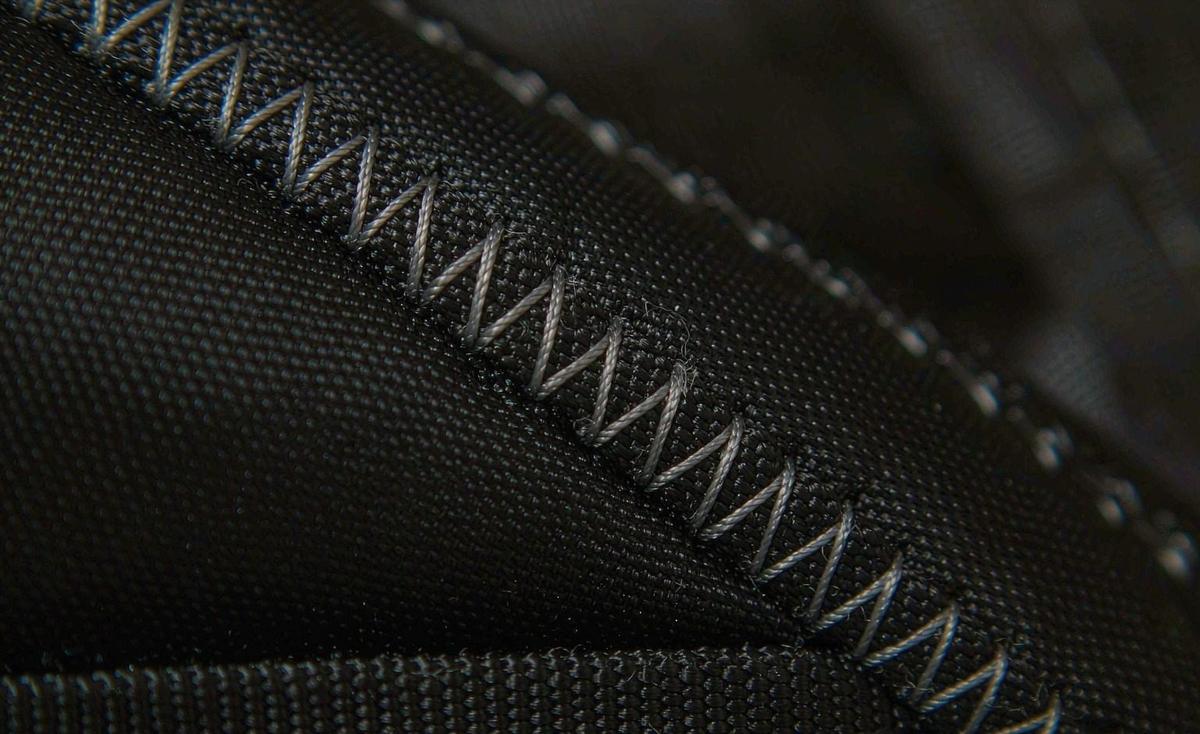
Think about the date format and content before approving artwork. A coherent scheme includes a facility identifier, a production month and year, and a run or lot number that ties back to the packing list and the inspection report. When those three appear consistently on product, packing documents and QC records, a future query resolves in minutes. When every document uses a different identifier, traceability exists only on paper.
Durability also matters. A label whose print rubs off after a week meets nobody's definition of permanent. Specify a material and print method appropriate to the bag's life and, where children are the users, confirm the attachment survives normal laundering and rough handling. Our team includes a label legibility check after abrasion in the standard pre-production sample approval record for exactly this reason.
Where bag constructions actually fail
Failures cluster predictably, and every one of them is cheaper to avoid at specification than to discover at testing. The list below reflects what shows up in our own test registers and in the rejection patterns seen across component categories, ordered roughly by frequency.
- Screen print inks, particularly dense plastisol deposits in bright reds, oranges and yellows, which historically used lead-based pigments and continue to fail when a supplier uses an older stock pot.
- Painted or plated metal hardware, including eyelets, rivets, buckles and slider bodies, where lead appears inside the alloy or the finish rather than on the surface.
- Coated fabrics and artificial leather, where soft PVC-based coatings contain phthalates at levels above 0.1 percent.
- Flexible badges and patches, including rubberised logos and rubber zipper pullers chosen for grip, which are frequently soft PVC.
- Zipper tape coatings and printed webbing, overlooked because they look incidental rather than decorative.
- Novelty charms and pullers, often bought separately from the bag components and therefore outside the original compliance review.
Buying discipline removes most of this. Ask every component source for a declaration plus supporting test report against the specific regulated methods, require them before purchase rather than after delivery, and register each one against your component list. Where a supplier cannot supply documentation, treat the component as untested, because it is. Our sourcing partner maintains that register for our campaign files and will not release a component into bulk without a document on its row.
Artwork deserves separate attention because it interacts with both testing and visual quality. Specify ink systems rather than just colours, since two visually identical prints can be chemically unrelated. Our guidance on artwork files for bag printing covers the file preparation side, and the compliance habit is to note the ink system and supplier in the same place you note the Pantone reference.
Finally, remember that a pass on one colourway says nothing about another. Dark colours tend to pass and bright ones tend to fail for lead; flexible components tend to fail for phthalates. If your stretch goals unlock additional colourways, budget test slots for the new ones at the point they are unlocked, not at the point the first production batch is already cut.
Cost, lead time and the campaign calendar
Budget planners usually ask for a single testing number and then discover the count depends on components and colours. As a working range for campaign-scale orders, laboratories commonly charge per material per colour per substance group, so a five-material bag across two colours and two substance groups can generate meaningful cost, in the low hundreds of currency units per report group in our experience, with turnaround typically around 5 to 10 working days and expedited options at a premium.
Fit it into the calendar deliberately. Standard sampling takes 6 to 10 working days, or 12 to 15 working days for complex constructions, and testing can run in parallel with those later sampling steps once a production-representative sample exists. If you wait until bulk finishes, you have created a dependency entirely outside your control and added it to the end of a 35 to 50 day bulk window, which is precisely where schedule risk should not be added.
There is a second calendar interaction worth planning: retesting. If a component fails, you need replacement material plus new testing, and replacement material comes with its own lead time. Build at least two weeks of slack for this scenario in any children's product programme, because it is realistic rather than pessimistic. Campaigns that plan for one clean pass tend to be the ones that end up explaining delays in update posts.
Payment mechanics do not change much. Standard terms remain T/T 30/70, deposit at order and balance before release, and the commercial terms remain FOB Xiamen for most shipments we handle. What does change is that the balance release checklist should include the compliance file, not merely the inspection report, because shipping goods whose paperwork does not exist creates an entirely avoidable customs exposure. Compliance operates inside the same commercial envelope as everything else: the minimum order stays at 500 pcs per style and colourway, and the pre-shipment inspection still runs to AQL 2.5 to ISO 2859-1, so the test file and the inspection report are completed on the same release checklist.
What to write into the tech pack
Compliance belongs inside the specification document rather than beside it. A well-built tech pack for a potentially regulated bag carries a component table in which each row records the component name, material composition, colour, supplier, applicable substance declarations and the report reference. That single table becomes the test plan, the file evidence and the audit trail without anyone rewriting anything later.
- Materials stated by composition: polyester rather than a trade name, PU rather than a marketing term, so testing scope is unambiguous.
- Ink and coating systems named, including supplier and product line, since colour references alone say nothing about chemistry.
- Hardware finishes specified, including plating type and any lead-free requirement stated explicitly for quoted finishes.
- Age-grade decision recorded with the intended age range and the factors supporting it.
- Labelling artwork included, covering tracking label content, placement and durability requirement.
Add a change-control clause. Any change to composition, colour, coating or component source must be notified and re-approved before bulk cutting, with retesting where the change touches a tested attribute. This clause costs one paragraph and prevents the single most common compliance failure in crowdfunding, which is silent substitution during a cost review after some titles have already been published.
Keep the campaign-side documents in the same file. If your campaign page claims a product is safe for kids, free from harmful chemicals, or non-toxic, screenshot it and date it into the file. Regulators and retailers read claims as representations, and the fastest way to a defensible position is to know exactly what was said and when. Our file convention keeps campaign copy, tech pack and test reports under the same reference number.
When backers are outside the United States
Crowdfunding reward lists rarely stop at one country, and substance rules do not converge. A bag that fully satisfies United States requirements can still fail in the European Union or in California, because each regime uses different lists, thresholds and documentary duties. The safest approach for a multi-market campaign is to build to the strictest applicable combination rather than to the destination with the largest backer count.
Practically, this means treating the following as one evidence set rather than three projects: component declarations covering the regulated substance lists for each market, test reports against each regime's methods where those differ, and a document inventory mapping every requirement to the record that answers it. The tech bag logistics and compliance overview covers how some of these regimes overlap in practice.
Across the 20+ crowdfunding campaigns in our files, the ones that shipped without incident did one thing consistently: they decided the compliance posture before the campaign page was written, and they let that decision constrain the marketing copy rather than the reverse. It is far easier to write a campaign page that does not over-claim than to engineer a product that satisfies a claim made optimistically at midnight six weeks before launch.
If you take one action after reading this, make it the component table. Every other task in this article becomes straightforward once you can name, material by material, what your bag is made of and who made each piece. Everything before that point is guesswork dressed as due diligence, and guesswork is expensive precisely when it is discovered late.
Planning a bag that will be marketed to families or shipped alongside children's lines? Send the tech pack and target list of backer countries through the quotation form or to service@junyuanbags.com, and we will scope the component table and test plan before samples are cut.
Frequently Asked Questions
Does CPSIA apply to ordinary adult reward bags?
Not with regard to the lead and phthalate limits, since those attach to children's products. A general-use bag remains subject to overarching consumer safety law but not to the special children's product testing and certificate regime. The determining factor is intended age, judged from your marketing, sizing, decoration and sales channel.
What makes my custom bag a children's product?
Design intent for children 12 years and younger, judged from evidence including size, imagery, language, licences and channel. A 30 cm cartoon drawstring sold through a school channel and described as a kids bag is a children's product; a 45 cm gym duffel sold to adults is not, even if some buyers hand it to a child.
What are the lead limits I have to meet?
Total lead of 100 ppm in accessible substrate materials and 90 ppm in paint or surface coatings. These are content limits rather than migration limits, so lead inside an alloy or a coating counts even where exposure would be unrealistic in normal handling.
Which phthalates are restricted and at what level?
Six are restricted at above 0.1 percent by weight: DEHP, DBP, BBP, DINP, DIDP and DnOP. They appear as plasticisers in flexible plastics, so PVC patches, soft prints and artificial leather are the usual sources. Substituting TPU or silicone removes most of the exposure cheaply.
Do I need third-party testing for my campaign bag?
For a children's product, yes, at a CPSC-accepted laboratory using the applicable test methods on production-representative samples. For general-use bags there is normally no such requirement, though some retail buyers ask for evidence anyway. Testing cost scales with material count, colour count and substance group.
What is a Children's Product Certificate?
A written certificate, in English, identifying the product, citing each applicable rule, naming the certifying party, giving the date and place of manufacture, and identifying the laboratory used. It must accompany the product or shipment and be available to distributors, retailers and regulators on request.
What is a tracking label and where does it go?
A permanent mark, normally a sewn-in interior label plus matching information on the packaging, disclosing maker identity, location and date of production, and batch or run information. It exists so a specific production cohort can be identified if something later goes wrong.
How long does compliance testing take?
Laboratory turnaround commonly runs around 5 to 10 working days per report group, with expedited options at a premium. Plan it against the 6 to 10 working day sampling window so the clock is run in parallel, and allow two weeks of contingency for a failure and its retest.
Do I need to retest after a component change?
Yes, where the change touches a tested attribute. Substituting material, colour, coating, ink or component source invalidates the earlier result for that component. This is the most commonly missed rule in crowdfunding because changes often happen during a late cost review after tiers have been published.
Which bag components fail most often?
Dense printed ink deposits, painted or plated metal hardware, coated fabrics and PVC-based artificial leather, flexible rubberised patches and soft grip pullers. Bright colours fail for lead more often than dark ones, and anything flexible and glossy is the first suspect for phthalates.
Is component testing better than composite testing?
Composite testing is cheaper and screens well for a pass, but it averages across materials so a single failing component can be diluted below the threshold. Use composite screening broadly and component testing on the risky parts, particularly prints, coatings, metals and flexible components.
What if my backers are in several countries?
Build to the strictest applicable combination rather than to the largest backer group. Different regimes use different substance lists, thresholds and documentary duties, and rebuilding a product for one market after another is far more expensive than specifying once against all of them.
People Also Ask
Is my reward bag regulated as a children's product?
Only if it is designed or intended primarily for children 12 years and younger. Evidence includes your size, imagery, language, licensing and sales channel, so the question is answered by your campaign page as much as by the product itself.
What is the CPSIA lead limit for bags?
100 ppm total lead in accessible substrates and 90 ppm in paint or coatings, applying where the bag is a children's product. Adult bags are generally outside these limits.
Do all six phthalates apply to backpacks?
Statutorily the restriction targets children's toys and child care articles, which most backpacks are not. Commercially, most retailers require phthalate compliance across their children's range regardless, so planning for 0.1 percent is the safe course.
Can I use an existing test report from a supplier?
Only if it meets method, laboratory, date and batch requirements. Generic compliance letters with no method reference or batch identity carry little weight when a retailer or customs officer reviews the file.
Who issues the Children's Product Certificate?
Normally the importer or domestic producer, who carries legal responsibility. Supporting evidence such as the component register, test reports and production identification is typically assembled by whoever administers the production programme.
How do I avoid lead failures cheaply?
Specify lead-free finishes on hardware and compliant ink sets at the tech pack stage. Substitution costs almost nothing at specification and very little at scale, whereas discovering it after testing costs material replacement plus retest time.
Does the tracking label have to be permanent?
Yes. It must remain legible through normal use and cleaning, which usually means a sewn-in woven or durable printed label rather than a sticker, plus matching information on the packaging.