Woven Labels, Hang Tags and Inserts: A Branding Guide
Woven labels, hang tags and packaging inserts carry the brand information a print cannot. Specify each one: label weave and fold type, tag stock and attachment, card weight and content, plus placement coordinates and minimum quantities. All three are ordered with the bulk run at 500 pcs per style and colourway, approved in a 6-10 working days of sampling round and held to AQL 2.5 to ISO 2859-1.
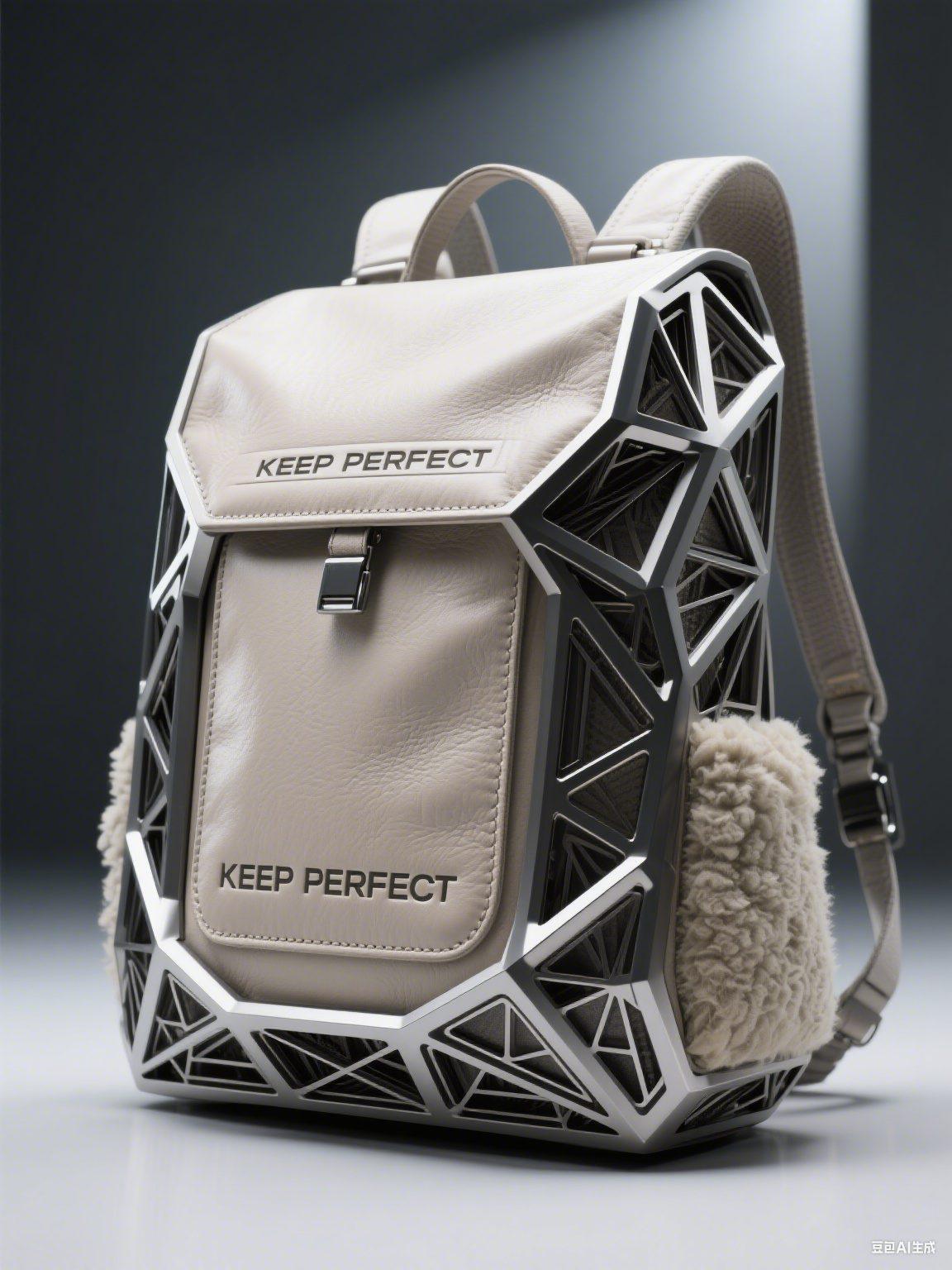
- Three brand carriers and what each one does
- Woven label types and construction
- Specifying a woven label
- Hang tags: stock, print and attachment
- Care labels and compliance content
- Packaging inserts and the information set
- Placement: where each element goes
- Minimum quantities, tooling and cost
- Artwork and file requirements
- Sampling and approval for branding elements
- Defect classes for branding elements
- A branding specification you can send
Three brand carriers and what each one does
A printed logo is one brand carrier and it is the one every campaign thinks about first. Three others do work that print cannot, and they are collectively the cheapest way to make a reward bag read as a designed product rather than a decorated one. The woven label is permanent and carries the mark at close range. The hang tag is removable and carries the information that does not belong on the bag. The insert carries everything else, in the reader's language, at a length no label allows.
They also sit at different points in the backer's experience, which is why all three are worth having. The label is found during use and reinforces ownership over months. The tag is removed in the first minute and is the element most often photographed, because it is the only one that reads as retail packaging. The insert is read once, immediately, and is the only carrier that can make an argument rather than a statement.
The sourcing consequence is that all three are ordered with the bulk run and approved with the pre-production sample, not added later. Each has its own minimum quantity and its own lead time, and each is specified in the same way as any other component: material, dimension, content, placement and attachment method. The print and embroidery page covers the printed methods that sit alongside them.
- Minimum order quantity
- 500 pcs per style / colourway
- Sampling
- 6-10 working days (12-15 for complex builds)
- Bulk production
- 35-50 days after deposit + approved pre-production sample
- Inspection
- AQL 2.5 to ISO 2859-1
- Trade term
- FOB Xiamen
- Payment
- T/T 30/70
- Production floor
- 4,950 m² SGS-verified, 137 staff, 7 lines, 149 machines
- Monthly capacity
- 200,000 pcs per month
- Programme contact
- service@junyuanbags.com
Key takeaways on labels, tags and inserts
- The woven label is permanent and read at close range; the hang tag is photographed and removed; the insert is read once, in full.
- Specify each element by material, dimension, content, placement and attachment, not by a reference image alone.
- All three carry their own minimum quantity and are ordered with the bulk run, so they belong in the first RFQ.
- Care and composition content is a compliance obligation, not a design choice, and it must match the sewn-in label.
- Approve all three at the pre-production sample gate, so they are released with bulk rather than after it.
Woven label types and construction
A woven label is made on a loom, with thread rather than ink, which is why it reads as quality in a way a printed label does not. Two weaves cover most campaign work. Damask weaves fine detail and small type well and is the standard choice for a main brand label. Satin weaves a smooth, slightly shiny surface that takes larger type and simple marks well and is the usual choice for care and composition content.
| Type | Characteristics | Best use | Limitation |
|---|---|---|---|
| Damask, high definition | Fine detail, small type legible | Main brand label | Higher cost per unit |
| Damask, standard | Good detail at moderate cost | Main or interior label | Very small type softens |
| Satin, printed-look | Smooth, lustrous, larger type | Care and composition labels | Fine detail drops out |
| Taffeta | Crisp, economical, matte | Size and utility labels | Coarser hand feel |
| Edge-woven or ultrasonic cut | Soft edges, no fraying | Labels touching skin | Additional cutting step |
| Woven patch or badge | Larger area, applied as a panel | Exterior brand statement | Adds a sewing operation |
Two further decisions sit underneath the weave choice: the fold and the cut. A fold determines what the label does when it is sewn into a seam, and a cut determines whether the edges fray. Get either wrong and the label is uncomfortable, illegible or comes away, which is a defect the backer will find in the first week of use.
- Straight cut: simplest and cheapest, sewn on two or four sides, with cut edges that need heat sealing.
- End fold: folded at both ends and sewn under, the standard for a label set into a seam.
- Mitred fold: folded at 45 degrees, used where the label sits in a corner or a bound edge.
- Centre fold: folded down the middle, used for a label that hangs inside a pocket or at a zip garage.
- Ultrasonic or laser cut: sealed edges that do not fray or scratch, used where the label touches skin.
- Manhattan fold: a small folded tab, used where only a short label can be accommodated.
Specifying a woven label
A woven label specification has seven lines, and a reference image is not one of them. An image shows what you want; the lines produce it. Write them into the tech pack, and the first sample will be close enough that one revision round is enough rather than three.
- Weave type: damask, satin or taffeta, with the definition level where damask is chosen.
- Dimensions: width and height in millimetres, stated as the finished woven size.
- Ground and thread colours: named, ideally with a reference such as a Pantone code for each.
- Artwork: vector file, with minimum type sizes confirmed against the weave's capability.
- Fold type: straight cut, end fold, mitred, centre fold or Manhattan, as appropriate to the placement.
- Cut and edge finish: heat sealed, ultrasonic or laser, stated where fraying or comfort matters.
- Placement and attachment: the seam or panel, the stitch pattern, and the stitch density.
Type size is the line most often overlooked and the one that most often fails. A woven label reproduces type down to roughly 1.5-2 mm in cap height on a high-definition damask weave, and below that the letters fill in. If the brand mark includes small legal or descriptive text, that text belongs on the printed care label or on the insert, not on the woven label.
Hang tags: stock, print and attachment
A hang tag is the most photographed element on a reward bag, and it is also the one most likely to arrive damaged. It hangs free during packing and transit, which means the attachment method matters as much as the print. A tag without an eyelet tears free; a tag with a string that is too long catches on other units in the carton; a tag printed on uncoated board scuffs against the fabric.
| Element | Common options | Recommendation | Failure to avoid |
|---|---|---|---|
| Board weight | 250-400 gsm | 350 gsm for a retail feel | Below 250 gsm curls in transit |
| Finish | Uncoated, matte or gloss laminate | Matte laminate resists scuffing | Uncoated dark ink scuffs |
| Offset for quantity, digital for short runs | Match to quantity and colour count | Full bleed without a bleed allowance | |
| Shape | Rectangular, die-cut, rounded corners | Rounded corners resist dog-earing | Sharp corners catch and bend |
| Eyelet | None, plain hole or metal eyelet | Metal eyelet for any string attachment | A hole without an eyelet tears |
| Attachment | String, cotton twine, plastic fastener | Twine or a fastener matched to the brand | String too long catches in packing |
Content on a hang tag should be minimal. The tag is not the place for the full specification or the care instruction; it is the place for the brand mark, the product name, and one line that earns attention. Everything else belongs on the insert, which is read in the hand rather than glanced at while still attached to the bag.
Care labels and compliance content
The care and composition label is the one branding element that is not optional. Most destination markets require fibre composition to be declared on a durable label attached to the product, and several require country of origin, care symbols and importer identification. This is a compliance obligation rather than a design decision, and getting it wrong is more expensive than any aesthetic mistake on the bag.
| Content | US | EU and UK | Note |
|---|---|---|---|
| Fibre composition as a percentage | Required | Required | Must match the packaging and spec card |
| Country of origin | Required | Required in most cases | State the manufacturing country |
| Care instructions | Recommended | Recommended | Use recognised symbols or plain text |
| Importer or responsible operator | Required in many categories | Required under EU GPSR | Name and address or registered details |
| Brand or trademark | Standard practice | Standard practice | Consistent with the main label |
| Batch or style reference | Recommended | Recommended | Helps traceability on a complaint |
Fibre composition appears on the sewn-in care label, on the packaging and on the specification card, and all three must state the same percentages. A mismatch is the easiest compliance failure for anyone to find, and it is usually caused by the card being written after the label was approved.
Packaging inserts and the information set
Inserts do the work the bag cannot do and they are the cheapest place to buy credibility. A printed card can state dimensions, capacity, materials and care in the backer's language, at a length no label allows, and it is the element most likely to be kept. Three cards is the usual set, and more than four starts to read as junk mail.
| Insert | Stock and size | Must contain | Optional |
|---|---|---|---|
| Care card | 250 gsm, A6 | Wash temperature, drying, no-iron note | A QR code to a longer guide |
| Spec card | 300 gsm, A5 or A6 | Dimensions, capacity, weight, composition | A feature list or diagram |
| Thank-you note | 120 gsm, A6 | Founder name, direct contact, response time | A backer name where personalised |
| Warranty card | 250 gsm, A6 | Term in months, coverage, claim route | Registration instructions |
| Re-order card | 250 gsm, A6 | Where to buy, code, expiry date | A referral incentive |
Print the set in one run. Specifying the care card, spec card and thank-you note on the same stock, in the same print run, removes two of three set-up charges, keeps colour consistent across the set, and means one proof covers all three. That typically saves three to five days in the approval window, which on a campaign calendar is worth more than the money.
Specify the care card, specification card and thank-you note on the same stock, in one print run, and approve them with a single proof. This removes two of three set-up charges, keeps colour consistent across the set, and means the whole information set is approved at the same gate as the pre-production sample rather than trailing behind it.
Placement: where each element goes
Placement is where branding elements most often go wrong, because a placement described in words is interpreted differently by the person reading it. Pin every element to a measured coordinate from a stated seam or edge, and the interpretation problem disappears. A label 'on the side seam' means different things to two people; a label 'at the side seam, 40 mm below the binding, centred on the seam' means one.
| Bag type | Woven label | Hang tag | Insert |
|---|---|---|---|
| Tote | Interior side seam, 40 mm below the binding | On the handle, at the top of the webbing | Inside the bag, care card visible on opening |
| Backpack | Interior back panel seam, or exterior bottom corner | On the top haul loop or a zip puller | In the main compartment, card facing outward |
| Zipper pouch | Interior side seam near the zip end | On the zip puller or a side D-ring | Flat inside the pouch, on top |
| Duffle | Interior end panel seam | On the shoulder strap or top handle | In the main compartment on top |
| Cosmetic bag | Interior lining seam | On the zip puller | Flat inside, under the opening |
| Drawstring | Interior side seam below the channel | On the cord lock or a corner loop | Inside, rolled or flat |
Two placement rules apply across all of them. Keep the woven label away from any point where the bag folds repeatedly, because a label set into a fold line creases and becomes scratchy. And keep the hang tag away from any point where it can catch on another unit in the carton, which is usually a strap or a long loop.
Minimum quantities, tooling and cost
Each branding element carries its own minimum, and they do not all match the bag minimum. Woven labels are produced on a loom with a set-up, so their minimum is typically higher than the bag order and the unit cost falls steeply with quantity. Hang tags and inserts are printed, so their economics follow print: a set-up charge plus a low marginal cost. Understanding which is which tells you where a quantity increase is cheap.
| Element | Typical minimum | Cost behaviour | Planning note |
|---|---|---|---|
| Woven label | Often 1,000-2,000 pcs | Set-up plus steep volume fall | Order for the run plus the re-order |
| Satin care label | Often 500-1,000 pcs | Set-up plus volume fall | Content changes mean a new set-up |
| Hang tag | Matches the order quantity | Print set-up plus low marginal cost | Die-cut and eyelet add set-up |
| Insert cards | Matches the order quantity | One set-up covers the whole set | Colour count drives the set-up |
| Woven patch or badge | Often 1,000 pcs plus | Higher, plus a sewing operation | Rarely justified on a first run |
The practical consequence of that table is that a woven label ordered for exactly 500 pcs often costs nearly as much as one ordered for 2,000, because the loom set-up dominates. Where a campaign anticipates a re-order, ordering the label quantity for both runs at the outset is usually cheaper than a second set-up later, and it avoids a delay if the label supplier's minimum is above the re-order quantity.
Artwork and file requirements
Woven labels and printed cards need different artwork, and supplying the wrong one is the most common cause of a revision round. A woven label needs a simplified vector file with strokes that a loom can physically produce; a printed card needs a colour-managed file with bleed and a defined colour space. The same logo file rarely satisfies both.
- Woven label: supply vector artwork, simplified, with no strokes below roughly 0.3 mm at final size.
- Woven label: confirm cap height of at least 1.5-2 mm for any text on a damask weave.
- Woven label: state thread colours rather than relying on a printed colour match, as thread reads differently.
- Printed card: supply a press-ready PDF with 3 mm bleed and crop marks.
- Printed card: confirm colour space, and approve a printed proof rather than a screen view.
- Both: keep the artwork version-controlled, and reference the version number in the tech pack.
Version control is the unglamorous item that prevents the most expensive error in this category: a label or card produced from an outdated file. Reference the artwork version in the tech pack, in the approval, and in the purchase order, and require the production partner to confirm which version they are working from. Our sample prototyping page sets out where this sits in the checkpoint sequence.
Sampling and approval for branding elements
Branding elements are approved with the pre-production sample, and they should be approved as physical objects rather than as proofs. A woven label proof on screen shows colour and shape but not hand feel or edge comfort. A hang tag proof shows the print but not whether the eyelet holds under the weight of the tag in transit. Ask for all three elements applied to the sample bag, and approve them there.
- Request all branding elements applied to the sampling unit, not supplied separately as loose samples.
- Measure label placement against the stated coordinate from the stated seam, and photograph it.
- Check the label edge for fraying or sharpness, and flex the panel to confirm it does not scratch.
- Operate the hang tag attachment 20 times and pull-test the eyelet once.
- Read the insert set in full, in the destination language, with a second reader checking for errors.
- Confirm the composition on the care label, the packaging and the spec card all state the same percentages.
That last step is worth doing twice. A composition mismatch between the sewn-in label and the printed card is the single most common compliance error in this category, and it happens because the card is written after the label is approved and the two are never compared. Add it as an explicit line on the approval checklist.
Defect classes for branding elements
Branding defects are usually classed as minor, and that is often wrong. A crooked label is cosmetic; a missing care label is a compliance failure and a major defect, because the unit cannot legally be sold in most markets. Define the classes before inspection, and the inspector will apply them rather than guessing.
| Defect | Class | Why | Threshold example |
|---|---|---|---|
| Missing care or composition label | Critical | Compliance failure | Zero tolerance |
| Wrong composition stated | Critical | Compliance failure | Zero tolerance |
| Hang tag detached on arrival | Major | Presentation failure | Above 2% of the sample |
| Label placement off by more than 5 mm | Major | Visible workmanship | Above the AQL major threshold |
| Label fraying or sharp edge | Major | Comfort and durability | Any instance in the sample |
| Print colour outside the approved range | Major | Brand consistency | Against the approved proof |
| Insert missing from the pack | Major | Information failure | Any instance in the sample |
| Slight label skew under 5 mm | Minor | Cosmetic | Within the minor threshold |
Because branding defects are often systematic rather than random, a hold point during assembly is more effective than relying on the pre-shipment sample alone. Ask for a first-off check at the point labels and tags are applied, and a mid-run pull of five units photographed beside the approved sample. Our QA and QC page shows how the classes are logged on campaign runs.
A branding specification you can send
The block below can be copied into any bag tech pack. Fill in the values and the elements can be quoted, sampled and inspected without a round of clarification questions. Send it with the RFQ and the returned quotation will include the branding elements rather than assuming a plain bag.
- Woven label: damask, high definition, 50 x 20 mm finished, two thread colours, end fold, heat-sealed edges.
- Woven label placement: interior side seam, 40 mm below the binding, centred on the seam, four-sided stitch.
- Care label: satin, 60 x 30 mm, printed content, composition as a percentage, country of origin, care symbols.
- Hang tag: 350 gsm matte laminated board, 55 x 90 mm, rounded corners, metal eyelet, cotton twine attachment.
- Insert set: care card 250 gsm A6, spec card 300 gsm A5, thank-you note 120 gsm A6, printed in one run.
- Artwork: vector files supplied, version number stated and referenced in this pack and in the purchase order.
- Approval: all elements applied to the pre-production sample, approved in writing before bulk is released.
With that block in the pack, the branding elements stop being an afterthought and become a specified part of the product, quoted and scheduled like any other component. That is the difference between a reward bag that looks designed and one that looks decorated, and it costs nothing beyond the discipline of writing it down. If you are still choosing formats, the custom bag categories page and the material customisation page will help you match the elements to the bag, and the cosmetic bag page shows how the set is scaled for a small format.
- Print and embroidery for custom bags
- Custom bag categories
- Material customisation for Kickstarter bags
- Crowdfunding bag sample prototyping
- Kickstarter campaign bag QA and QC
- Crowdfunding rewards fulfilment
- Custom bags for Kickstarter campaigns
- Request a quotation
Specify the branding elements with the bag
Send us your bag specification, artwork and quantity. As your production partner we will specify the label weave, tag stock and insert set, quote all three, and return a 6-10 working days of sampling window. Write to service@junyuanbags.com or use the quotation form.
Frequently Asked Questions
What is the difference between a damask and a satin woven label?
Damask weaves fine detail and small type well and is the standard for a main brand label, reproducing cap heights down to roughly 1.5-2 mm. Satin has a smooth, slightly lustrous surface suited to larger type and is normally used for care and composition content.
What minimum quantity applies to woven labels?
Woven labels typically carry a minimum of 1,000-2,000 pcs because of the loom set-up, which is above the 500 pcs bag minimum. Where a re-order is likely, ordering both runs of labels at the outset is usually cheaper than paying a second set-up later.
What should a bag care label contain?
Fibre composition as a percentage, country of origin, care instructions and, in most markets, importer or responsible economic operator identification. The composition must match the packaging and the specification card exactly, because a mismatch is the easiest compliance failure to find.
How should hang tags be attached to a bag?
Use a metal eyelet with cotton twine or a plastic fastener. A plain hole without an eyelet tears free in transit, and a string that is too long catches on other units in the carton. Use 350 gsm matte laminated board to resist scuffing.
What stock weight should packaging insert cards use?
Use 300 gsm uncoated board for the specification card, 250 gsm for the care and warranty cards and 120 gsm for a digital-printed thank-you note. Printing the set in one run removes two of three set-up charges and saves three to five days.
How should label placement be specified?
Pin it to a measured coordinate from a stated seam or edge, such as 40 mm below the binding and centred on the interior side seam. A placement described only in words is interpreted differently by different people and is a common revision cause.
Why does small text disappear on a woven label?
Woven labels are made with thread, so fine strokes physically cannot be produced below a certain scale. On a damask weave, text usually needs a cap height of at least 1.5-2 mm. Anything smaller belongs on a printed care label or an insert.
When are branding elements approved?
At the pre-production sample gate, applied to the sample bag rather than supplied as loose proofs. Approve placement against the stated coordinate, check label edges for fraying, pull-test the tag eyelet, and confirm composition matches across label, packaging and card.
Is a missing care label a major defect?
It should be classed as critical with zero tolerance, because the unit cannot legally be sold in most destination markets without declared composition. A crooked or skewed label is normally minor, but a missing or incorrect one is a compliance failure.
Can branding elements be added after the campaign funds?
Only with cost and delay. Labels and tags carry their own minimum quantities and are ordered with the bulk run, so adding them later means a second set-up, a new approval and a delay to the production window. Specify them in the first RFQ.
How many insert cards should a reward bag include?
Three is the usual set: care, specification and thank-you. Four is acceptable where a warranty card is needed. Above four the pack starts to read as junk mail, and the cards that matter most get lost among the ones that do not.
Do branding elements need their own artwork files?
Yes. A woven label needs simplified vector artwork with strokes of at least 0.3 mm, while a printed card needs a press-ready PDF with 3 mm bleed. The same logo file rarely satisfies both, so supply both and state the version number.
People Also Ask
Are woven labels worth the cost on a reward bag?
Yes, because they are the cheapest element that signals a designed product. Backers look for them, they last as long as the bag, and the loom set-up means the unit cost falls steeply once you order above roughly 1,000 pieces.
Where should a woven label go on a tote bag?
The interior side seam, roughly 40 mm below the binding, centred on the seam and stitched on all four sides. Keep it clear of fold lines, because a label set into a fold creases and becomes scratchy against the hand.
What size should a hang tag be?
Around 55 x 90 mm on 350 gsm matte laminated board, with rounded corners and a metal eyelet. Keep the content minimal: the brand mark, the product name and one line, with everything longer moved to the insert.
Can I use one artwork file for all branding elements?
Rarely. Woven labels need simplified vector artwork with strokes thick enough for a loom, while printed cards need a press-ready file with bleed. Supply both, version-control them and reference the version in the tech pack.
What happens if the care label and spec card disagree?
It is a compliance failure and the easiest one for anyone to find. Composition must match across the sewn-in label, the packaging and the specification card, so add an explicit cross-check to the sample approval checklist.