Custom Adventure Bags for Campaigns: Durable Niche With Loyal Backers
Adventure is a loyalty niche rather than a volume niche: backers are fewer, they pledge more, and they punish a bag that fails in the field. Durability is bought with specification, not adjectives. The numbers that matter are abrasion resistance in the 20,000 to 50,000 cycle band, tear strength above roughly 30 newtons, hardware rated for the load, bar-tacked reinforcement at every stress point, and a load test at 15 to 25 kg before approval. Minimum is 500 pcs per style and colourway, sampling 6 to 10 working days or 12 to 15 for a complex build, bulk 35 to 50 days, inspection AQL 2.5 to ISO 2859-1.
- Why adventure is a loyalty niche, not a volume niche
- Defining durable in a specification you can inspect
- Fabric selection: denier, weave and coating
- Hardware: the parts that actually fail
- Reinforcement detail that costs little and prevents returns
- Load testing: what to test before you fund
- Weather: coatings, seams and honest waterproof claims
- What durability costs per unit
- Sampling a durable build: why it runs to 12-15 days
- Inspection points specific to adventure bags
- Positioning the durability claim on the campaign page
- RFQ for an adventure bag programme
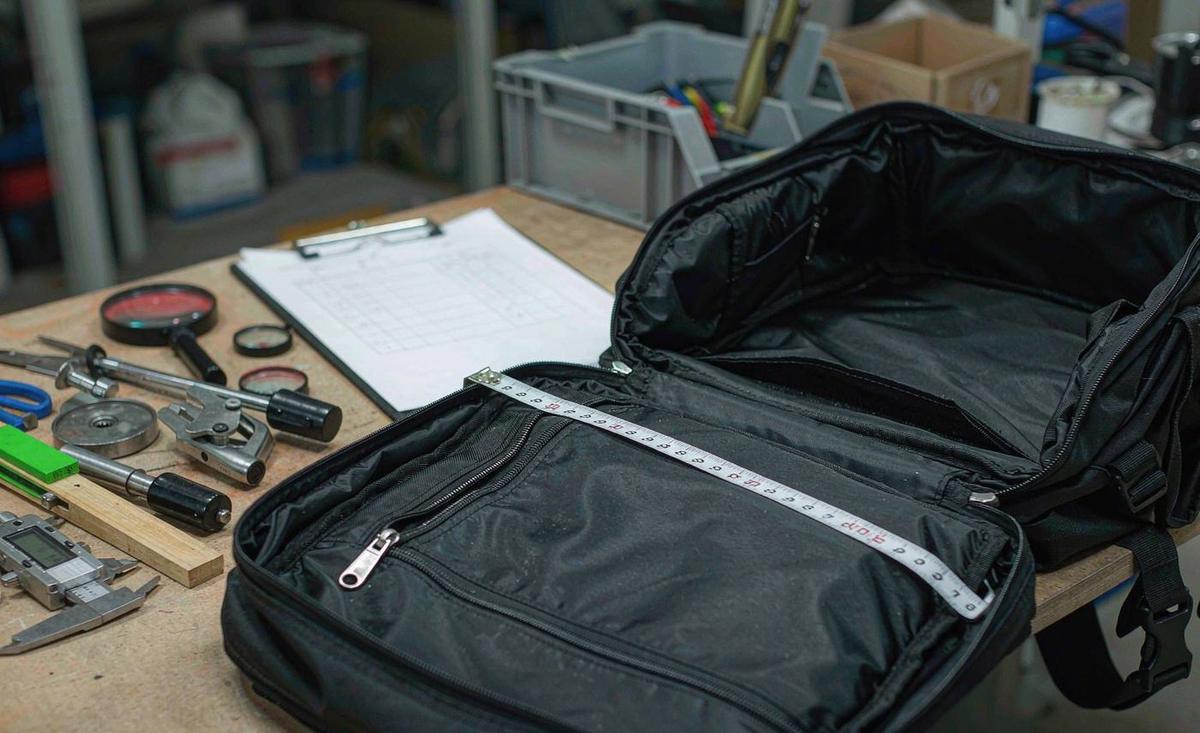
Why adventure is a loyalty niche, not a volume niche
Adventure campaigns behave differently from general travel campaigns and the difference should shape the whole programme. Backer counts are lower, typically in the hundreds rather than the thousands. Average pledge values are higher, because the audience expects to pay for equipment rather than for luggage. And the post-campaign behaviour is unusually valuable: an adventure audience buys a second bag, recommends a bag to a club or a group, and posts field photographs that a general travel audience rarely does.
That loyalty is conditional on the product surviving. A general travel bag that frays after a year produces a private disappointment. An adventure bag that fails on a trip produces a public one, in the exact forums where the next campaign's backers are reading. The practical consequence is that the specification has to be built for the worst case the audience will actually encounter, and the campaign page has to be able to name the numbers rather than describe the feeling.
There is a commercial upside to that discipline. A bag with a stated abrasion figure, a stated hardware grade and a stated load test can be priced above a general travel bag of the same size, and the audience will accept the premium because they understand what they are paying for. Campaigns in this niche have supported reward prices well above the general travel band for exactly that reason, provided the numbers are real and provided the sample can be shown being tested. Our custom travel bags for Kickstarter pillar page sets the travel context, our custom sports bags for Kickstarter page covers the adjacent gym and team-sport end of the same audience, and this article covers the durability specification layered on top of both.
Key takeaways on adventure bag specification
- Adventure audiences are smaller, pledge more and punish field failure publicly, so specification discipline is a marketing asset.
- Durability is specified with numbers: abrasion cycles, tear strength in newtons, hardware grade, bar-tack count and load test weight.
- Reinforcement detail is the cheapest durability available: bar-tacks, bound seams, doubled base panels and protected zip ends.
- A durable build samples at the complex end of the window, 12-15 working days, because reinforcement adds operations.
- Budget a warranty reserve of 2-4 per cent of unit cost; it is cheaper than a field failure in a niche forum.
- Minimum order quantity
- 500 pcs per style and per colourway
- Sampling
- 6-10 working days (12-15 for complex builds)
- Bulk production
- 35-50 days after deposit and approved pre-production sample
- Inspection
- AQL 2.5 to ISO 2859-1
- Trade term
- FOB Xiamen
- Payment
- T/T 30/70
- Production floor
- 4,950 m² SGS-verified, 137 staff, 7 lines, 149 machines
- Monthly capacity
- 200,000 pcs per month
- Campaigns supported
- 20+ crowdfunding campaigns since 2014
Defining durable in a specification you can inspect
The word durable is unusable in a tech pack because nobody can inspect it. Three measurable properties replace it: abrasion resistance, tear strength and seam strength. Abrasion resistance is reported in cycles to a defined end point under a standard test method, and a travel fabric in the 20,000 to 30,000 cycle band is adequate while an adventure fabric in the 40,000 to 50,000 cycle band is genuinely tough. Tear strength is reported in newtons, and a shell fabric below roughly 25 newtons will propagate a puncture while one above 40 newtons tends to stop it.
Seam strength is the one most often omitted and it is the one that fails first. A seam is a line of holes through the fabric, and under load the failure usually happens at the stitch line rather than in the panel. The control is a combination of stitch density, thread specification and seam construction: a plain seam at 8 stitches per inch with a bonded nylon thread behaves very differently from the same seam at 12 stitches per inch with a heavier thread. State the stitch density in the pack and the inspector can check it.
- Abrasion resistance: request the test report, the method and the end point, not just the number. 20,000-30,000 cycles is travel grade; 40,000-50,000 is adventure grade.
- Tear strength: ask for the figure in newtons in both warp and weft. Below 25 N propagates punctures; above 40 N resists them.
- Seam strength: state stitch density and thread specification in the pack so the figure is inspectable.
- Colour fastness to rubbing: a dark shell fabric that crocks onto clothing generates complaints that look like durability failures.
- Coating adhesion: a coating that delaminates after flexing is the most common weather-related failure and it is testable.
Request the test reports at sampling stage rather than at inspection. A claim made on the campaign page has to be defensible by the time the inspection report is issued, and a fabric mill certificate dated after the campaign closes is not a defence. Where the campaign intends to quote a specific figure, ask for the report number and the laboratory, and keep both with the approved sample record.
Fabric selection: denier, weave and coating
Denier is the weight of the yarn and it is the number creators reach for first, which is unfortunate because it is the least predictive of the three. A 500D polyester and a 500D nylon of the same construction behave differently, and a 420D high-tenacity nylon ripstop can outperform a 600D polyester on abrasion. The specification should name the fibre, the denier and the weave together, and it should name the coating, because the coating contributes as much to abrasion and weather performance as the base cloth.
| Fabric | Typical abrasion band | Weight position | Best use |
|---|---|---|---|
| 420D nylon ripstop, PU coated | 25,000-35,000 cycles | Light | Panels where weight matters |
| 500D nylon, PU or TPU coated | 30,000-45,000 cycles | Medium | General adventure body panels |
| 600D polyester, PVC backed | 20,000-30,000 cycles | Medium-heavy | Cost-led builds |
| 1000D nylon, PU coated | 45,000-60,000 cycles | Heavy | Base, wear panels, haul points |
| Laminated or composite panels | Varies by construction | Varies | Structured or waterproof builds |
The move that delivers the most durability per dollar is not a heavier body fabric, it is a targeted one. A bag built from 500D nylon with a 1000D base panel and 1000D reinforcement at the wear points outperforms a bag built entirely from 1000D, weighs less, costs less and sews more easily. Fabric is charged by area, so concentrating the expensive cloth in the 20 per cent of the bag that actually touches the ground is the single most efficient specification decision available.
Coating choice follows use case. Polyurethane coating is the default: it is light, flexible and reasonably abrasion resistant. Thermoplastic polyurethane is more expensive, more flexible at low temperature and more resistant to hydrolysis, which matters for a bag stored damp in a warm climate. PVC backing is heavy, cheap and stiff, and it tends to crack at low temperature. For an adventure bag that will be stored damp between trips, the hydrolysis argument is real and worth the premium.
Hardware: the parts that actually fail
Field failure reports in this category concentrate on hardware far more than on fabric. A panel abrades gradually and the owner notices; a buckle fractures and the bag stops working immediately. The hardware schedule should therefore be specified as carefully as the fabric schedule, with a named grade for each component and a stated expectation for the load it carries.
- Zips: number 8 and number 10 coil for main openings on a 40 litre plus bag; number 5 is a pocket zip, not a structural one. Ask for the slider type and whether it is auto-lock.
- Buckles: acetal hardware from a recognised brand, with the breaking strength stated. Unbranded acetal is the most common silent downgrade in this category.
- Webbing: polyester webbing for low stretch and dimensional stability; nylon webbing is softer but stretches when wet.
- D-rings and ladder locks: state whether they are moulded or stamped, and the plating or anodising expectation on metal.
- Cord and cord locks: a cord lock that slips under load is a small failure that generates a disproportionate number of complaints.
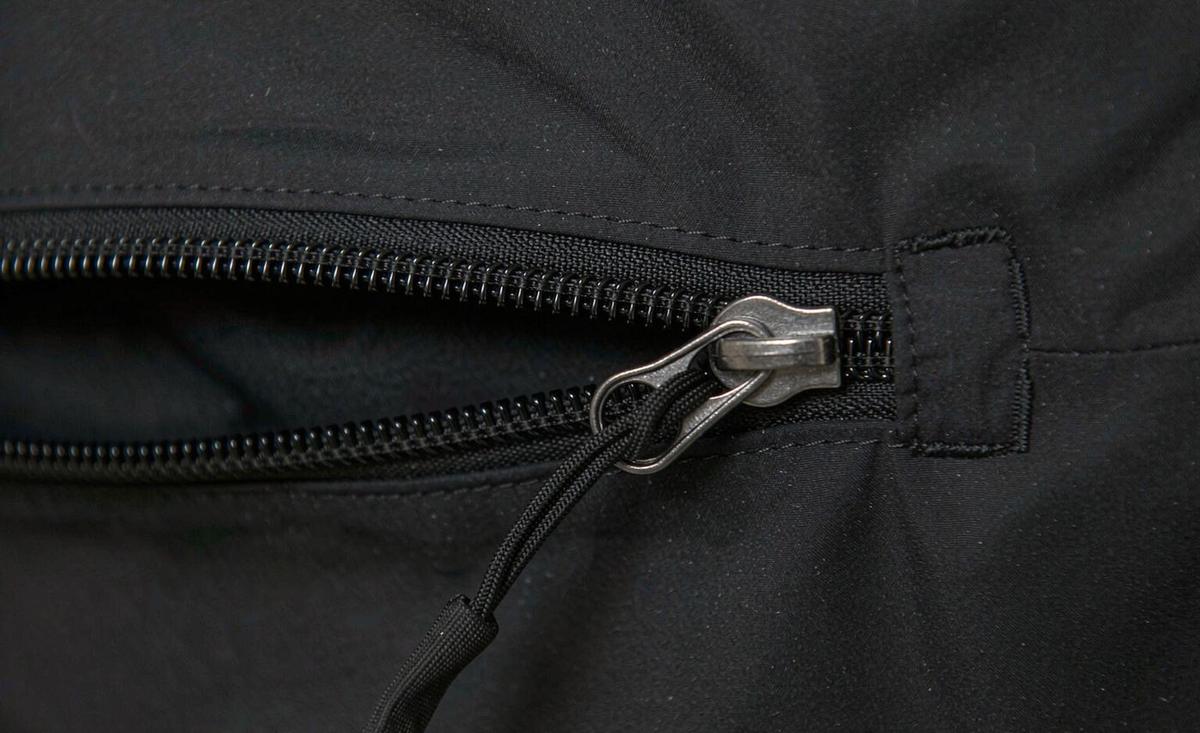
One hardware decision has an outsized effect on perceived quality and costs almost nothing: the zip puller. A moulded or webbing-wrapped puller with the brand mark on a number 10 main zip is the first thing a backer touches and the most photographed detail on the bag. A bare metal pull on the same zip reads as unfinished. Specify the puller, and consider a branded puller as a campaign signature, since it is among the cheapest branding surfaces available.
Corrosion deserves a line in the pack when the bag will see salt water or humid storage. Metal components should carry a stated plating or anodising specification and, where the campaign will make a weather claim, a salt spray expectation. A corroded buckle on a bag that was sold as adventure-ready is a warranty claim the campaign cannot argue against, and the fix at specification stage is a material choice rather than a cost increase.
Reinforcement detail that costs little and prevents returns
The cheapest durability in this category is reinforcement detail, because it adds minutes of sewing rather than grams of material. A bar-tack is a dense zigzag stitch that anchors a stress point; a bag with bar-tacks at every handle, strap and haul point will outlast the same bag without them by a wide margin, at a cost measured in cents. The detail list below is the one our production team applies to adventure builds as standard.
- Bar-tack every handle and strap attachment, on both sides of the panel where the load path runs through two layers.
- Extend the webbing past the stress point rather than terminating it at the seam; a webbing tail trapped in the seam is the standard failure.
- Bind or turn internal seams on load-bearing panels so raw edges cannot propagate.
- Double the base panel or add a 1000D wear panel on the surface that touches the ground.
- Box or reinforce the corners, which are the highest abrasion area on any bag set down on rock.
- Protect zip ends with a garage or a fabric stop so the slider cannot run off the track under load.
- Use a heavier thread on structural seams and state the thread specification in the pack.
- Add a haul loop rated for the loaded weight, bar-tacked through the frame rather than through the lining.
The failure mode these details address is specific and predictable: a strap attachment does not usually tear the webbing, it tears the seam that holds the webbing, or it tears the panel the webbing is sewn to. Both are fixed by extending the load path. A strap whose webbing continues to the base of the bag distributes load into a structure; a strap sewn to a single panel concentrates it into a line of stitch holes. The difference in material cost is negligible; the difference in field life is not.
There is one reinforcement that is worth resisting: over-specified hardware on a light build. A number 10 zip on a 20 litre daypack adds weight, cost and stiffness without adding useful life, because the failure will occur elsewhere first. Match the hardware to the volume and the load, and spend the saved money on the base panel, which is where the bag actually wears out.
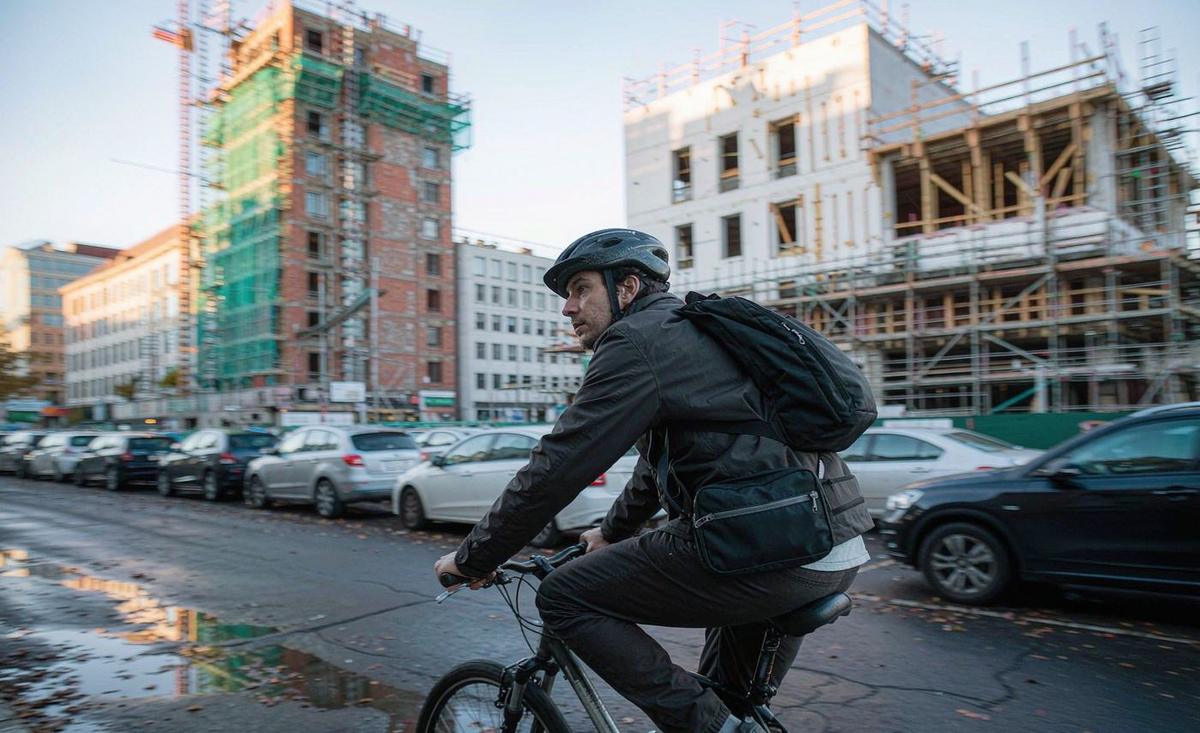
Load testing: what to test before you fund
A load test is not a laboratory exercise for this category, it is the minimum evidence a campaign page should have before it makes a durability claim. The test is simple and can be run on the approved sample with a set of weights, a doorway and a stopwatch. The purpose is not certification, it is to find the failure before the audience does, and it routinely finds one on the first sample.
| Test | Method | Pass expectation |
|---|---|---|
| Static load | Hang the bag loaded to 15-25 kg from its haul loop for 24 hours | No seam movement, no distortion |
| Carry test | Wear the loaded bag for 60 minutes on a mixed surface | No strap creep, no hot spots |
| Drop test | Drop the loaded bag from 1 m onto a hard surface, 6 times | No hardware fracture, no seam opening |
| Zip cycle | Open and close every zip 200 times under load | No track separation, no slider wear |
| Abrasion rub | Rub the base panel 500 cycles against a rough surface | No coating loss, no yarn exposure |
| Handle pull | Apply a 3x expected load to each handle for 60 seconds | No stitch movement at the attachment |
The drop test and the zip cycle test find the most. A drop onto a hard surface reveals hardware that is brittle at low temperature and attachments whose load path is too short; a zip cycle under load reveals track misalignment that is invisible when the bag is empty. Both are cheap, both take under an hour, and both should be recorded, because the video is campaign material as well as engineering evidence.
Where a campaign wants a formal report rather than an internal one, third-party laboratories test to published methods and issue a certificate for a fee. That route is worth it when the claim is specific and quantitative on the page, and unnecessary when the claim is qualitative. Our crowdfunding bag sample prototyping page sets out how to structure the sampling round so the tests are run against a reference unit that is also the inspection standard.
Weather: coatings, seams and honest waterproof claims
Adventure audiences use the word waterproof loosely and hold creators to it strictly. The honest position is a three-level vocabulary: water-resistant means the fabric sheds light rain for a short period, weatherproof means the bag protects contents in sustained rain, and waterproof means the construction resists ingress under defined conditions. Most sewn bags are weatherproof at best, and the distinction matters because a backer who takes waterproof literally will test it.
The construction detail that decides the level is the seam. A stitched seam is a line of needle holes, and no fabric coating closes them. A taped seam covers the stitch line with a heat-applied tape and raises protection substantially. A welded seam eliminates the stitching entirely and is the only route to a genuine waterproof claim, at a significant cost in equipment and unit price. The zips are the second gate: a standard coil zip leaks, a water-resistant zip with a coated tape and a garage helps, and a waterproof zip costs several times more.
The practical specification for an adventure bag is a weatherproof build: a coated shell, taped seams on the panels that face the weather, water-resistant zips with garages, and a rain cover supplied for sustained exposure. That combination handles a day of real rain, costs a fraction of a welded build, and can be described accurately on the page. Our article on waterproof travel bag seam and coating specifications covers the hydrostatic figures and the testing regime in full.
What durability costs per unit
Durability costs money in three places: heavier or coated fabric, graded hardware, and added sewing minutes. The first two are material lines and scale with area and count; the third is a labour line and scales with the number of reinforcement operations. The useful observation is that the reinforcement labour is the cheapest of the three and delivers the largest share of the field-life improvement, which is why the specification order should be reinforcement first, hardware second, fabric weight third.
| Upgrade | Unit cost effect | Field life effect | Value |
|---|---|---|---|
| Bar-tacks at all stress points | +1-3% | High | Best value in the list |
| 1000D base and wear panels | +4-8% | High | Best value material line |
| Graded branded hardware | +5-10% | Medium-high | Prevents immediate failure |
| Number 8 to number 10 zips | +3-6% | Medium | Worth it above 40 litres |
| TPU coating instead of PU | +6-12% | Medium | Worth it for damp storage |
| Taped seams on weather faces | +8-14% | Medium | Depends on the claim |
| Full welded construction | +40-80% | High | Only for a true waterproof claim |
| Third-party test certification | Fixed fee | Reputational | Worth it for specific claims |
Against those upgrades sits a line creators routinely forget: the warranty reserve. A bag sold into an adventure audience will generate claims, and the honest way to handle them is to budget 2 to 4 per cent of unit cost into the reward price and to decide the replacement policy before the campaign opens. That reserve is cheaper than a public field failure in a niche forum, and it is the difference between a niche brand and a one-campaign brand.
Sampling a durable build: why it runs to 12-15 days
Sampling runs 6 to 10 working days for a standard build and 12 to 15 working days for a complex one, and a genuinely durable adventure build is a complex one. The reason is not difficulty, it is operation count. Every bar-tack, every bound seam, every doubled panel and every reinforced corner is an additional operation with its own setup, and a sample line building one unit still has to perform each of them in sequence.
The practical response is to plan two rounds rather than one, and to decide in advance which decisions belong to which round. Round one is structural: dimensions, opening geometry, harness or carry system, and panel layout. Round two is durability detail: bar-tack placement, reinforcement shapes, hardware confirmation and seam finish. Attempting to settle both in one round usually produces a sample that is structurally wrong and a revision list too long to action clearly.
- Release the structural sample with dimensions, opening geometry and carry system settled, and a written start and completion date.
- Run the load, drop and zip cycle tests on the round one sample before any durability detail is specified.
- Write the reinforcement schedule from the test findings, not from a template: reinforce where the sample actually moved.
- Confirm the hardware schedule with named grades and request the component specification sheets.
- Build round two with the reinforcement schedule applied, and re-run the load and drop tests on it.
- Request fabric and hardware test reports at this stage, not at inspection.
- Approve the round two unit in writing as the pre-production reference and the inspection standard.
One discipline keeps this inside the calendar: the revision list must be numbered, and each item must name a component and a required change. A revision list that says make the straps stronger generates a second sample and a third. A list that says increase bar-tack width at the shoulder attachment to 12 mm and extend the webbing tail to the base panel generates one corrected sample. Precision in the revision list is the single largest lever on sample count.
Inspection points specific to adventure bags
Inspection runs at AQL 2.5 to ISO 2859-1, and the defect class list should be written for this category rather than borrowed from a general bag order. The items below are the ones that distinguish a durable build from a durable-looking build, and each is checkable on the inspection table without laboratory equipment.
- Bar-tack presence and placement at every attachment named in the pack; a missing bar-tack is a critical defect, not a minor one.
- Bar-tack stitch count and width, checked against the approved reference unit.
- Webbing tail length at each attachment, measured against the sample rather than estimated.
- Base panel and wear panel material, confirmed by hand and by the material declaration.
- Hardware grade, checked against the component list; a substituted buckle is the most common silent downgrade.
- Zip size and slider type on every opening, with the garage or stop present at both ends.
- Seam finish on load-bearing panels: bound or turned, not raw.
- Coating adhesion at the fold points, checked by flexing the fabric at the sample seam.
The substitution risk deserves emphasis. A quotation built on graded hardware from a named brand is a quotation with a component list, and the inspection is where that list is either honoured or quietly changed. Require the inspection report to record the hardware actually fitted, and require the report to be issued to you before the 70 per cent balance is released. Our Kickstarter campaign bag QA and QC page lists the defect classes we log and the evidence pack issued with a report.
Positioning the durability claim on the campaign page
A specification this detailed is wasted if the page says only that the bag is tough. Adventure backers respond to named components, named figures and named tests, because those are the vocabulary of equipment. A page that says 500D nylon shell with a 1000D base panel, number 10 zip with an auto-lock slider, bar-tacked at 14 stress points and load tested at 25 kg is making four defensible claims and inviting the backer to compare.
The second rule is to show the test rather than describe it. A short clip of the drop test, the zip cycle test or the loaded carry test does more for conversion than a paragraph of adjectives, and it costs nothing beyond the hour spent running the test. Where a third-party report exists, show the certificate with the report number visible. Where it does not, say internal testing and state the method, which is both honest and unusual enough to be persuasive.
The third rule is to state the limits. A bag that is weatherproof should say so and should say what it is not. Adventure audiences trust a creator who names a limit and distrust one who claims everything, because in this niche the audience has been disappointed before by exactly that kind of copy. Naming the limit also protects the campaign: a claim that overreaches is the root of most warranty disputes in the category.
RFQ for an adventure bag programme
An adventure RFQ is quoted accurately in one exchange when the material schedule, the hardware schedule and the reinforcement schedule are stated explicitly, and in three exchanges when they are not. The three schedules are the whole document; everything else on the page is negotiable detail.
- Material schedule: shell fabric with fibre, denier, weave and coating; base and wear panel fabric; lining; webbing specification and thread specification.
- Hardware schedule: zip sizes and slider types per opening, buckle grades with stated breaking strength, D-rings, ladder locks, cord locks, and any plating or anodising expectation.
- Reinforcement schedule: bar-tack locations and dimensions, seam finish per panel, webbing tail lengths, base panel construction, zip garages, haul loop attachment.
- Quantity per style and colourway, with the 500 pcs per style and colourway minimum understood.
- Test documentation required: abrasion, tear, colour fastness, coating adhesion, and any third-party certificate the page will cite.
- Load test protocol you will run on the sample, so the sample is built to survive it.
- Target delivery month and destination market, so freight, duty and compliance are quoted correctly.
- Inspection standard: AQL 2.5 to ISO 2859-1, with the adventure-specific defect class list agreed in advance.
Send that pack to request a quotation with your target delivery month and you will receive a unit cost, a sampling plan and a booked 35 to 50 day production window. Payment runs T/T 30/70, with the 30 per cent deposit released on written approval of the pre-production sample and the 70 per cent balance due after a passed inspection and before cargo release at FOB Xiamen. Our production team works from 4,950 m² of SGS-verified floor with 137 staff across 7 lines and 149 machines, running 200,000 pcs per month, and has supported 20+ crowdfunding campaigns since 2014.
Specify the adventure bag, then quote it
Send us the material, hardware and reinforcement schedules. As your campaign bag specialist we will return a unit cost, a two-round sampling plan and a booked production window, with test documentation listed.
Frequently Asked Questions
What is the minimum order quantity for a custom adventure bag?
500 pcs per style and per colourway. A single adventure bag in one colourway is a 500 pcs commitment. A size range of two sizes is 1,000 pcs, and adding a second colourway doubles any of those figures, so the colourway decision should be made before the pack goes out.
How much does a durable specification add to unit cost?
Indicatively, bar-tacks at all stress points add 1 to 3 per cent, a 1000D base and wear panel adds 4 to 8 per cent, graded branded hardware adds 5 to 10 per cent, and taped seams on the weather faces add 8 to 14 per cent. Full welded construction adds 40 to 80 per cent.
What abrasion figure should an adventure bag fabric meet?
Aim for the 40,000 to 50,000 cycle band on the shell for adventure use, against 20,000 to 30,000 for general travel. Always request the test method and end point together with the number, because abrasion figures are not comparable across methods.
What tear strength should the shell fabric have?
Above roughly 30 newtons in both warp and weft, with 40 newtons and above resisting puncture propagation well. Below 25 newtons a small puncture tends to tear onward, which is the failure pattern that generates the worst field reports in this niche.
Which zip size should an adventure bag use?
Number 8 or number 10 coil for main openings on a bag above about 40 litres, with an auto-lock slider and a garage or stop at both ends. Number 5 is a pocket zip, not a structural one, and it is the most common under-specification on adventure builds.
How long does sampling take for a durable adventure build?
12 to 15 working days, because a reinforced build sits in the complex band rather than the standard 6 to 10 day band. Plan two rounds: one structural, covering dimensions and carry, and one covering the reinforcement schedule and hardware confirmation.
What load test should I run on the sample?
Hang the bag loaded to 15 to 25 kg from its haul loop for 24 hours, wear it loaded for 60 minutes, drop it loaded from 1 m six times, cycle every zip 200 times under load, and apply three times the expected load to each handle for 60 seconds.
Can an adventure bag be described as waterproof?
Only if the construction justifies it. A stitched seam is a line of needle holes, so most sewn bags are weatherproof at best, using a coated shell, taped seams on the weather faces and water-resistant zips. A genuine waterproof claim requires welded seams and a waterproof zip.
What is the most common failure on an adventure bag?
Hardware, and specifically strap attachment: the webbing rarely tears, the seam holding it does. Extend the webbing past the stress point, bar-tack through both layers, and reinforce the panel it attaches to. That detail costs cents and prevents the majority of field failures.
How do I stop hardware being downgraded after quoting?
Name the grade in the hardware schedule, require the component specification sheets at sampling, and require the inspection report to record the hardware actually fitted. Hold the report until before the 70 per cent balance is released rather than accepting it afterwards.
Should I budget for warranty claims on an adventure campaign?
Yes. Budget 2 to 4 per cent of unit cost into the reward price and decide the replacement policy before the campaign opens. That reserve is materially cheaper than a public field failure in a niche forum where the next campaign's backers are reading.
What inspection standard applies to an adventure bag order?
AQL 2.5 to ISO 2859-1 under general inspection level II, with a category-specific defect class list agreed before inspection day. Treat a missing bar-tack or a substituted buckle as critical rather than minor, because both are the failure modes the specification exists to prevent.
People Also Ask
Are adventure bags a good niche for a crowdfunding campaign?
Yes, if the specification supports the claim. Backer counts are lower than general travel, typically in the hundreds, but pledge values are higher and the audience buys again. The condition is that the bag survives the field, because this audience reports failures publicly.
What denier should an adventure bag use?
Denier alone is not predictive. Specify fibre, denier, weave and coating together: 500D nylon with a PU or TPU coating for body panels and 1000D for the base and wear panels outperforms a uniform 600D build on both weight and cost.
How do I make an adventure bag last longer without raising cost much?
Spend on reinforcement before fabric. Bar-tacks at every attachment, webbing tails extended past the stress point, bound seams on load-bearing panels and a doubled base panel add 1 to 8 per cent to unit cost and deliver most of the field-life gain.
What is a bar-tack and why does it matter?
A bar-tack is a dense zigzag stitch anchoring a stress point. It is the cheapest durability available, adding 1 to 3 per cent to unit cost, and it prevents the most common adventure failure, which is a strap attachment tearing out of its panel.
Do I need third-party testing for an adventure bag?
Only if the page makes a specific quantitative claim. For qualitative claims, internal testing with a documented method is enough and is honest. Where a figure is quoted, request the laboratory report at sampling rather than after the campaign closes.
What is the difference between water-resistant, weatherproof and waterproof?
Water-resistant sheds light rain briefly, weatherproof protects contents in sustained rain, and waterproof resists ingress under defined conditions. Most sewn bags with coated fabric and taped seams are weatherproof; true waterproof requires welded seams.
How much should an adventure bag reward cost to pledge?
It can sit above the general travel band, because a stated abrasion figure, hardware grade and load test justify the premium to an equipment audience. Build the price from FOB plus freight plus duty plus a 2 to 4 per cent warranty reserve.