Custom Backpack for Crowdfunding: Nylon vs Polyester vs Recycled PET
Choosing nylon, polyester or recycled PET for a crowdfunding backpack is a sourcing decision before it is a design decision. Nylon carries a 30-60% fabric premium and better abrasion resistance; polyester is the cheapest and most colour-stable; recycled PET adds 15-35% plus a GRS transaction certificate. At MOQ 500 pcs per style and colourway, the shell choice moves unit cost, the 6-10 working days of sampling window and the certification lead time at once.
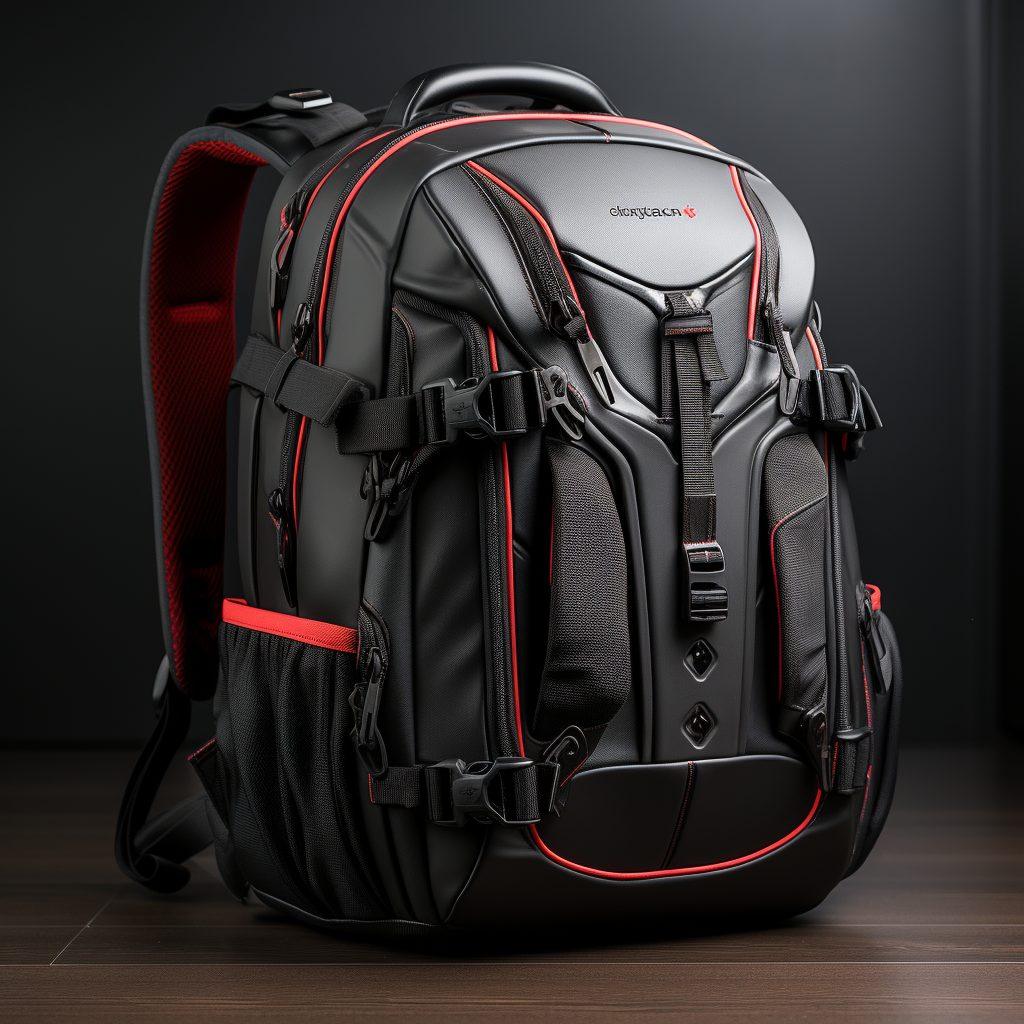
- Material selection is a sourcing decision first
- Nylon: where the premium is actually earned
- Polyester: the default for campaign backpacks
- Recycled PET: what the certification requires
- Head-to-head on measurable properties
- Denier, weave and coating: reading a spec sheet
- What each material does to cost and lead time
- Lining, webbing and hardware compatibility
- Compliance and documentation by material
- Dye lots, shade consistency and re-order risk
- Matching the material to the published reward
- Material questions to put in the RFQ
Material selection is a sourcing decision first
Shell fabric is the only specification on a backpack that a backer can independently verify after delivery. They cannot measure your stitch density or confirm your hardware grade, but they can rub the fabric, hold it up to the light, get it wet and compare it with the bag they already own. That makes material selection the most exposed decision in a campaign, and the one most often taken on marketing language rather than on a spec sheet.
Three families dominate crowdfunding backpacks: nylon (polyamide), polyester (PET) and recycled PET. Each has a distinct cost structure, a distinct certification pathway and a distinct effect on the production calendar. Nylon and polyester differ chemically and therefore differ in dyeing, coating and UV behaviour; recycled PET is chemically polyester but commercially a different purchase, because the recycled content has to be documented rather than merely asserted.
For a buyer, the practical questions are narrow. What does each material do to unit cost at 500 pcs? What does it do to the 6-10 working days of sampling window and the 35-50 day bulk run? What documentation does the destination market require? And what happens on a re-order if the original dye lot is gone? This article answers those four questions for each material and then puts them side by side.
Two framing points. First, fabric is typically 28-40% of unit cost on a structured backpack, so a 30% fabric premium translates into roughly a 9-12% movement in the total unit cost — material enough to change whether a pledge tier works. Second, availability beats preference: a fabric that is not held in stock adds procurement days inside the bulk window, and those days come directly off the published delivery month. Start from the custom backpacks for Kickstarter category page if you have not yet fixed the base format.
Key takeaways on shell material choice
- Fabric is 28-40% of unit cost on a structured backpack, so a 30% fabric premium moves total unit cost by roughly 9-12%.
- Recycled PET is chemically polyester but commercially different, because recycled content requires a documented transaction certificate.
- Nylon earns its premium on abrasion and tear resistance, not on water resistance, which is a coating property.
- Confirm stock availability before specifying: an out-of-stock fabric adds procurement days inside the 35-50 day window.
Nylon: where the premium is actually earned
Nylon is a polyamide. Its advantage is mechanical: for a given denier it resists abrasion and tearing better than polyester, which is why high-tenacity nylons are standard on load-bearing panels, pack bases and anything expected to scrape against concrete. In laboratory terms the difference shows up clearly in Martindale abrasion cycles to ISO 12947-2 and in grab-test tear strength to ASTM D5034, and both figures are worth requesting from the mill rather than accepting a durability adjective.
The premium is real but frequently misattributed. Nylon costs more — commonly 30-60% above a comparable polyester at the same denier — and buyers often assume the extra money buys water resistance. It does not. Water resistance is a coating and construction property: PU or TPU coating, seam design and zip choice determine whether a pack sheds rain, and a polyester shell with a good coating outperforms an uncoated nylon shell in a spray test every time.
Nylon also carries two behaviours that matter for a campaign. It absorbs more moisture than polyester, around 4% by weight against well under 1%, so a nylon pack gains slightly more weight when wet and dries more slowly. And it is generally less UV-stable, tending to fade or yellow with prolonged exposure, which is why light-fastness testing to ISO 105-B02 is worth specifying on pale or brightly coloured nylon shells.
Where nylon genuinely pays: a technical or outdoor pack positioned on durability, a pack with a heavy load rating, or a design where the base panel takes the abrasion. Where it does not pay: a commuter or lifestyle backpack that will be judged mainly on colour, hand-feel and finish, where the same money spent on a better zip chain and denser strap padding produces a more noticeable result.
Polyester: the default for campaign backpacks
Polyester is the workhorse of the crowdfunding bag category and the correct default for most campaigns. It costs less than nylon at equivalent denier, it dyes with disperse dyes that give excellent colour fastness, it absorbs almost no water, and it holds its colour under UV exposure far better than nylon. For a campaign whose photography depends on a specific shade staying specific, that colour stability is a commercial asset rather than a technical footnote.
The mechanical trade-off is real but manageable. Polyester tears and abrades somewhat more readily than nylon of the same denier, and the standard compensation is to specify one denier step higher — 900D polyester where 600D nylon was considered, or 600D where 420D was. That step costs less than switching polymer families and keeps the colour and availability advantages intact.
- 600D polyester with PU backing. The volume default for commuter and daypack builds; good hand-feel, coats well, widely stocked.
- 900D polyester. One step up for base panels, pack bottoms and any area that takes abrasion.
- 1680D polyester. Heavy-duty and stiff; used where structure matters more than drape, and usually reserved for panels rather than a whole shell.
- Ripstop polyester. A grid weave that limits tear propagation; light for its strength and visually distinctive in macro photography.
- Polyester canvas or heather. A lifestyle finish that reads well on camera and hides soiling better than a flat weave.
Availability is polyester's quiet advantage. Common deniers in standard shades are held in stock by mills in volume, which shortens the procurement leg inside the 35-50 day bulk window and makes a mid-run substitution far less likely. For a first campaign with a fixed delivery month, that supply depth is worth more than a marginal performance gain on a spec sheet.
Recycled PET: what the certification requires
Recycled PET is chemically polyester. Mechanically it behaves close to virgin polyester with a small penalty in tenacity, and for most backpack applications the difference is not detectable in use. What makes it a different purchase is documentation: recycled content is a claim that has to be evidenced through a chain of custody, and the certificate has to exist before the claim appears on a campaign page.
The mechanism is a transaction certificate issued under a recognised standard, most commonly the Global Recycled Standard or the Recycled Claim Standard, covering the specific fabric lot purchased. The certificate states a recycled percentage for that lot. A campaign that claims 100% recycled shell fabric without holding the matching certificate has published an unverifiable claim, which is a compliance exposure in the EU and a Prop 65 and advertising exposure in the United States.
Cost sits above virgin polyester, typically 15-35% on the fabric line, reflecting smaller production runs and certification overhead. Availability is narrower: fewer deniers, fewer shades, and a greater chance that a specific lot is not held in stock. That last point has a calendar consequence, because an out-of-stock recycled fabric adds procurement days to a bulk run that was already budgeted at 35-50 days.
Book certification during sampling, not during production. The transaction certificate is issued against a purchased lot, so it cannot be produced before the fabric is bought, but the supplier's scope certificate and the intended claim wording can be agreed weeks earlier. Doing that work in parallel with the 6-10 working days of sampling window costs nothing; doing it in the final production week is a schedule risk with no mitigation.
Head-to-head on measurable properties
The table below compares the three families on the properties that actually appear in a tech pack. Values are typical ranges for comparable deniers and constructions; treat them as a starting frame for discussion with a sourcing partner rather than as guaranteed figures, because weave, coating and mill quality move individual results considerably.
| Property | Nylon | Polyester | Recycled PET |
|---|---|---|---|
| Abrasion resistance (ISO 12947-2) | Highest of the three at equal denier | Good; roughly one denier step below nylon | Close to virgin polyester, slightly lower tenacity |
| Tear strength (ASTM D5034) | Highest | Good | Good, marginally below virgin polyester |
| Water uptake | Around 4% by weight; slower to dry | Well under 1%; dries quickly | Well under 1%, as polyester |
| UV and light fastness (ISO 105-B02) | Weaker; pale shades can yellow | Strong colour retention | Strong, though recycled lots vary slightly |
| Dye method and shade depth | Acid dye; deep shades, harder shade matching | Disperse dye; stable and repeatable | Disperse dye; shade range narrower |
| Relative fabric cost index | 130-160 | 100 (baseline) | 115-135 |
| Certification pathway | OEKO-TEX Standard 100, REACH, Prop 65 | OEKO-TEX Standard 100, REACH, Prop 65 | GRS or RCS transaction certificate plus the above |
| Typical stock availability | Moderate | High across standard deniers | Narrower; fewer shades held |
Read the cost index as a fabric-line comparison rather than a finished-bag comparison. Because fabric represents roughly 28-40% of unit cost on a structured backpack, moving from a 100 index to a 160 index adds approximately 17-24% to the fabric line, or roughly 5-10% to total unit cost depending on how the rest of the bill of materials is weighted. That is a real number and it belongs in the pledge-tier model.
If the campaign claims a recycled content percentage, the transaction certificate has to exist before the claim goes live. Agree the wording during the 6-10 working days of sampling window, because the certificate is issued against the purchased fabric lot and cannot be produced retrospectively.
Denier, weave and coating: reading a spec sheet
Denier describes yarn thickness, not quality. A 600D fabric is not automatically better than a 420D fabric, and a heavier denier always buys stiffness and weight alongside durability. What a tech pack should state is denier, weave, coating and finish together, because it is the combination that determines performance — and because a mill quotation that gives only a denier is not a specification anyone can inspect against.
- Denier. 420D for light panels and linings, 600D for a general shell, 900D for high-abrasion zones, 1680D where structure matters more than drape.
- Weave. Plain weave for a flat surface, Oxford for a textured basket look, ripstop where tear propagation must be limited, dobby or jacquard for pattern.
- Coating. PU backing for general water resistance; TPU laminate where weldable seams are planned; avoid unspecified PVC where REACH or Prop 65 declarations are required.
- Finish. DWR for water beading; note that DWR is a finish that wears and should not be marketed as permanent waterproofing.
- Hydrostatic head. Request the figure in millimetres to ISO 811 or AATCC 127 rather than accepting a waterproof claim; 1,000-5,000 mm is typical for PU-coated shell fabric.
- Colour fastness. Specify rubbing fastness and light fastness by standard and grade so a lot substitution can be evaluated objectively.
One correction worth making to a common campaign claim: no coated shell fabric makes a backpack waterproof in the sense backers usually mean. Seams, zips and the closure geometry leak long before the fabric does. If the campaign needs a genuine waterproof claim, the construction has to change — welded seams, a roll-top closure and water-resistant zips — and that change moves sampling into the 12-15 working day band.
What each material does to cost and lead time
Material choice reaches the calendar through two routes: procurement inside the bulk window, and extra operations required by the coating or construction. The table below separates those, because they are solved in different ways — procurement risk is solved by confirming stock early, and operation risk is solved by simplifying the build.
| Material | Effect on unit cost | Effect on sampling and bulk windows | Buyer note |
|---|---|---|---|
| Polyester 600D, PU coated | Baseline; cheapest of the three | No added sampling time; procurement 7-12 days if stocked | Default choice when the delivery month is fixed and tight |
| Polyester 900D or ripstop | +4-9% on the fabric line | No added sampling time; check stock on ripstop shades | Cheapest way to buy abrasion resistance |
| Nylon 420D or 840D | +9-18% on the fabric line | Procurement 10-16 days; acid-dye shades may add a lab dip | Justify on load rating or base-panel abrasion |
| Recycled PET 600D | +4-11% on the fabric line | Procurement 10-18 days; certification runs in parallel | Book the transaction certificate during sampling |
| TPU laminate or weldable build | +7-14% on the fabric line | Adds 4-8 days for parameter setting on the production lot | Only where a genuine waterproof claim is required |
Notice that the material itself rarely adds sampling time; what adds time is the finish applied to it. A lab dip on a custom nylon shade, a strike-off on a printed panel and a weld-parameter window on a TPU laminate are the three items that push a build out of the standard 6-10 working day band. If the calendar is the binding constraint, hold the fabric choice to a stocked standard and spend the saved time on a second sampling round.
Lining, webbing and hardware compatibility
The shell fabric does not sit alone. Lining, webbing, thread and hardware all have to be compatible with it, and mismatches show up as defects at inspection rather than as design problems at sampling. A heavy 1680D shell paired with a featherweight 150D lining produces a pack that wears through the interior long before the exterior looks tired, which is a warranty pattern rather than an aesthetic one.
| Component | With a 600D polyester shell | With a nylon or heavy shell |
|---|---|---|
| Lining | 210D polyester for general compartments; 420D in device sleeves | 210D or 420D; consider a coated lining if the shell is water resistant |
| Webbing | 25 mm for light straps, 38 mm for shoulder straps | 38 mm minimum; match webbing stretch behaviour to the shell |
| Thread | Bonded polyester thread, ticket size matched to seam stress | Bonded nylon or polyester; check needle heat on coated shells |
| Zips | #5 coil for pockets, #8 for main compartments | #8 or #10 coil; reverse coil where weather resistance is claimed |
| Foam and spacer mesh | Standard density EVA or PE foam with polyester spacer mesh | Higher-density foam, since a heavier shell implies a heavier load |
Two practical cautions. First, coated and laminated shells behave differently under a needle: they are prone to needle-heat damage and to visible stitch puckering if the thread and needle size are not matched to the coating, which is a defect an inspector will count. Second, a recycled shell paired with virgin polyester webbing and lining complicates the recycled-content percentage a campaign may claim, because the claim usually applies to the shell fabric rather than to the finished product.
Compliance and documentation by material
Documentation requirements follow the destination market and the claims the campaign publishes, not the material alone. But material choice changes which certificates are straightforward and which need lead time, and that difference should be resolved while the tech pack is still open. The table below is the practical set for backpack rewards shipped into North America and Europe.
| Claim or market | Document | Material note | When to book |
|---|---|---|---|
| EU chemical compliance | REACH declaration | Required regardless of fibre; covers coatings and dyes | During sampling |
| California delivery | Prop 65 declaration | Watch PVC coatings and certain dye carriers | During sampling |
| Skin-contact or children's positioning | OEKO-TEX Standard 100 or CPSIA test report | Applies to shell, lining and webbing as a set | During sampling, 2-4 weeks |
| Recycled content claim | GRS or RCS transaction certificate | Issued against the purchased fabric lot with a stated percentage | At fabric purchase, before the claim is published |
| EU market access | EU GPSR documentation | Product-level, not fibre-specific | Before first shipment |
| Water resistance claim | Hydrostatic head test report (ISO 811 or AATCC 127) | A coating property, not a fibre property | During sampling |
Testing is not instantaneous and should never be requested in the final week of a run. A test house needs physical material, which means the fabric has to have arrived; and a report that arrives after cartons are packed protects nothing. Build the testing window into the sampling phase alongside the first sample round, so the report lands before the pre-production sample is signed.
Dye lots, shade consistency and re-order risk
Fabric is bought in dye lots, and a dye lot is a finite quantity with its own shade. Two lots of the same nominal colour will differ slightly, and on a backpack the difference is visible where panels meet. Within a single 500-pcs run this is controlled by cutting all panels from one lot. Across runs it is the problem that catches campaigns that overfund and reorder.
- Buy the whole run from one lot. Confirm the lot quantity covers 500 pcs plus cutting waste before bulk starts, not after.
- Record the lot reference in the tech pack. Without it a re-order cannot be matched and the second batch will be a different shade.
- Keep a retained swatch. A physical reference from the approved pre-production sample settles shade disputes by comparison.
- Set a shade tolerance. A stated tolerance against a reference swatch gives inspection an objective criterion instead of an argument.
- Expect more variation on recycled lots. Mechanically recycled feedstock varies slightly; build the tolerance accordingly and avoid a pure-white specification.
Re-order economics are where the material decision returns. A re-order built to an approved specification skips sampling and repeats no set-up charge on fabric or hardware, which is why a second batch is usually the most profitable volume a campaign ever buys. That advantage depends on the lot still being available; if it is not, the re-order needs a new lab dip and a fresh approval, and the cost benefit narrows considerably.
Matching the material to the published reward
Match the material to the promise on the page. A commuter backpack sold on organisation and colour should be polyester, because colour stability and stock availability matter more than abrasion. A technical pack sold on load-carrying and durability can justify nylon, provided the premium is carried by the pledge price. A pack whose story is environmental should be recycled PET, with the certificate in hand before the first backer reads the claim.
Then check the choice against the funding model rather than against the design. If the pledge tier leaves a landed unit cost ceiling, work out whether the chosen fabric fits inside it at 500 pcs and at 1,000 pcs, because the answer frequently differs. A fabric that only becomes affordable at 1,000 pcs is a stretch-goal material, not a launch material, and that distinction should be settled before the render is commissioned rather than after the campaign closes.
Finally, remember the inspection angle. Whichever material is chosen, the fabric becomes a defect category at AQL 2.5 under ISO 2859-1: shade variation, coating marks, slubs and needle damage all get counted. A material that is harder to work with generates more of those defects, which is a cost that never appears on the fabric quotation. Our page on Kickstarter campaign bag QA and QC sets out how material-specific defect classes are written into the inspection criteria.
Material questions to put in the RFQ
A material conversation with a sourcing partner moves quickly when the questions are specific. Vague requests for a durable recycled fabric produce a list of options and no decision; a request that states denier, coating, test method and claim produces a quotation with a lead time attached. Use the questions below and add the destination market, because compliance follows the destination rather than the design.
- Which shell fabric do you recommend at this denier, and is it held in stock right now?
- What is the abrasion figure to ISO 12947-2 and the tear strength to ASTM D5034 for the recommended fabric?
- What coating is proposed, and what is the hydrostatic head figure to ISO 811 or AATCC 127?
- If recycled content is required, which standard covers the certificate and what percentage can be documented?
- What shade tolerance can be held within one dye lot, and what happens if the lot is exhausted mid-run?
- Which lining, webbing and thread specification is compatible with the proposed shell?
- What is the unit cost difference between the two candidate fabrics at 500, 1,000 and 2,000 pcs?
- Does either candidate add days to the sampling window or to the 35-50 day bulk run?
With those answers a production partner can hold a fabric option, quote the delta between candidates and state whether the bulk window moves. To open that conversation, use the quote request form. For the wider sourcing sequence around material selection, the custom bags for Kickstarter sourcing guide covers costing and the production calendar, and the sourcing FAQs answer the material questions creators ask most often.
Be honest about what your product can and cannot do. Overstating a material claim is the fastest way to lose backer trust after delivery.
Kickstarter Creator Handbook
- Minimum order quantity
- 500 pcs per style / colourway
- Sampling
- 6-10 working days (12-15 for complex builds)
- Bulk production
- 35-50 days after deposit + approved pre-production sample
- Inspection
- AQL 2.5 to ISO 2859-1
- Trade term
- FOB Xiamen
- Payment
- T/T 30/70
- Production floor
- 4,950 m², SGS-verified
- Team
- 137 staff / 7 production lines / 149 machines
- Capacity
- 200,000 pcs per month
- Custom backpacks for Kickstarter campaigns
- Custom bags for Kickstarter — sourcing hub
- Custom bag categories and reward formats
- Campaign bag QA and QC
- Sampling and prototyping programme
- Low MOQ bag production for creators
- Sourcing FAQs
- More campaign sourcing articles
Compare two fabrics side by side
Send the bag type, target denier and destination market. You get abrasion and tear figures, coating options, the unit cost delta at three volumes and confirmation of stock availability.
Frequently Asked Questions
Which fabric is best for a crowdfunding backpack?
Polyester is the correct default: cheapest of the three, best colour stability and the widest stock availability. Choose nylon where abrasion resistance or a high load rating justifies a 30-60% fabric premium, and recycled PET where the campaign story depends on documented recycled content.
How much does nylon add to the unit cost of a backpack?
Nylon typically costs 30-60% more than a comparable polyester at the same denier. Because fabric represents 28-40% of unit cost on a structured pack, that premium adds roughly 5-10% to the total unit cost and should be tested against the pledge tier first.
Is recycled PET as strong as virgin polyester?
Very close. Mechanically recycled feedstock carries a small tenacity penalty, and for most backpack applications the difference is not detectable in use. The real differences are commercial: a narrower shade range, 15-35% higher fabric cost and a transaction certificate requirement.
What certificate is needed for a recycled content claim?
A transaction certificate issued under the Global Recycled Standard or the Recycled Claim Standard, covering the specific fabric lot purchased and stating a recycled percentage. It cannot be issued before the fabric is bought, so agree the claim wording during sampling and publish only what the certificate supports.
Does nylon make a backpack waterproof?
No. Water resistance is a coating and construction property, not a fibre property. PU or TPU coating, seam design and zip choice determine whether a pack sheds rain; a coated polyester shell outperforms an uncoated nylon shell in a spray test.
What hydrostatic head figure should a backpack shell have?
PU-coated shell fabric commonly tests between 1,000 and 5,000 mm to ISO 811 or AATCC 127. Request the actual figure from the mill rather than accepting a waterproof claim, and note that seams and zips leak long before the fabric does.
How is abrasion resistance specified and tested?
Specify Martindale cycles to ISO 12947-2 and grab-test tear strength to ASTM D5034, then record both figures in the tech pack. Having real numbers lets a proposed fabric substitution be evaluated objectively instead of by adjectives. Request both figures at fabric selection, before the tech pack is frozen at sample approval.
When should compliance testing be booked?
During the sampling window. A test house needs physical material, so reports can only follow fabric arrival, and a report landing after cartons are packed protects nothing. REACH, Prop 65 and OEKO-TEX work typically takes two to four weeks. Recycled content certification should be agreed at fabric purchase, before the claim is published.
Why does dye lot matter on a 500-pcs run?
Each dye lot has its own shade, and panels cut from different lots will not match. Confirm the lot quantity covers 500 pcs plus cutting waste before bulk starts, record the lot reference in the tech pack, and keep a retained swatch for disputes.
What happens if a fabric lot runs out on a re-order?
The re-order needs a new lab dip and a fresh approval, which removes much of the cost advantage of repeating an approved specification. Ordering enough of the original lot, or recording the reference so it can be re-dyed, preserves the economics of the second batch.
Which lining should be paired with a 600D polyester shell?
210D polyester for general compartments and 420D in device sleeves and high-wear areas. Pairing a heavy shell with a very light lining produces a pack that wears through internally long before the exterior looks tired, which is a warranty pattern.
Does material choice change the sampling window?
The fibre rarely does; the finish does. A custom-shade lab dip, a printed strike-off or a weld-parameter window on a TPU laminate are the items that push a build out of the standard 6-10 working day band into 12-15. Hold to a stocked standard fabric when the published delivery month is the binding constraint.
How does recycled content affect the whole-product claim?
The recycled percentage normally applies to the shell fabric, not to the finished pack. Lining, webbing, foam and hardware are usually virgin material, so a campaign claiming a fully recycled product overstates what its certificate supports. State the recycled percentage at fabric level on the campaign page, which is what the certificate covers.
What should a material RFQ ask a production partner?
Ask for denier and stock status, abrasion and tear figures with test methods, coating type with hydrostatic head, the certificate standard for any recycled claim, shade tolerance within a lot, and the unit cost delta at 500, 1,000 and 2,000 pcs.
People Also Ask
Is nylon or polyester better for a Kickstarter backpack?
Polyester for most campaigns: cheaper, more colour-stable and widely stocked. Nylon wins on abrasion and tear resistance and is worth the premium only on technical or heavy-load packs. Recycled PET sits between the two on cost and adds a transaction certificate requirement.
How much more does recycled PET cost than polyester?
Typically 15-35% more on the fabric line, plus a transaction certificate requirement. Since fabric is 28-40% of unit cost, the effect on the finished pack is roughly 4-11%. Agree the certificate wording during sampling, since it is issued against the purchased fabric lot.
Do I need a certificate to claim recycled fabric?
Yes. A GRS or RCS transaction certificate covering the purchased lot and stating a percentage. Agree the wording during sampling and publish only what the certificate supports. It is issued against the purchased lot and states a percentage, so it cannot precede the fabric buy.
What denier should a campaign backpack use?
600D polyester for a general shell, 900D on base panels and high-abrasion zones, and 420D linings with 420D or heavier in device sleeves. Denier is thickness, not quality. Weave and coating matter just as much, so state all three together in the tech pack.
Can a backpack be genuinely waterproof?
Only with changed construction: welded seams, a roll-top closure and water-resistant zips. Coated fabric alone sheds rain but does not make a pack waterproof, and seams leak first. Welded seams with a roll-top closure add 4-8 sampling days and 7-14% to unit cost.