Kickstarter Backpack: How to Design a Backpack That Funds in 30 Days
A backpack design that funds in 30 days is a design that can be quoted, sampled and produced without a single late change. MOQ is 500 pcs per style and colourway, sampling runs 6-10 working days and production 35-50 days — so every pocket, panel and closure has to earn its place on the cost sheet before the page goes live. This article shows which design choices pay for themselves in pledges and which only add cost, sampling rounds and inspection criteria.
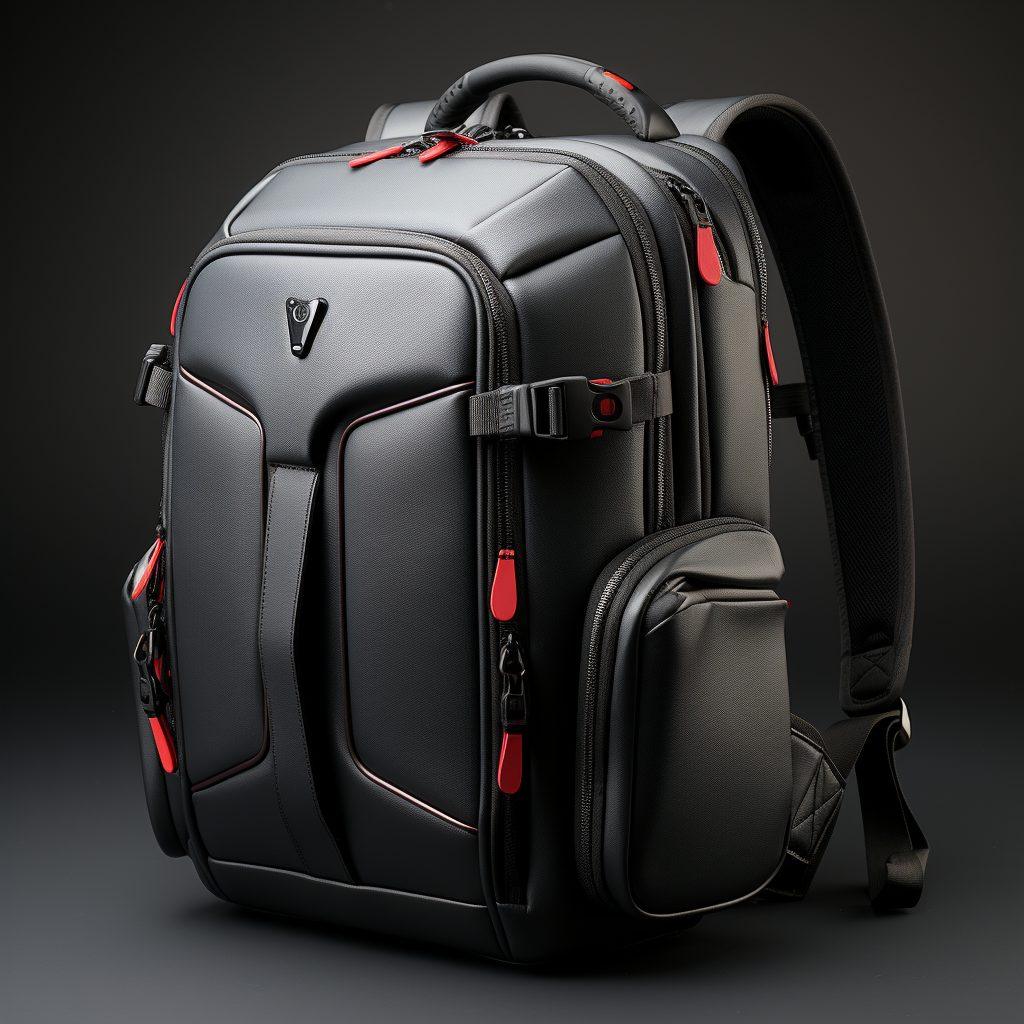
- Every design decision is a cost decision
- Start from the pledge tier, not the sketch
- Features that photograph well and produce cleanly
- Features that add cost without winning pledges
- Panel count, material count and the sampling clock
- Sizing the pack around freight and carry-on bands
- Colourway and variant strategy at 500 pcs
- Material choice that supports the campaign claim
- Two rounds to a fundable sample
- Validating the design against the production window
- Design lock: what late changes actually cost
- From approved sample to campaign asset
Every design decision is a cost decision
A backpack design is a cost sheet wearing a render. Every pocket becomes a panel, every panel becomes a pattern piece and a cutting operation, every closure becomes a purchased component, and every one of those items appears again as an inspection criterion at AQL 2.5. Creators who sketch first and cost second discover this at pre-production sample stage, when the only available remedy is to remove features from a page that has already been published.
The discipline that prevents it is simple. For every feature on the list, ask three questions before it enters the tech pack: does it move unit cost by more than a dollar, does it add a decision to the 6-10 working days of sampling window, and does it create a defect category that will be counted at inspection. A feature that fails all three is free and should stay. A feature that passes all three needs to be justified by a pledge, not by enthusiasm.
That third question is the one almost nobody asks. Backers do not inspect to ISO 2859-1, but a production partner does, and a feature with no clear acceptance criterion is a feature that will be built inconsistently across 500 units. A hidden magnetic pocket, for example, needs a stated pull force and a stated closure alignment tolerance, or the fifty-first unit will close differently from the first.
Designing this way also changes the conversation with a sourcing partner. A brief that arrives with costs attached to features gets a quotation back quickly, because the trade-offs have already been made and only need pricing. A brief that arrives as a feature wish list gets a range, and a range cannot support a funding target. Start with the custom backpacks for Kickstarter category framework if you are still choosing the base format.
Key takeaways for design-for-funding
- Test every feature against unit cost, sampling decisions and inspection criteria before it enters the tech pack.
- A design that cannot be quoted at 500 pcs cannot support a published funding target.
- Features with no measurable acceptance criterion get built inconsistently across the run.
- Simplify the material list before the pocket list — materials drive both sampling time and procurement lead time.
Start from the pledge tier, not the sketch
Funding in 30 days is a pricing outcome as much as a design outcome. The fastest route to a design that funds is to fix the pledge tier first, subtract everything the campaign has to pay before it sees margin, and let the remainder dictate what the backpack may cost to produce. Design then becomes a constrained exercise rather than an open one, which is exactly what a 35-50 day production window requires.
| Line | Per unit (USD) | Note |
|---|---|---|
| Published pledge | 119.00 | The reward tier as it appears on the campaign page |
| Backer freight and handling | -20.00 to -28.00 | A 1.2-1.8 kg parcel to North America or western Europe |
| Platform and payment fees | -10.00 to -12.00 | Commonly 8-10% of pledge value combined |
| Replacement and warranty reserve | -3.00 to -5.00 | Budgeted at 3-5% of shipped units on a structured pack |
| Available for landed cost plus margin | 74.00 to 86.00 | The figure your quotation has to beat |
| Target landed unit cost at 500 pcs | 38.00 to 46.00 | Leaves a margin you can defend in a campaign update |
Read that table as a design brief. A landed unit cost ceiling of USD 38-46 at 500 pcs permits one branded zip chain, a 600D or 900D shell, a padded laptop sleeve and a structured base. It does not permit a moulded harness, full-sublimation print and metal hardware throughout. Those are stretch-goal economics, not launch economics, and the distinction should be settled before the first render is commissioned.
Landed unit cost means the FOB Xiamen price plus freight, duty and per-unit fulfilment handling. Quoting the FOB figure alone is how campaigns discover a cash shortfall in the week the 70% balance falls due. Run the model at 500 pcs — the volume you are actually committing to — and resist the temptation to model at the volume you hope to reach.
One further discipline helps. Request the quotation at three volumes — 500, 1,000 and 2,000 pcs — before the pledge tier is fixed. The shape of that curve shows whether a stretch goal genuinely improves margin or merely adds volume, and it reveals how much of the first run is set-up cost that disappears entirely on a re-order built to an approved specification. Campaigns that skip the three-tier request usually discover the curve after they have published a price.
Features that photograph well and produce cleanly
Some design choices earn disproportionate attention in campaign photography while remaining cheap and stable in production. These are the features to spend your design budget on, because they win pledges without lengthening the sampling window or adding a defect class. All of the following are stock components or standard constructions on the lines that will run your order.
- Reverse-coil zip with a contrast tape. Reads strongly in close-up video, costs a small premium over a standard coil, and needs no tooling.
- Contrast internal lining. A lighter or coloured lining makes the interior legible in photography and is one of the cheapest perceived-value additions available.
- Structured flat base. A reinforced base panel lets the pack stand upright unaided, which matters enormously in product photography and costs one extra pattern piece.
- Bar-tacked load points. Visible dense stitching at strap roots signals durability to an experienced backer and is a low-cost addition to the operation sheet.
- Luggage pass-through sleeve. A single webbing panel on the back, cheap to add, and a feature business travellers specifically search for.
- Hidden back security pocket. A flat panel against the wearer's back, low material cost, and consistently among the most mentioned features in backer comments.
- Removable sternum strap. Uses a stock buckle, adds one component, and photographs as a genuine carrying-system feature.
- Quick-access top pocket with a soft lining. One panel and one short zip, inexpensive to add, and it protects the sunglasses and phone case that backers mention most often.
- Reflective piping or reflective zip tape. Minimal material cost, reads strongly in night photography, and gives any visibility claim on the page something real behind it.
What these share is that they are stock components arranged with intent. None requires tooling, none requires a strike-off, and none introduces a parameter that has to be set on the production fabric lot. A design built from this list can realistically be sampled in 6-10 working days rather than the 12-15 working day complex band.
Features that add cost without winning pledges
The mirror image is a set of features that consume budget and calendar without showing up in pledge behaviour. These are not bad design; they are mistimed design. Most belong on a stretch-goal variant or a second-season re-order, where the fabric lot and print set-up are already paid for and the incremental cost falls materially.
| Feature | Cost and calendar impact | Recommendation |
|---|---|---|
| Custom-moulded zip pulls | A tooling charge plus two to three weeks on the sampling clock | Use a stock pull with branded zip tape; almost no backer pledges for a moulded pull |
| Full-sublimation print | Strike-off approval and colour management across panels | Restrict print to one outer panel or to the lining, where shade variation is less visible |
| Welded or taped seams | A parameter window set on the actual fabric lot, adding four to eight days | Reserve for a stretch-goal variant once the base build is proven |
| Modular removable organisers | An extra component buy and a doubling of fit checks | Offer as an add-on from the same fabric lot instead of a launch feature |
| Metal hardware throughout | Weight up and hardware cost up 15-25% | Use aluminium or acetal selectively at the points backers touch |
The general principle is that tooling and custom components are the expensive parts of a first run, not fabric. Fabric is bought in dye lots that amortise across 500 units reasonably well; a mould costs the same whether it serves 500 units or 5,000. Spend on material grade and on the components backers physically touch — zip chain, webbing, strap padding — and defer anything that needs a tool.
Panel count, material count and the sampling clock
Sampling is quoted at 6-10 working days for standard builds and 12-15 working days for complex ones. What decides the band is not the number of pockets. It is the number of independent decisions the line must resolve, and above all the number of distinct materials those decisions depend on. A pack with fourteen pockets cut from one fabric samples faster than a pack with six pockets cut from four.
- One shell fabric, one lining, one webbing. Fastest route through the window and the cheapest procurement leg in bulk.
- A second accent fabric. Adds a purchase order and a shade-matching step; typically two to three working days.
- A laminated or moulded harness. Adds pattern work and a lamination or moulding operation; three to five working days.
- Custom hardware. Adds a tooling lead time that runs alongside the pattern and usually defines the end of the window.
- Multi-position branding. Each position carries a set-up and an approval, and positions on curved panels take longest to align.
Document the material list as its own page in the tech pack: supplier, denier, coating and shade reference for every item. That single page is what procurement works from once bulk begins, and it is what any proposed substitute is checked against if a lot becomes unavailable mid-run. Campaigns that describe materials only in prose are the ones that discover a substitution after 500 units have already been cut.
When the calendar is tight, cut materials before pockets. Material consolidation reduces the sampling window, shortens procurement inside the 35-50 day production run, lowers the number of dye lots that have to match, and reduces the number of shade-variation defects that can be counted at inspection. Pocket count mainly affects labour minutes, which is the element of unit cost most predictable at quotation stage.
Sizing the pack around freight and carry-on bands
External dimensions are usually chosen for aesthetics and then discovered to be a freight problem. A structured backpack ships air: it holds its shape in the carton and carriers charge on volumetric weight, so a pack two centimetres taller than it needs to be can add a measurable amount per unit across 500 parcels. Size the pack against the carrying use case and the carton, not against a sketch.
Three dimensions matter commercially. Laptop sleeve internal width, because that is the specification backers check first. Overall height against common airline carry-on sizers, because a pack marketed for travel is judged on it. And packed carton dimensions, because those determine the volumetric band. Agree all three with the fulfilment partner before the pre-production sample is approved, since a carton cannot be resized after packing. See rewards fulfilment for how carton specification and barcoding are locked ahead of a run.
Capacity in litres is the fourth dimension and the one that causes the most avoidable friction. A pack marketed as 30 L that measures out at 26 L is a discrepancy a backer can find with a tape measure, and it is exactly the kind of finding that spreads through comments within a day. Publish capacity as a measured figure taken from the approved sample rather than as a rounded design intent, and use the same number on the campaign page, the packing insert and any retail listing that follows.
Colourway and variant strategy at 500 pcs
The minimum is 500 pcs per style and per colourway, and variant strategy is where a well-designed pack can quietly become unaffordable. Two colours of one design is a 1,000-pcs commitment. Two sizes is treated as two styles, because the pattern and markers differ. Both decisions should be made on forecast, not on the appeal of offering choice on the campaign page.
- One hero colourway at launch. 500 pcs, one dye lot, one hardware set-up, and the cleanest unit cost available to a first campaign.
- Second colourway only above 400 forecast units. Otherwise the unsold balance of the second dye lot becomes dead stock.
- Add-ons rather than variants. A pouch, organiser insert or strap pad made from the same fabric lot adds a pledge line without triggering a new minimum.
- Stretch goals built on add-ons. Incremental unit cost on an add-on from the paid-for fabric buy is frequently 30-50% below a standalone equivalent.
Offering choice is not the same as creating value. A campaign page with one colourway and three add-on options frequently outperforms a page with three colourways, because the decision cost to the backer falls and the production complexity falls with it. The volume arithmetic behind that is set out in What Is the MOQ for Custom Bags on a Kickstarter Campaign?.
Material choice that supports the campaign claim
Material is the one design decision that backers can verify after delivery, which makes it the one claim a campaign cannot afford to overstate. Specify by measurable property rather than by adjective: 600D polyester with a PU coating rather than tough fabric, a #8 reverse-coil zip rather than a strong zipper, 420D lining in the laptop compartment rather than a padded interior. Adjectives cannot be inspected; numbers can.
Where the campaign story rests on materials — recycled content, water resistance, abrasion resistance — the documentation has to exist before the claim is published. A recycled content percentage needs a transaction certificate; a waterproof claim needs a hydrostatic head figure; an abrasion claim needs a stated test method. Book the testing during sampling rather than in the final production week, because a report requested late is a schedule risk with no mitigation available.
Abrasion and tear resistance also deserve a stated test method wherever the campaign makes a durability claim. Fabric mills quote Martindale or Wyzenbeek cycles for abrasion resistance and grab-test figures for tear strength, and both are inexpensive to obtain during the sampling window. Putting a real figure in the tech pack gives inspection something objective to verify if a fabric lot has to be substituted later in the run.
If you are weighing shell options now, the comparison in Custom Backpack for Crowdfunding: Nylon vs Polyester vs Recycled PET sets out the cost, lead-time and certification differences between the three in sourcing terms rather than marketing terms.
Two rounds to a fundable sample
Plan two sampling rounds and treat the second as the one that produces campaign assets. The first settles structure, geometry and fit; the second settles colour, branding placement and hand-feel. Budgeting one round is the most common scheduling error in campaign bag sourcing, and it typically costs two to three weeks at exactly the point the page still needs final photography.
- Issue the tech pack with acceptance criteria. Dimensions, materials, hardware, stitch specification, branding placement and packing, each with a tolerance.
- Confirm material and hardware availability. Fabric lots, zip chain, webbing and foam confirmed in stock or substituted with a documented equivalent.
- Build and measure the first sample. Sewn on the production line, measured against the tech pack, photographed under neutral light.
- Mark up in writing. Changes recorded as a revision with dimensions, never conveyed as a conversation.
- Approve the second sample as the campaign asset. The pack photographed for the page should be the pack that is produced.
- Sign the pre-production sample. Construction locks here; later changes carry both a cost and a calendar consequence.
Keep the sample that was photographed. It becomes the reference unit for inspection, and it is the artefact you will need if a backer disputes a defect or a shade. Our programme page on crowdfunding bag sample prototyping covers how to structure the mark-up so the second round really is the last.
Validating the design against the production window
A design that funds in 30 days still has to be produced in 35-50. Before the pre-production sample is signed, run the design through the production window and add up what each choice costs in days. Bulk production starts only when the deposit has cleared and the sample has been approved, so days added inside the window come straight off the published delivery month.
| Design choice | Days added | Why |
|---|---|---|
| Custom or moulded hardware | +5 to +10 | Tooling and component purchase must complete before assembly can start |
| Multi-position or multi-colour branding | +3 to +7 | Each position carries its own set-up and approval step |
| Welded seams or TPU laminate | +4 to +8 | A parameter window must be established on the production fabric lot |
| Modular sub-assemblies | +4 to +9 | Extra assembly stations plus additional fit checks per unit |
| Retail-style printed packaging | +2 to +5 | Carton printing runs after the bags themselves are finished |
Add those figures to 35 days rather than to 50. A design carrying moulded hardware, welded seams and printed retail packaging sits at or beyond the top of the range, and it leaves no recovery room if a first inspection fails. If the published delivery month matters more than the feature list, this is the table that should decide which features stay.
Design lock: what late changes actually cost
After the pre-production sample is signed, every change arrives as a surcharge and a delay. Fabric already cut cannot be re-cut, hardware already purchased cannot be returned, and a line already set cannot be re-set without losing its place in the queue. Creators routinely underestimate this because the change itself sounds small — one stitch pattern, one label position, one extra bar-tack.
The moment the campaign page goes live, the design is a public promise. Treat the published page as the specification freeze and route any subsequent idea to the stretch-goal list or the re-order instead. Changes requested after pre-production sample approval are quoted separately and are the most expensive line in most first campaigns.
There is one legitimate exception: a change driven by a failed inspection or a compliance finding. Those are corrections, not preferences, and they should be handled immediately even at cost. Everything else waits. The discipline is easier to hold if the alternative is pre-costed — put the wish-list features into a stretch-goal price before launch, so the campaign knows exactly what each unlock costs.
From approved sample to campaign asset
The approved pre-production sample is simultaneously three things: the construction reference for the line, the unit photographed for the campaign page, and the benchmark against which AQL 2.5 inspection will judge 500 finished units. Treating it as all three from the outset removes the most common source of dispute between a campaign and its production partner — a page that shows something the line was never asked to build.
Photograph the approved sample under the lighting you intend to use on the page, and keep the raw files. Keep the measurement record from the sample alongside the tech pack. And keep one physical unit, because shade disputes and dimension disputes are resolved by comparison, not by argument. These are cheap habits that pay for themselves the first time a backer posts a photograph that does not match the render.
Decide early which specification numbers will appear publicly. Published dimensions, capacity, empty weight and maximum device size become binding in the eyes of backers even when they carry a tolerance in the tech pack. Where a figure has a range, publish the conservative end of it: a pack that arrives slightly roomier than advertised is a pleasant surprise, and one that arrives slightly tighter is a refund request.
From there the sequence is mechanical: deposit paid, production 35-50 days, inspection at AQL 2.5 to ISO 2859-1, handover on FOB Xiamen terms, then transit and fulfilment. That sequence, and the calendar around it, is set out in full in the custom bags for Kickstarter sourcing guide. To start a design conversation with cost attached, use the quote request form.
Set a realistic delivery date, communicate it clearly, and update backers when anything changes — the update is what preserves trust.
Kickstarter Creator Handbook
- Minimum order quantity
- 500 pcs per style / colourway
- Sampling
- 6-10 working days (12-15 for complex builds)
- Bulk production
- 35-50 days after deposit + approved pre-production sample
- Inspection
- AQL 2.5 to ISO 2859-1
- Trade term
- FOB Xiamen
- Payment
- T/T 30/70
- Production floor
- 4,950 m², SGS-verified
- Team
- 137 staff / 7 production lines / 149 machines
- Capacity
- 200,000 pcs per month
- Custom backpacks for Kickstarter campaigns
- Custom bag categories and reward formats
- Sampling and prototyping programme
- Rewards fulfilment planning
- Campaign bag QA and QC
- Low MOQ bag production for creators
- Sourcing FAQs
- More campaign sourcing articles
Cost your design before you publish it
Send the feature list, target quantity and reward price point. You get a per-feature cost impact, a three-tier unit cost band and the sampling window within one business day.
Frequently Asked Questions
How do I design a backpack that funds in 30 days?
Fix the pledge tier first and let the remainder dictate the design. On a USD 119 reward, freight takes USD 20-28 and fees 8-10%, leaving a landed unit cost ceiling near USD 38-46 at 500 pcs. Design inside that ceiling using stock components rather than tooled ones.
Which backpack features increase unit cost the most?
Moulded or custom hardware, welded seams and full-sublimation print. Tooling costs the same whether it serves 500 or 5,000 units, so it amortises badly on a first run. Spend instead on zip chain grade, webbing and strap padding — the components backers physically touch.
Does pocket count affect the sampling window?
Less than material count does. Sampling is 6-10 working days for standard builds, and what pushes it to 12-15 is the number of independent decisions — extra fabrics, laminated panels, custom hardware. Cut materials before pockets when the calendar is tight.
Should a launch campaign offer more than one colourway?
Usually not. Each colourway carries its own 500-pcs minimum, its own dye lot and its own hardware set-up. One hero colourway plus two or three accessory add-ons made from the same fabric lot generally outperforms three colourways on both margin and decision cost.
What dimensions should a backpack reward be designed around?
Three: laptop sleeve internal width, overall height against common airline carry-on sizers, and packed carton dimensions. The last one sets the volumetric freight band, so agreeing it with the fulfilment partner before sample approval can save a measurable amount per unit across 500 parcels.
When should the backpack design be frozen?
At pre-production sample approval, and practically at campaign page publication. After approval, fabric is cut and hardware purchased, so every change arrives as a surcharge plus a 2-4 week delay. Route later ideas to the stretch-goal list or the re-order. Better still, pre-cost every wish-list feature as a stretch goal before the page is published.
How many sampling rounds does a backpack design need?
Two. The first settles structure, geometry and fit; the second settles colour, branding placement and hand-feel. Each round runs 6-10 working days for a standard build, and courier transit sits on top, so allow five to seven calendar weeks. The second round should produce the unit photographed for the campaign page.
What is the most common design mistake in campaign backpacks?
Sketching before costing. A feature list with no unit cost attached cannot be tested against a funding target, and the problem surfaces at sample approval when the only remedy is removing features from an already published page. Cost each feature at 500, 1,000 and 2,000 pcs before it enters the tech pack.
How should materials be specified in a tech pack?
By measurable property, not adjective. State 600D polyester with PU coating rather than tough fabric, a #8 reverse-coil zip rather than a strong zipper, and 420D lining rather than a padded interior. Adjectives cannot be inspected at AQL 2.5; numbers can.
Do design choices change the bulk production window?
Yes. Custom hardware adds 6-10 working days, welded seams 4-8 days, multi-position branding 6-10 working days and printed retail packaging 2-5 days. Add those to 35 rather than to 50, because a design carrying all four leaves no recovery room if a first inspection fails.
Is a recycled fabric a good choice for a launch backpack?
It works when the campaign story depends on it and the transaction certificate exists before the claim is published. Book certification during the sampling window, since a report requested in the last week of a 35-50 day run is a schedule risk with no mitigation.
What should happen to the approved sample?
Keep it. It is the construction reference for the line, the unit photographed for the page and the benchmark for AQL 2.5 inspection. Keep the measurement record and one physical unit, because shade and dimension disputes are resolved by comparison rather than argument.
How much margin should a backpack reward leave after landed cost?
Enough to fund a 3-5% replacement reserve and still show a real number. On a USD 119 pledge, a landed unit cost near USD 38-46 leaves workable margin; above roughly USD 55 the campaign funds but delivers no profit, regardless of how well it performs.
Can accessory add-ons be produced without a second minimum?
Yes, when they use the hero run's fabric lot and print set-up. Because those costs are already paid, incremental unit cost on an add-on is frequently 30-50% below a standalone equivalent, which makes add-ons the most margin-friendly stretch goal available at 500 pcs.
People Also Ask
How much does it cost to design and produce a Kickstarter backpack?
Cost is driven by fabric denier, hardware grade and panel count. At 500 pcs most launch designs land between USD 38 and USD 46 landed, before freight and duty are added to the pledge-side calculation.
What makes a backpack campaign fund quickly?
A pledge tier validated against landed unit cost, stock components rather than tooled ones, and a design that can be sampled in 6-10 working days rather than the 12-15 day complex band. Validate the pledge tier against landed unit cost at 500 pcs.
Should I use custom hardware on a first backpack run?
Rarely. Tooling adds a charge and two to three weeks, and it amortises badly across 500 units. Use stock hardware and put the budget into zip chain grade and strap padding. A stock pull on branded zip tape gives the same visual result at a fraction of the cost.
How do I stop design changes after the campaign launches?
Freeze the specification at pre-production sample approval and pre-cost every wish-list feature as a stretch goal. Then the campaign knows exactly what each unlock costs before backers vote on it. After sample approval, fabric is cut and hardware bought, so late changes arrive as surcharges.
Is one colourway enough for a crowdfunding backpack?
Usually yes. One colourway keeps the commitment at 500 pcs and one dye lot, while accessory add-ons from the same fabric buy give backers choice without multiplying the minimum. Two colourways means two 500-pcs minimums and two dye lots to reconcile at inspection.