How Much Defect Is Acceptable in a Custom Bag Order Under AQL 2.5
Acceptable tolerance under AQL 2.5 is the line between a defect you must accept and one you can reject the lot over, and the short answer is this: critical defects are never acceptable, major defects are counted against a limit of 2.5 percent under ISO 2859-1, and cosmetic issues fall into a looser minor band. In practice this means roughly 3 accepted defects per 50 units opened on a 500-piece first run. The useful part for a crowdfunding creator is not the arithmetic but the classification, because identical faults attract completely different remedies. This article sets the tolerances, attribute by attribute, for the defects that actually occur on sewn and printed reward bags.
- What acceptable tolerance means under AQL 2.5
- The three defect classes and how creators should set them
- A defect dictionary for campaign bags
- Dimensional tolerance: how much variation is normal
- Colour tolerance: shade, batch and metamerism
- Workmanship defects that look worse than they are
- Functional failures: automatic reject and why
- Print and branding tolerance: registration and edge quality
- Accept, rework or reject: the decision arithmetic
- Writing tolerances into the purchase order
- Setting tolerance by price position
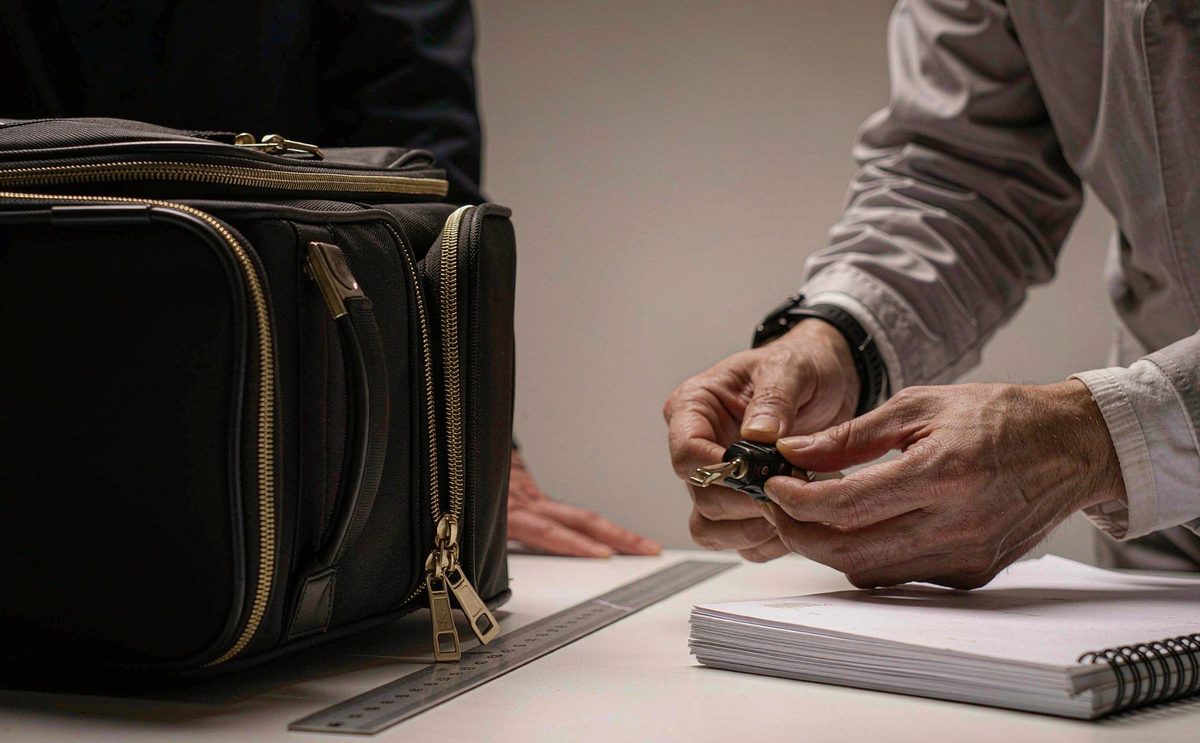
The most useful thing a crowdfunding creator can learn about quality is not how to measure a defect but how to classify one. Two teams can open the same carton, find the same loose thread at the same corner, and reach opposite conclusions, because one is applying a cosmetic standard and the other a functional standard. Nobody in that disagreement is acting in bad faith; they simply never agreed which side of the line the thread sits on. This article puts numbers on that line for the defects that appear most often on custom bag programmes, using AQL 2.5 to ISO 2859-1 as the counting rule and real production behaviour as the practical guide. It complements the broader Bag QC and Compliance framework, which sets out where this decision sits in a campaign calendar.
What acceptable tolerance means under AQL 2.5
An acceptable quality limit is not a guarantee. AQL 2.5 means that under the sampling plan, a lot running at roughly 2.5 percent defective would be accepted most of the time. Lots better than that are accepted more often; lots worse are rejected more often. The number describes the risk balance between buyer and maker, and it is deliberately imperfect, because inspecting every unit of a soft sewn product costs more than the defects it would catch.
For a first campaign order at 500 pcs per style and colourway, which is our minimum, general inspection level II gives 50 inspected units and an acceptance number of 3 major defects, with rejection at 4. Read that literally and it may sound permissive: three visibly faulty bags out of fifty. What it actually means is that the plan tolerates a production process that occasionally errs, while giving you a defined, non-negotiable trigger to reject the entire lot and require sorting.
The distinction that trips creators up is between tolerance and target. Tolerance is what you will accept; target is what you asked for. Your tech pack should be built to the target, always. Tolerance exists only to answer what happens when reality misses that target slightly, and it should be written per attribute rather than stated once for the whole bag, because a 2 mm error on a logo position and a 2 mm error on a laptop compartment depth are not remotely equivalent problems.
There is also a sampling illusion to keep in mind. Finding two defects in fifty units does not mean 4 percent of your bags are defective, because the inspector opened specific units for specific attributes. It means your process produced at least that. This is why our production team treats every confirmed defect as evidence about the process rather than about the sample, and asks what caused it before asking how many units it affects.
The three defect classes and how creators should set them
Standard practice divides defects into three classes. Critical defects make the product unsafe, unlawful or unusable: a sharp metal burr inside a pocket, a substance failure against a regulated chemical limit, an age-warning omission where one is required. Major defects are ones a reasonable buyer would reject the unit for, including broken zippers, split seams, significant colour mismatch and misapplied branding. Minor defects are workmanship issues below that threshold, such as loose thread ends or slight print imperfections invisible at conversational distance.
Most campaign contracts assign zero tolerance to critical defects, count majors at AQL 2.5, and count minors at AQL 4.0. That structure works, but the interesting work sits inside it: two campaigns selling the same gym bag may legitimately classify the same fault differently. If your campaign video promised military-grade stitching, you have made seam quality a brand promise, and a fault that is minor for another creator becomes major for you.
This is why classification should be written during product development rather than during inspection. Walk through your campaign page line by line and list every claim: waterproof, tear-resistant, lifetime guarantee, fits a 16-inch laptop. Each claim generates at least one defect class entry, because a product that fails a promised attribute is defective regardless of how it looks. The pre-production sample approval stage is the natural moment to convert marketing copy into tolerance lines.
Our campaign bag specialist typically asks for one extra class in crowdfunding files, which we call consistency defects. These are not failures of any single unit but divergence between units: two shades of the same panel, a logo 3 mm higher on one bag than another, a strap that feels stiffer here than there. Individually each unit passes; collectively they look like a different product, and backers notice patterns faster than they notice individual faults.
A defect dictionary for campaign bags
Below is the dictionary we work from. It is deliberately specific about numbers, because adjectives are what cause arguments. Where a figure is given as a range, it reflects normal variation in material behaviour rather than a negotiating position, and the tighter end of the range should be used for premium positioning and the looser end for soft unstructured shapes.
| Defect | Class | Default tolerance | Decision |
|---|---|---|---|
| Zipper does not close or splits behind slider | Critical | Zero in any sampled unit | Reject lot, full sort |
| Strap or handle stitching pulled from body | Critical | Zero where load-bearing | Reject lot, re-engineer |
| Seam open over 10 mm at a stress point | Major | 2 in 50 units at AQL 2.5 | Sort and re-stitch |
| Logo placement outside +/- 3 mm of drawing | Major | 2 in 50 units | Sort, reprint affected panels |
| Body dimension outside +/- 8 mm on soft goods | Major | 2 in 50 units | Assess fit impact first |
| Colour difference below grey scale 4 | Major | 2 in 50 units | Sort by shade, ship in waves |
| Loose thread end over 5 mm | Minor | 5 in 50 units at AQL 4.0 | Accept with trim instruction |
Notice what the table does and does not do. It sets a default so that inspection can start without negotiation, and it links each defect to the decision that follows it, because finding a fault is only useful if you have already agreed what happens next. A lot that arrives with one critical defect does not get a discount discussion; it gets sorted. A lot with four loose threads gets accepted with a trim instruction.
Two entries deserve expansion. First, colour difference is judged against grey scale rather than against opinion, and the threshold most apparel and bag programmes use is grade 4 on the ISO grey scale for colour change. Below grade 4, side-by-side panels read as different colours to most observers. Second, loose thread ends look alarming in photographs and are almost always minor: trimmed, they vanish, and chasing them consumes inspection budget better spent on load paths.
Dimensional tolerance: how much variation is normal
Soft goods move. Fabric stretches on the cutting table, foam compresses under a presser foot, and a seam that was exactly 10 mm at Pattern stage becomes 9 or 11 mm in production through no fault of anybody. Setting a tolerance of zero on dimensions guarantees arguments rather than precision, so the realistic approach is a stated band per dimension, informed by material behaviour.
Workable defaults: around 5 to 8 mm on unstructured soft bodies, 3 to 5 mm on structured panels with foam or board, 2 to 3 mm on webbing width where hardware fit is involved, and 1 to 2 mm on internal dimensions that determine whether a specific device fits. Those last two are the ones campaigns get wrong. A laptop sleeve specified at 35 cm wide with a laptop measuring 34.5 cm has no tolerance at all, regardless of what standard somebody cites.
The correct method at sampling stage is a fit test rather than a tape measure for fit-critical dimensions. Put the actual device in the actual compartment, with the actual padding thickness, and record how much slack remains, because that single observation is worth more than twenty caliper readings. Our production team records fit-test results on the sample record for precisely this reason, and the value carries into every later dispute.
Where tolerance genuinely matters, it also pays to control the process rather than just measure the output. Tighter tolerances cost money because they require single-ply cutting, additional pressing, or a slower line speed. If you need 2 mm rather than 8 mm, say so during quotation and expect the unit price to move, because there is no version of the world where precision is free. Background reading on how this works in practice sits in size tolerance handling for fabric bags.
Colour tolerance: shade, batch and metamerism
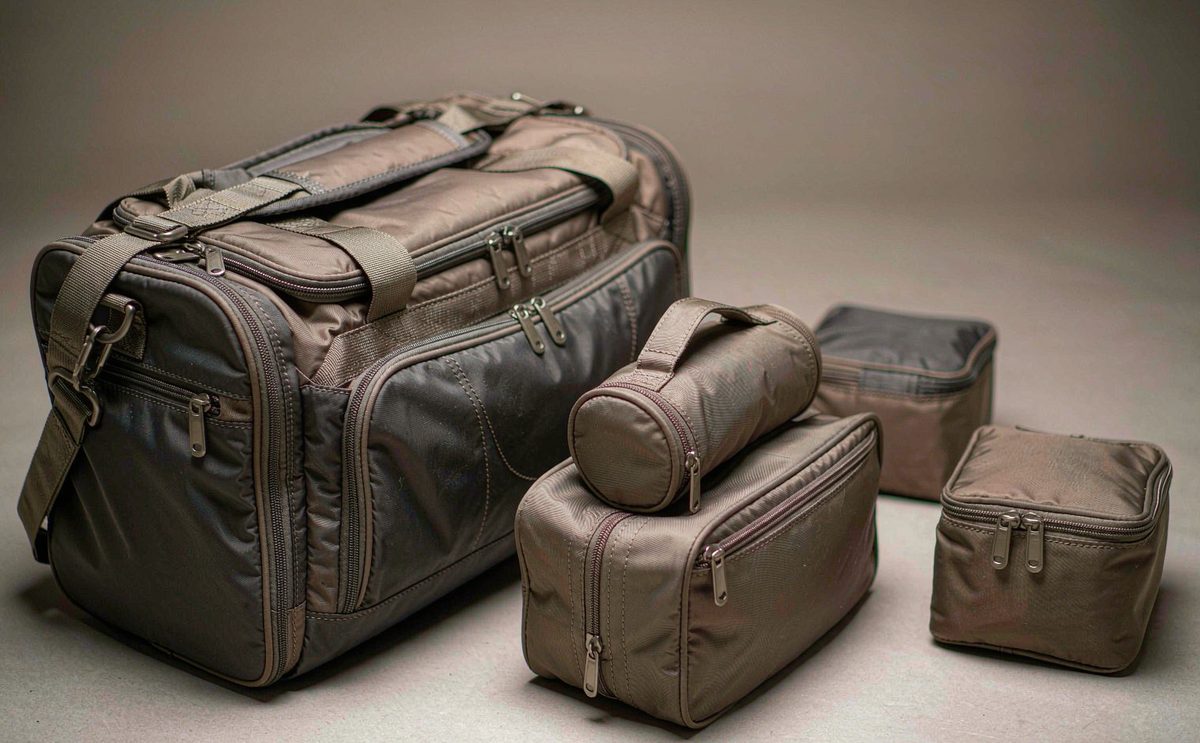
Colour produces more campaign disputes than any other attribute, partly because it is genuinely hard and partly because nobody defines the viewing conditions. Fabric dyed in one lot rarely matches fabric dyed in another; the industry accepts within-lot consistency and judges across-lot variation against a reference chip and a grey scale. What makes this manageable is deciding those conditions before production: the reference, the light source, the viewing distance and the grey scale threshold.
Default practice for campaign bags is ISO grey scale grade 4 for acceptable colour difference between panels and against the approved reference. Grade 5 means no perceptible difference, grade 4 means slight, and grades below 4 read clearly to most eyes. Instrumental measurement using a spectrophotometer and a delta E threshold of roughly 1.0 to 1.5 can supplement this where you want an auditable number, but a spectrophotometer will happily tell you two obviously different prints are close, because it does not see texture.
Metamerism deserves a mention because it generates phantom defects. Two panels match under store lighting and differ under daylight, or match indoors and separate outdoors, which is common with certain synthetic dyes and printed coatings. If your campaign photography was shot outdoors and heavily relied on accurate product colour, specify the primary viewing condition as daylight rather than the typical retail fluorescent source.
Operationally, protect yourself with retained swatches. Ask for one signed swatch card per material and per colourway at sample approval, then compare production against it under the agreed light. Where campaigns unlock additional colourways through stretch goals, this discipline becomes essential, because the fourth colourway is usually dyed months after the first three and served by a different dye lot. Our team keeps those cards in the campaign archive and ships a duplicate set to the creator.
Workmanship defects that look worse than they are
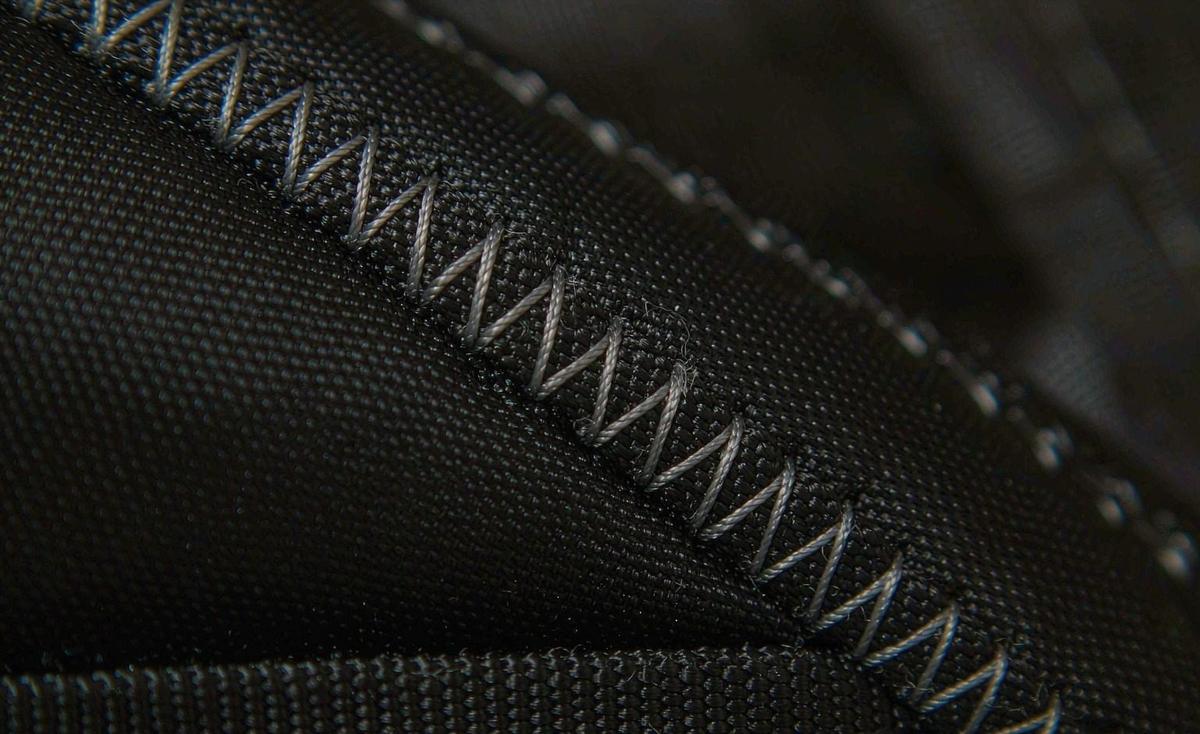
A proportion of what inspectors find is real and trivial. Thread tails, slight glue haze near a bonded edge, small creases from folding and packing, a faint needle hole where a stitch was unpicked once during repairs. Each photographs badly and none affects function. The risk for creators is spending their entire defect allowance on cosmetics and discovering, three weeks later, that they never checked whether the strap actually holds.
The defensive move is to state explicitly which cosmetic issues are auto-accept and which are counted. Standard workmanship limits include thread tails under 5 mm trimmed rather than counted, glue residue invisible at 50 cm under normal lighting accepted, and light creasing that relaxes within a day of unpacking accepted. Everything beyond those thresholds goes into the minor column and consumes allowance.
Packing-induced appearance is a special case worth agreeing separately. Copies shipped folded flat in a compressed carton arrive creased, and many look poor for the first day before relaxing. Decide in advance whether recipients receive bags flat-packed or stuffed, and build the visual expectation accordingly, since the same product can look like two different products depending purely on what was put inside it before sealing. Reference approach and materials are covered in packing custom bags efficiently.
There is a behavioural trap too. Once you start counting cosmetics, your inspector will find more of them, because attention follows instruction. Give clear thresholds and the count stabilises; give vague instructions such as check workmanship carefully and the count grows with every hour of inspection. Precision in instruction is the cheapest quality intervention available to a creator, and it costs nothing but thirty minutes of writing.
Functional failures: automatic reject and why
Anything that stops the bag doing the job it was bought for belongs in the critical column regardless of incidence. A zipper that does not close, buckle that will not release, a strap that tears at the root, a waterproof bag that leaks at a stated seam. These are not quality issues in the statistical sense; they are product failures, and sampling plans were never designed to ration them.
The reason zero tolerance is commercially rational is repair economics. A functional failure post-delivery generates replacement product plus two-way freight plus review damage, typically costing several multiples of the unit price. Preventing it means either 100 percent functional testing on line or a robust design margin, and for most campaign bags both are available at modest cost. The alternative, statistical tolerance of functional faults, is not cheaper; it merely defers the cost to the moment you have least control.
Design margin is the part creators most often skip. A strap rated to carry 15 kg in normal use should be specified and tested well beyond that, because the failure mode nobody predicts is dynamic loading: a bag dropped, swung, or yanked off an overhead rack. Our standard practice is to specify attachment strength at a multiple of realistic static load, and to test that assumption on pre-production units rather than discovering it in the field.
Hardware choices sit behind most functional failures in our files, which is why closure selection deserves separate attention rather than being treated as trim. If you have not yet specified your closures, read zippers, pockets and closures for custom bags before locking the tech pack, because changing a slider specification after bulk begins is one of the few changes that may be impossible to make at all.
Print and branding tolerance: registration and edge quality
Branding is where marketing meets manufacturing, and it is the category most often rejected by creators who are otherwise satisfied. The three controlling tolerances are placement, meaning distance from a reference edge or seam; registration, meaning alignment between colours in a multi-colour print; and edge quality, meaning definition and absence of bleed or cracking.
Reasonable defaults are +/- 3 mm in placement for prints and embroideries on flat panels, +/- 1.5 mm in registration between colours, and acceptance of edge raggedness invisible at 50 cm. Tighter figures are achievable on small logos and on stable woven fabrics, and looser ones are sometimes unavoidable on textured coatings or heavily padded panels where the substrate moves during application.
Cracking is the one branding defect worth refusing outright. Flex prints and transfers that crack when the substrate is folded are not a tolerance question but a wrong-process question, and no amount of sorting will fix units already printed. This is why we test every print process on the actual production substrate rather than a generic swatch, and why we insist the test sample be flexed, folded and washed before approval rather than merely photographed flat.
Placement method matters as much as tolerance width. A logo positioned relative to a seam will drift with panel variance; the same logo positioned relative to a hard corner will be consistent within a millimetre or two. If consistency across the run matters more than absolute placement, specify the datum point explicitly on the tech pack drawing. Our artwork review flags this whenever the drawing shows only a centred position with no datum.
Accept, rework or reject: the decision arithmetic
Once defects are classified and counted, three options exist and they are not equally attractive. Accept means taking the lot as found, usually against a credit or an agreed remedy for the affected units. Rework means sorting, repairing or replacing within the existing lot, keeping production on site and delaying shipment by the duration of the sorting operation. Reject means refusing the lot and requiring remake, which under a 35 to 50 day bulk window can cost more time than the campaign has.
The decision should be driven by three numbers: how many units are affected, how long the remedy takes, and what the remedy costs relative to the delivery promise. Sorting a 500-piece lot at a realistic rate is a matter of days, not weeks, and is the right answer for most cosmetic and localized problems. Full remake of a structural problem costs another production window and is usually the wrong answer unless the affected proportion is large.
Payment timing governs your leverage here. Standard terms of T/T 30/70 mean the deposit has been paid and 70 percent remains outstanding; that balance is your leverage and should not be released until the remedy is complete and re-verified. Under FOB Xiamen terms your obligations begin at handover to your nominated forwarder, so the decision has to be made and closed while goods are still on the origin side of that boundary.
Build a contingency line into the campaign timeline for exactly this. Sampling takes 6 to 10 working days, or 12 to 15 working days for complex constructions, and if a reworked lot needs a second round, part of that clock restarts. Campaigns that promise delivery dates computed as if production never fails are the campaigns that end up explaining themselves in update posts, while campaigns that carried a two-week buffer absorbed the same problem silently.
Writing tolerances into the purchase order
Tolerance only binds it if is written where both parties signed. The purchase order should carry, at minimum: the inspection standard stated as AQL 2.5 to ISO 2859-1 with the general inspection level; the acceptance and rejection numbers per defect class; the tolerance per critical dimension; the colour reference and grey scale threshold; and the remedy that applies when each threshold is breached. Anything absent from that list will be interpreted generously by whoever has the goods.
Write tolerance as measurable statements rather than adjectives. High quality construction is unenforceable. Stitch density 8 to 10 stitches per inch on all load-bearing seams, verified at three points per unit is enforceable. The conversion takes discipline and it is the single highest-value hour you will spend on the production side of a campaign, because it converts every later disagreement into a measurement instead of a negotiation.
Attach the signed reference sample as a named exhibit in the order, identified by a number that appears on the sample itself, on the tech pack and in the inspection report. When three documents cite the same exhibit number, disputes about what was approved end quickly. When they cite different things, every subsequent conversation becomes archaeology. Our programme coordinator assigns that exhibit number at sample approval and uses it consistently thereafter.
Finally, state the inspector and who pays. Whether inspection is run by an independent third party engaged by you, by our internal team, or jointly, put it in writing with the cost allocation and the date. Vague arrangements here produce the worst outcome in the industry: nobody inspects, everybody assumes somebody did, and the first person to discover the truth is a backer.
Setting tolerance by price position
Tolerance should follow positioning. A bag retailing around USD 30 as part of a multi-item reward tier can legitimately run looser workmanship limits than one sold as a standalone premium product at USD 149. What changes is not the honesty of the process but the amount of inspection effort and finishing labour bought with the unit price, and pretending otherwise leads either to overpaying or to disappointed backers.
For budget tiers, we recommend keeping functional tolerance at zero while relaxing cosmetic limits: allow more minor workmanship defects, keep structural and safety requirements unchanged. For mid tiers, tighten cosmetics to standard apparel norms and add a 100 percent functional check on closures. For premium tiers, move major defects to AQL 1.5, require 100 percent closure checks, and add packaging presentation checks, because buyers at that level inspect the box as carefully as the bag.
Across the 20+ crowdfunding campaigns in our files, the campaigns with the fewest public complaints were not the ones with the tightest stated tolerance. They were the ones where the published tier matched the inspection effort paid for, so nobody was surprised. A clearly positioned product inspected to a matching standard produces predictable outcomes; a product that promises premium and pays for economy produces arguments on comment threads.
Whichever position you choose, review it after shipping rather than before the next campaign only. Every programme generates a small set of faults nobody anticipated, and those get promoted or demoted in the defect dictionary for your next project. Tolerance is not a fixed rule handed down once; it is a living document that gets sharper every time you ship, provided somebody actually writes down what happened.
Want your defect classes and tolerances drafted for your specific bag rather than adapted from a template? Send the tech pack and target ship date through the quotation form or to service@junyuanbags.com, and we will return a tolerance schedule with numbers attached to every claim on your campaign page.
Frequently Asked Questions
What does AQL 2.5 actually mean for a bag order?
AQL 2.5 is the acceptable quality limit used with ISO 2859-1 sampling. For a 500-piece lot at general inspection level II, 50 units are inspected and the plan accepts 3 major defects, rejecting at 4. The standard does not guarantee perfection; it defines how much imperfection triggers a rejection and full sorting.
Is AQL 2.5 strict enough for premium reward bags?
For most campaign bags, yes. Where a bag retails above roughly USD 100 or carries a lifetime-style guarantee, moving major defects to AQL 1.5 is worthwhile. That plan inspects more units and accepts fewer defects, which raises inspection cost slightly and substantially reduces cosmetic complaints.
What is the difference between a major and a minor defect?
A major defect is one a reasonable buyer would refuse to accept: a split seam, an inoperable zipper, a badly placed logo. A minor defect is a workmanship issue below that threshold, such as a thread end over 5 mm or slight glue haze. Majors are counted at AQL 2.5 and minors usually at AQL 4.0.
Are critical defects ever acceptable under AQL 2.5?
No. Critical defects carry a zero acceptance number in standard campaign contracts, because they make the product unsafe, unlawful or unusable. Finding one critical defect in a 500-piece lot normally triggers lot rejection, full sorting and correction, not a negotiated credit for one unit.
How much dimensional variation should I allow on a soft bag?
Around 5 to 8 mm on unstructured soft bodies, 3 to 5 mm on structured panels, and 2 to 3 mm on webbing where hardware fit is affected. Fit-critical internal dimensions deserve their own tolerance, ideally verified by placing the real device rather than by caliper measurement alone.
What colour difference is acceptable between panels?
Most bag and apparel programmes accept down to ISO grey scale grade 4 for colour change, which means slight but perceptible difference. Below grade 4 most observers can read two panels as different colours. Spectrophotometer values around delta E 1.0 to 1.5 supplement this but do not replace visual judgement.
Can I reject a lot if my own inspection finds defects later?
Only if the contract allowed it. Standard practice ties rejection to inspection performed before shipment and before balance release under T/T 30/70 terms. Once goods have been handed over under FOB Xiamen, remedy becomes a commercial negotiation. This is why inspection timing should be written into the order.
Is rework or replacement cheaper when defects are found?
Rework, in most cases. Sorting and repairing within an existing 500-piece lot costs days of labour, while a full remake costs another 35 to 50 day production window plus freight displacement. Replacement becomes sensible only when the affected proportion is large or the fault is structural.
How do I stop cosmetic defects eating my defect allowance?
State cosmetic thresholds explicitly before inspection so they are either auto-accept or excluded from counting. Standard limits include trimming thread tails under 5 mm and accepting glue haze invisible at 50 cm. Precision here stabilises the count and keeps attention on structural checks.
Do tighter tolerances cost more per unit?
Yes. Achieving 2 mm instead of 8 mm typically requires single-ply cutting, additional pressing or slower line speed, all of which add labour. The cost is usually modest and well worth paying on fit-critical features, but it should be requested at quotation rather than demanded after approval.
Should every unit be functionally checked?
For closures, yes, where the product depends on them. Sampling plans are designed for attributes that vary randomly; functional failures cluster by machine, operator or component batch. A 100 percent check of zipper operation and buckle engagement is inexpensive and prevents the most expensive category of complaint.
What should be recorded when a tolerance dispute happens?
Record the tolerance line from the purchase order, the measurement method, the units measured, the lighting condition for any colour judgement, and photographs with identifiable unit numbers. Disputes resolve quickly with five consistent data points and stall indefinitely with impressions. Keep the signed reference exhibit at hand throughout.
People Also Ask
What is an acceptable defect rate for custom bags?
Under AQL 2.5 with ISO 2859-1, roughly 3 accepted major defects per 50 units opened on a 500-piece lot, with rejection at 4. Critical defects are never acceptable and minor defects are counted at AQL 4.0.
Can I demand zero defects?
Not realistically on soft sewn goods. You can demand zero for critical and functional failures, which is the commercially meaningful commitment, and set caps for everything else rather than pretending lives can be perfect.
Why do bags from the same order look different?
Usually because of dye lot variation, panel cutting variance or differences in how the unit was packed. Retained signed swatches and a stated datum point for logo placement remove most of this divergence before it reaches a backer.
Is a loose thread a defect?
Technically yes, usually classified as minor. Thread tails under about 5 mm are trimmed rather than counted; longer ones count against the AQL 4.0 minor allowance. Thread tails near a load-bearing seam warrant a closer look at stitch integrity.
How do I write tolerance into a purchase order?
State the inspection standard, the sampling level, acceptance numbers per class, per-dimension tolerances, colour reference with grey scale threshold, and the agreed remedy. Use measurable statements with numbers rather than adjectives such as high quality.
Does tightening AQL delay production?
Tightening AQL raises inspection hours rather than production time, adding roughly a day per lot. Rework caused by a tighter standard is what actually costs time, so pair stricter limits with better finishing rather than with more counting.
What should I do first when defects are found?
Classify before reacting. Identify the class, count against the plan, establish whether failures cluster in one area, and only then choose between accept, rework and reject. Never release the balance payment before that sequence is complete.