How to Test Custom Bag Durability Before a Campaign Ships
A 20,000 zipper-flex target and 5,000 open/close cycles are useful only when the test defines the specimen, load, speed, environment and failure limit. For campaign bags, durability testing should reproduce likely backer use across zips, closures, straps, seams, fabric and coating, then connect the approved sample to the 500-piece production lot. Treat the numbers as documented programme targets, not universal guarantees of service life.
- What 20,000 and 5,000 cycles really mean
- Convert backer behaviour into a use profile
- Define specimens, conditioning and failure
- Build a 20,000-operation zipper protocol
- Run 5,000 open and close cycles correctly
- Test straps, handles and seams under fatigue
- Measure fabric and surface durability
- Add water, heat and contamination in the right order
- Transfer test results into production controls
- Report evidence without promising immortality
Durability evidence should answer a purchasing question: will the approved construction tolerate the use described on the campaign page with an acceptable margin? It cannot predict every user's service life. A credible plan identifies likely failures, tests representative samples to written protocols, records progressive damage and verifies that bulk materials and assembly match the tested build. The campaign can then communicate what was tested without converting a controlled result into an unlimited warranty claim.
What 20,000 and 5,000 cycles really mean
A cycle count is incomplete without an operation definition. “20,000 zipper flex” could mean reciprocating a slider along a specified chain length, flexing the closed chain around a radius, opening and closing under lateral tension or repeating pulls around a curved bag panel. Those actions stress teeth, tape, slider, stitching and surrounding material differently. “5,000 open/close” is equally ambiguous for hook-and-loop, snaps, magnets, roll-top buckles or a zip pocket. Write one cycle as a sequence: starting position, travel, applied load, speed, dwell, return and inspection interval. State the specimen orientation and whether the bag is empty or packed. Then define failure. Total breakage is obvious, but unacceptable performance often appears earlier as slider jamming, tooth separation, tape distortion, pull detachment, closure-force change, seam growth or loss of engagement. Set objective limits before testing so the target is not moved after damage appears. Record observations at intervals such as 0, 1,000, 2,500, 5,000 and then appropriate later points for the 20,000 programme. Interim data shows the damage curve and helps diagnose whether wear is gradual or sudden. These numbers are programme targets, not universal industry promises or direct years-of-life equations. A backer may operate a main zip 8 times daily, overload the bag or expose it to sand; another may use it twice a week. Communicate the controlled operation and result rather than claiming “lasts 10 years.” Pair cycle evidence with the Kickstarter campaign bag QA and QC guide so production inspection verifies the same chain, slider and seam construction.
| Protocol field | Zipper example | Closure example | Why it matters |
|---|---|---|---|
| One cycle | Full open, full close, return | Engage and disengage once | Prevents count ambiguity |
| Load | Packed panel plus lateral force | Defined peel or pull force | Represents use severity |
| Speed | Fixed operations per minute | Controlled dwell and rate | Heat and wear change with speed |
| Inspection | Jam, separation, tape and pull | Engagement, damage and force | Captures progressive failure |
| End point | 20,000 completed within limits | 5,000 completed within limits | Creates an objective decision |
| Traceability | Chain, slider, lot and seam | Component lot and installation | Links result to bulk |
Convert backer behaviour into a use profile
Build the test around how the reward will be used, not around the equipment already available. List the target user, trip frequency, carried mass, access frequency, environment, packing style and expected misuse. A commuter opens a laptop compartment and quick-access pocket repeatedly, sets the bag on rough floors and loads one shoulder first. A weekender sees fewer cycles but higher loads and more lifting by the grab handle. A children's bag may be swung, dragged and overstuffed. Rank functions by frequency and consequence. Main closure, load-bearing straps and bottom seams deserve stronger evidence than a decorative pocket opened once a month. Convert behaviour into a matrix of operations per day, exposure days and target margin, but do not present that arithmetic as guaranteed lifespan. It is a design assumption that selects test severity. Include combined stresses. A zip may pass 20,000 unloaded operations yet fail when the panel is packed and the teeth are contaminated. A handle may hold a static mass but fatigue after thousands of lifts. A coating may resist water when new but crack after fold cycles. Sequence tests to expose interactions: condition, load, cycle, abrade, wet, dry and recheck function where that sequence resembles use. Identify the worst-case size and colourway. The largest bag may carry more load; the darkest coated fabric may absorb more heat; a curved zip route may create higher slider friction than a straight route. If multiple variants are grouped under one result, document why the specimen is at least as severe. Review claims before choosing targets. “Daily commuter,” “weather resistant” and “heavy duty” each create expected behaviours that generic sewing tests do not cover. Use the related waterproof bag testing guide where moisture performance is part of the durability promise.
Define specimens, conditioning and failure
A result is defensible only when the tested specimen represents production. Record bag revision, size, colourway, shell and lining article, coating, zip chain and slider codes, thread, stitch density, seam allowance, reinforcement and assembly date. Photograph the sample before testing and retain an untested control from the same build. Use enough specimens to reveal variation rather than relying on one unusually good prototype; the responsible engineer or laboratory should set the count for the risk and method. Condition samples under stated temperature and humidity before baseline measurements, and record any preconditioning such as washing, wetting or temperature exposure. Measure initial closure force, dimensions, mass and visible condition. Mark inspection zones so crack or seam-growth measurements can be repeated. Failure criteria should combine function and appearance. A zip that still moves but separates behind the slider has failed. A strap that remains attached after seam extension beyond the approved limit has failed. A hook-and-loop panel that closes but retains too little peel strength has failed. Decide whether one specimen failure rejects the design, triggers investigation or requires a larger confirmation set. Do this before the run. Control machine parameters and calibration. Record model, fixture, speed, load, counter reading and any interruptions. If a test stops overnight, document the count and sample position. Never reset or lubricate a jammed component unless the protocol permits and the event is recorded; intervention can erase the failure you intended to detect. The first formal test should use a signed pre-production sample, not an early visual prototype. Standard sampling takes 6–10 working days, while complex representative constructions may need 12–15. Courier, conditioning and laboratory time sit outside those windows and belong in the launch calendar.
Build a 20,000-operation zipper protocol
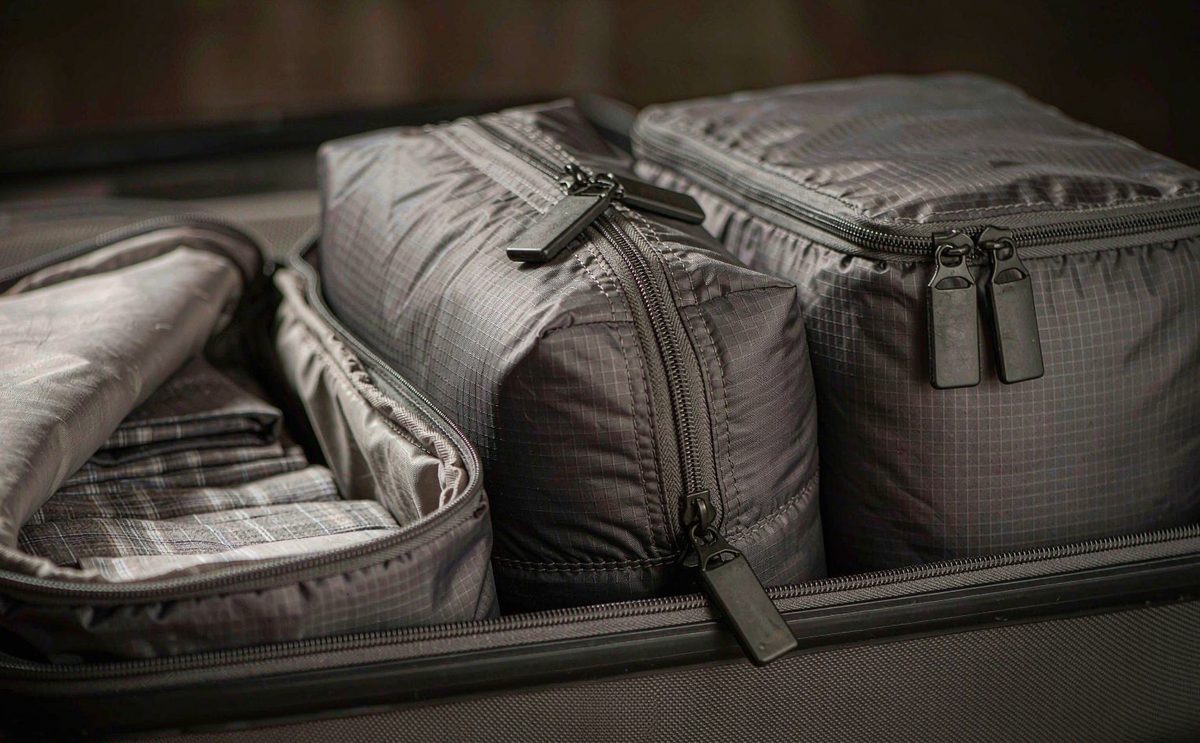
Treat the zipper as a system: chain, teeth or coil, slider, pull, stops, tape, seam, panel geometry and packing load. Select the exact production-intent set. A premium slider on a different chain does not validate the pair intended for bulk. Mount the bag or panel so the zip follows its real route, including curves and corner tension. Fill the compartment to a defined volume or apply lateral load if normal packing pushes the chain apart. Set travel endpoints without repeatedly crashing the slider into stops more severely than actual use unless stop impact is a deliberate part of the test. Specify speed low enough to avoid artificial heat yet consistent enough for reproducibility. The 20,000-operation target should include scheduled checks for operating force, jamming, tooth or coil damage, tape fray, seam opening, slider wear, pull security and separation behind the slider. Do not wait until the counter ends to photograph damage. If the pull has a cord, moulded tab or metal ornament, test its attachment separately because the cycling fixture may not reproduce sideways pulling. Add contamination only when the use profile justifies it, using a controlled medium and quantity. For water-resistant designs, cycle after wet conditioning and drying to see whether coating stiffness or corrosion changes function. Compare tested results with the untested control and record any change in hand-feel or noise. A failure should lead to root-cause work across alignment, chain size, slider match, stitch position and panel load, not an automatic upgrade to the most expensive zip. After correction, repeat the complete relevant protocol on a new representative sample; continuing from the old count on a modified specimen does not validate 20,000 operations.
Run 5,000 open and close cycles correctly
The 5,000-cycle closure target applies differently to each mechanism. For hook-and-loop, one cycle must define full engagement pressure, dwell, peel direction and complete separation. Track peel or shear performance at intervals because fibre contamination and hook damage reduce holding force before visible failure. For snaps, control alignment and actuator direction; off-axis opening can deform the post or tear the surrounding fabric. Measure opening force so a closure does not become unusably stiff or dangerously loose. For magnetic closures, inspect retention, housing security, alignment and surrounding material wear, while separately reviewing product- and market-specific restrictions. Buckles require engagement, load, release and examination for cracks, latch wear and accidental opening. Roll-top systems combine buckle cycles with repeated folding, so mark the fold line and inspect coating delamination or whitening. Drawcord locks require cord abrasion and slip checks in addition to button cycling. Mount the complete bag area where possible because reinforcement and fabric flexibility influence the closure. If only a component coupon is tested during development, confirm the installed assembly before approval. Define cleaning or contamination steps where cosmetics, dust or fibres are likely. Record force at baseline and at planned intervals, not only pass or fail. A closure may remain intact at 5,000 cycles while force drifts outside a child user's capability or a one-handed accessibility promise. The final criterion must reflect the intended user. Protect the headline from overclaim: 5,000 machine cycles under a stated protocol are evidence of repeated-operation resistance, not proof that every backer receives 5,000 flawless uses in uncontrolled conditions. Keep the full method and data behind any campaign summary.
Test straps, handles and seams under fatigue
Static strength answers whether an assembly holds one high load; fatigue asks what repeated lower loads do over time. Campaign bags need both. Define the intended maximum carrying load, then test shoulder straps, grab handles, detachable anchors and critical body seams as complete paths. Begin with dimensional and stitch records. Apply a controlled static load for the specified dwell and inspect slippage, seam growth, fabric distortion and hardware damage. Follow with repeated lifting or alternating fatigue cycles that represent walking, shoulder loading or hand carrying. The engineer should select loads, rates and cycle counts from use risk rather than copying the zipper number. Observe the weakest transition: webbing into a seam, bar tack into coated fabric, hook into a D-ring, reinforcement edge into shell or thread crossing a thick stack. Hidden failure often starts where stiffness changes. Test both straps together and individually where foreseeable one-strap use exists. For detachable systems, cycle attachment and apply load after wear. Record adjustment slip because a strap can remain attached yet lengthen unacceptably. Seam evaluation should include stitch breakage, yarn pull-out, needle-hole growth, seam slippage and tearing beside reinforcement. Compare warp, weft and bias orientations where panel direction changes. If a sample fails, inspect construction before simply increasing stitch density; too many needle holes can weaken coated or light fabric. Production controls must define reinforcement location, seam allowance, thread and bar-tack pattern. At first-off bulk, open or X-ray representative hidden areas by the agreed method to confirm transfer. In-line pull checks catch missing back-tacks early, while final AQL 2.5 inspection confirms sampled workmanship across cartons.
Measure fabric and surface durability
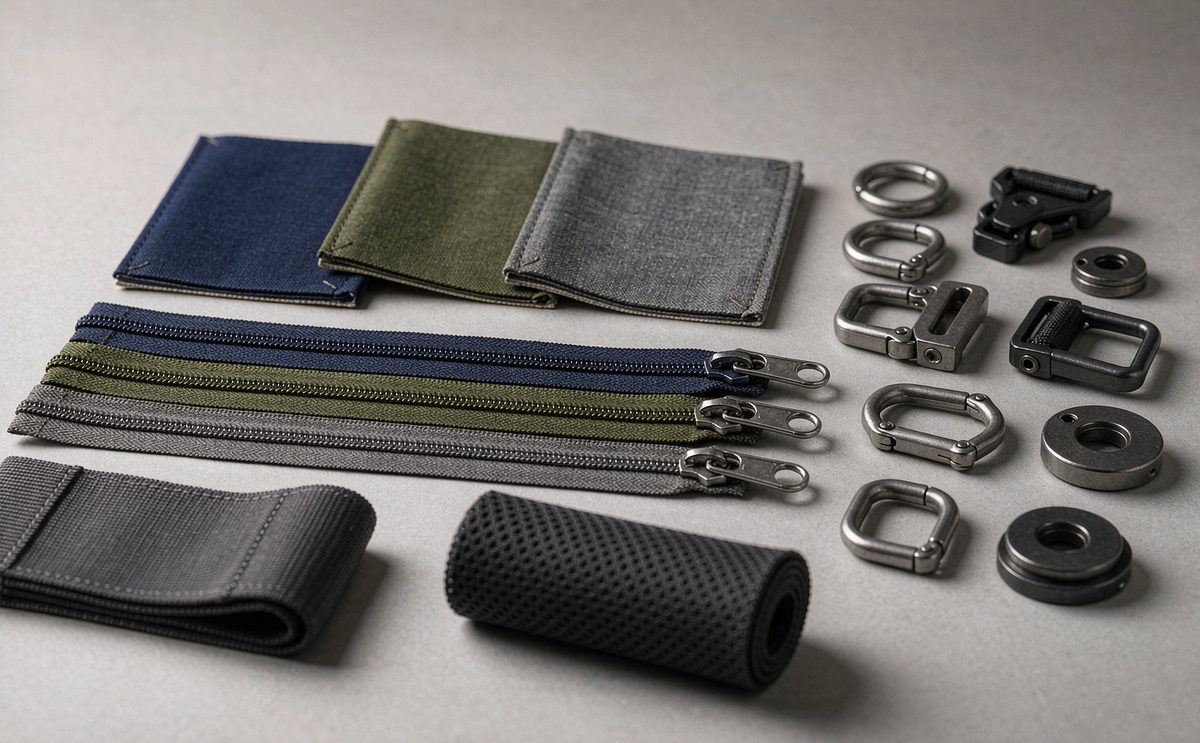
Fabric durability is multi-dimensional. Abrasion, tear, tensile strength, puncture, pilling, colourfastness, coating adhesion and seam slippage address different failure modes. Select tests from contact zones and claims. Bag bottoms and side panels meet floors and walls; shoulder areas rub clothing; coated folds crease; printed panels face scratching and sunscreen or cosmetic contact. Map zones on the pattern and test the exact production-intent article, including dye, print, coating and lamination. A base fabric result does not validate a later transfer print or bonding process. Abrasion methods need the abradant, pressure, motion, endpoint and specimen orientation. Report the number of cycles at the agreed visual or structural change, not just the machine stop. Tear and tensile data help compare materials, but constructed seams can fail first, so test panels with representative needle and thread. For prints, examine adhesion, cracking, colour change and edge lift after flex, rub and environmental conditioning. Embroidery needs thread abrasion, backing stability and puckering review. Coating durability should look for delamination, pinholes, whitening, tackiness and hydrolysis risk appropriate to the material. Colourfastness may include dry and wet rubbing, perspiration or water depending on use. Set acceptance with approved physical standards and instrument readings where practical, because “no obvious change” varies between reviewers. Test the darkest, lightest or most heavily coated variant according to a documented worst-case rationale. Then retain swatches and reports by lot. During the 35–50 day bulk production period, incoming inspection should compare identity, weight, width, colour and surface against the approved roll before cutting.
Add water, heat and contamination in the right order
Environmental exposure can change mechanical durability, so sequence matters. A clean dry zipper may complete 20,000 operations while the same assembly becomes stiff after dust, water or salt exposure. A coating may pass a new-bag spray check but crack after repeated folds. Start with the use profile and select realistic conditioning rather than an extreme collection of unrelated tests. Record water type, temperature, duration, drying method and recovery period. For wet-use bags, inspect corrosion, colour transfer, swelling, adhesive whitening, seam-tape lift and closure force after conditioning. Heat and cold can change plastic buckle toughness, foam recovery, adhesive bond and coating flexibility. Cycle within justified ranges for storage, freight and intended use, then return specimens to defined conditions before measurement. Contamination tests need controlled media such as standardised dust, lint or artificial perspiration where appropriate; random sand from outdoors cannot produce repeatable evidence. Combine stresses deliberately. If the product is advertised for rainy commuting, perform water exposure after mechanical flex and recheck leakage plus zip function. If sunscreen contact is foreseeable on a beach bag, expose the relevant panel, clean according to instructions, then inspect print and coating. Keep one factor unchanged when investigating a failure so the cause can be isolated. Environmental tests do not automatically justify an IPX claim, “waterproof” language or a temperature guarantee; those statements need their own defined methods and product boundaries. The waterproof bag testing article explains seam, ingress and IPX-style evidence in detail. Include environmental conditioning in the approved protocol before testing begins, not as an improvised rerun after a dry result looks weak.
Transfer test results into production controls
A passed prototype has commercial value only if production replicates it. Create a tested-construction register listing every result with sample revision, fabric lot, zip combination, closure code, thread, reinforcement, seam and supplier source. Mark safety- or durability-critical items as no-substitution without written review. Attach clear photographs and key dimensions to the tech pack. At incoming inspection, verify material and hardware identity, then run focused checks such as zip operation, buckle engagement, coating appearance or webbing dimensions. At first-off, compare the complete unit with the retained tested sample and inspect hidden construction. During sewing, control the process that creates durability: stitch density, seam allowance, needle condition, reinforcement position, bar-tack pattern and zip alignment. Use short verification tests at defined intervals rather than repeating 20,000 cycles on every batch. For example, operate sampled zips through a smaller screening cycle, pull-test attachments and inspect first pieces from each line; the full qualification remains tied to unchanged materials and construction. Trend defects and stop when jams, skipped stitches or seam growth rise above the control rule. Final inspection uses AQL 2.5 to ISO 2859-1 for agreed defect classes and functional checks. If a critical component changed, do not rely on AQL appearance; assess whether qualification testing must be repeated. The order minimum is 500 pcs per style and colourway, so one unapproved substitution can affect an entire reward tier. Review the final report before the T/T 70% balance and FOB Xiamen release. The companion bag print and embroidery QC guide covers production controls for decorated surfaces that can fail after flex and abrasion.
Set a requalification rule before procurement. Full retesting is normally triggered when the change can alter the stressed system: a different zip source or size, new slider geometry, lower fabric weight, revised coating, changed thread, reduced reinforcement, relocated seam, different closure or new assembly site. Administrative changes and demonstrably identical lots may need document review rather than a complete programme, but record the rationale and approver. Use a small first-off or pilot quantity to confirm that production machines, folders and operator methods reproduce sample-room construction. Select units across time and positions, not 3 consecutive pieces made for inspection. Screening tests should have action limits stricter than obvious failure so drift is found early. If operating force rises, tape begins to wave or attachment displacement grows, pause and investigate before breakage. Calibrate gauges and retain tested bulk pieces with their lot code. Compare field returns with qualification damage signatures: similar wear can identify an underestimated load or operation, while a new failure mode may reveal production variation. Feed results into the next order's specification and control plan. A strong durability programme is therefore a closed loop from use assumption to qualification, bulk screening and backer experience, rather than a one-time laboratory certificate.
Report evidence without promising immortality
A durability report should let an independent reviewer reproduce the work. Include objective, use profile, protocol revision, specimen count and identity, conditioning, equipment and calibration, loads, speeds, cycle definition, inspection intervals, raw observations, photographs, failures, interventions, result and authorised reviewer. Show data from all specimens, not only the best. Explain any deviation, machine stop or replacement. Link the report to the retained tested sample and production register. For campaign communication, summarise the operation precisely: a named zipper assembly completed 20,000 defined machine operations under a documented load and inspection plan, or a named closure completed 5,000 engagement cycles within agreed performance limits. Do not translate those results into an exact number of years, unlimited use, indestructibility or a warranty period without separate evidence and legal review. Make clear which components were tested. A main zip result does not cover every pocket zip; a buckle result does not prove fabric abrasion. Pair durability with realistic care instructions and a replacement policy. Backer complaints should capture lot code, use, load, environment, failure point and photographs. Compare returned items with retained samples and interim test damage. This closes the loop between laboratory assumptions and field behaviour. Revisit the protocol when repeated complaints appear, even if the original sample passed. Creators can send target load, bag type, materials and launch date through the quote request form. Our production team can coordinate representative samples and lot controls, while the selected laboratory or engineer owns the test method and interpretation. Good durability evidence is specific, reproducible and modest about what it predicts.
Send your use profile, bag specification, target load and durability claims to plan representative samples and production controls before launch.
Frequently Asked Questions
What does a 20,000 zipper-flex test prove?
It shows that the named zipper assembly completed 20,000 defined operations under the protocol's load, geometry, speed, conditioning and failure limits. It does not automatically predict a number of years or validate every zip on the bag. Record chain, slider, pull, tape, seam and panel construction, then ensure bulk production uses the same approved combination and component lots throughout.
What counts as one zipper test cycle?
The written protocol must define it. A common programme may count full opening, full closing and return to the starting state as one cycle, but other rigs count individual strokes. State travel, load, speed and endpoints so 20,000 has one meaning. Also record whether the bag is packed and whether curves or lateral tension reproduce actual panel geometry during every scheduled check.
What does 5,000 open and close cycles mean?
It means a specific closure completed 5,000 defined engagement and disengagement sequences within pre-agreed limits. The method differs for hook-and-loop, snaps, magnets, buckles and cord locks. Measure changes in force, wear and accidental release, not just complete breakage. A closure can remain intact while becoming too stiff or too loose for the intended user. Record force at planned intervals.
Can cycle testing predict how many years a bag will last?
Not exactly. Machine cycles are controlled evidence, while backer use varies by load, frequency, contamination, storage and care. You can use a behaviour model to select test severity, but should not convert 20,000 operations into a guaranteed 10-year life. Report the protocol and result, then support field performance with lot traceability and complaint trend review across delivered batches.
How many durability test specimens are needed?
The responsible engineer or laboratory should set the count from risk, method and expected variation. One perfect prototype is weak evidence because fabric, hardware and sewing vary. Test multiple representative units where practical and retain at least 1 untested control from the same build. Record all results, including failures, rather than reporting only the strongest specimen or averaging away an early break.
Should a bag be loaded during zipper cycling?
Yes when normal packing creates lateral tension or changes zip geometry. Define the load, fill method and panel shape so the test is repeatable. An unloaded straight zip coupon may be useful for component comparison but can understate stress on a curved, overstuffed compartment. Use the installed assembly for final qualification and document any additional contamination or wet conditioning in the controlled protocol.
Which durability tests matter besides zipper cycling?
Consider strap and handle fatigue, static load, seam strength and slippage, fabric abrasion and tear, print adhesion, buckle or snap cycling, coating flex, colourfastness and environmental conditioning. Select from the use profile rather than running every available method. A commuter pack, weekender and children's bag have different high-frequency functions and failure consequences that require different programme priorities.
When should durability testing happen in sampling?
Screen components during development, then qualify the signed pre-production construction before bulk. Standard sampling takes 6–10 working days and complex builds 12–15, with conditioning and laboratory time added separately. Leave room for redesign and a complete retest. Testing an early substitute-material sample cannot validate the later production-intent coating, hardware or seam. Keep one untested control sample.
Does AQL 2.5 replace durability testing?
No. AQL 2.5 to ISO 2859-1 samples finished cartons for agreed defects and short functional checks. It does not reproduce 20,000 zipper operations or long fatigue programmes. Qualification proves the approved construction under the protocol; production controls and final AQL inspection verify that the 500-piece lot replicates that construction and workmanship consistently.
Must testing be repeated after a material change?
Review every change against the qualified construction. A new zip chain, slider, coating, fabric, reinforcement or seam can alter the relevant result even when appearance is similar. Repeat affected qualification when equivalence is not justified by controlled evidence. Quarantine the substitute until approval, because one change can affect all 500 pcs in the colourway and the published performance claim.
How should durability results appear on a campaign page?
Name the component, operation count and controlled nature of the test. Avoid indestructible, lifetime or exact-years language unless separate evidence supports it. Keep the full protocol and report behind the summary. If only the main zip completed 20,000 operations, do not imply that every closure, seam and fabric panel received the same programme or result.
What records should accompany tested production?
Keep the protocol, raw data, equipment details, specimen photographs, component lot codes, retained sample, approved tech pack, incoming checks, first-off record, in-line controls and final AQL 2.5 report. Review them before the T/T 70% balance and FOB Xiamen handover. These records connect the laboratory result with the actual shipment and later complaint analysis by lot, component and production date.
People Also Ask
Is 20,000 zipper cycles good?
It can be a useful target when the protocol matches actual use and defines failure limits. The number alone cannot be compared without load, speed, geometry and specimen details.
How are bag zippers durability tested?
A representative assembly is repeatedly opened and closed under controlled geometry and load. Inspectors track operating force, jams, separation, tape, seams, pull security and progressive wear.
What is closure cycle testing?
It repeatedly engages and disengages a snap, buckle, magnet, hook-and-loop panel or other closure. Force and damage are checked at planned intervals.
Do durability tests damage the sample?
Yes, qualification specimens may be worn or destroyed. Retain an untested control and separate campaign-photo samples from units allocated to destructive testing.
Can one tested colour cover all colourways?
Only with a documented worst-case rationale and equivalent materials and finishes. Different coatings, pigments or hardware may require separate evidence.
What happens after a durability failure?
Document the failure, identify the mechanism, correct materials or construction and repeat the relevant complete protocol on a new representative specimen.
Is durability testing part of final inspection?
Long qualification tests normally happen before bulk. Final inspection performs shorter functional checks and verifies that production matches the tested construction.