Custom Bag Kitting: Mixing Colourways and Add-Ons Per Backer Tier
Kitting is the step that turns a uniform bag run into individually configured backer parcels, and it is where most reward tiers break. Cap the matrix at three colourways per shell and four add-on slots, which keeps you inside MOQ 500 pcs per style and colourway while still feeling bespoke. Budget 0.35 to 0.90 USD per parcel for kitting labour, hold a 3 percent shell and 4 percent add-on attrition pool as loose components, and enforce one scan per component. This page shows how to build the matrix, where it collides with minimum order quantities, and what to write into the RFQ.
- Why kitting is where reward tiers actually break
- Counting the SKU explosion before you promise anything
- MOQ 500 pcs per style and colourway across a tier ladder
- Building the colourway ladder on one base shell
- Add-ons that kit cleanly, and the four that do not
- The kitting matrix as a single source of truth
- Attrition, spares and the 3 percent rule
- Barcodes, pack-out lists and the one-scan rule
- What kitting costs on a 500 pcs first run
- Sequencing kitting against sampling and bulk lead time
- When to split the shipment instead of kitting everything
- A kitting specification to attach to your RFQ
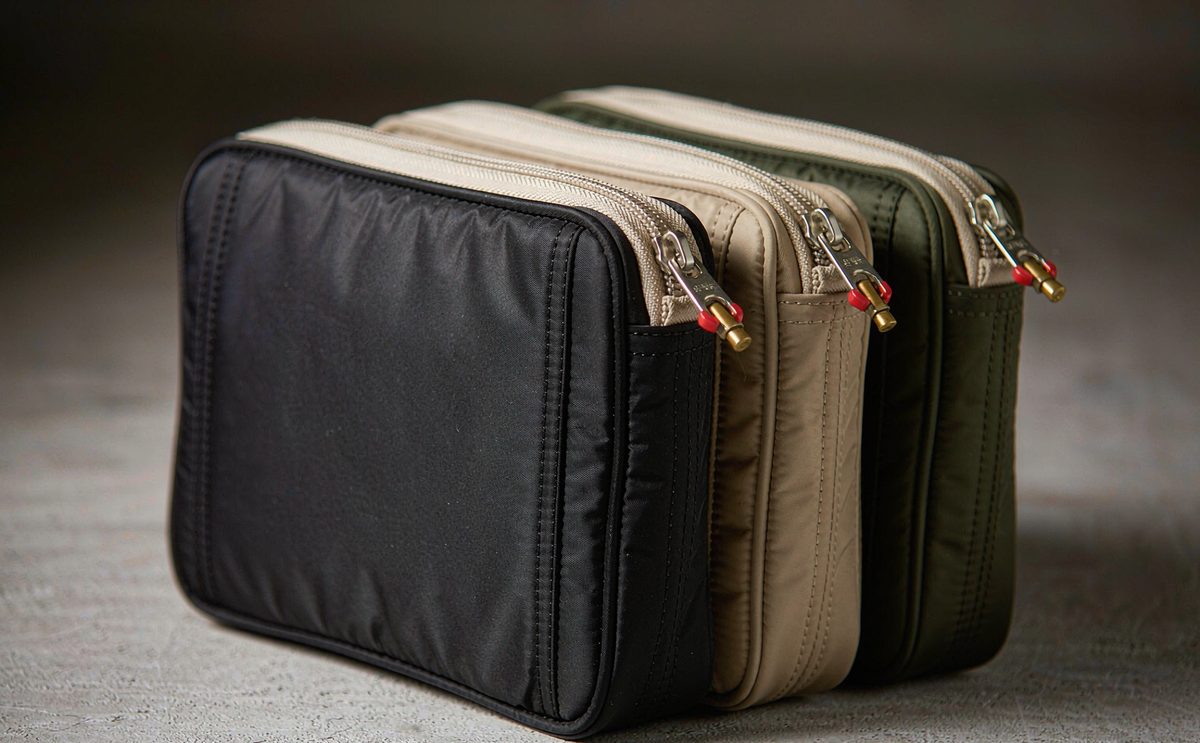
Why kitting is where reward tiers actually break
A bag campaign rarely fails in the sewing room. It fails in the last 72 hours before cartons leave, when somebody counts the padded straps and finds 380 of them for 412 backers who ordered them, discovers the packing list was written for three tiers rather than nine, and realises the slate colourway was approved but never ordered in the right quantity. Production was fine. Kitting was not. Kitting is the assembly step that converts a homogeneous run of identical bags into individually configured parcels, and it is the single step most campaign plans leave as an afterthought.
The reason it gets underestimated is that kitting looks like packing, and packing looks unskilled. In practice kitting is an inventory problem wearing a logistics costume. Every combination of tier, colourway and add-on is a distinct stock keeping unit that must be forecast, purchased, received, stored, picked, assembled and verified. A campaign with three reward tiers, three colourways and four optional add-ons is not running three products. It is running somewhere between 9 and 45 configurations depending on which combinations are actually sold, and each configuration needs its own count before a single carton is taped.
Our programme coordinators see the same three symptoms whenever kitting was not planned early. The first is a shortage of one specific add-on that only 8 percent of backers chose, which holds 8 percent of parcels hostage for weeks. The second is mis-kits, where the bag is right and the add-on is wrong, producing a support queue that scales linearly with parcel count. The third is a surplus of the least popular colourway that ends up as dead stock on the creator's balance sheet long after the campaign closes.
All three have the same root cause: the campaign page was designed as a marketing artefact and never translated into a purchasing plan. A tier described as "choose your colour and add any two accessories" is a sentence that sells well and sources badly. Translating it into a plan requires deciding, months earlier, which combinations will actually be manufactured, in what quantity, and on which line. Teams that do this translation during campaign design spend roughly two extra days on planning and save three to five weeks during fulfilment.
Counting the SKU explosion before you promise anything
The arithmetic is brutal and worth doing on paper before the campaign page goes live. If you offer 3 tiers and each tier can be any of 3 colourways, that is 9 base configurations. If each of those can take any of 4 add-ons and backers may choose more than one, the number of distinct parcels climbs toward 45. Every one of those 45 is a pick line on a packing bench and a row in a reconciliation sheet.
The fix is not to remove choice. Choice converts. The fix is to constrain the matrix structurally so the number of configurations stays countable while the perceived choice stays high. Three rules do most of the work: cap colourways at three per shell, make add-ons tier-linked rather than freely combinable, and never let an add-on have its own colourway choice. A creator who follows those three rules typically lands between 9 and 18 configurations, which a seven-line packing operation can handle without a warehouse management system.
There is a second-order benefit. Fewer configurations mean each configuration is a larger pick quantity, and larger pick quantities are dramatically easier to count accurately. A pick line of 400 units is verified by weighing or by carton count. A pick line of 11 units has to be counted by hand, twice, by somebody who is already tired. The campaign that offers unlimited mixing pays for that freedom in error rate, and the error rate shows up as refunds.
The constraint also makes the survey shorter, which lifts completion rates. Every extra question costs a measurable share of responses, and a survey that asks a backer to choose among nine configurations converts worse than one offering three. Higher completion means fewer defaults, and fewer defaults mean less unplanned inventory.
MOQ 500 pcs per style and colourway across a tier ladder
Here is the collision point that surprises almost every first-time creator. Our production programme runs on a minimum of 500 pcs per style and per colourway. That number is not negotiable per tier, because each colourway is a separate dye lot, a separate trimming order and a separate run on the line. If your tier ladder offers slate, sand and forest, and you want all three, you are committing to 1,500 units across the three, not 500 across the campaign.
This is where tier design becomes a sourcing decision rather than a marketing one. A campaign that expects 900 backers cannot honestly offer three colourways at 500 each. It can offer two, or it can offer three with the third restricted to a single tier where volume is predictable. Our campaign bag specialist will normally push back on a three-colourway plan below roughly 1,400 total units, not because it is impossible but because the leftover balance becomes the creator's problem.
A workable compromise is a primary plus accent structure. Make one colourway the default that ships when a backer does not answer the survey, and make the other one or two available only on the top tier where backer counts are small and the price premium absorbs the dye lot cost. This keeps the marketing page colourful while the purchase order stays defensible. It also gives you a clean fallback if a colourway underperforms: the default absorbs the shortfall instead of stranding inventory.
MOQ applies per colourway, not per campaign. Three colourways at 500 pcs is a 1,500-unit commitment before a single add-on is counted.
Building the colourway ladder on one base shell
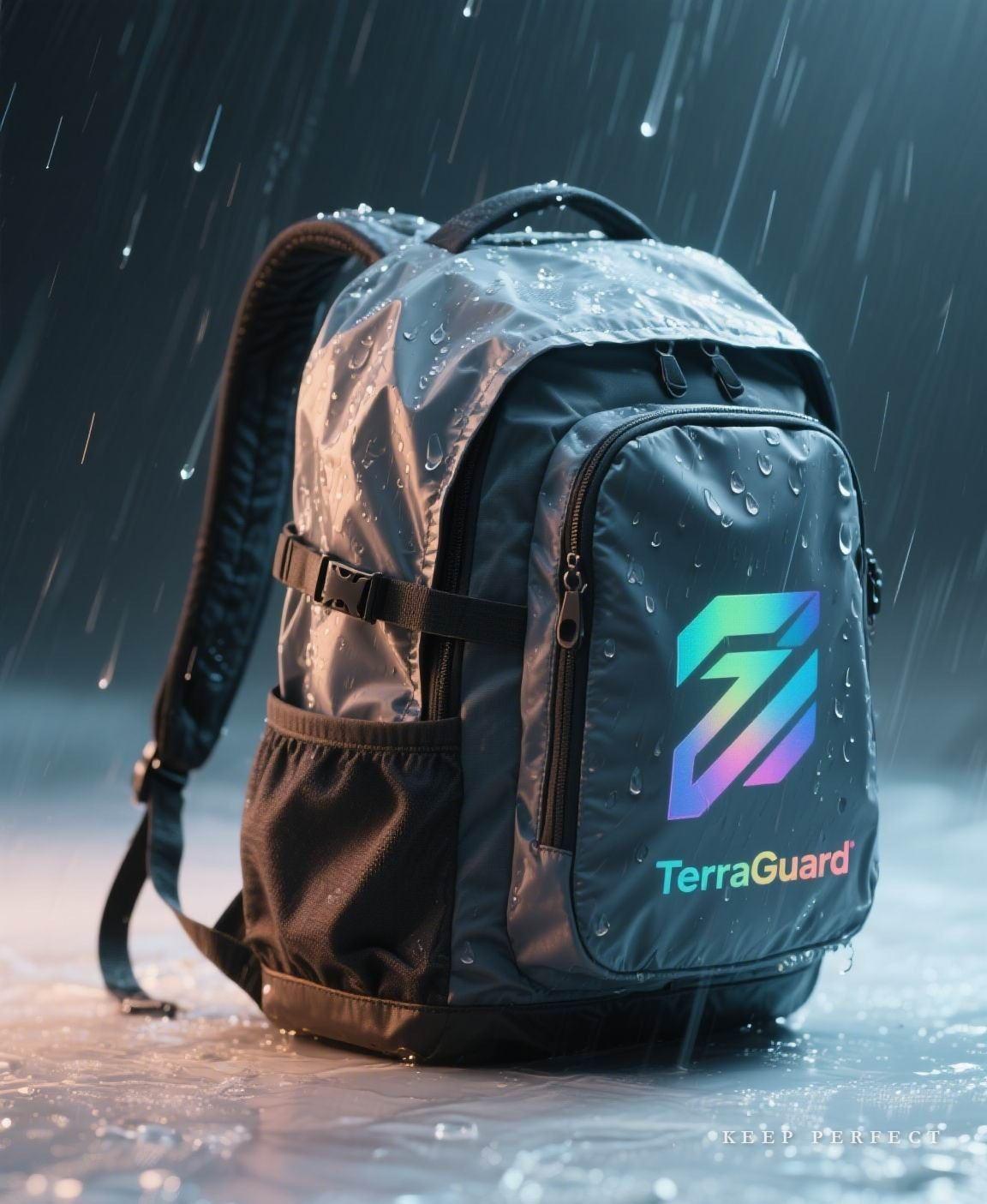
The most cost-effective way to offer colour variety is to change what is cheap to change. On a sewn bag, the expensive parts of a colourway are the body fabric and the lining, because both are purchased in lot quantities and both must match the trimmings. The cheap parts are the zip tape, the pull cord, the binding, the webbing and the logo treatment. A ladder built on one body fabric with three trim packages reads as three colourways to a backer and costs a fraction of three genuine fabric runs.
That approach has a limitation worth stating plainly. Backers who look closely will notice that the shell is the same. For most crowdfunding audiences this is acceptable, because the perceived distinction is carried by the trim and by the photography. For premium tiers above roughly 120 USD, where the backer is buying scarcity, a genuine fabric change is usually worth the extra lot cost.
When you do commit to separate body fabrics, plan the trimming together. A common failure is a new shell colourway approved with the original zip tape because nobody re-specified it, producing a visible mismatch that reads as a defect even though nothing is functionally wrong. Ask your production partner to issue a trim card per colourway, not per style, and confirm the card before sampling starts rather than after.
There is a third route that sits between the two: a two-tone shell. If the front panel and the base use different fabrics, changing only one of them produces a visibly different product while the second fabric stays on a single lot. This works best on bags with a natural panel break, such as a duffel with a reinforced base, and it is usually cheaper than a full colourway change because only one material moves.
Add-ons that kit cleanly, and the four that do not
Not every add-on is equal on a packing bench. Clean add-ons are rigid, individually barcoded, and either go inside the bag or attach to it in one motion. Padded straps, organisers, pouches, cable wraps and care cards all kit cleanly. They can be dropped into the main compartment, scanned, and the parcel is closed.
The four that reliably cause trouble are printed inserts that must be folded to a specific orientation, items that require the bag to be unzipped and re-zipped around them, liquids or aerosols that change the shipping classification of the parcel, and anything with its own colourway choice. Each of those adds a manual decision at the bench, and manual decisions are where both the labour cost and the error rate live.
A useful test is the eight second rule. If a packer cannot complete the add-on placement in eight seconds without reading an instruction, the add-on needs to be redesigned or dropped. On a 1,200 parcel run, every extra four seconds per parcel is roughly 1.3 additional labour hours, which is trivial. The same four seconds applied to a decision rather than an action is where the mistakes come from, and a 2 percent mis-kit rate on 1,200 parcels is 24 support tickets plus 24 reshipments.
- Clean add-ons: padded strap, organiser insert, pouch, cable wrap, care card, sticker sheet.
- Acceptable with a jig: patch, key clip, luggage tag, dust bag.
- Avoid unless margin is high: printed folded inserts, re-pack items, liquids, sub-colourway choices.
- Never without a compliance review: batteries, power banks, anything magnetic or aerosol.
The kitting matrix as a single source of truth
Every campaign we support ends up with one artefact that matters more than any other: the kitting matrix. It is a grid with tiers down the side, colourways across the top, and add-on slots as sub-rows. Each cell holds a quantity. The matrix is generated from the survey data, signed off by the creator, and then becomes the picking instruction, the packing list and the reconciliation sheet simultaneously.
The discipline is that the matrix is frozen at a defined date. After the freeze, changes are possible but they are logged, costed and approved in writing rather than applied informally. This sounds bureaucratic. It is the difference between a 1 percent mis-kit rate and a 6 percent one, because it stops the bench from working from three different versions of the truth.
| Tier | Base shell | Colourways offered | Add-on slots | Configurations |
|---|---|---|---|---|
| Early bird | 18 L daypack | 1 (default slate) | 0 | 1 |
| Standard | 18 L daypack | 3 | 2 optional | 9 |
| Deluxe | 18 L daypack + pouch | 3 | 3 included | 3 |
| Collector | 18 L daypack + pouch + strap | 1 exclusive | 3 included | 1 |
| Retail buffer | 18 L daypack | 1 | 0 | 1 |
| Total tracked configurations | 15 |
Fifteen configurations is manageable. Forty is not. If your matrix comes out above roughly 20, the right response is to remove an add-on slot rather than to hire more packers. Volume does not make complexity cheaper; it makes complexity more expensive in absolute terms, because the same error rate applies to a larger number of parcels.
Attrition, spares and the 3 percent rule
Some fraction of every run will be defective, damaged in transit, or returned and not resellable. For sewn bags shipped internationally, plan on 3 percent attrition on shells and 4 percent on small add-ons, because small items are lost, crushed or mis-picked more often than the bag itself. That pool is not waste. It is the inventory that lets you answer a backer's damage claim in 48 hours instead of six weeks.
The pool must be held as loose components, not as pre-kitted spare parcels. A spare parcel is a finished configuration that may never match the next claim. Loose components can be assembled into whatever configuration the claim requires. In practice this means ordering roughly 30 extra shells per 1,000 and roughly 40 extra add-on sets per 1,000, and storing them flat in a marked cage.
There is a financial argument for the pool that most creators miss. A reshipment sent from the destination country costs 8 to 22 USD in freight and handling. A reshipment sent from the origin country costs 3 to 9 USD but takes three weeks. Holding a small regional spare pool on the two largest destination markets converts a slow cheap option into a fast cheap one, and usually pays for itself after about 40 claims.
Decide where the pool lives before dispatch rather than after. Holding it at origin is cheapest and slowest; holding it in the largest destination market costs a little more in storage and turns a 30 day replacement into a 3 day one. For campaigns with more than 40 percent of backers in a single country, the regional option usually pays for itself within the first year of claims.
Barcodes, pack-out lists and the one-scan rule
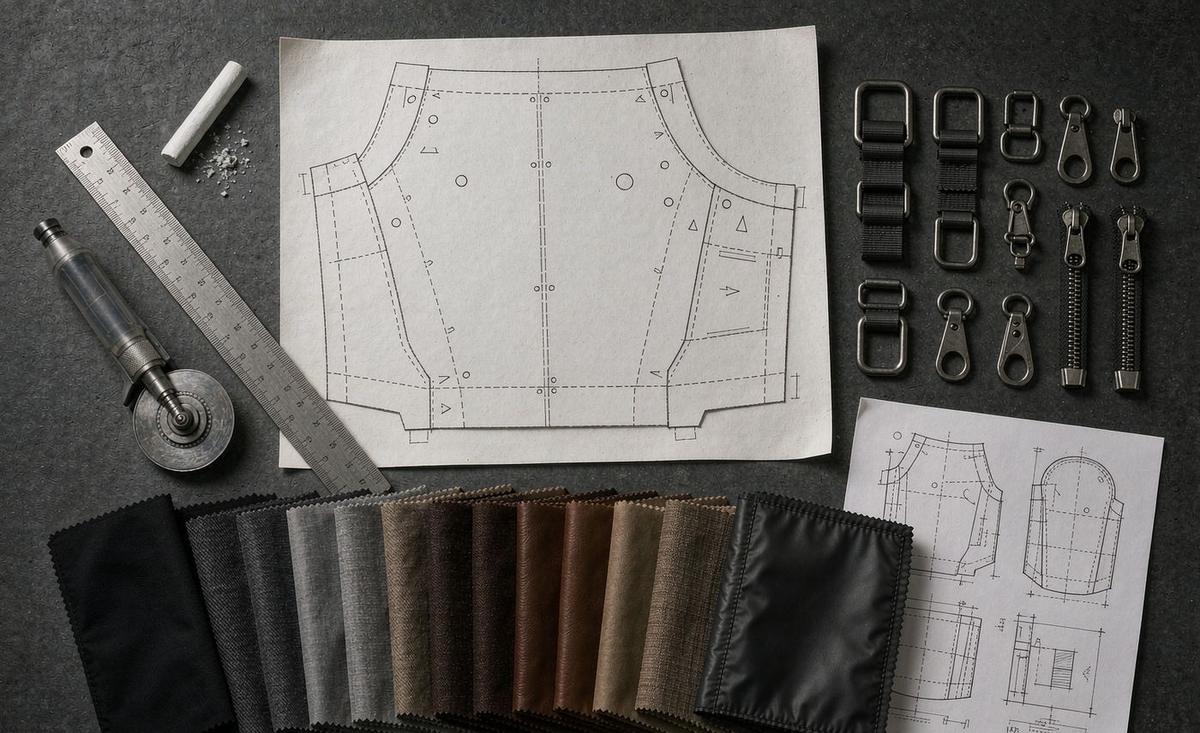
The cheapest error-reduction tool available to a campaign is a barcode on every component and a scanner on the bench. The rule we recommend is simple: one scan per component, no exceptions. The packer scans the bag, scans each add-on, and scans the parcel label. The system refuses to close the parcel if the scanned set does not match the tier on the label.
If a full scanning setup is out of budget, the manual equivalent is a printed pack-out sheet per parcel showing the tier, the configuration in words, and three checkboxes that must be initialled. It is slower, perhaps 6 seconds per parcel, but it reduces mis-kits by roughly the same margin as scanning on runs under 2,000 parcels. Above 2,000 parcels the manual method degrades because packers start pattern-matching instead of reading.
Label placement matters more than it should. Put the tier name on the parcel label in plain words, not a code. When a backer emails a photograph of a wrong parcel, the support agent should be able to read the tier off the label without cross-referencing a spreadsheet. This single change typically cuts the diagnosis time on kitting complaints from two email round trips to zero.
Build one exception path and write it down. Some component will arrive unlabelled, some barcode will fail to scan, and some parcel will need a manual override. Define who authorises the override and how it is recorded, because an undefined exception path becomes an informal one within a day, and informal overrides are how mis-kits re-enter the process after you have paid to remove them.
What kitting costs on a 500 pcs first run
Kitting labour is priced per parcel, not per unit of value. On a first run of 500 pcs with two add-on slots, expect 0.35 to 0.90 USD per parcel for assembly depending on how many components are involved. Add 0.06 to 0.14 USD per component for barcode labelling if components arrive unlabelled, and 0.05 to 0.11 USD for the printed pack-out sheet or insert.
| Cost element | Low | High | Note |
|---|---|---|---|
| Assembly labour, 2 components | 0.35 USD | 0.60 USD | Rises with component count |
| Assembly labour, 4 components | 0.60 USD | 0.90 USD | Adds roughly 0.15 per extra pick |
| Component barcode labelling | 0.06 USD | 0.14 USD | Avoided if supplied pre-labelled |
| Pack-out sheet or insert | 0.05 USD | 0.11 USD | Mono print, one side |
| Polybag and closure | 0.09 USD | 0.18 USD | Vented LDPE, see packaging spec |
| Total per parcel | 0.55 USD | 1.33 USD | Excludes carton and freight |
Those figures sit on top of the bag cost, not inside it. A creator budgeting 14 USD for a reward bag that actually costs 14.80 with kitting discovers the gap at exactly the wrong moment, which is after the campaign has closed and prices are fixed. Put kitting on the spreadsheet as its own line from day one, alongside fulfilment packaging rather than buried inside unit cost. The same discipline applies to the wider rewards fulfilment plan, where kitting sits alongside packing, freight and returns.
Compare that per parcel figure against the cost of the mistake it prevents. A mis-kit costs a reshipment of 8 to 22 USD domestically plus support time plus a damaged first impression, so a 0.60 USD per parcel scan step pays for itself if it prevents one error in every 20 parcels. At campaign volumes it usually prevents far more than that.
Sequencing kitting against sampling and bulk lead time
Kitting preparation is parallel work, and it should start while the sample is being made rather than after bulk is finished. The sequence that works: freeze the tier structure during campaign design, run sampling in 6 to 10 working days (12 to 15 working days for complex builds with moulded parts or unusual hardware), finalise the matrix during the survey window, and pre-book the kitting line roughly two weeks before bulk lands.
Bulk production runs 35 to 50 days after deposit and approved sample. That window is the one you should use for kitting preparation, because nothing else productive can happen in it. Order the add-ons inside that window too, and make sure they arrive at the kitting location before the bags do. Add-ons that arrive after the bags create a two-stage kitting process, which costs roughly 40 percent more per parcel than a single pass.
The final gate is inspection. Before any parcel is assembled, the components should pass AQL 2.5 to ISO 2859-1 on both the bag and the add-ons. It is far cheaper to reject 40 defective pouches before kitting than to discover them inside 40 assembled parcels, because the latter requires un-taping, re-kitting and re-taping. If your campaign QC plan does not include add-on inspection, add it. Kitting errors and product defects produce very different support queues, and only one of them is solved at the bench.
One scheduling trap deserves a warning: do not approve the add-on sample later than the bag sample. If the bag is approved in week six and the pouch only in week ten, the kitting line cannot be booked until week ten, and the four week gap is pure schedule loss. Run both approvals against the same deadline, even if the add-on is trivially simple.
When to split the shipment instead of kitting everything
There is a persistent belief that every parcel must be fully kitted at origin. It is worth challenging. If 60 percent of your backers are in one country and 40 percent are spread across 28 others, kitting the domestic 60 percent at origin and shipping loose components to a regional partner for the remaining 40 percent is sometimes cheaper and almost always faster for the backer.
The trade-off is control. A regional kitting partner needs the same matrix, the same spares pool and the same scan rule, and you lose the ability to walk over and check. We recommend the split only when the largest single market exceeds roughly 45 percent of backers and the tail is genuinely diffuse. Below that threshold the complexity of running two kitting operations outweighs the freight saving.
A middle path that often wins is partial kitting at origin: assemble the bag plus the two most common add-ons, and ship the remaining add-on as a separate small parcel from a regional hub. Backers accept two parcels far more readily than they accept one late parcel, provided the campaign page said so before they pledged.
Whatever structure you choose, say it on the campaign page before pledges close. Backers accept almost any fulfilment arrangement that was disclosed in advance and resent almost any arrangement that appears later, regardless of whether it is better for them. One sentence about split shipments removes the entire category of surprise, and it costs nothing to add.
The disclosure also protects you if the split arrangement changes later, which it often does once real freight quotes arrive. Backers who were told the plan may change accept a change far more readily than backers who were told nothing and then notice a second parcel arriving from a different country.
A kitting specification to attach to your RFQ
The last step is to make kitting contractual. A one page specification attached to the same request for quotation as the bag itself removes almost all ambiguity. It should state the configuration count, the components per configuration, the labelling method, the pack-out method, the attrition pool size and the inspection standard.
- Configurations
- 15 (frozen at survey close)
- MOQ per colourway
- 500 pcs per style and colourway
- Sampling
- 6 to 10 working days, 12 to 15 for complex builds
- Bulk production
- 35 to 50 days after deposit and approved sample
- Inspection
- AQL 2.5 to ISO 2859-1, bag and add-ons
- Attrition pool
- 3 percent shells, 4 percent add-ons, held loose
- Trade terms
- FOB Xiamen, T/T 30/70
- Capacity available
- 200,000 pcs per month across 7 lines
Send that specification with your brief rather than after it. A production team that sees the configuration count before quoting will price the kitting correctly, flag any add-on that cannot be sourced reliably, and tell you honestly whether a three-colourway ladder is viable at your volume. That conversation is worth having before the campaign page is designed, not after the survey closes.
Two closing practicalities. First, ask who owns the leftover add-on stock, because a campaign that orders 4 percent extra on every component ends up with a meaningful pile of loose pouches and straps, and those have value as a retail bundle or as a later add-on sale. Second, agree the changeover rule in writing: if a configuration sells out mid-run, does production stop for a new colourway, or does the campaign substitute the default and notify backers? Deciding that on the day is how a one week delay becomes a six week one.
Send us your tier ladder and colourway plan, and our campaign bag specialist will return a configuration count, an MOQ position and a kitting cost per parcel.
Frequently Asked Questions
How many colourways can I offer without breaking the 500 pcs minimum?
Each colourway carries its own minimum of 500 pcs per style, so three colourways is a 1,500-unit commitment. As a working rule our programme coordinators suggest two full colourways below about 1,400 total units, and a third only on a premium tier where volume is predictable and the price premium covers the separate dye lot. If you need a third option, consider a trim-only variation, which reads as a distinct colourway to most backers without committing to a second fabric lot.
What is a reasonable number of reward configurations for a first campaign?
Between 9 and 18 configurations is comfortable for a packing operation without a warehouse system. Above roughly 20 configurations the error rate rises faster than the labour cost, so the right response is to remove an add-on slot rather than add packers. Cap colourways at three and link add-ons to tiers rather than letting backers combine freely. Count configurations after the survey closes, before the order is placed.
Should add-ons be packed inside the bag or shipped alongside it?
Inside, whenever the add-on is rigid and fits without distorting the shell. Packing inside removes a pick step and reduces the chance of a component being separated in transit. Ship add-ons separately only when they change the parcel shipping classification, such as liquids or batteries, or when the bag would have to be unzipped and re-zipped around them. Packing inside also reduces the number of separate pick lines on the bench, which is where most kitting errors originate at campaign volume.
How much spare inventory should I hold for replacements?
Plan 3 percent attrition on shells and 4 percent on small add-ons. On a 1,000-unit run that is roughly 30 extra bags and 40 extra add-on sets, held as loose components rather than pre-kitted parcels so they can be assembled into whatever configuration a damage claim requires. Review the pool after the first dispatch wave, because actual claim rates at that point tell you whether 3 percent was generous or tight.
Can I change the kitting matrix after bulk production has started?
Technically yes, practically it is expensive. Freeze the matrix at survey close and treat later changes as logged, costed and approved in writing. Informal changes are the main cause of benches working from three different versions of the truth, which is what turns a 1 percent mis-kit rate into a 6 percent one. Changes affecting only add-on allocation are usually feasible; changes affecting shell quantity or colourway rarely are, because fabric is already cut.
What does kitting labour cost per parcel on a 500 pcs run?
Budget 0.35 to 0.90 USD per parcel for assembly depending on component count, plus 0.06 to 0.14 USD per component for barcode labelling and 0.05 to 0.11 USD for a printed pack-out sheet. The all-in figure lands between 0.55 and 1.33 USD per parcel before carton and freight. Labour rises roughly 0.15 USD per additional pick, so a four component parcel costs materially more to assemble than a two component one.
Do add-ons need their own quality inspection?
Yes. Inspect add-ons to AQL 2.5 to ISO 2859-1 before kitting begins, not after. Rejecting 40 defective pouches before assembly is cheap; discovering them inside 40 finished parcels requires un-taping, re-kitting and re-taping, which typically costs three to four times as much in labour. Ask for add-on inspection to run a few days before bag inspection, so any rejection is resolved before the packing bench is scheduled.
How long does sampling take for a bag with add-ons?
Sampling runs 6 to 10 working days for a standard build and 12 to 15 working days for complex builds with moulded parts or unusual hardware. Add-ons can usually be sampled in parallel, so the critical path stays the bag itself rather than the accessory set. Use 12 to 15 working days when the add-on is structural rather than decorative, since moulded parts and unusual hardware extend the sample round.
Is it cheaper to kit at origin or in the destination region?
Origin kitting is cheaper per parcel and gives better control. Regional kitting wins on reshipment speed, because a replacement sent domestically costs 8 to 22 USD against 3 to 9 USD from origin but arrives in days rather than weeks. Consider a split when one market exceeds about 45 percent of backers. Origin kitting also keeps the matrix under one owner, which on a first campaign is usually worth more than the freight difference between the two options.
What should the parcel label say to make support easier?
Put the tier name in plain words on the parcel label rather than a code. When a backer photographs a wrong parcel, an agent should identify the tier without cross-referencing a spreadsheet. This change typically removes two email round trips from every kitting complaint. Add the configuration in words as well as the tier, so an agent can confirm parcel contents without opening a photograph attachment from the backer.
How do I stop one unpopular add-on from holding up the whole shipment?
Rank add-ons by expected take rate and order the low-take items with a larger proportional buffer, because their absolute quantity is small enough that the buffer is cheap. Also confirm the add-on lead time separately from the bag lead time, since the two rarely run on the same clock. Where an add-on is genuinely risky to source, consider shipping it as a later separate parcel rather than as part of the main reward shipment.
Can kitting be quoted at the same time as the bag?
Yes, and it should be. Send a one page kitting specification with the RFQ covering configuration count, components per configuration, labelling method, pack-out method, attrition pool and inspection standard. Pricing kitting up front avoids discovering a 0.80 USD per parcel gap after campaign prices are fixed. A partner who prices kitting up front can also flag add-ons that are unreliable to source, which is worth knowing before the campaign page is designed.
People Also Ask
What is kitting in crowdfunding fulfilment?
Kitting is the assembly step that turns a uniform production run into individually configured backer parcels. For bag campaigns it means matching each backer's chosen colourway and add-ons into one parcel, then verifying the set before the carton closes. It is planned as a matrix of tiers against options.
How many colourways should a crowdfunding bag offer?
Two full colourways works below about 1,400 units, because each colourway carries a 500 pcs minimum. A third colourway is viable on a premium tier where the price premium absorbs the extra dye lot. A trim-only variation gives visual variety without a second fabric lot.
Why do add-on shortages delay whole shipments?
Because a parcel is not complete until every component is present, so a shortage affecting 8 percent of backers can hold 8 percent of parcels for weeks. Ordering low-take items with a larger proportional buffer is cheap insurance, since their absolute quantities are small.
What is a pack-out sheet?
A printed sheet placed in or on each parcel showing the tier, the configuration in words, and checkboxes initialled by the packer. It is the manual alternative to barcode scanning and works well below about 2,000 parcels, above which packers start pattern-matching instead of reading.
Should spare parts be pre-kitted or kept loose?
Loose. A pre-kitted spare parcel matches only one configuration, while loose shells and add-ons can be assembled into whatever a damage claim needs. Hold roughly 3 percent extra shells and 4 percent extra add-on sets on a first run.
How is kitting cost calculated?
Per parcel, not per unit of value. Assembly labour runs 0.35 to 0.90 USD depending on component count, with small additions for labelling and printed inserts. The total sits on top of the bag cost and should be a separate line in the reward budget.
When should kitting planning start?
During sampling, not after bulk. The 35 to 50 day bulk window is when add-ons should be ordered and the kitting line pre-booked, so components arrive before the bags do. Add-ons arriving late force a two-stage kit that costs about 40 percent more per parcel.