Custom Bag Prototype Cost: 3 Budget Ranges for Different Bag Types
Prototype cost on a custom bag falls into three bands. Simple flat and soft constructions such as pouches, totes and drawstrings typically land in the low hundreds of dollars per round. Structured bags with padding, lining and multiple panels sit in the middle band. Technical builds with moulded hardware, mechanisms or electronics sit at the top and carry tooling on top. Budget two to three rounds rather than one, add courier and any laboratory testing, and check what is credited back at the 500 pcs bulk order.
- What a prototype budget has to cover
- Range 1: simple flat and soft constructions
- Range 2: structured bags with padding and lining
- Range 3: technical builds with hardware and mechanisms
- The hidden costs inside a prototype round
- How many rounds to budget for, by bag type
- Photography samples and the duplicate build question
- What drives a second or third round
- Recovering prototype cost through the bulk order
- Building a prototype line into the campaign budget
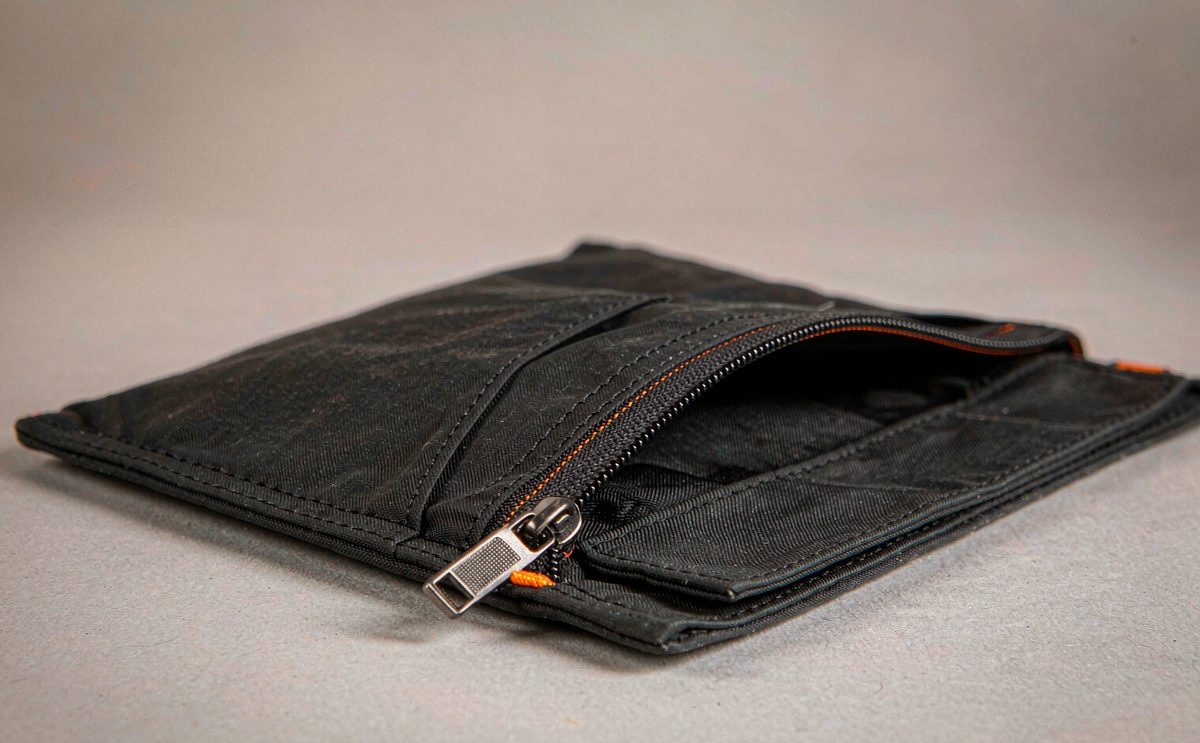
Every first-time creator asks the same question in the same way: *how much does a prototype cost?* It is the right question and it has an unhelpful direct answer, because the size of the bag matters less than its construction. A 40 litre duffel made of one folded panel with a zipper and two handles is cheaper to prototype than a 12 litre tech pouch with six panels, a moulded insert, three zippers and elastic retention. Panel count, padding, lining and hardware drive the cost. Volume almost does not.
The more useful framing is three bands. Simple flat and soft constructions sit in the low band, structured bags with padding and lining in the middle, and technical builds with moulded hardware or mechanisms at the top with tooling on top of everything else. Within each band the spread is driven by material cost and by whether the pattern already exists. Knowing which band your product sits in lets you sanity-check a quotation in about thirty seconds, which is worth more than a precise number for someone else's product.
Two caveats before the numbers. First, the figures below are industry typicals for a first build to a supplied specification, expressed as ranges, and they are for the sampling work rather than a quote. Second, the prototype budget is not the sample fee: the fee is one line inside it. Courier, tooling, laboratory testing and second units are separate, and those four lines are where most prototype budgets come unstuck. The sampling sequence is set out in our crowdfunding bag sample and prototyping guide.
Panel count, padding, lining and hardware drive prototype cost. Volume does not. A 40 litre duffel can be cheaper to prototype than a 12 litre tech pouch.
What a prototype budget has to cover
A prototype budget that contains only the sample fee will be exceeded, usually by a factor of two. The complete budget has seven lines. Pattern development, meaning drafting, digitising and grading the panels. Material sourcing, meaning buying fabric, lining, webbing, foam and hardware in minimum quantities, often at a premium for short lengths. Build labour, meaning the technician time for cutting, sewing and assembly, which is the expensive line because a sample is made by the most experienced operators available.
Machine set-up and tooling, including any cutting dies, jigs, embroidery digitising or print file preparation. Internal checking, meaning the review against the specification before the unit is shipped, which is real labour and is what separates a considered sample from a rushed one. Courier and import charges, which for an international express shipment of a large bag can exceed the build cost. Laboratory testing, if any is required, which is passed through from a third-party laboratory at cost.
Second and third rounds sit inside the budget as a multiplier rather than a line, and this is the single biggest difference between a budget that holds and one that does not. A first round is almost never the last round. A first structured bag realistically takes two to three rounds: one to validate the construction, one to correct it, and one to confirm it. At 6 to 10 working days per round for a standard build, that is roughly 4 to 6 weeks of calendar time and roughly 2.5 times the cost of a single round.
The seventh line is the one nobody budgets and everybody needs: the second physical unit. A crowdfunding creator needs at least two units: one to keep as the approved golden sample and one to send to a photographer, a reviewer or a fulfilment partner. A duplicate built at the same time from the same pattern is typically 40 to 70 percent of the first unit, because the pattern and set-up are already paid for. Built separately later, it costs more, because the machine is set up again. Ask for the duplicate price when you commission the first.
Range 1: simple flat and soft constructions
This band covers pouches, flat zipper bags, totes, drawstring bags, laundry bags, simple packing cubes and garment covers. The defining characteristics are a low panel count, no or minimal padding, a simple lining or no lining, and stock hardware. A drawstring bag is essentially two panels, a hem, a channel and a cord. A tote is a body, a base and two handles. A flat pouch is one or two panels and a zipper. None of these require a complex pattern and none require structural engineering.
The typical first-round cost in this band sits in the low hundreds of dollars, and the build time is at the short end of the standard window, roughly 6 to 8 working days, because the pattern is simple and the machine set-up is minimal. Where the product uses stock fabric in a stock colour, the material sourcing line shrinks dramatically and the whole exercise can be turned around quickly. This is the band where a creator can genuinely afford three rounds and should plan for two.
The cost drivers inside this band are three. Printing method, because a full-coverage sublimation print requires file preparation and a print run that carries its own minimum, while a screen print carries a screen charge per colour. Handle or closure construction, because a boxed and bar-tacked handle costs more to develop than a simple turned edge. Fabric choice, because a heavy canvas behaves very differently from a lightweight ripstop and the heavier material needs different needle, thread and seam construction.
The risk in this band is under-specification rather than cost. Because the band is cheap, creators are tempted to skip the tech pack and describe the product in an email. That works for a pouch, right up to the point where the internal dimension matters, or the print placement is 8 mm off, or the zipper is the wrong gauge. Spend the extra hour on a dimensioned drawing even in this band. It is the cheapest insurance available, and the specification is what the bulk inspection will be measured against.
Range 2: structured bags with padding and lining
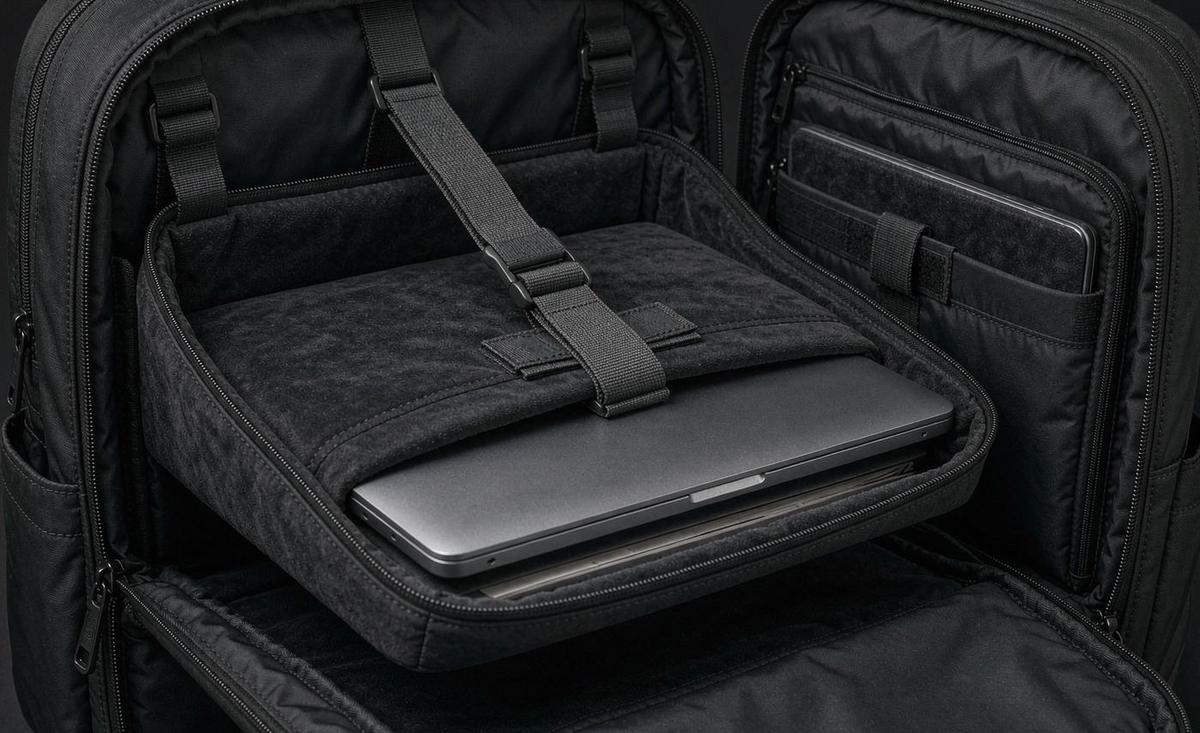
This band covers daypacks, laptop backpacks, duffels, weekenders, gym bags, camera bags, insulated cooler bags and most multi-compartment products. The defining characteristics are a full lining, padding in the straps or the body, multiple panels that have to meet in three dimensions, and a meaningful hardware count. This is where the pattern becomes genuine engineering, because a three-dimensional assembly has to be drafted so that the panels actually meet when sewn, and the tolerances compound across the assembly.
The typical first-round cost in this band sits in the middle hundreds of dollars, with the build time at the 8 to 10 working day end for a straightforward structured bag and at the 10 to 15 working day end for one with multiple compartments, a shoe pocket, a laptop sleeve or heavy hardware. The spread within the band is wide, because *structured* covers everything from a single-compartment gym bag to a 20 panel camera backpack with dividers.
Three cost drivers dominate here. Padding specification, because foam density and thickness have to be chosen and then the pattern has to accommodate the thickness at the seams, which is where most first-round fit problems originate. Lining construction, because a fully lined bag is effectively built twice, and the lining has to be drafted to fit the shell rather than to match it. Hardware count and type, because every additional zipper, buckle and ring is a sourcing line and an attachment detail that has to be engineered for load.
The planning implication is that this band is where round count matters most. A structured bag almost always needs a second round, because the three-dimensional fit is very hard to get right first time from a drawing. Budget two to three rounds and treat three as the planning number rather than the pessimistic one. Our experience across 20+ crowdfunding campaigns is consistent here: the campaigns that launched on schedule budgeted three rounds and used two. The ones that slipped budgeted one and used four, and paid for it twice in both time and money.
Range 3: technical builds with hardware and mechanisms
This band covers technical backpacks with moulded shells or frames, camera bags with removable divider systems, bags with integrated electronics, rolling luggage, cooler bags with welded liners, dry bags with radio-frequency welded seams, and anything with a custom moulded component. The defining characteristic is that the build requires either new tooling, a process the workshop does not run every day, or a component that has to be engineered rather than sourced.
The typical first-round cost in this band starts in the high hundreds of dollars and rises from there, and the build time is the 12 to 15 working day figure that applies to complex builds. Crucially, that figure excludes tooling. A moulded shell, a custom buckle, a welded liner or an integrated frame each carry a tooling or development charge that is invoiced separately, before the build, and is not credited against bulk unless specifically agreed.
The cost drivers here are different from the other two bands. Tooling and development is the first, and it is the one that changes the shape of the whole budget. Process qualification is the second: a radio-frequency weld, a heat seal or an ultrasonic cut has to be set up and tested for strength before it can be used on a sample, and that is development time rather than build time. Component integration is the third, because an electronics bay changes the packing, the labelling and the shipping classification of the finished product.
The honest advice for a first crowdfunding product in this band is to redesign down one band if you can. Not because the product is bad, but because band three carries a tooling commitment at exactly the moment you know least about whether the design works, and the tooling is not recoverable if it does not. The usual resolution is to prototype the band two version, validate the design and the demand, and then reintroduce the technical feature on the second wave, when there is volume to pay for it and evidence that it is worth paying for.
The hidden costs inside a prototype round
The seven lines below are the ones that turn a USD 300 estimate into a USD 700 invoice, and none of them are unreasonable. They are simply not the things people think of when they ask what a prototype costs. Knowing them in advance lets you decide which to accept and which to avoid, rather than discovering them on an invoice and feeling misled. In our experience the misled feeling, not the amount, is what damages the working relationship.
| Line | Typical impact | Avoidable? | Notes |
|---|---|---|---|
| International courier | Moderate to high | Partly | Often exceeds the build cost on a large bag; ask for a consolidated shipment |
| Import duty and clearance | Low to moderate | No | Depends on destination and declared value; ask whether the shipment is DDP or DDU |
| Fabric minimum purchase | Moderate | Partly | Short lengths carry a premium; stock colours avoid it entirely |
| Hardware component minimum | Moderate to high | Partly | Specialist parts carry box minimums; stock parts avoid it |
| Embroidery or print file prep | Low per file | Yes | Finish the artwork before commissioning; every revision re-incurs the charge |
| Laboratory testing | Low to high | Choose scope | Test what your claim requires, not everything available |
| Duplicate unit built later | Moderate | Yes | Order the second unit with the first at 40 to 70 percent of the cost |
Two of those deserve expansion. Fabric minimum purchase is the one that surprises people most, because fabric is bought by the roll and a sample needs a fraction of one. The usual arrangement is that the balance of the roll is held against your bulk order, which is fine if the bulk happens and awkward if it does not. Where a stock colour in a stock fabric is used instead, this line disappears entirely, which is the single most effective way to reduce prototype cost on a first run.
Hardware component minimums behave similarly and can be larger, because a specialist component maker sells in box quantities. A custom zipper pull might carry a component minimum of 3,000 to 10,000 pieces against a 500 pcs bag run. That is manageable when the balance is held against re-orders, and it is a problem when it is not. Ask two questions in writing: who stores the balance, and for how long. The standard answer is 12 to 24 months against re-orders, and it should be written down rather than assumed.
The third worth detail is laboratory testing scope. A full restricted-substance and physical test programme across a multi-material bag is a real cost, and most of it will not be relevant to your product. Test against your destination markets and your published claims. A bag sold only in one market needs one compliance position. A bag claimed to be water-resistant needs a shower test; one claimed to be waterproof needs sealed seams and a hydrostatic head test. Test the claim, not the category.
How many rounds to budget for, by bag type
Round count is the multiplier that determines whether a prototype budget holds, and it varies systematically by band. Band one products typically need one to two rounds. The construction is simple enough that a good tech pack usually produces an acceptable first unit, and the second round, where it happens, is usually a dimension or a print placement correction rather than a rebuild.
Band two products typically need two to three rounds. The first validates the three-dimensional assembly, the second corrects the fit and the internal details, and the third confirms it. Occasionally a well-specified band two product passes in two. It very rarely passes in one, and a programme that tells you it will is either working from an existing pattern or being optimistic. Working from an existing pattern is a legitimate and much faster route, and it is worth asking whether your product can be adapted rather than drafted from scratch.
Band three products typically need three or more rounds, and the rounds are longer. The first validates the concept, the second integrates the tooling or the new process, and the third confirms the production version. Where an electronics bay or a mechanism is involved, add a round for failure-mode testing, because the interesting failures in that category are the ones that appear after repeated use rather than on the bench.
Turn each of those into calendar time and the planning becomes concrete. At 6 to 10 working days per round plus 5 to 7 days of courier each way: band one is roughly 3 to 5 weeks for two rounds, band two is roughly 6 to 9 weeks for three, and band three at 12 to 15 working days per round is 9 to 14 weeks for three. Add the colour approval cycle of roughly 4 to 6 weeks running alongside, and the honest answer is that prototyping a structured bag from scratch takes two to three months.
Photography samples and the duplicate build question
A crowdfunding campaign needs more physical units than most creators expect, and the gap is usually discovered a week before the shoot. The realistic list for a first campaign is four to six units: one golden sample to keep and never send anywhere; one or two photography units for the campaign video and the product shots; one or two reviewer units to send to press or creators ahead of launch; and one unit for the fulfilment partner to measure for packaging and carton specification.
The economics of the duplicate run are straightforward and worth exploiting. A second unit built at the same time as the first, from the same pattern, in the same set-up, is typically 40 to 70 percent of the first unit cost, because the pattern development and the machine set-up are already paid for. The same unit built three weeks later is closer to the full price, because the machine has to be set up again and the material may have to be re-sourced. Order all the units you need in one instruction.
There is a quality caveat on photography units that matters commercially. A unit used for the campaign video should be a sales sample built as close to production specification as the timing allows, and the campaign page should not claim more than the production version will deliver. The most damaging thing that can happen to a bag campaign is a hero video showing a hand-finished unit and a bulk delivery that is visibly less refined. Where the timing does not allow a production-specification unit for the shoot, the honest approach is to shoot the prototype and clearly label it as a prototype on the page.
One more consideration that is specific to this category: reviewer units are a fulfilment problem, not a sampling problem. Sending six units to six reviewers in six countries means six parcels, six customs declarations and six chances of a delay, and it has to happen before launch, which is the busiest point in the campaign. Build the reviewer shipment into the pre-launch schedule with the same rigour as the production schedule. Our programme coordinator has seen more than one launch week derailed by reviewer parcels sitting in a customs shed.
What drives a second or third round
Understanding the causes is cheaper than paying for the consequences, and the causes are remarkably consistent. Specification drift is the largest. The sample arrives, the creator decides the strap should be wider, the pocket should be deeper, the logo should be larger. Each sounds cosmetic. Each moves multiple panels, because a change to one dimension changes the pattern, and a change to the pattern changes the material requirement, and the round has to be rebuilt.
Material substitution is the second. The specified fabric is unavailable, or its price has moved, or it does not meet the fastness requirement, and an alternative is proposed. If the alternative behaves differently, which it usually does, the sample has to be rebuilt to be meaningful. The mitigation is to approve the material in writing before the build, including the fallback, rather than discovering the substitution when the unit arrives.
Unclear approval criteria is the third and the most avoidable. The sample is fine, nobody has written down what fine means, and it gets rebuilt while the creator decides. This is a process failure rather than a technical one, and it is solved by a simple document: the approval checklist, written before the build, listing the dimensions, the functions and the appearance standards the unit has to meet. Our team issues this with every first round and asks for it back signed.
The control that addresses all three is a numbered change log with a cost impact attached. Every change request gets a number, a description, and a stated cost and time impact before it is actioned. This is not bureaucracy; it is the mechanism that makes the trade-off visible. When a creator can see that widening a strap means a new pattern, new webbing, a new reinforcement panel and 5 extra working days, roughly half of the requested changes get dropped as not worth it, and the ones that survive are the ones that genuinely improve the product.
Recovering prototype cost through the bulk order
Prototype cost is recovered through the bulk order under one of the three structures covered in our sample fee policy guide: refundable, where the fee is credited in full against the bulk once it reaches the 500 pcs per style and colourway minimum; split, where only part is credited; and fold-in, where there is no separate invoice and the cost is spread across the unit price. Which one you are offered depends partly on the programme and partly on where you are in the campaign cycle.
The arithmetic of recovery is worth doing explicitly, because it changes with quantity. USD 600 of prototype cost folded into 500 pcs adds USD 1.20 per unit. Folded into 1,000 pcs it adds USD 0.60, and into 2,000 pcs it adds USD 0.30. That is the argument for running the development once and amortising it across the largest realistic run, and it is also the argument against over-developing a product you will only ever make 500 of.
Tooling is recovered differently, and should be tracked separately. A mould or a die is a durable asset that is used across the run and across re-orders, so its recovery horizon is the life of the product rather than the first order. That makes tooling easier to justify than sampling, provided the volume is genuinely there. Where a tooling charge looks large, ask the question directly: how many units does this take to pay back? A mould that saves USD 0.50 per unit pays back in 2,000 units. One that saves USD 0.05 does not.
The final point on recovery is that the credit has conditions, and the conditions are where money is lost. A refundable credit typically carries a quantity threshold at the 500 pcs minimum, a time limit commonly 90 to 180 days, and a specification match requirement. Change the fabric or drop below the minimum and the credit is usually forfeited. Get the five terms in writing: the amount, the trigger, the expiry, the treatment of a partial order, and the treatment of a specification change.
Building a prototype line into the campaign budget
A prototype line in a campaign budget should be a range with a contingency, not a single figure. The structure that works is three numbers: the expected figure, calculated as the band rate times the realistic round count plus the known extras; the upper figure at roughly 1.5 times expected, which covers an extra round and a duplicate build; and the recovered figure, being the expected figure less whatever will be credited at bulk. Present all three to yourself and plan against the middle one.
Worked example for a band two structured backpack. Expected: first round at the middle of the band, plus two further rounds at 60 to 100 percent and 50 to 80 percent of the first, plus one duplicate unit, plus courier on four shipments. Upper: the same plus one more round and a laboratory test. Recovered: the expected figure less the creditable portion at 500 pcs. The gap between expected and upper is the contingency, and it should sit in the campaign budget rather than on a credit card. For the wider production and fee picture that the prototype line sits inside, see our campaign budget guide.
The prototype line also has to sit correctly in the cash-flow timeline, which is where crowdfunding differs from wholesale. Prototyping happens before funding, which means it is paid from savings, from pre-launch revenue or from a founder's own money. Bulk happens after funding, against a T/T 30/70 structure with the 30 percent deposit at order and the 70 percent balance at release. The two are different money at different times, and conflating them is how a funded campaign ends up with no cash to book the run.
Two last planning notes. Sampling is the longest lead item in the pre-launch phase, longer than video, longer than the landing page, and longer than most creators believe. A structured bag from scratch is two to three months including colour approval. Work backwards from the launch date and you will find that sampling has to start before most of the other pre-launch work. And the prototype budget is the cheapest money in the whole campaign: spending an extra USD 400 to get a third round is trivially cheap compared with the cost of a one-month delay on a funded campaign with 1,500 backers waiting.
Send us your specification and target launch date, and our production team will tell you which prototype band your product sits in and what the realistic round count is.
Key takeaways
- B
- u
- d
- g
- e
- t
- b
- y
- b
- a
- n
- d
- ,
- m
- u
- l
- t
- i
- p
- l
- y
- b
- y
- r
- o
- u
- n
- d
- c
- o
- u
- n
- t
- ,
- a
- n
- d
- a
- d
- d
- c
- o
- u
- r
- i
- e
- r
- ,
- t
- o
- o
- l
- i
- n
- g
- a
- n
- d
- d
- u
- p
- l
- i
- c
- a
- t
- e
- s
- .
- P
- l
- a
- n
- t
- h
- r
- e
- e
- r
- o
- u
- n
- d
- s
- a
- n
- d
- u
- s
- e
- t
- w
- o
- ,
- n
- o
- t
- o
- n
- e
- r
- o
- u
- n
- d
- a
- n
- d
- f
- o
- u
- r
- .
Frequently Asked Questions
How much does a custom bag prototype cost?
It depends on construction rather than size. Simple flat and soft builds typically sit in the low hundreds of dollars per round, structured bags with padding and lining in the middle hundreds, and technical builds with moulded hardware start in the high hundreds and rise from there, with tooling charged separately and before the build. Add courier, tooling, laboratory testing and duplicate units, because those four lines are where prototype budgets come unstuck.
Why is a small tech pouch sometimes more expensive to prototype than a large duffel?
Because panel count, padding, lining and hardware drive the cost, not volume. A 40 litre duffel made from one folded panel with a zipper and two handles is a simpler pattern than a 12 litre pouch with six panels, a moulded insert, three zippers and elastic retention. Panel count, padding, lining and hardware drive the cost, which is why the smaller product is often the dearer one to develop.
How many prototype rounds should I budget for?
One to two for a simple flat build, two to three for a structured bag with padding and lining, and three or more for a technical build with tooling. Plan three rounds and use two rather than budgeting one and using four, which costs more in both money and calendar time. Plan three rounds and use two rather than budgeting one and using four, which costs more in both money and calendar time.
How long does bag prototyping take in total?
A standard build is 6 to 10 working days per round and a complex build 12 to 15, plus 5 to 7 days of courier each way. Two rounds on a simple bag is about 3 to 5 weeks, three rounds on a structured bag 6 to 9 weeks, and three on a technical build 9 to 14 weeks. Colour approval adds 4 to 6 weeks alongside.
Is the sample fee the same as the prototype cost?
No. The sample fee is one line inside the prototype budget. The full budget also covers courier and import charges, fabric and hardware minimums, embroidery or print file preparation, laboratory testing, any duplicate units and the additional rounds, which are usually the largest single component. The additional rounds are usually the largest single component, and they are the line most often left out of the first estimate.
How much does a second identical sample cost?
Typically 40 to 70 percent of the first if it is built at the same time from the same pattern, because the pattern and machine set-up are already paid for. Built separately later it costs closer to the full price, so order every unit you need in one instruction. Order every unit you need in one instruction, because the same unit built three weeks later costs closer to the full price.
How many physical units does a campaign need?
Usually four to six: one golden sample to keep and never send anywhere, one or two for photography, one or two for reviewers, and one for the fulfilment partner to measure for packaging and carton specification. Order them together to get the duplicate rate. Reviewer units are a fulfilment problem as much as a sampling one, with six parcels, six declarations and six chances of delay.
What causes a second prototype round?
Three things, in order of frequency: specification drift, where a change that sounds cosmetic moves multiple panels; material substitution, where the specified fabric is unavailable and the alternative behaves differently; and unclear approval criteria, where nobody wrote down what acceptable means before the build. A written approval checklist, produced before the build, addresses all three causes more cheaply than the extra round does.
How is prototype cost recovered at the bulk order?
Through one of three structures: refundable, where the fee is credited in full against the bulk at the 500 pcs per style and colourway minimum; split, where only part is credited; or fold-in, where the cost is spread across the unit price. Check the quantity threshold, the expiry and the specification match conditions. Get the amount, the trigger, the expiry and the change treatment in writing, because that is where the money is lost.
How much does prototype cost add per unit?
USD 600 folded into 500 pcs adds USD 1.20 per unit, into 1,000 pcs USD 0.60, and into 2,000 pcs USD 0.30. That is the argument for amortising development across the largest realistic run rather than over-developing a product you will only make 500 of. That is the argument for amortising development across the largest realistic run rather than over-developing a small one.
Is tooling recovered the same way as sampling?
No. A mould or a die is a durable asset used across the run and across re-orders, so its recovery horizon is the life of the product rather than the first order. Ask how many units it takes to pay back: a mould saving USD 0.50 per unit pays back in 2,000 units, one saving USD 0.05 does not. Ask how many units a mould takes to pay back, and compare that figure with your realistic re-order volume before committing.
Should I prototype a technical feature before the campaign?
Usually not on a first product. Band three tooling is committed at the moment you know least about whether the design works, and it is not recoverable if it does not. Prototype the simpler version, validate the design and the demand, then reintroduce the technical feature on the second wave where there is volume to pay for it. Prototype the simpler version, validate the demand, then reintroduce the feature on the second wave where the volume pays for it.
People Also Ask
What is the cheapest bag to prototype?
A flat or soft construction with stock fabric and stock hardware: pouches, totes, drawstrings and packing cubes, typically in the low hundreds of dollars per round.
Does a bigger bag cost more to prototype?
Not necessarily. Panel count, padding, lining and hardware drive the cost. A large simple duffel is often cheaper than a small complex pouch.
How many samples do I need for a campaign?
Four to six: a golden sample to retain, one or two for photography, one or two for reviewers and one for the fulfilment partner.
What is a duplicate unit rate?
About 40 to 70 percent of the first unit when built at the same time from the same pattern, because the set-up is already paid for.
Is tooling included in the sample fee?
No. Moulds, dies, embroidery digitising and print file preparation are charged separately, usually before the build, and are rarely credited unless agreed.
When should prototyping start before launch?
Two to three months before launch for a structured bag from scratch, including colour approval. Sampling is the longest lead item in the pre-launch phase.
Can I avoid a second round?
Sometimes, by working from an existing pattern rather than drafting from scratch, and by writing an approval checklist before the build rather than after it arrives.