Custom Bag RFQ Template: The 30 Fields Every Creator Should Send
A bag request for quotation is not a form to fill in, it is the document that decides whether the price you are given is a number or a guess. Thirty fields cover it: six on the campaign and the commercial frame, seven on the product specification, six on materials and components, four on branding, three on compliance and inspection, and four on logistics and terms. Creators who send all thirty receive a quote in days with a sampling date attached; creators who send eight receive a range with caveats. This guide sets out every field, what to write in it, and why each one moves the price or the calendar.
- Why an RFQ Is a Decision Document, Not a Form
- Group A: Campaign and Commercial Fields (1-6)
- Group B: Product Specification Fields (7-13)
- Group C: Material and Component Fields (14-19)
- Group D: Branding and Decoration Fields (20-23)
- Group E: Compliance, Testing and Inspection (24-26)
- Group F: Logistics, Terms and Timeline (27-30)
- The Five Fields Creators Most Often Leave Blank
- What a Complete RFQ Changes About the Quote
- How to Send It: File Format, Attachments and Follow-Up
- Scoring Your Own Brief Before You Send It
Why an RFQ Is a Decision Document, Not a Form
Most creators send a short message with a picture and a quantity and expect a price. What they receive is a range with caveats, and the caveats are not evasion, they are arithmetic. A bag's unit price is the sum of a material cost, a cutting and sewing time, a decoration cost, a packing cost and an amortised setup, and four of those five cannot be estimated without information that a short message does not contain. The range exists because the brief is incomplete, not because anyone is being cautious.
The cost of an incomplete brief is not the range itself, it is the calendar. An incomplete brief generates a round of clarification questions, each of which costs a day across a time difference, and three rounds of questions is a week before the clock on 6 to 10 working days of sampling has even started. A complete brief removes the questions, and that is the single largest schedule saving available to a creator at the start of a programme.
The second reason to treat the RFQ as a decision document is that it becomes the specification. The fields you fill in are the fields that will later appear on the tech pack, on the purchase order, on the packing specification and on the inspection checklist. Writing them once, carefully, at the quotation stage means they are agreed once. Writing them loosely means they get rewritten under pressure later, and a specification changed during production is the most expensive kind of change there is.
Our Bag Production Partner for Campaign Creators page describes where this document sits in the wider programme, and the custom bag order process page shows what happens immediately after it is received. This guide is the field-by-field detail of the document itself, and it is written so that you can copy the structure into a file and fill it in.
Group A: Campaign and Commercial Fields (1-6)
The first block is not about the bag at all, and it is the block creators skip most often. It establishes the commercial frame: when the money arrives, when the goods have to be delivered, how many there are and what the budget is. Without it, a production partner can quote a price but cannot tell you whether the programme is viable, and viability is the question you actually need answered.
| # | Field | What to write | Why it changes the quote |
|---|---|---|---|
| 1 | Platform and launch date | Kickstarter, Indiegogo, both, or retail; the launch month | Sets the sampling slot and whether the run can be pre-booked |
| 2 | Target delivery month | The month the goods must reach backers, not the dispatch date | Works backwards to the deposit date and the bulk window |
| 3 | Total units required | Headline number, plus the split by style | Price breaks and line loading depend on the total |
| 4 | Colourway split | Units per colourway, each clearing 500 pcs | Below the minimum, the unit price rises sharply |
| 5 | Budget band per unit | A target range, FOB Xiamen, excluding freight | Tells the team which materials are worth quoting |
| 6 | Reorder and long-tail plan | Whether a second run is likely and roughly when | Decides whether tooling and material are booked for more |
Field 2 is the one that does the most work and it is worth being precise about. Give the month the goods must be in the destination warehouse, not the month you would like to dispatch, because the difference between those two numbers is freight, clearance and last-mile delivery, and it can be three weeks. From that month, the schedule is arithmetic: bulk runs 35 to 50 days, inspection to AQL 2.5 to ISO 2859-1 adds two to four days, and the pledge data has to be locked before the order is placed.
Field 4 deserves a sentence of its own because it is where most campaigns discover a problem. The minimum is 500 pcs per style and per colourway, so a campaign that wants three colourways needs 1,500 units, and a campaign that wants one colourway at 600 units has one colourway. If you do not know the split yet, say the total and the maximum number of colourways you would accept, and ask for a price at each. That is a legitimate way to send an RFQ, and it is much better than guessing.
Field 5 is the one creators are most reluctant to fill in, on the theory that naming a budget invites a quote at that budget. In practice the opposite is true. A stated band tells the production team which fabric weights, hardware grades and decoration methods are in scope, and a quote built inside the band is a quote you can act on. A quote built with no band tends to come back either too expensive to use or too cheap to trust, and neither is useful.
Group B: Product Specification Fields (7-13)
The second block is the product itself, described in numbers. The test for whether a field has been filled in properly is simple: could someone make the bag from the answer without asking a follow-up question? If the answer contains the word about, or a range wider than a few per cent, or a reference to a photograph without a dimension on it, it has not been filled in properly.
| # | Field | What to write | Why it changes the quote |
|---|---|---|---|
| 7 | Bag type and reference | Silhouette, plus a reference product or a sketch | Sets the pattern development scope |
| 8 | External dimensions | Width, height, depth in centimetres, plus tolerance | Drives fabric yield and therefore material cost |
| 9 | Capacity and load | Litres and the intended carry weight in kilograms | Decides reinforcement, base panel and strap spec |
| 10 | Compartment layout | Number, position and closure of each pocket | Panel count drives sewing time directly |
| 11 | Closure system | Zipper gauge and type, brand or generic, puller style | Branded hardware has lead time and cost |
| 12 | Strap and handle build | Webbing width, padding, adjustability, attachment method | Attachment method is a durability and a cost decision |
| 13 | Weight target | Target grams, empty | Constrains fabric and hardware choice |
Field 8 is the single most quoted number in a bag brief and the one most often given without a tolerance. Dimensions should carry a stated tolerance, typically plus or minus 3 to 5 millimetres on a soft construction, because a soft bag cannot be held to a machined tolerance and a brief that implies it can will produce a dispute at inspection. Write the tolerance into the field and it will be written into the inspection checklist later.
Field 11 is where brand and cost interact most visibly. A generic coil zipper in a standard gauge is available from stock and costs a small amount. A branded zipper with a specific puller has a lead time measured in weeks and costs several times more, and both are legitimate choices. What matters is that the choice is made in the RFQ rather than discovered when the material buyer tries to source it, because a lead-time surprise at that stage pushes the whole 35 to 50 day window.
Fields 10 and 12 are the two that drive sewing time, and sewing time is the largest single component of the labour cost in a bag. Every additional pocket is another panel to cut, another set of operations and another opportunity for a defect. Every strap attachment is a stress point that has to be reinforced and inspected. A brief that specifies a clean layout with fewer, better-executed features will always quote better than one with many features, and it will usually be a better product.
Group C: Material and Component Fields (14-19)
The third block is where the price is actually decided, and it is the block where a creator's own preferences matter least and the production team's sourcing knowledge matters most. The right way to fill these fields in is to state the performance you need and the aesthetic you want, and to ask for options rather than to name a single material you have no way to verify. Performance is measurable; a brand name on a fabric is not.
| # | Field | What to write | Why it changes the quote |
|---|---|---|---|
| 14 | Shell fabric | Composition, denier, coating, finish, and the performance needed | The largest single material line in the cost |
| 15 | Lining fabric | Composition and denier, or a stated ripstop or taffeta grade | Affects both cost and perceived quality |
| 16 | Padding and structure | Foam density and thickness, interlining, base reinforcement | Structure is weight, bulk and cost |
| 17 | Hardware specification | Material, finish, plating, and any salt-spray or pull requirement | Plating grade drives both cost and defect risk |
| 18 | Webbing and binding | Width, material, weave, and colour reference | Small cost, large visual effect |
| 19 | Thread and stitch density | Thread type and stitches per inch, typically 7 to 9 | Stitch density drives both durability and speed |
Field 14 should be answered as a specification rather than as a name. Nylon or polyester, denier, weave type, coating type and any performance requirement such as a water-repellent finish or a hydrostatic rating, plus the test method if the claim will be printed on the page. That is enough for a production team to source two or three candidate fabrics and quote each, which is far more useful than a single named fabric that may not be available in the required colour.
Field 17 is the one that catches campaigns out at the worst moment. Hardware is a bought-in component with its own minimum quantities and its own lead time, and a custom puller or an unusual plating can add weeks that no amount of urgency on the sewing line will recover. State whether stock hardware in a standard finish is acceptable. If it is, the schedule gets shorter and the quote gets cheaper, and in most cases nobody can tell the difference.
Field 19 is small, technical and worth including because it prevents a specific and common defect. Stitch density at 7 to 9 stitches per inch is the normal range for a bag of this kind, and specifying it prevents a bulk run being sewn faster and looser than the approved sample. It costs nothing to write and it is the kind of detail that separates a specification from a description.
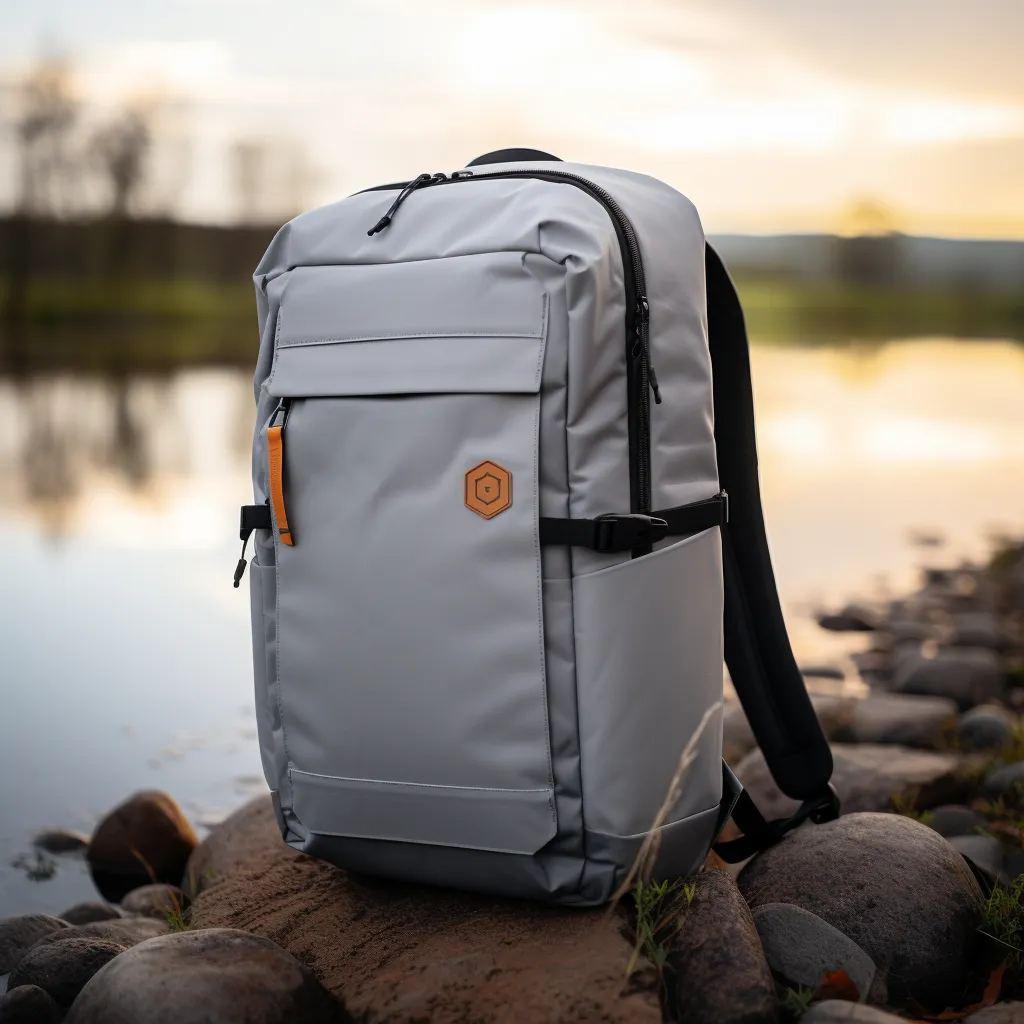
Name the performance, not the brand. A stated hydrostatic rating or denier can be sourced and quoted; a fabric name usually cannot be verified.
Group D: Branding and Decoration Fields (20-23)
The fourth block is short and it generates more rework than any other, because decoration is the part of a bag where an artistic intention has to be converted into a machine instruction. The conversion has rules: an embroidery file is not the same as a print file, a logo with a fine gradient behaves differently from a flat two-colour mark, and a placement that looks right on a flat sketch may fall across a seam on the made-up bag.
| # | Field | What to write | Why it changes the quote |
|---|---|---|---|
| 20 | Artwork files | Vector file, plus the formats available and the colour count | A raster-only logo needs redrawing before anything is made |
| 21 | Decoration method | Embroidery, heat transfer, woven label, rubber patch, metal plate | Each has a setup cost and a different per-unit cost |
| 22 | Placement and size | Panel, position in centimetres from a stated datum, and maximum size | Placement across a seam or a pocket changes the operation |
| 23 | Colour references | Pantone codes for both the logo and the body fabric | Colour matching is a sampling round if it is left open |
Field 20 sounds trivial and it is the most common cause of a two-day delay. A logo supplied only as a flattened image has to be redrawn before a sample can be decorated, and redrawing is a design task with its own turnaround. Supply the vector file if one exists, say what it was made in, and state the colour count. If the mark is complex, say which elements are essential and which can be simplified for a small format.
Field 21 should be answered with an understanding of the cost shape. Embroidery carries a digitising setup cost and then a per-unit cost that scales with stitch count. Heat transfer carries a film setup and a low per-unit cost, and it suits fine detail. A woven label carries a weaving minimum, typically in the low thousands of pieces, which is a stock commitment. A metal plate or a rubber patch carries a tooling cost. Each is reasonable; the point is to choose in the RFQ rather than during sampling.
Field 23 is where a colour expectation becomes either a specification or an argument. A Pantone reference for the body fabric and for each logo colour turns colour into a measurable target, and the bulk run can be checked against it before packing. Without it, colour is a matter of opinion, and opinions are formed at the worst possible moment, which is when 500 units are already made. The colour matching process is worth reading before filling this field in.
Group E: Compliance, Testing and Inspection (24-26)
The fifth block is the one creators treat as paperwork and it is the one that stops shipments. Compliance is not a document you collect at the end; it is a set of decisions about materials, inks and components that have to be made before those things are bought. A campaign that discovers in week six that its target market requires a specific test has already bought the fabric, and the options at that point are expensive.
| # | Field | What to write | Why it changes the quote |
|---|---|---|---|
| 24 | Target markets and standards | Every market the goods will be sold or shipped into | Determines which substance limits and label rules apply |
| 25 | Required tests and certificates | List the specific tests the campaign or retailer needs | Test costs and lead times are booked before bulk |
| 26 | Inspection standard and tolerance | AQL level, and whether a written defect list will be supplied | Sets the acceptance criteria the run is measured against |
Field 24 should list every market, not the main one. A campaign shipping to the United States, the European Union and Japan has three sets of requirements, and the strictest of them governs the material choice for the whole run. Children's products attract additional and stricter requirements in most jurisdictions, and a bag aimed at children should say so explicitly here. The compliance checklist for the US market shows how much is involved.
Field 25 should name the tests rather than the concept of testing. Fabric strength, colour fastness to rubbing and light, zipper cycle testing, hardware corrosion, and substance testing for lead and phthalates are all distinct items with distinct costs and durations, and a campaign that needs three of them should say which three. Naming them at quotation stage means they can be booked to run alongside sampling rather than alongside packing.
Field 26 is where the acceptance criteria are agreed, and the answer we work to is AQL 2.5 to ISO 2859-1 against a retained golden sample and a written defect tolerance list. Say whether you will supply your own tolerance list or want one proposed. Either is fine, and having the conversation before the run means the pre-shipment inspection measures against an agreed standard rather than against an impression.
Group F: Logistics, Terms and Timeline (27-30)
The sixth block is the commercial and physical delivery frame, and it is where a quote becomes a contract. These four fields are the ones a purchase order will repeat verbatim, so they should be written once, correctly, here. Getting them wrong does not change the unit price much, but it changes the landed cost and the cash flow, and it is the block most likely to be filled in by assumption rather than by decision.
| # | Field | What to write | Why it changes the quote |
|---|---|---|---|
| 27 | Incoterm and port | FOB Xiamen, or a delivered basis if you need one | Defines exactly which costs sit inside the unit price |
| 28 | Payment terms | T/T 30/70, or state if you need something different | Deposit timing sets when the production slot is booked |
| 29 | Packing specification | Polybag, sleeve or box, carton quantity, and any insert | Packing is a real per-unit cost and a freight variable |
| 30 | Labelling and barcodes | Care label content, composition, barcode type, any retail marking | Labels are components with their own lead time |
Field 27 matters more than it looks. FOB Xiamen means the unit price covers the goods and their delivery to the port and onto the vessel, and everything after that is yours: freight, insurance, duty, clearance and last-mile delivery. A creator comparing an FOB price against a delivered price from another source is comparing two different things. State which basis you are quoting on and compare like with like.
Field 28 is a cash-flow field rather than a cost field. T/T 30/70 means 30 per cent at order placement and 70 per cent before shipment, and those two dates sit either side of the 35 to 50 day production window. A campaign funded on a platform that releases money in stages needs to know that the deposit may fall before the platform has released the funds, and that the balance falls before any backer has received anything.
Field 29 is the field that quietly changes the freight bill. A bag flat-packed in a polybag has a materially lower volumetric weight than the same bag boxed, and across 500 units that difference is a real sum. Decide the packing format here, in the RFQ, so that the packing specification and the freight estimate are based on the same assumption. Field 30 is the companion to it: a care label with composition is a component, it has a lead time, and it has to be right the first time.
The Five Fields Creators Most Often Leave Blank
Across the briefs we receive, five fields are missing far more often than the others, and each absence produces a predictable failure. They are worth listing because a creator who fills in only these five has already improved the quality of the quote substantially, even if the rest of the brief is thin.
- Colourway split. Left blank because the creator does not know yet, and it decides whether the order is producible at all at 500 pcs each.
- Weight target. Left blank because it feels like a detail, and it determines whether the fabric and hardware can be chosen at all.
- Target markets. Left blank because the campaign is global, and it determines which substance limits govern the material buy.
- Packing specification. Left blank because it is assumed to be a polybag, and it moves the freight bill more than most price negotiations.
- Reorder plan. Left blank because it is speculative, and it decides whether material and tooling are booked once or twice.
The first and third on that list are the expensive ones. A missing colourway split means the quote has to assume a single colourway, and if the campaign then wants three, the price is wrong and the schedule is wrong. A missing market list means the quote assumes the least demanding standard, and if the goods then need to meet a stricter one, the material has to be re-sourced and the tests have to be run, both of which land inside the production window.
The fourth is the one that surprises people. Packing is a per-unit cost that is easy to leave out of a comparison and easy to get wrong, and because it also sets the volumetric weight, an error here is multiplied across the freight bill. A campaign that specifies retail packaging without pricing it will find that its margin was spent on a box. A campaign that specifies a polybag for a premium reward will find that its unboxing disappointed backers.
There is a simple way to handle all five if the answer is genuinely unknown: write unknown and state when you will know. A brief that says colourway split to be decided by the campaign close, likely two ways, gives the production team something to work with. A brief that simply omits the field does not, and the difference between those two is the difference between a quote and a conversation.
What a Complete RFQ Changes About the Quote
The practical value of a complete brief is measurable in two places: the precision of the price and the length of the calendar. A brief with all thirty fields can be quoted against real material prices and a known operation count, which typically produces a figure within a narrow band and a sampling date attached to it. A brief with eight fields produces a wide range, a list of questions and a start date that depends on when the answers arrive.
The calendar effect is the larger of the two and it is worth quantifying. Each round of clarification costs roughly a day of elapsed time across a working time difference, and an incomplete brief typically generates three to five rounds. That is most of a week before sampling starts, on a programme whose entire sampling stage is 6 to 10 working days. A complete brief collapses the clarification stage to a single exchange, and that is a week of the campaign calendar recovered for free.
The second effect is on the price itself, and it works through material rather than through negotiation. A brief that states the performance required allows the sourcing side to find two or three candidate fabrics at different price points and quote each. A brief that names a single fabric allows no such search, and if that fabric is expensive or unavailable, there is no alternative to offer. Optionality is worth more than any discount a creator is likely to negotiate at 500 pcs.
The third effect is on risk, and it is the one that matters at delivery. Every field that was decided in the RFQ is a field that does not have to be decided under pressure later, and decisions made under pressure during a production run are the ones that produce defects, delays and disputes. The RFQ is cheap insurance bought at the easiest possible moment, which is before anything has been cut.
How to Send It: File Format, Attachments and Follow-Up
Format matters less than completeness, but a badly formatted brief costs the recipient time and costs you a day. Send the thirty fields as a single document, structured in the six blocks used here, with the reference images and artwork attached separately and named clearly. Do not send the specification inside an email body with images pasted at random positions, because it will have to be retyped before it can be used, and retyping is where transcription errors enter a programme.
- One document. A text file, a spreadsheet or a PDF, with the thirty fields numbered.
- Separate attachments. Artwork, reference photographs, sketches and any existing tech pack, each clearly named.
- Vector artwork. Supply the vector file if it exists; a raster-only logo adds a redrawing step.
- State the unknowns explicitly. Unknown with a date is useful; a blank field is not.
- Say when you need the quote. A stated deadline lets the team tell you honestly whether it is achievable.
The last item is worth emphasising because it is the difference between a good experience and a frustrating one. If you need a quote in three days, say so in the first message. A production team can usually meet a stated deadline or say honestly that it cannot, and either answer is better than a silence that turns into a chase. What it cannot do is invent material prices for a brief that is missing the fabric specification.
On follow-up, one exchange is normal and productive; four chases in a week is not. If you have sent a complete brief, the clarification round will be short and the quote will follow. If you find yourself being asked many questions, that is information: the brief is missing fields, and the fastest route to a price is to answer them in one go rather than one at a time. Our programme coordinator will always tell you which fields are blocking the quote.
Scoring Your Own Brief Before You Send It
Before you send, score the brief against the thirty fields and see where it stands. A brief with twenty-five or more fields filled in will be quoted quickly and accurately. A brief with fewer than fifteen will generate questions, and the questions will be about the fields that matter. This is a five-minute exercise and it is the highest-value five minutes in the whole sourcing stage.
| Fields completed | What usually happens | Typical path to a quote |
|---|---|---|
| 25-30 | Priced against real materials, sampling date offered | A quote in days, sampling in 6-10 working days |
| 18-24 | One clarification round on materials or colourways | A narrow band, then a firm figure |
| 10-17 | Several rounds; the price stays a range | A week of exchanges before sampling can be booked |
| Under 10 | Cannot be quoted responsibly at all | A request to complete the brief first |
The bottom row is stated bluntly for a reason. A brief with fewer than ten fields cannot be quoted responsibly, and a supplier who quotes it anyway is giving you a number they will renegotiate later. That is not a quote, it is a lead-generation device, and campaigns that take it at face value discover the real price after they have committed to a campaign goal. Ask for the fields to be completed instead.
The other thing worth doing before sending is the arithmetic on your own side: does the total volume clear 500 pcs per style and per colourway in each colourway you intend to offer, and does the delivery month you want leave room for 35 to 50 days of bulk plus two to four days of inspection plus freight? If either answer is no, the brief should say so, because it changes what is being quoted. Those two questions are answered on the bag MOQ and production calculator pages.
Key takeaways
- A
- c
- o
- m
- p
- l
- e
- t
- e
- R
- F
- Q
- d
- o
- e
- s
- n
- o
- t
- g
- e
- t
- y
- o
- u
- a
- b
- e
- t
- t
- e
- r
- p
- r
- i
- c
- e
- b
- y
- n
- e
- g
- o
- t
- i
- a
- t
- i
- o
- n
- .
- I
- t
- g
- e
- t
- s
- y
- o
- u
- a
- r
- e
- a
- l
- p
- r
- i
- c
- e
- ,
- a
- s
- h
- o
- r
- t
- e
- r
- c
- a
- l
- e
- n
- d
- a
- r
- ,
- a
- n
- d
- a
- s
- p
- e
- c
- i
- f
- i
- c
- a
- t
- i
- o
- n
- y
- o
- u
- w
- i
- l
- l
- n
- o
- t
- h
- a
- v
- e
- t
- o
- r
- e
- w
- r
- i
- t
- e
- u
- n
- d
- e
- r
- p
- r
- e
- s
- s
- u
- r
- e
- .
Send us a brief with all thirty fields, or send what you have and we will tell you which ones are blocking the quote, at service@junyuanbags.com.
Frequently Asked Questions
Why do I need thirty fields to get a bag quote?
Because the unit price is the sum of a material cost, a cutting and sewing time, a decoration cost, a packing cost and an amortised setup, and four of those five cannot be estimated without specific information. Thirty fields cover the campaign frame, the specification, the materials, the branding, the compliance requirements and the commercial terms. A brief with all thirty can be quoted in days; a brief with eight generates three to five rounds of questions first.
What is the minimum order quantity I should state in the RFQ?
500 pcs per style and per colourway. State the total and the split, because the minimum applies per colourway: three colourways means 1,500 units. If you do not know the split yet, give the total and the maximum number of colourways you would accept, and ask for a price at each option. That is better than guessing and discovering the problem at the order stage.
Should I state my budget in an RFQ?
Yes. A stated band tells the production side which fabric weights, hardware grades and decoration methods are in scope, so the quote comes back usable. Without one, quotes tend to arrive either too expensive to act on or too cheap to trust. State a target range per unit on an FOB Xiamen basis and say whether packaging sits inside it, so that the comparison is like for like.
Which field most often delays a bag quote?
The colourway split, followed by the target markets. A missing colourway split forces an assumption of a single colourway, and if the campaign then wants three, both the price and the schedule are wrong. A missing market list means the quote assumes the least demanding compliance standard, and a stricter requirement later forces a material re-source and fresh testing inside the 35 to 50 day window.
Do I need to supply vector artwork with the RFQ?
Yes if it exists. A logo supplied only as a flattened image has to be redrawn before any sample can be decorated, which adds a design step with its own turnaround. Supply the vector file, say what it was created in, state the colour count, and say which elements must be preserved and which can be simplified for a small format.
What inspection standard should I write into the RFQ?
AQL 2.5 to ISO 2859-1, measured against a retained golden sample and a written defect tolerance list. State whether you will supply your own tolerance list or want one proposed. Agreeing the acceptance criteria before the run means the pre-shipment inspection measures against a standard rather than against an impression, which is what prevents disputes at the end of a campaign.
Should I name a specific fabric in the RFQ?
State the performance rather than a brand name. Give the composition, denier, weave, coating and any measurable requirement such as a water-repellent finish or a hydrostatic rating, and ask for two or three candidate options. That allows a genuine search and a comparison. A single named fabric that is unavailable or expensive leaves no alternative to offer.
What does FOB Xiamen mean for my landed cost?
It means the unit price covers the goods and their delivery to the port and onto the vessel. Everything after that is yours: freight, insurance, duty, clearance and last-mile delivery. A creator comparing an FOB price against a delivered price from another source is comparing two different things, so state the basis you are quoting on and compare like with like.
How does the payment schedule interact with a campaign calendar?
T/T 30/70 means 30 per cent at order placement and 70 per cent before shipment, which sit either side of the 35 to 50 day production window. If your platform releases funds in stages, the deposit may fall before those funds arrive and the balance before any backer has received anything. Plan the working capital gap before you launch rather than in week four.
Should I include the packing specification in the RFQ?
Yes, because it is a real per-unit cost and it sets the volumetric weight that drives the freight bill. A bag flat-packed in a polybag costs materially less to ship than the same bag boxed, and across 500 units the difference is significant. Decide the format in the RFQ so the packing specification and the freight estimate share one assumption.
What if I do not know the answer to a field yet?
Write unknown and state when you will know. A brief that says the colourway split will be decided at campaign close, likely two ways, gives the production side something to work with and lets a quote be prepared. A blank field does not. The distinction between unknown-with-a-date and blank is the difference between a quote and a conversation.
How quickly will I get a quote from a complete RFQ?
Typically in days rather than weeks, with a sampling date attached. Sampling itself runs 6 to 10 working days for a standard style and 12 to 15 working days for a complex one. The delay in most programmes is not the quoting or the sampling, it is the clarification rounds beforehand, and those are entirely removed by a complete brief.
People Also Ask
What is an RFQ for a custom bag?
A request for quotation: the document that carries the specification, volume, materials, compliance and commercial terms a production partner needs to price a run. Thirty fields covers it completely.
How many fields should a bag RFQ have?
Thirty, in six blocks: campaign and commercial, specification, materials and components, branding, compliance and inspection, logistics and terms.
Can I get a quote from a photo and a quantity?
You can get a range with caveats, not a number. Four of the five cost components cannot be estimated without material, decoration and packing detail.
What is the MOQ to state in an RFQ?
500 pcs per style and per colourway. State the total and the split, because the minimum applies to each colourway you offer.
Should I tell the supplier my budget?
Yes. A stated band puts the right fabrics, hardware and decoration methods in scope, so the quote comes back usable rather than either unaffordable or suspiciously cheap.
Do I need Pantone codes in the RFQ?
Yes, for the body fabric and each logo colour. It turns colour into a measurable target so the bulk run can be checked before packing instead of argued about after.
What file should I send the RFQ in?
One numbered document with artwork and reference images attached separately and clearly named. Do not paste a specification into an email body with images at random positions.
What happens if my RFQ is incomplete?
You get a clarification round, and each round costs about a day across a working time difference. Three to five rounds is most of a week before the 6 to 10 working day sampling clock starts.