Custom Bag Vendor Comparison: A Fair Way to Read 3 Quotes
Three bag quotations are almost never comparable as they arrive, because each one is built on a different specification, a different quantity, different delivery terms and a different treatment of one-off charges. Comparing the headline unit prices is comparing three different products. To compare fairly you must normalise four things first: the specification, the quantity, the delivery terms and the one-off charges. Only then does the difference in the unit price mean anything. This article sets out the four normalisation steps, the five types of quote you will receive, and a one-page comparison sheet that puts three offers side by side on the same basis.
- Why Three Quotes Are Almost Never Comparable
- Step 1: Normalise the Specification
- Step 2: Put Every Quote on the Same Quantity
- Step 3: Separate Unit Price From One-Off Charges
- Step 4: Put Every Quote on the Same Delivery Terms
- Reading the Material and Hardware Lines
- Comparing Payment and Risk Structure
- Comparing the Schedule, Not Just the Date
- The Five Quote Types and How to Spot Them
- The One-Page Comparison Sheet
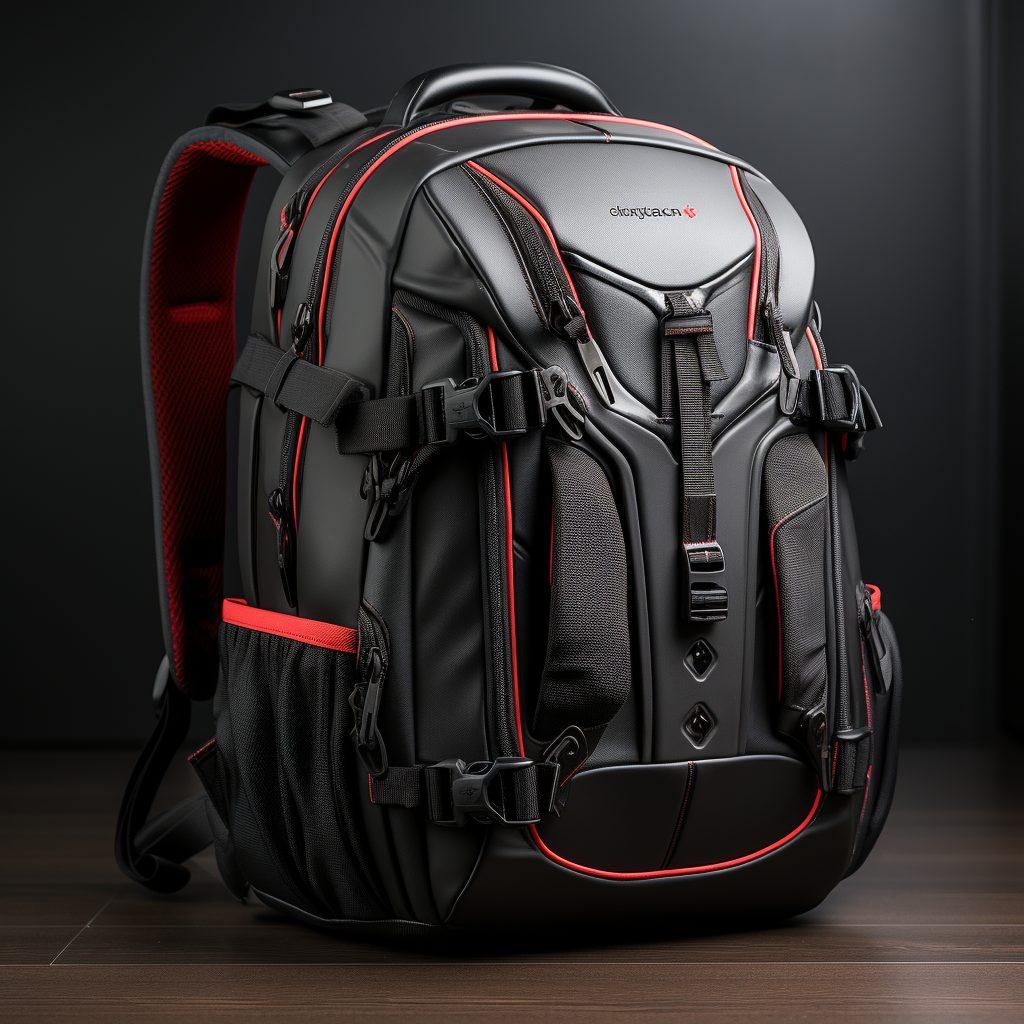
Why Three Quotes Are Almost Never Comparable
The standard advice to a creator is to get three quotes, and it is reasonable advice. What it does not say is that the three quotes will arrive on three different bases and that reading them side by side without adjustment will produce the wrong answer. The spread in a set of bag quotations is usually much smaller than it looks, and the ranking is often different once they are put on the same basis.
Four things differ between them, and each one moves the number independently. The specification differs, because each partner filled the gaps in your brief with their own assumptions about fabric weight, lining and hardware grade. The quantity differs, because one quoted 500 pcs and another quoted 1,000. The delivery terms differ, because one is FOB Xiamen and another is a delivered price. The one-off charges differ, because one folded them into the unit price and another listed them separately.
Consider two quotes on a 30 L backpack: USD 19.40 at 500 pcs with separate tooling, and USD 21.10 on a delivered basis with tooling included. Read literally, the first looks 8 per cent cheaper. Normalised to FOB Xiamen at 500 pcs with the tooling spread across the run in both cases, the first is USD 21.20 and the second is USD 19.30. The ranking reverses, and it reverses by 10 per cent, which is a meaningful amount on a 500-piece order.
There is a second reason three quotes are not comparable, which is subtler and more common. Each partner was answering the brief they received, and a brief that leaves gaps will be filled with different assumptions. One will assume a 600D shell, another 900D. One will assume a standard coil zip, another a branded one. Both are answering in good faith, and the two answers describe different bags. The gap is not a pricing difference, it is a product difference, and it has to be closed before any comparison is meaningful.
This is why the sequence matters. Send one brief to three partners, normalise what comes back, then compare. Sending three different briefs and comparing what comes back is not a comparison, it is three separate projects. Our How to Write a Bag Spec Sheet for a Fast, Accurate Quote page shows the brief format that produces comparable answers, and Bag Production Partner for Campaign Creators places the comparison inside a full sourcing programme.
A quotation is an answer to the brief it received. Three briefs produce three answers that cannot be ranked, however tidy the numbers look.
Step 1: Normalise the Specification
The first step is to make sure all three quotes describe the same physical object. This is the step that takes the longest and saves the most, and it should be done before any arithmetic. Read the material and hardware lines of each quote and write down, side by side, what each partner assumed.
| Line | What one partner may assume | What another may assume | Effect on unit price |
|---|---|---|---|
| Shell fabric | 600D polyester, plain weave | 900D with a PU coating | USD 1.50 to 4.00 |
| Lining | Unlined or a light taffeta | 210D dyed to match | USD 0.50 to 2.00 |
| Main zip | Standard coil, no brand | Branded reverse coil | USD 0.60 to 3.00 |
| Webbing | Standard width, undyed edge | Dyed to match, finished edge | USD 0.30 to 1.60 |
| Base | No stiffener | Stiffener panel or tray | USD 0.40 to 2.50 |
| Decoration | Excluded from the unit price | One position included | USD 0.35 to 2.00 |
| Packaging | Bulk packed in a plain carton | Individual polybag and label | USD 0.20 to 1.00 |
| Inspection | No inspection included | AQL 2.5 included | USD 0.20 to 0.80 |
The last four rows are the ones most often omitted entirely, and together they can move a unit price by more than the visible material differences. A quote that excludes decoration, packaging and inspection looks cheaper and is cheaper, because it is a smaller scope. Adding the three back brings it onto the same basis as the others, and that is the number to compare.
The practical method is a recalculation request rather than a rejection. Write back to each partner with the normalised specification attached and ask them to confirm their price against it. This is a normal, professional request and a good partner will welcome it, because they would rather quote against a real specification than find out later that they were compared against a different product. If a partner will not confirm, that is itself information.
There is a useful side effect of doing this. By the time you have reconciled three quotes onto one specification, you will have a complete, unambiguous brief for the product, and that document is exactly what the eventual production order will be built on. The normalisation work is not an overhead. It produces the specification you were going to need anyway, and it produces it at the point where disagreements are cheap.
Step 2: Put Every Quote on the Same Quantity
Quantity is the second normalisation, and it is the one that most often misleads. A quote at 1,000 pcs will be lower per unit than the same quote at 500 pcs, typically by 12 to 18 per cent, and the difference is not a discount anyone is offering you. It is the arithmetic of spreading fixed costs.
The rule is simple and absolute: compare at the quantity you will actually order. For a first campaign that is usually 500 pcs per style and per colourway, because the minimum applies per style and per colourway, and because a campaign that funds at 800 backers across three colourways does not have a 2,400-piece run to give. It has three 500-piece commitments, priced at the 500-piece tier.
There is a trap here that catches a lot of creators. A partner quoting at 2,000 pcs is not being generous or optimistic; they are quoting a real price for a different order size. If you intend to order 500, ask for the 500-piece price and do not accept a 2,000-piece number as a basis for the campaign model. The gap between the two is around 25 per cent on a canvas tote and 12 to 18 per cent on a mid-commuter backpack, and a model built on the wrong one will not survive contact with the funding result.
The one legitimate use of a different quantity tier is a two-tier comparison. If you genuinely expect a re-order, ask each partner for their price at 500 and at 1,500, and compare both columns. This tells you two things that a single column cannot: where the volume break actually falls for each partner, and which partner is more competitive at the size you will be ordering at next time. Our Low MOQ vs Wholesale Pricing: The Unit Cost Curve for Bags page draws the whole curve out.
Colourways need the same treatment as quantity, because they are the same arithmetic. A quote for a bag in one colour at 500 pcs is not the same as a quote for 1,500 units across three colourways, even though the total is identical. The second carries three setups, three material lots and three line setups. Ask each partner to quote the colour split as you will actually order it, and compare that.
Step 3: Separate Unit Price From One-Off Charges
The third normalisation is arithmetic, and it is the one that changes totals most at the 500-piece end. One-off charges are real costs of the order, and whether they appear inside the unit price or beside it does not change what you will pay. It changes only what the comparison looks like.
| Charge | Typical range | At 500 pcs | At 1,000 pcs | At 2,000 pcs |
|---|---|---|---|---|
| Pattern and spec development | USD 80 to 250 | USD 0.16 to 0.50 | USD 0.08 to 0.25 | USD 0.04 to 0.13 |
| Sample units, 2 rounds | USD 120 to 360 | USD 0.24 to 0.72 | USD 0.12 to 0.36 | USD 0.06 to 0.18 |
| Embroidery digitising | USD 25 to 60 | USD 0.05 to 0.12 | USD 0.03 to 0.06 | USD 0.01 to 0.03 |
| Print screens, per colour | USD 100 to 300 | USD 0.20 to 0.60 | USD 0.10 to 0.30 | USD 0.05 to 0.15 |
| Custom zipper pull die | USD 300 to 900 | USD 0.60 to 1.80 | USD 0.30 to 0.90 | USD 0.15 to 0.45 |
| Woven label setup | USD 80 to 200 | USD 0.16 to 0.40 | USD 0.08 to 0.20 | USD 0.04 to 0.10 |
Sum the one-offs, divide by the quantity, and add the result to the unit price before you compare. On a 500-piece programme with a custom pull and two print colours, this typically adds USD 1.50 to 3.50 per unit, which is 8 to 15 per cent on a mid-commuter backpack. Any comparison that leaves it out is not comparing the same thing.
There is a second question to ask about one-offs, which is whether they recur. Pattern development, sampling and digitising are one-time costs that do not repeat on a re-order, and a partner who will confirm that in writing is giving you a lower second-round price. A partner who charges them again is making your re-order more expensive than it needs to be. Ask the question at the comparison stage, not at the re-order stage, because it changes the two-tier totals.
Some partners credit the sample cost against the bulk order and some do not, and this is a genuine difference rather than a presentation one. A quote with samples at USD 180 each and a full credit against the order is materially better than a quote with samples at USD 120 and no credit. Our Custom Bag Sample Fee Policies: Refund, Split, Fold-In page covers the three arrangements and what each one implies.
Step 4: Put Every Quote on the Same Delivery Terms
Delivery terms are the fourth normalisation, and they are the easiest to get wrong because the difference is invisible until goods are moving. A price quoted on a delivered basis includes freight, insurance and often duty. A price quoted on FOB Xiamen includes none of them. Comparing the two directly is comparing different lengths of journey.
- FOB Xiamen covers the goods to the port of loading. Freight, insurance, duty, port handling, inland delivery and the outbound parcel are all yours to arrange and to fund.
- CIF adds freight and insurance to a named port, but not duty, not inland delivery and not the last leg.
- DDP adds everything, including duty and delivery to the destination address, and it is the arrangement that removes customs charges for a backer.
The normalisation is mechanical. Convert everything to FOB Xiamen first, because that is the basis on which production can be compared without the freight variable. Then, separately, add your own freight and duty lines to each one, which you can do once rather than three times. The result is three landed numbers built on one freight assumption, and those are comparable.
Rough figures for the conversion at 500 pcs: ocean freight runs USD 3 to 9 per unit, import duty USD 2 to 7 by HS classification and destination, port handling and documentation USD 1 to 3, and air freight runs three to five times the sea figure on volumetric weight. If a partner will not separate their delivered price into its parts, ask them to, because a delivered price that cannot be broken down cannot be compared or audited.
There is a reason to prefer FOB for the comparison even if you will ultimately ship DDP, which is that it isolates the two decisions. The production decision should be made on production cost, and the logistics decision made separately on mode, destination and speed. Our Kickstarter Freight Options: FOB vs CIF vs DDP page sets out the three arrangements and when each is right, and DDP Shipping for Backers: Duties Paid, No Surprise Fees covers the backer-facing case.
Reading the Material and Hardware Lines
Once the four normalisations are done, the unit prices are on the same basis and the remaining differences are real. The next step is to understand where those differences come from, because a lower price built on a lighter specification is not a saving, it is a different product at a different price.
| Line | Partner A, lowest | Partner B, middle | Partner C, highest |
|---|---|---|---|
| Shell | 600D polyester, no coating | 600D with PU coating | 900D with DWR finish |
| Lining | Light taffeta, undyed | 210D dyed to match | 210D dyed, with a coated base |
| Main zip | Standard coil, unbranded | Branded coil | Branded reverse coil |
| Webbing | Standard, undyed edge | Dyed to match | Dyed, finished edge |
| Base | No stiffener | Stiffener panel | Moulded base tray |
| Unit at 500 pcs | USD 15.20 | USD 18.40 | USD 22.10 |
Read that table as a choice rather than a ranking. All three are legitimate products. Partner C's is a better bag, and it costs USD 6.90 more. The question is not which number is lowest, it is which specification your backers are paying for. If your campaign page shows a structured base and a water-repellent shell, Partner A's number is not a saving at all, because it will not produce the bag you advertised.
The useful discipline is to decide the specification before you look at the prices. Write down the shell, the lining, the zip, the webbing and the base you are willing to ship, then see which partner's quote matches. Doing it in that order prevents the common and expensive error of choosing a price and then discovering what it buys. Our Custom Bags for Campaign Backers: Quality vs Price page treats the same decision from the backer's side of the page.
There is one line where a lower figure should be treated as a warning rather than a saving, which is the main zip. A duffle or backpack zip that fails disables the product, and the difference between a standard coil and a branded reverse coil is roughly USD 2 per unit against a replacement shipment that costs tens of times that. Compare the zip specification across quotes by name, and if one of them does not state the brand or the gauge, ask.
Comparing Payment and Risk Structure
Price is one part of the commercial structure, and the other two parts are when you pay and who carries which risk. Two quotes at the same unit price can differ substantially in both, and the difference is real money and real exposure.
| Variable | Standard arrangement | What to watch for |
|---|---|---|
| Deposit and balance | T/T 30/70, 30 per cent to start and 70 per cent before shipment | A deposit above 50 per cent transfers working capital to you for the whole 35 to 50 day window |
| Inspection right | AQL 2.5 to ISO 2859-1 before the balance is due | Balance demanded before inspection removes your only leverage over the result |
| Defect remedy | Rework or credit agreed in writing before the deposit | No written remedy means the cost of a defective lot is yours |
The second row is the one with the sharpest teeth. Under T/T 30/70, the 70 per cent balance is payable before shipment, which means it is payable after the inspection. That sequence is what makes the inspection meaningful, because a lot that fails AQL 2.5 can still be reworked while the goods are on the production side. If a partner asks for the balance before the inspection, the inspection has become advisory.
The third row is the one most often left unwritten, and it is the one that determines what happens in the bad case. Before you send the deposit, agree in writing what happens if the lot fails inspection: who pays for the rework, whether a credit is available, and how long either takes. It is a short paragraph and it converts an argument into a process. Our Custom Bag Contract Basics: Payment Terms, IP and Liability Clauses page covers the clause set in full.
Payment method carries a cost that should be in the comparison too. A telegraphic transfer carries bank charges at both ends and an intermediary fee, and those charges are not trivial on a 500-piece order. Any quote that includes them and any that excludes them should be put on the same basis before the totals are read. It is a small line and it is part of the same discipline as the other three normalisations.
Comparing the Schedule, Not Just the Date
A delivery date is not a schedule, and comparing dates without comparing schedules is how a campaign misses its promise. Three partners may all offer a completion date, and the three dates may be built on different assumptions about when the clock starts.
- When the sampling clock starts. From approval of the specification, or from receipt of the deposit? The difference is usually a week.
- When the bulk clock starts. From materials in and slot open, or from deposit received? The difference can be two weeks.
- How many sampling rounds are included. One, or two? A second round adds 6 to 10 working days on a standard build.
- What happens at a peak. Is a slot named, or is the date a target? Ask for the completion dates of their last three orders of similar size.
- Whether the freight leg is included. Production complete is not the same as goods delivered, and the two differ by the whole transit.
The standard figures to hold every partner to are 6 to 10 working days for a standard sample and 12 to 15 working days for a complex one, then 35 to 50 days for bulk. A partner quoting outside those ranges is either slower or is quoting a different scope, and asking which will tell you a great deal about how they will handle the order.
The fourth item on that list is the most revealing and the easiest to ask. A partner with a schedule will name a slot and will be able to say what would displace your order from it. A partner working from a target will say it should be fine. The first is a schedule and the second is a hope, and the difference between them is usually the two or three weeks that decide whether a campaign delivers on its promise. Our Kickstarter Bag Project Timeline: Sampling to Delivery page builds the full calendar with buffers.
There is a final comparison to make on the schedule, which is the re-order. Ask each partner what the turnaround would be on a second round of 1,500 units in eight weeks' time. A partner with your pattern, your approved sample and a held slot will answer in days. A partner without them will answer in weeks, and that answer should be in the comparison, because most funded campaigns need the second round.
The Five Quote Types and How to Spot Them
After a while you can classify a quotation quickly, and classifying it tells you how much weight to give the number. Five types cover nearly everything that arrives in a creator's inbox, and each has a recognisable shape.
| Type | How it looks | What it means |
|---|---|---|
| The complete quote | Specification attached, seven items named, one-offs listed separately | Built from a real calculation. This is the one to compare. |
| The bare number | One unit price, no specification, no terms | An estimate, not a quotation. Can be converted by asking for the seven items. |
| The optimistic range | A very low price at a quantity you did not ask for | Priced to win the comparison. Ask for the price at your quantity. |
| The bundled quote | Everything included, nothing itemised | Cannot be normalised or audited. Ask for the parts. |
| The provisional quote | Price given subject to seeing the artwork or the sample | The number will move. Ask what would move it and by how much. |
The seven items a complete quote names are worth memorising, because they are the test: the unit price at a stated quantity, the MOQ it is based on, the materials and components by specification, the sampling and bulk lead times, the payment terms, the trade terms and the inspection standard. A quote with all seven can be compared directly. A quote missing any of them needs a question before it can be.
Two of the five types deserve a direct response rather than a conversion. The optimistic range should be answered with a request for the price at your quantity, and if the partner cannot give one, they are not a candidate. The provisional quote should be answered with a question about what would move it, because the answer tells you where the real number will land. Both responses are quick, and both save a wasted comparison.
It is worth saying that the bare number is not dishonest. It is often what a busy operation sends first, and asking for the seven items will frequently produce an excellent quote. The classification is about how much weight the number can carry as it stands, not about the integrity of whoever sent it.
The One-Page Comparison Sheet
Everything above reduces to one page, and building the page is the fastest way to make the decision. Nine rows and three columns, filled in on the same basis for every candidate, with the normalisations already applied. The value is that it makes the differences visible in one place rather than across four email threads.
| Row | Partner A | Partner B | Partner C |
|---|---|---|---|
| Specification confirmed in writing | Yes | Yes | Pending |
| Quantity compared | 500 pcs | 500 pcs | 500 pcs |
| Basis | FOB Xiamen | FOB Xiamen | FOB Xiamen |
| Unit price | USD 18.40 | USD 19.10 | USD 17.90 |
| One-offs, per unit at 500 | USD 1.90 | USD 1.20 | USD 2.80 |
| Normalised unit | USD 20.30 | USD 20.30 | USD 20.70 |
| Sampling, working days | 6-10 | 6-10 | 12-15 |
| Bulk window, days | 35-50 | 35-45 | 40-55 |
| Re-order behaviour | Setup not repeated | Setup not repeated | Setup recharged |
The illustrative figures show the point of the whole exercise. Partner C had the lowest unit price and the highest normalised one, and Partner C was also the slowest on sampling and the only one that would recharge setup on a re-order. Reading the headline number would have produced exactly the wrong choice. Reading the sheet produces a clear one.
Two closing points on using the sheet. First, fill it in before you negotiate, because it tells you which partner to negotiate with and which levers exist. Second, share it. Telling a partner that you are comparing three normalised quotes and that theirs is the highest on one-offs is a legitimate and effective negotiation, and it is honest, because it is true.
And one caution about what the sheet cannot tell you. It compares what partners say, not what they do. The only test of the schedule is a sample, and the only test of the quality system is an inspection report. Do the comparison on paper, then confirm the winner with a sample in 6 to 10 working days before you commit. Our Custom Bag Order Process: Quote, Sample, Deposit, Production page shows the sequence that follows.
Send one brief to three partners, normalise what comes back, and we will price against the sheet with you. Start at /contact-quote/.
Frequently Asked Questions
Why do three bag quotes differ so much?
Usually because they were built on different specifications, quantities, delivery terms or treatments of one-off charges. The spread narrows considerably once all four are normalised, and the ranking frequently changes.
What should a complete bag quotation contain?
Seven things: the unit price at a stated quantity, the MOQ it is based on, the materials and components by specification, the sampling and bulk lead times, the payment terms, the trade terms and the inspection standard.
How do I put a delivered price on an FOB basis?
Subtract the freight, insurance, duty and inland delivery elements. If a partner will not itemise their delivered price, ask them to, because a bundled figure cannot be normalised or audited.
How much do one-off charges add at 500 pcs?
Typically USD 1.50 to 3.50 per unit, covering pattern development, sampling, digitising, print screens, a custom pull die and label setup. They add around half that at 1,000 pcs and a quarter at 2,000 pcs.
Should I compare at 500 pcs or 2,000 pcs?
At the quantity you will actually order, which for a first campaign is usually 500 pcs per style and per colourway. A 2,000-piece price is 12 to 18 per cent lower on a backpack and it will not appear if you order 500.
Do one-off charges repeat on a re-order?
Pattern development, sampling and digitising should not. Ask each partner to confirm that in writing before the first deposit, because it changes the two-tier comparison and the cost of your second round.
Is the lowest unit price the best value?
Not necessarily. In a typical three-way comparison the lowest headline price is often built on a lighter shell, an unbranded zip and separate one-off charges, and once normalised it can be the most expensive of the three.
What is T/T 30/70 and why does the sequence matter?
A 30 per cent deposit to release material purchasing and 70 per cent before shipment. Because the balance falls due after the AQL 2.5 inspection, the inspection has teeth. A balance demanded before inspection removes your leverage.
How do I compare delivery dates fairly?
Compare schedules, not dates. Ask when the sampling clock starts, when the bulk clock starts, how many sampling rounds are included, and whether a production slot is named or the date is a target.
What are the standard lead times I should hold partners to?
6 to 10 working days for a standard sample and 12 to 15 for a complex one, then 35 to 50 days for bulk production. A partner quoting outside those ranges is either slower or quoting a different scope.
Should I tell partners I am comparing three quotes?
Yes, and do it specifically. Saying that you are comparing three normalised quotes and that theirs is highest on one-off charges is an honest and effective negotiation position.
What cannot be learned from a comparison sheet?
Whether the partner actually delivers. A sheet compares what three operations say. Confirm the winner with a sample in 6 to 10 working days, and with a sample inspection report before the deposit.
People Also Ask
How do I compare bag quotes?
Normalise four things first: the specification, the quantity, the delivery terms and the one-off charges. Then compare the unit prices.
What should a bag quote include?
Seven items: unit price at a stated quantity, MOQ, materials by specification, lead times, payment terms, trade terms and the inspection standard.
Why is one quote cheaper?
Often a lighter shell, an unbranded zip, or one-off charges listed separately. Normalise and the gap usually narrows or reverses.
Should I compare at 500 or 1,000 pcs?
At the quantity you will order. The 1,000-piece price is 12 to 18 per cent lower on a backpack and will not appear if you order 500.
What is T/T 30/70?
30 per cent deposit to start and 70 per cent before shipment, after the AQL 2.5 inspection.
Do setup charges repeat on a re-order?
Pattern, sampling and digitising should not. Get it in writing before the first deposit.
Is the cheapest bag quote the best?
Rarely. Once the four normalisations are applied, the lowest headline price is often the highest real one.
How long is bulk production?
35 to 50 days, starting when materials are in and the production slot opens.