Custom Drone Bags for Crowdfunding: A Niche Perk for Aerial Brands
A drone bag is rarely the product a backer funds; it is the perk that makes a funded product usable on day one. That role shapes every specification decision: the compartment is sized to a folded aircraft rather than to a generic volume, battery storage has to satisfy transport rules, and small parts such as propellers and cables need dedicated pockets. At MOQ 500 pcs per style and colourway, sampling 6-10 working days and production 35-50 days, a drone bag is a compact, high-margin perk that rewards precise measurement.
- Why a drone bag is a perk and not the product
- What a drone kit actually contains, and what breaks
- Hard shell, soft shell and the hybrid insert
- Sizing to the aircraft: folded versus unfolded
- Battery pockets and the LiPo transport question
- Controller, propeller and small-part organisation
- Foam insert versus dividers: cost and protection
- Materials, closures and field conditions
- Unit cost and MOQ economics at 500 pcs
- Sampling and testing a drone bag
- Positioning the perk tier for aerial backers
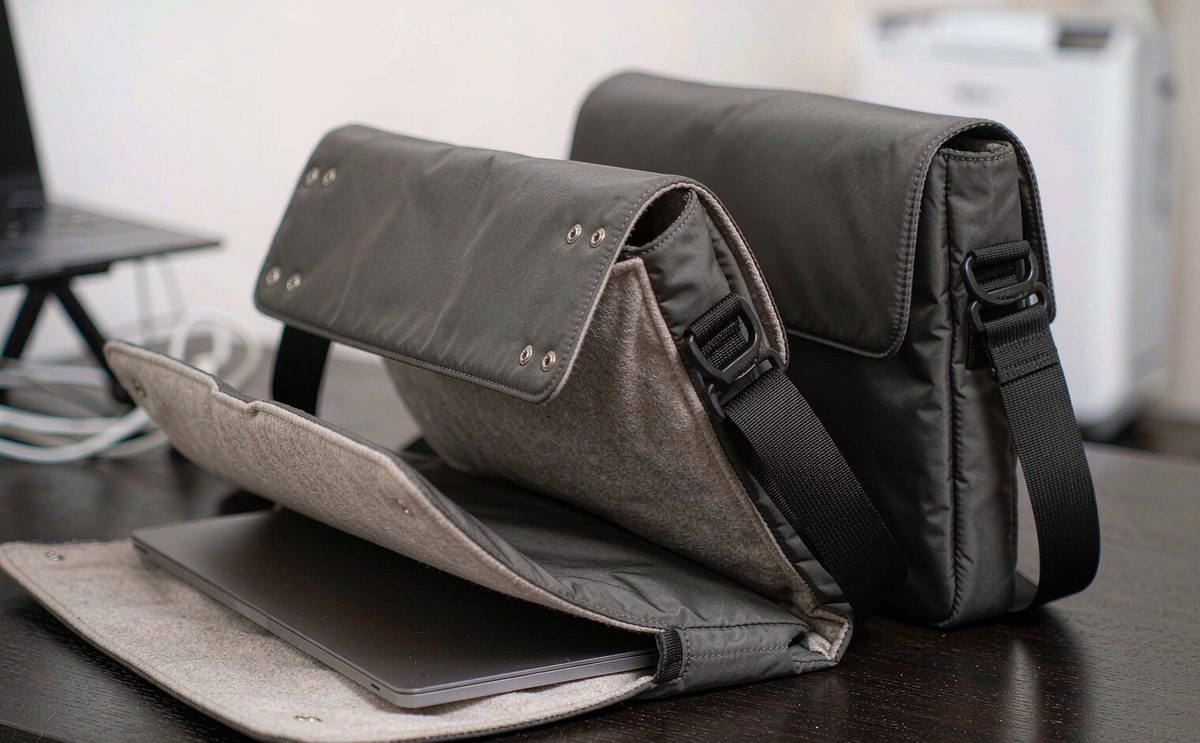
Why a drone bag is a perk and not the product
Most aerial tech campaigns launch an aircraft, a gimbal or a piece of ground equipment. The bag is the accessory that turns that product into something a pilot can actually take into the field, and that role changes how it should be specified, priced and presented. A perk is judged on whether it solves the problem the funded product creates; a standalone product is judged on whether it justifies its own price. Conflating the two is the most common mistake in this niche.
The practical consequence is that the drone bag must be designed around one specific aircraft and one specific kit, not around a category. A bag sized to the folded dimensions of a particular quadcopter will be bought by owners of that quadcopter and by nobody else, which sounds like a limitation and is actually the entire commercial advantage. A generic camera bag competes with every camera bag on the market; a bag sized to a named aircraft has no direct competitor on the campaign page.
That specificity also improves the economics. Because the kit is known, the interior can be a fixed foam insert rather than an adjustable divider set, which is cheaper to assemble, faster to quote and much easier to inspect consistently across a 500-pcs run. Fixed geometry removes the most common source of sampling revisions in bag categories, which is a compartment that has to serve several configurations and serves none of them well.
If the campaign also serves photographers, note that the two audiences overlap but do not share a compartment layout. A camera compartment wants adjustable channels; a drone compartment wants a fixed cavity with a lip that holds the aircraft in place. Our breakdown of Kickstarter camera bags covers the adjustable side of that split, and the crowdfunding bag guide sets out where these two formats sit against totes, backpacks and pouches on cost.
What a drone kit actually contains, and what breaks
Before any dimension is written down, list the kit. A typical consumer or prosumer quadcopter kit contains the aircraft, a controller with integral or detachable sticks, two to four flight batteries, a charger with a mains lead, a set of spare propellers, a set of cables in three or four different connector types, a memory card, filters, and often a small tool. Two of those items are fragile, three are easy to lose and one carries a transport rule that affects the build.
What breaks is instructive. Propellers crack when they are compressed against the aircraft body. Gimbal assemblies are the single most expensive and most delicate component on the aircraft and fail from a point load rather than from a drop. Battery terminals short if they are stored loose with metal objects. Cables disappear. A bag that answers those four failure modes specifically is worth more to a pilot than a bag with more padding and no organisation.
- Aircraft cavity. Sized to the folded aircraft with a lip or retaining strap so it does not shift, and with no pressure point over the gimbal.
- Battery pockets. Individual sleeves or a dedicated pouch with separation between batteries, never a shared open pocket.
- Propeller storage. A flat rigid or semi-rigid sleeve, because curved blades stored under compression take a permanent set.
- Cable and card organisation. Elastic loops or a small mesh pocket; these are the items that go missing first.
- Controller position. Usually in the lid panel or a dedicated front pocket, with clearance for sticks if they are detachable.
Write that list into the RFQ as the packing configuration and require the sample to be tested by packing the real kit. A drone bag that cannot be packed in the order a pilot actually packs it will be criticised in the first field review, and that review is usually published in the community where the campaign sold.
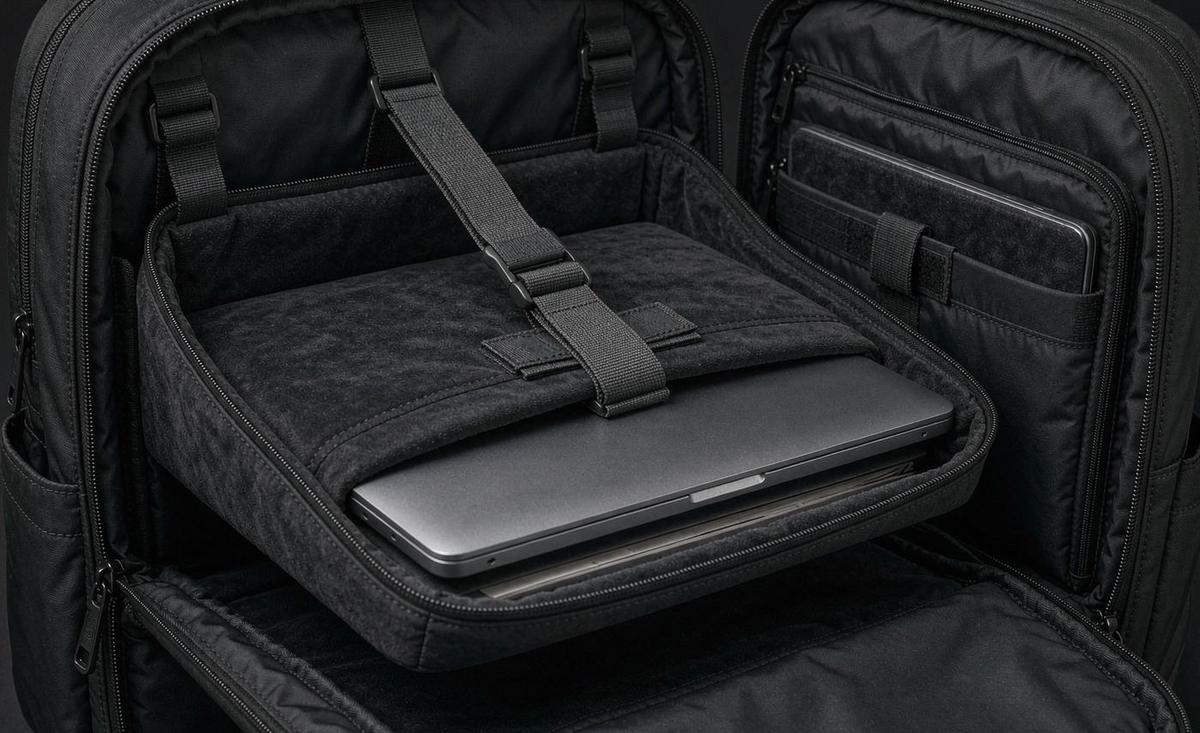
Hard shell, soft shell and the hybrid insert
Three constructions dominate this niche, and the choice drives cost, weight and protection. A hard shell case offers the best crush protection and the worst carry comfort, and it requires tooling, which means a longer lead time and a minimum that sits above the standard bag run. A soft shell bag carries comfortably, packs into a backpack and offers impact protection but not crush protection. The hybrid, a soft shell with a removable rigid or semi-rigid insert, is usually the right answer for a crowdfunding perk.
| Construction | Protection profile | Cost and lead-time impact | Best fit |
|---|---|---|---|
| Soft shell with adjustable dividers | Impact only; aircraft can shift | Lowest cost; standard sampling window | Light kits and entry perks |
| Soft shell with die-cut foam insert | Impact plus location; fixed cavity | +6-12% unit cost; no tooling | The default choice for a named aircraft |
| Soft shell with a moulded EVA tray | Impact plus crush at the base | +10-18%; tooling decision required | Premium perk tiers |
| Hard shell case with foam | Best crush and impact protection | Highest cost; tooling and longer lead | Professional and field-service kits |
| Sleeve or pouch only | Scratch protection only | Lowest cost of all | Add-on perk at the entry tier |
The hybrid wins on three practical counts. It ships flat-ish because the insert can be packed separately if needed, it uses standard bag construction so sampling stays inside the 6-10 working day band, and it can be re-inserted into a larger bag, which is how most pilots actually travel. A moulded tray or a hard shell is a legitimate premium option but should be reserved for a tier where the price supports tooling, because tooling cost does not fall with volume in the way unit cost does.
There is a second reason the hybrid suits a crowdfunding perk specifically: risk. A hard shell is a tooling commitment made before the campaign has validated demand, while a soft shell with a die-cut insert commits only to a die. If the campaign underperforms, the difference between a tooling write-off and a die write-off is material.
Also weigh how the bag travels. Pilots rarely carry only the drone bag; they carry it inside or alongside a backpack. A soft shell with a removable insert can be lifted out and placed in a larger pack, which is how most field kits actually move, whereas a hard shell occupies its own space every time.
Sizing to the aircraft: folded versus unfolded
The single measurement that decides whether a drone bag works is the folded aircraft footprint, not the diagonal and not the unfolded span. A quadcopter with a 350 mm diagonal can fold to something near 200 x 100 x 80 mm, and designing to the unfolded figure produces a bag three times the necessary size. Measure the folded aircraft with arms and propellers in the transport position, add clearance, and write those millimetres into the tech pack as the cavity dimension.
Clearance should be tight on a fixed cavity: 5 to 10 mm on each dimension is usually right. Too much clearance lets the aircraft shift and defeats the purpose of the insert; too little makes packing a daily struggle and puts pressure on the arms and the gimbal. Where the aircraft has a folding gimbal cover, check whether the campaign ships one, because a bag designed around a covered gimbal will not protect an uncovered one.
Height is the dimension most often guessed. Propellers folded against the arms add height over the body alone, and a cavity cut to the body height will force the aircraft in, which is exactly the failure mode the insert exists to prevent. Our production team asks for three photographs of the folded aircraft, front, side and top, alongside the dimension sheet, because a cavity cut from a photograph and a tape measure is right far more often than one cut from a specification sheet alone.
Where the aircraft is still in development, build in a revision allowance rather than a hope. Agree with the aircraft team which dimensions are frozen and which may still move, and size the cavity to the frozen ones with clearance on the others.
Battery pockets and the LiPo transport question
Flight batteries are the reason a drone bag is not simply a camera bag with different foam. Lithium polymer packs are shipped under dangerous-goods rules, and while the bag itself is not regulated, the way it stores batteries is directly relevant to how a pilot travels. Individual sleeves or separated pockets, with no loose metal in the same compartment, is the specification that answers the practical risk.
- Individual sleeves. One battery per sleeve, so terminals cannot contact each other or a tool.
- Separation from metal. Keep batteries out of the same compartment as propellers, tools or spare screws.
- Ventilation and access. Batteries are removed for charging, so the pocket needs an opening a hand can reach, not a deep slot.
- Terminal protection. A flap or a deeper sleeve over the terminal end prevents contact damage during transport.
- Count. Design for the number of batteries the kit ships with, plus one; pilots buy spares within weeks.
On compliance, be careful with claims. A bag cannot make a lithium battery safe to ship, and no bag specification satisfies UN 38.3 or IEC 62133, which are cell and pack level tests handled by the battery supplier. What the bag can do is support safe carriage of the batteries a pilot already owns. State that plainly on the campaign page rather than implying the bag carries any certification, because the audience includes people who read dangerous-goods rules for a living.
Charger and cable storage is the adjacent decision. A charger with a mains lead is bulky and awkward, and pilots often carry a car charger as well. A dedicated zip pocket sized to the supplied charger, rather than a generic one, is a cheap specification that reads as genuine product thinking in the campaign video and costs one additional panel.
Controller, propeller and small-part organisation
The controller is the second-largest item in the kit and the one that determines the bag's silhouette. Modern controllers with an integrated screen or detachable sticks are bulky and have protruding control surfaces. A controller cavity should hold the device face-down or in a dedicated sleeve so the sticks are not bearing load, and the pocket needs enough depth that the device does not press against the aircraft cavity wall.
Propellers are the most commonly damaged item and the cheapest to over-protect. A flat sleeve with a semi-rigid panel, stored against the lid or the back panel rather than against the aircraft, prevents the compression set that ruins a blade. Two sleeves, one for fitted spares and one for used blades, is a small specification detail that pilots notice immediately, because a used and a new propeller should not be stored together.
Small parts are where perceived quality is actually decided. Cables, memory cards, filters, spare screws and a small tool accumulate within weeks of purchase, and a bag with nowhere to put them becomes a bag with a jumble in the bottom. Elastic loops in two widths, a zip mesh pocket and a slip pocket for a card wallet cost very little in materials and are the items most often mentioned positively in field reviews.
Filters and lens cloths are the items pilots acquire second and have nowhere to put. A single flat slip pocket on the lid panel is enough and costs almost nothing. It is a small specification that prevents the accumulation of loose items in the bottom of the cavity, which is where they end up otherwise.
Foam insert versus dividers: cost and protection
For a named aircraft, die-cut foam beats adjustable dividers on almost every measure that matters to a pilot: the aircraft cannot shift, packing is faster and repeatable, and the assembly is simpler because there is no hook-and-loop tape on multiple faces. It costs more per unit than a basic divider set because of the foam volume and the die, but it removes a class of sampling revision and a class of inspection failure.
| Interior | Unit cost impact | Sampling impact | Protection and perception |
|---|---|---|---|
| Three-piece adjustable divider set | Baseline | Standard window | Flexible but allows the aircraft to shift |
| Die-cut EVA foam insert, single layer | +6-12% | +2-3 working days for die setup | Fixed cavity; reads as purpose-built |
| Die-cut foam insert, two-layer with lid pad | +9-15% | +2-4 working days | Best soft-shell protection; premium perception |
| Moulded EVA tray | +10-18% | Tooling decision; longer lead | Crush protection at the base; premium tier only |
| Elastic loop panel only | -3-6% versus dividers | No change | Entry perk; acceptable for a pouch-style bag |
Two-layer foam with a lid pad is worth the extra few percent. The lid pad converts the insert from a tray into a clamshell, holding the aircraft from both faces, and it is the difference between protection that works when the bag is upright and protection that works when the bag is thrown into a car. It costs foam and one extra lamination step, not tooling.
There is a re-order argument for foam as well. Once the die exists, a second run or a stretch-goal variant reuses it, so the incremental cost of a later 500-pcs batch falls. An adjustable divider set carries the same labour content on every run. For a campaign planning a post-campaign retail re-order, which is where most aerial brands end up, foam is usually the better long-term choice.
One caution on foam: it must be specified by density as well as by thickness. A low-density foam of the right thickness compresses to almost nothing under a 1.5 kg aircraft and gives the appearance of protection without the substance. State a density range in the tech pack and check recovery after compression at sampling.
Materials, closures and field conditions
Drone bags are used at the edge of a field, on a beach and in the back of a vehicle, so the material specification should prioritise abrasion and cleanability over hand feel. A 600D or 900D polyester with a PU coating is the working choice; a coated base panel with feet is close to mandatory because the bag is set down on wet ground. Hydrostatic head to ISO 811 or AATCC 127 between 1,000 and 5,000 mm covers the realistic weather case.
- Shell. 600D or 900D polyester or nylon, PU or TPU coated, with a stated hydrostatic head figure.
- Base. Heavier denier or a coated panel with feet; a drone bag is set down more often than it is carried.
- Zips. Reverse-coil with a garage on the main compartment; sand and dust are the realistic enemy, not heavy rain.
- Interior lining. A low-lint dark lining that hides field dust and does not shed onto the gimbal.
- Hardware. Metal or quality acetal hardware on load points; a broken slider on a field bag ends the day.
Dust deserves more attention than it gets. Fine sand in a zip coil is the most common field failure in coastal filming, and a covered reverse-coil zip with a garage is the practical mitigation. A brushed interior also matters: lint shed onto a gimbal is a genuine problem, and a low-lint lining is a specification line that costs nothing and prevents a category of complaint.
Carry method should be decided against how pilots move. A shoulder strap plus a grab handle suits a bag carried from a vehicle to a launch point. A backpack harness suits a walk-in location. Both can be specified, and adding a stowable harness costs less than a harness fitted to a pack designed around it, but it does change the back panel, so it belongs in the first round rather than the second.
Unit cost and MOQ economics at 500 pcs
As a perk, a drone bag has to clear a tighter margin test than a standalone product, because its price is usually set by what the tier can carry rather than by what the bag costs. The minimum is 500 pcs per style and per colourway, and the unit cost band at that volume is driven by foam content, shell denier and hardware grade. The useful exercise is to price the specification at 500, 1,000 and 2,000 pcs before the tier is fixed, because the drop between 500 and 1,000 is usually where the margin appears.
| Component | Share of unit cost | Notes for the RFQ |
|---|---|---|
| Shell fabric and coating | 18-26% | Denier and coating grade; the largest single material line |
| Foam insert or divider set | 14-22% | Die-cut foam is higher but reduces revision and inspection risk |
| Hardware: zips, buckles, sliders | 12-18% | Grade choice is visible and tactile; worth funding |
| Labour and assembly | 20-30% | Driven by panel count and pocket complexity |
| Lining, webbing and trim | 8-14% | Small lines that add up across 500 units |
| Packaging and labelling | 3-7% | Per-unit polybag, carton and any retail labelling |
Two cost levers are worth naming. The first is pocket count: each pocket is a panel, a zip, a set-up and an inspection criterion, and a drone bag rarely needs more than six. The second is shell denier: moving from 900D back to 600D rarely loses a pledge in this niche, whereas downgrading the zip always loses reviews. Spend on the closure and the insert, save on the shell and the pocket count.
If the campaign is weighing a bag against another perk of similar price, consider the fulfilment physics. A soft drone bag with a removable insert packs efficiently, ships at a moderate volumetric weight and generates few damage claims. That is not true of every perk category, and it is worth modelling before the tier is published. Our crowdfunding rewards fulfilment page covers how per-unit freight is calculated against carton dimensions.
Sampling and testing a drone bag
Sampling runs 6-10 working days for a standard build and 12-15 working days for a complex one, and a drone bag with a die-cut two-layer insert sits at the upper end of the standard band because of the die setup. That is still comfortably inside a normal campaign calendar, provided the folded aircraft dimensions are final before round one. The most expensive delay in this niche is an aircraft revision between the campaign and the sample, which is worth guarding against contractually with the aircraft supplier.
- Pack test with the real kit. Aircraft, controller, batteries, charger and spares, in the order a pilot packs them.
- Cavity dimension check. Measured against the tech pack on a drawn sample, with 5-10 mm clearance confirmed.
- Gimbal clearance. Confirm no point load over the gimbal when the lid is closed and the bag is compressed.
- Battery sleeve count and fit. Insert and remove every battery; sleeves should not be so tight that terminals catch.
- Zip function with dust. Run every zip after a light dust exposure; binding zips are the top field complaint.
- Drop test with the aircraft. A loaded bag dropped from 0.5-0.8 m onto a hard surface, with no damage to the kit.
Round two should be the last. The way to achieve that is to write the revision list as measurements rather than impressions: the cavity is 6 mm short on depth, the battery sleeve is 4 mm tight, the lid pad compresses to 3 mm under the aircraft. A mark-up written that way can be actioned in one pass, which is precisely what our crowdfunding bag sample prototyping programme is structured around.
Pre-shipment inspection runs at AQL 2.5 to ISO 2859-1, and the functional criteria for a drone bag should include cavity dimensions, insert presence and fit, battery sleeve count and zip function under load. Those are the checks that fail silently in a purely visual inspection, and each one maps directly to a complaint the campaign would otherwise field after delivery.
Positioning the perk tier for aerial backers
Present the bag as the answer to a problem the funded product creates, not as merchandise. The campaign copy should state which aircraft and which kit the bag is sized to, show the packed layout in the video, and give the folded cavity dimensions in millimetres. Pilots buy on fit; a perk page that leads with lifestyle photography and no measurements will be asked the fit question repeatedly in the comments.
- Name the aircraft and the kit. Specificity is the commercial advantage, not a limitation.
- Publish folded cavity dimensions. Millimetres, with the clearance figure stated.
- Show the pack sequence on video. Twenty seconds saves hundreds of comment replies.
- State battery capacity. How many flight batteries the bag holds, with sleeves.
- Separate the tier from the aircraft tier. A perk should be addable to any pledge level.
- Photograph the approved sample. Panel stiffness and zip line are visible and are judged.
Adjacency helps. Many aerial backers also carry a laptop for field editing and a set of cables, so a perk that acknowledges the wider kit converts better. The custom laptop bags for Kickstarter page covers how a device compartment is specified separately, and the custom cable organiser bags for Kickstarter route is a very cheap companion perk in the same bundle. Bundling two low-cost organisers with the drone bag is usually more persuasive than discounting the bag itself.
Finally, set the delivery expectation against the real calendar. production 35-50 days after deposit and approved pre-production sample, on top of sampling, so a perk tier shipping with the aircraft has to be specified while the campaign is live rather than after it funds. Campaigns that treat the bag as an afterthought end up shipping it as a second wave, which is the outcome backers complain about most.
Scope a drone bag perk
Send the folded aircraft dimensions, the kit list, battery count and target quantity. You get construction options, a unit cost band at three volumes and the sampling window within one business day. Write to service@junyuanbags.com or use the quote form.
- Minimum order quantity
- 500 pcs per style / colourway
- Sampling
- 6-10 working days (12-15 for complex builds)
- Bulk production
- 35-50 days after deposit + approved pre-production sample
- Inspection
- AQL 2.5 to ISO 2859-1
- Trade term
- FOB Xiamen
- Payment
- T/T 30/70
- Team
- 137 staff / 7 production lines / 149 machines
- Founded
- 2014; founder in the trade since 2004
- Campaigns supported
- 20+ crowdfunding campaigns
Frequently Asked Questions
What dimensions should a drone bag be designed around?
The folded aircraft footprint, not the diagonal or the unfolded span. A quadcopter with a 350 mm diagonal can fold to roughly 200 x 100 x 80 mm. Measure the folded aircraft with arms and propellers in the transport position, add 5 to 10 mm clearance per dimension, and write those millimetres into the tech pack as the cavity size.
Should a drone bag use a foam insert or adjustable dividers?
For a named aircraft, die-cut foam. It stops the aircraft shifting, makes packing repeatable and removes a class of inspection failure. It costs 6 to 12 percent more per unit than a basic divider set and adds 2 to 3 working days for die setup, but it usually reduces total sampling rounds.
How should flight batteries be stored in a drone bag?
In individual sleeves with separation between them and away from metal objects such as tools and spare propellers. Design for the number of batteries the kit ships with plus one, because pilots buy spares within weeks. Terminals should be covered so they cannot contact anything during transport.
Does a drone bag need dangerous-goods certification for lithium batteries?
No. UN 38.3 and IEC 62133 are cell and pack level tests handled by the battery supplier, not by the bag. What a bag can do is support safe carriage with individual sleeves and terminal protection. State that plainly on the campaign page rather than implying the bag carries certification.
Is a hard shell case better than a soft shell drone bag?
Hard shell offers better crush protection and worse carry comfort, and it requires tooling, which raises lead time and cost. For a crowdfunding perk, a soft shell with a die-cut insert usually wins: it ships efficiently, stays inside the 6-10 working days of sampling band and can be placed inside a larger backpack.
What fabric should a drone bag use?
A 600D or 900D polyester or nylon with PU or TPU coating and a hydrostatic head between 1,000 and 5,000 mm to ISO 811 or AATCC 127. Add a coated base panel with feet, because this bag is set down on wet ground more often than it is carried. A low-lint interior lining prevents shedding onto the gimbal.
Why do drone bag zips fail in the field?
Fine sand and dust in the coil is the most common cause, not heavy rain. Specify reverse-coil zips with a garage on the main compartment and test zip function after light dust exposure during sampling. A broken slider ends a filming day, so hardware grade is worth funding ahead of shell denier.
What does a drone bag cost to produce at 500 pcs?
Cost concentrates in four places: shell fabric at 18 to 26 percent of unit cost, the foam insert at 14 to 22 percent, hardware at 12 to 18 percent and labour at 20 to 30 percent. Ask for the full specification priced at 500, 1,000 and 2,000 pcs, because the margin usually appears between 500 and 1,000.
How long does sampling take for a drone bag with a foam insert?
Six to ten working days for a standard build, and a two-layer die-cut insert sits at the upper end of that band because of die setup. Complex builds run 12 to 15 working days. A moulded EVA tray or hard shell needs a tooling decision and a longer lead, so reserve it for a premium tier.
How many pockets should a drone bag have?
Around six is the practical ceiling. Each pocket adds a panel, a zip, a set-up and an inspection criterion. Prioritise the aircraft cavity, individual battery sleeves, a flat propeller sleeve, a controller position and one mesh pocket for cables and cards, and spend the remaining budget on zip grade instead.
Which checks belong in a drone bag inspection?
Cavity dimensions against the tech pack, insert presence and fit, gimbal clearance under compression, battery sleeve count, zip function under load and a drop test with the aircraft at 0.5 to 0.8 m. Run inspection at AQL 2.5 to ISO 2859-1 and agree the functional criteria in writing before the run starts.
Can a drone bag be shipped as an add-on perk alongside the aircraft?
Yes, and it usually should be. Keep the bag tier addable to any pledge level and name the aircraft and kit it fits. Plan the specification while the campaign is live, because bulk production runs 35 to 50 days after deposit and approved sample, and a bag specified after funding ships as a second wave.
People Also Ask
Can one drone bag fit several aircraft models?
Rarely well. A fixed cavity sized to one folded aircraft protects it properly; a compromise cavity protects none of them. If you must serve two models, size to the larger and add a removable pad for the smaller.
Do I measure the drone folded or unfolded?
Folded, with arms and propellers in the transport position. The unfolded span produces a bag several times too large, which is the most common sizing error in this niche.
Are drone bags worth offering as a Kickstarter perk?
Yes, because the funded aircraft creates an immediate carrying problem and the bag solves it. Specificity is the advantage: a bag sized to a named aircraft has no direct competitor on the page.
How many batteries should the bag hold?
The number the kit ships with plus one. Pilots buy spare flight batteries within weeks of purchase, so designing for the shipped count alone produces a bag that is outgrown immediately.
Is a moulded EVA tray worth the tooling?
Only on a premium tier. It adds 10 to 18 percent to unit cost and requires a tooling decision and a longer lead. A two-layer die-cut insert gives most of the protection at 9 to 15 percent with no tooling.
Can the drone bag also carry a laptop?
It can, but keep the device compartment separate from the aircraft cavity so a rigid laptop cannot press into the gimbal. A rear flat sleeve is the cheapest arrangement and does not disturb the insert geometry.