Custom Laptop Backpacks: Padding, Water and Warranty
A laptop backpack reward is judged on three promises: that it protects the device, that it keeps rain out, and that someone will stand behind it. Protection means closed-cell foam at the right density placed in a suspended sleeve with a false bottom. Water resistance is a system of coating, covered openings and seam treatment rather than a fabric property. Minimum order is 500 pcs per style and per colourway, sampling runs 12 to 15 working days for this build, bulk runs 35 to 50 days, and inspection holds at AQL 2.5 to ISO 2859-1.
- What backers actually claim about
- Padding: foam density, thickness and placement
- The suspended sleeve and the false bottom
- Back panel and shoulder strap padding
- Water resistance is a system, not a fabric
- Zippers, storm flaps and the base panel
- Warranty wording that survives backer contact
- Failure-rate reserve and spare parts
- The testing regime during sampling
- AQL inspection and pre-shipment checks
- What the protection package costs
- Writing the page claims
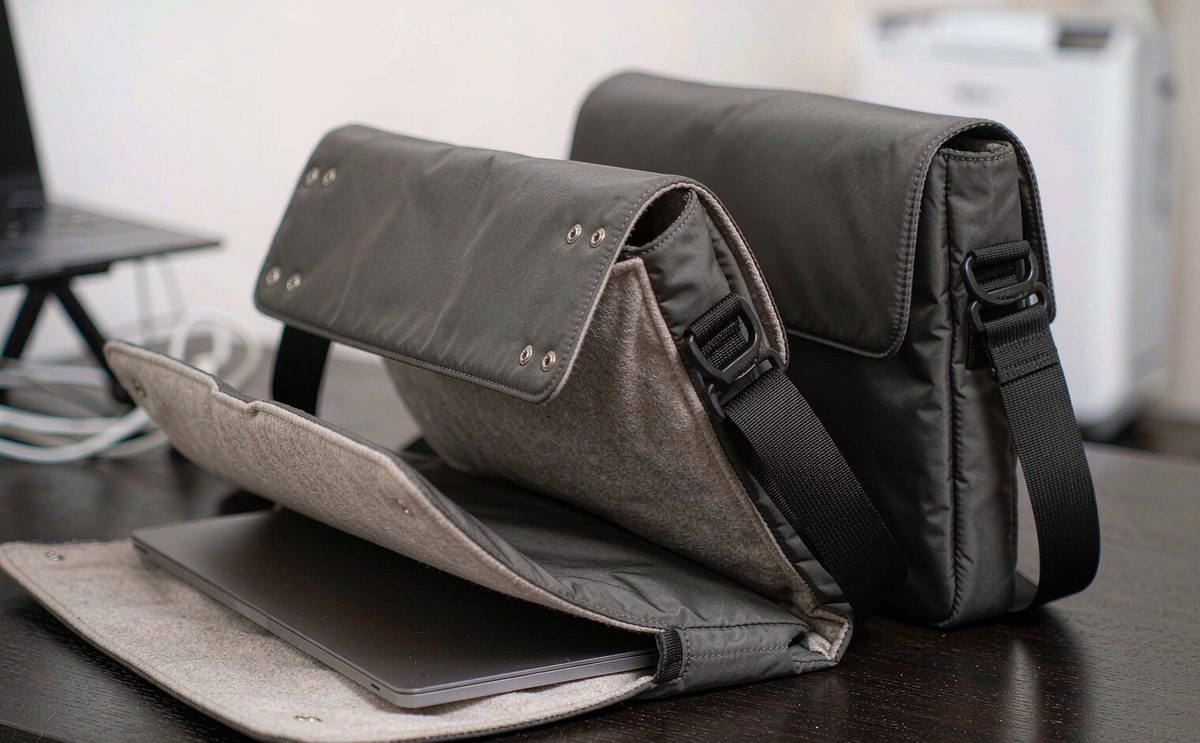
What backers actually claim about
The three most common contacts a laptop backpack campaign receives after delivery are, in order: a device was damaged or the sleeve does not fit, the bag let water in, and something broke and the backer wants to know what happens next. Every one of those is a specification question rather than a customer service question, which is why the three subjects in this article belong together. They are the three promises a backpack makes and the three that get tested.
The asymmetry worth internalising is that a backpack reward is a high-value item with a long service life. A backer who receives a tote and dislikes it is mildly annoyed. A backer who receives a laptop backpack that fails in month four is genuinely inconvenienced, because they have organised their commute around it and because their expensive device was involved. That raises the standard of care required and it is why our production team treats this category as the most specification-heavy in the range.
It also raises the commercial stakes in a good way. A backpack reward sits at the top of most pledge ladders and it is often the tier that decides whether a campaign hits its target. Getting the three promises right is therefore both the biggest risk and the biggest opportunity in the programme. Our laptop bag and backpack specifications share the same underlying framework.
Protection, water resistance and warranty are not three separate features. They are the three promises a backpack makes, and they are the three a backer will test.
There is also a sequencing point that saves campaigns real trouble. The three promises are cheapest to get right before the campaign page is written, because each one turns into copy. A page that says the sleeve is suspended, the shell is coated and the warranty is 24 months is a page that is already specified, and the specification can be produced from it. A page written first with adjectives and specified afterwards is a page that has to be rewritten, and by then the launch date is fixed and the rewrite is done under pressure. Our team works from the specification backwards into the copy for exactly this reason.
The sequencing also governs the survey. Ask backers to confirm their device against a stated internal sleeve dimension, and to confirm their colourway, before bulk is scheduled. Those two questions take thirty seconds for the backer and they remove most of the disputes that would otherwise arrive months later. Our programme coordinator supplies a survey-ready dimension block with every laptop bag and backpack programme.
Padding: foam density, thickness and placement
Padding is specified by three variables and most people specify only one. Thickness is the variable everyone names, typically 6 to 10 millimetres on a laptop backpack sleeve. Density is the variable that actually determines performance, and it is the one most often left out of a specification. A low-density foam of 10 millimetres compresses to almost nothing under a point load and behaves like 3 millimetres, while a higher-density foam of 8 millimetres holds its thickness and spreads the load.
Placement is the third variable and it is where the engineering happens. A backpack takes impacts at its base when set down, at its back panel when knocked, and at its corners in almost every accident. Padding the front face is largely decorative, because that is not where a packed backpack lands. Our production team specifies foam on the sleeve panels, on the base, and on the back panel, and specifies the sleeve as a separate structural element rather than as a lining detail.
There is a comfort dimension too. Foam that is too dense in the back panel makes the bag uncomfortable, because the panel needs to conform slightly to the back. The resolution is to specify different foams for different jobs: a firmer closed-cell foam in the sleeve and base for protection, and a softer open-cell or perforated foam in the back panel and straps for comfort. A single foam specified everywhere is the clearest sign that a bag was designed from a cost sheet.
The suspended sleeve and the false bottom
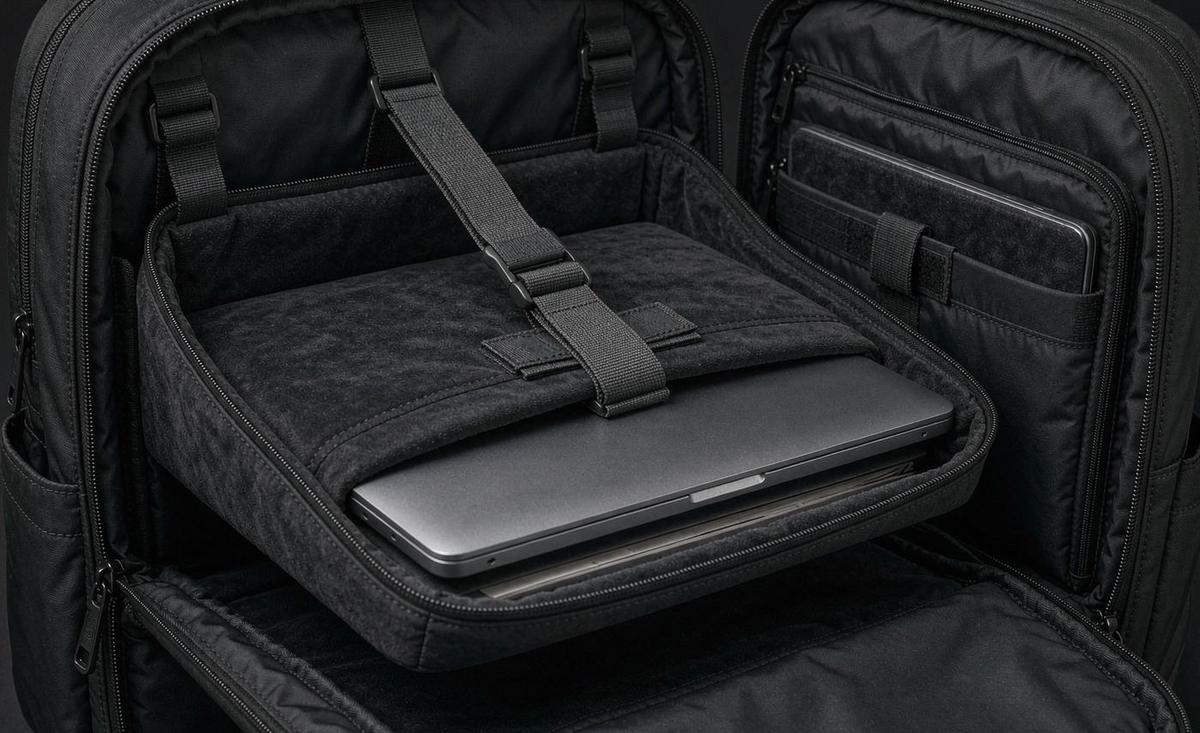
A suspended sleeve is attached to the backpack near its upper edge only, so the base of the sleeve hangs free above the base of the bag. That gap, typically 20 to 30 millimetres, is the entire impact absorption system for the case where a loaded backpack is set down hard. A sleeve sewn flat to the base panel transmits the full impact into the corner of the machine, and the corner of a laptop is the part that fails.
The false bottom is the companion detail. It means the sleeve base sits above the bag base by the measurement above, and the bag base itself is reinforced with a stiffener so it does not sag into that gap under load. Without the stiffener, the gap closes as soon as the bag is packed, and the suspension stops working. Our production team specifies the sleeve gap and the base stiffener together, because specifying one without the other produces a suspension that exists on paper only.
Closures on the sleeve matter as well. A sleeve with no retention lets the machine lift out and drop back in when the bag is carried and set down repeatedly. The usual solutions are an elasticated top edge, a hook-and-loop tab, or a short webbing strap across the top. Our preference is a webbing tab, because elastic loses tension over years and hook-and-loop collects lint and wears, while webbing and a snap last as long as the bag.
Back panel and shoulder strap padding
Comfort is the part of a backpack reward that generates the most positive reviews and the most negative ones, and it is almost entirely a function of three measurements. Strap width should be 60 to 80 millimetres on a laptop backpack, because a narrow strap concentrates load on the trapezius and becomes painful within an hour. Strap foam should be 8 to 12 millimetres of soft open-cell foam, and it should taper at the top where it crosses the shoulder rather than staying at full thickness.
The back panel needs both padding and airflow. A solid foam panel is comfortable for twenty minutes and hot after an hour, which is why the standard solution is a perforated foam with a spacer mesh face and raised channels that let air move vertically. Our production team specifies channels of 8 to 12 millimetres depth running the length of the panel, with the foam between them rather than under them.
The fourth element is the load path, and it is what separates a comfortable backpack from a padded one. A sternum strap and a hip belt are not accessories on a laptop backpack carrying 5 kilograms; they are the mechanism that moves load off the shoulders. Our team specifies a sternum strap as standard and a removable hip belt where the bag will carry heavy loads, because the difference in perceived comfort is larger than any change to the foam.
One specification detail is frequently missed and it matters: the top of the back panel. The area where the panel meets the shoulder blades takes the most abrasion from clothing and from the load shifting, and a panel that is comfortable at first and abrasive by month six is usually one whose top edge was finished with the same binding as the rest. Our production team specifies a softer finish at the contact edge.
Water resistance is a system, not a fabric
Water resistance is the most frequently overclaimed property in the bag category and the most frequently misunderstood. A coated fabric is the starting point, not the finish. Water enters a backpack through the zip line first, through stitch holes second, and through the base third, and a specification that addresses only the fabric has addressed the strongest part of the system and ignored the three weakest.
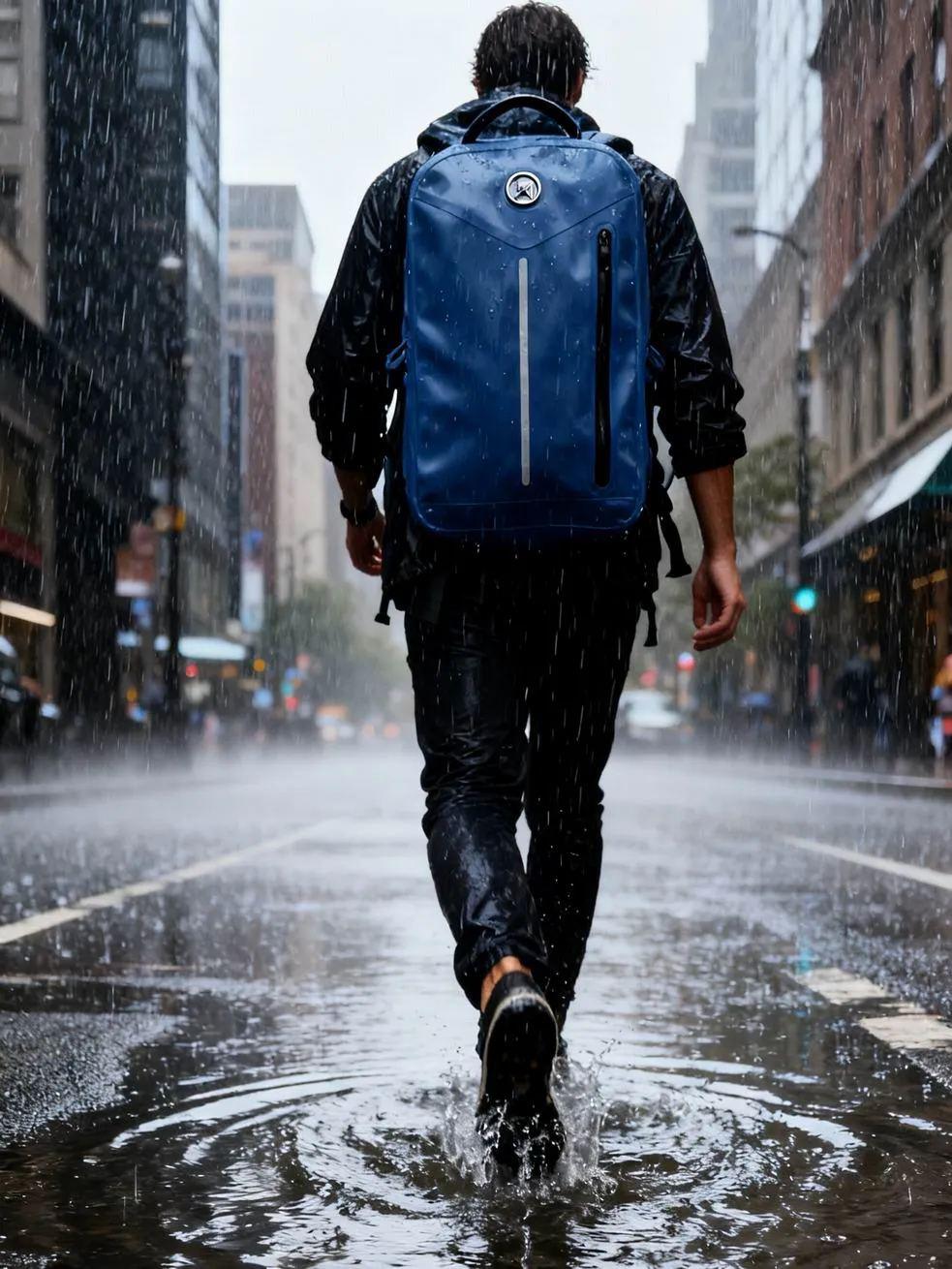
The build our team recommends for a laptop backpack is a PU-coated shell at 600D or heavier, a durable water repellent finish on the face so water beads rather than soaking in, storm flaps or zip garages over every external opening, taped seams on the top panel and the base seam, and a base panel in a heavier denier with a coated reverse. That combination keeps the interior dry in sustained rain and it is honest to describe as water resistant.
The honest limits matter. A DWR finish is a treatment, not a barrier, and it degrades over months of use and abrasion. Seam taping every seam is possible but expensive and it makes the bag stiffer, so we tape selectively. And a zip, by definition, is a line of gaps covered by a flap rather than a seal. None of that prevents a brand from writing waterproof on a hangtag, which is precisely why our team writes the specification and the page copy together.
| Measure | What it does | Limit | Cost impact |
|---|---|---|---|
| PU coating on shell reverse | Primary barrier against water soaking through fabric | Does nothing for seams or zips | Included in standard shell |
| DWR face finish | Makes water bead and run off | A treatment, wears off over months | Very low |
| Storm flap over main zip | Keeps rain off the zip line | Adds a panel and a fastening | Moderate |
| Taped top panel and base seams | Closes the stitch holes where water collects | Partial taping, not full seam sealing | Moderate |
| Heavier denier coated base | Resists standing water when the bag is set down | Adds weight | Low to moderate |
| Included rain cover | Full coverage in heavy rain | Separate item, can be lost | Low, high perceived value |
| Fully welded construction | Genuine waterproof performance | Stiff hand feel, high cost | High |
Zippers, storm flaps and the base panel
The main compartment zip on a laptop backpack is the largest single failure point in the product, because it is long, load-bearing and opened constantly. Our production team specifies a #8 or #10 coil zip for the main opening with a reverse coil where the design calls for a cleaner face, and a #5 for secondary compartments. Every external zip gets a garage, and the main opening gets a storm flap where the campaign will claim weather resistance.
Base panels deserve separate attention because they fail quietly. A backpack is set down on wet ground, on gravel and on concrete, and the base takes abrasion that the body never sees. The specification we use is a heavier denier than the body, a coated reverse, and either a reinforced fabric panel or four low feet that lift the base clear of standing water. Feet are the cheaper and more effective of the two and they also help the bag stand upright, which backers notice.
One detail that prevents a specific and common complaint: the base seam. On a backpack the base is usually joined to the body with a seam that runs around the perimeter at the lowest point of the bag, which is exactly where water pools when the bag is set down. Taping that seam, or moving it up the side panel by 20 to 30 millimetres, removes most of the ingress risk for a modest cost.
Test the main zip under load as well as empty. A zip on an empty backpack runs freely; the same zip with 5 kilograms pulling the panels apart binds, and binding is what wears the chain and eventually separates it from the tape. Our production team runs the zip test on a loaded sample during sampling, and it is one of the most informative checks in the programme because it finds a problem an unloaded test never will.
Warranty wording that survives backer contact
A warranty on a crowdfunding reward is not a legal formality, it is a promise made to several hundred people who will remember it. The first rule is to write what will actually happen rather than what sounds generous. A lifetime warranty sounds impressive and is impossible to honour from a campaign that will not exist as an operation in five years. A 24-month warranty against defects in materials and workmanship is honest, generous by category standards and deliverable.
The second rule is to separate defects from wear. A warranty should cover a zip that fails, a seam that opens and hardware that breaks under normal use. It should not cover abrasion on the base after two years, a strap worn through by a sharp edge, or damage from an accident. Saying so in plain language is better than silence, because silence means every contact becomes a negotiation and every negotiation is conducted in public.
The third rule is to name the remedy and the process. Replace the item, repair it, or refund it, and say which applies and how long it takes. Our team recommends a simple statement: a defective item is replaced from the reserve stock, the backer sends one photograph, and a replacement ships within a stated number of days. A clear process turns an angry backer into a satisfied one in a single exchange, which is worth more than any marketing.
Consider the wording around the device itself. A campaign should be clear that the warranty covers the bag and not the device inside it, because a backer whose laptop is damaged will otherwise read the warranty as a promise about the laptop. Our team recommends one plain sentence stating that the warranty covers the bag against defects and does not extend to the device or to its contents.
Failure-rate reserve and spare parts
A warranty promise is only as good as the stock behind it. The reserve our team recommends for a backpack programme is 2 to 3 percent of the run, which is higher in absolute value than for a tote because the item is expensive. On a 1,000-unit backpack programme that is 20 to 30 units held back, and those units are the entire difference between a campaign that honours its promise and one that cannot.
Spare parts are the second half of the answer and they are cheaper than whole units. A small quantity of zip sliders, pullers, sternum straps and buckles held by the creator covers the majority of real failures without consuming a whole bag. Our production team can include a spare parts pack with the production order at a modest cost, and we recommend doing so for any programme that has made a public warranty commitment.
Plan the reserve logistics too. Holding 30 backpacks is a storage question, and unlike a folded tote a backpack occupies real volume. Our recommendation is to hold the reserve at the fulfilment warehouse rather than shipping it to the creator, so a replacement can be dispatched in the normal pick and pack flow rather than as a separate parcel from a spare room.
Decide the scrap threshold too. A unit returned as defective that cannot be repaired should be written off rather than re-shipped, and the decision should be made before the first return arrives. Our programme coordinator recommends a simple rule: any fault affecting the load-bearing structure, meaning the straps, the base or the main zip, is a write-off, and anything else is repairable from the spare parts pack.
The testing regime during sampling
A laptop backpack sits at the complex end of the range and sampling runs 12 to 15 working days rather than the 6 to 10 that a simple bag takes. That window is when the three promises should be tested, because changing a foam specification or a seam treatment after bulk starts is expensive and after delivery is impossible. Our team runs four tests and shares the results with the creator.
The drop test loads the bag with a weighted dummy at the stated maximum device weight and drops it from 60 to 80 centimetres onto each base corner and then flat onto the base, repeated five times per position. The rain test holds the packed bag under a shower for five minutes from above and from a 45 degree angle, then checks the main compartment and the sleeve for moisture. Both are simple and both catch the failures that generate claims.
The third is the abrasion test on the base, which is a rub count against a standard abrasive to confirm the base fabric will survive being set down. The fourth is the load test, where the bag is loaded to its stated capacity and carried for a set period, then inspected for strap attachment movement and seam creep. Our sample and prototyping programme ships two units: one to test destructively and one to keep as the sealed reference for bulk.
Record all four tests with photographs and keep them with the specification. The record has two uses: it settles any later question about whether a defect is a fault or an accident, and it is genuinely effective campaign content, because a backer who watches a bag being dropped and rained on is watching the claim being demonstrated rather than reading it. Our team supplies the test log with the sample.
AQL inspection and pre-shipment checks
Inspection holds at AQL 2.5 to ISO 2859-1, which sets sample size and accept and reject numbers rather than leaving it to opinion. On a laptop backpack the critical defects are sleeve internal dimension against the stated figure, suspension attachment and gap, foam placement and thickness, zip smoothness through full travel, storm flap coverage, and bar-tack reinforcement at every strap and handle attachment.
Strap attachment deserves particular emphasis because it is the highest-consequence defect in the category and the one most often missed. A shoulder strap that pulls away from the body is not a repairable fault in practical terms and it usually means a replacement. Our production team checks every strap attachment with a pull test on samples drawn from each production batch rather than relying on visual inspection, and we specify bar-tacks plus a hidden reinforcement patch at each point.
The pre-shipment check is separate and it is about the carton rather than the bag. Confirm the units-per-carton count, the carton weight, the label scheme and the packing arrangement, because a miscount at dispatch becomes a reconciliation problem at the fulfilment warehouse. Our team packs to a fixed count for the whole programme and issues a packing photograph with the shipment.
Add a functional check to the inspection plan, not just a visual one. Every bag in the inspection sample should be opened, closed, briefly loaded and carried, because a bag can look correct and still have a stiff zip, a strap that twists or a sleeve that is 5 millimetres short. Our production team builds functional checks into the plan alongside the AQL 2.5 defect count.
What the protection package costs
The protection package, meaning the suspension, the foam specification, the coated shell, the storm flaps and the taped seams, adds a meaningful amount to unit cost but a small amount relative to the pledge. The drivers in descending order are hardware, foam and stiffeners, seam taping labour, and fabric. Hardware is the largest because a laptop backpack uses five or more zips plus buckles and strap hardware, and quality hardware costs several times generic.
Against that, a laptop backpack typically sits at the top of a pledge ladder and supports a price two to five times a tote reward on the same campaign. The standard guardrail applies and is comfortably met: total landed cost including freight, duty and a reserve at or below 30 to 35 percent of the pledge. The margin is usually healthier on this tier than on any other, which is the argument for making the top tier a backpack rather than a larger version of a cheaper item.
The place not to economise is the hardware and the strap attachment. Both are load-bearing, both are the most common causes of a warranty claim, and both are cheap relative to the cost of a replacement plus a public complaint. The place where economising is sensible is decorative detail: extra pockets, contrast panels and printed linings add cost without adding to the three promises.
One more cost belongs in the calculation and is usually forgotten: the cost of the promise. The reserve, the spare parts pack and the replacement shipping are real costs that sit outside the unit price, and a campaign that budgets the bag but not the warranty will find the gap in month four. Our team recommends adding roughly 3 to 5 percent to the landed cost of a backpack tier to cover it properly.
Writing the page claims
Every claim on the page should map to something in the specification. If the page says the bag has a suspended laptop sleeve, the specification should state the gap in millimetres. If it says water resistant, the specification should list the coating, the finish, the storm flaps and the taped seams. If it says 24-month warranty, there should be a reserve and a spare parts pack behind it. Claims without a specification behind them are the ones that become problems.
Write the numbers into the reward description. Foam thickness, sleeve internal dimensions, shell denier, strap width, warranty duration and remedy. A technical audience reads specifications and trusts them, and a page with real numbers converts better than a page with adjectives. Our team reviews the page copy against the technical specification before a campaign goes live, because a mismatch between the two is the most common source of disputes after delivery.
Then hold the same numbers in the survey and in the packing insert. A backer who confirms their device against a stated internal dimension, receives a bag that matches it, and has a card in the box telling them what the warranty covers and how to use it, has experienced a professionally run campaign. That is what produces the reviews that fund the next one. Send us your device list, target pledge and tier structure and a campaign bag specialist will return a costed specification with dates.
Send your backpack brief to service@junyuanbags.com and a campaign bag specialist will return a costed protection specification with sampling and bulk dates.
Keep one file with every claim and the specification line behind it. When a backer asks, the answer is a document rather than a recollection, and when the next campaign starts that file is the brief. Our programme coordinator maintains it for each programme we support, and it is the single artefact that most reliably prevents a gap opening between what a page says and what a product does.
Frequently Asked Questions
How much padding does a laptop backpack need?
6 to 10 millimetres of closed-cell foam on the sleeve panels, with density specified as well as thickness. A low-density 10 millimetre foam compresses under load and behaves like 3 millimetres. Place foam on the sleeve, the base and the back panel, and use a softer foam in the back panel and straps for comfort rather than one foam everywhere.
What is a suspended laptop sleeve and what gap is right?
A sleeve attached near its upper edge only, so its base hangs free above the bag base. A gap of 20 to 30 millimetres is standard. It must be paired with a stiffened reinforced base, because without the stiffener the gap closes under load and the suspension stops working.
How wide should backpack shoulder straps be?
60 to 80 millimetres on a laptop backpack, with 8 to 12 millimetres of soft open-cell foam that tapers where the strap crosses the shoulder. A narrow strap concentrates load and becomes painful within an hour. Specify a sternum strap as standard and a removable hip belt for heavy loads.
Can a laptop backpack reward be described as waterproof?
Usually not honestly. Waterproof requires welded construction and a sealed closure. A PU-coated shell with a DWR finish, storm flaps and taped top and base seams supports water resistant, which is the claim to make. An included rain cover is a cheap way to offer stronger real performance with an honest description.
Does a durable water repellent finish last?
No, not permanently. DWR is a face treatment that makes water bead and run off, and it degrades over months of use and abrasion. It should be described as part of a system that also includes a coating and covered openings, not as the water protection on its own.
What zipper size should a laptop backpack use?
Number 8 or number 10 coil for the main opening and number 5 for secondary compartments. Every external zip should have a garage and the main opening should have a storm flap where the campaign claims weather resistance. The main zip is the largest single failure point in the product.
What warranty should a crowdfunding backpack offer?
24 months against defects in materials and workmanship is honest and deliverable, unlike a lifetime promise a campaign cannot honour. Separate defects from wear, naming abrasion and accidental damage as excluded, and state the remedy and the response time plainly.
How many spare units should a backpack campaign hold?
2 to 3 percent of the run. On a 1,000-unit programme that is 20 to 30 units. Add a spare parts pack of sliders, pullers, sternum straps and buckles, which covers most real failures without consuming a whole bag. Hold the reserve at the fulfilment warehouse so replacements ship in the normal flow.
How long does sampling take for a custom laptop backpack?
12 to 15 working days, because the build is complex. That window is when the drop test, rain test, abrasion test and load test should be run, since changing a foam or a seam treatment after bulk starts is expensive and after delivery is impossible. Bulk then runs 35 to 50 days.
How is a laptop backpack sample tested?
Drop the loaded bag from 60 to 80 centimetres onto each base corner and flat onto the base, five times per position. Hold the packed bag under a shower for five minutes from above and at 45 degrees. Run a base abrasion count and a loaded carry test checking strap attachment and seam creep.
What does AQL 2.5 inspection check on a backpack?
Sleeve internal dimension, suspension attachment and gap, foam placement and thickness, zip smoothness, storm flap coverage and bar-tack reinforcement at every strap and handle. Strap attachment is checked with a pull test per batch because it is the highest-consequence defect in the category.
Is a backpack tier worth more than a larger cheaper reward?
Yes. A laptop backpack sits at the top of most pledge ladders and typically supports a price two to five times a tote reward on the same campaign, with a healthier margin than any other tier. Spend on hardware and strap attachment; economise on decorative detail.
People Also Ask
How thick should laptop backpack padding be?
6 to 10 millimetres of closed-cell foam, with density specified. Density determines performance more than thickness, because low-density foam compresses flat under load.
What makes a backpack water resistant?
A system: PU-coated shell, DWR face finish, storm flaps over external zips, taped top and base seams, and a heavier coated base panel. Fabric alone is not enough.
Should a campaign offer a lifetime warranty on a bag?
No. It cannot be honoured by a campaign that will not exist as an operation in five years. Offer 24 months against defects and state what is excluded.
Why do backpack straps break?
Usually insufficient reinforcement at the attachment point rather than weak webbing. Bar-tacks plus a hidden reinforcement patch, checked with a pull test per batch, prevent it.
Do backpack feet matter?
Yes. Four low feet lift the base clear of standing water and help the bag stand upright, which is a small cost with a noticeable daily benefit.
How many zips does a laptop backpack use?
Typically five or more across the main opening, the laptop compartment and secondary pockets, plus buckles and strap hardware. Hardware is usually the largest single cost line.
Is a rain cover a good reward accessory?
Yes. It costs little, works demonstrably, photographs well and lets a campaign offer real heavy-rain performance without an unsupportable waterproof claim.