Kickstarter Tablet Bags: Pairing Tech Gear With Carry
Pairing a tablet with a carry solution works because the device creates a need the device cannot meet on its own. The specification is governed by tablet size and by whether the backer uses a keyboard folio, which adds several millimetres and changes the pattern. Minimum order is 500 pcs per style and per colourway, sampling runs 6 to 10 working days, bulk runs 35 to 50 days, and inspection holds at AQL 2.5 to ISO 2859-1. Both items are flat and light, so a paired reward ships as one kit and lifts the pledge without straining the freight line.
- The pairing logic: device plus carry
- Tablet sizing: 11-inch and 12.9-inch classes
- The keyboard folio problem
- Folio, sleeve or sling: which carry form
- Stylus and pencil storage
- Bundling maths: what pairing does to pledge value
- Matching materials to the hero product
- Colourways and the per-colourway minimum
- Timeline: sampling and bulk for a paired reward
- Photography: showing the device in the bag
- QC handover between two product streams
- When pairing is the wrong move
The pairing logic: device plus carry
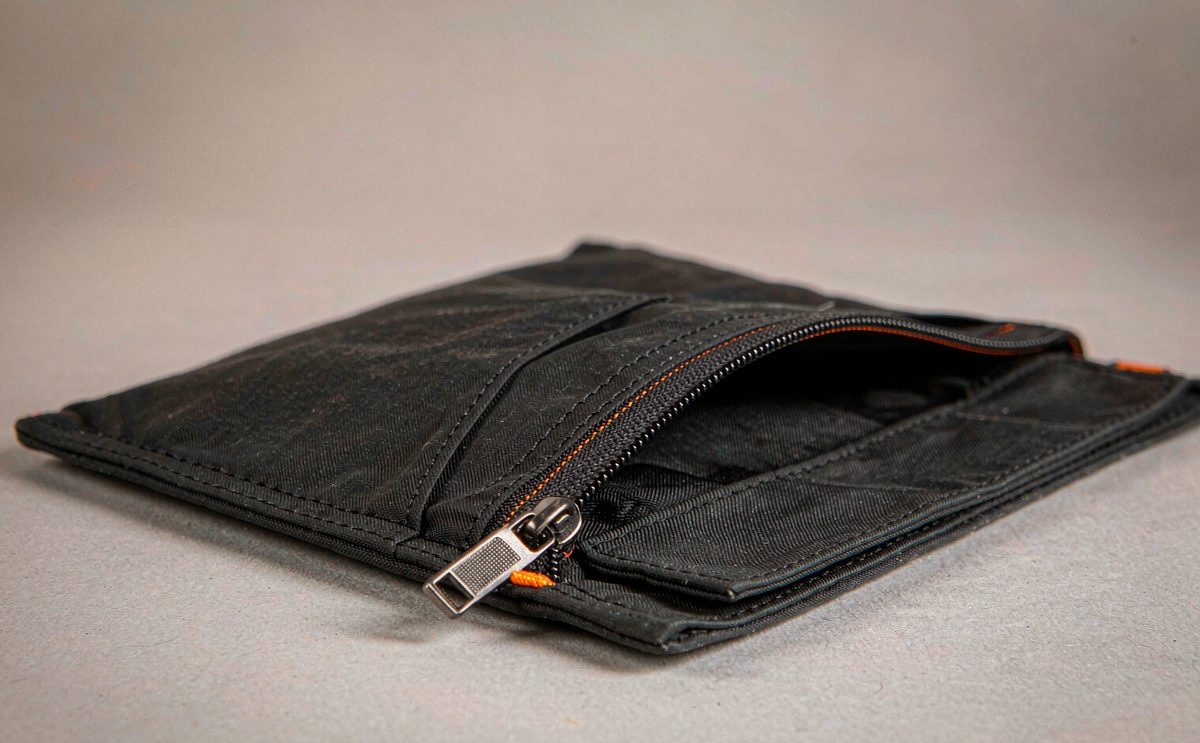
A tablet is a device that is almost never carried alone. It goes with a charger, a stylus, sometimes a keyboard, and it is expensive enough that its owner does not want it loose in a backpack. That combination creates a need the tablet itself cannot meet, and a carry solution that meets it is a natural companion rather than an upsell. This is the pairing logic and it is why tablet carry rewards attach to tablet and creative-hardware campaigns at unusually high rates.
The commercial version of the same point is that pairing raises the value of both items. A tablet sleeve on its own is a modest product with a low price expectation. The same sleeve presented as the carry solution for a specific device, photographed with that device inside it, inherits a share of the device's perceived value. Our team has seen this effect repeatedly across 20 plus crowdfunding campaigns, and it is the reason the page should always show the two together.
Pairing also reduces a specific risk. A backer buying a bag for an unspecified device has to judge whether it will fit, and uncertainty suppresses conversion. A backer buying the carry solution for the device they already own has no such question, provided the page states the device. Removing that uncertainty is worth more than any feature that could be added to the bag. Our laptop bag programmes use the same principle, naming the device rather than the size class.
A carry solution photographed with the device inside it inherits a share of the device's perceived value. Always show the two together.
There is a practical reason pairing is easier to sell than a standalone bag, and it shows up in the wording of the reward description. A generic bag reward has to argue for itself: fabric, pockets, dimensions, all of which the backer has to translate into their own life. A paired reward argues by reference: it fits the device you already own. That is one sentence against a paragraph, and one sentence converts better. The wider custom bag range works the same way whenever a campaign can name the object the bag is for.
The same logic extends beyond tablets. A campaign whose hero product is a camera, a keyboard, a portable monitor or a handheld console can apply exactly the same structure, and our team has run it in each of those categories. The requirement is always the same: name the object, cut to its real dimensions with a stated tolerance, and show it in the product. The tech campaign essentials article sets out how that discipline applies to a laptop reward, and most of it transfers directly.
Tablet sizing: 11-inch and 12.9-inch classes
Tablets cluster into two dominant classes, and a campaign that covers both covers most of the market. The 11-inch class typically has an external footprint around 24.5 to 25.5 centimetres tall by 17.5 to 18.5 centimetres wide, with a thickness of 5 to 7 millimetres. The 12.9-inch class typically sits around 28.0 to 28.5 centimetres tall by 21.5 to 22.5 centimetres wide, at a similar thickness.
Those are bare-device figures and they are the numbers to start from, but they are not the numbers to cut the pattern to, for two reasons. First, the aspect ratio differs from a laptop: a tablet is taller and narrower relative to its diagonal, so a sleeve designed by habit around laptop proportions will be too wide and too short. Second, and more importantly, most tablet owners carry the device in something.
The orientation question also needs settling early. Some tablet bags are designed portrait-first and some landscape-first, and the difference changes the opening position and the strap placement. Our production team asks which orientation the campaign will show in its hero image and cuts to that, because a bag designed for one and photographed in the other looks wrong in every frame. Portrait-first is the safer default for a sleeve; landscape-first suits a folio or a sling.
Measure the device rather than looking it up. Published dimensions are rounded, and a rounding of 2 millimetres is the difference between a precise fit and a loose one. Our production team asks creators to place the actual tablet on a rule and photograph it before the pattern is drawn, and we keep that photograph with the specification so there is a physical reference rather than a published figure.
The keyboard folio problem
The keyboard folio is the single biggest specification variable in tablet carry. A folio adds 4 to 8 millimetres of thickness, adds 3 to 6 millimetres to each dimension, and adds meaningful weight at one edge. A sleeve cut to the bare device will not close over a tablet in a folio, and a significant share of tablet owners use one, particularly in the larger class.
There are three honest responses. The first is to size to the bare device and state clearly on the page that a tablet in a keyboard folio will not fit. That is a defensible product but it is a smaller market. The second is to size to the folio and accept that the bare device sits with slack, which is tolerated by most users but reduces the precision of the fit.
The third, and the one our team recommends, is to cut a two-specification approach: a snug sleeve for the bare device and a slightly larger folio-compatible variant, offered as two options in the backer survey. Because each is a separate style at 500 pcs per style and per colourway, this doubles the commitment, so it only suits campaigns with real volume behind them. Where volume does not support it, size to the folio, because slack is recoverable and a device that will not go in is not.
Ask the audience before deciding. A single survey question, do you carry your tablet in a keyboard case, resolves the largest specification variable in the category in a day. Our team recommends asking it early, because the answer changes the pattern, the sampling time and the pledge, and discovering it after the pattern is cut means choosing between a re-sample and a product that excludes a share of the audience.
Folio, sleeve or sling: which carry form
Three forms cover the category and each suits a different use pattern. A sleeve is the simplest and cheapest: a padded envelope that the tablet slides into, usually with a small accessory pocket. It is carried inside another bag, so it protects rather than transports, and it suits a backer who already has a bag and wants the tablet protected within it.
A folio is a sleeve with a cover that folds, often with a stand function and a place for the stylus. It is a genuine carry solution for someone who takes a tablet to a meeting or a cafe and nothing else, and it is the form our team recommends when the campaign audience is creative professionals. Folios are more complex to make, which pushes sampling to 12 to 15 working days, and they need a closure that holds the cover flat.
A sling is a small cross-body bag sized for a tablet plus a few items, and it is the form with the highest perceived value because it is a complete product in its own right. It suits travel, commuting and anyone who does not want to carry a backpack for a tablet and a charger. Slings need strap hardware, a webbing specification and a stabilisation detail, all of which add cost, but they also support the highest pledge of the three forms.
There is a cost ordering that helps the decision. A sleeve is the cheapest to make and the cheapest to ship, a folio sits in the middle, and a sling is the most expensive on both counts. The pledge ordering matches, which is why the three forms make a natural ladder of their own rather than three alternatives at the same price. Our team recommends the ladder where the audience is broad enough to support it.
Stylus and pencil storage
If there is one detail that separates a considered tablet carry product from a generic one, it is stylus storage. A stylus is expensive, small, cylindrical and magnetically attached to the device in normal use, which means it falls off in a bag. Losing one is a real cost to the owner and a real annoyance, and a dedicated slot solves a problem the backer has actually experienced.
The specification is precise: a loop or slot of 10 to 14 millimetres internal width, lined so that it grips rather than lets the stylus slide, and positioned where the stylus cannot be crushed. On a sleeve the best position is along the spine edge; on a folio it is on the cover edge; on a sling it is on the strap or in an exterior pocket. A pencil that sits loose in a main compartment is a pencil that gets scratched.
The second accessory to plan for is the charger and cable, which are larger than people expect for a tablet and which do not fit comfortably in a slim sleeve. This is the natural argument for pairing the tablet carry item with a small pouch, and it is why our tech pouch programmes so often run alongside a tablet carry product on the same campaign.
Add a second consideration for the stylus: it must be reachable with the device in place. A slot that can only be used once the tablet has been removed is a slot that will not be used, and an unused feature is worse than an absent one. Our production team checks stylus access on the sample with the device actually inside the bag, because access is a spatial question and spatial questions cannot be answered from a drawing.
Bundling maths: what pairing does to pledge value
Pairing changes the arithmetic in two ways. It raises the ceiling, because the backer is comparing a set to a shop price for a set rather than to a shop price for a sleeve. And it raises conversion, because the bundle resolves the fit question at the same time as it answers the accessories question. In the programmes our team has supported, a tablet carry item bundled with a pouch typically supports a pledge 30 to 60 percent above the carry item alone.
The margin side is favourable because the second item is cheap relative to the first. A pouch adds a small amount to landed cost and a negligible amount to freight, while supporting a materially higher price. That asymmetry is why bundling is the first lever our programme coordinator reaches for when a creator needs to hit a funding target without raising the price of the entry tier.
The guardrail remains the same as for every reward: total landed cost including freight, duty and a reserve at or below 30 to 35 percent of the pledge. Bundles clear it comfortably because both items are flat and light. The risk in bundling is not margin, it is schedule, which is covered below.
| Pairing | Who it suits | Specification note | Typical pledge effect |
|---|---|---|---|
| Sleeve alone | Backers with a bag already | Cut to the bare device, state the exclusion | Baseline |
| Sleeve plus cable pouch | Commuters and students | Pouch holds the charger and the cable | 30 to 60 percent above sleeve alone |
| Folio alone | Creative professionals | Stand function, stylus slot on the cover edge | 20 to 40 percent above sleeve alone |
| Folio plus pouch | Meeting and cafe users | Matched lining and hardware across both | 40 to 70 percent above sleeve alone |
| Sling plus pouch | Travellers and minimal carriers | Strap hardware, stabilisation, exterior pocket | Highest band in the category |
| Sleeve plus second colourway | Multi-device households | Two commitments of 500 pcs | Modest, mainly conversion gain |
One more number belongs in the bundling maths: the add-on attach rate. On a paired programme the carry item is the tier and the pouch is the add-on, and add-ons are selected after the pledge decision rather than instead of it. In our experience a well-priced pouch attaches to between 25 and 55 percent of backers on a tablet or laptop campaign, and each attachment adds margin at almost no incremental freight cost. Modelling the funding target with that attach rate included is the difference between a campaign that hits its goal and one that narrowly misses.
Matching materials to the hero product
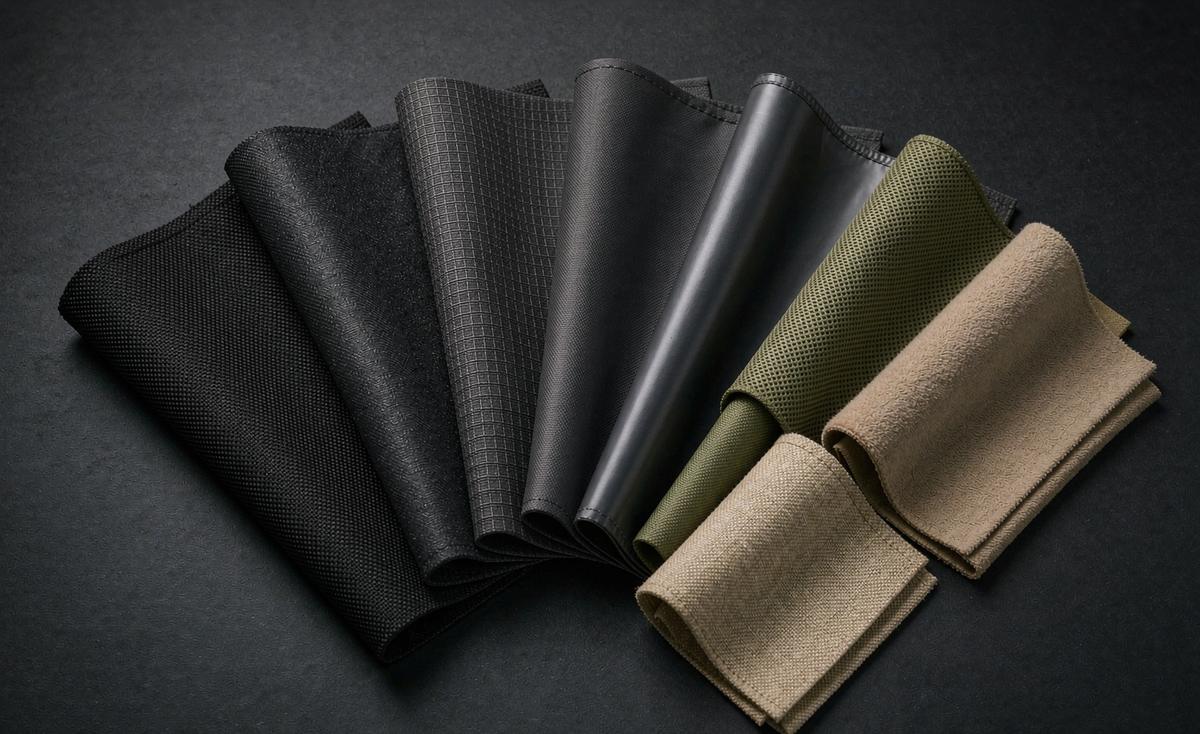
When a carry item is paired with a device, the materials should look like they belong to it. Devices are aluminium, glass and matte plastic in black, silver and a small number of accent colours. A carry item in a shiny synthetic that clashes with that palette reads as an accessory bought separately, while one in a matte technical fabric in a matching neutral reads as part of a system.
The practical method is to specify the shell in a matte or semi-matte finish in a neutral that matches the device family, and to reserve colour for the lining and the hardware accents. This is also the cheapest way to achieve a coordinated look, because a coloured lining costs the same as a black one and a coloured shell does not always exist in the required denier at low volume.
Texture matters as much as colour. A fine ripstop or a subtle twill reads as technical; a coarse canvas reads as lifestyle. For a tablet carry reward the technical read is usually correct, because the backer is buying protection for an electronic device and a technical fabric signals that intent. Our team samples two fabric options for pairing programmes so the creator can hold them next to the actual device before deciding, which is a decision that cannot be made from a swatch card.
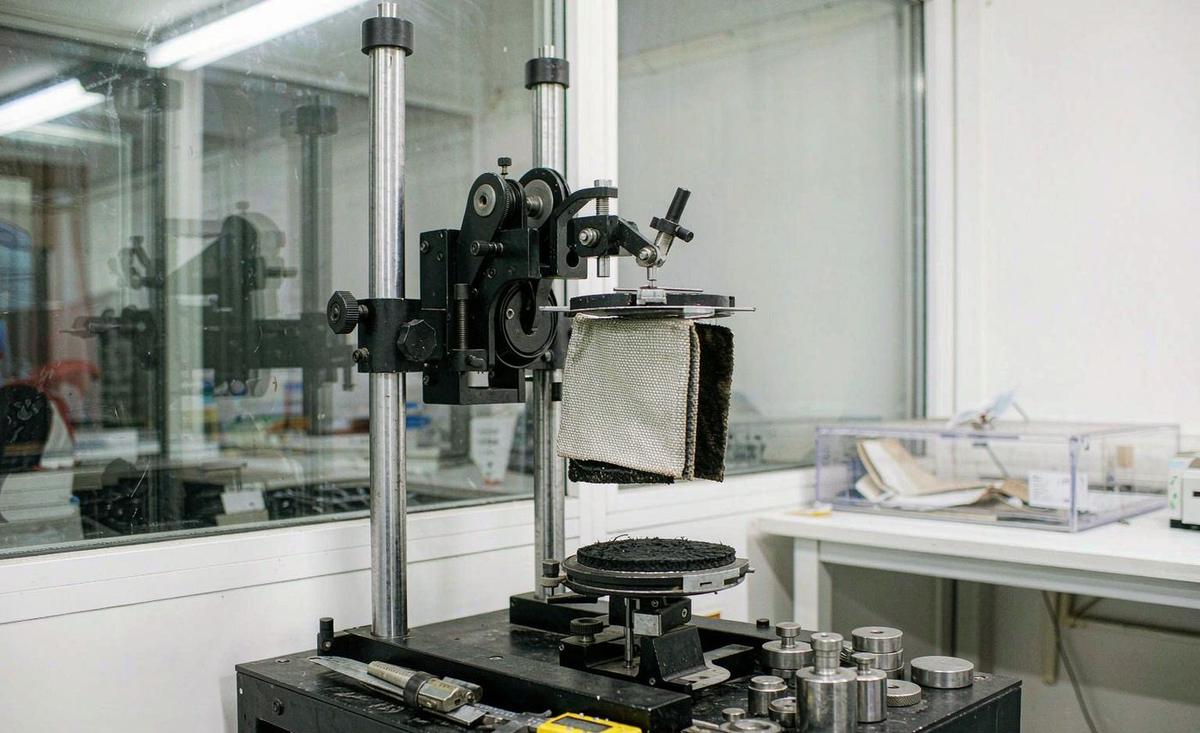
Consider the wear pattern too. A tablet carry item is handled constantly and it lives against clothing, so a fabric that pills or a coating that goes tacky will be noticed quickly. Our production team specifies abrasion-tested face fabrics for pairing programmes and we run a rub test on the sample, because the device-owner comparison is unforgiving: a bag sitting next to an aluminium tablet has nowhere to hide a worn patch.
Colourways and the per-colourway minimum
The minimum is 500 pcs per style and per colourway, and this is where pairing programmes most often overreach. A creator with a carry item in three colours and a pouch in three colours has six commitments of 500, which is 3,000 units before a single backer has pledged. The disciplined version is one colourway for each item in the first run, with a second colourway unlocked as a stretch goal.
Stretch goals are genuinely useful here because a colourway is a cheap stretch goal in communication terms and an honest one, since it really does require a separate production commitment. Our team recommends phrasing the stretch goal around the exact condition: a second colourway unlocks at a stated funding level, and it requires a further 500 pcs commitment. Backers respond well to stretch goals that name a real constraint.
The other colourway decision is whether the two items in a bundle should match or contrast. Matching is the safer commercial choice and it is what our production team recommends for a first campaign, because a matched set reads as designed and photographs as a family. A deliberate contrast, such as a dark shell with a bright lining, is a good compromise: it gives the bundle visual interest without fragmenting the order into more colourways.
Where a campaign does want variety without a second commitment, the answer is lining rather than shell. Two lining colours across one shell colourway gives backers a visible choice inside a single production run, and it costs nothing beyond a fabric change. Our programme coordinator recommends this as the standard compromise, and it is the option most first campaigns take once the per-colourway arithmetic is set out.
Timeline: sampling and bulk for a paired reward
A paired programme runs on one critical path, and the slower item sets the date. A tablet sleeve samples in 6 to 10 working days; a folio with a stand and a closure samples in 12 to 15 working days; a pouch samples in 6 to 10. If the programme contains a folio and a pouch, the folio is the critical path and the whole programme takes 12 to 15 working days to sample.
Bulk then runs 35 to 50 days from approved sample and deposit, and the same convergence rule applies: the items must finish together, because shipping a pouch a week after the sleeve means either holding the sleeve in storage or running two freight legs. Our programme coordinator schedules paired programmes as a single job with a single completion date and holds the two lines to it, which is the only reliable way to avoid a split shipment.
Freight sits on top and terms are FOB Xiamen with T/T 30/70. Capacity of 200,000 pcs per month across 137 staff, 7 lines and 149 machines on a 4,950 m2 SGS-verified site means the quantity is never the constraint; the constraint is component convergence and approval timing. Our team flags the longest-lead component at the start of every paired programme so the creator knows which item cannot be changed late.
Build the buffer into the public date rather than into the internal one. Our team recommends quoting backers a delivery month that sits two weeks after the internal completion date, because a campaign that delivers early is praised and one that delivers late is criticised, and the buffer costs nothing. That two-week gap is the cheapest reputation insurance available in a reward programme.
Photography: showing the device in the bag
Photography carries more weight for a paired reward than for any other bag category, because the whole argument is that this item belongs with that device. The shot list our team recommends has five frames: the device going into the bag, the bag closed from the front, the interior with the pouch and the charger visible, the stylus in its slot, and a size reference frame with a tape measure.
Two of those five do the heavy lifting. The insertion frame proves the fit, which is the backer's main unspoken objection. The size reference frame proves the claim, which is what protects the campaign if a dispute arises later. Both are cheap to shoot and both reduce pre-launch questions measurably.
Use the real device, not a stand-in. A tablet-shaped prop that is 3 millimetres different from the real machine will produce a fit that looks right in the frame and is wrong in the hand, and the campaign will then have published evidence that contradicts the product. Our team ships the sample with a shot list and asks the creator to confirm which exact device will appear before the shoot is booked.
One frame is worth adding beyond the five: the bag packed and held. Scale is the hardest thing to judge from a product shot, and a tablet bag photographed only on a table looks larger than it is. Our team includes a held frame in every shot list for this reason, because a backer who misjudges the size is a backer who returns the item or complains about it.
QC handover between two product streams
Inspection holds at AQL 2.5 to ISO 2859-1 for each item, and the additional discipline in a paired programme is the handover. Two items made on different lines have to arrive at packing as a matched set, which means the inspection criteria must include the cross-item checks: hardware finish consistency, lining colour consistency, and label placement consistency between the two.
Finish consistency across two product streams is the defect that most damages a bundle. It is also invisible in a single-item inspection, because both items can pass their own inspection and still not match each other. Our production team holds a reference set from the same hardware batch and the same fabric lot for both items, and inspects the pair together rather than separately.
Packing then needs a written layout. Which item sits at the bottom of the mailer, whether the pouch goes inside the sleeve, and where the printed card goes. Our team photographs the packing layout and issues it with the goods so the fulfilment partner works from an image. A written description of a packing arrangement is interpreted differently by every packer; a photograph is not.
The handover also needs a decision on what happens to a mismatched unit. If one item in a pair fails inspection, the pair is incomplete, and the replacement has to come from the same batch or it will not match. Our production team holds paired reserve units rather than individual ones for exactly this reason, which is a small planning decision that prevents a visibly mismatched replacement from reaching a backer.
When pairing is the wrong move
Pairing is not always right and there are three cases where our team advises against it. The first is when the audience already owns a solution, which is common among tablet users who have bought a folio with the device. In that case a second sleeve competes with something in a drawer rather than solving a problem, and attach rates reflect it.
The second is when the device list is too broad. Pairing works because the page can name a device. If a campaign cannot name one or two specific devices, the fit uncertainty returns and the pairing advantage disappears, at which point a general-purpose bag described by internal dimensions is the better product. The third is when the schedule is tight, because a paired programme is bound by its slowest item and by convergence.
Where pairing is right, it is one of the strongest structures available to a campaign: a named device, a resolved fit question, a second item that lifts the pledge, and a set that photographs as a family. Our team has supported this shape on many of the 20 plus crowdfunding campaigns in our programme history. Send us your device list and a campaign bag specialist will return the carry form, the sizing and a costed specification.
Send your tablet and device list to service@junyuanbags.com and a campaign bag specialist will return a carry specification with sampling and bulk dates.
Where a campaign decides against pairing, the alternative is not to abandon the category. A general-purpose carry item described by internal dimensions, photographed with a device for scale but not claimed as a fit for it, sells on its own merits and carries no fit promise. Our team recommends that route for audiences who already own a solution, and it is a perfectly good product when the page is written honestly.
Frequently Asked Questions
Why do creators pair tablets with carry solutions?
Because the device creates a need it cannot meet. A tablet goes with a charger, a stylus and sometimes a keyboard, and it is too expensive to carry loose. A carry solution that solves that is a companion rather than an upsell, and it also inherits a share of the device's perceived value when the two are shown together.
What sizes should a tablet bag reward cover?
Two classes cover most of the market. The 11-inch class is roughly 24.5 to 25.5 centimetres by 17.5 to 18.5 centimetres, and the 12.9-inch class is roughly 28.0 to 28.5 by 21.5 to 22.5 centimetres. Remember that the aspect ratio is taller and narrower than a laptop, so a pattern drawn from laptop habits will be too wide and too short.
Should a tablet sleeve fit a tablet in a keyboard folio?
It depends on the audience, but if in doubt size to the folio. A folio adds 4 to 8 millimetres of thickness and 3 to 6 millimetres on each dimension. A sleeve cut to the bare device will not close over it. Slack is recoverable; a device that will not go in is not. The best answer with enough volume is two options in the backer survey.
Which carry form is best for a tablet reward?
A sleeve for backers who already own a bag, a folio for creative professionals who want a stand and stylus storage, and a sling for travellers and minimal carriers. The sling carries the highest perceived value and supports the highest pledge, but it needs strap hardware and stabilisation and therefore costs more.
How should stylus storage be specified?
A loop or slot of 10 to 14 millimetres internal width, lined so it grips, positioned where the stylus cannot be crushed: along the spine edge on a sleeve, on the cover edge on a folio, or on the strap on a sling. A stylus loose in a main compartment gets scratched and lost.
How much does bundling a pouch raise pledge value?
In the programmes our team has supported, a tablet carry item bundled with a pouch typically supports a pledge 30 to 60 percent above the carry item alone, and a folio plus pouch can reach 40 to 70 percent. The margin side is favourable because the pouch is cheap relative to the carry item and adds almost nothing to freight.
How many colourways should a paired programme have?
One per item for the first run. Minimum order is 500 pcs per style and per colourway, so three colours on two items is six commitments of 500. Unlock a second colourway as a stretch goal and name the real constraint, because backers respond well to stretch goals that state an honest requirement.
How long does sampling take for a tablet carry programme?
A sleeve samples in 6 to 10 working days and a pouch in 6 to 10, but a folio with a stand and a closure samples in 12 to 15. A paired programme takes the longest of its items, so the folio is the critical path. Bulk then runs 35 to 50 days from approved sample and deposit.
What is the risk in a paired production programme?
Convergence. Two items made on different lines have to finish together, or the campaign either pays for storage on the finished item or runs two freight legs. Our programme coordinator schedules paired programmes as one job with one completion date and flags the longest-lead component at the start.
How is a paired reward inspected?
Each item is inspected at AQL 2.5 to ISO 2859-1, and then the pair is inspected together for cross-item consistency: hardware finish, lining colour and label placement. Both items can pass their own inspection and still not match, so our team holds a reference set from the same hardware batch and fabric lot.
What photography does a tablet carry reward need?
Five frames: the device going in, the closed front, the interior with the pouch and charger, the stylus in its slot, and a size reference frame with a tape measure. The insertion shot proves the fit and the size reference shot protects the claim. Always shoot the real device, never a stand-in.
When is pairing a tablet with a bag the wrong decision?
When the audience already owns a folio, when the device list is too broad to name a specific machine, or when the schedule is tight and cannot absorb the slowest item in the pair. In those cases a general-purpose bag described by internal dimensions is usually the better product.
People Also Ask
Do tablet bags work as crowdfunding rewards?
Yes, especially when paired with the device. The tablet creates a carry problem it cannot solve, and naming the device on the page removes the fit uncertainty that suppresses conversion on generic bags.
Should a tablet sleeve be portrait or landscape?
Decide from the hero image and cut to that. Portrait-first is the safer default for a sleeve, while landscape-first suits a folio or a sling. A bag designed for one and photographed in the other looks wrong in every frame.
Will a tablet in a keyboard case fit a standard sleeve?
Usually not. A folio adds 4 to 8 millimetres of thickness and a few millimetres on each dimension. Size to the folio if in doubt, or offer two options in the backer survey if volume allows.
What is the best material for a tablet carry item?
A matte or semi-matte technical fabric in a neutral that matches the device family, with colour used in the lining. A fine ripstop or subtle twill reads as technical and signals protection, which is what the backer is buying.
How do I stop a tablet bag reward generating fit complaints?
Name the exact device, publish internal dimensions, add a photographed size reference frame, and state explicitly what is excluded, such as tablets in bulky keyboard cases.
Can a tablet pouch and sleeve ship as one kit?
Yes, and they should. Pack the pouch inside the sleeve, use a written packing layout photographed by the production team, and inspect the pair together for hardware and colour consistency.
Is a sling or a sleeve better value as a reward?
A sling is a complete product and supports the highest pledge, but costs more because of strap hardware and stabilisation. A sleeve is cheaper and simpler and suits backers who already own a bag.