Kickstarter Laptop Sleeves: 13, 14, 15-inch Sizing That Sells
Sizing is the single largest cause of returns and complaints on a laptop sleeve reward. The fix is to cut the sleeve to the largest real device in each size class, publish internal dimensions rather than marketing sizes, and hold 5 to 10 millimetres of tolerance. The three classes that cover nearly all demand are 13-inch, 14-inch and 15-inch. Minimum order is 500 pcs per style and per colourway, sampling runs 6 to 10 working days, bulk runs 35 to 50 days, and terms are FOB Xiamen with T/T 30/70.
- Sizing is the number one return reason
- The 13-inch class: ultrabooks and the air
- The 14-inch class: the current default
- The 15-inch class and the 16-inch trap
- Internal versus external dimensions and tolerance
- One size or three: SKU strategy against the minimum
- Fit testing: the plug-in and shake tests
- Sleeve construction: neoprene, padded and moulded
- Corner geometry and the tapered nose
- Sleeve plus pouch bundles and the accessory ladder
- Labelling and page copy that prevent disputes
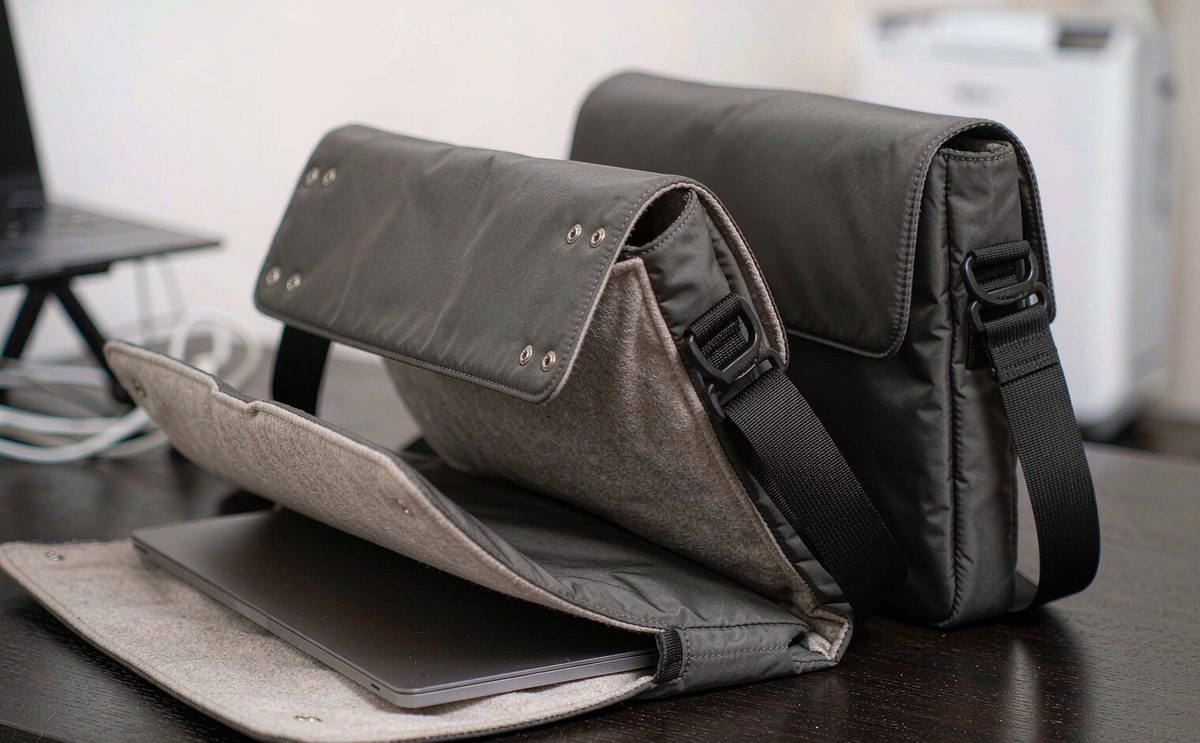
Sizing is the number one return reason
Ask any campaign that has shipped a laptop sleeve what generated the most backer contact and the answer is almost always fit. Not fabric, not colour, not stitching: fit. A sleeve that does not fit its stated device is not a slightly disappointing reward, it is a useless one, because a sleeve has exactly one job. That makes sizing the highest-stakes decision in the entire specification, and it is a decision made on paper weeks before anything is cut.
The reason fit goes wrong is that marketing sizes are not measurements. A laptop sold as 14-inch has a screen diagonal of roughly 14 inches, and its external width and depth depend on bezel design, hinge placement and chassis style. Two machines both sold as 14-inch can differ by 15 millimetres in width. A sleeve cut to one will not take the other, and the backer will reasonably say the page was wrong.
The second reason is that creators inherit lazy copy from the wider market. Phrases like fits most laptops up to 15 inches are common in retail because retailers accept a return rate that a crowdfunding campaign cannot. A campaign has a fixed production run, no reverse logistics and a comment section where every future backer reads the complaint. The correct standard is therefore stricter than retail: name the internal dimension and defend it. Our team builds every laptop bag and sleeve programme around that rule.
Two laptops both sold as 14 inches can differ by 15 millimetres in width. Cut to a marketing size and you will eventually ship a sleeve that does not fit.
The 13-inch class: ultrabooks and the air
The 13-inch class is the lightest and the most portable, and it is the class with the widest real-world variation relative to its size, because manufacturers use the same nominal size for thin-and-light machines and for slightly thicker mainstream ones. Typical external widths in this class sit around 30 to 31 centimetres, with depths around 21 to 22 centimetres and thicknesses from 6 to 15 millimetres depending on whether the machine is a thin ultrabook or a conventional laptop.
For a sleeve, thickness matters less than people expect and width matters more, because a sleeve is a flat envelope and the fabric will accommodate a thicker machine far more readily than a wider one. The practical approach is to cut to the widest machine in the class and let thickness take care of itself. Our production team specifies the sleeve internal width at the largest device width plus tolerance, and we confirm on the approved sample with a gauge.
Commercially, the 13-inch class is the one to lead with if your audience skews towards writers, students, travellers and anyone who prioritises weight. It also ships cheapest, because a 13-inch sleeve is the smallest and lightest item in the range and it folds or lies flat in a mailer with no dimensional weight penalty. If a campaign is unsure where to start, our team usually recommends this class plus the next one rather than all three.
The variation within this class is also the reason to ask the audience directly. A poll or a single survey question before launch, asking which machine backers carry, resolves in a day what a specification meeting argues about for a week. Our team recommends asking, because the answer frequently differs from what the creator assumed, and the cost of being wrong on one size is a full production run that does not fit the people who bought it.
The 14-inch class: the current default
The 14-inch class has become the working default for a large share of professional and creative users, because it balances screen area against weight and most brands now put their mainstream machine here. Typical external widths sit around 31 to 32.5 centimetres and depths around 22 to 23 centimetres. This is the class our production team cuts most often and, if a campaign can only offer one sleeve, it should usually be this one.
The reason to lead with 14 rather than 13 is tolerance direction. A sleeve cut for the 14-inch class will usually accept a 13-inch machine with a little slack, and slack in a sleeve is tolerated by most users because they understand a sleeve is sized to a class. A sleeve cut for 13 will not accept a 14 at all, and cannot be argued with. Sizing up is recoverable; sizing down is not.
That asymmetry should also drive how the page is written. If a single sleeve is offered, describe it as fitting up to a stated internal dimension and name the largest class. Do not describe it as fitting 13 and 14 inch machines equally, because the 13-inch backer will notice the slack and may complain about it. Naming the internal dimension and the largest intended class is honest, and it sets the right expectation for both cohorts.
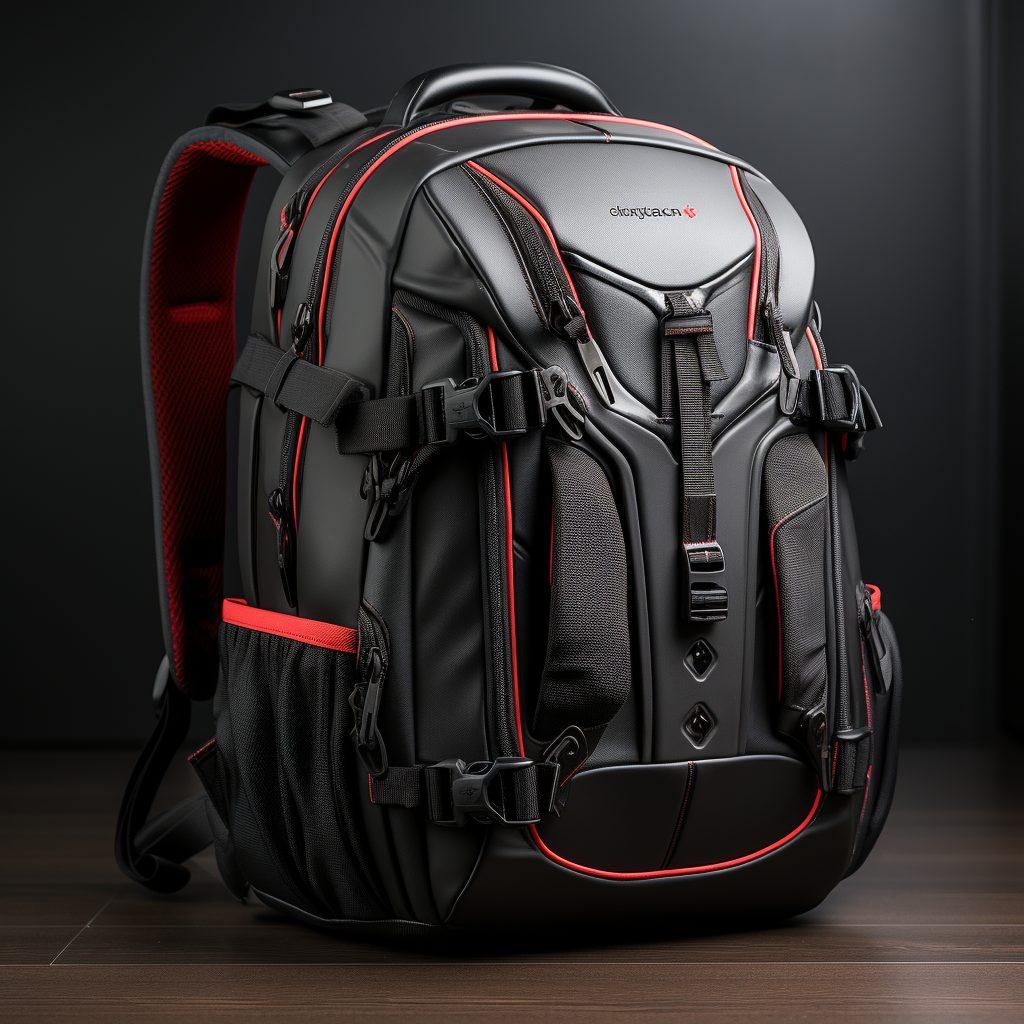
The 14-inch class is also the class where a single sleeve SKU is most defensible commercially, because it covers the largest share of any one audience without asking the backer to choose. Choice is not always an advantage: a size question in the survey is a small friction point at checkout, and where the audience is concentrated in one class it is friction that buys nothing. Our team recommends one size where the data supports it.
The 15-inch class and the 16-inch trap
The 15-inch class covers the larger mainstream machines and the smaller performance ones, with typical external widths around 34 to 36 centimetres and depths around 23 to 25 centimetres. This is where the width variation between brands becomes large enough that a single sleeve genuinely cannot serve the whole class without leaving visible slack on some machines.
The 16-inch trap is the specific failure to avoid. Several popular large machines are sold as 16-inch and they are meaningfully wider than a 15-inch machine, often by 10 to 15 millimetres. A page that says fits up to 15 inch will attract a backer with a 16-inch machine who reads the copy as a general size indication rather than a limit. The defensive move is explicit: state the maximum, and add that 16-inch machines are not covered by this size.
If the campaign audience genuinely includes large-machine users, offer a fourth SKU rather than stretching the 15-inch pattern. Stretching is worse than it sounds, because the added slack makes the sleeve sloppy for every 15-inch backer, which degrades the product for the majority in order to serve a minority. A separate SKU costs a separate 500 pcs commitment, which is exactly why the decision has to be made on audience data before the campaign launches.
Our team handles this by asking creators to settle the exclusion policy before the pattern is cut, because the exclusion sentence on the page has to match the physical product. Deciding late produces either a sleeve cut generously enough to accept a 16-inch machine and therefore sloppy for everyone, or a page that promises something the product does not do. Neither is recoverable once bulk has started.
Internal versus external dimensions and tolerance
A sleeve specification has two sets of numbers and conflating them causes most sizing disputes. The internal dimension is the usable space inside the sleeve, measured flat with the lining compressed. The external dimension is the outside of the sleeve including padding and shell. Backers need the internal figure; pattern makers need both. Our team records both on the specification sheet and publishes only the internal one.
Tolerance is where judgement comes in. The working range our production team uses is 5 to 10 millimetres over the largest intended device on width and depth. Five millimetres gives a snug, precise fit that feels premium and holds the machine firmly, but it leaves little room for manufacturing variation across a run of 500 units. Ten millimetres is forgiving in production and easier for a backer to get the machine in and out of, but it starts to feel loose.
Our recommendation is 6 to 8 millimetres for a fitted sleeve and closer to 10 millimetres for a sleeve that is intended to accept a machine in a thin skin or shell. Whatever figure is chosen, it has to be held across the run. That is a manufacturing discipline as much as a design one, and it is why sleeve internal width is measured with a gauge at inspection under AQL 2.5 to ISO 2859-1 rather than checked by eye.
| Class | Typical internal width | Typical internal depth | Notes for the campaign page |
|---|---|---|---|
| 13-inch | 30.5 to 31.5 cm | 21.5 to 22.5 cm | Lightest to ship; leads for travel and student audiences |
| 14-inch | 31.5 to 33.0 cm | 22.5 to 23.5 cm | The safe single-SKU default; accepts a 13-inch machine with slack |
| 15-inch | 34.5 to 36.0 cm | 23.5 to 25.0 cm | Widest real-world variation; state the maximum explicitly |
| 16-inch | 36.0 to 37.5 cm | 24.5 to 26.0 cm | Separate SKU, separate 500 pcs commitment; do not stretch the 15 pattern |
| Tablet or 11-inch | 25.0 to 28.5 cm | 18.0 to 21.0 cm | Pairs as an add-on rather than a lead tier |
One size or three: SKU strategy against the minimum
The minimum order is 500 pcs per style and per colourway, and a sleeve size is a style. Three sizes is therefore three 500-piece commitments, or 1,500 units, and four sizes is 2,000. That arithmetic is the real constraint on SKU strategy and it is the reason most first campaigns should not offer every size. The question is not what backers would like, it is what quantity the campaign can realistically place against each size.
The approach our team recommends is to offer two sizes on launch, typically 14-inch and 15-inch, and to let the backer survey choose the split after funding rather than guessing it before. Because the survey runs while bulk is being scheduled, the split can be adjusted against real demand instead of a forecast. That is a genuine advantage of crowdfunding over retail and creators routinely underuse it.
If the campaign insists on one size, take 14-inch. If it can support three, add 13-inch for the travel crowd. Colourway then multiplies again, so a two-size, two-colourway programme is four commitments of 500. Our advice is to fix colourway at one for the first run and offer a second colourway as a stretch goal, because colourway splits are the fastest way to turn a workable order into an unworkable one.
There is a second route for campaigns that cannot support two full size commitments, and it is worth knowing before ruling a sleeve out. Our low minimum production programme is built for creators who want to test a category with a smaller first run, and it changes the arithmetic above: two sizes become viable where they would not otherwise be. The trade-off is unit cost, which is higher at lower quantities, so the right way to judge it is to cost the smaller run at its real unit price and compare that against the pledge rather than against the 500-piece price.
The accessory route is the other lever on the same problem. Adding a cable pouch to the reward costs a fraction of a second size commitment, because pouches are one size and one pattern, and it raises the perceived completeness of the tier without multiplying SKUs. For a campaign weighing a second sleeve size against a bundle, the bundle usually wins on both cash and risk, and it is the option our programme coordinator raises first.
Fit testing: the plug-in and shake tests
Two tests settle whether a sleeve is correctly sized, and both can be run at a desk during the sampling window. The plug-in test takes the largest device in the intended class and inserts and removes it 50 times, checking for resistance at the corners, for zip or closure stress, and for lining wear. A device that enters easily the first time and catches on the twentieth insertion indicates a tolerance that is too tight or a corner radius that is wrong.
The shake test takes the smallest device in the intended class, places it in the sleeve, holds the sleeve closed at one end and shakes gently sideways. If the machine moves more than about 10 millimetres inside the sleeve, the tolerance is too generous and the machine will shift in use, which is both annoying and a protection risk because a moving machine can meet a corner. Ten millimetres of movement is the practical pass line.
Both tests belong in the 6 to 10 working day sampling window, and they should be run on the sample that will be photographed for the page rather than on a prototype. Our sample and prototyping programme ships two units for exactly this reason: one to test destructively and one to keep as the sealed reference for the bulk run and for the campaign shoot.
Record the results. A one-page test log with the device used, the number of insertions and the shake measurement gives the campaign something to point to if a dispute arises, and it gives the next campaign a starting point. Our production team keeps the log with the sealed sample, and we recommend creators photograph the tests, because a short clip of the insertion test is also effective pre-launch content.
Sleeve construction: neoprene, padded and moulded
Three constructions dominate the sleeve category and each has a different sizing behaviour. Neoprene is a foamed synthetic rubber, typically 3 to 5 millimetres thick. It stretches, which makes it forgiving on fit and is the reason neoprene sleeves can be sold as one-size-fits-a-range. That forgiveness is also its weakness: a stretched neoprene sleeve holds the machine firmly but offers limited impact absorption, and neoprene marks and scuffs more visibly over time.
Padded polyester or nylon is the standard construction: a shell fabric, a layer of closed-cell foam of 4 to 6 millimetres, and a lining. It does not stretch, so it must be cut accurately, and it gives better impact performance than neoprene at the same thickness. This is what our production team specifies for most campaign programmes, because it holds its shape in photography and it takes branding well.
Moulded shell sleeves use a shaped front panel, usually EVA, bonded to a fabric face. They look premium and they photograph extremely well, and they are the most expensive and the least forgiving on fit because a moulded panel does not accommodate any variation. A moulded sleeve also pushes the sampling window to 12 to 15 working days because of the tooling, and it makes the packed parcel thicker, which affects freight.
Construction choice also determines what the sleeve can be branded with, which matters more than it appears to. Neoprene takes a sublimation print well and can carry all-over artwork, which suits an illustrated campaign. Padded polyester takes embroidery, a woven label or a heat transfer, and it is the more flexible option for a campaign mark that needs to look considered. Moulded shells take a debossed or embossed panel, which is expensive at low quantities because of the tooling. Our team matches the branding method to the construction during specification rather than after it, because a mark designed for one and applied to another usually looks wrong. The wider custom bag range uses the same decision logic.
Corner geometry and the tapered nose
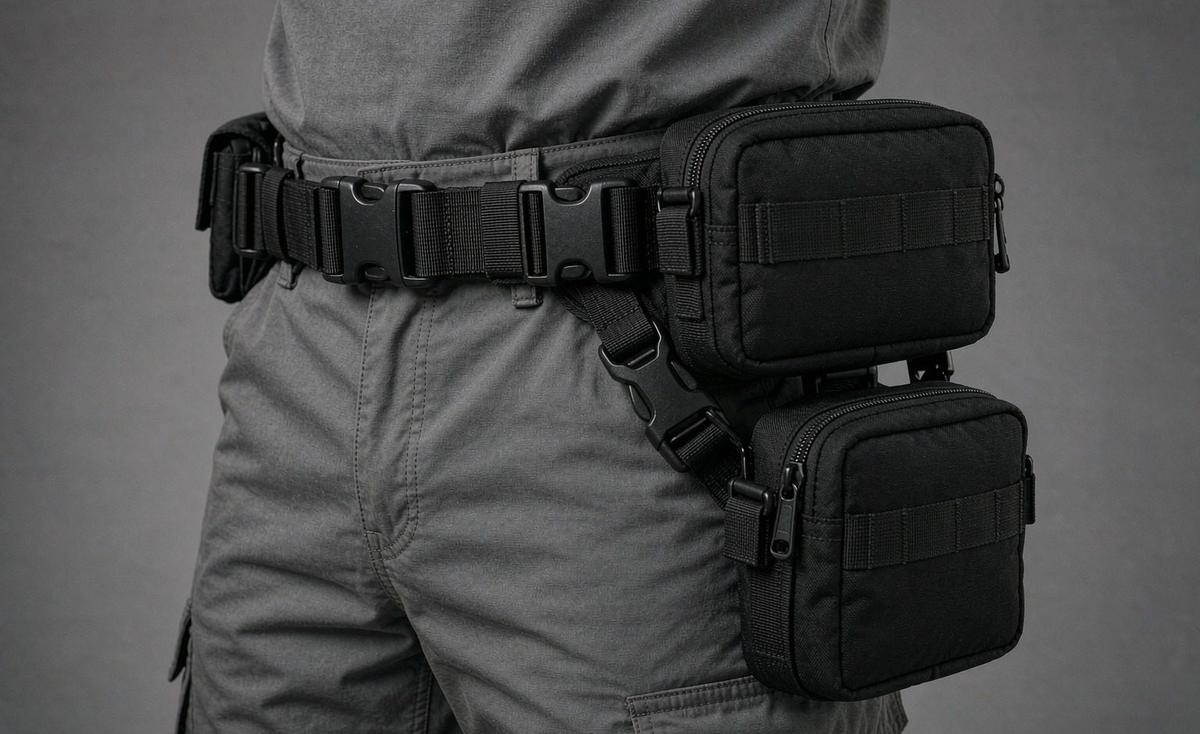
Machine corners are not square and neither should the sleeve be. Most modern laptops have a corner radius in the region of 8 to 15 millimetres, and a sleeve cut with a tighter radius will not accept the machine cleanly even when the width and depth are correct. This is the most common cause of a sleeve that measures right and fits wrong, and it is invisible on a dimension sheet.
The fix is to specify the corner radius on the pattern and to check it on the sample against the actual device rather than against a drawing. Our production team traces the largest intended device onto the sample lining and confirms the radius before approving a pattern. It takes minutes and it prevents an entire run being cut to a shape that fights the machine it was designed for.
The second geometry point is the tapered nose. Many machines are slightly thinner at the front edge than at the hinge, and a sleeve cut dead rectangular will meet the machine first at the hinge end. A small taper on the opening, or a slightly radiused entry, lets the machine slide in rather than being forced. Reinforced corners at the base of the sleeve complete the protection, because that is where the machine lands when the sleeve is set down.
The same logic applies to the entry lip. A sleeve whose opening is bound with a stiff tape resists the machine going in even when the internal dimension is correct, because the binding does not flex. Our production team specifies a softer binding or a turned edge at the opening for exactly this reason, and it is one of the details that separates a sleeve which feels precise from one which simply feels tight.
Sleeve plus pouch bundles and the accessory ladder
A sleeve on its own is a modest-value reward, and the reliable way to raise its value is to bundle it with a flat accessory. The natural partner is a cable pouch, because the two are used together, both are flat, and the pouch costs very little to add to a parcel. In programmes our team has supported, a sleeve plus pouch bundle typically supports a pledge 30 to 55 percent above the sleeve alone, while adding only a small amount to landed cost.
Bundling also solves a sizing risk. A backer who is unsure whether their machine fits is more likely to pledge for a bundle that includes a pouch they can use regardless, and less likely to abandon the tier. It is not a substitute for good sizing, but it reduces the sensitivity of the pledge to the fit question, which is useful when the campaign cannot offer every size.
The scheduling caution is convergence. A sleeve and a pouch are made on different lines with different components, so the programme runs on one critical path and the slower item sets the date. Our programme coordinator schedules bundles as one programme with one completion date rather than two parallel ones, because a pouch finishing a week late delays the whole shipment and that delay costs more than any saving from parallel scheduling.
The pricing of a bundle should follow the same anchor logic as the sleeve: price against the shop price for a set rather than against the unit cost. A sleeve and pouch sold together for less than a shop-bought organiser alone reads as good value and still clears the landed-cost guardrail comfortably, because both items are cheap to make, cheap to ship and add almost nothing to the parcel.
Labelling and page copy that prevent disputes
Start with the label inside the sleeve. A woven size label stating the internal dimension in centimetres and the intended class means a backer can verify the claim the moment they open the parcel, and it means a support conversation starts from a shared fact rather than from an argument. Our team includes this as standard and it costs a few cents.
Then write the page from the number. State internal width, internal depth, and the largest device class the sleeve is cut for. Add one sentence naming what is excluded, for example that 16-inch machines are not covered, and one sentence about machines in bulky hard cases. Those three sentences eliminate most of the disputes that would otherwise arrive in the comment section and in support mail.
Photography does the same job as copy and it is worth planning deliberately. Shoot the sleeve with the actual largest device in the intended class going into it, from an angle that shows the corner clearance, and shoot one frame with a tape measure visible. A technical audience trusts a measured photograph far more than a styled one, and a single frame showing the machine entering the sleeve answers more pre-launch questions than a paragraph of reassurance. Our programme coordinator supplies a shot list with every sleeve sample for this reason.
Finally, put the same numbers in the backer survey. Asking a backer to confirm their machine against a stated internal dimension before the size is locked converts a potential return into a data point. Our team provides a survey-ready dimension block with every sleeve programme for exactly this purpose. Send us your target device list and a campaign bag specialist will return the recommended sizes, the internal dimensions and a sampling date.
Send your target device list to service@junyuanbags.com and a campaign bag specialist will recommend sizes, internal dimensions and a sampling date.
Frequently Asked Questions
What sizes should a laptop sleeve reward cover?
Three classes cover nearly all demand: 13-inch, 14-inch and 15-inch. Typical internal widths are 30.5 to 31.5 centimetres, 31.5 to 33.0 centimetres and 34.5 to 36.0 centimetres respectively. Because each size is a separate 500 pcs commitment, most first campaigns should launch with two sizes rather than three.
Should a campaign offer one sleeve size or several?
Two is usually right. Launch 14-inch and 15-inch and let the backer survey set the split after funding, which turns a forecast into real demand. If only one size is viable, take 14-inch, because a sleeve cut for the 14-inch class will accept a 13-inch machine with tolerable slack while the reverse never works.
What is the 16-inch trap on a laptop sleeve?
Popular 16-inch machines are often 10 to 15 millimetres wider than a 15-inch machine, and a page that says fits up to 15 inch will attract a backer with a 16-inch device. State the maximum explicitly and add that 16-inch machines are not covered. If the audience genuinely includes them, add a separate SKU rather than stretching the pattern.
How much tolerance should a laptop sleeve have?
5 to 10 millimetres over the largest intended device on width and depth. We recommend 6 to 8 millimetres for a fitted sleeve and closer to 10 millimetres if the sleeve should accept a machine in a thin skin or shell. Whatever figure is chosen has to be held across the whole run and checked with a gauge at inspection.
Should a campaign publish internal or external sleeve dimensions?
Internal. The internal dimension is the usable space and it is what the backer needs; the external dimension includes padding and shell and is a pattern-making figure. Record both on the specification sheet, publish the internal one, and measure it on the approved sample rather than calculating it.
How is a laptop sleeve fit tested?
Two desk tests. The plug-in test inserts and removes the largest intended device 50 times, checking corner resistance, closure stress and lining wear. The shake test places the smallest intended device inside, holds the sleeve at one end and shakes sideways; movement above about 10 millimetres means the tolerance is too generous.
Which sleeve construction is best for a campaign reward?
Padded polyester or nylon with 4 to 6 millimetres of closed-cell foam. It holds shape in photography, takes branding well and gives better impact performance than neoprene at the same thickness. Neoprene is forgiving on fit but absorbs less impact. Moulded EVA shells look premium but are unforgiving on fit and push sampling to 12 to 15 working days.
Why does a sleeve measure correctly but still not fit?
Usually the corner radius. Most laptops have a corner radius of 8 to 15 millimetres, and a sleeve cut tighter will not accept the machine even when width and depth are right. Specify the radius on the pattern and trace the actual device onto the sample lining before approving the pattern.
How does the 500-piece minimum affect sleeve SKU planning?
Each size is a style and each colourway carries its own 500 pcs minimum, so three sizes in two colourways is six commitments of 500. Fix colourway at one for the first run and offer a second as a stretch goal. Colourway splits are the fastest way to turn a workable order into an unworkable one.
Is bundling a sleeve with a pouch worth doing?
Yes. A sleeve plus cable pouch bundle typically supports a pledge 30 to 55 percent above the sleeve alone while adding little to landed cost, because both items are flat and light. Bundling also reduces the sensitivity of the pledge to the fit question when the campaign cannot offer every size.
What should the sleeve label say?
A woven size label stating the internal dimension in centimetres and the intended device class. That lets a backer verify the claim the moment they open the parcel, and it means any support conversation starts from a shared fact rather than an argument.
What are the production and payment terms for a sleeve programme?
Sampling runs 6 to 10 working days for padded construction and 12 to 15 working days for a moulded shell. Bulk runs 35 to 50 days from approved sample and deposit. Terms are FOB Xiamen with T/T 30/70, and inspection holds at AQL 2.5 to ISO 2859-1 with sleeve internal width checked by gauge.
People Also Ask
What size laptop sleeve should I make for a campaign?
Start with the 14-inch class, which covers the largest share of professional machines and accepts a 13-inch device with slack. Add 15-inch if the order size supports it.
How do I stop backers complaining that the sleeve does not fit?
Publish the internal dimensions in centimetres, name the largest intended device class, and state explicitly what is excluded. Then repeat the same numbers in the backer survey.
Is neoprene or padded fabric better for a sleeve?
Padded fabric with closed-cell foam. Neoprene stretches and is forgiving on fit but absorbs less impact and scuffs visibly. Padded fabric must be cut accurately but performs and photographs better.
Can one sleeve size fit 13 and 14-inch laptops?
Yes if you cut to the 14-inch class, and the 13-inch machine will sit with modest slack. Never cut to 13 and claim 14, because the larger machine simply will not go in.
How loose is too loose for a laptop sleeve?
If the smallest intended machine moves more than about 10 millimetres inside the closed sleeve when shaken sideways, the tolerance is too generous. That movement is both annoying and a protection risk.
Do I need a separate sleeve for a 16-inch laptop?
Yes. Those machines are 10 to 15 millimetres wider, so stretching the 15-inch pattern makes the sleeve sloppy for everyone else. A separate SKU means a separate 500 pcs commitment.
Should sleeve sizes be chosen before or after the campaign funds?
Choose which sizes to offer before launch, because the decision drives the order. Choose the split between sizes after funding, using the backer survey, so the split reflects real demand.