Custom Laptop Bags for Kickstarter: Tech Reward Essentials
A laptop bag is the natural reward for a tech campaign because the audience already owns the device and already has an opinion about the bag they carry it in. The essentials are a stated device matrix, a suspended padded sleeve with reinforced corners and a false bottom, a coated fabric with a durable water repellent finish, organisation sized to the charger and the cables, and restrained branding. Minimum order is 500 pcs per style and per colourway, sampling runs 6 to 10 working days, bulk runs 35 to 50 days, and inspection holds at AQL 2.5 to ISO 2859-1.
- Why a laptop bag fits a tech campaign audience
- The device matrix: state every size the page claims
- Protection: foam, suspended sleeve and corners
- Fabrics: nylon, polyester, RPET and coated shells
- Water resistance: coating, DWR and seam position
- Organisation: charger, mouse, cables and bottle
- Branding that suits a technical audience
- Compliance and documentation for tech rewards
- Costing a laptop bag tier
- Sampling, drop testing and the 12 to 15 day window
- Fulfilment, inspection and the replacement reserve
- Building the reward ladder around the bag
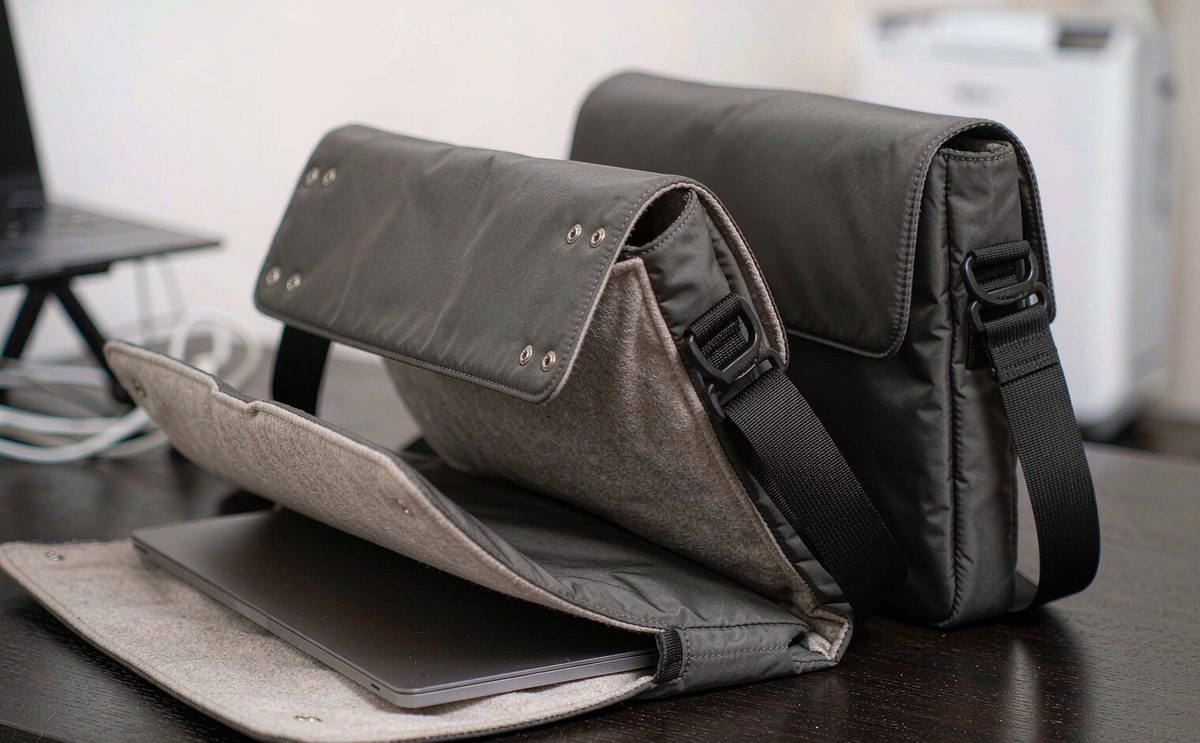
Why a laptop bag fits a tech campaign audience
Audience fit is the first test for any reward and a laptop bag passes it unusually well on a technology campaign. The backer owns a laptop, carries it somewhere at least several times a week, and has an opinion about the bag they use. That combination means the reward is not a novelty, it is a replacement for something they already own and possibly dislike. Rewards that replace an existing purchase convert far better than rewards that ask the backer to imagine a new habit.
There is also a coherence argument. A campaign selling a piece of hardware, an app, a keyboard or a developer tool is selling competence, and a reward that is technically well specified reinforces that message. A poorly specified bag does the opposite, and it does it publicly, because a backer who receives a bag whose sleeve does not fit their machine will say so in the campaign comments where every prospective backer can read it.
The third reason is price tolerance. Tech audiences are accustomed to paying real money for carry solutions and they understand the difference between a 20 dollar bag and a 120 dollar bag. That means a laptop bag reward can sit at a pledge level well above a tote or a drawstring bag and still read as good value, provided the specification supports the claim. Our team has supported 20 plus crowdfunding campaigns and this is the category where the specification-to-pledge relationship is tightest. See the full laptop bag options before you fix a tier price.
A laptop bag reward replaces something the backer already owns. Rewards that replace an existing purchase convert better than rewards that ask for a new habit.
The device matrix: state every size the page claims
Every laptop bag reward begins with a device matrix, which is simply the list of machines the page says the bag fits, written down with their actual external dimensions. This sounds obvious and it is the single most common source of post-delivery disputes. A page that says fits most 14-inch laptops will generate a complaint from the first backer whose 14-inch machine is 2 millimetres too wide, because most is not a specification.
The correct method is to choose the largest device the page will claim and cut the sleeve to that machine with a tolerance of 5 to 10 millimetres on width and depth. The tolerance matters in both directions. Too tight and some machines will not go in without force, which stresses the zip and the seam. Too loose and the machine slides inside the sleeve, which defeats the suspension and lets the corner take the load in a drop.
Then state the internal dimension on the page rather than the marketing size. Writing internal sleeve 33.0 by 23.5 centimetres, fits up to a 14-inch laptop is unambiguous and it is defensible if a dispute arises. Our production team measures the internal dimension on the approved sample and records it in the specification sheet, and we recommend putting that exact figure in the reward description rather than paraphrasing it.
One further discipline helps at the page-writing stage: build the matrix from measurements rather than from a device list copied off a spec sheet. Our production team asks creators to name the two or three machines their audience most commonly owns and to measure those, because a matrix built from a published figure is only as good as that figure, and published dimensions are rounded more often than people expect.
Protection: foam, suspended sleeve and corners
Protection is the functional claim a laptop bag makes, and it has three components. The first is padding thickness and density. A closed-cell foam of 5 to 8 millimetres on the panels is the usual range; below 4 millimetres the protection is cosmetic and above 10 millimetres the bag becomes bulky without a meaningful gain. Density matters as much as thickness, because a low-density foam of 8 millimetres compresses flat under load and behaves like 3 millimetres.
The second component is the suspended sleeve. A suspended sleeve is attached to the bag only at its upper edge, or at two points near the top, so that the base of the sleeve does not touch the base of the bag. The gap underneath is what absorbs a drop when the bag is set down hard. A sleeve sewn flat to the base panel transmits the entire impact into the corner of the machine, which is exactly the failure a backer will report.
The third component is corner reinforcement. Corners take the load in almost every real-world impact, and they are the cheapest place to add protection. The usual methods are a doubled fabric layer with an internal stiffener, or a moulded corner piece bonded into the lining. Our production team specifies reinforced corners as standard on every laptop bag programme, and pairs them with a false bottom, meaning the sleeve base sits 15 to 25 millimetres above the bag base.
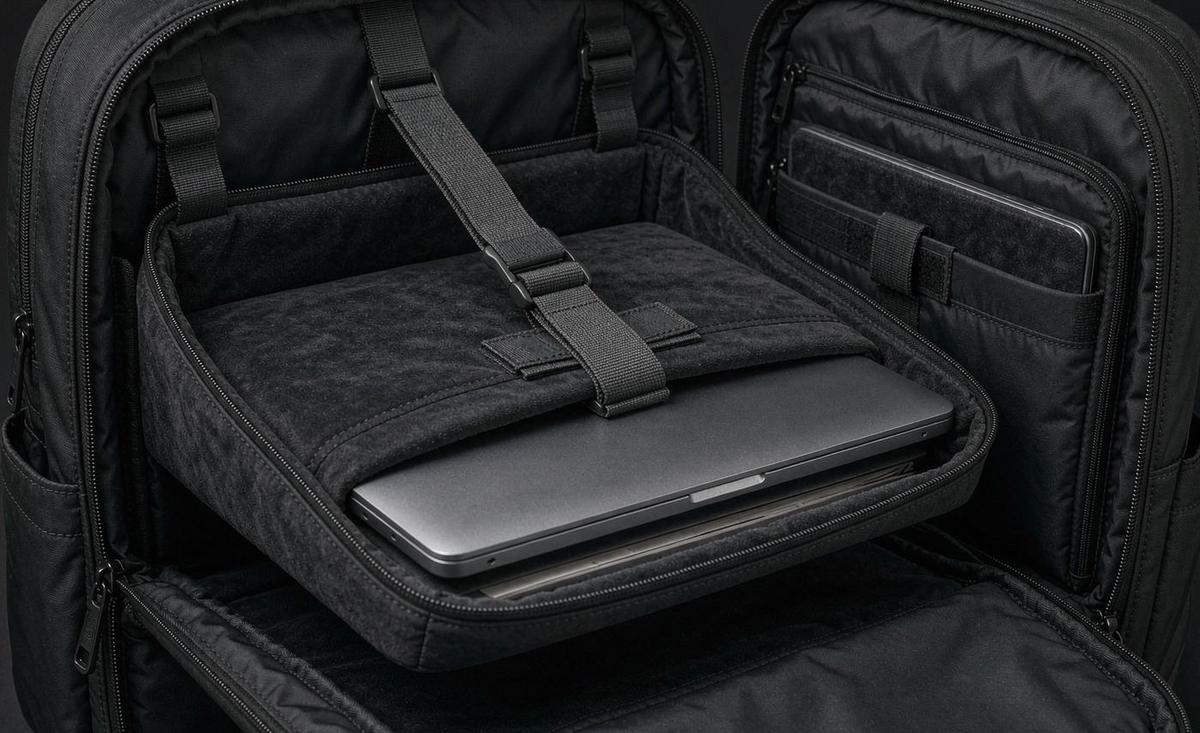
Warranty exposure is the reason to be conservative here. A bag that claims to protect a device invites a claim if it does not, and the claim is made against the campaign rather than against a retailer. Our team therefore recommends stating the protection as a construction description, meaning suspended sleeve, false bottom and reinforced corners, rather than as a promise, and keeping any drop-test evidence in a file that can be produced if asked.
Fabrics: nylon, polyester, RPET and coated shells
Shell fabric for a laptop bag is usually a synthetic, and the choice is between nylon, polyester and recycled polyester. Nylon has the best abrasion resistance and the best hand feel at a given weight, and it takes a coating well. Polyester is cheaper, holds colour well and is entirely adequate for a bag that is not being dragged across concrete. RPET is polyester made from recycled feedstock, it performs closely to virgin polyester, and it carries a sustainability story that many tech audiences actively look for.
Denier is the number to specify. 420D is light and suitable for a sleeve or a slim bag. 600D is the workhorse for a laptop bag and the safest default. 840D and 1000D are heavy-duty and appropriate for a bag that will be checked, thrown in a vehicle or used outdoors. Going heavier than the use case requires adds weight and cost without adding perceived value for a commuter.
Coating is specified separately from the base fabric. A PU coating on the reverse side of the fabric provides the water resistance; a TPU laminate is more durable and more expensive; a DWR finish on the face makes water bead and run off rather than soak in. DWR is a finish rather than a barrier and it wears off over time, which is worth knowing before writing any long-term claim on the campaign page.
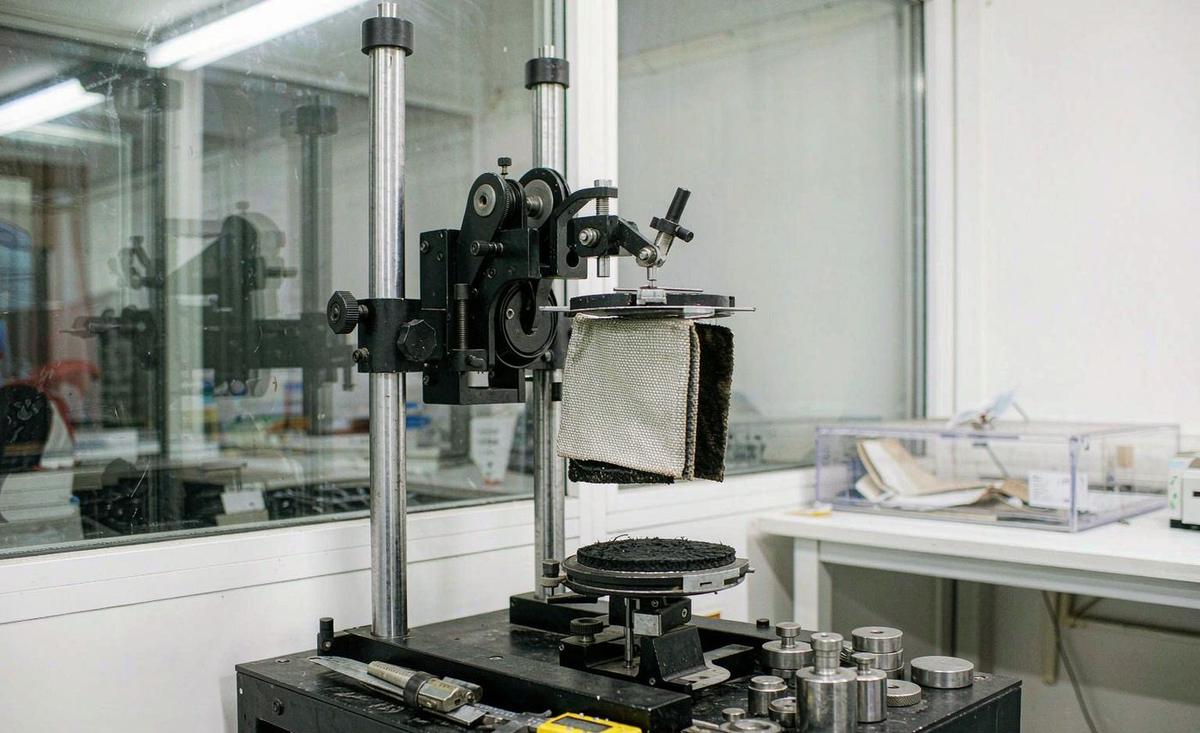
Backing matters as much as face fabric on a coated shell. A PU coating applied too thinly flakes after repeated flexing, and once it flakes the fabric loses its water resistance permanently. Our production team specifies coating weight alongside denier for this reason, and we flex-test the coated fabric on the sample rather than accepting a mill certificate alone, because a coating that survives a mill test does not always survive being folded into a bag and shipped.
Water resistance: coating, DWR and seam position
Water resistance in a laptop bag is a system property, not a fabric property. A coated fabric with unsealed seams will still let water through the stitch holes, and a bag with a coated fabric, sealed seams and an exposed zip will let water through the zip. The three weak points in order are the zip line, the seam holes and the base, and a specification that addresses only the fabric has addressed the strongest part of the system.
The practical specification our team recommends is a PU-coated shell, a storm flap or zip garage over every external opening, a bound or taped seam on the top panel where water collects, and a base panel in a heavier denier than the body. Seam taping every seam in a bag is expensive and usually unnecessary; taping the top panel and the base seam captures most of the benefit at a fraction of the cost.
Claims should then be written to match. Water resistant is defensible with the above. Waterproof generally requires welded seams and a roll-top or sealed closure, and it is a claim our team rarely recommends for a zippered laptop bag. Where a campaign needs a stronger promise, the honest route is an included rain cover, which is a cheap accessory that demonstrably works and can be photographed doing so.
The practical test is simple and it belongs in the sampling window. Hold the assembled bag under a shower for five minutes, check the interior, then repeat after the bag has been flexed and folded a hundred times. The second pass is the one that matters, because a coating that performs on a new sample and fails after flexing is a coating that will fail in month three, which is exactly when the comment appears.
Organisation: charger, mouse, cables and bottle
Organisation is where a laptop bag earns its daily value, and the specification should be driven by the objects the audience actually carries. For a tech audience that is almost always the charger and its cable, a mouse or a trackpad, a phone, a notebook or a small tablet, and often a pair of headphones. Pockets cut to those objects beat generic pockets, because a backer recognises immediately that someone thought about their kit.
The charger is the one that gets specified wrong most often. A laptop power brick is bulky and its cable is stiff, so a pocket that fits the brick will not necessarily accommodate the cable without forcing it. Our production team specifies a wide, shallow pocket with an elasticated top for the brick and a separate loop or slip for the cable, rather than one deep pocket that forces the two to fight each other.
Cable management is the second detail that reads as considered. Small elastic loops in a row, sized at 25 to 35 millimetres, hold a charging cable, a mouse cable and a drive without tangling. They cost very little in material and they are the feature most often photographed in an unboxing, because a tidy interior is visually satisfying. A key clip near the top of the lining and one bottle pocket that actually fits a 500 millilitre bottle complete the set.
The counter-principle is worth stating: do not add pockets for things the audience does not carry. A laptop bag aimed at software developers does not need a tablet slip, and one aimed at designers probably does. Our team asks creators to name the five objects their audience carries most often and specifies pockets for those five, because every additional pocket adds cost and weight and dilutes the clarity of the interior.
Branding that suits a technical audience
Tech audiences are unusually sensitive to overt branding, and a large logo is one of the fastest ways to lower the perceived value of an otherwise good bag. The approach that works is restraint: a small woven label on a side seam or on the strap, a tonal or dark-on-dark mark, and a clean exterior with no oversized print. The bag should look like something the backer chose rather than something they were given.
Where creators want more presence, the better placements are the puller and the lining. A debossed or laser-etched logo on a metal zip puller is visible every time the bag is opened and it reads as a hardware detail rather than as advertising. A printed lining in a campaign colour does the same job at the moment of opening, without affecting the exterior at all.
Colourway choice interacts with branding and with the minimum order. Because the minimum is 500 pcs per style and per colourway, a black and a grey option is two full commitments. For a tech audience, black and a dark neutral is usually the right pair, because it matches the devices and it is what this audience buys. Our team generally advises against a light colourway on a laptop bag for a first campaign; it shows dirt and it photographs poorly next to the device.
One placement to avoid is a large print on the front panel. It is the first thing a backer sees and the first thing that reads as advertising, and it also ages badly because a printed panel creases. Where a campaign needs front-panel presence, our team recommends an embroidered mark at under 60 millimetres rather than a print, because embroidery creases with the fabric instead of fighting it.
Compliance and documentation for tech rewards
A bag is a textile product, not an electronic one, so a laptop bag reward usually does not carry the compliance burden of the hero product. That said, two documentation areas matter. The first is fibre content and care labelling, which is required in most destination markets and which needs to be correct for the actual fabric composition. A label that says polyester on a nylon bag is a compliance exposure, and it is also visible to the backer.
The second is substance compliance. If the campaign sells into the European Union or the United Kingdom, the finished article needs to meet the applicable restrictions on substances in textiles, and if it sells into California the labelling requirements there apply. Our production team works with mills that can provide the relevant test documentation, and we recommend requesting it during sampling rather than after bulk, because a test report takes time and the shipment does not wait for it.
The third, often overlooked, is the claim documentation. If the page says recycled fabric, there should be a documented recycled content figure behind it. If it says water resistant, there should be a test method behind it. Our programme coordinator keeps a claim file for each campaign programme so that if a platform or a marketplace asks, the answer is a document rather than an assertion.
| Tier | Specification level | Typical pledge band | What it must include |
|---|---|---|---|
| Entry sleeve | 420D shell, 5 mm foam, no organisation | Low band | Correct internal dimension, bound seams |
| Slim laptop bag | 600D PU-coated, suspended sleeve, 2 pockets | Mid band | Reinforced corners, elastic cable loops, key clip |
| Commuter laptop bag | 600D or 840D, full organisation, bottle pocket | Upper mid band | False bottom, storm flap, trolley strap, rain cover option |
| Tech bundle | Laptop bag plus cable pouch plus sleeve | Top band | Matched hardware finish across all items, one packing spec |
| Premium work bag | 840D or 1000D, structured base, metal hardware | Premium band | Drop test evidence, spare parts policy, warranty wording |
One further decision sits inside the device matrix: whether the bag is specified for a bare laptop or for a laptop in a sleeve or a hard case. Most backers carry the bare machine, but a meaningful minority keep it in a shell, and a shell adds 2 to 4 millimetres on each dimension. Our team resolves this by specifying the sleeve to the bare device and stating on the page that a machine in a bulky hard case may not fit. That sentence costs nothing and it removes an entire category of dispute.
The second decision is the secondary device. If the audience carries a tablet as well as a laptop, the bag needs a separate unpadded or lightly padded tablet slip rather than a shared compartment, because a tablet sharing space with a laptop gets scratched by the laptop's corners. A dedicated slip is a small addition in material and it is the sort of detail a technical audience notices and values. Confirm whether the campaign page will mention a tablet before the pattern is cut, because adding it later means a new sample.
Costing a laptop bag tier
Cost in a laptop bag is driven by four things in descending order: hardware, padding and structure, fabric, and labour. Hardware surprises creators because a good branded zip with a cast puller can cost several times a generic one, and a bag may use four or five zips. Padding and structure come next, because foam, stiffeners and a reinforced base are both material and labour.
Against that, the pledge headroom is large. A laptop bag reward typically sits at a pledge two to four times a tote reward on the same campaign, and the added unit cost over a tote is far less than that multiple. The guardrail remains the same: total landed cost including freight, duty and a reserve at or below 30 to 35 percent of the pledge. A laptop bag almost always clears it comfortably, which is why it is the most reliable high-value reward in the category.
The costing decision that most often goes wrong is quantity. Because the minimum is 500 pcs per style and per colourway, a creator who wants three colourways of one bag is committing to 1,500 units. Our advice is to launch with one or two colourways and treat a second run as a stretch goal with a real reorder behind it, rather than pre-committing to inventory that may not convert.
The second costing trap is the assumption that a higher pledge always means a better margin. It does not, because cost rises with specification and the top tier is usually the most heavily specified item on the page. Our team costs every tier independently rather than extrapolating from the cheapest one, and we have more than once recommended simplifying a top-tier bag in order to improve the margin on the tier that actually funds the campaign.
Sampling, drop testing and the 12 to 15 day window
A laptop bag sits at the complex end of the sampling range. Standard builds run 6 to 10 working days, but anything with a suspended sleeve, a reinforced base, a moulded corner or a bonded lining realistically runs 12 to 15 working days. Our team quotes the honest figure at the start rather than the optimistic one, because the sampling date is what a creator builds the page and the launch date around.
Drop testing belongs in that window. The test our production team runs is simple and repeatable: load the bag with a weighted dummy at the stated maximum device weight, drop it from 60 to 80 centimetres onto a hard floor onto each of its four base corners, and inspect the device dummy and the sleeve for contact damage. Repeat from a lower height onto the flat base. Then run the same test with the bag at its realistic packed weight, not empty.
The second test is the insertion test, which is the one that catches sizing errors. Take the largest device on the matrix, insert and remove it 50 times, and check for resistance at the corners, for zip stress and for lining wear. A device that goes in easily the first time and catches on the twentieth has a tolerance problem, and it is much cheaper to find that in sampling than in a comment thread.
The third test is the simplest and the most often skipped: carry the sample for a week before approving it. Every specification looks sound on a desk and several do not survive a commute. Our team encourages creators to use the sample as their own bag for five working days and to write down every annoyance, because a note taken in week one is a change that costs nothing and the same note in month four is a review.
Fulfilment, inspection and the replacement reserve
Inspection holds at AQL 2.5 to ISO 2859-1 across our programmes, which sets the sample size and the accept and reject numbers rather than leaving it to judgement. For a laptop bag the critical defects are sleeve dimension against the stated figure, suspension attachment, corner reinforcement presence, zip smoothness through full travel, and foam placement. The first of those is checked with a gauge rather than by eye, because a 5 millimetre shortfall is invisible in a photograph and decisive in use.
Fulfilment for a laptop bag is heavier and bulkier than for a tote, so the parcel cost line is materially higher. A slim laptop bag in a mailer is manageable; a structured commuter bag is a boxed parcel, and boxed parcels bill on dimensional weight. Our team recommends costing outbound parcels on the packed dimensions of the actual sample rather than on an estimate, because the difference between a folded Flat bag and a boxed structured one is large.
Reserve planning is the last piece, and for a laptop bag we recommend 2 to 3 percent of the run held back for replacements. This category has a higher reported-defect rate than a tote simply because there is more to go wrong, and a backer whose sleeve does not fit needs a replacement quickly rather than a discussion. Our team holds the reserve as part of the production programme so it is available in the same specification as the shipped goods.
Building the reward ladder around the bag
The strongest structure is a ladder rather than a single tier. Start with a laptop sleeve at the entry level, move to a slim laptop bag at the mid level, and finish with a commuter bag plus cable pouch bundle at the top. Each step is a clear increase in kind rather than in quantity, which is what stops backers sliding down the ladder, and each step is built on the same fabric and hardware family so the programme is coherent.
A laptop bag also works as the anchor of a wider reward range rather than as a standalone item. Once the device matrix and the hardware family are fixed, a pouch, a tablet sleeve and a packing cube can be specified against the same finishes and sold alongside the bag without a second design exercise. Our team builds those ranges from one specification, which is how the wider custom bag programme stays coherent across a campaign that offers more than one textile reward.
Add-ons then sit on top of the ladder rather than inside it. A cable pouch, a rain cover and a second colourway are the three that sell most consistently against a laptop bag, and all three are cheap to ship because they are flat and light. Our bag programme team specifies add-ons in the same hardware finish as the main bag so a bundle reads as a designed set.
Finally, write the page from the specification. State the internal sleeve dimension, the foam thickness, the fabric denier and coating, the pocket count and what each pocket is cut for. Tech audiences read specifications, and a page with real numbers converts better than a page with adjectives. Send your device matrix and target pledge to us, and a campaign bag specialist will return a costed specification with a sampling date and a bulk date you can publish.
Send your device matrix and target pledge to service@junyuanbags.com and a campaign bag specialist will return a costed laptop bag specification with dates.
Finally, make sure the ladder is visible as a ladder on the page. Three tiers that share a fabric family and a hardware finish read as a designed range, and a backer who can see the steps is more likely to take a higher one. Our team provides photography guidance for range shots for exactly this reason, because a ladder shown as a single row of bags converts better than the same ladder shown as three separate products.
Frequently Asked Questions
What sizes should a laptop bag reward claim to fit?
Choose the largest device the page will claim and cut the sleeve to that machine with 5 to 10 millimetres of tolerance on width and depth. Then publish the internal dimension rather than the marketing size. A page that says fits most 14-inch laptops invites disputes; a page that says internal sleeve 33.0 by 23.5 centimetres is unambiguous and defensible.
How much padding does a laptop bag actually need?
Closed-cell foam of 5 to 8 millimetres on the panels is the working range. Below 4 millimetres the protection is cosmetic; above 10 millimetres the bag becomes bulky without meaningful gain. Density matters as much as thickness, because a low-density 8 millimetre foam compresses flat under load and behaves like 3 millimetres.
What is a suspended laptop sleeve and why does it matter?
A suspended sleeve is attached to the bag only near its top edge, so the base of the sleeve does not touch the base of the bag. That gap absorbs the impact when the bag is set down hard. A sleeve sewn flat to the base panel transmits the whole impact into the corner of the machine, which is precisely the failure backers report.
Which fabric should a campaign laptop bag use?
600D polyester with a PU coating is the safest default for a commuter bag. Nylon has better abrasion resistance and hand feel at the same weight. RPET performs close to virgin polyester and carries a sustainability story that tech audiences look for. Go to 840D or 1000D only when the bag will be checked or used outdoors.
Can a laptop bag reward be called waterproof?
Usually not honestly. Waterproof generally requires welded seams and a sealed or roll-top closure. A PU-coated shell with a storm flap and taped top seams supports water resistant, not waterproof. Where a campaign needs a stronger promise, include a rain cover, which is cheap, demonstrably works and can be photographed in use.
How long does sampling take for a custom laptop bag?
6 to 10 working days for a simple sleeve or slim bag, and 12 to 15 working days for a build with a suspended sleeve, a reinforced base, moulded corners or a bonded lining. Our team quotes the honest figure at the start because the sampling date is what the campaign page and launch date are built around.
How should a laptop bag sample be tested?
Run two tests. The drop test loads the bag with a weighted dummy at the stated maximum device weight and drops it from 60 to 80 centimetres onto each base corner. The insertion test puts the largest device on the matrix in and out 50 times to check corner resistance, zip stress and lining wear.
What is the minimum order for a custom laptop bag?
500 pcs per style and per colourway. A bag offered in three colourways is therefore a 1,500 unit commitment. For a first campaign we recommend one or two colourways and treating further colourways as a stretch goal with a genuine reorder behind it.
What does AQL 2.5 inspection check on a laptop bag?
Sleeve dimension against the stated figure, suspension attachment, presence of corner reinforcement, zip smoothness through full travel, and foam placement. Sleeve dimension is checked with a gauge rather than by eye, because a 5 millimetre shortfall is invisible in a photograph and decisive in use.
How much shipping should a campaign budget for a laptop bag?
Materially more than for a tote. A slim bag in a mailer is manageable, but a structured commuter bag is a boxed parcel and boxed parcels bill on dimensional weight. Cost outbound parcels on the packed dimensions of the actual sample rather than on an estimate before fixing the pledge.
What documentation should a tech campaign have for a bag reward?
Fibre content and care labelling correct for the actual composition, substance compliance documentation for the destination market, and a claim file behind any recycled content or water resistance statement. Request documentation during sampling rather than after bulk, because a test report takes time and the shipment will not wait.
Should a laptop bag reward be offered alone or in a bundle?
Build a ladder. A sleeve at the entry tier, a slim bag at the mid tier, and a commuter bag plus cable pouch bundle at the top. Keep each step a clear increase in kind rather than in quantity, and sell the pouch, a rain cover and a second colourway as add-ons on top.
People Also Ask
Are laptop bags good Kickstarter rewards?
Yes, particularly for tech campaigns. The backer already owns a laptop and has an opinion about the bag they use, so the reward replaces an existing purchase rather than asking for a new habit.
What foam thickness protects a laptop?
5 to 8 millimetres of closed-cell foam on the panels, with density specified as well as thickness. Combine it with a suspended sleeve and reinforced corners, which matter more than extra foam.
Should I publish the internal sleeve size?
Yes. Publish internal dimensions alongside the marketing device size. It prevents disputes and it signals to a technical audience that the specification was actually measured.
Is RPET suitable for a laptop bag?
Yes. It performs close to virgin polyester, takes a coating well and carries a recycled content story. Ask for documented recycled content if you plan to claim it on the page.
How many pockets does a laptop bag need?
One pocket cut for the charger brick, a separate loop for its cable, elastic loops for small cables, a key clip and one bottle pocket. Named pockets beat generic ones because the backer recognises the intent.
How many colourways should a laptop bag reward have?
One or two. Each colourway carries its own 500 pcs minimum, and for a tech audience black plus a dark neutral covers most demand without fragmenting the order.
What is the difference between water resistant and waterproof?
Water resistant means a coated fabric, covered openings and some seam protection that will shed rain. Waterproof requires welded seams and a sealed closure. Do not claim the second with the first build.