Mini Cosmetic Bags for Crowdfunding: A $19 Perk That Scales
Does a $19 mini cosmetic bag perk work on a crowdfunding campaign? Yes, when the unit economics hold: a 130 x 100 x 60 mm pouch costs USD 1.90 to 3.40 at 500 pcs and USD 1.55 to 2.85 at 2,000 pcs, weighs 45 to 90 g, and ships as a light parcel in most lanes. At a $19 pledge that leaves goods cost near 20 percent of the tier price before postage. The minimum is 500 pcs per style and colourway, sampling takes 6 to 10 working days, and bulk takes 35 to 50 days. The design problem is making a small bag look worth $19.
- Why the $19 slot exists in a reward ladder
- Unit economics of a $19 perk, line by line
- What counts as mini: dimension bands and what fits
- Designing a small bag that still looks premium
- Materials and finishes at the entry price point
- Closures and hardware that survive at low cost
- Branding a mini bag without a big panel
- Where mini bags sit in the tier ladder
- Add-on strategy, attach rate and average pledge lift
- Freight and light-parcel fulfilment advantage
- Production planning: MOQ, colourways and stretch goals
- Returns, warranty and the true cost of a cheap perk
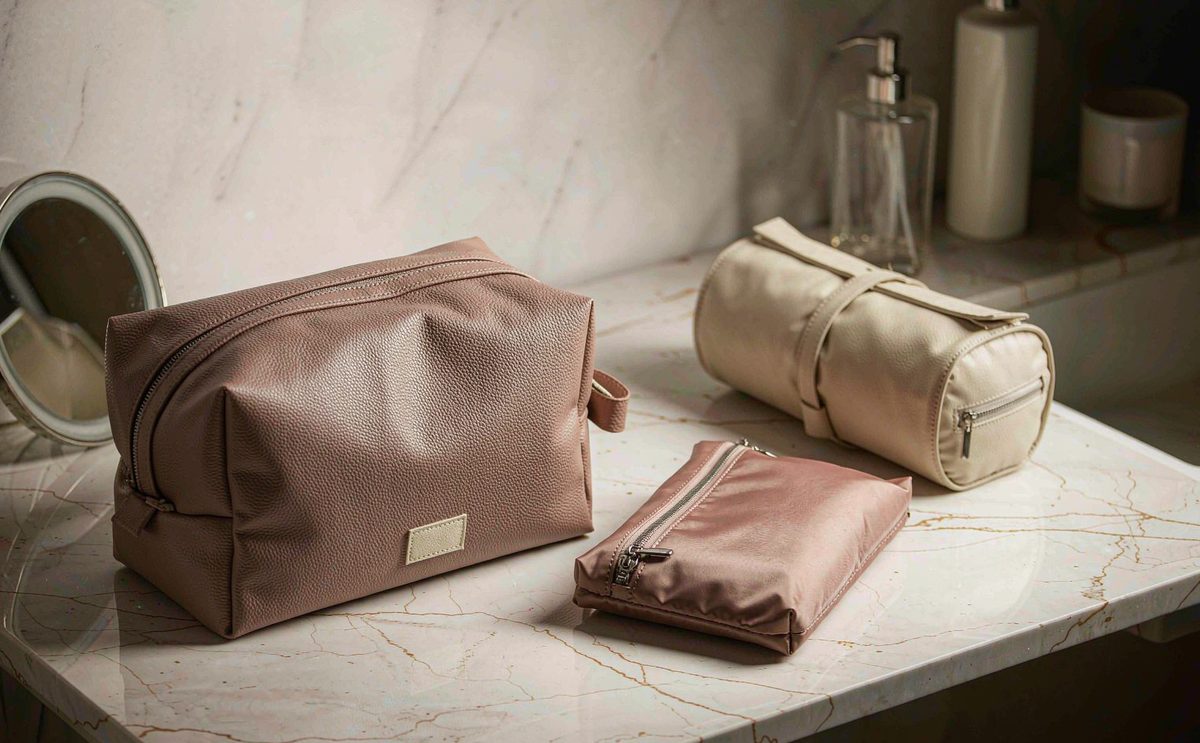
The $19 slot is the most commercially interesting price point on a crowdfunding campaign and the easiest one to get wrong. It is high enough to feel like a purchase rather than a token, low enough to be an impulse decision, and it is the tier where a physical bag is most often offered as the entry reward. This guide is about making a mini cosmetic bag work at that price: what it costs, what it should measure, how to finish it so it does not read as cheap, and how to place it in the ladder so it raises average pledge value instead of cannibalising the main tier.
Why the $19 slot exists in a reward ladder
Reward ladders work because backers self-select. A campaign with only a $79 tier and a $149 tier gives a hesitant visitor two choices, and one of them is expensive. Adding a $19 slot converts visitors who like the project but are not ready to commit, and it does something more valuable: it converts them into backers, and backers are far more likely to upgrade later than non-backers are to pledge for the first time. On campaigns we have supported, the entry slot typically accounts for 20 to 35 percent of backer count and 6 to 12 percent of total funds.
The bag is the right object for that slot for three reasons. It is the cheapest custom item a campaign can produce at a credible quality level. It ships as a light parcel, which keeps the postage line under control at a price point where postage is proportionally large. And it is useful, so it does not feel like filler. The risk is the opposite one: a $19 bag that looks cheap damages the brand more than no $19 tier at all. Everything below is about avoiding that outcome while keeping the unit economics intact.
- Conversion: the entry slot typically draws 20 to 35 percent of backer count on campaigns that offer one.
- Upgrade path: an existing backer is materially more likely to raise a pledge than a visitor is to place a first one.
- Postage control: at 45 to 90 g the bag ships in the lowest weight bands on most lanes.
- Utility: a pouch is used daily, so the brand stays in the backer's hands after the campaign ends.
- Risk: a visibly cheap entry perk damages the premium positioning of the tiers above it.
Unit economics of a $19 perk, line by line
A $19 perk has roughly $19 to work with, and by the time platform fees, payment processing, taxes and postage are removed the budget for goods is much smaller than it looks. Platform fees run about 5 percent, payment processing about 3 to 5 percent, and domestic postage for a light parcel is USD 3.50 to 6.50. That leaves roughly USD 9 to 11 for the goods, the mailer and the pack-out labour before any contribution to campaign overhead. A mini bag at USD 1.90 to 3.40 plus a mailer at USD 0.45 and pack labour at USD 0.60 fits comfortably inside that.
The number to watch is goods cost as a share of pledge. At a $19 pledge and a USD 2.60 bag in a USD 0.45 mailer, goods are about 16 percent of the tier price before postage and about 35 percent after postage. That is a healthy structure, and it is why the mini bag works where a larger bag would not: the same specification at 220 x 160 x 90 mm would cost USD 4.20 to 6.80, which pushes goods plus postage past 60 percent of the pledge and erases the margin. The entry perk survives on small dimensions, not on thin margins.
| Line item | Mini bag at 500 pcs | Mini bag at 2,000 pcs | Full-size bag at 500 pcs |
|---|---|---|---|
| Bag unit cost FOB Xiamen | USD 1.90 to 3.40 | USD 1.55 to 2.85 | USD 4.20 to 6.80 |
| Mailer and insert | USD 0.35 to 0.60 | USD 0.30 to 0.50 | USD 0.55 to 0.90 |
| Pack-out labour | USD 0.45 to 0.75 | USD 0.40 to 0.65 | USD 0.60 to 0.95 |
| Domestic postage | USD 3.50 to 6.50 | USD 3.50 to 6.50 | USD 5.50 to 9.00 |
| Goods plus postage total | USD 6.20 to 11.25 | USD 5.75 to 10.50 | USD 10.85 to 17.65 |
| Share of a $19 pledge | 33 to 59 percent | 30 to 55 percent | 57 to 93 percent |
What counts as mini: dimension bands and what fits
Mini is a band, not a size, and the band matters because it determines both cost and usefulness. The smallest workable cosmetic pouch is about 110 x 80 x 50 mm, which holds a lipstick, a compact and a few small items. The most commercially useful band is 130 x 100 x 60 mm, which holds a travel-size tube, a small palette and a brush. The upper edge of mini is about 170 x 120 x 70 mm, which holds a full-size foundation and a small brush set and is where the format starts competing with a standard pouch rather than complementing it.
Choosing inside that band is a positioning decision. A bag that is too small to be useful is returned to the drawer and forgotten, and a bag that is too large stops being an entry perk. The test we suggest is the three-item test: can it hold three items a backer would realistically carry daily? If not, go up one band. Every 20 mm of added length adds roughly 6 to 11 percent to the unit cost in fabric and lining, and about 8 to 14 percent to the packed volume, so the band should be chosen once and not changed after sampling begins.
- List the three items the bag must hold, with dimensions and filled weight.
- Add 8 to 12 mm clearance beyond the largest item in its stored position.
- Confirm the closure closes over the tallest item with at least 5 mm to spare.
- Check the flat packed footprint, which drives freight more than the finished volume.
- Freeze the dimension before sampling starts, because a change after nesting adds 2 working days.
Designing a small bag that still looks premium
Premium perception at small scale comes from proportion, edge quality and hardware weight, not from size or decoration. Three specific techniques do most of the work. The first is a structured base: a bag that holds its shape when empty photographs as a product, and a bag that slumps photographs as a sample. A 0.8 to 1.2 mm PP board in the base costs USD 0.18 to USD 0.32 and changes the whole impression. The second is edge finish: a bound or turned internal seam rather than an overlocked raw edge is visible the moment the bag is opened and costs 3 to 5 labour minutes.
The third technique is contrast. A tonal bag with a contrasting lining, a contrast zip tape or a contrast pull reads as designed rather than generic, and it costs almost nothing because it is a colour choice rather than an added component. A mini bag in navy with a sand lining and a sand zip tape looks like a considered product; the same bag in navy throughout looks like a stock item. Our campaign bag specialist will normally propose two contrast schemes with the first sample, because this is the cheapest available lever on perceived value at any price point.
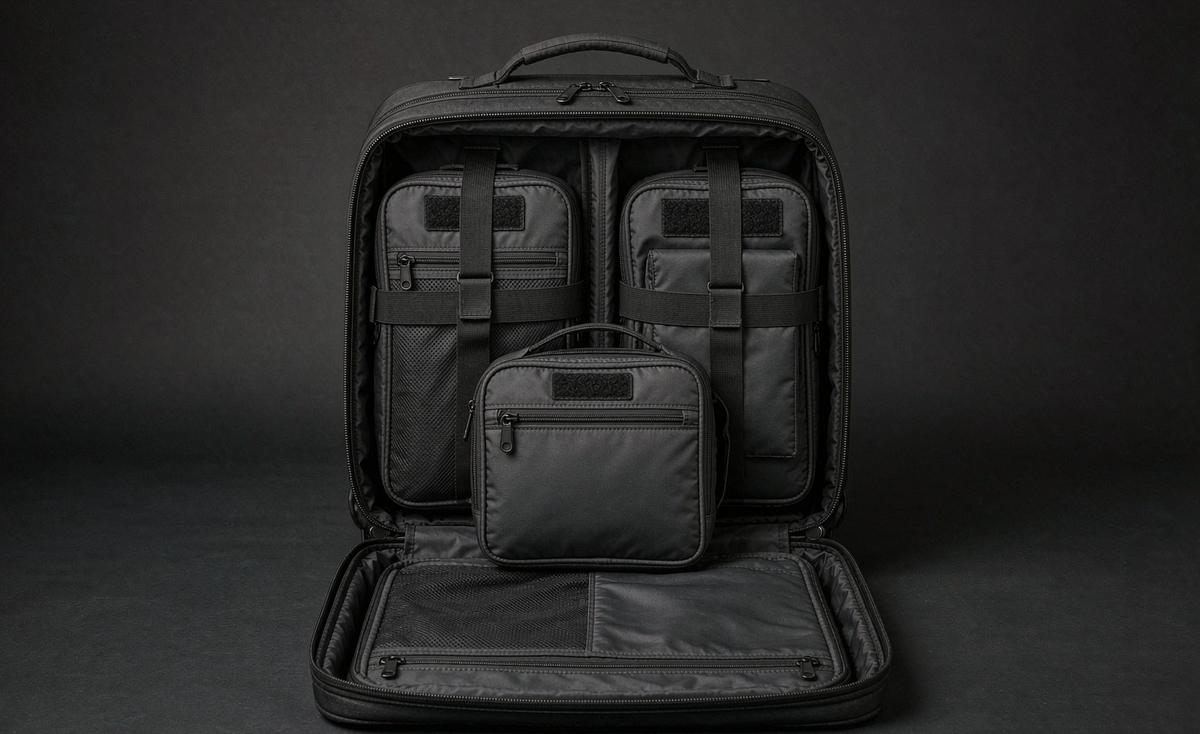
A fourth technique costs nothing at all: proportion. A bag whose height is roughly 1.3 times its width reads as balanced, and one that is square or long and low reads as utilitarian. On a 130 x 100 mm pouch that ratio is already close to correct, which is part of why this size band performs well. Creators moving outside the band should check the ratio before they check anything else.
Materials and finishes at the entry price point
At a $19 price point the face fabric has to be cheap per metre and still look considered. PU-coated 300D polyester is the default and runs at the baseline cost. A pebble-grain or a subtle embossed PU reads better than a flat gloss and costs USD 0.15 to USD 0.30 more per unit. RPET with a PU backing is the right choice when the campaign has a sustainability story, at USD 0.25 to USD 0.45 above baseline, and it is one of the few upgrades that a backer can be told about and will value.
What to avoid at this price point is more useful than what to choose. Avoid thin 190T or 210D linings, which show every seam and tear at the stress points within months. Avoid a gloss PVC face, which creases permanently in transit and looks damaged on arrival. Avoid unlined single-layer construction, which reads as a promotional giveaway. Where the budget is genuinely tight, the right move is to hold the face fabric and simplify the interior rather than the reverse, because the exterior is what appears in every campaign photograph and every backer unboxing.
- Default face: PU-coated 300D polyester at baseline cost, wipe-clean and print receptive.
- Better hand feel: pebble-grain or embossed PU at USD 0.15 to 0.30 above baseline.
- Sustainability claim: RPET with PU backing at USD 0.25 to 0.45 above baseline, with a mill transaction certificate.
- Avoid: 190T or 210D linings, gloss PVC faces and unlined single-layer construction.
- Priority: hold the face fabric and simplify the interior, never the reverse.
Closures and hardware that survive at low cost
A mini bag has a short zip run, typically 130 to 200 mm, and that is an advantage: short runs put less lateral load on the tape and are more forgiving of a lower-cost zip. A #3 or #4 nylon coil is entirely adequate at this scale and costs 20 to 35 percent less than a #5. Metal-look plastic teeth and a matching pull give the appearance of a metal zip at a fraction of the weight, which matters on a light parcel where every gram is counted. What should not be cut is the pull: a backer touches the pull first, and a light hollow pull reads as cheap instantly.
One specification is worth insisting on even at the entry price: a zip garage or a turned end stop. A zip that runs to the edge of the panel leaves the slider exposed, and exposed sliders catch on other items in a handbag and eventually separate the tape. A zip garage adds under one labour minute and removes a meaningful share of long-term failure. We also run a 200 cycle pull test on the pre-production sample of every mini bag programme, because a zip that fails in month two generates a warranty claim that costs more than the saving.
The pull is the one hardware item worth spending on at this price point. A backer touches it first and forms an impression from its weight and finish within seconds. A solid metal-look pull at USD 0.18 to USD 0.35 reads as a deliberate choice, while a light hollow pull at USD 0.06 reads as cost-cutting. That difference is the highest-return line on the whole specification.
Branding a mini bag without a big panel
On a 130 x 100 mm bag the usable centred panel is about 55 x 30 mm. That is enough for a simplified wordmark or a compact icon, and not enough for a full logo with a tagline. Creators should prepare a dedicated mini lockup. The cheapest methods at this scale are a woven label at USD 0.05 to USD 0.12 and a single-colour heat transfer at USD 0.08 to USD 0.20. A silicone patch at USD 0.45 to USD 0.90 plus a USD 120 to USD 260 mould costs proportionally more on a cheap bag but is the single upgrade that most reliably lifts perceived value at this price point.
Placement matters more than method on a small bag. A mark centred on the face at 40 percent of the panel height reads as intentional. A mark placed near the base seam, over a zip garage or crowding an edge reads as an afterthought, and on a small bag there is nowhere to hide it. We require a placement drawing with plus or minus 2 mm tolerance on every mini bag programme, and we recommend transferring the mark onto the same panel across all tiers so the entry perk and the premium tier look like one family. That visual consistency is what makes a $19 perk support a $149 tier rather than undercut it.
Key takeaways
- O
- n
- a
- m
- i
- n
- i
- b
- a
- g
- t
- h
- e
- b
- r
- a
- n
- d
- i
- n
- g
- m
- a
- r
- k
- s
- h
- o
- u
- l
- d
- o
- c
- c
- u
- p
- y
- a
- b
- o
- u
- t
- 4
- 0
- p
- e
- r
- c
- e
- n
- t
- o
- f
- t
- h
- e
- p
- a
- n
- e
- l
- h
- e
- i
- g
- h
- t
- a
- n
- d
- s
- i
- t
- o
- n
- t
- h
- e
- s
- a
- m
- e
- p
- a
- n
- e
- l
- a
- s
- t
- h
- e
- p
- r
- e
- m
- i
- u
- m
- t
- i
- e
- r
- s
- .
- C
- o
- n
- s
- i
- s
- t
- e
- n
- c
- y
- i
- s
- w
- h
- a
- t
- s
- t
- o
- p
- s
- a
- n
- e
- n
- t
- r
- y
- p
- e
- r
- k
- f
- r
- o
- m
- c
- h
- e
- a
- p
- e
- n
- i
- n
- g
- t
- h
- e
- l
- a
- d
- d
- e
- r
- .
Where mini bags sit in the tier ladder
A mini bag belongs in one of three positions, and each has different economics. As the entry reward at $19, it converts hesitant visitors and should be specified modestly. As an add-on at $12 to $16 on top of any pledge, it raises average pledge value and should be specified to look like a deliberate purchase rather than a throw-in. As a stretch goal unlocked for all backers at a funding threshold, it is a marketing event and should be specified to look generous in the campaign update where it is announced.
The cannibalisation risk is real and manageable. If the $19 mini bag looks too good, backers who would have pledged $79 for the full tier downgrade. The standard defence is a clear specification gap: the entry bag uses a printed mark and a stock pull, the mid tier uses a silicone patch and a structured base, and the premium tier adds a contrast lining, a custom pull and a second compartment. Backers read that gap quickly. What should not differ is the face fabric family, because a visibly different fabric makes the ladder look incoherent rather than layered.
There is one more position worth considering: the mini bag as a gift with purchase at the top tier. A $149 tier that includes a mini pouch alongside the main product reads as generous for a cost of USD 2 to USD 4, and it gives the campaign something to announce in an update without changing the reward structure. It also uses the same production run as the entry perk, so no additional tooling or minimum is involved.
Add-on strategy, attach rate and average pledge lift
An add-on is the most efficient use of a mini bag, because it attaches to pledges that already exist and carries no acquisition cost. Attach rate on a well-presented mini bag add-on at $12 to $16 typically runs 15 to 30 percent of backers on campaigns where the bag is shown in a real photograph rather than a render. At 25 percent attach on 2,000 backers, that is 500 additional units at USD 12 net of fees, which is USD 6,000 of incremental funding against a goods cost of roughly USD 1,300 at the 500 pcs band.
Three things drive attach rate. Presentation in a real photograph with a hand or a familiar object for scale, because a small bag in a render has no scale reference and backers assume it is bigger or smaller than it is. A clear statement of what fits inside, ideally with the three-item list from the design stage. And a deadline or a limited colourway, because an add-on without urgency is deferred and then forgotten at survey time. Our production team can hold a limited colourway as a separate 500 pcs run, which is the cleanest way to make the offer genuinely scarce without complicating the main production.
Timing matters on an add-on. An add-on offered only in the backer survey converts far worse than one offered on the campaign page, because by survey time the backer has mentally closed the purchase. The practical structure is to offer it on the page, repeat it in the final 48 hour update, and carry it into the survey for anyone who missed it. Three exposures at three moments is the pattern that produces the upper end of the attach range.
Freight and light-parcel fulfilment advantage
The fulfilment case for a mini bag is strong and specific. At 45 to 90 g packed, it ships in the lowest weight band on most domestic lanes and stays under the 100 g international threshold that is common across postal systems. It nests flat to about 20 mm, which means 150 to 250 units per export carton and a negligible freight allocation when it ships with the main reward. And it fits a standard small mailer, which avoids the dimensional surcharge applied to parcels over certain dimensions even when they are light.
There is one trap. Some carriers apply a minimum charge per parcel that is only slightly below the cost of shipping a heavier item, so the saving from a very light parcel is smaller than expected. The practical response is to consolidate: where a backer has pledged for a mini bag and another item, ship them together and take the single parcel rate rather than two minimum charges. That consolidation decision belongs in the fulfilment plan, and creators should confirm the rate card with their fulfilment partner before finalising the tier, not after. The crowdfunding rewards fulfilment guide covers consolidation, kitting and last-mile lane selection in more detail.
The second freight advantage appears at the fulfilment centre rather than on the ocean leg. A small flat pouch can be stored in a bin rather than on a pallet, and bin storage is charged far lower per unit per month than pallet storage. Over the 60 to 120 days between arrival and the last parcel shipping, that difference is real, and it is another argument for keeping the reward small rather than upgrading its size.
Production planning: MOQ, colourways and stretch goals
The minimum for a mini bag is the same as for any other style: 500 pcs per style and per colourway. That is a modest commitment at this price point, and it is the reason the mini bag is a sensible first custom item for a campaign that has never produced physical goods. The decision that needs care is the colourway count. Three colourways of a mini bag is 1,500 units, and if the campaign sells 900 the excess is dead stock. One colourway with a limited second colourway as a stretch unlock is usually the better structure.
Stretch goals interact with production in a way that catches campaigns out. A stretch goal announced at 200 percent funding that adds a second mini bag colourway needs its own 500 pcs run, its own sampling window of 6 to 10 working days and its own place in the production schedule. If it is announced without that planning, it either delays the whole programme or ships late. We advise creators to define stretch goals in the brief before sampling begins, so the additional colourways are sampled alongside the main run and scheduled in the same 35 to 50 day bulk window rather than after it.
For campaigns weighing the mini bag against a slightly larger pouch, the comparison is worth doing on landed cost rather than unit cost, because the freight and postage differences are where the mini format wins. Our cosmetic bag programme page sets out the standard build options and price bands, and the custom bags for Kickstarter overview covers how an entry perk fits a full campaign reward structure. If you are still deciding between sizes, the pricing at 500, 1,000 and 5,000 pcs breakdown gives the cost curve for each band.
Returns, warranty and the true cost of a cheap perk
A $19 perk generates a different class of problem than a $149 one, because the economics of handling a complaint are inverted. On a premium tier, a replacement unit costing USD 6 plus USD 5 of postage is an affordable response to a defect report. On a $19 perk, the same replacement costs more than the revenue the pledge generated after fees, so the commercially rational response is a refund, and a refund removes the backer's reason to pledge again. That asymmetry should influence how the cheap perk is specified: preventing the defect is worth more than handling it.
The three defects that drive returns on a small pouch are zip separation, seam opening at the stress point where the gusset meets the face, and colour transfer from a dark lining onto a light face. All three are preventable at specification. Zip separation is prevented by the grade and the end stop discussed earlier. Seam opening is prevented by a bar tack or a back-stitch reinforcement at each gusset end, which costs under one labour minute and appears on almost no creator's tech pack. Colour transfer is prevented by a colour-fastness check on the lining before bulk, which is a low-cost test run on the pre-production sample.
The budget line that follows is a defect allowance. Campaigns should plan for a replacement or refund rate of 1 to 3 percent on a soft good reward even with good specification, and hold either stock or cash against it. A 2 percent allowance on 2,000 units is 40 replacements, which at a USD 2.60 unit cost and USD 4.50 of postage is about USD 284, or a little over 1 percent of the gross on 2,000 pledges at $19. That is an affordable insurance line and it is far cheaper than the reputational cost of answering defect reports with silence.
- Specify a bar tack or back-stitch reinforcement at every gusset end, at under one labour minute each.
- Run a colour-fastness check on the lining before bulk, using the pre-production sample.
- Confirm the zip grade and the end stop on the approved sample, not on the drawing.
- Hold a 1 to 3 percent defect allowance in either stock or cash before the campaign closes.
- Decide the response policy in advance: replace, refund, or replace with a discount on a future order.
On a $19 perk the replacement costs more than the pledge earned, so preventing the defect is worth more than handling it. Spend on reinforcement and testing, not on a returns process.
Send us your target dimensions, quantity per colourway and launch date, and we will return a mini bag specification with costed options at your band.
Frequently Asked Questions
How much does a custom mini cosmetic bag cost per unit?
A 130 x 100 x 60 mm pouch costs USD 1.90 to 3.40 at 500 pcs and USD 1.55 to 2.85 at 2,000 pcs, FOB Xiamen. The band depends on face fabric, lining construction and branding method. The band depends on face fabric, lining construction and branding method, with a pebble-grain PU or an RPET backing adding USD 0.15 to 0.45 to the base figure.
What is the minimum order for a mini cosmetic bag?
500 pcs per style and per colourway. Three colourways is three runs of 500 pcs each. Where the campaign is unsure of the mix, one colourway plus a limited stretch colourway is the safer structure. One colourway plus a limited second colourway as a stretch unlock is usually the safer structure when the campaign is unsure of the variant mix. Where the variant mix is uncertain, a single colourway with the variant identified on the insert card keeps the run to one band.
What dimensions count as a mini cosmetic bag?
The useful band runs from about 110 x 80 x 50 mm at the small end to 170 x 120 x 70 mm at the top. The commercially most useful size is 130 x 100 x 60 mm, which holds a travel tube, a small palette and a brush. The commercially most useful mid-point is 130 x 100 x 60 mm, which holds a travel tube, a small palette and a brush while staying inside the light-parcel bands.
Is a $19 perk profitable after fees and postage?
Yes at mini dimensions. Platform fees run about 5 percent, processing 3 to 5 percent, and light-parcel postage USD 3.50 to 6.50, leaving USD 9 to 11 for goods, mailer and pack labour on a $19 pledge. Goods cost as a share of pledge is the number to watch: at a $19 pledge that lands near 35 percent after postage, which is a healthy structure for a physical reward.
How do I stop a $19 perk from cannibalising my main tier?
Build a visible specification gap. Keep the same face fabric family across tiers, then step the branding method, the base structure and the interior features so backers can see what the higher tier buys. Backers read that gap quickly, and keeping the face fabric family common across tiers is what stops the ladder from looking incoherent rather than layered. What should not differ is the face fabric family, because a visibly different fabric makes the ladder look incoherent to backers.
What attach rate should I expect on a mini bag add-on?
15 to 30 percent of backers is typical when the bag is shown in a real photograph with a scale reference and a clear statement of what fits inside. Renders without scale consistently underperform. A limited colourway held as a separate 500 pcs run is the cleanest way to make the offer genuinely scarce without complicating the main production. Three things drive it: a real photograph with a scale reference, a clear statement of what fits inside, and a deadline or a limited colourway.
How much does a mini bag weigh and how does that affect postage?
45 to 90 g packed, which keeps the parcel in the lowest weight band on most domestic lanes and under the 100 g threshold common internationally. It also nests flat to about 20 mm. It also nests flat to about 20 mm and fits a standard small mailer, which avoids the dimensional surcharge applied to larger parcels even when they are light.
How many mini bags fit in one export carton?
150 to 250 units for a 130 x 100 x 60 mm bag. That makes the freight allocation close to negligible when the mini bags ship with the main reward in the same container. Consolidating a mini bag with another pledged item into one parcel avoids paying two carrier minimum charges, which is worth confirming on the rate card early. We hold carton weight under 15 kg and mark each carton with the campaign name, the SKU and a sequence number for reconciliation.
Which zip grade does a mini bag need?
A #3 or #4 nylon coil is adequate because the zip run is short, at 130 to 200 mm, and short runs put less lateral load on the tape. Insist on a zip garage or turned end stop regardless. A #3 or #4 nylon coil is adequate because the zip run is short at 130 to 200 mm, and short runs put less lateral load on the tape.
Can I announce a stretch goal colourway late in the campaign?
You can, but it needs its own 500 pcs run, its own 6 to 10 working day sampling window and its own schedule slot. Define stretch colourways in the brief before sampling so they run inside the same 35 to 50 day bulk window. Each colourway is a separate 500 pcs run with its own sampling window, so define stretch colourways in the brief before sampling begins.
How long does sampling and production take for a mini bag?
Sampling runs 6 to 10 working days for a standard construction and 12 to 15 working days with a silicone patch or a custom pull. Bulk runs 35 to 50 days from written approval of the pre-production sample and deposit. Bulk runs 35 to 50 days from written approval of the pre-production sample and clearance of the deposit, not from the purchase order date.
What is the best way to brand a small pouch?
A woven label at USD 0.05 to 0.12 or a single-colour heat transfer at USD 0.08 to 0.20. A silicone patch at USD 0.45 to 0.90 plus a USD 120 to 260 mould is the upgrade that most reliably lifts perceived value. Placement matters more than method on a small bag: a mark at about 40 percent of the panel height reads as intentional, with plus or minus 2 mm tolerance.
People Also Ask
How much does a mini cosmetic bag cost to make?
USD 1.90 to 3.40 at 500 pcs and USD 1.55 to 2.85 at 2,000 pcs for a 130 x 100 x 60 mm pouch, FOB Xiamen.
What size is a mini cosmetic bag?
Roughly 110 x 80 x 50 mm to 170 x 120 x 70 mm. The most useful mid-point is 130 x 100 x 60 mm.
Is a $19 bag perk worth offering?
Yes. It typically draws 20 to 35 percent of backer count and converts hesitant visitors into backers who are more likely to upgrade later.
What is the MOQ for mini cosmetic bags?
500 pcs per style and per colourway, the same as any other style in the programme.
How do I make a cheap bag look premium?
Add a 0.8 to 1.2 mm base board, bind the internal seams and use a contrast lining or zip tape. Those three cost little and change the whole impression.
Should the mini bag be an add-on or a tier?
As an add-on it carries no acquisition cost and attaches at 15 to 30 percent. As a tier it converts hesitant visitors. Many campaigns do both at different price points.
How heavy is a packed mini bag?
45 to 90 g, which stays in the lowest weight band on most domestic lanes and under 100 g internationally.
Can stretch goal colourways delay my production?
Yes, if planned late. Each colourway is a separate 500 pcs run with its own sampling window, so define them in the brief before sampling begins.