Custom Packing Cube Sets for Kickstarter: The Add-On That Lifts AOV
Yes, a packing cube set is the highest-return add-on available to a travel campaign, because it adds roughly 8 to 15 per cent to manufactured cost while supporting an add-on price that lifts average order value by 20 to 40 per cent. The catch is that every size in the set is a separate style at 500 pcs per style and colourway, so a three-cube set is a 1,500 pcs commitment. Sampling runs 6 to 10 working days, bulk runs 35 to 50 days, and inspection sits at AQL 2.5 to ISO 2859-1. This article models the AOV arithmetic, the minimum commitment, the kitting cost and the campaign timing of a cube set add-on.
- Why add-ons are the cheapest AOV lever in a travel campaign
- What backers actually add at checkout
- Pricing an add-on: the three numbers you need
- MOQ and the add-on trap: every size is a style
- Which cube set configuration converts
- Costing a cube set line by line
- Sampling an add-on without delaying the hero reward
- Kitting and pick-pack: what an add-on costs to despatch
- Timing the add-on launch inside the campaign
- A worked AOV model for a cube set add-on
- Specifying the add-on in the RFQ
Why add-ons are the cheapest AOV lever in a travel campaign
Average order value is the number that decides whether a funded campaign is profitable or merely funded. A campaign that raises 200,000 dollars across 2,000 backers has a 100 dollar average pledge; lift that average by 25 dollars with an add-on that costs 6 dollars to make and 2 dollars to pick and pack, and the campaign adds roughly 34,000 dollars of contribution for a marginal cost near 16,000 dollars. No amount of page optimisation produces that ratio, which is why add-on design deserves the same attention as the hero reward itself.
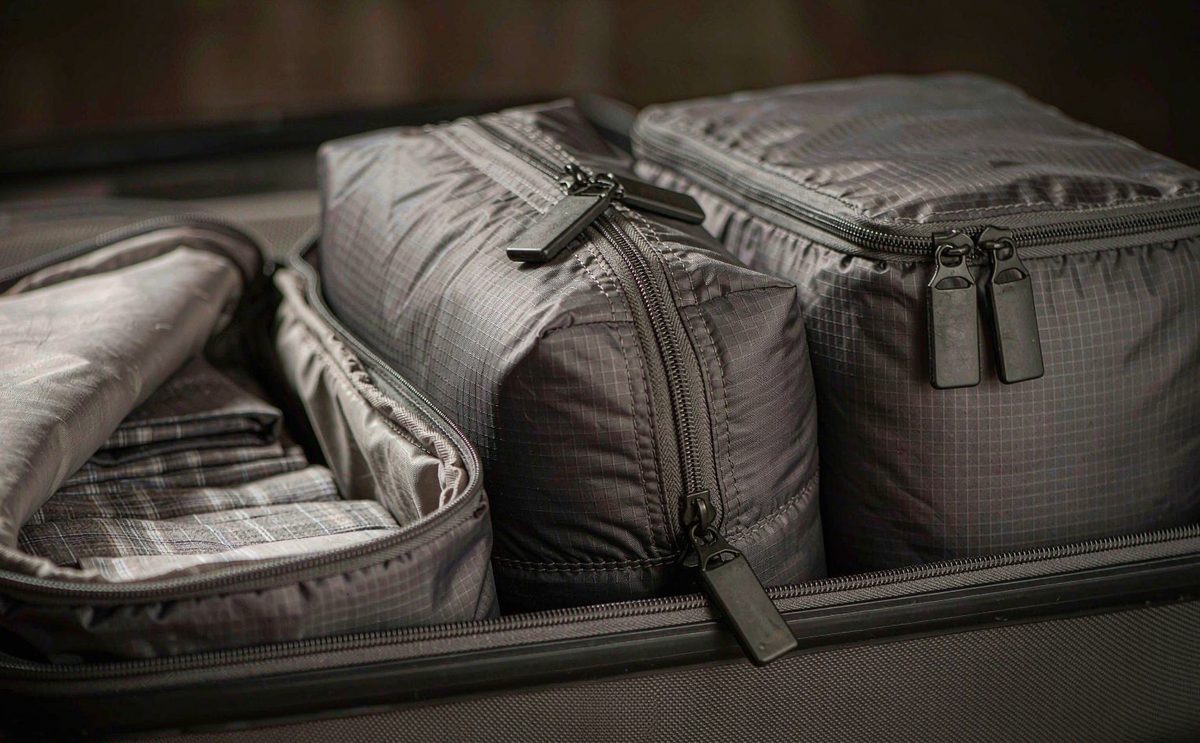
The packing cube set is unusually well suited to that job for three reasons. First, it is genuinely useful and genuinely desirable, so it does not need to be discounted to move. Second, it is cheap relative to the hero bag, which means the add-on price can sit at a healthy multiple of cost without looking greedy to a backer who has just spent 150 dollars on a bag. Third, it is photographable in a way that shows the benefit in one frame, and campaign pages are won and lost on single frames.
The reason it is the cheapest lever rather than merely a good one is that the cube set shares the material programme, the trim programme and the production booking of the hero bag. There is no new tooling, no new compliance route and no separate freight consolidation if the cubes ship nested inside the body or in the same carton as the bag. Our production team prices cube sets inside the same programme as the body for exactly that reason, and the marginal unit cost reflects it. Start from custom travel bags for Kickstarter for the category context before you model the add-on.
Key takeaways on cube set add-ons
- A cube set adds 8-15 per cent to set cost and can lift AOV by 20-40 per cent when priced as an add-on.
- Every cube size is a separate style at 500 pcs per style and per colourway, so a three-cube set is 1,500 pcs.
- Compression cubes and mesh-panel cubes convert better than plain cubes because the benefit is visible in one photograph.
- Sampling runs 6-10 working days and can be booked alongside the hero bag rather than after it.
- Kitting, nesting and pick-pack are the costs that quietly erode the add-on margin; specify them in the RFQ.
- Minimum order quantity
- 500 pcs per style and per colourway
- Three-cube set commitment
- 1,500 pcs in one colourway
- Sampling
- 6-10 working days (12-15 for complex builds)
- Bulk production
- 35-50 days after deposit and approved pre-production sample
- Inspection
- AQL 2.5 to ISO 2859-1
- Trade term
- FOB Xiamen
- Payment
- T/T 30/70
- Production floor
- 4,950 m² SGS-verified, 137 staff, 7 lines, 149 machines
- Monthly capacity
- 200,000 pcs per month
- Campaigns supported
- 20+ crowdfunding campaigns since 2014
What backers actually add at checkout
Backer behaviour at the add-on stage is more predictable than creators expect. Backers add items that solve a problem they can picture, that cost less than a quarter of what they just pledged, and that arrive in the same box as the thing they already bought. A cube set satisfies all three. Items that fail one of those tests tend to stall: a second colourway of the hero bag fails the price test, a standalone tech pouch fails the same-box test if it ships separately, and a care kit fails the picture test because nobody can visualise themselves using it.
Price threshold matters more than absolute price. The general pattern across travel campaigns is that add-ons priced at 15 to 30 per cent of the core pledge convert at 30 to 50 per cent of backers, while add-ons above 40 per cent of the core pledge convert in the low teens. A 149 dollar core reward therefore supports a cube set at 29 to 39 dollars far better than one at 59 dollars, and the difference in total contribution between those two prices is usually in the campaign's favour at the lower figure.
- Same-box delivery: add-ons that ship with the hero reward convert at roughly twice the rate of add-ons perceived as a separate delivery.
- Visible benefit: compression, organisation and shoe separation photograph well; fabric upgrades and coatings do not.
- Price ratio: 15-30 per cent of the core pledge is the band where conversion stays high.
- Completeness framing: a three-cube set presented as a system outsells three cubes offered separately.
- Limited count: a stated cap on add-on stock raises conversion, but only if the cap is real.
One behavioural detail is worth designing for: a meaningful share of backers will take the cube set but not the bag. Those are backers who already own luggage they trust and who were attracted by the campaign's design language. That is the argument for pricing the cube set as a standalone add-on rather than only as a bundle upgrade, and it costs nothing extra to offer, because the cubes are already a style inside the programme.
Pricing an add-on: the three numbers you need
An add-on price should be built from three numbers and not from a competitor's page. The first is the marginal FOB unit cost of the cubes inside the existing programme. The second is the destination cost per unit: the share of ocean or air freight, duty and inland delivery attributable to the add-on. The third is the pick, pack and despatch cost at the fulfilment warehouse. Creators who price from the first number alone routinely underprice by 30 to 50 per cent and discover the gap after the campaign has closed.
The destination cost deserves particular care because it behaves differently depending on how the add-on ships. Nested inside the hero bag, the cube set adds almost no freight, because the bag is the volume and the cubes occupy void space inside it. Shipped as a separate retail-style pack, the cubes add their own carton volume, and both ocean and air freight bill on chargeable weight, the greater of actual and volumetric. That single decision can move the landed cost of the add-on by 20 to 35 per cent.
| Cost element | Low case | High case | Note |
|---|---|---|---|
| Marginal FOB unit cost | 4.20 USD | 7.80 USD | 70D ripstop to 210D, number 3 to number 5 zip |
| Share of ocean freight and duty | 0.90 USD | 2.40 USD | Nested in body versus separate carton |
| Pick, pack and despatch | 1.80 USD | 3.20 USD | One extra scan and one extra bag |
| Total marginal cost | 6.90 USD | 13.40 USD | Before any platform and payment fee |
| Platform and payment fee at 8-10% | 2.30 USD | 3.90 USD | On a 29 to 39 dollar add-on price |
| Suggested add-on price | 29.00 USD | 39.00 USD | 15-30% of the 149 dollar core pledge |
The resulting contribution per add-on unit lands between roughly 19 and 25 dollars in the low case and between 21 and 26 dollars in the high case, which is why the cube set survives even an aggressive cost scenario. The number to watch is not the margin percentage but the absolute contribution per backer, since the campaign's fixed costs are already covered by the core pledge.
MOQ and the add-on trap: every size is a style
The minimum is 500 pcs per style and per colourway, and in the cube category a size is a style. Small, medium and large are three styles and a 1,500 pcs commitment in one colourway. Add a shoe cube and it is four styles and 2,000 pcs. Add a second colourway and the whole thing doubles to 4,000 pcs. This is the constraint that turns an attractive add-on into an inventory risk, and it is the single most common reason a cube set is cut late in planning.
| Configuration | Styles | Total pcs, one colourway | Assessment |
|---|---|---|---|
| Single large cube | 1 | 500 pcs | Lowest risk test of the category |
| Three-cube set | 3 | 1,500 pcs | Standard configuration |
| Four-cube set with shoe cube | 4 | 2,000 pcs | Strong story, needs proven demand |
| Three-cube set, two colourways | 6 | 3,000 pcs | Retail-scale commitment |
| Three-cube set, one colourway, plus re-order option | 3 | 1,500 pcs + option | Recommended structure |
Two structures reduce that exposure. The first is to negotiate the cube set as one style with size variants inside a single 500 pcs commitment, split across the three sizes. That is a commercial negotiation rather than a published rule, and it should be raised during the RFQ rather than after the quotation arrives. The second is to hold a re-order option: book 1,500 pcs for the first wave, agree the re-order price and lead time in writing, and release the second wave only once add-on sales are visible on the campaign dashboard.
The re-order option is the more valuable of the two in practice, because it converts an inventory gamble into a decision made with data. A re-order on an existing style with existing materials and an existing marker typically runs faster than the first production window, and it avoids the worst outcome in this category, which is 1,000 unsold cubes sitting in a warehouse while the campaign is still paying for storage. Our low minimum bag production page sets out how creators structure these split commitments.
Which cube set configuration converts
Configuration is a marketing decision with a manufacturing consequence, and the two should be settled together. The three-cube set of small, medium and large at roughly 3, 6 and 12 litres is the baseline because it maps onto how people actually pack: undergarments and small items, folded garments, and bulkier layers. A four-cube set that adds a shoe cube converts better on outdoor and adventure campaigns and worse on city-travel campaigns, which is an audience signal rather than a universal rule.
- Three-cube set, 3 / 6 / 12 litres: the standard; nests inside a carry-on body and covers the majority of packing needs.
- Four-cube set with a shoe cube: stronger on adventure and family travel; adds one style and one commitment block.
- Two-cube set, 6 / 12 litres: lowest commitment at 1,000 pcs; works where the hero bag is small.
- Compression three-cube set: higher unit cost, materially better conversion because the benefit is visible in one frame.
- Cube set plus laundry pouch: the pouch is the cheapest addition available and raises perceived completeness.
The compression variant deserves a specific note, because it is the configuration most likely to pay for itself. A cube with a second compression zip costs roughly 15 to 30 per cent more per unit than a plain cube and converts significantly better, for the simple reason that a backer can see the volume difference in a photograph. The full specification argument for that variant is set out in our article on compression panels and add-on sales, which covers geometry, fabric and the two-zip architecture.
Costing a cube set line by line
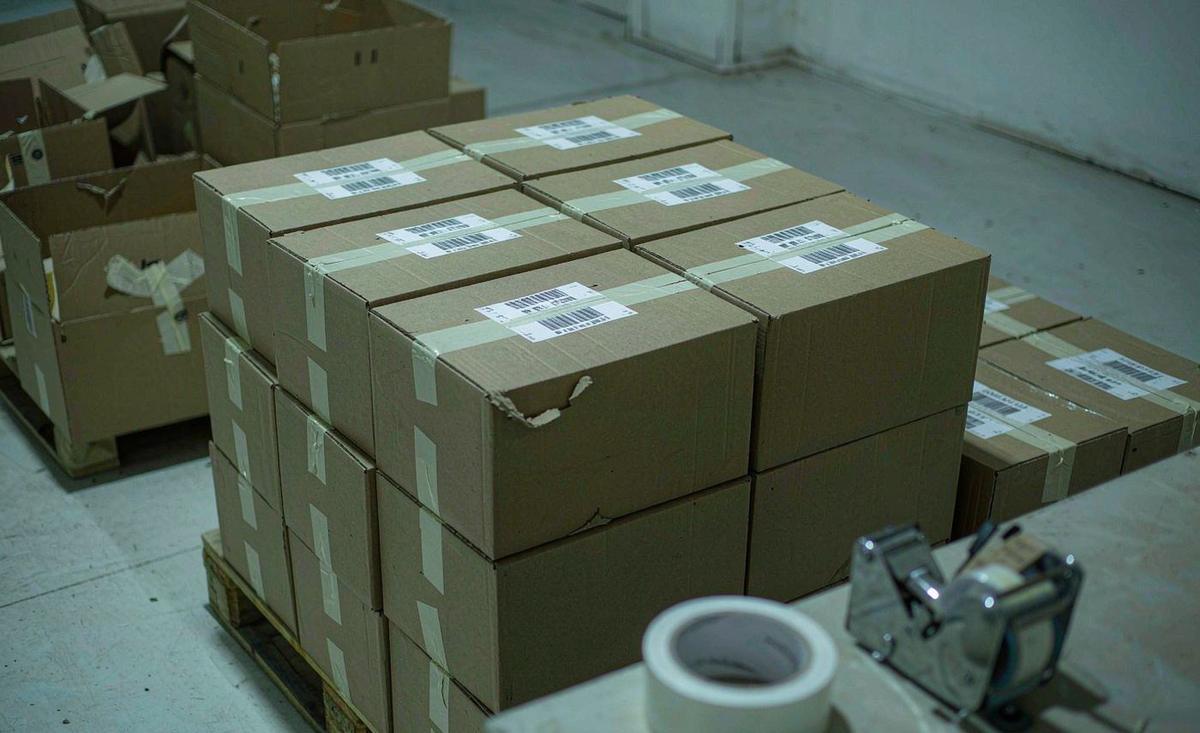
A cube is a small sewn product with a zip, a mesh panel, a webbing pull and a seam finish, and its cost is dominated by material and by sewing minutes rather than by anything structural. That means the two levers a creator actually controls are fabric weight and zip specification. Moving from 70D ripstop to 210D polyester changes the handle, the weight and the compressibility, and it moves unit cost by a meaningful margin in both directions depending on the mill's position at the time of booking.
| Line | Economy specification | Premium specification | Cost effect |
|---|---|---|---|
| Shell fabric | 210D polyester | 70D or 105D ripstop nylon | +10-25% unit cost |
| Mesh panel | Coarse polyester mesh | Fine no-seeum mesh | +4-8% unit cost |
| Zip | Number 3 coil, non-locking | Number 4 coil, auto-lock slider | +8-15% unit cost |
| Puller | Webbing loop | Moulded or branded pull | +3-7% unit cost |
| Seam finish | Overlocked internal seam | Bound or turned internal seam | +6-12% unit cost |
| Compression zip | Not present | Second zip with panel | +15-30% unit cost |
Two of those lines are worth the money and two are not. A fine mesh and a bound internal seam are the two specifications that most change how a cube feels in the hand, and both are cheap relative to their effect on perceived quality. A moulded puller is the least defensible upgrade in the list, because it adds weight and cost for a detail most backers never notice. An auto-lock slider sits in between and is worth specifying on any cube that will be compressed, since a non-locking slider creeps open under load.
The cost line creators forget is the marker. Cubes are cut from roll goods and nesting efficiency varies with the size mix; a set of three sizes cut together can use fabric more efficiently than three sizes cut separately, which is a further argument for booking the set as one production run rather than three. Ask for the fabric consumption figure per set in the quotation so the number is visible rather than buried in a unit price.
Sampling an add-on without delaying the hero reward
The fear with any add-on is that it drags the sampling calendar. It does not have to. Sampling runs 6 to 10 working days for a standard build and 12 to 15 working days for a complex one, and the cube set can be released to the sample line in the same booking as the hero bag. Because the cubes share material and trim with the body, the sample line is not waiting on a separate material purchase, which is the usual cause of delay in multi-style programmes.
- Book the cube sample in the same sampling round as the hero bag and state both completion dates in writing.
- Sample the largest cube first, since it carries the zip, mesh and seam decisions that the other sizes inherit.
- Approve the shell fabric, mesh and zip once, against the largest cube, and apply the decision to all sizes.
- Run a physical fit test: place the full set inside the body, close it, and confirm the body closes without strain.
- Cycle each zip ten times and check for creeping on a non-locking slider under compression.
- Record the nesting sequence physically and write it into the packing specification.
- Return one numbered revision list covering all sizes, each item tied to a component identifier.
- Approve the largest cube as the reference unit for the remaining sizes.
The fit test is the one step that cannot be replaced by arithmetic. The internal dimensions of a body are smaller than its external dimensions by the thickness of the structure and the lining, typically 2 to 4 cm in each direction, and a filled cube bulges by a further 1 to 2 cm. Cube dimensions specified from the external figure of the bag will produce a set that fits on paper and fights the zip in reality, and that is the complaint that dominates travel-set reviews. Further approval discipline is covered on our crowdfunding bag sample prototyping page.
Kitting and pick-pack: what an add-on costs to despatch
Kitting turns three production runs into one retail-ready unit, and it is quoted per unit. It covers folding or nesting the cubes, inserting any printed card, bagging the set, and cartoning. Specified tightly it is a small line; left open it is the difference between an add-on that contributes 20 dollars and one that contributes 12. State the nesting sequence, the bag type, whether an insert card is included and who prints it, the sets per carton and the carton dimensions, and the cost becomes predictable.
On the destination side, the cost of an add-on is the pick, pack and despatch step at the fulfilment warehouse. An add-on shipped inside the hero carton adds a scan and, in most warehouses, a handling fee in the range of 1 to 3 dollars. An add-on shipped as a separate parcel adds a full despatch charge, which on a transatlantic parcel can exceed the manufactured cost of the cubes entirely. The practical rule is simple: an add-on should travel in the same carton as the reward it belongs to, and that should be decided before the freight quotation is requested.
Nesting the cube set inside the hero bag removes its freight volume and its separate despatch charge in one decision. It is the single largest cost lever on this add-on, worth typically 20-35 per cent of the landed unit cost.
There is one exception worth planning for. Backers who take the cube set without the bag need a shippable pack of their own. A cube set that nests inside itself and ships in a simple poly mailer satisfies that case at low cost, and it is worth specifying during the RFQ rather than improvising at the fulfilment centre, where an improvised pack tends to cost more than a planned one. Our crowdfunding rewards fulfilment page covers the destination side of that handover in detail.
Timing the add-on launch inside the campaign
When an add-on appears on the page matters almost as much as what it is. Launching every add-on on day one front-loads revenue but gives backers no reason to return to the page; releasing a cube set at the mid-campaign point gives the campaign a second news event at exactly the moment when the typical funding curve flattens. The pattern that works for most travel campaigns is a core set of add-ons live from day one and one deliberate mid-campaign release.
The mid-campaign release is also the moment when a stretch goal can be tied to the cube set. Announce that the core reward includes the three-cube set once funding passes a stated threshold, and two things happen at once: existing backers raise their pledges to reach the tier that includes the set, and the campaign gains a reason to appear in backers' feeds again. Both effects are strongest when the threshold is close enough to feel reachable, typically 15 to 25 per cent above the current total.
The production consequence of that strategy is that the cube commitment should be booked at the upper estimate before the campaign opens, not after the stretch goal is hit. Materials are purchased against a booking, and a booking made after a stretch goal lands can push the production window out by two to four weeks, which lands directly on the delivery date promised on the campaign page. The safer structure is a booked quantity plus a re-order option, so the upside is captured without the calendar risk.
A worked AOV model for a cube set add-on
The arithmetic is worth writing out, because it is the argument that settles whether the add-on is worth the commitment. Take a campaign with a 149 dollar core reward and 2,000 backers, giving 298,000 dollars of gross pledges and an AOV of 149 dollars. Add a 35 dollar cube set that converts at 35 per cent of backers, and 700 units sell, adding 24,500 dollars. AOV rises to 161 dollars, an increase of 8 per cent on the base pledge figure, before any effect from backers upgrading tiers to obtain the set.
| Conversion | Add-on units | Gross added | New AOV | Contribution after 10 USD cost |
|---|---|---|---|---|
| 20% | 400 units | 14,000 USD | 156 USD | 10,000 USD |
| 35% | 700 units | 24,500 USD | 161 USD | 17,500 USD |
| 50% | 1,000 units | 35,000 USD | 166 USD | 25,000 USD |
| 35% plus 8% tier upgrades | 860 units equiv. | 30,100 USD | 164 USD | 21,500 USD |
Against that, set the commitment. A three-cube set at 1,500 pcs costs roughly 10,000 to 20,000 dollars depending on specification, and at a 35 per cent conversion the campaign sells 700 sets and carries 800 sets of residual stock. That residual is not dead money if the plan accounts for it: a cube set is a sellable retail item, it is the natural upsell for a post-campaign store, and it is the cheapest route into a second campaign. The plan should say where those 800 sets go, written down before the booking is signed.
The alternative structure is the one most campaigns should prefer: book 1,000 sets across three sizes in the first wave by negotiating the split, hold the re-order price and lead time in writing, and release the second wave against live add-on data. That keeps the cash exposure near 7,000 to 13,000 dollars while preserving the ability to capture a 50 per cent conversion if the campaign runs hot.
Specifying the add-on in the RFQ
An add-on is quoted accurately in one exchange when the size list, the material set and the pack instruction are stated explicitly, and in three exchanges when they are not. The two omissions that most often turn an optimistic quotation into a revised one are a missing pack instruction and an unstated size split. Both are cheap to include and expensive to add later.
- Cube specification per size: external dimensions with tolerance, capacity, shell fabric, mesh, zip size and slider type, seam finish, handle.
- Quantity per size and per colourway, with the 500 pcs per style and colourway minimum understood and any split negotiation raised explicitly.
- Pack instruction: nesting sequence, bag type, insert card, sets per carton, carton dimensions, and whether the set ships inside the hero bag.
- Target delivery month and destination market, so freight, duty and compliance are quoted on the right basis.
- Inspection standard: AQL 2.5 to ISO 2859-1, with a sub-lot per size and a piece-count check at the packing station.
- Re-order option: unit price, lead time and validity period for a second wave released against campaign data.
Send that pack to request a quotation with your target delivery month and you will receive a per-size unit cost, a sampling estimate and a booked 35 to 50 day production window. Payment runs T/T 30/70, with the 30 per cent deposit released on written approval of the pre-production sample and the 70 per cent balance due after a passed inspection and before cargo release at FOB Xiamen. Our production team works from 4,950 m² of SGS-verified floor with 137 staff across 7 lines and 149 machines, running 200,000 pcs per month, and has supported 20+ crowdfunding campaigns since 2014.
Price your cube set add-on before the campaign opens
Send us the size list, the material set and your pack instruction. As your campaign bag specialist we will return a per-size unit cost, a sampling plan and a booked production window, with a re-order option held open for the mid-campaign upside.
Frequently Asked Questions
What is the minimum order quantity for a packing cube set add-on?
The minimum is 500 pcs per style and per colourway, and each cube size counts as a style. A three-cube set is three styles and 1,500 pcs in one colourway, and a four-cube set with a shoe cube is 2,000 pcs. Raise a split of one 500 pcs commitment across the sizes during the RFQ.
How much does a three-cube set cost to make?
Indicative marginal FOB unit cost for a three-cube set runs from roughly 4 to 8 dollars in an economy specification to 9 to 14 dollars with ripstop fabric, fine mesh, auto-lock sliders and bound seams. A compression zip adds a further 15 to 30 per cent per cube.
How should I price a cube set add-on?
Build the price from three numbers: marginal FOB cost, the share of freight and duty, and pick, pack and despatch at the warehouse. Add 8 to 10 per cent for platform and payment fees. On a 149 dollar core reward that produces an add-on price of 29 to 39 dollars.
Does a cube set add-on really lift average order value?
Yes, and it is usually the cheapest lever available. At 35 per cent conversion on a 2,000 backer campaign with a 35 dollar add-on, gross pledges rise by 24,500 dollars and AOV moves from 149 to 161 dollars, against a marginal cost near 10 dollars per unit.
How long does sampling take for a cube set?
Sampling runs 6 to 10 working days for a standard build and 12 to 15 working days for a complex one. Book the cube sample in the same round as the hero bag so the two share a material purchase, and approve the largest cube as the reference unit for the other sizes.
Should the cube set ship inside the hero bag?
Yes, wherever the campaign allows it. Nesting the set inside the body removes its freight volume and its separate despatch charge at once, typically saving 20 to 35 per cent of the landed unit cost. Backers taking cubes without a bag need a simple self-nesting mailer pack.
What fabric and zip should a packing cube use?
A 70D or 105D ripstop nylon is the standard for a lightweight cube, with a fine no-seeum mesh panel and a number 3 or number 4 coil zip. Specify an auto-lock slider on any cube that will be compressed, because a non-locking slider creeps open under load.
How do I stop cubes arriving in the wrong count?
Specify a piece-count check at the packing station and a carton weight tolerance check at loading. Both are cheap controls. A carton with two cubes instead of three is the most common complaint in this category and it is a packing failure, not a sewing failure.
Should I offer the cube set bundled or as a separate add-on?
Both. Bundle it into the upper tiers to lift perceived value and offer it separately to capture the backers who already own a bag they trust. Price the standalone add-on during the original RFQ so it can be switched on the moment the campaign funds.
When should the add-on appear on the campaign page?
Launch a core set of add-ons on day one and hold one deliberate mid-campaign release. Tying the cube set to a stretch goal 15 to 25 per cent above the current total creates a second news event and pulls existing backers to upgrade tiers.
What inspection standard applies to a cube set order?
AQL 2.5 to ISO 2859-1, sized under general inspection level II, with a sub-lot per cube size reported in a single document. Inspect the kitting outcome as well as the pieces: correct count, correct nesting, correct insert and correct carton marking.
What happens to cube stock that does not sell as an add-on?
Plan for it before the booking is signed. A cube set is a sellable retail item and the natural upsell for a post-campaign store. At 35 per cent conversion on a 1,500 pcs booking roughly 800 sets remain, and those should have a named destination in the plan.
People Also Ask
Are packing cube sets worth adding to a Kickstarter travel reward?
Yes. They add 8 to 15 per cent to set cost while supporting an add-on price that lifts AOV by 20 to 40 per cent. The risk is not the unit cost, it is the 500 pcs per style minimum and the kitting labour, both of which are manageable if specified.
How many cubes should a starter set contain?
Three: small, medium and large at roughly 3, 6 and 12 litres. That covers undergarments, folded garments and bulkier layers, nests inside a carry-on body, and keeps the set at three styles under the 500 pcs per style minimum.
What makes a packing cube feel cheap to a backer?
Raw internal seams, a coarse mesh that snags on garment labels, and a non-locking zip slider that creeps open under compression. Bound seams, fine mesh and an auto-lock slider are the three specifications that prevent that impression.
Can I book cubes later if the add-on sells well?
Yes, and it is the recommended structure. Agree the re-order unit price, lead time and validity period in writing during the original RFQ, then release a second wave against live campaign data rather than gambling on a single large booking.
Do packing cubes need their own compliance labelling?
Any piece a backer might use or resell separately should carry its own identification. Where the set is permanently bundled, one labelling set on the outer piece plus material identification on each cube is usually sufficient, but confirm against the destination market.
Does a compression cube justify its higher unit cost?
Usually yes. A second compression zip adds 15 to 30 per cent to the cube unit cost and converts materially better on the campaign page, because a backer can see the volume difference in a single photograph in a way a plain cube cannot show.
How much freight does a cube set add to a shipment?
Almost nothing if nested inside the hero bag, because the bag is the volume and the cubes fill void space. Shipped as a separate retail pack it adds its own carton volume, and both ocean and air freight bill on chargeable weight.