Kickstarter Travel Backpack vs Carry-On Duffle: Which Should You Fund?
Fund the travel backpack if your backers move under their own power across cities and airports; fund the carry-on duffle if they pack heavy, travel in groups and value a wide opening over a carrying system. The backpack typically costs 15 to 30 per cent more per unit, samples at the longer end of the 6 to 10 working day window, and carries a higher defect surface. The duffle is cheaper, packs flat for freight and gives a cleaner 360 degree branding surface. Both are 500 pcs per style and colourway, 35 to 50 days in bulk, AQL 2.5 to ISO 2859-1.
- The decision is about your backer, not about the bag
- Carry-on compliance: what both formats must prove
- Unit cost at 500 pcs and at 2,000 pcs
- Sampling complexity and calendar risk
- Freight volume and landed cost
- Branding surface and campaign photography
- Durability and defect profile by format
- Reward tier and add-on implications
- Backer demographic signals that actually predict
- A scoring matrix for the decision
- RFQ differences between the two formats
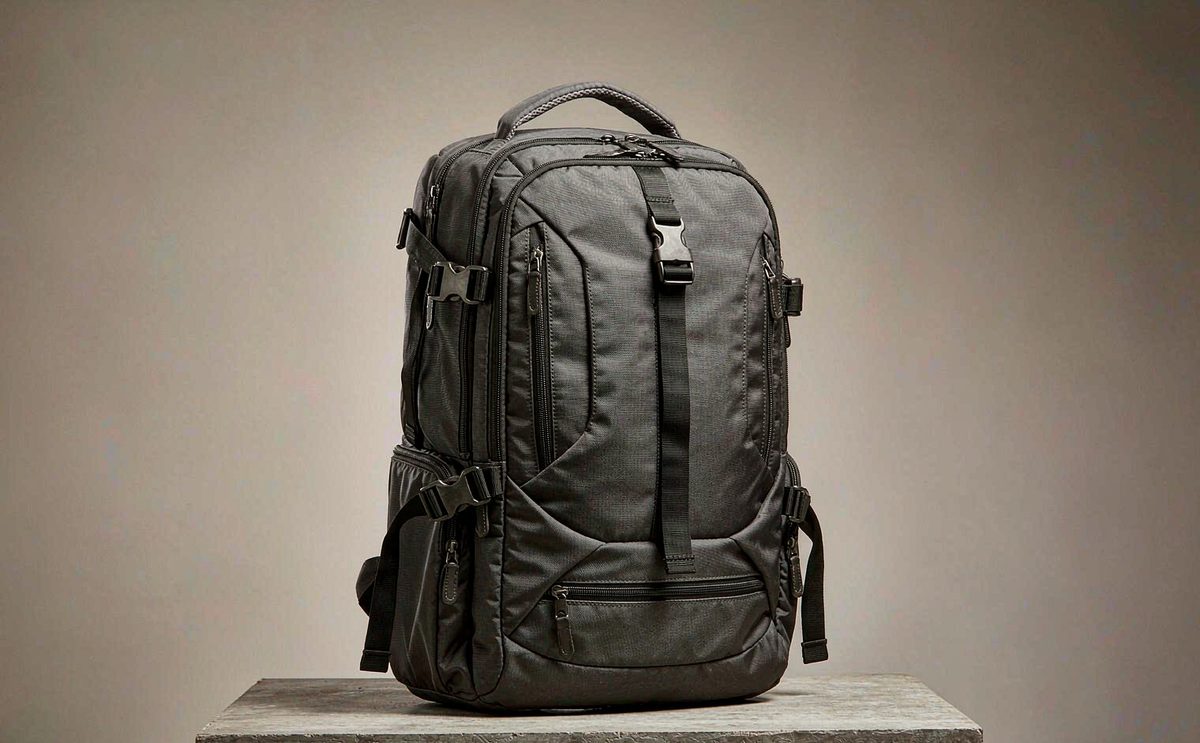
The decision is about your backer, not about the bag
Creators frame this as a product question and it is really an audience question. A travel backpack and a carry-on duffle hold similar volumes, ride in the same overhead bin and photograph equally well. What separates them is how the backer moves. A backpack is the right answer for a backer who walks between hostels, stations and airports with the bag on their back for an hour at a time. A duffle is the right answer for a backer who lifts the bag from a car boot to a hotel room and packs it at a table.
That distinction sounds soft until it is translated into specification, at which point it becomes hard numbers. A backpack needs a harness: shoulder straps with foam, a back panel, a sternum strap, and usually a load lifter and a frame sheet. Each of those is a component, a sewing operation and an inspection point. A duffle needs a shoulder strap, two grab handles and a base board. The component count difference is roughly two to one, and the component count is what drives unit cost, sample length and defect exposure in that order.
The second consequence is psychological and it affects conversion. A backpack reads as a piece of equipment and attracts a backer who identifies as a traveller; a duffle reads as luggage and attracts a backer who identifies as a holidaymaker. Campaigns built around hiking, remote work and long-haul independent travel convert better on the backpack. Campaigns built around gym-to-weekend use, family travel and short breaks convert better on the duffle. Look at your existing audience before you look at the sample rack. Our custom travel bags for Kickstarter pillar page carries the wider format comparison for creators still deciding, and our custom backpacks for Kickstarter page goes deeper on the harness formats the backpack route opens up.
Key takeaways on format selection
- A backpack carries roughly twice the component count of a duffle, which drives cost, sample length and defect exposure.
- Backpacks cost 15-30 per cent more per unit at the same volume and material level.
- Duffles pack flat and ship denser, typically 10-18 per cent less chargeable weight per unit.
- A duffle offers a continuous 360 degree branding surface; a backpack offers a small front panel.
- Backpacks suit independent long-haul travel audiences; duffles suit short-break and group travel audiences.
- Minimum order quantity
- 500 pcs per style and per colourway
- Sampling
- 6-10 working days (12-15 for complex builds)
- Bulk production
- 35-50 days after deposit and approved pre-production sample
- Inspection
- AQL 2.5 to ISO 2859-1
- Trade term
- FOB Xiamen
- Payment
- T/T 30/70
- Production floor
- 4,950 m² SGS-verified, 137 staff, 7 lines, 149 machines
- Monthly capacity
- 200,000 pcs per month
- Campaigns supported
- 20+ crowdfunding campaigns since 2014
Carry-on compliance: what both formats must prove
Whichever format you choose, the carry-on claim is the most legally and reputationally exposed sentence on the campaign page. Airlines publish their own cabin baggage allowances and they differ, sometimes by several centimetres, and a bag that fits one sizer will be gate-checked on another. The widely used industry reference point is the IATA cabin baggage suggestion of a bag around 55 x 40 x 20 cm including handles and wheels. Campaign copy that says designed to fit most major carry-on sizers is defensible; copy that says guaranteed carry-on compliant is not.
The two formats fail this test in different ways. A backpack fails because of depth: a loaded backpack with a structured harness bulges away from the back, and a bag specced at 20 cm empty can measure 26 cm full. A duffle fails because of width and because of soft walls: a duffle at the dimensional limit will compress into a sizer, but a duffle that is genuinely full will not. The practical control is the same for both, and it should be written into the sampling protocol: measure the sample at three points, empty and then packed to capacity, before the external dimensions are locked.
- Measure empty and packed: a soft bag grows by 2-5 cm in depth when filled, and that growth is what fails the sizer.
- Include protrusions: handles, harness, wheels and any external pocket count toward the airline figure.
- Test against a physical sizer: a cardboard or plastic sizer at the sample stage costs almost nothing and prevents a page claim that cannot survive contact.
- Write the honest sentence: designed to fit most major carry-on sizers, with the measured dimensions stated on the page.
- State the litre figure separately: capacity and external dimensions are different claims and should be separated in the copy.
One format-specific note matters for the backpack: a harness that is comfortable is a harness that protrudes. The most comfortable travel backpacks use a padded, spaced back panel, and that panel is 2 to 3 cm of depth that a flat-packed duffle does not have. If the campaign's headline is a 40 litre carry-on backpack, the arithmetic should be checked against a physical sizer at sample stage, because 40 litres inside 55 x 40 x 20 cm is possible but leaves very little room for structure.
Unit cost at 500 pcs and at 2,000 pcs
At the same material level and the same volume, a travel backpack costs more than a carry-on duffle. The gap comes from the harness, the back panel, the frame sheet and the additional sewing operations, and it typically lands between 15 and 30 per cent. That is a wide band because it depends on how much harness the design carries: a travel backpack with a removable harness and a structured back panel sits at the top of the band, while a convertible backpack with webbing straps and no frame sits near the bottom.
| Cost element | Travel backpack | Carry-on duffle | Delta |
|---|---|---|---|
| Shell and lining material | Baseline | -8 to -12% | Duffle has fewer panels |
| Harness, back panel, frame sheet | 18-28% of unit cost | Not present | Largest single delta |
| Straps, handles and hardware | 10-15% of unit cost | 5-8% of unit cost | Duffle needs fewer components |
| Zip and opening | 8-14% of unit cost | 8-14% of unit cost | Comparable |
| Sewing minutes | Longer | Shorter | Drives labour line |
| Indicative FOB at 500 pcs | Higher | 15-30% lower | Per style, per colourway |
| Indicative FOB at 2,000 pcs | Lower than at 500 | Lower than at 500 | Volume amortises markers and setup |
Volume behaves the same way for both. Moving from 500 pcs to 2,000 pcs in a single style and colourway amortises marker setup, cutting-room setup and line setup across four times the units, and it improves material purchasing power. The practical effect is a lower unit cost, and the effect is larger on the backpack than on the duffle, because the backpack has more setup to amortise. A creator deciding between a single 2,000 pcs run and four 500 pcs colourways should know that the colourway route costs more per unit and buys more marketing surface.
There is a second-order cost that belongs in this comparison and is usually missed: returns. A harness that does not fit is the most common reason a travel backpack is returned, because shoulder width and torso length vary and a single harness cannot suit everyone. A duffle has no fit surface at all. If the campaign's projections assume a 3 per cent return rate and the backpack delivers 8 per cent, the 15 to 30 per cent unit cost advantage of the duffle widens considerably in the landed accounts.
Sampling complexity and calendar risk
Sampling runs 6 to 10 working days for a standard build and 12 to 15 working days for a complex one, and the two formats sit at different ends of that window. A duffle is a standard build: panels, a zip, a base board, a strap and two handles, with no fit-critical sub-assembly. A travel backpack is frequently a complex build, because the harness and back panel are fit-critical and because the first sample almost always needs a harness revision.
The revision pattern is what actually consumes the calendar. On a duffle, the first sample usually produces cosmetic and dimensional revisions: a panel size, a pocket depth, a stitch line. Those are one-round fixes. On a backpack, the first sample usually produces a harness revision: strap curvature, foam density, load-lifter position or sternum strap height. Those are also one-round fixes in principle, but they are harder to specify in writing and they more often run to a second round.
- Decide early whether the harness is fixed or removable; a removable harness adds components and a sample revision risk.
- Sample the backpack at the top of the size range if multiple sizes are planned, since the harness scales last.
- Wear the loaded sample for a minimum of 30 minutes with 8 to 10 kg inside before approving the harness.
- Measure the duffle sample empty and packed and record both figures in the revision list.
- Cycle every zip ten times and check the track alignment under load on both formats.
- Return one numbered revision list, each item tied to a pack clause and a component identifier.
- Approve the pre-production sample in writing before the 30 per cent deposit is released.
The calendar consequence is concrete. If the campaign promises a delivery date built on a 35 to 50 day bulk window after a single sampling round, a backpack that runs to a second harness round pushes that date out by 6 to 10 working days. Build the contingency into the public date rather than into the private plan. Our crowdfunding bag sample prototyping page sets out the approval discipline in more detail, including how to structure a revision list.
Freight volume and landed cost
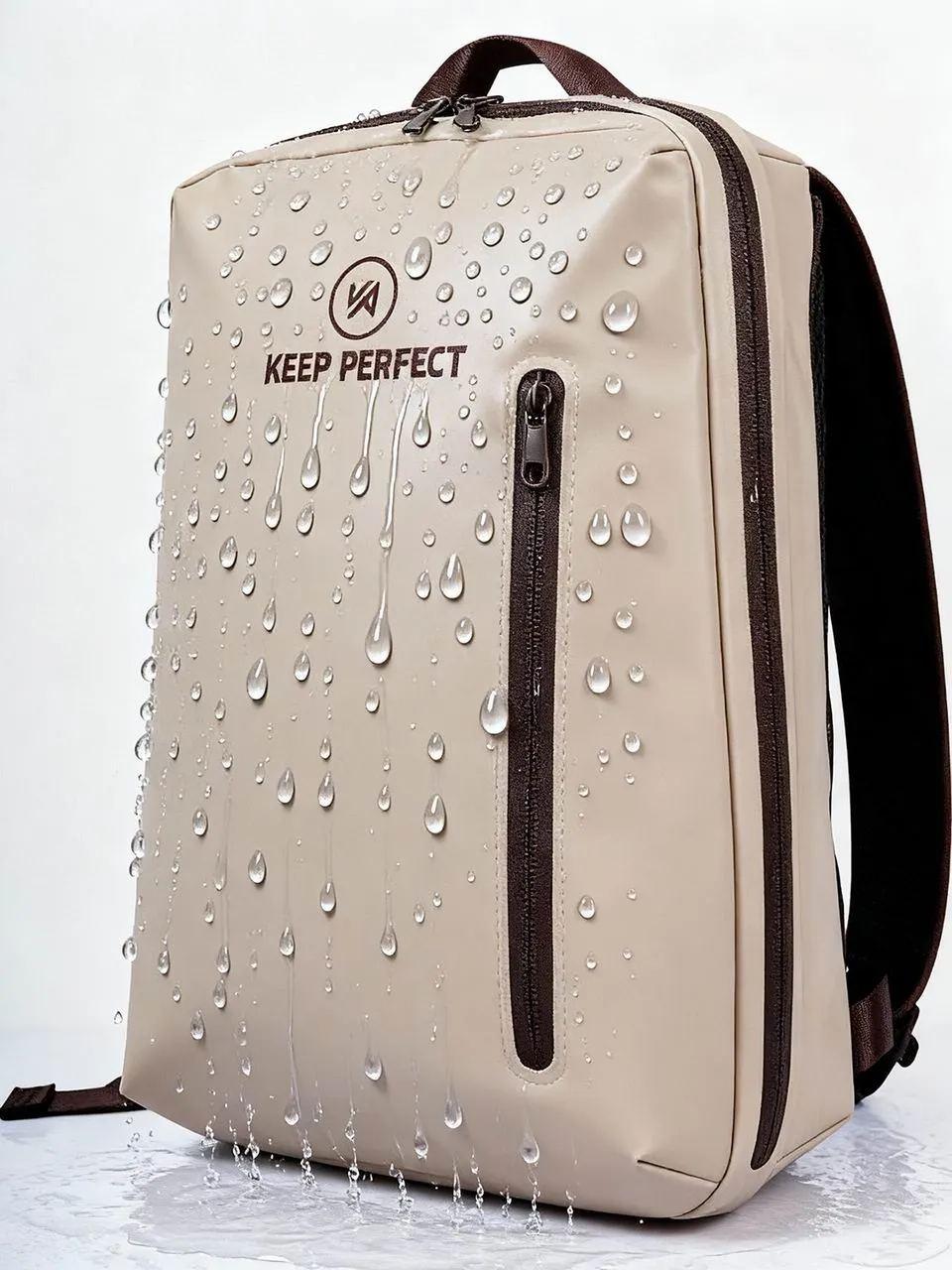
Freight is where the duffle wins, and it wins on geometry rather than on weight. An empty duffle collapses and packs flat, so a carton of duffles uses its volume efficiently; an empty backpack with a structured harness and back panel does not collapse, so a carton of backpacks carries air. Both ocean and air freight bill on chargeable weight, the greater of actual and volumetric, which means the air inside a backpack carton is billed at the same rate as the bag.
The typical effect is a 10 to 18 per cent lower chargeable weight per unit for the duffle at the same litre capacity. On a 2,000 unit shipment that is a meaningful line: at a freight rate of a few dollars per chargeable kilogram, the difference across the shipment runs to four figures. It is not a reason to choose the duffle on its own, but it is a number that belongs in the comparison, particularly for campaigns shipping air freight to hit a promised delivery date.
| Factor | Travel backpack | Carry-on duffle | Effect |
|---|---|---|---|
| Collapsibility | Low, harness and panel hold shape | High, packs flat | Carton efficiency |
| Chargeable weight per unit | Baseline | -10 to -18% | Volumetric billing |
| Units per 40 ft container | Lower | Higher | Fewer containers per programme |
| Air freight viability | Expensive per unit | More viable | Affects date promises |
| Carton damage risk | Lower, structure protects | Higher, soft walls crush | Packing specification matters |
The duffle's advantage here is partly offset by a packing risk: a soft bag crushed in a container arrives looking tired. The control is a packing specification that states units per carton, carton strength and whether each unit is bagged, plus a drop and compression expectation for the carton itself. Under FOB Xiamen the goods are delivered on board at Xiamen and risk transfers there; ocean freight, insurance, clearance and inland delivery to your fulfilment point are arranged on your side. Budget 18 to 30 days port to port to the US West Coast and 28 to 38 days to Northern Europe by sea.
Branding surface and campaign photography
The two formats offer completely different branding geometry, and this is the one area where the duffle is unambiguously better. A duffle is a cylinder with a continuous surface: a mark placed on the body is visible from any angle the bag is viewed from, and it can be sized generously without looking odd. A backpack has a front panel, which is a defined and usually small area, and a harness that occupies the surface a logo would otherwise want. A backpack brand mark is effectively a small badge; a duffle brand mark can be a design element.
- Duffle end panel: the most photographed surface, visible when the bag is carried and when it stands.
- Duffle body band: a continuous wrap; suits a woven label, a rubber patch or a heat transfer repeated at two points.
- Duffle strap webbing: a jacquard or printed webbing repeats the mark across the carrying surface.
- Backpack front panel: small, defined; suits an embroidery or a small silicone patch.
- Backpack shoulder strap: a woven label on one strap is visible in use but rarely in product photography.
Photography flips the comparison partially back. A backpack photographs as a piece of equipment and conveys technical credibility: harness detail shots, back panel detail shots and load-out shots all read as evidence of engineering. A duffle photographs as an object and depends more on colour, material and styling. Campaigns with a strong technical story get more from the backpack's detail shots; campaigns with a strong design story get more from the duffle's clean surfaces. Our article on duffel logo placement across 360 degree surfaces covers the duffle side of this in detail.
Durability and defect profile by format
Defects follow components, and the backpack has more of them. The most frequent defects on a travel backpack order are harness attachment failures, strap webbing that is not bar-tacked at the load point, back panel foam that creases, and zip track misalignment where the panel is curved. The most frequent defects on a duffle order are grab handle attachment failures, base board distortion, and zip failure at the corner where the opening turns. Neither list is worse in severity, but the backpack list is longer.
Inspection at AQL 2.5 to ISO 2859-1 treats both formats the same way, but the defect class list should be written differently. For a backpack, the list should call out bar-tack placement and stitch count at every harness attachment, foam position inside the back panel, and strap symmetry measured left to right. For a duffle, the list should call out handle attachment reinforcement, base board flatness, and the corner transition of the main zip. Both lists should be agreed before inspection day, because a defect class agreed afterwards is a defect class that will be disputed.
| Area | Travel backpack | Carry-on duffle |
|---|---|---|
| Harness and straps | Highest defect concentration | Not applicable beyond the shoulder strap |
| Handles | One grab handle, moderate risk | Two grab handles, highest risk area |
| Zips | Curved track alignment risk | Corner transition risk |
| Structure | Back panel foam creasing | Base board distortion |
| Branding | Front panel placement accuracy | Wrap placement and repeat spacing |
| Typical first-round fixes | Harness geometry, strap curvature | Panel size, pocket depth, handle length |
For creators who want a longer service life claim to sit behind the campaign, the specification work is described in our article on durable adventure bag builds, which covers abrasion figures, reinforcement detail and the load testing regime. Much of that applies to either format; the point is that durability is bought with specification, not claimed with adjectives.
Reward tier and add-on implications
The two formats support different ladders. A backpack supports a feature ladder: entry tier without a harness pocket, core tier with the full harness, top tier with a hip belt or a removable daypack. A duffle supports a size ladder: 30 litre, 45 litre and 60 litre variants, or a bundle ladder where the top tier adds cubes and a shoe compartment. Size ladders are easier for a backer to evaluate and harder to produce, because each size is a style at 500 pcs per style and colourway.
Add-ons behave differently too. A backpack takes a hip belt, a rain cover and a daypack as natural add-ons, and each is a style with its own minimum. A duffle takes packing cubes, a shoe bag and a laundry pouch, and those are cheaper and more universally desirable. If the campaign's economics depend on add-on revenue, the duffle is the friendlier platform, because the cube set is the highest-converting add-on in the travel category and it fits a duffle better than a backpack.
Put plainly: a backpack campaign must make its money on the reward itself, because its add-on list is technical and niche. A duffle campaign can make its money on the bundle, because its add-on list is broad and cheap. Our article on packing cube sets as an AOV lever models that arithmetic in full, including the commitment matrix and the worked AOV model.
Backer demographic signals that actually predict
Three signals predict which format will convert better for a given audience. The first is the audience's existing luggage: an audience that already owns technical backpacks will buy another backpack, and an audience that owns soft holdalls will buy a duffle. The second is trip length: trips under five nights favour the duffle, because packing volume matters more than carrying comfort. The third is terrain: cobbles, stairs and stations favour the backpack; lifts, cars and smooth floors favour the duffle.
There is a fourth signal that is weaker than creators expect and should be treated with caution: stated preference in a survey. Backers reliably overstate how much they will walk with a bag. Where a campaign has an existing list, the better question is what they did on their last trip rather than what they intend to do on the next one. Where a campaign has no list, look at the comment sections of comparable campaigns, which is where real usage reporting appears.
A practical way to settle it without guessing is to run the decision as a campaign-page poll before the launch, with the two formats photographed at the same scale and the same colourway. A poll on a warm list of a few thousand addresses will produce a usable split, and the split is usually decisive enough to end the debate. What the poll will not tell you is cost, sample risk or freight, which is what the rest of this article supplies.
A scoring matrix for the decision
The cleanest way to decide is to score both formats against the criteria that actually move a campaign and weight them. Cost, sample risk, freight and branding surface are objective and can be scored from a quotation. Audience fit, photography and add-on potential depend on the campaign's own context and should be scored by whoever knows the audience best. A weighted score does not remove judgement, but it stops the decision being made on the sample that looked best on the day.
| Criterion | Weight | Backpack score (1-5) | Duffle score (1-5) |
|---|---|---|---|
| Unit cost efficiency | 20% | 3 | 5 |
| Sampling speed and certainty | 15% | 3 | 5 |
| Freight and landed cost | 10% | 3 | 5 |
| Branding surface | 10% | 2 | 5 |
| Audience carrying comfort | 20% | 5 | 3 |
| Add-on revenue potential | 15% | 3 | 5 |
| Photography and technical story | 10% | 5 | 3 |
Run with equal audience weighting, the matrix usually lands close, which is the honest answer: for many campaigns either format would work. The tie-breakers that decide it in practice are sample risk and add-on potential, and both favour the duffle. Choose the backpack when audience carrying comfort is genuinely decisive, which means the campaign's audience walks long distances with the bag and says so in their own words.
One structural option deserves mention because it avoids the choice entirely: a convertible design with a stowable harness. It samples at the complex end of the window at 12 to 15 working days, costs more than either pure format, and gives the campaign both stories on one page. It is the right answer when the audience is genuinely split and the budget supports one complex build rather than two standard ones.
RFQ differences between the two formats
An RFQ for a travel backpack needs information an RFQ for a duffle does not, and submitting the wrong one produces a quotation that will be revised. The backpack pack must describe the harness in the same level of detail as the body: strap foam density and width, back panel construction, frame sheet material, load lifter position, sternum strap adjustability, and whether any of it is removable. The duffle pack must describe the base structure and the handle reinforcement, which is where duffle failures concentrate.
- External dimensions with tolerance, measured empty and packed, plus the litre figure as a separate claim.
- Material set: shell, lining, foam, webbing, hardware references, and the colourway list.
- Backpack only: harness specification, foam density and width, back panel construction, frame sheet, load lifter and sternum strap.
- Duffle only: base board specification, grab handle reinforcement and bar-tack placement, strap attachment method.
- Quantity per style and colourway, with the 500 pcs per style and colourway minimum understood.
- Packing specification: units per carton, bagging, carton strength, and whether cubes nest inside the body.
- Target delivery month and destination market, so freight, duty and compliance are quoted correctly.
- Inspection standard: AQL 2.5 to ISO 2859-1, with a format-specific defect class list agreed in advance.
Send that pack to request a quotation with your target delivery month and you will receive a unit cost per format, a sampling estimate and a booked 35 to 50 day production window. Payment runs T/T 30/70, with the 30 per cent deposit released on written approval of the pre-production sample and the 70 per cent balance due after a passed inspection and before cargo release at FOB Xiamen. Our production team works from 4,950 m² of SGS-verified floor with 137 staff across 7 lines and 149 machines, running 200,000 pcs per month, and has supported 20+ crowdfunding campaigns since 2014.
Quote both formats before you commit the page
Send us both packs and we will return a comparative unit cost, a sampling plan for each and a booked production window. As your campaign bag specialist we will also flag which format carries the shorter sample risk.
Frequently Asked Questions
Which format costs less to produce for a crowdfunding campaign?
The carry-on duffle, typically by 15 to 30 per cent at the same volume and material level. The gap comes from the backpack harness, back panel and frame sheet, which together account for roughly 18 to 28 per cent of a backpack unit cost and have no equivalent on a duffle.
What is the minimum order quantity for either format?
500 pcs per style and per colourway for both. A single backpack or duffle in one colourway is a 500 pcs commitment. A size ladder of three duffle sizes is three styles and 1,500 pcs, and a second colourway doubles any of those figures.
How long does sampling take for a travel backpack versus a duffle?
Both quote at 6 to 10 working days for a standard build and 12 to 15 for a complex one. In practice a duffle usually completes in the standard window and a travel backpack often runs to the complex window, because the harness is fit-critical and frequently needs a revision round.
Which format is cheaper to ship?
The duffle, by roughly 10 to 18 per cent on chargeable weight per unit at the same litre capacity. A duffle collapses and packs flat; a backpack with a structured harness and back panel does not, and freight bills on the greater of actual and volumetric weight.
Which format gives a better branding surface?
The duffle, unambiguously. It is a cylinder with a continuous surface visible from any angle, supporting end panel marks, a body band and jacquard webbing. A backpack offers a small defined front panel and a harness that occupies the surface a logo would otherwise want.
Can either format promise airline carry-on compliance?
Only with careful wording. Airlines publish differing allowances, and the widely used industry reference is the IATA cabin baggage suggestion of roughly 55 x 40 x 20 cm. Honest copy says designed to fit most major carry-on sizers, with measured dimensions stated separately from capacity.
Which format has more production defects?
The backpack, because defects follow components and it has roughly twice as many. Harness attachment, bar-tack placement, back panel foam creasing and curved zip track alignment are the concentration areas. On a duffle the concentration is grab handle attachment and base board distortion.
Which format supports better add-on revenue?
The duffle. Its add-on list of packing cubes, a shoe bag and a laundry pouch is broad, cheap and universally desirable, while a backpack add-on list of hip belts and rain covers is technical and niche. A cube set can lift AOV by 20 to 40 per cent.
Should I offer multiple sizes or one size in two colourways?
One size in two colourways is usually the safer first campaign. Each size is a separate style at 500 pcs, so three sizes is a 1,500 pcs commitment, and sizes are harder to forecast than colourways. Colourways also give the campaign page more visual variety per unit of risk.
Is a convertible backpack-duffle worth the extra cost?
It is when the audience is genuinely split. A convertible with a stowable harness samples at the complex end of the window at 12 to 15 working days and costs more than either pure format, but it gives one campaign both stories and avoids an inventory split across two styles.
How should the pre-production sample be approved?
In writing, against a numbered revision list, after a physical test rather than a visual one. For a backpack wear the loaded sample for 30 minutes with 8 to 10 kg inside. For a duffle measure it empty and packed, and cycle the main zip ten times under load.
When are payments due on a travel bag order?
Payment is T/T 30/70. The 30 per cent deposit falls due on written approval of the pre-production sample and releases materials and the production slot. The 70 per cent balance falls due after a passed pre-shipment inspection at AQL 2.5 to ISO 2859-1 and before cargo release at FOB Xiamen.
People Also Ask
Should a crowdfunding travel reward be a backpack or a duffle?
Choose the backpack if your backers walk long distances with the bag and identify as travellers. Choose the duffle if they pack heavy, travel in groups and value a wide opening. The duffle is 15 to 30 per cent cheaper and samples faster.
How much more does a travel backpack cost to make?
Typically 15 to 30 per cent more per unit at the same volume and material level. The difference is the harness, back panel and frame sheet, which together represent roughly 18 to 28 per cent of a backpack unit cost.
Which travel bag format ships cheapest?
The duffle, by 10 to 18 per cent on chargeable weight per unit. It collapses and packs flat, while a structured backpack ships air. Both ocean and air freight bill on the greater of actual and volumetric weight.
Is a duffle easier to brand than a backpack?
Yes. A duffle is a cylinder with a continuous 360 degree surface, so a mark is visible from any angle and can be sized generously. A backpack has a small front panel and a harness occupying much of the rest.
Which format is riskier in sampling?
The travel backpack. Its harness is fit-critical and usually needs a revision round, pushing sampling from the standard 6 to 10 working days toward the complex 12 to 15 day window. A duffle usually completes in the standard window.
Can I offer both formats in one campaign?
Yes, but it doubles the commitment. Each format is a style at 500 pcs per style and colourway, so two formats is 1,000 pcs minimum. A convertible design with a stowable harness is often the cheaper way to serve a split audience.
Do both formats need the same compliance testing?
Broadly yes, because obligations attach to the material set rather than to the shape. REACH in the EU, Prop 65 in California, CPSIA where an item is marketed to children, and EU GPSR for general product safety all apply to either format.