How to Launch a Bag on Kickstarter: The 10-Step Checklist
Launching a bag on Kickstarter is a supply-chain project wearing a marketing costume. Ten things must be true before you press launch: a defined job for the bag, evidence of demand, a written spec, a landed cost model with platform fees inside it, a real production sample built in 6-10 working days, photography of that sample, a funding goal derived from cost, a page with a defensible delivery date, a tested pre-launch audience, and a production slot booked. Skip the sampling step or the cost model and the campaign will fund and then fail. This checklist gives each step a number and a date.
- Step 1: Define the one job your bag does better
- Step 2: Size the demand before you spend
- Step 3: Write a spec, not a sketch
- Step 4: Build the cost model before the tiers
- Step 5: Sample on the production clock
- Step 6: Photograph the real sample, not the render
- Step 7: Set the funding goal from cost
- Step 8: Build the page and the delivery promise
- Step 9: Pre-launch audience and the 48-hour test
- Step 10: Book production and fulfilment
- The final gate: one week before launch
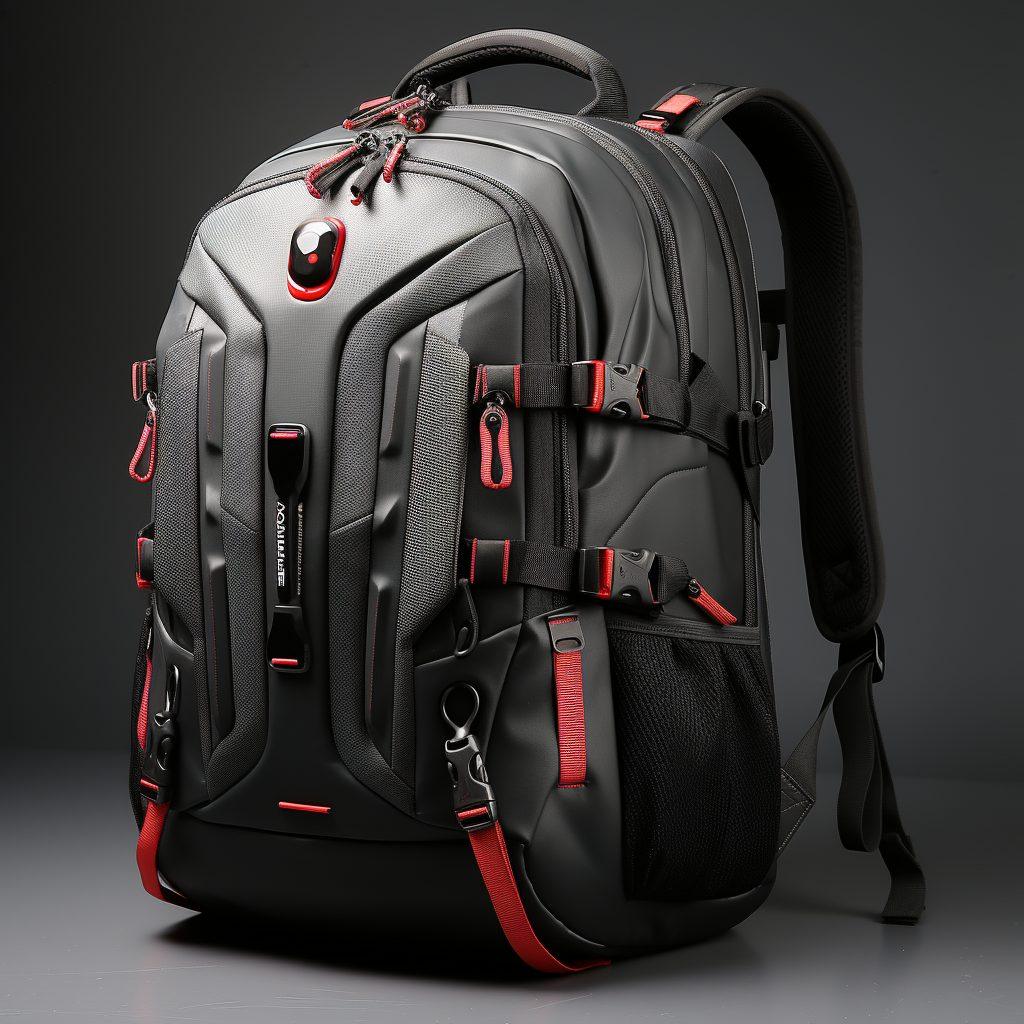
Most bag campaigns that fail do not fail on launch day. They fail in the eight weeks before it, in decisions that were never written down, and they surface three months later as a missed delivery date. The ten steps below are ordered the way the work actually has to happen, not the way a campaign page reads. Each one has a number attached, because a checklist without numbers is a wish list. Our production team has supported 20+ crowdfunding campaigns and the pattern is consistent: the creators who arrive with a written spec and a cost model ship on time, and the ones who arrive with a render do not.
Step 1: Define the one job your bag does better
A bag that does six things moderately well has no reason to exist in a market where a backer can buy a good bag tomorrow. The campaigns that convert have a single job stated in one sentence, and the sentence is usually about a specific object in a specific situation: a 20-litre pack that carries a full camera body with two lenses and a 16-inch laptop without a separate insert, or a duffel with a ventilated shoe compartment that fits a size 46 shoe. That sentence becomes your headline, your spec and your quality target all at once.
Write the sentence, then write the three things you are willing to give up to achieve it. A bag optimised for camera protection is heavier than a commuter pack; a bag with a rigid shoe compartment does not compress flat. Naming the trade-offs does two things: it stops the spec from drifting during sampling, and it gives your page honest copy, which backers reward. Vague differentiation is the most common cause of a campaign that funds at 40%. The backer could not say what made yours different, so they waited.
Test the sentence on ten people who are not your friends. Ask each one to repeat back what the bag does. If six of them repeat it accurately, the positioning is clear. If they describe three different bags, the sentence is not doing its job and no amount of video production will fix it. This test costs one evening and it is the cheapest research you will ever run. Our programme coordinator asks for this sentence before the first costing conversation, because it tells us which features are load-bearing and which are decoration.
Step 2: Size the demand before you spend
Demand sizing for a bag campaign has three inputs that you can gather in a fortnight. Comparable campaigns: find ten bags in your category that launched in the last 24 months, note their funding multiple, backer count, tier prices and delivery performance, and treat the set as a range rather than a target. Search and community signal: monthly search volume for your category terms, and the size of the subreddits, forums and Facebook groups where your buyer actually talks. Warm list: the number of people who will give you an email address before you have a product.
The number that matters is not total addressable market, it is conversion of warm list to backer. A realistic pre-launch list converts at 5-15% into backers, depending on price and how long you have been talking to them. If your tier price is 120 US dollars and your list is 800 people, expect somewhere between 40 and 120 backers from that list. Everything else has to come from platform discovery and press, which are far less controllable. Working backwards from backer count gives you a unit volume, and unit volume is what determines whether your programme clears a 500 pcs per style and colourway minimum.
If the arithmetic says you will not clear 500 units, do not launch yet. You have three honest options: raise the price and reduce the required backer count, grow the list for another two months, or choose a product where one style covers more colourways. What you should not do is launch and hope, because a run below the minimum either gets cancelled or gets priced at a level your tier cannot support. The full research method is set out in our market research guide for bag campaigns, and the category-level demand patterns are covered in the crowdfunding bag guide.
Step 3: Write a spec, not a sketch
A sketch is a picture. A spec is a document someone can cost, sample and inspect against. It needs dimensions in centimetres with tolerances, a fabric call-out with denier and coating, a hardware list with finish and size, stitch density, thread type, closure types, interior layout, logo method and placement, colour references, packing method and a target weight. Two pages is enough for most bags. What makes it valuable is that every line is measurable, so that a sample can be approved or rejected against it rather than against a feeling.
The most important line in the spec is the tolerance. A bag specified at 45 cm tall with no tolerance will generate an argument about a bag that is 44.2 cm. Give ±1 cm on soft panels and ±0.3 cm on rigid ones, and say where the dimension is measured from. The second most important line is the logo method, because embroidery, heat transfer, woven label, silicone patch and debossed leather patch have different minimum order implications, different artwork requirements and different durability. Choose it in the spec, not in the sample approval email.
There is a discipline here that pays twice. Anything in the spec can be costed before tooling, and anything not in the spec will be decided under time pressure later, usually badly. Our team returns a costing against a spec in days rather than weeks, because the questions are answerable. Against a render, the same costing takes three rounds of clarification. If you have not written one before, the sampling and prototyping pillar shows the structure we work from, the campaign bag sourcing hub keeps the volume and timing anchors in one place, and the production partner guide explains how a spec turns into a quotation.
| Spec line | What to write | Why it matters |
|---|---|---|
| External dimensions | 45 x 30 x 18 cm, +/ - 1 cm | Removes approval arguments later |
| Fabric and coating | 600D rPET polyester, PU coating, denier stated | Determines cost, hand feel and water resistance |
| Hardware | YKK #5 reversed coil, matte black finish | Affects price, lead time and inspection criteria |
| Stitch density | 8 stitches per inch, bonded nylon thread | Structural durability and returns rate |
| Logo method | Woven label 40 x 20 mm, or silicone patch | Different MOQ and artwork requirements |
| Packing method | Flat packed, one per polybag, 20 per carton | Drives freight volume and 3PL handling |
Step 4: Build the cost model before the tiers
Tier prices are the output of a cost model, not the input. Build the model from the bottom: unit price at your expected volume, then tooling and sampling one-offs, then platform fee and payment processing, then freight and duty to your 3PL, then pick-pack and postage per backer, then a contingency for returns and replacements. Convert all of it to a landed cost per unit, and only then decide what the tier will be. If you set the tier first and cost later, you will discover the margin in month three, which is four months too late.
Two lines are habitually missed. Platform and payment fees are typically around 5% plus 3-5% of funds raised, which on a 100-dollar tier is 8-10 dollars before anything else is paid. Postage is not a rounding error: a 1.4 kg parcel shipped internationally can cost more than the difference between two tier prices. Model postage per destination zone with real 3PL quotes rather than a single global average, because a campaign with 60% US backers and one with 60% EU backers have materially different economics.
The model also decides your payment timing. Our standard terms are T/T 30/70: 30% deposit when the production slot is booked, 70% before shipment, against FOB Xiamen delivery. Platform payouts arrive on their own schedule, so a campaign that funds in month one can still be short of working capital in month two when the deposit is due. Put the deposit date into the cash flow line, not just the total. The full worked model is in our campaign budget breakdown.
Step 5: Sample on the production clock
Sampling is where a paper spec becomes a physical object, and the clock is measured in working days, not calendar days. Our standard window is 6-10 working days, which stretches to 12-15 working days for complex builds with moulded parts, welded seams, multi-panel print or unusual hardware. Budget for two rounds. Round one answers whether the design works; round two answers whether it can be produced consistently. A creator who plans one round and discovers a problem at the end of it has lost three weeks, not one.
The mistake that costs the most time is sending a sample change request as prose. Write changes as a revised spec with the changed lines marked, plus annotated photographs with arrows. A paragraph describing a strap that feels wrong generates a sample that is wrong in a new way. A marked drawing and a photograph generate the bag you meant. Our team returns round two against the marked spec, and the approval then becomes a document you can hold the production run to.
Approve the sample against the spec, not against excitement. Check the dimension list, the stitch density, the zipper run, the logo placement measured from a stated seam, the interior layout, and the packed flat method. Sign off in writing with the revision number. That signed sample becomes the golden reference for the production run and the benchmark the AQL 2.5 inspection compares against. Without it, an inspection finding becomes a debate about intent rather than a measurement.
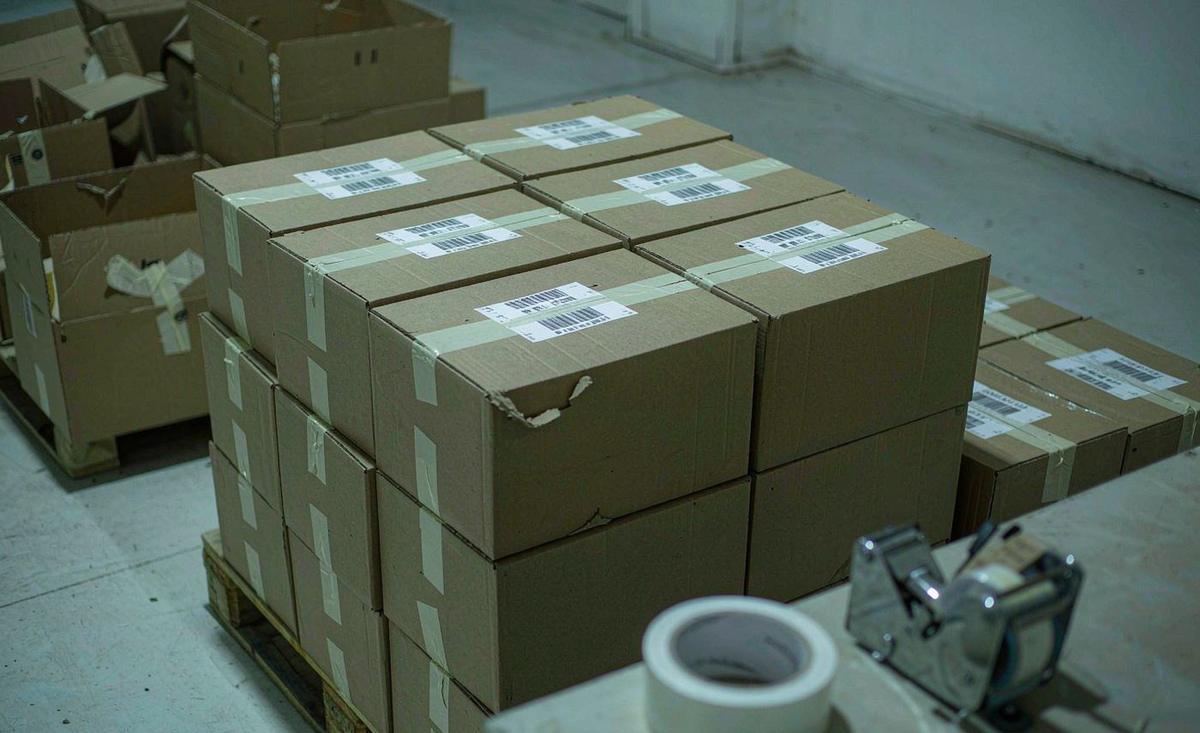
Step 6: Photograph the real sample, not the render
Backers fund objects, and they can tell the difference between a render and a photograph in about two seconds. Shoot the production sample, in the colourways you are actually offering, with a person who resembles your buyer. Include a scale reference: a 15-inch laptop going into the sleeve, a water bottle in the side pocket, a shoe in the shoe compartment. These are the frames that answer the objection a backer types into the comments, and a campaign page that answers objections in images converts better than one that answers them in a FAQ.
Shoot three sets. Hero frames for the top of the page and the video thumbnail, in good light, clean background. Detail frames of hardware, stitching, lining and logo, because these are what a skeptical backer zooms into. Context frames of the bag in use, on a shoulder, on a train, under a desk. Budget a half-day studio session and get 200 frames; you will use 30. Do not skip the detail set: it is the cheapest credibility you can buy, and it compensates for being an unknown brand.
One more practical note: shoot the actual packaging too. Backers care about how the reward arrives, and a photograph of the polybag, the carton and any insert card reduces unboxing complaints and returns. If you are using a printed dust bag or a recycled carton, shoot it. It also forces you to decide the packing method early, which is a line in the spec and a driver of freight volume.
Step 7: Set the funding goal from cost
A funding goal set from cost behaves differently from one set from ambition. Work it out: landed cost per unit multiplied by the minimum viable quantity, plus fixed costs, plus fees, plus a contingency. If that number is 38,000 US dollars, your goal is not 25,000 and it is not 100,000. Setting it below cost means funding successfully and delivering at a loss or not at all. Setting it far above means failing visibly, which burns the audience you spent months building and makes a relaunch harder.
There is a second constraint: Kickstarter is all-or-nothing, so the goal is also a psychological threshold. Campaigns in the bag category tend to cluster, and a goal that reads as plausible for the category converts better than one that reads as a stretch. The way to reconcile the two is to set the goal at the honest number and then make the tier ladder do the work, because average pledge, not goal size, is what determines how many backers you need. A five-tier ladder with a strong middle can lift average pledge by 20-40%.
Finally, separate the goal from the cash you need. The goal is what the platform counts; the cash you need includes the deposit timing, the tooling payment and the pre-launch marketing spend. Model both. Our reward tier structure guide covers the ladder mechanics, and the pricing strategy article shows the formula that keeps a 20% margin after fees.
Step 8: Build the page and the delivery promise
The page has four jobs: state the one sentence, show the object, price it clearly, and state a delivery date you can hit. The delivery date is the one founders get wrong most often, because it is usually produced by optimism rather than by arithmetic. Build it backwards: 35-50 days of mass production, plus a post-campaign lock of three to five weeks for surveys and purchase orders, plus freight and customs of three to seven weeks, plus fulfilment of two to five weeks. That is the real number, and quoting a month earlier than it is the fastest route to an angry comment section.
Structure the page so that a skimmer gets everything. A 60-90 second video above the fold. A tier table that fits on one screen with the contents spelled out as a list per tier. A dimensions block in centimetres and inches. A materials block naming the fabric denier and the hardware brand. A timeline graphic with months, not seasons. Then the long content: the design story, the sampling process, the production plan and the risks. Backers forgive a long page; they do not forgive a missing dimension.
State the risks explicitly. Every campaign that ships physical goods carries production and freight risk, and backers who have funded before know it. A short paragraph saying what could slip, what you will do about it and how you will communicate is worth more than a promise of certainty. It also protects you later: if a slip happens, you have already told people how you will behave, and the update writes itself.
Step 9: Pre-launch audience and the 48-hour test
Pre-launch work is not a countdown graphic, it is a list with a conversion rate. Build the list with a landing page and one traffic source you can repeat, then a second. Paid social, a newsletter swap with an adjacent creator, a Reddit post that is genuinely useful, and coverage from one relevant publication are the four sources that reliably produce a bag-campaign list. Track cost per email and the source of every sign-up, because the source predicts conversion better than the size does.
Then run the 48-hour test. Send your list the tier prices and the delivery month 48 hours before launch and watch the replies. You are looking for three signals: which tier people ask about, what objection appears most often, and whether anyone asks a question you cannot answer on the page. Fix the page in those 48 hours. This is not a soft launch, it is a dress rehearsal with your most interested readers, and it catches the pricing error that would otherwise cost you the first 72 hours of momentum.
Set expectations for launch day too. Platform discovery rewards velocity in the first 48 hours, so your list needs to be told when to arrive, not just that something is coming. Plan the email for launch morning, the second email for the 24-hour mark, and a third for the final 72 hours. A campaign that funds 30% in day one has a materially different outcome from one that funds 8%, because the platform's own ranking and the press coverage both follow momentum.
Step 10: Book production and fulfilment
The last step happens before launch, and it is the one most creators postpone until after funding. Get a written production quotation against your spec, with the sampling window, the mass production window, the MOQ, the inspection standard and the payment terms stated. Get a 3PL quotation for receipt, pick-pack and postage to your top three destination zones. Both should be in hand before you press launch, because both affect the numbers on your page, and because a funded campaign with no booked slot loses weeks it cannot recover.
Book the slot conditionally if you can. Production capacity is not infinitely elastic, and a programme that starts in the peak season faces longer lead times than the published 35-50 days. A conditional booking that converts on funding costs little and protects the delivery date you just promised. Ask what the slot looks like if funding comes in at 150% instead of 100%, because a campaign that overshoots needs a bigger fabric buy and possibly a second production line.
Line up the inspection too. Our programmes inspect to AQL 2.5 to ISO 2859-1, and the inspection happens before shipment, not after arrival. Decide in advance what happens to a failed lot: rework, partial shipment or remake. That decision belongs in the production agreement, not in a panic email three months later. For the shipping side of the plan, the rewards fulfilment pillar covers 3PL selection and zone pricing in detail.
Ask one more question before you sign: what happens when a lot fails inspection. A written answer covering rework, partial shipment and remake tells you more about how the programme will behave under pressure than any quotation figure. Put it in the agreement alongside the inspection standard and the packing method, so the decision is already made if it is ever needed.
The final gate: one week before launch
One week out, run the gate. The spec is signed and dated. The sample is approved in writing with a revision number. The landed cost model exists in a spreadsheet with fees and postage inside it. The funding goal is derived from that model. The page states a delivery month built from production plus freight plus fulfilment. The photography is of the real sample. The pre-launch list has been told the date and time. The production quotation and the 3PL quotation are in hand. If any of these is false, move the launch date.
- Spec signed and dated, with tolerances and logo method fixed
- Sample approved in writing with a revision number, photographed from every angle
- Landed cost model complete, including platform fees, duty and per-zone postage
- Funding goal derived from cost, not from a competitor's number
- Delivery month built backwards from 35-50 days production plus freight and fulfilment
- Pre-launch list told the launch date, with a 48-hour test already run
- Production and 3PL quotations in hand, with a conditional slot agreed
Moving a launch date by two weeks is cheap. Moving a delivery date after 800 people have funded is expensive, and it is the difference between a campaign that builds a brand and one that ends it. If the gate fails, fix the specific item and relaunch the plan, not the hope. When the gate passes, send us the spec and the target delivery month through the quote and enquiry page and our programme coordinator will confirm the sampling window, the production slot and the inspection plan against your dates.
Send us your spec and launch date, and we will confirm sampling, production slot and inspection against the delivery month on your page.
Frequently Asked Questions
How long before launch should I start sampling my bag?
Start sampling eight to twelve weeks before launch. Our sampling window is 6-10 working days per round, or 12-15 working days for complex builds, and most programmes need two rounds. Add courier time in both directions and a week for photography. Starting eight weeks out gives you room for a second round without compressing the page build. Starting three weeks out means the photographs on your page will be of the first sample, which is rarely the bag that gets produced.
What minimum order quantity applies to a first campaign bag?
Plan around 500 pcs per style and per colourway. That is the level at which fabric is bought as a dye lot rather than a cut lot and hardware as a production package, so the unit price becomes defensible in a pledge tier. It also establishes a specification that can be re-run after the campaign. If your backer arithmetic lands below 500, raise the price, narrow the colourway count, or grow the list before launching.
How do I set a Kickstarter funding goal for a bag?
Multiply landed cost per unit by your minimum viable quantity, then add fixed costs, platform and payment fees of roughly 5% plus 3-5%, and a contingency of 5-10%. That total is your goal. Do not set it below cost to make the number look achievable, because an all-or-nothing campaign that funds below cost delivers at a loss. Also model cash separately, because a T/T 30/70 deposit can be due before the platform payout clears.
Should I put a render or a real sample photograph on the campaign page?
Use the real production sample. Backers recognise renders quickly, and a render with no photograph reads as an unbuilt product, which is the single biggest conversion killer in the bag category. Shoot hero frames, detail frames of hardware and stitching, and context frames in use. Include scale references such as a 15-inch laptop in the sleeve, because those frames answer the objections that otherwise sit in the comments unanswered.
How many tiers should a bag campaign have?
Five is a workable number for a bag: an early bird single unit, a standard single unit, a two-unit or bundle tier, a colourway or accessory tier, and a premium tier. Five gives an anchor at the top and a low-friction entry at the bottom without forcing backers to compare nine options. The middle tier should carry most of the volume, and its price should be set so that the step up to the bundle feels like better value per unit.
What delivery date should I promise backers?
Build it backwards. Allow a post-campaign lock of three to five weeks for surveys and purchase orders, 35-50 days of mass production, three to seven weeks of freight and customs, and two to five weeks of fulfilment. Quote the month, not a specific day, and add a buffer. Campaigns that promise a specific date in a specific week are the ones that end up writing apology updates.
Can I launch a bag campaign with only a sketch and no sample?
You can, and it is the most common reason campaigns fund and then fail. A sketch cannot be costed accurately, cannot be photographed, and cannot be used as a golden reference for inspection. Without a signed-off sample there is no objective standard for the production run, so any defect becomes an argument about intent. Build at least one physical sample before the page goes live, and preferably two.
How much should I budget for pre-launch marketing?
There is no fixed percentage, but model it as cost per email rather than as a lump. Track what a sign-up costs on each channel and multiply by the list size you need. If your tier price is 120 US dollars and warm-list conversion runs 5-15%, then 1,000 backers needs a list in the range of 7,000 to 20,000 people. Work out what that costs on your channels before you commit to a launch date.
Do I need a 3PL lined up before the campaign launches?
Yes. Postage is one of the largest lines in a bag campaign budget and it varies by destination zone, so a 3PL quote changes your landed cost and therefore your tier prices. Arranging it after funding also costs you weeks of receipt and processing time. Get quotes for receipt, pick-pack and postage to your top three zones before launch, and ask about battery handling if your reward contains electronics.
What should be in the bag specification document?
Dimensions with tolerances, fabric with denier and coating, hardware with size and finish, stitch density, thread type, closure types, interior layout, logo method and placement, colour references, packing method and target weight. Two pages is enough. Every line must be measurable so a sample can be approved or rejected against it. Tolerances and logo method are the two lines most often omitted and most often argued about later.
How do platform fees affect my bag pricing?
Assume roughly 5% in platform fees plus 3-5% in payment processing on total funds raised. On a 100 US dollar tier that is 8-10 dollars before fabric, freight or postage. Build it into the landed cost model rather than subtracting it at the end, because pricing that ignores fees looks profitable on a spreadsheet and loses money in practice. Add a contingency of 5-10% for returns, replacements and currency movement.
What happens if my campaign funds far above target?
Plan for it before launch. A campaign at 200% needs a larger fabric buy, possibly a second production line and a longer freight plan, and the delivery date you promised may not hold at double the volume. Ask your production partner what a 150% and a 200% outcome does to the schedule, and write stretch goals that add value without adding lead time, such as a colourway using existing materials rather than a new moulded part.
People Also Ask
How early should I start preparing a Kickstarter bag launch?
Start eight to twelve weeks before launch, so two sampling rounds of 6-10 working days and a photography session fit without compressing the page build.
What is the minimum order for a campaign bag?
500 pcs per style and per colourway. Below that, unit price rises and the specification cannot be re-run cheaply for a post-campaign re-order.
Do I need a physical sample before launching?
Yes. A sample can be costed, photographed and used as the golden reference for AQL 2.5 inspection. A sketch can do none of those things.
How do I calculate my funding goal?
Landed cost per unit times minimum viable quantity, plus fixed costs, plus about 8-10% in fees, plus a 5-10% contingency.
How many reward tiers work best for bags?
Five. An early bird, a standard single, a bundle, a colourway or accessory tier, and a premium anchor at the top.
Should the page show a render or a photo?
A photograph of the real production sample, with detail frames and scale references such as a laptop in the sleeve.
When should I book production?
Before launch. Get a written quotation and a conditional slot, because a funded campaign with no booked slot loses weeks it cannot recover.
What delivery month should I promise?
Build it backwards from 35-50 days of production plus three to seven weeks of freight and two to five weeks of fulfilment, then quote the month.