In-Line vs Final Inspection for Bags: What Is the Difference
In-line inspection happens while a bag order is still being made, typically when a tenth to a third of units are finished, while final random inspection happens when the lot is complete and packed, normally using AQL 2.5 to ISO 2859-1. They answer different questions. The in-line check tells you whether to let production continue, and the final check tells you whether to release the balance payment. Neither substitutes for the other, and a first crowdfunding order usually benefits from both. This article compares their timing, sample basis, limitations and cost, and shows how to schedule them inside a 35 to 50 day production window without adding days to the calendar.
- The four inspection moments in a bag order
- What an in-line check actually does
- What a final random inspection actually does
- The timing arithmetic inside the production window
- What each type can and cannot catch
- Sample basis and AQL application differ
- Cost, man-days and what you actually buy
- Choosing a mix by campaign size and risk
- Writing inspection requirements into the order
- When the two inspections disagree
- Special cases: first orders, re-orders and colourway splits
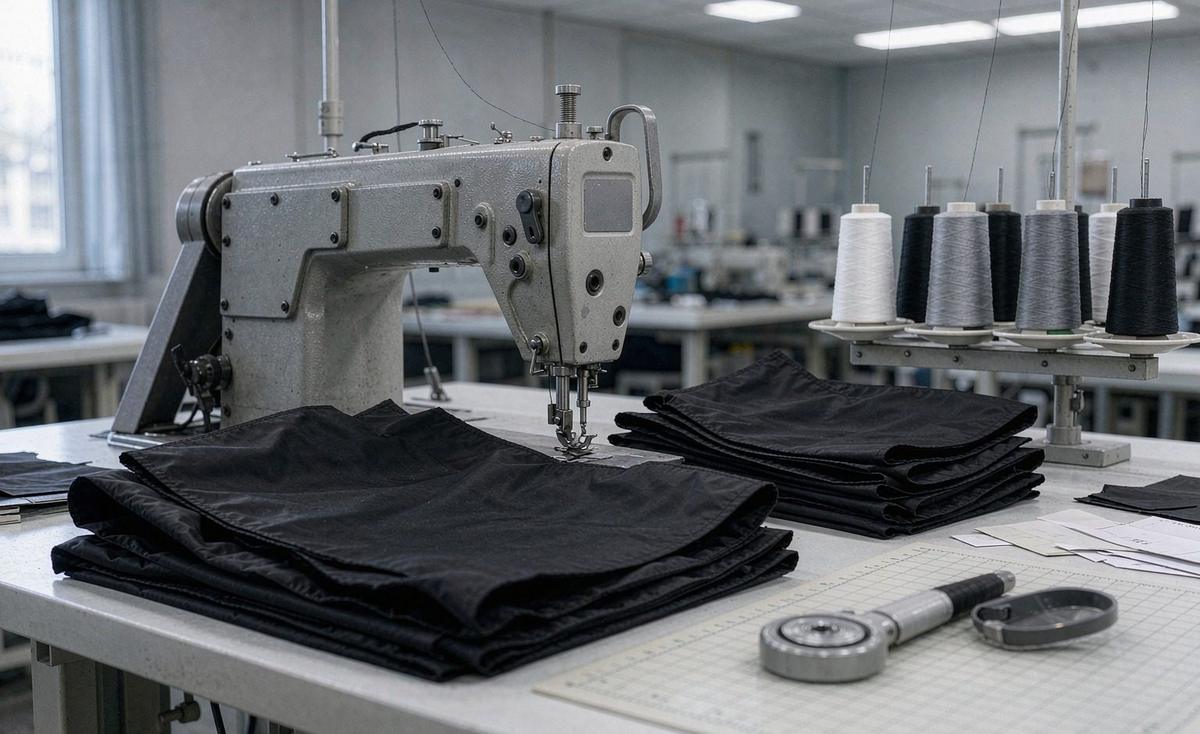
Ask most creators whether their order will be inspected and the answer is yes. Ask which inspection and at what point and the answer becomes vague, which is exactly the gap this article closes. In-line inspection attends while the order is being made and asks whether production should continue. Final random inspection attends when everything is finished and packed and asks whether the lot should ship. They use different evidence, they fail in different ways, and each is blind to what the other sees clearly. Choosing between them is rarely the right question; choosing the right mix for your calendar, your budget and your backers is. The wider framework sits in our Bag QC and Compliance programme.
The four inspection moments in a bag order
A bag order offers four moments at which somebody external can look. Understanding all four makes it obvious why relying on one leaves exposure, because each moment sees a different state of the product and permits a different remedy.
- First-piece or pilot check, before cutting begins in earnest, comparing the first units off the line against the approved sample and tech pack.
- In-line or during-production check, once a proportion of units are finished and some are still in process, allowing correction before the rest of the run repeats the same mistake.
- Final random inspection, held when the lot is complete and largely packed, drawing units at random against an agreed sampling plan.
- Container loading check, verifying carton count, condition and loading sequence at the point goods enter the container.
Each step is cheaper than the one after it, in the sense that problems found early cost less to fix. A first-piece error costs a re-cut; the same error found at packing costs sorting; found after loading, it costs replacement plus freight. This gradient is the whole argument for doing more than one check, and it is why our production team runs internal first-piece verification before any external booking.
Not every programme needs all four. A simple re-order of a design already proven across three runs needs less attention than a first campaign for a construction nobody has made before. The useful habit is deciding deliberately rather than defaulting into whatever was offered in the quotation.
Note where responsibility sits at each moment. First-piece and line-side verification belong to whoever is making the goods, which is why our own team performs them as part of the programme rather than as a service item. The random final check and the loading check are better performed by someone whose only interest is the observation, which is why we recommend booking them independently even where you trust everybody involved.
What an in-line check actually does
An in-line check, sometimes called a during-production inspection, attends partway through manufacturing. Typical triggers used across the industry are around 10 to 30 percent of the order finished, and the visit examines finished units already produced plus units in progress on the line. Its purpose is diagnosis: finding issues early enough that the remaining majority of the order is made correctly.
Because it sees the work in progress, it can observe things later checks never show. Stitch density being set on a machine, fabric being cut from a nested marker, lining being substituted before anybody noticed - all of these exist only during production, and all of them affect the bulk of the order if left unchallenged. This is the unique value of an in-line visit and no amount of final sampling recovers it.
It also carries a remedy that later checks do not. Correcting something at 20 percent complete means the other 80 percent may still be made right, which converts a potential lot-wide failure into a limited rework. That is why, in our own files, in-line attendance is most valuable on constructions with new tooling, new operators or a design being scaled for the first time.
Its limitation follows from timing. An in-line check cannot tell you how the final 70 percent turned out, cannot verify packing, and cannot evidence carton quantities. Creators sometimes treat a clean in-line visit as though it cleared the lot, then release the balance early and discover packing problems nobody had looked at. Pair it with a final visit rather than substituting one for the other.
What a final random inspection actually does
A final random inspection, commonly called a pre-shipment inspection, attends when the order is complete and largely packed. The usual threshold cited is at least 80 percent of the lot finished and packed, with some providers asking for full completion. Its purpose is release: giving the buyer enough evidence to authorise the balance payment and agree the goods may go.
Because the lot is complete, this is the only visit that can speak to packing quality, carton counts, labelling, shipper marks and weights. Those are precisely the attributes that determine whether your fulfilment partner receives an orderly shipment, which is why this visit is not optional even where in-line attendance was thorough.
Its limitation is equally clear. Everything is already made, so any finding can only be corrected by sorting, repair or remake rather than by prevention. Where a structural fault exists in a design that has already run to completion, the cheapest remedy may be nothing less than replacement production, which costs another 35 to 50 days plus whatever freight slot it displaces.
The phrase random in the name matters. Units are selected by chance from cartons chosen by chance, which is what gives the plan its statistical meaning. Any visit where somebody else selects which units to show has quietly converted a sampling inspection into a demonstration, and the evidence value collapses even if the paperwork looks identical.
One more difference deserves stating plainly: the final visit is the only one that can be read as a decision. Its counts map directly onto acceptance numbers you agreed in advance, which is what lets you either release payment or withhold it without argument. Everything found earlier is diagnostic and requires interpretation, and interpretation is exactly what you want out of the way when a balance payment is due.
The timing arithmetic inside the production window
Treat inspection as scheduled work rather than as an event that happens when production reports completion. Standard bulk runs 35 to 50 days after deposit and an approved sample, with 6 to 10 working days for sampling beforehand, or 12 to 15 working days where construction is complex. Inspection slots should be pencilled in at the start of that window rather than requested at the end of it.
| Attribute | In-line check | Final random inspection | Container loading check |
|---|---|---|---|
| Typical timing | 10-30 percent finished | 80-100 percent finished and packed | At loading |
| Core question | Should production continue | Should I release payment | Are the right cartons loaded |
| Sees work in progress | Yes | No | No |
| Verifies packing and marks | Partly | Yes | Yes |
| Evidence standard | Process observation | AQL 2.5 to ISO 2859-1 | Carton count reconciliation |
| Best for finding | Systematic making errors | Finished lot condition | Quantity and loading damage |
Work backwards from your vessel booking. Allow a working day for the final report, and assume that any finding will consume several more days of sorting plus re-verification. Campaigns that pencil in inspection for the same day they expect the invoice commonly discover their inspector cannot attend at short notice, and the resulting delay falls on the delivery promise instead of on a buffer.
Schedule the in-line visit against a production milestone rather than a date. Production dates slip for entirely normal reasons - a fabric delivery, a machine fault, a holiday week - and a visit booked for the day 20 percent was expected may arrive to find 60 percent finished. Agreeing the completion trigger in the order, rather than only a calendar date, keeps the visit meaningful even when plans move.
Remember that inspection attendance itself takes time on site. A visit examining 500 pcs per style and colourway typically occupies most of a working day, and larger lots may require more than one inspector-day. Building that into the same calendar prevents the awkward situation where production finished on time but verification cannot be completed before the vessel closes.
What each type can and cannot catch
A useful way to think about this is to ask what state the product is in when the inspector sees it. In-line, the product is partly made, so the inspector can watch process behaviour. Final, it is finished and packed, so the inspector can only assess outcomes. Some faults exist in only one of those states, which is why neither visit can be replaced by the other.
In-line is uniquely able to catch systematic making errors: wrong stitch settings, incorrect panel nesting, an operator using the wrong webbing, fabric being fed with the coating facing inward, or component substitution carried out before anybody updated the paperwork. It can also confirm whether corrections agreed after sampling have actually been applied rather than merely acknowledged.
Final inspection is uniquely able to catch finished lot attributes: carton quantities, packing quality, bag-to-bag consistency across the whole run, colour consistency between the first and last batches made, and whether the final units match the reference sample after hundreds of repetitions. It is also the only visit whose result realistically supports releasing payment.
Neither catches anything requiring laboratory methods. Coating hydrolysis, print adhesion cycles, fabric tear and tensile behaviour or chemical composition each need specimens and equipment, and no amount of visual inspection substitutes for them. Keep material testing and inspection as separate budget lines, since conflating them leads to confident conclusions that no observation supported.
There is one category both visits can see, and it is worth naming because it causes the most confusion: consistency between units. An in-line visit sees only part of the run, so apparent consistency there may not hold later. A final visit sees packed units drawn across the whole lot, which is why consistency findings carry more weight there and why backers notice them first.
Sample basis and AQL application differ
Inspections are often described as though all of them use AQL sampling. In reality, in-line visits frequently use smaller, judgement-based samples because their purpose is diagnostic rather than decisional. Some providers apply a reduced AQL plan, others use a fixed unit count, and either is acceptable provided you know what was done and do not later treat the result as though it were a lot acceptance decision.
Final inspections, by contrast, arewhere AQL 2.5 to ISO 2859-1 with general inspection level II normally applies. Sample sizes follow from lot size: around 50 units from a 500-piece lot with acceptance of 3 major defects and rejection at 4, rising to 125 units for lots in the low thousands. Those numbers carry the decision, so anything less than the plan requires cannot support releasing payment.
The classification question also behaves differently between the two. During an in-line visit, a trend matters more than a count, because two occurrences of a systematic fault may predict hundreds more. At final inspection the count governs, because the plan is designed to convert counts into a clear accept or reject outcome. Reading the in-line report as a pass-fail document misses the point entirely.
Where both visits are booked, ask that they reference the same acceptance numbers and the same defect classification scheme from the start. Shared language makes later comparison meaningful; different language turns two reports into two unrelated documents and makes it impossible to tell whether anything improved between visits.
A second difference concerns severity drift. As a run progresses and operators settle, workmanship often improves while material problems persist, so the mix of findings changes between visits. Reading both reports together tells you whether quality is trending toward your standard or away from it, which no single visit reveals.
Cost, man-days and what you actually buy
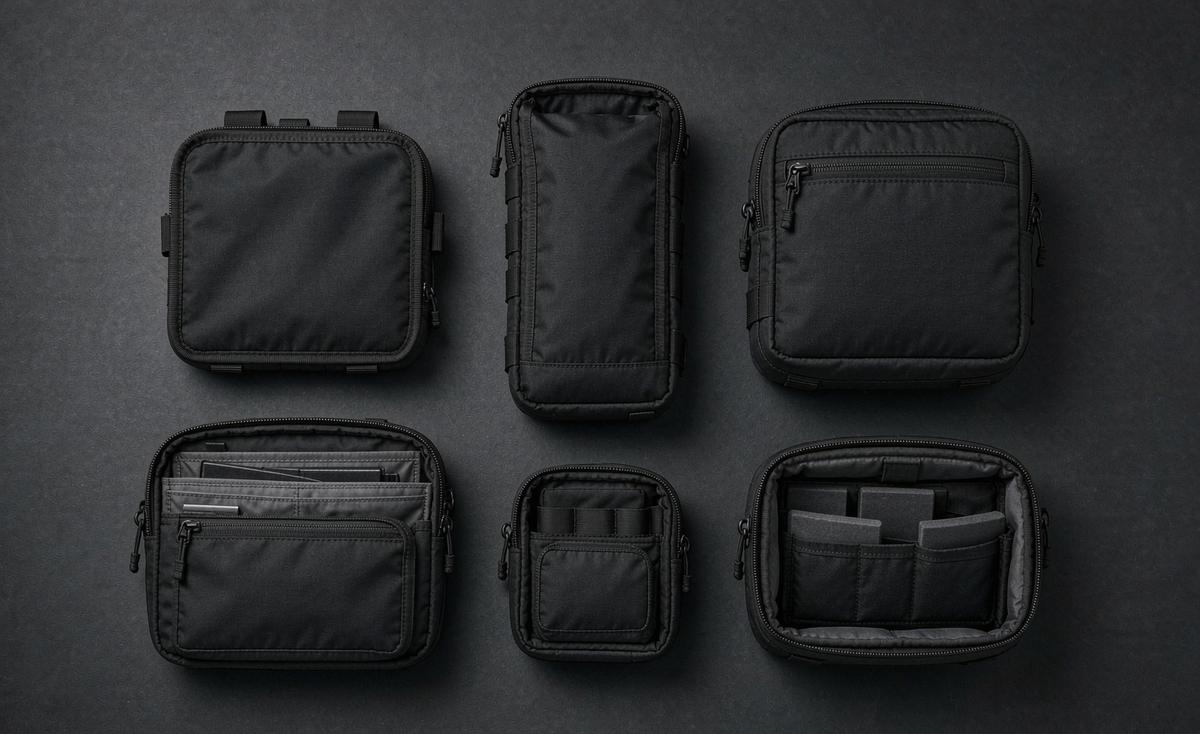
Third-party inspection is normally priced per inspector per day, with typical market rates in the low-to-mid hundreds of currency units per man-day depending on location, specialism and lead time. Small lots fit within one man-day; large lots may need several, and some providers quote per lot instead. The absolute number matters less than understanding what you are buying, which is attendance plus a written record, not a guarantee.
Set that against exposure. On a first campaign run, the balance payment yet to be released under T/T 30/70 terms is typically seventy percent of a five-figure order, and once goods pass to your nominated forwarder under FOB Xiamen terms, control travels with them. A visit costing a few hundred currency units that protects that decision is not a cost conversation; it is one of the few genuinely cheap pieces of insurance available to a creator.
Beware the false economy of booking only the cheaper visit. In-line visits are sometimes priced lower because they involve fewer units, but they do not permit a release decision, so buying only the in-line check leaves you unable to justify withholding payment and unable to justify releasing it. Buy at least one final visit on every first order regardless of what else you book.
Grouping is where it gets legitimate too. Where two colourways of the same construction ship together, one inspector-day may cover both provided the sample sizes are aggregated correctly andeachcolourway is represented. Ask explicitly how multiple styles in one booking are handled, because the arithmetic changes and silent shortcuts here produce reports that look complete and are not.
Choosing a mix by campaign size and risk
Think in terms of three variables rather than one: how novel the product is, how much calendar slack you have, and how visible the consequence would be. A first campaign with a new construction, a tight delivery promise and a public comment section deserves the full sequence. A third re-order of an established design does not, and pretending otherwise wastes money that could fund better materials.
- First campaign, new construction: first-piece verification, one in-line visit around the completion trigger, and a full final random inspection before release.
- Established design, moderate volume: one in-line visit where the calendar allows, plus a final random inspection on every run.
- Repeat re-order with no specification change: final random inspection only, plus a retained reference comparison against the previous lot.
- Multiple colourways in one lot: final inspection with each colourway represented proportionally, rather than one inspection covering the first packed colourway.
- Tight delivery promises: final inspection with a pre-agreed report deadline, so any rework decision does not consume your publicised month.
Two rules survive every scenario we have administered. Always keep a final inspection, because it is the only visit that governs release. Always keep testing and inspection as separate budget lines, because the cheapest way to feel protected without being protected is using one to cover both.
Where budget genuinely allows only one visit, ask a harder question before choosing: is my risk concentrated in how the bags are made, or in how many arrive and how they look? Concentrated making risk favours in-line; concentrated presentation and quantity risk favours final. Most first campaigns actually fear appearance and quantity more, which usually points to the final visit.
Writing inspection requirements into the order
Verbal arrangements produce the worst pattern in the industry: everybody assumed something was inspected and nobody can say what. Put the requirements in the purchase order,stating each visit's type, trigger, sampling plan, acceptance numbers, report deadline and who pays. Nothing else reliably survives the weeks between booking and shipping.
- Type and trigger: in-line at an agreed completion percentage, final at an agreed packed percentage.
- Standard: AQL 2.5 to ISO 2859-1 for the final visit, with inspection level and critical defect policy stated.
- Sample selection: random carton selection across the lot, with the number of cartons stated where possible.
- Report deadline: a named number of working days after attendance, before the balance falls due.
- Cost allocation: who books, who pays, and what happens if re-verification is needed after rework.
Add one clause about access and independence. Specify that the inspector chooses the cartons, works without supervision being arranged for them, and speaks to you rather than through somebody else. That single sentence protects the evidential value of the visit more effectively than any procedural detail.
Finally, name who receives the report and who decides. Our programme coordinator asks for both to be recorded, because reports delivered to the wrong inbox are functionally reports never delivered, and decisions with no named owner tend to be made by whoever happens to notice first.
State the contingency too: what happens if production is late, if the lot is partially packed, or if verification after rework is needed. Agreeing those three sentences before they arise prevents most arguments, because the disagreement is rarely about quality. It is nearly always about who pays for the delay that quality created.
When the two inspections disagree
It is entirely normal for an in-line visit to find nothing and a final visit to find defects, or vice versa. They are not the same population: the first examined partly made goods, the second examined packed finished ones, and packing itself introduces findings that did not exist before. Understanding this prevents the suspicion that somebody is hiding something.
The useful question when they diverge is whether the later finding existed at the earlier visit. Colour inconsistency across a run did exist in principle but may not have been visible when only a tenth of the units were made. Carton count discrepancies plainly did not exist yet, since nothing had been packed. Each answer points at a different cause.
Where findings appear in one visit and disappear in the next without explanation, ask for the corrective record. Genuine remediation leaves evidence: re-sorted cartons, a note of the corrective action, possibly replaced units. Silent disappearance usually means the second visit sampled differently rather than the problem having been fixed.
Escalation should be calm and quick. Request clarification in writing, then verification if the answer is unsatisfactory, and keep the calendar in view throughout. Across the 20+ crowdfunding campaigns in our files, disputes resolved within a day or two were far less damaging than disputes resolved correctly a week later, because the delay rarely bought anything proportionate.
Keep the visits independent of each other in one specific way: do not let the earlier report set expectations for the later one. An inspector who knows what was found before may unconsciously look for the same things, and your evidence value comes from each visit sampling the lot afresh.
Special cases: first orders, re-orders and colourway splits
Three situations deserve specific handling because default practice tends to misfit them. The first is the genuinely new construction, where nobody has made this design before and operator learning is real. Here an early line-side visit earns its cost, because the first fifty units teach everybody something and the next nine hundred either repeat it or do not.
The second is the repeat re-order, where the temptation is to skip inspection on the argument that nothing changed. Retained references make this cheaper but not free: verify that the components really are unchanged, since silently substituted webbing or a different lining lot is precisely how established designs go wrong. A retained reference comparison plus final random inspection is proportionate here.
The third is the multi-colourway lot, common in campaigns that unlock colours as stretch goals. Sampling must represent every colourway, because shade and print behaviour differ by colour, and defects cluster by colour genuinely rather than coincidentally. Ask how your provider handles this before booking, since treating a three-colourway lot as one homogeneous population systematically under-samples each colour.
Whichever situation applies, finish with the file. Keep both reports, the reference comparison, the corrective actions and the packing list together under one reference, because the point of running two visits is having two pieces of evidence rather than one. Programmes that accumulate evidence get cheaper and calmer with every run, which is a better outcome than any single clean report.
The last point is straightforward economics. Two visits on a first run typically cost less than the air freight needed to repair one wave of failures, and considerably less than the goodwill lost to a second. Spending early on verification is not caution, it is simply the cheaper way to buy certainty.

Deciding which inspections to book for your own timeline? Send the order size, construction type and target ship month through the quotation form or to service@junyuanbags.com, and we will sequence the visits inside your production window.
Frequently Asked Questions
What is the difference between in-line and final inspection?
An in-line check attends while the order is being made, typically at 10 to 30 percent finished, and asks whether production should continue. A final random inspection attends when the lot is complete and packed, usually above 80 percent, and asks whether the balance payment should be released.
Do I need both types of inspection?
For a first campaign with a new construction, usually yes. The two look at different states of the product and catch different failures. If budget allows only one, keep the final inspection, because it is the only visit that governs release and verifies packing.
Can an in-line check replace a final inspection?
No. It cannot verify carton quantities, packing quality or how the last units of the run compare with the first. Treating a clean in-line visit as lot release leaves you without evidence for either paying or withholding, which is the weakest position to be in.
How much do inspections cost?
Third-party inspection is typically priced per inspector per day, with market rates commonly in the low-to-mid hundreds of currency units per man-day depending on location and lead time. Small lots fit in one man-day. Set that against the balance payment it protects, which is usually a different order of magnitude.
What percentage of production triggers each visit?
In-line visits usually trigger around 10 to 30 percent finished, while final inspections usually require at least 80 percent finished and packed, sometimes 100 percent. Agreeing the trigger rather than a fixed date matters because production dates slip for ordinary reasons.
Do both visits use AQL 2.5 sampling?
The final inspection normally does, using ISO 2859-1 general level II with defined acceptance numbers. In-line visits often use smaller judgement-based samples because their purpose is diagnosis. Do not read an in-line result as if it were a lot acceptance decision.
How do I book inspection without delaying shipment?
Pencil both visits into the 35 to 50 day window at the start, allow a working day for the final report, and set the in-line trigger by completion percentage rather than date. Reports due before balance falls due keep every decision on the correct side of payment.
What if I have several colourways in one lot?
Require each colourway to be proportionally represented in the sample. Treating a multi-colourway lot as one population under-samples each colour, and shade or print defects often cluster by colourway rather than distributing evenly across the shipment.
Are re-orders safe to ship without inspection?
Not entirely. Retained references make comparison cheaper, but component substitution happens quietly over time. Proportionate practice for a repeat order is a retained reference comparison plus a final random inspection, rather than skipping verification because the specification is unchanged.
What should the report deadline be?
A named number of working days after attendance, and always before the balance falls due. Reports delivered after the payment date leave only two poor options: pay without having read the findings, or delay shipment while somebody reviews them under pressure.
Should the inspector choose the cartons?
Yes. Random selection by the inspector is what gives sampling its statistical meaning. Any visit where another party chooses the units has become a demonstration, and the report loses evidential value even though the paperwork looks identical.
Is inspection the same as material testing?
No. Inspection observes finished or semi-finished units and counts defects. Testing measures properties needing specimens and equipment, such as coating ageing, print adhesion cycles or fabric tear strength. Keep them as separate budget lines so neither is mistaken for the other.
People Also Ask
Which inspection matters most for a first campaign?
The final random inspection, because it governs releasing the balance and verifies packing and quantity. Add an in-line visit where the construction is new or the calendar allows, since that is the only check that can still prevent errors rather than count them.
When should an in-line visit happen?
Around 10 to 30 percent of the order finished, agreed as a completion trigger rather than a fixed date. That timing leaves most of the run still able to be made correctly.
Can inspection delay my container?
Only if booked late. Pencil visits into the 35 to 50 day window at the start, allow a working day for the report, and require delivery before the balance is due.
Do in-line visits use the same AQL?
Not necessarily. Many use smaller diagnostic samples. Ask what plan was applied, and never read that result as though it decided lot acceptance.
Why do the two visits sometimes disagree?
They examine different populations at different times. Packing introduces findings that did not exist earlier, and colour drift becomes visible only across a full run. Ask whether the later finding could have existed at the earlier visit.
How many man-days do I need?
Most campaign-scale lots fit within one inspector-day per visit, with larger or multi-colourway shipments requiring more. Ask how multiple styles or colours are aggregated before booking.
What should be in the purchase order?
Visit type and trigger, sampling standard with acceptance numbers, random carton selection, report deadline before balance payment, cost allocation and independence of access for the inspector.