Kickstarter Bag Campaign Risks: Delays, Quality and Communication
Seven risks account for almost every problem on a bag campaign: schedule slip, quality variance, specification drift between sample and bulk, colour and material variance, cost movement, freight and customs, and demand mismatch. Each has a mitigation you can put in place before launch and a way of being communicated afterwards. Bulk runs 35 to 50 days and inspection sits at AQL 2.5 to ISO 2859-1, so most of the exposure is knowable in advance. This article gives you the register, the mitigations and the message structures.
- The risk register for a bag campaign
- Risk one: schedule risk and where the days actually go
- Risk two: quality variance and what inspection does and does not catch
- Risk three: specification drift between sample and bulk
- Risk four: colour and material variance
- Risk five: cost and currency movement
- Risk six: freight, customs and duty
- Risk seven: demand mismatch in both directions
- Building your own register with likelihood and impact
- Communicating risk before launch
- Communicating risk after launch
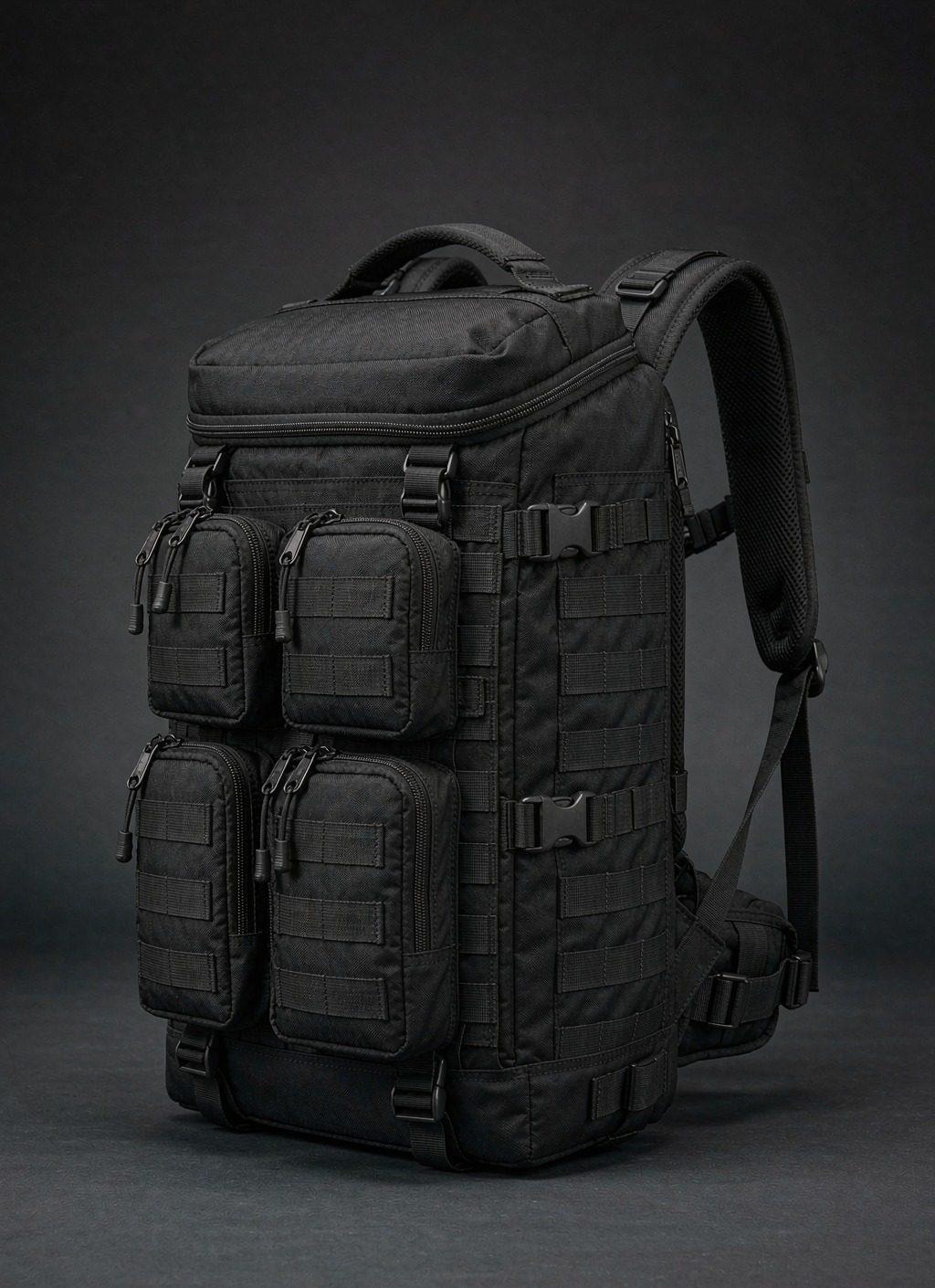
Every hardware campaign carries risk, and bag campaigns carry a specific set of it that is largely knowable in advance. The creators who handle problems well are not the ones who avoided them, they are the ones who had written them down beforehand, with a mitigation and a sentence prepared. This article is that document: seven risks, what each one costs, what you can do about it before launch, and how to talk about it afterwards.
The risk register for a bag campaign
A risk register is a short table with five columns: the risk, how likely it is, what it costs if it lands, what you will do about it, and who owns it. That is the whole tool. It is used in every serious manufacturing programme and almost never in crowdfunding, which is odd given that a crowdfunding creator has less margin for error than a business with inventory financing. The register below is the starting template we work from, and it should be adapted to your project rather than copied.
| Risk | Likelihood | Impact | Mitigation | Owner |
|---|---|---|---|---|
| Schedule slip in bulk | Medium | High | Book the slot early, build 10 days buffer | Programme coordinator |
| Quality variance at inspection | Medium | High | AQL 2.5 to ISO 2859-1 against retained sample | QC lead |
| Specification drift sample to bulk | Medium | Medium | Signed-off reference sample and change log | Creator |
| Colour or material variance | Medium | Medium | Approved swatch with tolerance, dye lot control | Production team |
| Cost or currency movement | Low | Medium | Price validity period stated in writing | Sourcing partner |
| Freight delay or customs hold | Medium | Medium | Book early, correct HS code, documents ready | Fulfilment partner |
| Demand mismatch | Medium | High | Order against validated demand, not projection | Creator |
Two columns do the real work. Impact is what tells you where to spend your attention, and it should be scored in weeks of delay or dollars rather than in vague severity. Owner is what turns the register from a document into a process, because a risk with no named owner is a risk that everybody assumes somebody else is watching. If you are a solo creator, you own most of them, and writing your own name six times is a useful reminder of how much of this sits on you.
Risk one: schedule risk and where the days actually go
Bulk production runs 35 to 50 days, and creators almost always plan for the bottom of that range. The realistic planning figure is the top, because the difference between the two is usually accounted for by things that are not really within anyone's control: a fabric lot arriving three days late, a line changeover taking longer than scheduled, a public holiday that everyone knew about and nobody counted. If you plan at 35 days and the run takes 47, you have created a two week delay that was entirely predictable.
The days also go in places that are not production at all. Sampling runs 6 to 10 working days for a standard style and 12 to 15 working days for complex constructions, and it is often sequential rather than parallel, because the second round cannot start until the first is reviewed. Inspection adds days. Freight adds weeks. Customs clearance adds an unpredictable number. Inland delivery to your fulfilment partner adds more. A campaign that promises three months from close to delivery and has only counted the production window is short by most of a month.
- Plan at the top of every range: 50 days for bulk, 15 working days for complex sampling, and full freight transit.
- Build a 10 day buffer and do not tell backers about it, so using it is not a delay.
- Work backwards on paper from the promised month and check the campaign end date still fits.
- Identify seasonal shutdowns before you set the date, not after the deposit is paid.
- Confirm the start condition in writing: bulk starts when deposit clears and materials are in, not when the campaign closes.
That last point is the one that causes the most surprise. Production does not start when the campaign ends. It starts when the deposit has cleared, the specification is frozen, and materials are on the floor. If your payment terms are T/T 30/70 and your funds take two weeks to clear, the clock has not started at the moment you were counting from. Confirm the start condition with your production partner in writing before you publish a delivery month.
Risk two: quality variance and what inspection does and does not catch
Inspection at AQL 2.5 to ISO 2859-1 is the standard we work to, and it is worth understanding what it actually means. AQL is an acceptable quality limit expressed as a defect rate, assessed against a statistically defined sample from the batch. For a batch of 1,200 units at AQL 2.5 under general inspection level II, the sample size is 80 units with an accept number of 5 and a reject number of 6. That tells you the inspection is a statistical assessment of the batch, not a check of every bag.
The consequence is that inspection catches systemic problems and not individual ones. If 4 per cent of the batch has a misaligned seam, AQL sampling at 2.5 will very likely catch it and the batch will be reworked. If one bag in 1,200 has a fault, it may well pass inspection and reach a backer. That is not a failure of the standard, it is what the standard is for, and the right response is to pair inspection with a straightforward replacement policy rather than to expect inspection to deliver perfection.
AQL 2.5 is a statistical check of the batch, not a guarantee about each unit. Pair it with a replacement policy you have budgeted for.
Budget for replacements. A reasonable planning figure is 1 to 3 per cent of the run held back or reserved for replacement stock, and that buffer is the difference between handling a fault in 48 hours and telling a backer to wait eight weeks for a re-run. Our QA and QC page sets out how the inspection is structured, what a defect is classified as, and what happens when a batch fails and has to be reworked.
Risk three: specification drift between sample and bulk
Specification drift is the quiet risk: nobody decides to change anything, and yet the delivered bag differs from the sample in five small ways. A fabric lot comes back a shade different and looks acceptable in isolation. A hardware item is substituted for an equivalent because the original was unavailable. A seam is moved 5 mm for durability. Each change is individually defensible and collectively they produce a bag that a careful backer will notice is not quite the thing on the page.
The mitigation is the retained reference sample plus a change log, and the discipline is that every deviation gets an entry. The log records the date, the deviation, the reason, who approved it and whether backers were told. That last column is the one that matters, because a change that was logged but not communicated is nearly as damaging as one that was not logged at all. Our production team maintains this as standard practice, and it is the artefact that makes post-delivery conversations short.
- Keep one signed-off reference sample, photographed from six angles, labelled with revision and date.
- Log every deviation however small, with date, reason, approver and communication status.
- Require approval for substitutions, in writing, before they happen rather than after.
- Update the campaign page in the same week as any visible change.
- Post an update for anything a backer could notice on delivery.
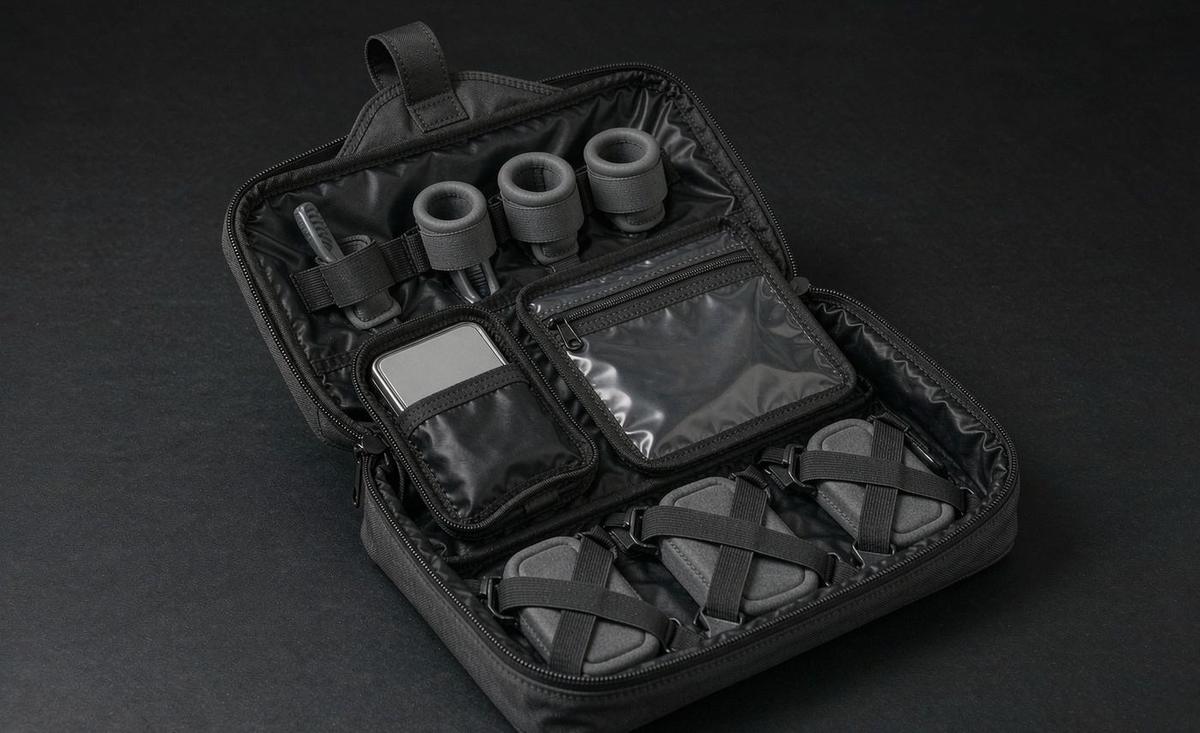
Risk four: colour and material variance
Colour is the most emotive quality issue on a bag, because it is the first thing a backer sees and the hardest thing to argue about. Dyed fabric varies between lots, and a variation that is within commercial tolerance can still be visible to someone comparing their bag with a photograph taken under studio lighting. The mitigation is an approved physical swatch with a stated tolerance, agreed before bulk and retained alongside the reference sample.
There is also a photographic component to this risk that is entirely within your control. A bag photographed under bright light with boosted saturation will always look richer than the same bag on a kitchen table. Shoot honestly, keep saturation neutral, and include a shot under ordinary indoor lighting. Backers who see a bag in both studio and everyday light rarely complain about colour, because their expectation was set accurately. If you want the detail on that, our bag photography and mockups article covers it.
Material variance behaves similarly but is less visible. A fabric from a different mill can meet the stated denier and coating specification and still feel different in the hand, and backers notice hand feel immediately. Specifying by code rather than description reduces this, and requesting a fabric swatch approval before bulk starts is the standard control. It costs a few days and it removes a category of complaint that is essentially impossible to resolve after delivery.
One more control is worth putting in place specifically for colour, and it is the tolerance statement. Agreeing that production must fall within a stated tolerance of the approved swatch, measured under a defined light source, converts an argument about whether a shade is acceptable into a measurement. Without that sentence, every colour discussion is a matter of opinion, and opinions in a dispute always favour whoever is holding the bag they do not like.
Risk five: cost and currency movement
A quote is valid for a period, and creators rarely check what that period is. If your quote was issued four months before the campaign closed and the validity was 30 days, the price you budgeted against is not the price you will pay. Fabric and hardware costs move, freight rates move more, and currency moves against you quietly. The mitigation is unglamorous: get the validity period in writing, re-confirm the price before you publish reward tiers, and re-confirm again before you sign the order.
The second-order effect is on your margin rather than on the campaign. A 6 per cent increase in landed cost on a reward priced at 129 dollars with a 28 dollar landed cost moves your margin from 101 dollars to about 99, which is survivable. The same 6 per cent on a reward priced at 69 dollars with a 34 dollar landed cost moves margin from 35 dollars to 33, which is a much larger proportional squeeze. Cheap tiers are more exposed to cost movement than expensive ones, and they are usually the tiers creators price most optimistically.
There are three practical controls, and none of them requires a finance background. First, ask for the quote validity period in writing and put a reminder in your calendar for a week before it expires. Second, model your reward tiers at a landed cost 5 per cent above the quoted figure, and treat the difference as contingency rather than as margin. Third, avoid pricing a tier within 10 per cent of your break-even point, because that is the band where a small movement turns a profitable reward into a loss-making one and you will not notice until fulfilment.
Currency deserves a sentence of its own because it is the movement creators notice last. If your quote is in one currency and your backers pledge in another, a shift between the campaign closing and the balance payment landing changes your cost without anyone having done anything wrong. Ask which currency the price is fixed in, confirm whether it is fixed for the whole order or only until a stated date, and if you are exposed, build the same 5 per cent contingency into the model rather than assuming the rate holds.
Risk six: freight, customs and duty
Freight is the least controllable leg and the one most likely to move a delivery date after the goods are finished. Ocean transit times vary with season, port congestion and routing, and a two week swing is not unusual. Air freight removes most of that variability and costs three to five times as much per kilogram. The practical mitigation is to book early, state the method on the campaign page, and hold a contingency for air freighting a partial shipment if the schedule slips badly.
Customs is the other half of this risk and it is more controllable than it feels. Delays at clearance are most often documentary: a wrong HS code, a missing commercial invoice, a valuation that does not match the paperwork. Confirm the HS code for your product category before shipment, make sure the declared value matches what backers paid where that is required, and have the documents ready before the vessel sails rather than after. Duty is a cost risk as well as a delay risk, and it should be in your landed cost model from the start.
- Confirm the HS code for your product category before you quote shipping to backers.
- State the freight method on the page so backers know whether to expect 30 days or 10.
- Have documents ready before departure, not after, because clearance delays are usually documentary.
- Hold an air freight contingency for a partial shipment if the schedule slips badly.
- State whether duty is included in the reward price, in one plain sentence.
Risk seven: demand mismatch in both directions
Demand risk cuts both ways and most creators only plan for one direction. Under-ordering means a second production run, which restarts the 35 to 50 day window and usually means a second deposit under T/T 30/70 terms at a moment when your cash is already committed. Over-ordering means unsold inventory, which is worse than it sounds because crowdfunded bags have no established resale channel and a specific design that a retailer did not ask for.
The minimum is 500 pcs per style and per colourway, and that floor is what makes the downside asymmetric. Ordering 500 when you have 400 backers leaves 100 units that may never sell. Ordering 500 when you have 700 backers leaves a clean result with a defined re-order decision. The practical guidance is to order against validated demand rather than projection: if your waitlist and deposit test support 600, order 600, and treat the campaign over-performance as a re-order conversation rather than trying to guess it in advance.
For the colourway dimension of this risk, poll preference before you commit. Colour preference is consistently skewed, with the leading colourway taking 40 to 55 per cent and the tail taking single digits. Ordering evenly across four colourways guarantees a slow-moving tail, and holding the long tail as stretch goals rather than launch options keeps the exposure where the demand is. Our piece on stretch goals for bag campaigns works through the threshold arithmetic.

Building your own register with likelihood and impact
Take the template at the top of this article and make it yours, which mostly means replacing the generic likelihood and impact scores with numbers that apply to your project. Likelihood is a judgement call and should stay as high, medium or low. Impact should be quantified: this one costs 12 days, or this one costs 2,400 dollars, or this one costs us 400 goodwill units we cannot replace. A quantified impact column makes prioritisation mechanical rather than emotional.
Then add two columns the template does not have. Early warning signal: what would you see first if this risk were starting to materialise? For schedule slip it is a stage not completing on its planned date. For quality variance it is a higher defect count in the first-off inspection. For demand mismatch it is a funding curve that is tracking below your projection at the halfway point. Trigger: at what point do you act? Defining the trigger in advance is what stops the most common failure, which is noticing a problem and then waiting a week to see whether it resolves itself.
A worked trigger is more useful than the concept. For schedule slip, the trigger might be: any production stage not completing within three working days of its planned date gets raised the same day, not at the next monthly check-in. For quality, it might be: any single defect category appearing more than twice in the first-off inspection triggers a full re-check of that operation. For demand, it might be: if funding is below 60 per cent of target at the campaign halfway point, the colourway plan is reduced from three to two. Each trigger is specific, observable and dated, which is what makes it act on.
Review the register at three fixed points rather than continuously: once before launch, once when the campaign closes and the survey data is in, and once when bulk starts. Continuous review turns it into anxiety, and three scheduled reviews turn it into a habit. The review itself takes twenty minutes and consists of one question per line: has the likelihood changed, has the impact changed, and is the mitigation still in place. Most lines will be unchanged, which is the point: the exercise is about catching the one that has moved.
Communicating risk before launch
The cheapest risk mitigation available is an accurate campaign page. Most post-delivery disputes are not about bad products, they are about expectation gaps, and expectation gaps are created on the page months earlier. Three specific things belong there. A delivery month that you calculated rather than hoped for. A plain statement of what is included and what is not, including duty and shipping. And a short section on what you will do if things go wrong, which almost nobody writes and everybody reads.
That last section is worth quoting as a pattern. Something like: if production slips, we will tell you within 48 hours of knowing, with a revised date and the reason. If your bag arrives faulty, contact us within 30 days and we will replace it from reserved stock. If a colourway does not reach its minimum, we will offer the nearest alternative before production starts. Three sentences, each a commitment you control, and each one removes a category of anxiety from the page.
The fourth thing that belongs on the page is a realistic delivery month, and this is where most creators damage themselves. The temptation is to promise the earliest date that is theoretically achievable, because a short wait converts better. The problem is that a delivery estimate is not a marketing claim, it is a schedule, and the schedule is built from 35 to 50 days of bulk, 6 to 10 working days of sampling or 12 to 15 for complex styles, inspection, freight and fulfilment. Work it backwards on paper, then add the buffer, and publish the result rather than the hope.
There is a counter-argument worth hearing: a late delivery month suppresses pledges. In practice the effect is smaller than creators fear, because backers comparing two similar bags are weighing product, price and credibility, and a credible date is part of credibility. A campaign that promises March and delivers in March is worth more in backer goodwill, and in the prospects for your second campaign, than one that promises January and delivers in April. The pledge gain from an optimistic date is real and small; the cost of missing one is large and lasting.
Communicating risk after launch
When something goes wrong, the message has four parts and the order matters: what happened, the new date or consequence, what you are doing about it, and what backers should do. Send it within 48 hours of knowing, not within 48 hours of being sure, because waiting for certainty is what turns a manageable slip into a trust problem. Use a month or a date rather than a season, keep the cause to two factual sentences, and always include a remedy.
- Lead with the fact, never with context or apology, because the reader's first question is what happened.
- Give a date, not a season, and restate it in every subsequent update with the as-of date.
- Name the remedy, even a small one, because a remedy converts an apology into an action.
- Offer the exit: state the refund route and the deadline if a backer no longer wants to wait.
- Do not attribute blame, even accurately, because the backer's agreement is with you.
The final discipline is about the shape of the message rather than its content. Short, factual and dated beats long, apologetic and vague, every time. Backers are not looking for reassurance, they are looking for information they can plan around, and a message that tells them what happened and when they will get their bag is doing exactly the job they need. Our post-funding project updates article covers the update calendar these messages sit inside.
Key takeaways
- W
- r
- i
- t
- e
- t
- h
- e
- r
- e
- g
- i
- s
- t
- e
- r
- b
- e
- f
- o
- r
- e
- l
- a
- u
- n
- c
- h
- ,
- q
- u
- a
- n
- t
- i
- f
- y
- t
- h
- e
- i
- m
- p
- a
- c
- t
- ,
- d
- e
- f
- i
- n
- e
- t
- h
- e
- t
- r
- i
- g
- g
- e
- r
- ,
- a
- n
- d
- l
- e
- a
- d
- e
- v
- e
- r
- y
- b
- a
- d
- -
- n
- e
- w
- s
- m
- e
- s
- s
- a
- g
- e
- w
- i
- t
- h
- t
- h
- e
- f
- a
- c
- t
- a
- n
- d
- t
- h
- e
- d
- a
- t
- e
- .
If you want a second pass on your register, send us your specification, quantity and target delivery month. Our campaign bag specialist will tell you where the schedule exposure sits, what inspection at AQL 2.5 to ISO 2859-1 will cover, and which of your commitments are realistic at 500 pcs per style and per colourway on FOB Xiamen terms. The crowdfunding bag guide sets the whole sequence out end to end.
Send us your timeline and quantity, and we will flag the schedule and quality exposure before you commit to a public delivery date.
Frequently Asked Questions
What are the biggest risks on a bag crowdfunding campaign?
Seven account for most problems: schedule slip, quality variance, specification drift between sample and bulk, colour or material variance, cost movement, freight and customs, and demand mismatch. Each has a mitigation you can put in place before launch.
How long does bulk bag production actually take?
35 to 50 days, and you should plan at the top of that range. Production also starts when the deposit clears and materials are on the floor, not when the campaign closes, which is where most unexpected schedule slip originates.
What does AQL 2.5 to ISO 2859-1 mean in practice?
It is a statistical assessment of the batch, not a check of every unit. For a 1,200 unit batch at general inspection level II the sample is 80 units with an accept number of 5. It catches systemic problems reliably and individual faults less so.
Should I budget for replacement stock?
Yes. A planning figure of 1 to 3 per cent of the run reserved for replacements turns a fault report into a 48 hour fix rather than an eight week wait for a re-run. Inspection cannot deliver perfection, so a replacement policy is the second line.
How do I stop the bulk run drifting from the sample?
Keep one signed-off reference sample photographed from six angles, and maintain a change log recording every deviation with the date, reason, approver and whether backers were told. Require written approval for substitutions before they happen.
How much colour variation is normal in dyed fabric?
Variation between dye lots is normal and usually within commercial tolerance, but it can still be visible against a studio photograph. The control is an approved physical swatch with a stated tolerance, retained alongside the reference sample, plus honest photography.
How long is a quote valid for?
Ask and get it in writing. Fabric, hardware, freight and currency all move, and a quote issued four months before the campaign closed may no longer hold. Re-confirm before publishing reward tiers and again before signing the order.
What causes customs delays on bag shipments?
Mostly documentation: a wrong HS code, a missing commercial invoice, or a declared value that does not match the paperwork. Confirm the HS code before shipment and have documents ready before the vessel sails rather than after.
Is it worse to over-order or under-order?
Both hurt, and the 500 pcs minimum makes it asymmetric. Under-ordering restarts the 35 to 50 day window and needs a second deposit. Over-ordering leaves inventory with no established resale channel and a design no retailer asked for.
How should I communicate a delay to backers?
Four parts in order: what happened, the new date, what you are doing about it, and what backers should do including the refund route. Send it within 48 hours of knowing, use a month or a date, and keep the cause factual.
Should I put risk information on the campaign page?
Yes. State the delivery month you calculated, say plainly what is included including duty, and add a short section on what you will do if things go wrong. Three sentences there remove a large category of later dispute.
What is an early warning signal in a risk register?
The first observable sign a risk is materialising: a production stage not completing on its planned date, a higher defect count at first-off inspection, or a funding curve tracking below projection at the halfway point. Define the trigger for acting on it in advance.
People Also Ask
What usually goes wrong on a bag crowdfunding campaign?
Schedule slip, quality variance, specification drift, colour variance, cost movement, freight and customs delay, and demand mismatch. All seven are largely knowable in advance.
How much buffer should I build into a bag timeline?
Plan at the top of every range, 50 days for bulk and 15 working days for complex sampling, and add a 10 day buffer you do not tell backers about.
Does AQL inspection guarantee every bag is perfect?
No. AQL 2.5 to ISO 2859-1 is a statistical check of the batch. Pair it with retained replacement stock of 1 to 3 per cent of the run.
When does bulk production actually start?
When the deposit clears, the specification is frozen and materials are on the floor, not when the campaign closes. Confirm the start condition in writing.
How do I prevent the bulk bag differing from the sample?
Retain a signed-off reference sample and keep a change log with date, reason, approver and whether backers were told.
Why does the delivered bag look a different colour?
Dye lot variation plus studio lighting and saturation. Control it with an approved physical swatch and photograph the bag under ordinary indoor light as well.
What causes freight and customs delays?
Seasonal transit swings, port congestion and, most often, documentation errors such as a wrong HS code or missing invoice.
How do I write a delay message to backers?
What happened, the new date, what you are doing, what backers should do. Send it within 48 hours and give a month, not a season.