Cosmetic Bag Case Studies: 3 Beauty Campaigns That Funded
What do funded beauty campaigns with a cosmetic bag reward have in common? Across three programmes we supported, the pattern was consistent: the bag was specified from the actual product dimensions rather than from a render, sampling ran two full rounds inside 6 to 10 working days each, the pre-production sample was approved before the 35 to 50 day bulk clock started, and the quantity was committed per colourway at 500 pcs minimum. Every one of them changed at least one specification after the first sample. This article sets out what they did, in anonymised form, with the numbers that drove the decisions.
- How to read these three case studies
- Case one: the serum kit that re-specified after the first sample
- Case one lessons: bottle-led specification and containment
- Case two: the brush set that ran one bag across four tiers
- Case two lessons: tier ladders and one tooling investment
- Case three: the travel-size brand that shipped from two ports
- Case three lessons: split shipments and international backers
- What all three had in common
- The mistakes each one avoided
- Turning the pattern into your own brief
- A 90-day plan from brief to backer delivery
- What each campaign would do differently
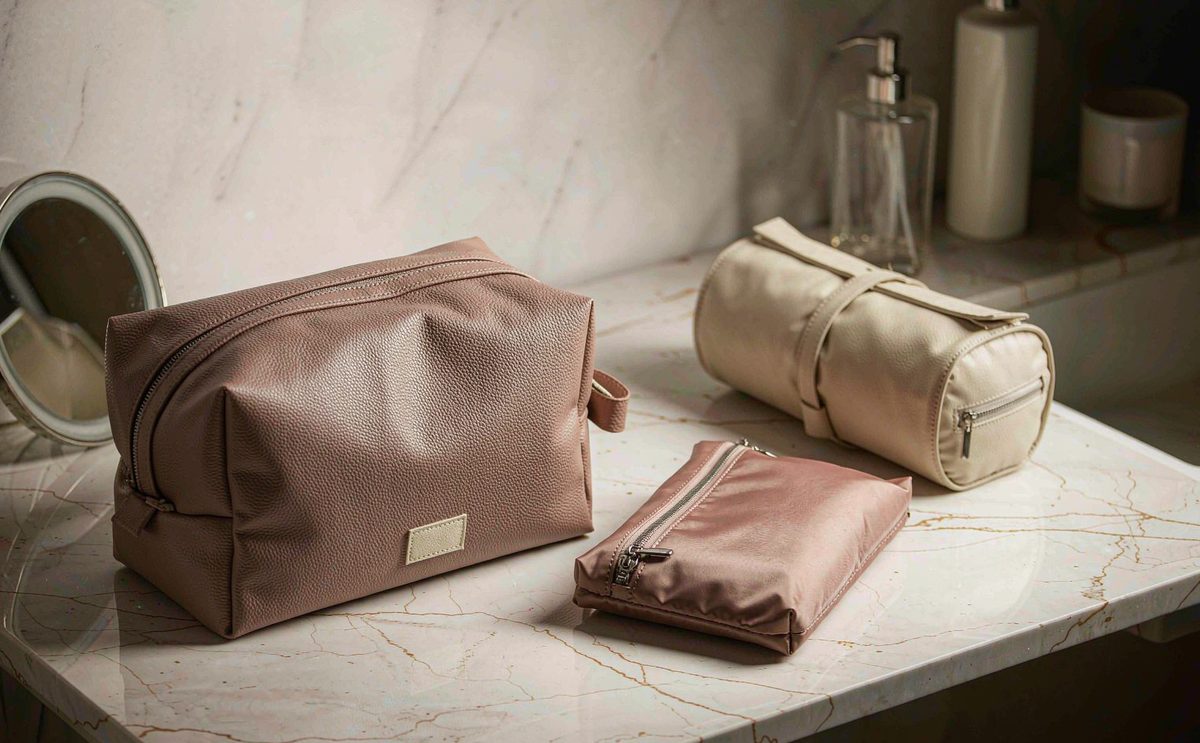
Case studies are only useful if they contain numbers and admit the failures. These three are drawn from programmes our team has supported, anonymised because campaign data belongs to the creators, and presented with the figures that matter rather than the funding headline. Each one is a different strategy: a containment problem, a tier-ladder problem and a logistics problem. All three funded. All three also changed something important after the first sample arrived, which is the single most transferable lesson in this article.
How to read these three case studies
Two caveats before the detail. First, the figures below are typical values and ranges from live programmes, not audited results for named campaigns. Where a number is given as a range, it is because the real value sat inside that band and the exact figure is not ours to publish. Second, none of these campaigns succeeded because of the bag. The bag was the component that delivered the product safely and made the tier look worth pledging for. A bag cannot rescue a weak offer, and the cases below describe campaigns with strong products that nearly undermined themselves with weak reward specification.
What is worth copying is the decision sequence, not the specification. Each campaign specified the bag after the product dimensions were frozen, sampled twice, approved a pre-production sample in writing, committed quantity per colourway rather than in total, and inspected at AQL 2.5 to ISO 2859-1. That sequence is repeatable on any cosmetic bag programme regardless of the style. Where the three diverge is in how they handled the two decisions that actually differentiate outcomes: how much structure to put inside the bag, and how many colourways to commit to before the campaign closed.
- Typical values, not audited results: ranges are given where the exact figure belongs to the creator.
- The bag did not fund the campaign: a strong product did. The bag delivered it intact and made the tier look credible.
- Every case changed a specification after the first sample, which is the most transferable lesson here.
- The decision sequence is repeatable: freeze product, sample twice, approve in writing, commit per colourway, inspect.
- The two differentiating decisions: how much interior structure, and how many colourways before close.
Case one: the serum kit that re-specified after the first sample
The first campaign was a three-step skincare regimen sold as a kit: a cleanser, a serum and a moisturiser, in glass bottles of 30 ml, 30 ml and 50 ml with dropper and pump closures. The creator arrived with a completed render of a soft pouch and a target unit cost. The brief was to make that pouch. The problem appeared at the first sample, which arrived in 8 working days: the pouch stood up empty, the bottles fitted, and the pouch collapsed under the 340 g filled weight because the base had no board and the side panels had no structure.
The re-specification was specific and cheap. The base gained a 1.2 mm PP board, the side panels gained a 0.6 mm interlining, and the loose drop-in liner was replaced with a welded TPU liner because the sewn liner showed needle perforations at the base seam. Unit cost rose from a quoted USD 4.30 to USD 5.15 at 1,000 pcs, an increase of 20 percent, and the creator accepted it because the alternative was a reward that arrived collapsed. The second sample round took a further 7 working days, and the pre-production sample was approved in week five of the programme.
The outcome worth noting is what the extra USD 0.85 bought. The kit photographed as a structured box rather than a soft bag, which supported a tier price increase of USD 10 on the campaign page. The welded liner removed the leak path that would otherwise have sent serum into the outer shell during a six-week transit. And the structured base meant the unit nested less flat, which raised carton volume by about 12 percent, a freight cost the creator absorbed without noticing because it was allocated across the whole shipment rather than charged per unit.
| Specification line | Original | Revised | Unit cost impact |
|---|---|---|---|
| Base structure | No board | 1.2 mm PP board | +USD 0.28 |
| Side panels | No interlining | 0.6 mm interlining | +USD 0.22 |
| Liner | Loose drop-in PE | Welded TPU, no needle holes | +USD 0.35 |
| Carton volume | Baseline | About 12 percent higher | +USD 0.04 freight allocation |
| Total unit cost | USD 4.30 | USD 5.15 | +USD 0.89, about 20 percent |
Case one lessons: bottle-led specification and containment
The lesson is that a bag carrying glass should be specified from the bottles, not from the render. A render shows a bag in an idealised state: empty, upright, evenly lit. A reward ships full, horizontal, stacked under other cartons, for weeks. Three specification rules follow. Filled weight above roughly 250 g needs a base board. Glass of any kind needs a welded liner, because needle perforations are the path a leak takes to the face fabric. And divider clearance of 1.5 to 2.0 mm per bottle diameter is what lets the kit close without force and without rattle.
The second lesson is commercial rather than technical. The creator had budgeted to a unit cost before knowing what the product required, and the 20 percent increase was uncomfortable because it had not been planned. The fix is to quote a band rather than a number in the planning stage: ask for the cost at the entry specification and at the specification you would accept if the first sample fails, then budget the higher one and treat the lower one as upside. That is a five-minute conversation before sampling and it removes the most common source of friction in a bag programme.
Key takeaways
- Q
- u
- o
- t
- e
- a
- b
- a
- n
- d
- ,
- n
- o
- t
- a
- n
- u
- m
- b
- e
- r
- .
- B
- u
- d
- g
- e
- t
- t
- h
- e
- s
- p
- e
- c
- i
- f
- i
- c
- a
- t
- i
- o
- n
- y
- o
- u
- w
- o
- u
- l
- d
- a
- c
- c
- e
- p
- t
- i
- f
- t
- h
- e
- f
- i
- r
- s
- t
- s
- a
- m
- p
- l
- e
- f
- a
- i
- l
- s
- ,
- a
- n
- d
- t
- r
- e
- a
- t
- t
- h
- e
- c
- h
- e
- a
- p
- e
- r
- o
- u
- t
- c
- o
- m
- e
- a
- s
- u
- p
- s
- i
- d
- e
- r
- a
- t
- h
- e
- r
- t
- h
- a
- n
- a
- s
- t
- h
- e
- p
- l
- a
- n
- .
A third lesson concerns the photograph. The structured kit photographed as a box rather than as a bag, and that difference appeared on the campaign page and in every backer unboxing. The campaign had not planned it, but it contributed more to the perceived value of the tier than the specification itself. Structure is a marketing asset as well as a functional one, and it is worth costing on that basis.
Case two: the brush set that ran one bag across four tiers
The second campaign sold a makeup brush set with a bag at four pledge levels, from a single brush with a small pouch at the entry tier to a twelve-piece set in a full case at the top. The instinct, and the initial plan, was to design four different bags. The cost of that plan is what killed it: four styles means four sets of tooling, four sampling rounds, four production runs each at the 500 pcs minimum, and four inspection days. At the quoted volumes the four-style plan carried roughly USD 900 of duplicated tooling and pushed the schedule past the fulfilment date.
The redesign used one bag silhouette at three sizes, sharing one fabric, one zip, one pull and one branding method. The entry tier used the small size with a heat transfer mark, the mid tiers used the medium size with the same mark, and the top tier used the large size with a silicone patch applied to the same panel position. Tooling dropped to one heat transfer plate at about USD 110 and one silicone mould at about USD 210. Sampling ran once for the silhouette and once for the patch, inside a combined 13 working days.
The commercial effect was larger than the tooling saving. Because all four tiers shared a fabric family, a zip and a mark position, the reward ladder read as one product line rather than four unrelated items. That coherence is what stops an entry perk from cheapening a premium tier, and it is visible in the campaign page in a way that a cost saving never is. The creator also gained flexibility: when the mid tier sold faster than forecast, units could be reallocated between sizes because the fabric, zip and pull were common across all three.
Case two lessons: tier ladders and one tooling investment
The structural lesson is that tier differentiation does not require different bags. It requires a visible specification step that costs less than a new style. The cheapest steps, in order, are the branding method, the interior feature count, the size, and finally the fabric. A campaign can move from heat transfer to a silicone patch for USD 0.30 to USD 0.60 per unit plus one mould, and backers see a clear difference. Moving to a different fabric costs a new lot, a new sample round and a new colour-matching risk for a difference most backers will not notice in a photograph.
The scheduling lesson is equally important. Shared components collapse the critical path. One fabric order, one hardware order, one colour approval and one inspection cover all four tiers, which is what allowed this campaign to hold a single 35 to 50 day bulk window for the whole ladder. Four separate styles would have required four windows or a compressed shared window with a much higher risk of a delay on any one style holding up the entire shipment. Creators planning a multi-tier reward should design for shared components first and differentiate second.
- Design one silhouette and vary the size, not four silhouettes.
- Share the fabric, zip, pull and thread across every tier.
- Differentiate with the branding method first: heat transfer, then silicone patch, then a custom pull.
- Differentiate second with interior features: slip pockets, divider count, brush loops.
- Keep the mark on the same panel position at every size so the line reads as one family.
Case three: the travel-size brand that shipped from two ports
The third campaign was a travel-size beauty brand with a predominantly international backer base: roughly 60 percent of backers outside the campaign's home market, spread across the EU and the UK. The reward was a small cosmetic bag filled with travel-size product. The problem was not the bag, which was a straightforward 150 x 110 x 70 mm pouch with a welded liner and a printed mark. The problem was that shipping every unit from one origin to one fulfilment centre and then re-shipping internationally meant paying inbound freight, then duty, then outbound international postage on every parcel.
The solution was a split shipment. Roughly 55 percent of units went by ocean to a US fulfilment centre, and 45 percent went by ocean to an EU fulfilment centre, in two customs entries under two consignees. The bag specification was identical across both, which meant one production run and one inspection, and only the carton markings and the documentation differed. Carton count was about 220 units per export carton, so the split was clean at carton level rather than requiring a repack.
The saving was in the outbound leg, and it was substantial. Shipping an EU-bound parcel from an EU centre rather than from the US removed an international postage charge of roughly USD 9 to 14 per parcel and, more importantly, removed the customs clearance step that generates the majority of delayed and returned parcels in international crowdfunding. The cost of the split was one additional ocean booking and one additional customs entry, both fixed charges in the low hundreds of dollars, amortised across 45 percent of a run in the low thousands of units.
Case three lessons: split shipments and international backers
The transferable lesson is that split shipping is worth modelling whenever more than about 30 percent of backers sit outside the primary market. The arithmetic is simple: compare the cost of one additional ocean booking plus one additional customs entry against the per-parcel saving multiplied by the number of cross-border parcels avoided. Above roughly 400 parcels the split usually wins. Below that, the fixed charges dominate and a single shipment is cheaper.
The second lesson concerns documentation. A split shipment means two sets of paperwork, and the bag specification has to be identical on both or the two entries will be classified differently and one will be held. That means one tech pack, one material declaration and one test report, referenced on both sets of documents. Where compliance testing is required, run it once per material and use the same report for both entries. This campaign ran REACH SVHC screening on the coated face fabric once, at about USD 310, and used the single report for both the EU and the UK consignment.
If more than 30 percent of your backers sit outside your primary market, model a split shipment. Above roughly 400 cross-border parcels the saving usually exceeds the extra booking and entry charges.
A third lesson is about the bag specification under two customs regimes. Because the specification was identical on both entries, the two shipments were classified identically and cleared on the same basis. Had the campaign varied the face fabric or the lining between the two consignments to suit local preferences, each entry would have needed its own classification decision and its own test reference.
What all three had in common
Strip away the differences and five things were true of all three programmes. Each specified the bag after the product was frozen, not before. Each ran two sample rounds and treated the first as a diagnostic rather than a finished article. Each approved a pre-production sample in writing, with a physical shade reference attached, before the production clock started. Each committed quantity per colourway rather than in total, accepting that three colourways means three runs at 500 pcs. And each inspected at AQL 2.5 to ISO 2859-1 with a functional test appropriate to the claim being made.
A sixth commonality is less flattering and more useful: all three experienced one schedule slip, and all three had built a buffer that absorbed it. In case one it was a second sample round. In case two it was a fabric mill delay on a custom dyelot. In case three it was a documentation correction on the second customs entry. None of these was foreseeable, and none of them cost the campaign its delivery date, because each programme had allowed 10 to 15 working days between the scheduled shipment date and the date fulfilment had to begin.
- Product first: the bag was specified after the product dimensions and filled weight were frozen.
- Two sample rounds: the first treated as diagnostic, the second as the approval candidate.
- Written approval: pre-production sample signed off with a physical shade reference attached.
- Per-colourway commitment: quantity committed per colourway, accepting the 500 pcs minimum on each.
- AQL 2.5 to ISO 2859-1 with a functional test matched to the claim being made.
- A 10 to 15 working day buffer between scheduled shipment and the date fulfilment must begin.
The mistakes each one avoided
It is worth being explicit about the failures that did not happen, because they are the common ones. Case one avoided shipping a bag that collapsed under its own contents, which would have generated a wave of unboxing videos showing a limp pouch. Case two avoided four production runs with four tooling sets, which would have cost roughly USD 900 in duplicated tooling and pushed past the fulfilment date. Case three avoided shipping every EU parcel across an international border, which would have added a customs clearance step to about 45 percent of parcels.
Three more mistakes were avoided by all of them, and each is cheap to avoid. None of them skipped the pre-production sample to save a week. None of them ordered a quantity that assumed the optimistic end of the forecast, which is how campaigns end up carrying two years of excess pouch inventory. And none of them left the branding placement to the production line: all three supplied a placement drawing with a stated tolerance, which is why the marks on the delivered units were where the campaign page said they would be.
A fourth avoided mistake is worth naming because it is the most common one in the category: none of them chose the bag before the product was finalised. Two of the three were tempted to, because the campaign page needed a photograph and the bag was the most photogenic component. Both waited, and both avoided the re-specification cost that case one eventually paid anyway, for a different reason.
Turning the pattern into your own brief
The pattern converts into a short brief that any creator can write before contacting a production programme. State the product: what goes inside the bag, with dimensions and filled weight. State the format: finished dimensions, closure type and the interior features you need. State the brand: the mark, the method you prefer and the panel you want it on, with a tolerance. State the quantity per colourway, not in total. State the date fulfilment must begin, working backwards through the 35 to 50 day bulk window and the 6 to 10 day sampling window.
Then state the two things most briefs omit. First, the failure you are most worried about: leakage, collapse, colour mismatch, zip failure, or a late delivery. Naming it lets the programme engineer against it rather than guessing. Second, the specification you would accept if the first sample fails, so there is a fallback already costed. Where the reward has to be kitted before it ships, the crowdfunding rewards fulfilment guide covers pack-out and consolidation. Our campaign bag specialist works through exactly this sequence, and the briefs that arrive with these items complete are the ones that get a firm price in 48 hours rather than a fortnight of questions.
One further item belongs in the brief and is almost always missing: the date the campaign closes. A production programme that knows the close date can reserve capacity in the right window and can tell the creator whether the plan is feasible before any money changes hands. Without it, the programme is quoting into a vacuum and the schedule is guesswork on both sides of the conversation.
A 90-day plan from brief to backer delivery
Working backwards from a delivery date, a cosmetic bag programme fits a 90-day plan with buffer. Days 1 to 5: brief, tech pack and artwork finalised, and filled product samples shipped to the production programme. Days 6 to 15: first sample round plus a second if needed, at 6 to 10 working days each, running concurrently with material sourcing. Days 16 to 20: pre-production sample approved in writing, deposit paid, and compliance testing booked if required. Days 21 to 70: bulk production, 35 to 50 days, with inspection at AQL 2.5 to ISO 2859-1 in the final week.
Days 71 to 80: balance payment, booking and ocean transit documentation. Days 81 to 90: transit and arrival buffer, with customs clearance and drayage to the fulfilment centre. That leaves very little slack, which is why we recommend launching the campaign with the bag programme already briefed and priced, so the order can be placed the day the campaign closes rather than the day the creator starts looking for a production partner. For the full picture of how a bag programme fits a campaign schedule, see the crowdfunding bag guide, and for the build options and price bands behind these cases see our cosmetic bag programme page. If quantity is your open question, the pricing comparison at three quantity bands sets out the cost curve.
Two adjustments make the plan realistic for most campaigns. First, run days 1 to 5 before the campaign launches rather than after it closes, which is the sampling-before-launch point made earlier. Second, treat days 81 to 90 as contingency rather than as transit, because transit is the leg most exposed to port congestion and weather. A plan that ends with a buffer is a plan that survives contact with reality.
What each campaign would do differently
Asked afterwards, each creator named one thing they would change. Case one would have sent the filled bottles before the first sample rather than with it, which would have collapsed a sample round and removed the 20 percent cost increase from the critical path. Case two would have designed the shared silhouette from the start rather than after costing four separate styles, which would have saved roughly two weeks of design and quoting. Case three would have modelled the destination split before specifying the bag, because the decision to ship from two centres changed the carton marking and documentation requirements in a way that was cheaper to design in than to retrofit.
The pattern across all three answers is that the change is a sequencing decision, not a design decision. None of them said they would have chosen a different fabric, a different colour or a different closure. All of them said they would have done the same work in a different order. That is a useful thing to know before starting: the specification itself is forgiving, because a sample round will reveal a bad fabric or a bad closure within 6 to 10 working days. The sequence is not forgiving, because a decision made late costs a full cycle to correct rather than a few days.
The second pattern is that each creator under-budgeted one line. Case one under-budgeted structure, case two under-budgeted tooling across four styles, and case three under-budgeted the documentation work on a second customs entry. None of the three amounts was large relative to the campaign, and each was large relative to the margin on the bag itself. The lesson is to budget the bag programme as a project with its own contingency rather than as a line on the campaign budget, because the lines that move are the ones nobody priced.
- Send the product before the sample, not with it: it collapses a round and removes a cost increase from the critical path.
- Design shared components first, rather than costing separate styles and then consolidating.
- Model the destination split before specifying, because it changes carton marking and documentation.
- The specification is forgiving: a sample round reveals a bad fabric or closure within 6 to 10 working days.
- The sequence is not forgiving: a late decision costs a full cycle to correct, not a few days.
Send us your product dimensions, target quantity per colourway and the failure you are most worried about, and we will return a specification proposal.
Frequently Asked Questions
Are these real crowdfunding campaigns?
They are drawn from programmes our team has supported, presented anonymously because campaign data belongs to the creators. Figures are typical values and ranges from live programmes, not audited results for named campaigns. Figures are typical values and ranges from live programmes rather than audited results, and the exact numbers remain the property of the creators concerned. Where a figure is given as a range it is because the real value sat inside that band and the exact number is not ours to publish.
Why did the serum kit campaign change its bag after the first sample?
The pouch collapsed under 340 g of filled glass bottles because the base had no board and the panels had no interlining. Adding a 1.2 mm PP board, a 0.6 mm interlining and a welded liner raised unit cost from USD 4.30 to USD 5.15 at 1,000 pcs. The change also raised carton volume by about 12 percent, a freight cost the creator absorbed without noticing because it was allocated across the whole shipment.
How much does adding structure to a cosmetic bag cost?
A 1.2 mm PP base board adds about USD 0.28, a 0.6 mm interlining about USD 0.22, and switching from a loose liner to a welded TPU liner about USD 0.35. Together that is roughly a 20 percent increase at 1,000 pcs. Together the three changes added about USD 0.89 per unit, roughly a 20 percent increase, which the creator accepted because the alternative arrived collapsed.
Should I design a different bag for each reward tier?
Usually not. One silhouette at three sizes sharing fabric, zip and pull avoids duplicated tooling, which in one case was about USD 900, and lets units be reallocated between tiers when the mix differs from forecast. The redesign used one silhouette at three sizes sharing fabric, zip, pull and branding method, sampling once for the silhouette and once for the patch across 13 working days.
How do I differentiate tiers without new tooling on each?
Step the branding method first: heat transfer at USD 0.08 to 0.20, then a silicone patch at USD 0.45 to 0.90 plus a USD 120 to 260 mould. Then step interior features. Keep the fabric common across the ladder. Backers see a clear difference between a printed mark and a silicone patch, whereas a different fabric costs a new lot and a new colour-matching risk they will not notice.
When is it worth splitting a shipment to two fulfilment centres?
When more than about 30 percent of backers sit outside your primary market. Above roughly 400 cross-border parcels, the per-parcel saving of USD 9 to 14 usually exceeds the extra ocean booking and customs entry charges. The cost was one additional ocean booking and one additional customs entry, both fixed charges in the low hundreds of dollars, amortised across 45 percent of the run.
Does a split shipment need two sets of compliance testing?
No. Run testing once per material and reference the single report on both customs entries. One REACH SVHC screening on a coated face fabric costs about USD 310 and can cover both an EU and a UK consignment. Below roughly 400 parcels the fixed charges dominate and a single shipment is cheaper, which is why the destination mix should be modelled before launch.
How many sample rounds should I plan for?
Two. The first confirms silhouette, layout and fit against the real product. The second confirms fabric, colour, branding placement and finishing. Each runs 6 to 10 working days, or 12 to 15 for complex builds. One REACH SVHC screening on the coated face fabric costs about USD 310 and can cover both an EU and a UK consignment when referenced on both entries.
When does the 35 to 50 day production clock start?
From written approval of the pre-production sample and clearance of the deposit, not from the purchase order date. Campaigns that assume it starts at the order date are the ones whose delivery slips. The first confirms silhouette, layout and fit against the real product; the second confirms fabric, colour, branding placement and finishing under campaign lighting. Every day spent arguing about shade matching after sign-off is a day the production calendar does not give back.
How much schedule buffer should I allow?
10 to 15 working days between the scheduled shipment date and the date fulfilment must begin. All three cases used a slip in that buffer: a second sample round, a fabric mill delay and a documentation correction. Campaigns that assume the clock starts at the purchase order date are the ones whose delivery slips, because every day after sign-off is a day the calendar does not return.
What should a bag brief contain?
Product dimensions and filled weight, finished bag dimensions and closure, interior features, branding method and panel with tolerance, quantity per colourway, and the date fulfilment begins. Plus the failure you fear most and a fallback specification. Naming the failure you fear most lets the programme engineer against it rather than guess, and a fallback specification means the second round is already costed.
What is the minimum order quantity per colourway?
500 pcs per style and per colourway. Three colourways of the same bag is three production runs, each priced in its own band, which is why the tier-ladder case kept the fabric common. Three colourways of the same bag is three production runs, each priced in its own band, which is why the tier-ladder case kept the fabric common across sizes. Consolidating to two colourways moves two thirds of the order into a single run, which is usually the cheapest structural decision available.
People Also Ask
Do funded beauty campaigns use custom bags as rewards?
Yes, and the successful ones specify the bag from the product dimensions rather than from a render, then sample twice before committing.
Why did a serum kit bag need re-specifying?
It collapsed under 340 g of filled glass. The fix was a 1.2 mm base board, a 0.6 mm interlining and a welded liner, costing about USD 0.85 more per unit.
Should each reward tier have its own bag design?
No. One silhouette at three sizes with shared fabric and hardware reads as a product line and avoids about USD 900 of duplicated tooling.
How do I make tiers look different cheaply?
Change the branding method first, then interior features, then size. Keep the fabric common so the ladder reads as one family.
Is splitting a shipment to two fulfilment centres worth it?
Yes above roughly 400 cross-border parcels. It removes a customs step that causes most delayed and returned international parcels.
How long does a cosmetic bag programme take end to end?
About 90 days: 5 days of brief, 10 days of sampling, 50 days of bulk, then transit, clearance and drayage with a 10 to 15 day buffer.
What is the most common mistake in bag rewards?
Specifying the bag from a render before the product is frozen, then discovering at the first sample that the contents do not fit or the bag collapses.
What inspection standard do funded campaigns use?
AQL 2.5 to ISO 2859-1, with a functional test matched to the claim, such as a spill test on a welded liner or a zip cycle test.