Kickstarter Fitness Merchandise: Why Gym Bags Beat T-Shirts as Rewards
For a fitness campaign, a gym bag usually beats a T-shirt as the hero reward because it removes the sizing problem entirely. One size fits every backer, so there are no size surveys, no size-related returns and no unsold size curve sitting in storage afterwards. A gym bag at 500 pcs per style and colourway needs sampling of 6-10 working days and production 35-50 days, and it supports a tier price roughly two to three times that of a printed tee while carrying a comparable or lower returns burden. The trade-off is a higher unit cost and a longer lead time, both of which are manageable if you price the tier on landed cost.
- The sizing problem that apparel rewards inherit
- Perceived value: what backers think each reward is worth
- Returns, exchanges and the cost of the wrong size
- Durability and brand impressions over the product life
- Unit economics: tee versus gym bag at the same tier price
- Shipping profile: weight, cube and the freight line
- Personalisation limits: print area versus decoration options
- Lead time compared: apparel versus bag sampling
- Where apparel still wins: the case for a mixed tier
- How to transition an apparel-led campaign to a bag reward
- Writing the reward page so the comparison is obvious
- The RFQ for a first bag reward on a fitness campaign
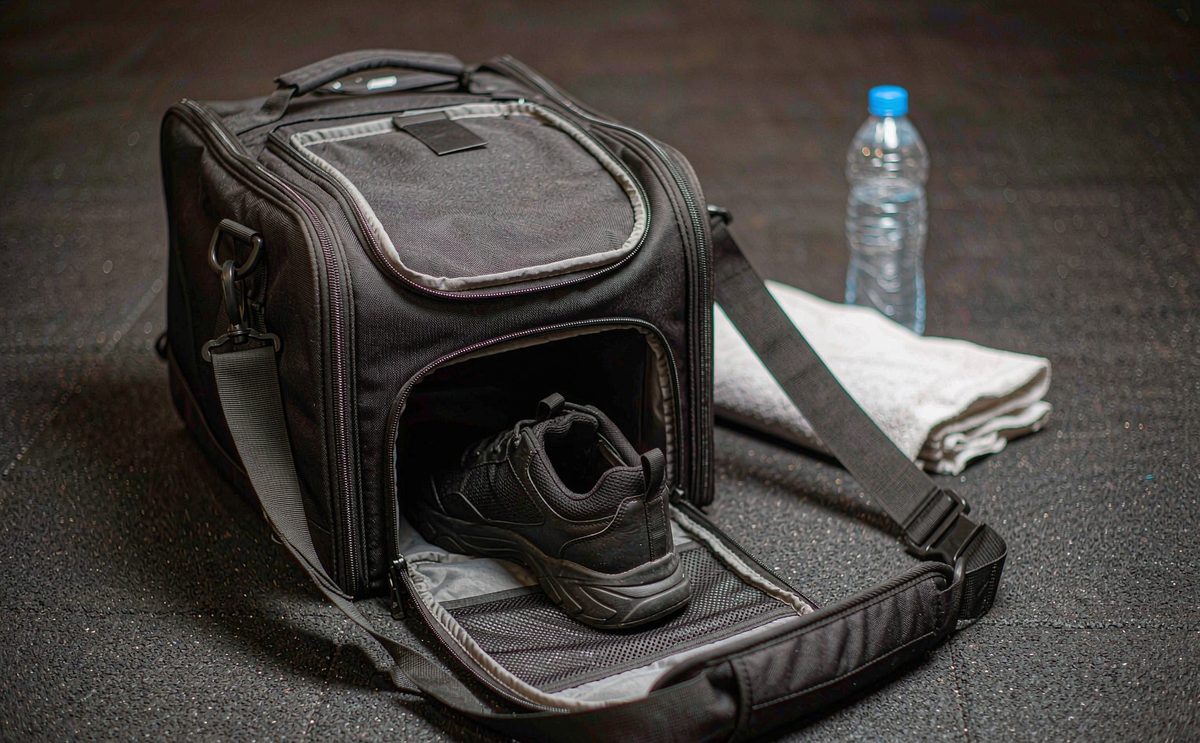
Fitness campaigns default to apparel because a printed tee is cheap, familiar and easy to mock up. It is also the reward that generates the most post-campaign work: size surveys, size changes, size-related returns and a size curve that never matches what you ordered. A gym bag removes all of that. This article compares the two honestly, including where apparel is still the better answer, and sets out what changes when a fitness campaign moves its hero reward from a garment to a bag.
- Minimum order quantity
- 500 pcs per style / colourway
- Sampling
- 6-10 working days (12-15 for complex builds)
- Bulk production
- 35-50 days after deposit + approved pre-production sample
- Inspection
- AQL 2.5 to ISO 2859-1
- Trade term
- FOB Xiamen
- Payment
- T/T 30/70
- Production floor
- 4,950 m2 SGS-verified, 137 staff, 7 lines, 149 machines
- Monthly capacity
- 200,000 pcs per month
- Campaign experience
- 20+ crowdfunding campaigns supported
Key takeaways on fitness merchandise
- A bag has no size curve, which removes the survey, the size-related return and the unsold size tail.
- Perceived value per unit is higher for a bag, which supports a tier price two to three times a printed tee.
- Apparel still wins on unit cost, packability and speed; use it as a secondary tier rather than the hero.
- Decoration options on a bag are broader: embroidery, woven labels, patches and heat transfer all work.
- Plan 6-10 working days for sampling and 35-50 days for bulk, and price the tier on landed cost.
The sizing problem that apparel rewards inherit
Every apparel reward carries a forecasting problem that no other reward category has. You are not ordering one product; you are ordering five or six variants of it in proportions you have to guess before the campaign closes. Get the curve wrong and the outcome is predictable: the medium and large sell out in the first week, the small and the extra-large sit unsold, and backers who wanted a sold-out size either cancel or wait.
The second-order effects are worse than they look. A size curve means your 500 pcs minimum is not one commitment but a distributed one, and some apparel programmes apply minimums per size as well as per style. It means the backer survey at the end of the campaign becomes a dependency rather than a nicety. And it means a late size change request, which arrives from roughly one in ten backers, has to be reconciled against a cut list that was already made.
A bag has none of this. There is one size, one colourway decision and one cut list. The comparison is not that a bag is a better product in the abstract; it is that a bag removes an entire category of operational work from a campaign team that is already running a marketing operation, a community operation and a support operation at the same time. That is the argument that matters when you are choosing a hero reward. Our custom bags for Kickstarter overview sets out how this fits the sourcing process.
Perceived value: what backers think each reward is worth
Backers do not price rewards on cost; they price them on comparison. A printed tee is compared against the tees they already own, which sets a ceiling that is hard to escape regardless of print quality. A gym bag is compared against the bags in a gym changing room and against retail sports bags, which is a higher and wider band, and it is a product that people rarely own a spare of.
The practical effect is on what tier price the audience will accept. A printed tee commonly sits in the USD 25 to 45 band as a reward. A mid-specification gym bag commonly sits in the USD 55 to 110 band, and a structured bag with a wet compartment supports the upper end of that. The unit cost difference between the two products is real but smaller than the price difference, which is precisely why the bag produces more contribution per pledge.
Perceived value also has a durability component that backers apply instinctively. A tee is understood as a consumable with a finite life. A bag is understood as a durable good that will still be in use next year, and that expectation raises what people will pay without any change to the product itself. It is also the reason the bag has to be specified to last: the perceived-value advantage disappears the moment the first review mentions a broken zip.
| Factor | Printed T-shirt | Custom gym bag |
|---|---|---|
| Comparison set used by backers | Tees they already own | Retail gym and sports bags |
| Common reward price band | USD 25-45 | USD 55-110 |
| Size decision required | Yes, five to six variants | No |
| Expected product life | One to two years | Three to five years |
| Decoration area | Chest or back print | Panel, pocket, strap, lining |
| Unprompted review mentions | Fit and print quality | Compartments and zips |
Returns, exchanges and the cost of the wrong size
Return rates are the number fitness campaigns underestimate most. A reward that fits gets kept; a reward that does not fit generates a support conversation, and in apparel that conversation happens at a rate that is materially higher than in any hard goods category. Published e-commerce return rates for apparel commonly sit well above those for accessories, and the gap is driven almost entirely by fit rather than by quality.
The cost of a return on a crowdfunding reward is higher than in retail, because there is no reverse logistics operation to absorb it. The campaign team handles the message, pays for the return leg, pays for the replacement leg, and absorbs the delay. At a reward price of USD 30 with a return rate in the teens, the effective cost per delivered reward rises by a figure that frequently exceeds the gross margin on the unit.
A bag does not eliminate returns, because damage in transit and genuine dissatisfaction still occur, but it removes the dominant cause. The returns that remain are the ones a QC programme can address: a failed zip, a marking defect, a shade variance. Those are specification failures rather than forecasting failures, and they are addressed by an AQL 2.5 to ISO 2859-1 inspection before the goods ship rather than by a support team after they arrive.
- Fit is the dominant driver of apparel returns and the one a bag removes entirely.
- Cost a return end to end: support time, return leg, replacement leg and delay.
- Model a return rate against your reward price before you set the tier.
- Budget a spare-unit reserve of 3-5 per cent for warranty and damage replacements.
- Treat remaining bag returns as a QC problem addressed before dispatch, not after.
Durability and brand impressions over the product life
Merchandise is marketing, and the metric that matters is impressions per unit over the life of the product. A tee worn once a fortnight for two years produces a certain number of impressions. A gym bag carried to a gym three times a week for four years produces substantially more, and it produces them in a context where the brand is associated with the activity rather than with the wardrobe.
That difference has a design implication. If the value of the reward is impressions, then durability is a marketing specification rather than a quality afterthought. Fabric denier, zip reference, strap attachment method and base reinforcement are the lines that determine whether the bag is still being carried in year three, and they are the lines worth spending on. A bag that fails in month six has produced a fraction of the impressions it was bought for.
There is also a visibility question that favours the bag in a gym context specifically. A tee is worn and seen; a bag is set down on a bench, hung on a hook and carried through a reception, which means it is seen by people who are not the wearer and who are in the target audience. For a fitness brand, that is the more valuable impression, and it is the reason gym bags outperform apparel as brand-building merchandise even when the unit economics are closer than they look.
There is a measurable way to approach this rather than a rhetorical one. Estimate the number of sessions the bag will be carried in a year, multiply by the number of people who will see it in each session, and compare that with the same calculation for a garment. The result is usually a multiple rather than a marginal difference, and it is the number to use when deciding whether to spend an extra dollar on a better zip or on a heavier fabric.
Unit economics: tee versus gym bag at the same tier price
The honest comparison starts with cost. A printed tee at 500 units costs materially less per piece than a gym bag at 500 pcs: less material, fewer minutes of labour, simpler packing. That is real and it is the main argument for apparel. The comparison then moves to price, where the bag wins by a wider margin than it loses on cost, and to the costs around the unit, where the bag wins again on returns and on size-curve dead stock.
Work it as contribution per pledge rather than as margin percentage. Take the tier price, subtract landed unit cost, subtract an expected return cost, subtract a share of the dead stock you expect to hold, and what remains is what the campaign actually earns. On that basis a bag at a higher tier price frequently produces more contribution per backer than a tee at a lower one, even though the tee shows a healthier-looking margin percentage on a spreadsheet.
The caveat is cash. A bag costs more per unit, so 500 pcs of bags ties up more working capital than 500 pcs of tees before any revenue arrives. For a campaign with limited pre-funding cash, that is a genuine constraint, and it is the main reason some campaigns should keep apparel as the hero. The mitigation is a smaller first run: 500 pcs rather than 1,000, with a re-order planned in the original request rather than negotiated afterwards.
| Line | Printed T-shirt | Custom gym bag |
|---|---|---|
| Indicative reward price | USD 30-40 | USD 65-95 |
| Landed unit cost | Lowest | Roughly 2-3x the tee |
| Size curve dead stock | Present and hard to sell | None |
| Expected return burden | Fit-driven, material | Defect-driven, small |
| Working capital at 500 pcs | Lowest | Higher |
| Contribution per backer | Lower | Usually higher |
Shipping profile: weight, cube and the freight line
A tee ships flat and light and is the cheapest thing in any campaign to distribute. A bag ships as a three-dimensional object, which means it is charged on volume by air freight and express carriers, and a structured bag that cannot be compressed is penalised more than a soft one. This is the clearest operational advantage apparel holds and it should be modelled rather than assumed.
The mitigation is design. A bag that can be packed flat, or that packs efficiently because its compartments nest, ships for materially less than a bag with a rigid base and a moulded back panel. Whether compression matters depends on the destination mix: a campaign shipping mostly to one country can use sea freight for part of the volume and the penalty is smaller, while a campaign shipping to 40 countries by air feels all of it.
Model it as a per-unit line before you set the tier price. Take the packed carton, compute volumetric weight with the divisor your carrier uses, divide by the pieces per carton, and add duty for the main destination. Campaigns that do this often find the bag still wins on contribution, but they find it with numbers rather than with optimism, and they know how much freight headroom the tier has. Our crowdfunding rewards fulfilment page covers the shipping side in detail.
One capability deserves a decision early because it affects the production sequence: variable data. Heat transfer allows a different name on every unit without stopping the line, while embroidery needs a digitised file per name and therefore a set-up step. If personalisation is part of the reward, choose the method at specification stage rather than discovering during production that the chosen method cannot handle per-unit data.
There is a second freight variable that favours the bag in one specific respect: damage. A garment in a polybag survives transit well and a structured bag with a rigid base does not, which means the bag needs better carton specification and a slightly higher damage reserve. Budget both and the comparison stays honest. The bag still usually wins on contribution, but it wins by a narrower margin than a comparison that ignores damage would suggest.
Personalisation limits: print area versus decoration options
Apparel offers one dominant decoration method and a limited number of positions: chest, back, sleeve. It is cheap, it is well understood and it scales. A bag offers more positions and more methods, which is an advantage in flexibility and a disadvantage in decision-making, because every additional position is another set-up, another registration check and another defect class to inspect.
The methods available on a bag include embroidery, woven labels, printed panels, heat transfer, rubber or PVC patches and sublimated panels, and each has a different minimum, a different durability profile and a different cost. Embroidery and woven labels suit small marks and last longest. Printed panels suit large artwork and cost less at volume. Heat transfer suits variable data such as names, which is a capability apparel also has but which is more valuable on a durable good.
The recommendation for a first bag reward is two positions maximum: a primary mark on the front panel or pocket, and a secondary woven label or small print elsewhere. That is enough to look considered and few enough to keep the sampling round clean. Adding a third position rarely changes conversion and it always adds a registration check at inspection, which is a cost that lands at the worst point in the calendar.
Colour count is the hidden cost inside every decoration method. A one-colour print and a four-colour print on the same panel are different operations with different set-up costs and different registration risks, and a gradient or photographic artwork adds another layer again. If the brand artwork is complex, ask which method reproduces it faithfully at the size you need, then check whether a simplified version would look better at that size. Artwork designed for a screen rarely translates directly to a bag panel without adjustment.
Lead time compared: apparel versus bag sampling
Apparel is faster. A printed tee can often be sampled in days rather than weeks, because the base garment exists and the sample is a print application. A bag has to be cut and sewn from a pattern, which means sampling of 6-10 working days for a standard build and 12-15 working days for a complex one, followed by bulk production of 35-50 days after deposit and written pre-production sample approval.
That is a real difference and it has to be planned around rather than argued with. The practical answer is to move sampling into the pre-launch period. Two rounds at 6-10 working days fit comfortably into a six to eight week pre-launch window, and if the pre-production sample is approved before the campaign opens, the only thing between funding and production is the deposit. That removes four to six weeks from the delivery path and makes the bag competitive with apparel on calendar.
There is one more scheduling point that favours the bag. Because there is no size curve, there is no backer survey dependency between funding and production. An apparel campaign cannot start cutting until the sizes are collected and reconciled, which typically adds two to four weeks after the campaign closes. A bag campaign can start as soon as the deposit lands, which recovers a meaningful part of the lead time difference. Our sample prototyping page sets out the gate in detail.
- Freeze the bag specification before launch: dimensions, materials, hardware and decoration coordinates.
- Complete sampling round one during pre-launch and return one numbered revision list.
- Complete sampling round two and measure the unit loaded with real kit.
- Approve the pre-production sample in writing before the campaign opens where possible.
- Release the 30 per cent deposit under T/T 30/70 as soon as funding clears.
- Run inspection at AQL 2.5 and release the 70 per cent balance before loading FOB Xiamen.
Where apparel still wins: the case for a mixed tier
This is not an argument for abandoning apparel. A tee is the best low-tier reward in fitness: cheap enough to sit at a USD 30 entry point, fast to produce, easy to ship, and an effective way to convert a follower into a backer. The mistake is making it the hero and pricing the campaign around it, which caps the average pledge at the ceiling the tee sets rather than at what the audience would pay for a bag.
The structure that works is a ladder with the tee at the bottom and the bag in the middle. An entry tier with a tee converts volume and builds the backer count. A mid tier with the bag carries the margin and the brand-building value. A top tier bundles the two, which costs little extra to assemble and gives the highest pledges a reason to exist. The bag is the hero in terms of margin; the tee is the hero in terms of reach.
There is also a category where apparel genuinely beats a bag: campaigns where the audience is buying into a design or a slogan rather than into an activity. A fitness campaign built around a strong graphic identity may find the tee is the product people want, and forcing a bag into that campaign produces a reward nobody asked for. Test it with the audience before committing, because the answer differs by community rather than by category.
The final change is in the support load. A bag generates different questions from a garment: dimensions, compartment fit, materials and care. Prepare a short specification summary to paste into responses and put the same answers in a campaign update, because the same eight questions will arrive repeatedly during the campaign and again after delivery. Campaigns that prepare this in advance spend their time on marketing rather than on repeating themselves.
Think about the entry tier as a conversion instrument rather than as a product. Its job is to turn a follower into a backer at the lowest possible psychological price, and a tee does that better than anything else in fitness. Once someone has pledged, the upgrade path to the bag tier is a second decision, and a well-built campaign page makes that upgrade visible in the pledge manager rather than relying on backers to find it themselves.
How to transition an apparel-led campaign to a bag reward
Campaigns that have run apparel before and want to add a bag should not treat it as a second garment. The brief changes from artwork-driven to specification-driven: instead of a print file and a size curve, you now need dimensions, materials, hardware references, compartment layouts and decoration coordinates. Budget time for that specification work before sampling starts, because a vague bag brief produces a sample round that answers nothing.
The second change is in the reward page. An apparel reward page sells a graphic; a bag reward page has to sell a set of dimensions and a compartment layout. That means photography of the open bag, a stated capacity or dimension, and answers to the fit questions that bag backers ask: what shoe size fits the compartment, what laptop size fits the sleeve, whether the bottle sleeve fits a standard bottle.
The third change is the calendar. Move sampling earlier than you would for apparel, and do not plan a bag on the same post-campaign timeline you used for tees. The campaigns we have supported that made this transition successfully were the ones that pre-sampled and pre-approved before launch; the ones that struggled were the ones that treated the bag as an apparel order with a longer wait attached. If you are planning this transition, our gym bag pillar page is the place to start.
Budget for one extra support commitment as well: a specification page. A fitness audience that has only ever bought garments from you will ask about materials, dimensions and care, and each answer is a small piece of trust. Publishing a short specification table on the campaign page converts better than paragraph copy and reduces the message volume at the same time, which is the reason several campaigns we have supported saw support load fall after adding one.
Writing the reward page so the comparison is obvious
Backers will not do the comparison for you. A reward page that lists a tee and a bag as two options without explaining the difference produces a split rather than a ladder, and a split lowers the average pledge. Make the difference explicit: state the dimensions, state what the compartments hold, and state the materials by name rather than by adjective.
Answer the three questions bag backers ask before they pledge. How big is it, in dimensions rather than in litres. What fits in the shoe compartment, as a stated shoe size. And what is it made of, as a denier and a material name. Those three answers remove most pre-pledge messages and they signal that the product was specified rather than sourced from a catalogue.
Then publish the delivery month. A bag reward takes longer than a tee and backers will accept that if it is stated on the page rather than discovered in an update. Where sampling is already complete, say so: a reward whose sample is finished and approved is a materially lower risk than one that has not been made yet, and that fact is worth stating as prominently as the price.
- State dimensions, not litres, and state the largest shoe size the compartment accepts.
- Name the materials by denier and type rather than using adjectives.
- Publish the delivery month and say whether sampling is already complete.
- Explain the difference between tiers rather than leaving backers to compare.
- Photograph the open bag and the compartments, not only the closed product.
- Answer whether the reward has a size decision; the absence is a selling point.
The RFQ for a first bag reward on a fitness campaign
A request for quotation is only as accurate as the specification behind it. For a first gym bag that means the format, the target use, the compartment list with dimensions, the shell and lining by denier and coating, the hardware references, the decoration method and its coordinate, the packing specification, the quantity per style and colourway, the inspection standard, the trade term and the destination market.
- Format and target use: duffel, backpack or tote, and where it will be carried.
- Compartment list with internal dimensions, including the largest shoe size to be supported.
- Shell, lining and base materials named by denier, weave and coating.
- Hardware references with material grade, especially zips and strap webbing.
- Decoration method, colour count, maximum logo dimension and a measured coordinate.
- Packing specification: pieces per carton, carton dimensions, polybag and marking.
- Quantity per style and colourway, with 500 pcs per style and colourway as the minimum.
- Destination market, delivery month and any compliance documentation required.
Two items on that list deserve emphasis because they change the answer more than anything else. The compartment dimensions determine whether the bag is fit for purpose, and the destination market determines the compliance documentation and therefore part of the lead time. Send the request as one document and you will receive a unit cost, a sampling estimate and a production window in a single exchange. Our team works as a campaign bag specialist at exactly this stage, having supported 20+ crowdfunding campaigns through it. See the wet-dry gym bag guide for compartment detail, or send us a brief through the quote request page.
Frequently Asked Questions
Why is a gym bag a better Kickstarter reward than a T-shirt?
Mainly because it has no size curve. One size fits every backer, so there is no size survey, no fit-driven returns and no unsold size tail. Perceived value is also higher: a bag is compared against retail sports bags at USD 55-110 rather than against tees at USD 25-45, and it produces more brand impressions over a longer life.
What is the MOQ for a custom gym bag reward?
500 pcs per style and per colourway. That is a single commitment for one bag in one colourway, because there are no sizes to distribute it across. Two colourways means two commitments, so most first campaigns use one base colourway with trim or lining variation for visual choice.
How long does a gym bag reward take compared with apparel?
Longer: sampling is 6-10 working days per round, or 12-15 for a complex build, and production 35-50 days after deposit and written sample approval. The difference narrows if you pre-sample before launch and if you count the two to four weeks an apparel campaign spends collecting sizes after funding closes.
Do bag rewards have lower return rates than apparel?
Generally yes, because the dominant cause of apparel returns, which is fit, does not exist for a bag. The returns that remain are defect-driven and are addressed by AQL 2.5 inspection before dispatch rather than by a support team after delivery. Damage in transit and genuine dissatisfaction still occur and need a spare reserve.
What reward price can a custom gym bag support?
Commonly USD 55-110 for a mid-specification bag, with a structured bag that has a wet compartment at the upper end. The band is set by comparison against retail gym bags rather than by cost. Work backwards from landed unit cost plus freight plus a contingency, and test the tier against a 20 per cent freight increase.
Is a bag more expensive to ship than a T-shirt?
Yes, and it is the clearest advantage apparel holds. Bags are charged on volumetric weight by air and express carriers, and a structured bag that cannot be compressed is penalised more. Model it per unit from packed carton dimensions before you set the tier price, and consider whether a pack-flat design reduces it.
Should I keep apparel in my reward ladder?
Usually yes, as the entry tier. A tee converts volume and builds backer count cheaply, while the bag at the mid tier carries margin and brand value. A top tier bundling both costs little extra to assemble. The mistake is making apparel the hero, which caps the average pledge at the ceiling a tee sets.
What decoration methods work on a gym bag?
Embroidery, woven labels, printed panels, heat transfer, rubber or PVC patches and sublimated panels. Embroidery and woven labels suit small marks and last longest; printed panels suit large artwork; heat transfer suits variable data such as names. Keep to two decoration positions on a first reward.
How do I know if my audience wants a bag or a tee?
Ask before committing, because the answer differs by community. Campaigns built around an activity usually find the bag is the product; campaigns built around a graphic identity often find the tee is. A forced-choice survey on the pre-launch list produces a decision that a preference ranking does not.
What should a bag reward page state that an apparel page does not?
Dimensions rather than litres, the largest shoe size the compartment accepts, and materials named by denier and type. Also publish the delivery month and say whether sampling is already complete. Those answers remove most pre-pledge messages and signal that the product was specified rather than catalogued.
How much working capital does a bag reward need?
More than apparel, because the unit cost is roughly two to three times a printed tee and 500 pcs is the minimum. If cash is constrained, keep the first run at 500 pcs rather than 1,000 and plan the re-order in the original request, so the second run is a confirmation rather than a new negotiation.
Can I pre-sample a bag before my campaign launches?
Yes, and you should. Two rounds at 6-10 working days fit into a six to eight week pre-launch window and remove four to six weeks from the post-campaign path. Approving the pre-production sample before launch means the only thing between funding and production is the deposit under T/T 30/70.
People Also Ask
Is a gym bag better than a T-shirt as a crowdfunding reward?
Usually for fitness campaigns. The decisive factor is the absence of a size curve, which removes surveys, fit returns and unsold sizes, plus a higher perceived value band.
Why do apparel rewards cause more returns?
Fit. Apparel returns are dominated by sizing, and crowdfunding has no reverse logistics operation to absorb them, so each one costs support time plus two shipping legs.
What price can I charge for a gym bag reward?
Commonly USD 55-110 for a mid-specification bag. The band is set by comparison against retail gym bags rather than by your cost.
How long does a gym bag reward take to produce?
Sampling 6-10 working days per round, or 12-15 for complex builds, then production 35-50 days after deposit and approved sample. Pre-sampling before launch cuts weeks off the path.
Should I still offer a T-shirt tier?
Yes, as the entry tier. It converts volume cheaply while the bag carries margin. Bundle both at the top tier.
Are bags expensive to ship?
More than tees, because carriers charge on volumetric weight. Model it from packed carton dimensions before setting the tier price.
Can I put names on gym bag rewards?
Yes, by heat transfer, which handles variable data without changing the production sequence. Embroidery needs a digitised file per name.
What should I state on a bag reward page?
Dimensions, the largest shoe size the compartment fits, materials by denier and type, and the delivery month.