Custom Pickleball Bags for Kickstarter: The Fast-Growing Sport Niche
Pickleball is a strong bag niche because the paddle dictates the design, the audience is club-based and buys in groups, and the category is not yet saturated with branded kit. The specification that matters is paddle carriage: a compartment or sleeve sized to a standard paddle of roughly 16 inches by 8 inches, protected at the edge, and shaped so the paddle does not press into the wearer's back. Plan on 500 pcs per style and colourway, sampling of 6-10 working days and production 35-50 days, with a reward price band that sits below technical racket sports bags.
- Why pickleball is a structurally good bag niche
- The paddle is the specification: dimensions and protection
- Court bag, backpack or sling: choosing the format
- The fence hook and the small features that win reviews
- Designing for an older, club-based audience
- Balls, shoes, water and the rest of the kit
- Colour and branding taste in this niche
- Fabric and hardware for a light but stiff load
- Unit cost and the price band this niche accepts
- Club and tournament distribution as a demand channel
- Sampling and QC on the paddle compartment
- The pickleball RFQ
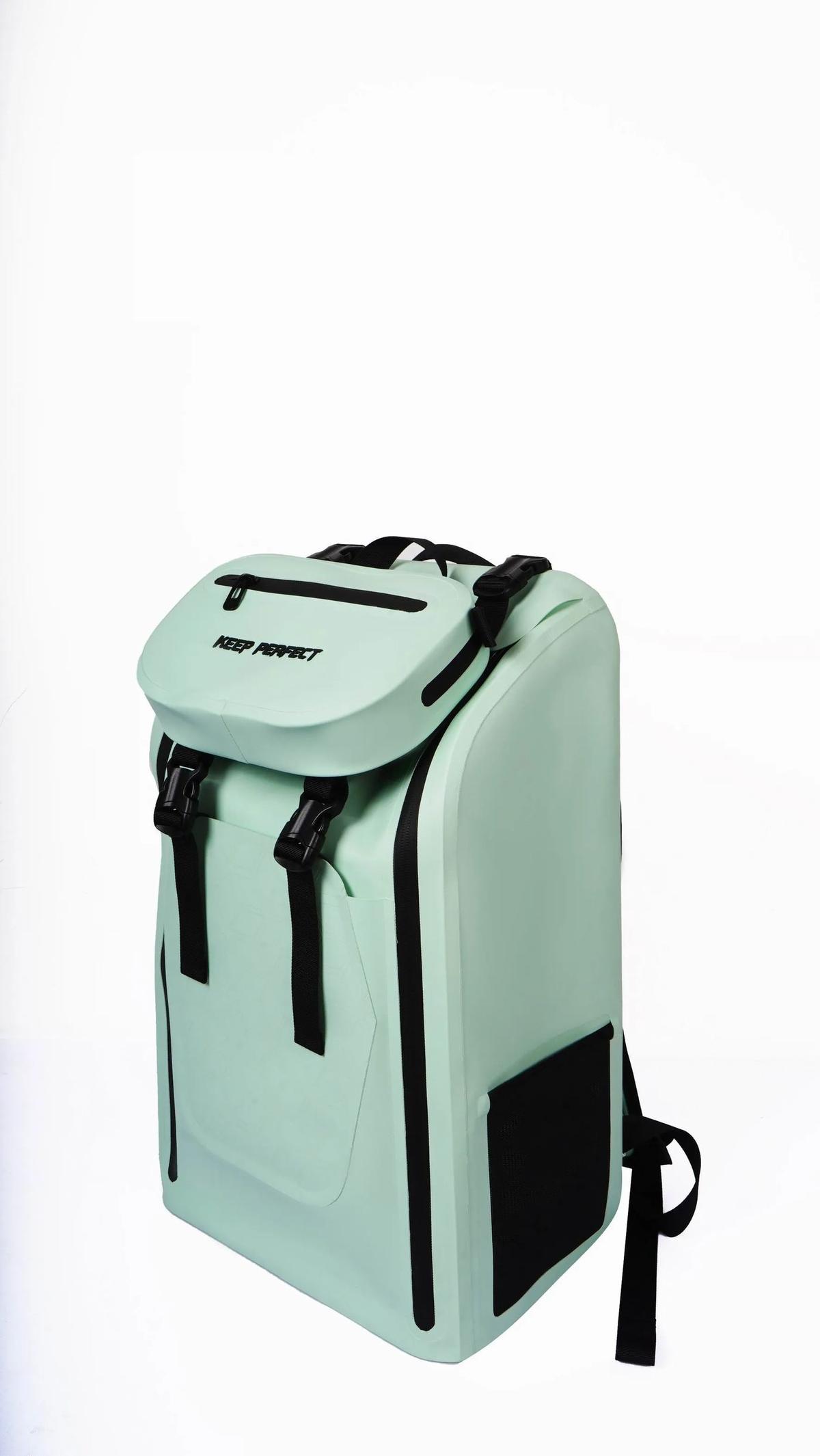
Pickleball has three properties that make it unusually attractive for a bag campaign. The equipment includes a rigid, awkwardly shaped object that no general sports bag carries well, which creates a genuine product reason rather than a marketing one. The player base is club-based and organised, which means group demand and repeat orders. And the branded kit market is less saturated than in tennis or golf, so a well-specified product does not have to fight an established shelf. This article is about turning those three advantages into a specification.
- Minimum order quantity
- 500 pcs per style / colourway
- Sampling
- 6-10 working days (12-15 for complex builds)
- Bulk production
- 35-50 days after deposit + approved pre-production sample
- Inspection
- AQL 2.5 to ISO 2859-1
- Trade term
- FOB Xiamen
- Payment
- T/T 30/70
- Production floor
- 4,950 m2 SGS-verified, 137 staff, 7 lines, 149 machines
- Monthly capacity
- 200,000 pcs per month
- Campaign experience
- 20+ crowdfunding campaigns supported
Key takeaways on pickleball bag sourcing
- Paddle carriage is the category-defining specification; size it to a standard paddle and protect the edge.
- Choose one format and one colourway for a first run: 500 pcs per style and colourway.
- Design for a club-based, often older audience: light weight, easy-open hardware, clear compartments.
- The fence hook is a small feature that generates disproportionate review mentions.
- Sampling 6-10 working days and production 35-50 days; price the tier below technical racket sports bags.
Why pickleball is a structurally good bag niche
The first reason is equipment-driven rather than trend-driven. A pickleball paddle is rigid, roughly rectangular and around 16 inches long, and it does not fit well in a general gym bag, a backpack bottle pocket or a tennis bag designed around a much longer racket. That creates a real fit problem, and fit problems are the ones crowdfunding solves well because the product reason is obvious in a single photograph.
The second reason is social structure. Play is organised around clubs, open sessions, leagues and tournaments, and players join rather than just participate. That has two consequences for a campaign: group orders are realistic, and the product gets seen by other players in the exact target audience every session. Both are worth more than the equivalent reach in an individual sport.
The third reason is competitive whitespace. Tennis, golf and cycling all have established branded bag categories with strong retail presence, which sets a comparison standard that a first campaign struggles to beat on price. Pickleball has far less branded kit at retail, which means the comparison set is thinner and a well-specified product can define the standard rather than chase it. Our custom bags for Kickstarter overview covers how a niche brief like this enters the sourcing process.
There is a fourth, more commercial reason worth weighing. Participation in this sport has been growing quickly in several markets, and growing sports produce new clubs, new leagues and new players who need kit now rather than later. A campaign that launches into a growing participation curve benefits from demand that is arriving anyway, which is a materially easier sell than a campaign trying to take share in a flat or declining category.
The paddle is the specification: dimensions and protection
Everything in this category starts from the paddle. A standard paddle is roughly 16 inches long and 8 inches wide with a handle that adds length, and a bag has to accept that object without bending it, without letting a hard edge press into the wearer's back, and without leaving it loose enough to rattle. Those three requirements point to a dedicated compartment rather than a sleeve inside the main volume.
Protection has two components that campaigns often conflate. Edge protection means the compartment walls are padded or lined so the paddle edge does not abrade the bag from inside or the bag from outside. Shape retention means the compartment holds the paddle flat against a structured panel rather than allowing it to bow. A padded sleeve that allows bowing fails the second test and is the most common disappointment in this category.
Decide early whether the compartment carries one paddle or two, because it changes the depth and therefore the whole silhouette. Most recreational players carry one or two. A compartment sized for two with a divider is more useful, only marginally more expensive, and it is a specification detail that reads well on a campaign page. Publish the number and the maximum paddle dimensions the compartment accepts, because that is the first question this audience asks.
| Carriage type | Protection | Relative cost | Audience perception |
|---|---|---|---|
| Dedicated padded compartment, one paddle | Best shape retention | Baseline | Purpose-built; reads as authentic |
| Padded compartment, two paddles with divider | Best | 1.1-1.3x | Serious player; good campaign story |
| External padded sleeve | Good edge, weaker shape | 0.8-1.0x | Casual; can read as an afterthought |
| Internal sleeve inside main volume | Moderate | 0.7-0.9x | Least authentic; steals internal space |
| Removable paddle case | Best transport protection | 1.3-1.8x | Premium; adds a loose component |
Whichever format you choose, publish the empty weight and the external dimensions. This audience compares across formats and cares about carrying a bag for an hour or more at a time, so both numbers influence the decision more than the compartment count does. Stating them also prevents the most common post-delivery disappointment in this category, which is a bag that is technically fit for purpose and heavier than the buyer expected.
Court bag, backpack or sling: choosing the format
Three formats serve this niche and they attract different buyers. A court bag, carried by hand or over one shoulder with a structured shape, is the traditional choice and the one that reads most clearly as pickleball. A backpack distributes weight across both shoulders, which matters for a player walking or cycling to a venue, and it doubles as everyday carry. A sling is the lightest option and suits a player carrying one paddle, a few balls and a bottle.
The choice is not cosmetic, because it changes what else fits. A backpack can carry shoes and a change of clothes in addition to paddles; a court bag can usually carry paddles, balls and a bottle but not much more; a sling carries paddles and almost nothing else. Ask your audience which of the three they would use, because the answer is usually unanimous within a club and split between clubs, and a split audience is an argument for one format rather than two.
For a first campaign, one format at 500 pcs per style and colourway is the right commitment, and the backpack is the safest of the three because it has the widest use case and the best resale value if a run does not clear. If the audience is clearly court-bag oriented, follow the audience. What you should not do is offer two formats, because that is two styles, two minimums, two sampling rounds and two sets of photography for one campaign.
Think about where the bag is stored between sessions, because that is a question this audience asks and few campaigns answer. A structured court bag takes space in a hallway or a car boot; a backpack hangs on a hook; a sling goes in a cupboard. For players who keep kit in a car between sessions, size and shape matter as much as capacity. Ask the question in a survey and put the answer in the reward copy, because it is a decision criterion the audience applies silently.
The fence hook and the small features that win reviews
Pickleball is played at courts enclosed by chain-link fencing, and players hang their bags on the fence. This is a small, specific, universally shared behaviour, and a bag that acknowledges it gets mentioned in reviews more often than almost any other feature. A fence hook is a short webbing loop with a clip or a carabiner, positioned so the bag hangs upright and the compartments stay accessible.
The specification details matter. The hook has to be rated for the loaded weight of the bag, which means webbing stated by breaking strength and an attachment that is bar-tacked rather than straight-stitched. It has to be positioned so the bag hangs with its opening accessible, which usually means high on the back panel. And it should be stowable, so the bag does not snag on anything when the hook is not in use.
Three other small features generate disproportionate review mentions in this category. A ball pocket sized for a sleeve of balls rather than for one. A bottle sleeve with a stated internal diameter, because insulated bottles vary widely. And an external pocket for keys and phone that is reachable while the bag is hanging on a fence. None of these are expensive and all of them are the difference between a bag that is adequate and one that gets recommended to other players at the club.
- Add a stowable fence hook rated for the loaded weight, positioned high on the back panel.
- Size the ball pocket to a sleeve of balls, not to a single ball.
- Give the bottle sleeve a stated internal diameter rather than a volume.
- Put a keys and phone pocket where it is reachable while the bag hangs.
- Keep the paddle compartment opening operable with one hand.
- Avoid features that require the bag to be put down to use.
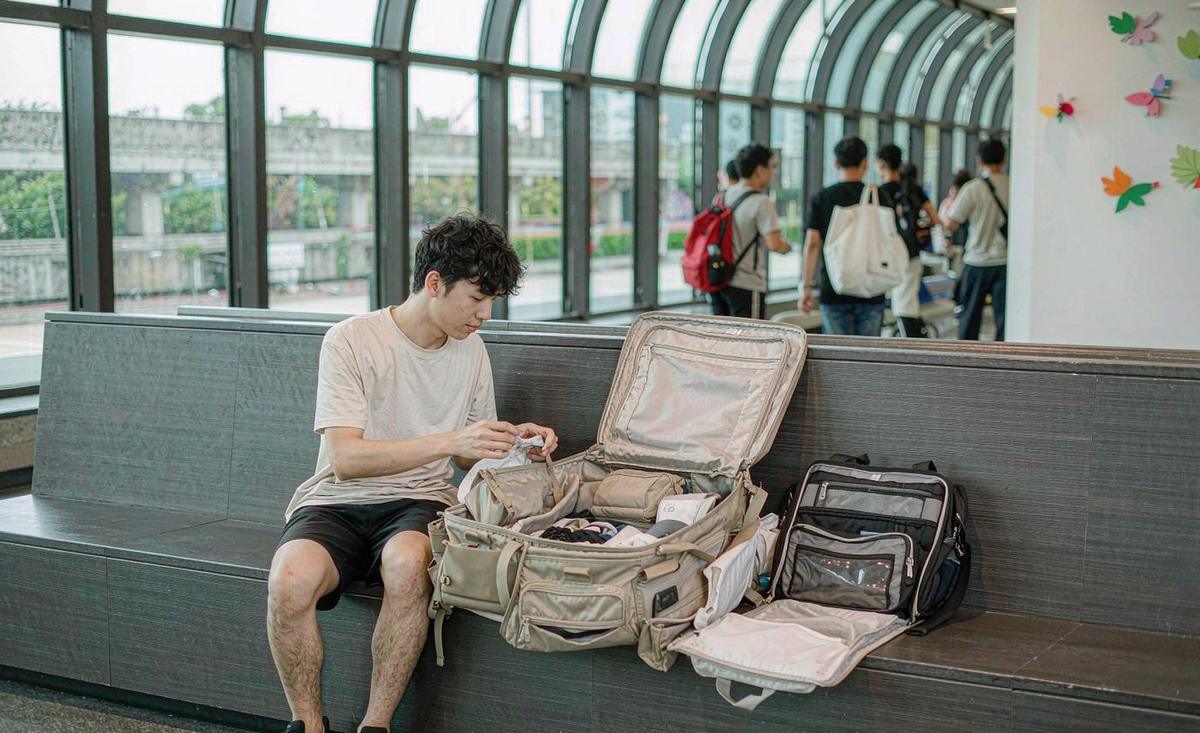
Consider the strap specification with particular care, because it is the comfort variable this audience judges hardest. Wider straps distribute load better, padding that does not flatten after a season matters more than padding that feels soft in a shop, and an adjustable sternum strap helps a player carrying the bag for a longer walk. Publish strap width and padding thickness rather than describing comfort, because a number can be compared and an adjective cannot.
Designing for an older, club-based audience
The demographic profile of this sport skews older than most racket sports, and that has design consequences which are practical rather than cosmetic. Weight matters more, because the bag is carried further and shoulder tolerance is lower. Hardware matters more, because grip strength and dexterity vary. And visual contrast matters more, because finding a dark lining inside a dark compartment is harder for anyone and harder again in low light.
Translate that into four specification lines. Keep the empty weight as low as the structure allows and publish it, because it is a comparison point this audience uses. Choose zip pullers that are large enough to grip and operate with one hand. Use a light-coloured lining so contents are visible. And state strap width and padding, because shoulder comfort is the comfort question that gets asked.
None of this means the product should look medical or utilitarian. It means the design should not silently exclude the people who play the sport most. The best test is a simple one: hand the sampling unit to three players in the target age range, ask them to load it, hang it, open every compartment and carry it across a car park, and watch what they struggle with. Twenty minutes of observation changes a specification more reliably than any internal review.
Accessibility is worth stating explicitly rather than leaving implicit. A bag that can be opened fully flat, whose main compartment does not require reaching into a dark corner, and whose zips run smoothly with light pressure, is a bag that works for the widest possible range of players. None of these add meaningful cost, and all of them are specification lines rather than design flourishes. State them in the brief so they are built in rather than added later as a redesign.
Balls, shoes, water and the rest of the kit
Beyond the paddle, the kit list for this sport is short and predictable: two to six balls, a water bottle, court shoes if the player changes at the venue, a towel, sunglasses, keys and a phone. That is a small load, which is why the bag does not need to be large and why the design conversation is about layout rather than about capacity.
The layout decision that matters most is whether shoes go inside. Players who drive to a court often change there, which means a shoe compartment is useful; players who arrive dressed do not need one. Including a ventilated shoe compartment costs panels and labour and adds to the silhouette. Ask the audience rather than assuming, because including it when half the audience does not need it means paying for a feature that reduces the bag's appeal to the other half.
Where a shoe compartment is included, it needs the same moisture logic as any sports bag: ventilation at the top, a drainage route at the bottom, and a liner that can be wiped. Court shoes pick up grit and dust rather than mud, which is slightly kinder than a field sport, but dust plus sweat produces the same odour problem over time. Our wet-dry gym bag article sets out that specification in detail.
| Kit item | Dimension it governs | Starting allowance |
|---|---|---|
| Paddle, standard size | Paddle compartment depth and width | Sized to stated maximum paddle dimensions |
| Two paddles with divider | Compartment depth | Two paddles plus divider thickness |
| Sleeve of balls | Ball pocket internal dimensions | Sized to a sleeve, not a single ball |
| Insulated bottle | Sleeve internal diameter | Confirm diameter, not volume |
| Court shoes, if carried | Shoe compartment length | Largest shoe size plus 2-3 cm |
| Towel, sunglasses, phone | Main compartment and quick-access pocket | Sized after paddle and shoe decisions |
There is a practical reason for restraint beyond taste. A bag with restrained branding is wearable by players from different clubs, which widens the resale market and makes a club order more likely to include members who would not carry a strongly branded product. A neutral base with a removable or discreet club mark gives you both: club identity when it is wanted and a clean bag when it is not.
Colour and branding taste in this niche
Branding taste in this category is more restrained than in streetwear-adjacent sports. Players want a bag that reads as pickleball equipment and carries a club or brand mark, not one that shouts. The practical implication is a moderate logo size in one clear position, a colour palette with two or three tones rather than high-contrast graphics, and no large all-over print.
Colourway choice should be driven by the club reality. Many clubs have colours, and a bag that clashes with club kit will not be bought by club members regardless of its other merits. A neutral base, navy, black, grey or white, with trim and lining variation is the safest structure, and it is also the structure that keeps you inside one 500 pcs per colourway commitment while still offering visual choice.
Decoration method follows the same logic. Embroidery or a woven label suits this audience better than a large heat transfer print, because it reads as equipment rather than as merchandise and it survives repeated use. Where a club mark is applied, the team sports bag guidance on vector artwork and Pantone references applies directly, because the same club buyer is involved.
Where a campaign wants stronger visual identity, the lining is the right place to put it. A bold printed lining is visible whenever the bag is open, it costs less than an external all-over print, and it does not affect how the product reads from a distance on court. That gives a brand its personality without fighting the restraint this audience prefers on the outside, and it photographs well in the open-bag shots that perform best on a campaign page.
Fabric and hardware for a light but stiff load
The load in this category is unusual: light in weight but rigid and awkward in shape. A paddle does not weigh much, but it has hard edges and it does not yield, so the failure mode is abrasion from inside rather than structural overload from weight. The specification response is a lining with adequate abrasion resistance at the paddle compartment, a structured panel behind it, and edge binding on any seam the paddle edge can reach.
Shell fabric can be lighter than in field sports. A mid-denier polyester or nylon with a light coating is usually sufficient, and keeping the shell light supports the empty-weight target that matters to this audience. The base is the exception: it should be reinforced and wipe-clean, because the bag is set down on court surfaces, car park surfaces and bench surfaces, and those are abrasive and often wet.
Hardware should be specified for repetition rather than for load. Zips on the paddle compartment and the ball pocket are opened many times per session, over hundreds of sessions, which makes zip quality the durability variable that shows up first. Name the zip reference, require corrosion-resistant sliders where the bag meets a damp towel or bottle, and include a functional zip check in the inspection plan rather than a visual one.
Unit cost and the price band this niche accepts
Price acceptance here is set by comparison against tennis and general racket bags rather than against gym bags, which is a moderately helpful comparison because racket bags are not cheap. A well-specified pickleball bag typically supports a reward price below technical racket sports bags and above a basic gym duffel, and the band is wide enough to absorb a padded paddle compartment and a fence hook without difficulty.
The cost structure follows the usual shape for a structured bag: fabric and trims 20-28 per cent, cutting and sewing labour 30-40 per cent, decoration 12-20 per cent, hardware and trims 10-16 per cent, packing 4-8 per cent, and overhead including inspection 10-18 per cent. Those are indicative ranges. The paddle compartment adds labour minutes and one structured panel, and the fence hook adds a small hardware and attachment cost.
The decision that protects the band is where to save. Spend on the paddle compartment structure, the zip references and the strap comfort, because those are the three things this audience touches and judges. Save on internal organiser complexity and on lining upgrades in compartments nobody sees, because those are costs that do not convert into a review mention. See the MOQ article for how quantity changes the unit figure.
| Cost line | Indicative share | What moves it |
|---|---|---|
| Face fabric, mesh and lining | 20-28% | Denier, coating, abrasion lining at the paddle compartment |
| Cutting and sewing labour | 30-40% | Compartment count, structured panel, strap attachment |
| Decoration | 12-20% | Method, colour count, print area, set-up amortisation |
| Hardware and trims | 10-16% | Zip references, fence hook, webbing grade |
| Packing and cartons | 4-8% | Pieces per carton, polybag, retail insert |
| Overhead, QC and margin | 10-18% | Inspection level, defect allowance, order size |
Plan the second season at the same time as the first. Clubs that like the bag will re-order, and the re-order is cheaper because sampling and set-up are already paid. Ask for the re-order price in the original request, keep the approved sample and artwork against the specification revision, and confirm a data cut-off and artwork deadline for the second run. That turns one club order into a repeatable annual one.
Club and tournament distribution as a demand channel
Clubs are the demand channel that makes this niche commercially different from an individual sport. A club order is a block of ten to fifty units with one artwork file and one delivery address, and clubs re-order when new members join or when a season starts. Structuring a reward tier for club quantity is one of the highest-return decisions available in this category.
Tournaments are the second channel and they behave differently. Tournament merchandise is bought on the day by players who did not pledge, which means it is retail rather than reward, and it means the units have to exist before the event rather than after the campaign. If tournament sales are part of the plan, they need a separate production decision and a reserved slot, because the units cannot be produced on the post-campaign path and still arrive in time.
Both channels share one requirement: the mark on the bag has to be one the club or event is entitled to reproduce. Get written confirmation before a decorated run is committed, and ask for vector artwork and a Pantone reference at the same time. Our production team asks for this as part of artwork release because a stopped run is expensive for everyone and it is entirely avoidable.
Tournament stock needs a different commercial decision from club orders, because it is speculative rather than pre-sold. Sizes, quantities and artwork have to be committed before demand is known, and unsold stock has to go somewhere. If tournament sales are part of the plan, keep the quantity modest, use a neutral decoration that can be sold afterwards, and treat the first event as market research rather than as a full retail launch. The second event is where the numbers get predictable.
Sampling and QC on the paddle compartment
Sampling of 6-10 working days for a standard build, or 12-15 for a complex one, is the right window to test the one thing that cannot be judged visually: whether the paddle sits correctly in the compartment when the bag is worn. Measure the empty sample, then load it with the largest paddle you claim to fit plus balls, a bottle and shoes, and carry it. A sample that passes empty and fails loaded is common in this category.
Check three specific things while loaded. Does the paddle edge press into the back or shoulder, which indicates the structured panel is too thin or the compartment is too shallow? Does the compartment hold the paddle flat, or does it bow under the weight of the rest of the load? And can the compartment zip be operated one-handed while the bag is on the wearer's back?
Then write those three checks into the inspection plan as functional classes at AQL 2.5 to ISO 2859-1, alongside the standard ones: zip operation, strap attachment integrity, decoration registration and shade consistency. A visual inspection will not find a compartment that bows. A loaded check on a drawn sample will. Our QA and QC page shows how functional classes are written into a plan.
- Release the specification with maximum paddle dimensions, compartment count and hardware references.
- Complete sampling round one and return one numbered revision list tied to pack clauses.
- Complete sampling round two and load the unit with the largest paddle, balls, bottle and shoes.
- Carry the loaded sample and check for edge pressure, bowing and one-handed access.
- Approve the pre-production sample in writing against the sample identification and pack revision.
- Release the 30 per cent deposit under T/T 30/70 and start the 35-50 day bulk window.
- Inspect at AQL 2.5 with the loaded checks included, then release the 70 per cent balance.
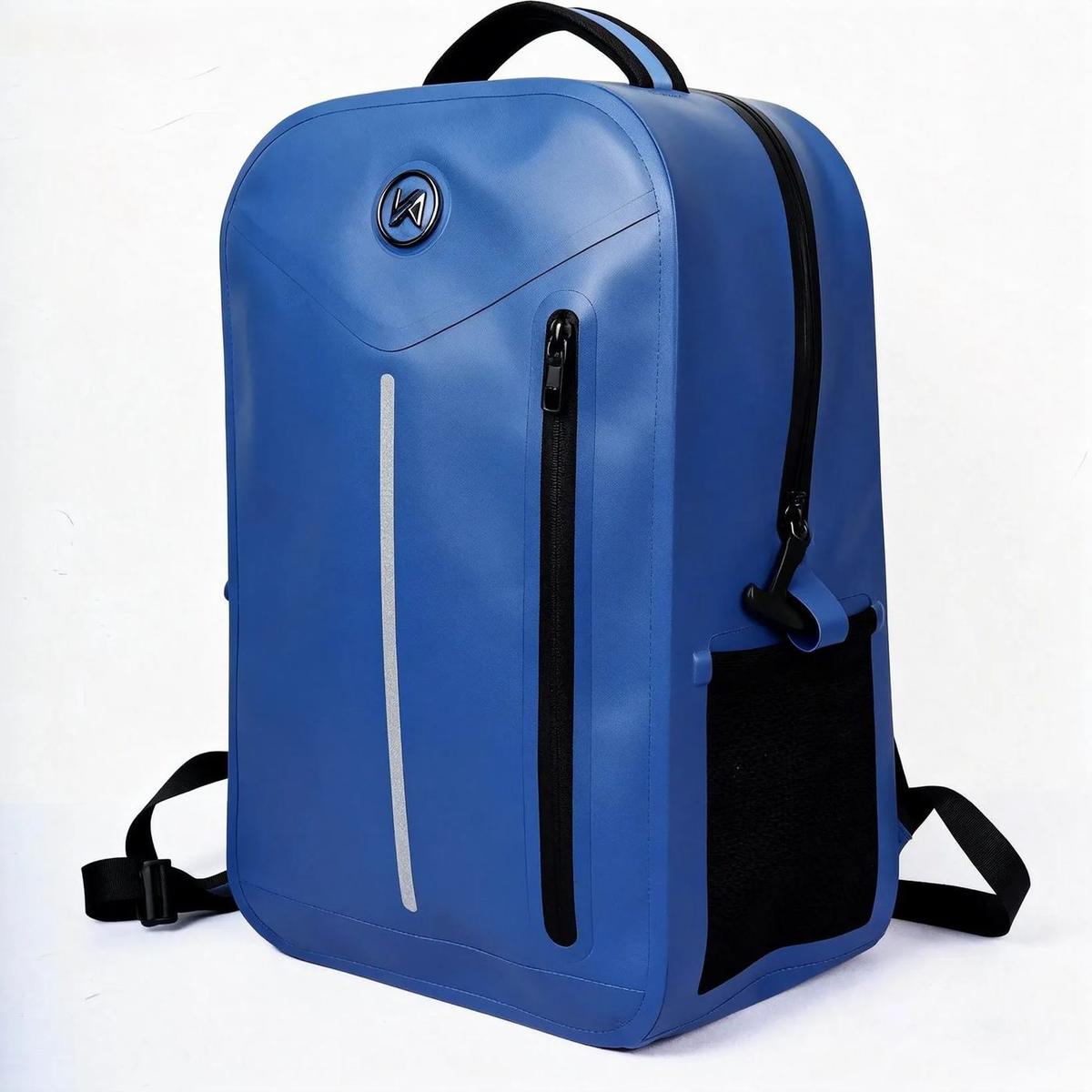
The pickleball RFQ
A quotation is only as accurate as the request behind it. For this format that means the maximum paddle dimensions the compartment must accept, the number of paddles, whether a shoe compartment is included, the format and capacity, the shell and lining by denier and coating, the hardware references including the fence hook, the decoration method and its coordinate, the packing specification, the quantity per style and colourway, the inspection standard, the trade term and the destination market.
- Maximum paddle dimensions and the number of paddles the compartment must hold.
- Whether a ventilated shoe compartment is required, and the largest shoe size to support.
- Format: backpack, court bag or sling, with target empty weight stated.
- Shell, lining and base materials named by denier, weave and coating, plus abrasion lining at the paddle compartment.
- Hardware references with material grade, including the fence hook webbing and clip rating.
- Decoration method, colour count, maximum logo dimension and a measured coordinate.
- Quantity per style and colourway, with 500 pcs per style and colourway as the minimum.
- Destination market, delivery month and any required compliance documentation.
One final line is worth adding because it changes the schedule more than any other: if club or tournament distribution is planned, state the likely re-order quantity and the event date in the same request. That lets the second slot be reserved rather than renegotiated, and it lets the artwork release be planned against a real date. Our custom sports bags for Kickstarter pillar page sets out the wider framework, and our team is ready when you send a brief through the quote request page.
Frequently Asked Questions
What is the MOQ for custom pickleball bags?
500 pcs per style and per colourway. One format in one colourway is a single commitment. Offering a backpack and a court bag is two styles and therefore two minimums, which is why most first campaigns pick one format and use trim or lining variation for visual choice.
What size should a pickleball paddle compartment be?
Sized to the maximum paddle dimensions you will claim to fit, which for a standard paddle is roughly 16 inches long and 8 inches wide plus handle length. Publish those dimensions and the number of paddles the compartment holds on the campaign page, because it is the first question this audience asks.
Should a pickleball bag have a shoe compartment?
Ask your audience rather than assuming. Players who change at the venue need one; players who arrive dressed do not. A shoe compartment adds panels, labour and silhouette, so including it when half the audience does not want it costs money and reduces appeal to the other half.
What is a fence hook and does it matter?
It is a stowable webbing loop with a clip that lets the bag hang on court fencing. It matters more than its cost suggests, because hanging bags on the fence is a universal behaviour in this sport and a bag that acknowledges it gets mentioned in reviews. Rate the webbing for the loaded weight and bar-tack the attachment.
How long does a pickleball bag programme take?
Sampling is 6-10 working days per round, or 12-15 for a complex build, and production 35-50 days after deposit and written pre-production sample approval. Add transit and clearance for the destination market. Completing sampling before the campaign opens removes four to six weeks from the post-campaign path.
Which format sells best: backpack, court bag or sling?
It depends on the club. A backpack has the widest use case and doubles as everyday carry, which makes it the safest first choice. A court bag reads most clearly as pickleball. A sling suits a player carrying one paddle and little else. Survey your audience with a forced choice rather than ranking.
What reward price can a pickleball bag support?
Below technical racket sports bags and above a basic gym duffel. The band is set by comparison against tennis bags rather than gym bags, which is a helpful comparison. It is wide enough to absorb a padded paddle compartment and a fence hook without difficulty.
How should I test the paddle compartment on a sample?
Measure it empty, then load it with the largest paddle plus balls, a bottle and shoes, and carry it. Check three things: whether the paddle edge presses into the back, whether the compartment bows under load, and whether the zip can be operated one-handed while worn.
What decoration method suits this niche?
Embroidery or a woven label. This audience reads restrained branding as equipment rather than merchandise, and both methods survive repeated use better than a large heat transfer print. Keep the mark moderate in size and in one clear position, and avoid large all-over graphics.
Can clubs order pickleball bags in quantity?
Yes, and it is one of the highest-return decisions available in this niche. A club order is a block of ten to fifty units with one artwork file and one delivery address, and clubs re-order when new members join. Publish a club quantity tier with a per-unit price.
Do I need permission to use a club or tournament logo?
Yes. Get written confirmation that the club or event is entitled to have the mark reproduced before committing a decorated run, and ask for vector artwork and a Pantone reference at the same time. A stopped run discovered after sewing starts is the most expensive version of the problem.
What inspection standard suits a pickleball bag?
AQL 2.5 to ISO 2859-1 with functional defect classes defined before production: loaded paddle compartment shape retention, edge pressure, one-handed zip operation, strap attachment integrity, decoration registration and shade consistency. A visual inspection will not find a compartment that bows under load.
People Also Ask
Why is pickleball a good niche for a bag campaign?
The paddle is rigid and awkwardly shaped, so no general sports bag carries it well. That creates a real fit problem, and fit problems convert well in crowdfunding.
What size paddle fits a pickleball bag?
Design around a standard paddle of roughly 16 inches by 8 inches plus handle. Publish the maximum dimensions your compartment accepts.
Should I make a backpack or a court bag?
A backpack for a first run, because it has the widest use case and doubles as everyday carry. Follow your audience if they are clearly court-bag oriented.
What is a fence hook on a pickleball bag?
A stowable clip or loop that lets the bag hang on court fencing. It is a small feature that earns disproportionate review mentions.
How long does a pickleball bag take to produce?
Sampling 6-10 working days per round, then production 35-50 days after deposit and approved sample. Pre-sampling before launch saves four to six weeks.
Can clubs buy pickleball bags in bulk?
Yes. Clubs order ten to fifty units with one artwork file and one address, and they re-order each season. Publish a club tier.
What does a pickleball bag cost to make?
Indicatively fabric 20-28 per cent, labour 30-40 per cent, decoration 12-20 per cent and hardware 10-16 per cent of unit cost at 500 pcs, FOB Xiamen.
How do I check paddle compartment quality?
Load the sample with the largest paddle and carry it. Check for edge pressure against the back, bowing and one-handed zip access.