Custom Team Sports Bags: Branded Kits for Clubs and Academies
Yes, club and academy buyers can be reached through a Kickstarter campaign, but only if the reward is built as team kit rather than as an individual product. The minimum is 500 pcs per style and per colourway, sampling runs 6-10 working days and production 35-50 days after deposit and written pre-production sample approval. Clubs buy in multiples, want names or numbers on every unit, and send logo artwork late. Budget for all three before you open: a group tier structure, a personalisation data pipeline and an artwork cut-off that sits ahead of your production slot. One academy can absorb 100 to 300 units of a single run when those pieces are in place.
- Why club and academy buyers behave differently from individual backers
- What a club actually buys: the kit-bag brief behind the pledge
- Personalisation: names, numbers and the data problem nobody budgets for
- Logo artwork: what clubs send you and how to make it production-ready
- Tier design for group orders: the captain, the team and the academy
- Colourway strategy when every club wants its own
- Durability specification for a bag used five days a week
- Decoration methods that survive industrial laundry
- Sizing the bag to the kit: a dimension worksheet
- Cost structure of a club programme and where the money goes
- Fitting a club season into a sampling and production window
- The club RFQ: what to send to get one accurate quote
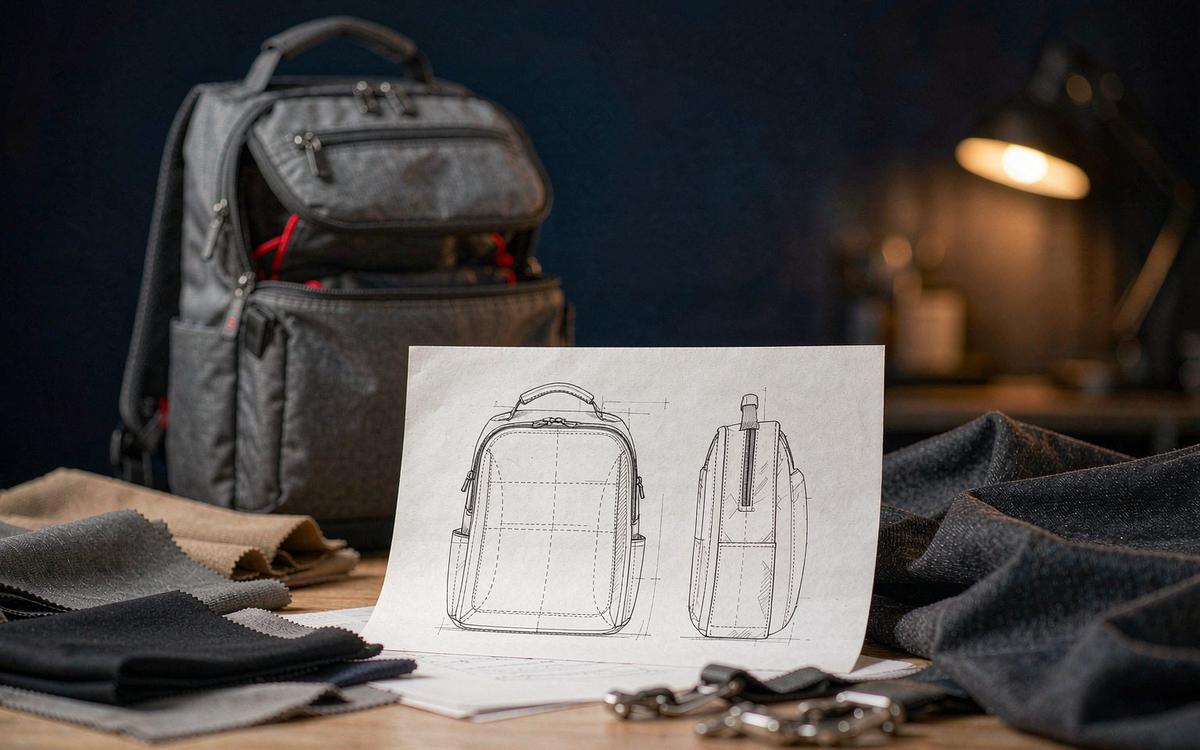
Clubs and academies are the most underrated demand channel in sports bag crowdfunding. They order in blocks, they re-order annually, and they are far less price-sensitive than an individual backer because the bag is being bought against a budget rather than against a whim. They are also harder to serve, because they expect a procurement-grade answer to questions most campaign pages never address. This article sets out what a club buyer needs to see, what the personalisation pipeline actually costs in time, and how to structure a run that satisfies several clubs without breaking the 500 pcs per style and per colourway minimum.
- Minimum order quantity
- 500 pcs per style / colourway
- Sampling
- 6-10 working days (12-15 for complex builds)
- Bulk production
- 35-50 days after deposit + approved pre-production sample
- Inspection
- AQL 2.5 to ISO 2859-1
- Trade term
- FOB Xiamen
- Payment
- T/T 30/70
- Production floor
- 4,950 m2 SGS-verified, 137 staff, 7 lines, 149 machines
- Monthly capacity
- 200,000 pcs per month
- Campaign experience
- 20+ crowdfunding campaigns supported
Key takeaways on club and academy programmes
- Clubs buy on specification, delivery month and uniformity, not on narrative.
- One academy can absorb 100 to 300 units, which turns campaign volatility into blocks.
- Personalisation is a data project as much as a decoration decision; lock the file format early.
- Ask for vector artwork and written mark permission before a decorated run is committed.
- Sampling 6-10 working days and production 35-50 days means a season deadline needs 4-5 months of runway.
Why club and academy buyers behave differently from individual backers
An individual backer makes an emotional decision in a few seconds and then waits months. A club or academy makes a procurement decision: someone with a budget, a season calendar and a duty to members signs off. That changes what they read on your campaign page. They are not looking for a story first; they are looking for a specification, a delivery month and a per-unit price at their quantity. A page that leads with narrative and hides the numbers loses the club buyer in the first screen, and losing that buyer usually means losing ten or twenty units rather than one.
The second difference is multiplicity. An individual pledges one unit. A club pledges ten, twenty or a whole squad, and an academy may order across several age groups. That is attractive because it converts campaign volatility into blocks of predictable demand, but it also means every unit has to be identical. Consistency of shade, crest placement and stitch quality becomes a commercial requirement rather than a nicety, because a kit bag that looks slightly different from the one hanging next to it generates complaints to the person who signed the order, and that person will not re-order.
The third difference is accountability. Whoever orders for a club answers to parents, players and a committee, so they ask questions individual backers never ask: what happens if a zip fails, can we re-order next season, will the crest survive a wash. Answering those three questions on the campaign page and in the reward description is worth more than any copy about premium materials. Our custom sports bags for Kickstarter pillar page sets out the specification framework these buyers expect to see before they will commit budget, and the custom gym bags for Kickstarter pillar page covers the same framework for an individual rather than a team brief.
What a club actually buys: the kit-bag brief behind the pledge
A club is not buying a bag; it is buying a kit system that happens to take the form of a bag. The brief behind most club orders contains four requirements. It must carry the full kit for one player. It must identify the club. It must survive a season of at least 30 to 40 training sessions plus fixtures. And it must arrive before the first match. Write your reward copy against those four and you are answering the brief the buyer actually holds rather than the one you assume they hold.
The kit itself varies by sport and by age group, and the variation matters more than most creators expect. A youth football kit is boots, shin guards, a bottle and a change of clothes. A senior rugby kit adds wet weather gear and often a second pair of boots. A swim academy kit is a towel, goggles and a wet costume, which is a completely different internal architecture. Ask two or three target clubs what their players actually carry before you fix the dimensions; a handful of email replies will move the design further than a week of internal debate.
There is also a storage reality that rarely appears on a campaign page. Kit bags are thrown into a car boot, stacked in a muddy corridor and hung on a fence. The bag has to survive that treatment, which pushes the specification towards a wipe-clean base, a silhouette that holds its shape when half full, and hardware that can be operated with cold or wet hands. These are unglamorous decisions and they are precisely the ones that produce a repeat order next season. Where wet kit is part of the load, our custom wet-dry gym bags article covers how compartment separation is specified.
Personalisation: names, numbers and the data problem nobody budgets for
Personalisation is the feature that most reliably converts a club buyer, because it turns a bag into a named piece of kit rather than a generic product. It is also the feature that most reliably breaks a fulfilment plan, because it converts one stock-keeping unit into dozens and it requires a data set that somebody has to collect, clean and transfer. Budget the data work as a project task with a named owner and a deadline, not as an afterthought to be handled in the final week.
The mechanics are straightforward once clean data exists. Names and numbers are usually applied by heat transfer, embroidery or a woven or printed label, and each has a different minimum, a different cost per unit and a different production implication. Heat transfer is the most flexible for variable data, because each unit can carry a different name without changing the production sequence. Embroidery gives a more durable and more expensive result and needs a digitised file per name, which is viable at low volumes but adds set-up time to a run that is already time-constrained.
The failure mode is the data file itself. Clubs send spreadsheets with merged cells, inconsistent capitalisation, missing sizes and names typed with diacritics the decoration equipment does not support. Agree the format in the reward terms: one row per unit, fixed column order, plain characters, and a cut-off date after which the data is locked. Validate the file before it reaches the production floor, because a name misspelled across 60 units is both a rework cost and a reputational one. Our programme coordinator can supply a template when you request a quotation.
| Method | Indicative cost per unit | Durability | Production impact |
|---|---|---|---|
| Heat transfer vinyl | USD 0.60-1.80 | Good; can lift after repeated hot washes | Flexible for variable data; minimal set-up |
| Embroidery | USD 1.50-4.00 | Excellent; outlasts the shell in most cases | Digitised file per name; adds set-up time |
| Woven label | USD 0.30-1.20 | Excellent | Fixed content only; needs its own minimum |
| Printed label or badge | USD 0.25-0.90 | Moderate; print can crack | Fixed content; low cost at volume |
| Sublimated panel | USD 1.20-3.50 | Excellent; colour is in the fibre | Best on polyester; panel minimum applies |
| Rubber or PVC patch | USD 0.80-2.50 | Very good | Tooling or mould cost; fixed artwork |
Logo artwork: what clubs send you and how to make it production-ready
Ask a club for a logo and you will usually receive a JPEG, sometimes a PNG with a white background, and occasionally a photograph of an embroidered badge. None of those are production files. A vector file is the standard requirement for print, embroidery and woven labels because it can be scaled and colour-separated without loss. Build the file request into the reward terms and state the accepted formats, then hold the artwork cut-off at least two weeks before the production slot so there is time to chase a resupply.
The second issue is colour. Club colours arrive as a Pantone reference, a screen colour or a verbal description, and all three drift in different directions. Where an exact match matters, ask for a Pantone reference and accept that a dyed fabric will match within a tolerance rather than exactly, while a printed logo matches more closely because the ink sits on the surface rather than in the fibre. Publishing that expectation early removes a dispute that otherwise surfaces at the pre-production sample stage, which is the worst possible moment to discover a disagreement about green.
The third issue is rights. A club crest may be licensed, registered or subject to a league rule, and some academies use a badge whose rights sit with a governing body or a sponsor. Before you commit 500 decorated units to a run, get written confirmation that the club is entitled to have the mark reproduced on merchandise. Our production team asks for this as part of the artwork release, not because it is a formality but because a stopped run costs everyone money and a stopped run discovered after sewing is the most expensive version of that problem.
- Request vector artwork in the reward terms and name the accepted file formats.
- Ask for a Pantone reference for every colour in the crest, including the small ones.
- Set an artwork cut-off at least 14 days before the production slot starts.
- Get written confirmation of mark permission before a decorated run is committed.
- Approve a pre-production sample with the real crest applied, not a digital mock-up.
- Keep the approved artwork file against the specification revision so re-orders match.
Tier design for group orders: the captain, the team and the academy
A club-facing campaign needs three reward shapes, not one. The individual tier serves players and parents who want a single bag. The team tier serves a squad order, typically 10 to 25 units, and should carry a per-unit price that is visibly below the individual tier. The academy tier serves multi-team orders of 50 units or more, and should be quoted as a negotiated line rather than a published price, because the discount depends on how many clubs land in the same production window.
The pricing logic is not generous discounting; it is order economics. A squad order arrives as one data file, one artwork file and one delivery address, which removes most of the variable cost of serving a campaign backer. Passing part of that saving back is rational, and it also changes behaviour: a parent who was going to pledge one unit becomes the person who collects 15 orders from a team WhatsApp group, which is the cheapest customer acquisition available to a sports campaign.
Structure the tiers so that the group buyer can see the arithmetic without emailing you. Publish the unit price at 1, at 10, at 25 and at 50, and state what changes at each step. Then put the delivery month next to each tier, because the club buyer is matching your date to a fixture list. Where the group order includes personalisation, publish the data cut-off date with the same prominence as the price, since a club that misses the cut-off will remember it as a service failure rather than as their own delay.
| Tier | Quantity | Typical buyer | What the tier must state |
|---|---|---|---|
| Player | 1 unit | Individual player or parent | Unit price, colourway choice, personalisation option |
| Captain / family | 2-4 units | Household with multiple players | Per-unit price at quantity, single delivery address |
| Squad | 10-25 units | Team manager or coach | Per-unit discount, crest application, data cut-off |
| Club | 26-75 units | Club secretary or committee | Negotiated price, delivery month, re-order right |
| Academy | 76+ units | Multi-team academy or school | Bespoke quote, split delivery, season re-order option |
Colourway strategy when every club wants its own
Here the minimum bites hardest. 500 pcs per style and per colourway means that if three clubs each want their own colourway, you are looking at 1,500 units of commitment unless the run can be split. A split within a single production run, where colourways share materials and are sewn in the same window, is sometimes possible, but it has to be negotiated at quotation stage rather than assumed, and it depends on the materials and the line schedule.
The safer structure for a first club campaign is one base colourway produced at 500 pcs, with club identity delivered through decoration rather than through fabric colour. A black or navy base with a club crest, a club name and player numbers reads as team kit to the buyer and keeps you inside one minimum. It also makes re-orders cheaper, because the base fabric is already a stocked or repeatable item while a bespoke dyed colourway is not.
If you do want multiple colourways, sequence them rather than running them in parallel. Produce the hero colourway first, use the demand data from the campaign to justify the second, and reserve the second slot before the campaign closes rather than after. That approach is set out in more detail in our Kickstarter sports bag MOQ article, which covers what a small campaign can realistically commit to across variants and styles.
There is also a negotiation worth running with the clubs themselves. Most will accept a shared base colourway if the alternative is a later delivery, because the committee is accountable for kit arriving before the first fixture rather than for a shade. Offer the trade explicitly in the reward terms: one base colourway delivered in the stated month, or a club-specific colourway delivered six to eight weeks later subject to a second minimum being met. Framed that way, most clubs choose the earlier date, and the campaign keeps one commitment instead of three.
Durability specification for a bag used five days a week
A consumer gym bag might be used twice a week. A club kit bag is used five or six times a week, often by someone who is not its owner, and it is loaded beyond what the dimensions suggest. The specification response starts with the face fabric: a higher denier on the shell, a coated or laminated base, and a lining grade chosen for wipe-clean behaviour rather than for hand feel. State the denier and the coating separately so the quote can be compared line by line rather than adjective by adjective.
The second move is at the load points. Strap attachments, handle roots and the base seam carry the dynamic load, and they are where a season of use shows first. Specify bar-tack or box stitch at these points, name the webbing by breaking strength rather than by width, and require a pull test on the sampling unit. A bag that survives 40 sessions is a bag whose attachment points were specified, not a bag whose fabric was expensive.
The third move is hardware. Zips are the most common failure in this category and the cheapest to specify properly: name the zip reference, require a corrosion-resistant slider where the bag will meet wet kit, and include a functional zip check in the inspection plan. Pullers should be sized for a gloved or cold hand. These lines cost very little on a unit-cost basis and they are the difference between a club that re-orders and a club that quietly moves on.
- Name the shell denier and the coating separately from the lining grade.
- Specify webbing by breaking strength, not by width alone.
- Require bar-tack or box stitch at every strap and handle load point.
- Name the zip reference and require a functional end-to-end zip check at inspection.
- Choose a wipe-clean base material and consider feet or a reinforced base panel.
- Confirm the silhouette holds shape when half full; a collapsing bag photographs badly.
Decoration methods that survive industrial laundry
Kit bags get washed. Not always well, not always at the temperature the care label suggests, and in academy settings sometimes in a communal machine at the end of a term. Decoration has to be chosen against that reality rather than against a photograph. Embroidery is the most robust across wash cycles because the thread is mechanically held in the substrate. Heat transfer is cost-effective and flexible for variable data but is vulnerable to high temperature and to tumble drying, so the care instructions have to match the method.
Woven labels sit somewhere in between: excellent durability for fixed content such as a club name or a sponsor, but useless for variable data such as a player number. Printed badges are the cheapest route and the most likely to crack after repeated washing, which is acceptable for a one-season item and not acceptable for a bag the club expects to use for three. Sublimation gives excellent durability but only on polyester substrates and usually at a panel minimum.
The practical recommendation for a club programme is a hybrid: an embroidered or woven crest for identity, heat transfer for the player number, and a printed care label that states the wash temperature the decoration can actually tolerate. Then test it. Put a sampling unit through five wash cycles before you approve the specification, because a decoration failure discovered by 200 club members in month two is a support burden no campaign team is staffed for. Our QA and QC page covers how decoration checks are written into an inspection plan.
Sizing the bag to the kit: a dimension worksheet
Work the dimensions outward from the kit rather than inward from a capacity claim. Start with the largest single item, which for most field sports is the footwear, then add the protective equipment, then the clothing, then the small items. A capacity figure in litres is marketing language and cannot be verified on a sampling table; an internal dimension with a tolerance can be measured with a tape in thirty seconds, which makes it the only useful number in a specification.
Age group is the variable that catches people out. A senior boot in a large size is meaningfully longer than a youth boot, and an academy ordering across age groups will want one bag that fits both. The usual resolution is to size the compartment to the largest item in the range and accept that smaller items have spare room, rather than producing two sizes and doubling your commitment against the minimum. Where two sizes are genuinely needed, treat them as two styles and therefore two minimums.
| Kit item | Dimension it governs | Starting allowance |
|---|---|---|
| Boots or trainers, largest size in range | Shoe compartment internal length | Stated shoe length plus 2-3 cm clearance |
| Shin guards and protective gear | Main compartment depth | Stacked height plus 1-2 cm |
| Water bottle, 750 ml | Sleeve internal diameter | Confirm diameter, not volume |
| Training kit and towel | Main compartment volume | Sized after footwear decision |
| Valuables: phone, keys, wallet | Secure internal pocket | Stated pocket dimensions with tolerance |
| Club crest or number panel | Decoration area | Maximum logo dimensions and a measured coordinate |
Publish these allowances in the reward description. Fit questions are among the most common pre-pledge messages in any bag campaign, and answering them on the page converts browsers rather than consuming your inbox. They also give your inspector something measurable, which is what makes an AQL 2.5 inspection meaningful rather than decorative. Full measurement guidance sits on our sample prototyping page.
Cost structure of a club programme and where the money goes
A club bag is usually a mid-specification product rather than a premium one, because the buyer is comparing against team kit pricing rather than against retail fashion. That makes cost structure the decisive discipline. Fabric and trims typically account for 20-28 per cent of unit cost, cutting and sewing labour 30-40 per cent, decoration 12-20 per cent, hardware and trims 10-16 per cent, packing 4-8 per cent, and overhead including inspection 10-18 per cent. Those are indicative ranges, not quotes.
Decoration is the line that behaves differently in a club programme. Because every unit carries a crest and many carry a number, decoration per unit is higher and more variable than on a consumer bag, and the set-up cost of digitising or screening a crest has to be amortised across the run. At 500 pcs a crest set-up is a meaningful per-unit figure; at 2,000 pcs it is almost invisible. That is a structural argument for consolidating clubs into one artwork per run wherever the clubs will accept it.
The second cost lever is the re-order. Sampling and set-up are carried by the first 500 pcs and not by the second, so the unit price on a season re-order is typically lower even before any volume effect. Quote the likely re-order quantity in the original request so that a second season order is a confirmation rather than a new negotiation. Our bag manufacturing for campaign creators page explains how reserved slots and repeat quantities are handled against a published delivery month.
Fitting a club season into a sampling and production window
A season start date is immovable, which makes backwards planning the only safe method. Take the first fixture, subtract transit and customs clearance for the destination market, subtract the 35-50 day bulk window, subtract sampling of 6-10 working days per round or 12-15 for a complex build, and subtract the artwork and data collection period. What remains is the date by which the campaign must have closed and the specification must be frozen. In practice a club programme needs four to five months of runway from frozen specification to kit in hand.
The step that breaks the calendar is almost always data. Clubs confirm squad lists late, players change, and a number is added the week before production. Build a hard data cut-off into the reward terms, communicate it twice, and hold it. A run started with incomplete data either ships late or ships with gaps, and both outcomes are worse for the club than a slightly smaller order delivered on time.
- Freeze the specification with dimensions, materials, hardware references and decoration coordinates.
- Collect club artwork as vector files and confirm Pantone references and mark permission.
- Complete sampling round one and return one numbered revision list tied to pack clauses.
- Complete sampling round two and wash-test the sampling unit five times.
- Approve the pre-production sample in writing against the sample identification and pack revision.
- Lock the personalisation data file at the published cut-off date.
- Release the 30 per cent deposit under T/T 30/70 and start the 35-50 day bulk window.
- Inspect at AQL 2.5, release the 70 per cent balance and load FOB Xiamen.
There is one shortcut worth taking: complete sampling before the campaign opens rather than after it closes. Two rounds at 6-10 working days fit comfortably into a pre-launch calendar and remove four to six weeks from the post-campaign path, which is often the difference between kit arriving for the first fixture and kit arriving for the third. Campaigns we have supported that pre-sampled consistently delivered closer to the promised month.
The club RFQ: what to send to get one accurate quote
A quotation is only as accurate as the request behind it. For a club programme that means the sport and age range, the kit list with dimensions, the shell and lining by denier and coating, the decoration method for crest and for number, the personalisation data format, the packing specification, the quantity per style and colourway, the inspection standard, the trade term and the destination market. Send it as one document and you will receive a unit cost, a sampling estimate and a production window in a single exchange.
- Sport, age range and the kit list the bag must carry, with stated dimensions.
- Shell, lining and base materials named by denier, weave and coating.
- Decoration method for the crest and a separate method for the player number.
- Personalisation data format, volume of names and the lock date.
- Hardware references with material grade, especially zips and strap webbing.
- Packing specification: pieces per carton, carton dimensions, polybag and marking.
- Quantity per style and colourway, with 500 pcs per style and colourway as the minimum.
- Destination market, delivery month and any compliance documentation required for youth use.
The final item is the season re-order. If a club likes the bag, the second order is worth more than the first, because set-up is already paid and the specification is already approved. Ask for the re-order price in the same request so that the conversation next season starts from a number rather than from a blank page. Our team has supported 20+ crowdfunding campaigns through this path, and the pattern is consistent: the programmes that plan the second season during the first are the ones that get it. Send us a brief through the quote request page, and see the crowdfunding bag guide for the full route from sketch to repeat order.
Frequently Asked Questions
What is the minimum order for custom team sports bags for clubs?
The minimum is 500 pcs per style and per colourway. For a club programme this usually means one base colourway produced at 500 pcs, with club identity delivered through decoration rather than through fabric colour. Three clubs wanting three different colourways would mean three separate 500 pcs commitments unless a split within a single production run is agreed at quotation stage, which depends on materials and line schedule.
Can every bag in a club order carry a different player name?
Yes, and heat transfer is usually the most practical method because each unit can carry different data without changing the production sequence. Embroidery is possible but needs a digitised file per name, which adds set-up time. The real constraint is data quality: agree a one-row-per-unit file with fixed columns and plain characters, set a lock date, and validate the file before it reaches the production floor.
How long does a club kit bag programme take from specification to delivery?
Plan four to five months. Sampling runs 6-10 working days per round, or 12-15 for a complex build, and production 35-50 days after the deposit and written pre-production sample approval. Add transit and customs clearance for the destination market, plus two to four weeks for artwork and data collection. Completing sampling before the campaign opens removes four to six weeks from the post-campaign path.
What artwork format do clubs need to supply for their crest?
A vector file is the standard requirement for print, embroidery and woven labels, because it can be scaled and colour-separated without loss. Clubs typically send a JPEG or a photograph of a badge, neither of which is production-ready. Ask for a Pantone reference for every colour and hold the artwork cut-off at least 14 days before the production slot so there is time to chase a resupply.
Who owns the rights to a club crest used on merchandise?
Often the club, but not always. Some crests are licensed, registered or subject to a league rule, and academies sometimes use a badge whose rights sit with a governing body or sponsor. Get written confirmation that the club is entitled to have the mark reproduced before committing 500 decorated units, because a stopped run discovered after sewing starts is the most expensive version of the problem.
How should reward tiers be priced for team and academy orders?
Publish four price points: 1 unit, 10 units, 25 units and 50 units, and state what changes at each step. Group orders arrive as one artwork file, one data file and one delivery address, which removes most of the variable cost of serving an individual backer, so part of that saving should be passed back. Larger academy orders are best quoted as a negotiated line rather than a published price.
What fabric specification suits a bag used five days a week?
A higher denier face fabric with a coated or laminated wipe-clean base and a lining chosen for cleaning rather than hand feel. Specify webbing by breaking strength rather than by width, require bar-tack or box stitch at strap and handle load points, and name the zip reference. Fabric and trims typically account for 20-28 per cent of unit cost and labour 30-40 per cent, so spend where the load is.
Which decoration method survives repeated washing best?
Embroidery is the most robust across wash cycles because the thread is mechanically held in the substrate. Woven labels are excellent for fixed content such as a club name but cannot carry variable data. Heat transfer is flexible and cost-effective for player numbers but is vulnerable to high temperature and tumble drying, so care instructions must match the method. Wash-test a sampling unit five times before approval.
Should I offer multiple club colourways in one campaign?
Usually not on a first campaign. 500 pcs per colourway means three colourways is a 1,500 pcs commitment. The safer route is one base colourway with club identity applied through decoration, which keeps you inside one minimum and makes re-orders cheaper. If you want a second colourway, sequence it: produce the hero first, use campaign demand data to justify the second, and reserve the slot before the campaign closes.
How do I size a bag to fit both youth and senior kit?
Size compartments to the largest item in the range, usually the biggest boot size, and accept that smaller items have spare room. Producing two sizes means two styles and therefore two minimums. Work dimensions outward from the kit list rather than inward from a litres claim, because an internal dimension with a tolerance can be measured on a sampling table and a capacity claim cannot be verified at all.
What inspection standard should a club order use?
AQL 2.5 to ISO 2859-1, with defect classes defined before production starts. For a club bag the classes that matter are zip function, strap attachment integrity, decoration registration against the approved coordinate, and shade consistency within the run. Uniformity matters commercially here, because a club member will notice a bag that differs from the one next to it on the hook.
Can we re-order the same kit bag next season?
Yes, and it is usually cheaper per unit because sampling and set-up were carried by the first 500 pcs. Ask for the re-order price in the original request so a second season order is a confirmation rather than a new negotiation. Keep the approved pre-production sample and the artwork file against the specification revision so the repeat run matches the first one exactly.
People Also Ask
Are clubs a good market for a Kickstarter bag campaign?
Yes, because they order in blocks and re-order annually. One academy can absorb 100 to 300 units, which converts campaign volatility into predictable demand. The trade-off is that club buyers expect procurement-grade answers on specification, delivery month and uniformity.
What is the MOQ for team kit bags?
500 pcs per style and per colourway. Most first club campaigns use one base colourway and deliver club identity through decoration, which keeps the commitment inside a single minimum.
How do I put player names on 500 bags?
Use heat transfer for variable data, and treat the name list as a data project. One row per unit, fixed columns, plain characters, and a lock date published in the reward terms.
Can clubs send their crest as a JPEG?
It is a starting point but not a production file. You need vector artwork for print, embroidery or woven labels, plus a Pantone reference for each colour in the crest.
How early should a club campaign start before the season?
Four to five months from frozen specification to kit in hand. That covers artwork and data collection, two sampling rounds at 6-10 working days, production 35-50 days, and transit.
What is the most common failure on a team kit bag?
Zips and strap attachments. Name the zip reference, specify webbing by breaking strength, require bar-tack or box stitch at load points, and include functional checks rather than visual ones at inspection.
Is embroidery or heat transfer better for club logos?
Embroidery for the crest, because it survives repeated washing. Heat transfer for player numbers, because it handles variable data without changing the production sequence.