Kickstarter Fulfillment for Bags: The Complete Backer Shipping Guide
Fulfilling bag rewards is four movements, not one, and each has its own cost driver and its own way of failing: production floor to port, port to warehouse, warehouse to carrier, and carrier to backer. Each has its own cost driver and its own failure mode. Bags are bulky rather than heavy, which means volumetric weight usually decides the parcel rate, and they are soft, which means packaging has to hold shape in transit. Budget eight to twelve weeks from inspection release to the last parcel delivered, and price the reward on the volumetric rate rather than the scale weight.
- What fulfilment actually covers for a bag campaign
- Choosing between self-fulfilment, a 3PL and a platform partner
- Freight: sea, air and the consolidation decision
- Customs, duty, VAT and the DDP versus DDU decision
- Parcel rates, zones and why volumetric weight beats scale weight
- Packaging specification for a bag in transit
- Address capture, validation and the re-ship problem
- Warehouse receiving, pick-pack and the wave plan
- Tracking, backer updates and the support load
- Budgeting fulfilment: a per-unit cost model
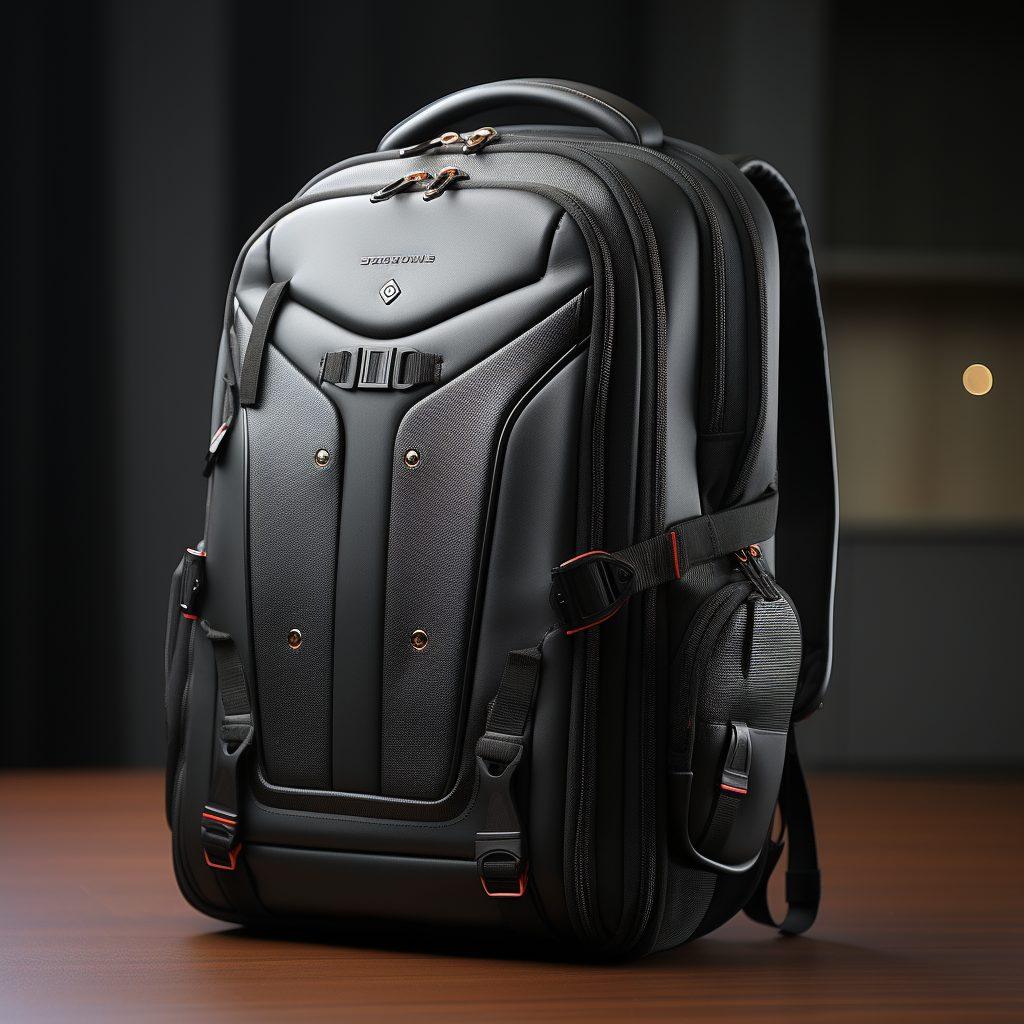
Most first-time creators think of fulfilment as the moment the box is posted. It is more useful to think of it as four separate movements, each with its own cost driver, its own paperwork and its own way of failing. Movement one is release to port: the goods leave the production floor after inspection, are packed into master cartons and travel inland to the port of loading. Movement two is port to warehouse: ocean or air freight, customs clearance and inland delivery to your fulfilment warehouse.
Movement three is warehouse to carrier: receiving, counting, put-away, picking against the backer list, packing and labelling. Movement four is carrier to backer: the last mile, the tracking, the exceptions and the returns. A campaign that budgets only for movement four will discover the other three at exactly the moment it has 1,200 backers asking where their bag is. The realistic planning figure for all four, from inspection release to the last parcel delivered, is 8 to 12 weeks.
Two properties of bags make this category specific. Bags are bulky rather than heavy, which means the parcel rate is usually driven by volumetric weight rather than scale weight, and a compressible product can be designed to reduce it. Bags are soft, which means they arrive creased or misshapen unless the packaging holds form, and a crushed bag is a return even though nothing is broken. Both are design problems as much as logistics problems, and both are far cheaper to solve at specification stage than at the warehouse. The full picture is set out in our crowdfunding rewards fulfilment guide.
Price the reward on volumetric weight, not scale weight. A bag that compresses into a smaller carton can cost materially less to ship than the same bag packed loosely.
What fulfilment actually covers for a bag campaign
The scope is wider than most creators expect, and the gaps are where budgets leak. Fulfilment includes freight forwarding from the port of loading to the destination warehouse; customs clearance, including duty, taxes and the classification work that determines them; warehousing, meaning receiving, storage and the per-unit pick-and-pack charge; packaging materials, meaning the mailer, the void fill and the label; parcel carriage, meaning the actual postage to each destination; and returns handling, which nobody budgets and everybody needs.
Two items are routinely missed entirely. Storage fees are charged per pallet or per cubic metre per week, and a campaign that ships in waves can easily hold stock for 8 to 16 weeks while the later zones are processed. At a typical weekly storage rate, a 10 pallet holding over three months is a real line. Returns and re-ships typically run at 2 to 5 percent of parcels across a mixed international campaign, and each one carries a second outbound parcel plus the inbound handling, so the effective cost is roughly double the original outbound.
The second missing item is the support load. A bag campaign with 1,500 backers generates a predictable volume of tickets: where is my parcel, my address is wrong, the tracking has not moved, the box arrived damaged, I ordered two and got one. A reasonable planning ratio is 0.3 to 0.8 tickets per backer across the fulfilment window, which is 450 to 1,200 messages on that size of campaign. That is a person, part-time, for six weeks, and it should be in the plan rather than discovered.
The scope question that matters most is who owns which movement. A typical structure has the production programme owning movement one under FOB Xiamen terms, a freight forwarder owning movement two, a 3PL warehouse owning movement three, and the carriers owning movement four. The handover points between them are where things get lost, and each handover needs a document: the packing list at the first, the bill of lading at the second, the goods-in receipt at the third, and the manifest at the fourth. Ask for each one.
Choosing between self-fulfilment, a 3PL and a platform partner
There are three routes and the choice is mostly a function of volume and destination spread. Self-fulfilment means packing parcels yourself, or with friends, and buying postage over the counter or through a shipping platform. It works up to roughly 200 to 400 parcels with a concentrated destination mix, and it stops working somewhere above that, for the unglamorous reason that packing 1,000 bags in a garage takes weeks and produces a high error rate.
A third-party logistics provider, or 3PL, receives your container, holds the stock, picks and packs against your backer list and hands parcels to carriers at contract rates. The economics work because a 3PL aggregates volume across many clients and therefore buys parcel carriage more cheaply than you can, typically 15 to 40 percent below published retail rates depending on the lane. The costs are a receiving charge, often per unit or per carton; a pick-and-pack charge per order; storage per pallet per week; and a carriage charge per parcel.
Platform or campaign-specific partners integrate directly with the pledge manager and often with the crowdfunding platform itself, which removes an export and import step and reduces address errors. They are convenient and usually more expensive per unit. The deciding factor is often destination spread: a campaign shipping 80 percent to one country is usually better served by a specialist warehouse in that country, while one shipping to 25 countries with no concentration benefits from a partner with multi-node capability.
The questions to ask any of the three are practical and specific. What is your pick-pack charge per unit and what does it include? What are your carriage rates to my top five destinations, in writing? What is your cut-off time and how long after I submit an order file do parcels go out? How do you handle a backer whose parcel is returned? Can you hold stock for a second wave? What is your inventory accuracy? A provider that cannot answer the last one precisely will lose your stock and argue about it later.
Freight: sea, air and the consolidation decision
The first freight decision is mode, and for a bag campaign it is usually not a close call. Sea freight runs roughly 25 to 40 days port to port on the main east-west lanes and costs a small fraction of air. Air freight runs roughly 5 to 10 days door to door and costs several times as much. Because bags are bulky, the comparison is worse for air than for most products, since air is charged on volumetric weight at a high rate per kilo. Sea is the default for the first wave and air is the emergency tool.
The second decision is full container versus consolidated. A 20 foot container holds roughly 28 to 33 cubic metres and a 40 foot high-cube about 68 to 76 cubic metres. A 500 pcs run of a medium backpack, cartoned at roughly 0.02 cubic metres each, is around 10 to 14 cubic metres, which does not fill a 20 foot container. That means LCL, or less than container load, where you share container space and pay per cubic metre. LCL is cheaper than a part-full container up to roughly 15 to 20 cubic metres, above which a full container usually wins.
The third decision is where to consolidate, and it interacts with the 500 pcs per style and colourway structure. If you are splitting the first wave across two fulfilment warehouses, one serving North America and one serving Europe, you are shipping two consolidated consignments or one container with a part-load to each. The cleanest approach is usually to consolidate at origin and deconsolidate at destination, which means one export clearance and two import clearances rather than two of each.
Two timing points. Book freight before the goods are ready. Against a bulk window of 35 to 50 days, the freight should be booked roughly 2 to 3 weeks before the inspection release date, because container space on the main lanes is not always available at short notice and rates move. And build in the clearance tail: ocean transit of 25 to 40 days plus clearance and inland delivery of 7 to 14 days plus warehouse receiving of 3 to 7 days means the goods are typically 5 to 9 weeks in transit after they leave the production floor.
Customs, duty, VAT and the DDP versus DDU decision
The single most consequential fulfilment decision for a crowdfunding campaign is whether backers pay import charges on delivery. Under DDU, or delivered duty unpaid, the parcel arrives and the carrier bills the recipient for duty and taxes before releasing it. Under DDP, or delivered duty paid, those charges are collected at checkout and remitted by the shipper. The difference is not technical; it is the most reliable way to generate angry backers.
The mechanics of DDU are worse than they sound. A backer who pledged USD 89 eight months ago, has forgotten the details, and is now asked to pay USD 24 to a courier they have never heard of, will in a meaningful number of cases refuse the parcel. It is then returned, usually at your cost, and you have a returned unit, a dissatisfied backer and a second outbound shipment. Refusal rates on unexpected DDU charges are materially higher than on any other fulfilment failure, and the cost lands entirely on the campaign.
DDP costs more up front and less overall. Collecting duty and tax at pledge time means the money is in hand, the parcel releases cleanly, and the backer's experience matches what they were promised. It requires registration or a fiscal intermediary in each destination market, which is administrative work, and it means your checkout has to calculate the right amount per destination. For a campaign shipping to the EU, the UK, Canada or Australia, the DDP route is normally worth the setup cost above a few hundred parcels.
Underlying all of this is classification. Duty rates on bags vary substantially by tariff heading, and the difference between two plausible classifications can be several percentage points of declared value. A travel bag, a backpack and a pouch may fall under different headings depending on construction, outer surface and function. Get the classification confirmed before you set reward prices, not after the goods have shipped. Our tax and customs guide covers the mechanics in more detail, including what a binding ruling is and when it is worth obtaining one.
Parcel rates, zones and why volumetric weight beats scale weight
Every parcel carrier charges on whichever is greater: the actual weight or the volumetric weight. Volumetric weight is calculated as length times width times height, divided by a divisor that varies by carrier and lane. A common divisor is 5,000 for cubic centimetres to kilograms, and some carriers use 4,000 or 6,000. A carton measuring 40 by 30 by 20 cm has a volume of 24,000 cubic centimetres, which at 5,000 is a volumetric weight of 4.8 kg. A backpack weighing 1.1 kg therefore bills as 4.8 kg, and the packaging is 77 percent of the freight cost.
That arithmetic is the single most useful thing a bag creator can know about shipping, because it means carton design is a pricing decision. Reducing that carton to 35 by 25 by 15 cm gives 13,125 cubic centimetres and a volumetric weight of 2.6 kg, which is a 46 percent reduction in billed weight on the same product. Across 1,000 parcels, that is the difference between a viable and an unviable reward tier. It is also why flat-pack and compressible designs are worth considering at specification stage, as covered in our flat-pack design guide.
The second variable is zone. Carriers price by origin-destination zone, and the spread between a domestic parcel and a long-haul international one can be a factor of 4 to 8 on the same carton. This is why destination mix is a campaign design question. A campaign whose audience is 70 percent in one country can price a single, accurate shipping rate and often offer free shipping as a marketing lever. One spread across 30 countries has to price an average, which means backers in the cheap zones subsidise the expensive ones and the expensive ones still look steep.
The third variable is service level, and the honest advice is to buy tracking, always. An untracked economy service saves a few dollars per parcel and removes your only defence against a dispute, your only way to diagnose a delay, and the single most reassuring thing you can give a backer who has waited eight months. In practice a tracked service at 2 to 5 percent of reward value is cheap insurance against a support load that can consume the entire margin of a campaign. Budget tracked, and upload the reference to the platform.
| Cost line | Domestic zone | Regional international | Long-haul international | Notes |
|---|---|---|---|---|
| Pick and pack | USD 1.50 to 3.00 | USD 2.00 to 4.00 | USD 2.00 to 4.00 | Per unit, excluding multi-item orders |
| Mailer and void fill | USD 0.60 to 1.50 | USD 0.80 to 1.80 | USD 0.90 to 2.00 | Recycled mailer, paper void fill |
| Parcel carriage | USD 6 to 12 | USD 14 to 26 | USD 22 to 45 | Driven by volumetric weight and zone |
| Fuel and surcharges | USD 1 to 2 | USD 2 to 4 | USD 3 to 6 | Percentage of carriage, varies quarterly |
| Duty and tax handling | USD 0 | USD 2 to 5 | USD 3 to 7 | DDP remittance fee where applicable |
| Returns provision | USD 0.40 to 1.00 | USD 0.80 to 2.00 | USD 1.20 to 3.00 | 2 to 5 percent rate, roughly double cost |
| Indicative total | USD 10 to 20 | USD 22 to 43 | USD 33 to 67 | Excludes storage and inbound freight |
Packaging specification for a bag in transit
The purpose of transit packaging is not to look good; it is to ensure the product arrives in the condition the backer expects. For a soft product the primary risk is deformation: a bag packed loosely into an oversized carton will arrive with creases, collapsed panels and flattened padding. The fix is a snug fit with light internal support, meaning the bag is lightly stuffed with paper rather than air, folded along its natural lines rather than compressed, and held centrally in the carton rather than free to move.
The second risk is abrasion, which is specific to bags because of the hardware. A metal zipper pull or a ring rubbing against the shell through a long transit will mark the fabric, and a coated fabric marked by hardware looks defective even though it is not. The mitigations are cheap: wrap the bag in tissue or a polybag so hardware does not contact the shell directly, and orient the hardware away from the shell in the fold. This is a five-second instruction on a packing spec that prevents a whole category of complaint.
The third risk is moisture, and it is the one that produces mould, which is the worst possible outcome for a textile product in transit. A bag packed with any residual moisture, or shipped in a container without adequate desiccant, can arrive with mildew. Two controls: confirm the goods are dry before packing, which means checking after inspection rather than assuming, and specify desiccant in the master carton for any sea freight leg. A carton-level desiccant costs cents and protects a USD 100 product.
The master carton specification matters as much as the mailer, because it protects the goods across the ocean leg. Specify the carton grade and wall thickness, the maximum carton weight, which should stay under roughly 15 to 20 kg for manual handling, the stacking strength, and the carton marking, meaning the shipping mark, the SKU, the quantity and the carton number in a sequence. Then share that specification with your fulfilment warehouse before the goods ship, so receiving is not a surprise. Our custom fulfilment packaging guide covers the options in more depth.
Address capture, validation and the re-ship problem
The cheapest fulfilment problem to fix is the one that never happens, and the highest-yield investment in the whole chain is address validation at survey stage. A mistyped apartment number, a missing postal code or a name entered in the wrong field produces a parcel that cannot be delivered. The parcel is then either returned, at your cost, or abandoned at the destination, which is worse because you have paid the freight and the backer has nothing.
Validation works in three layers. Format validation catches a postal code that does not match the country's pattern. Verification checks the address against a national postal database and either corrects or flags it. Normalisation puts the components into the carrier's field order so the label prints correctly. Most pledge managers offer at least the first layer; the second is worth paying for, because it is the layer that catches the errors that actually cause returns.
The second half of the problem is what happens when a backer moves. A campaign that collects addresses in June and ships in November will have a small but real percentage of backers who have relocated. The controls are a survey close date that is as late as the production schedule allows, a reminder email before the shipping window, and a stated address-change cut-off after which the original address is used. Publish the cut-off date in an update rather than deciding it case by case.
Then there is the re-ship decision, which is commercial rather than logistical. When a parcel is returned as undeliverable, someone has to pay to send it again. The common policies are to charge the backer the second outbound cost, to split it, or to absorb it. Absorbing it is the most generous and the most expensive; charging it is the most economical and generates complaints. A workable middle position is to absorb the first re-ship caused by a carrier error and charge for one caused by a backer error, and to state that policy before the parcels go out rather than in response to a ticket.
Warehouse receiving, pick-pack and the wave plan
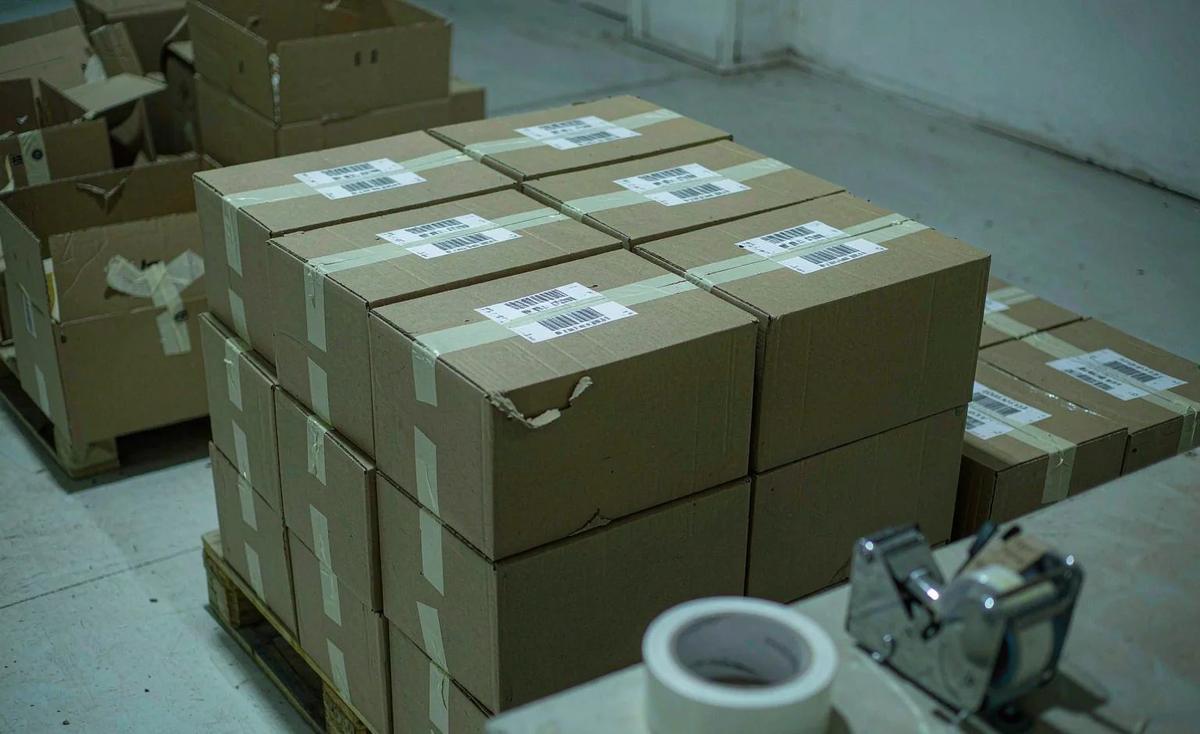
The warehouse stage starts before the container arrives, with a goods-in notification telling the warehouse what is coming: the purchase order, the SKU list, the carton count, the expected dimensions and weights, and the arrival window. Without it, receiving is slower and count discrepancies are harder to resolve. With it, the warehouse can plan labour and space, and any shortfall against the packing list is identified on the day rather than three weeks later when the last backer is waiting.
Receiving is where inventory accuracy is won or lost. The warehouse should count cartons against the packing list, count units against the carton marking, and record any discrepancy immediately with photographs. Inventory accuracy below roughly 99 percent produces a predictable failure: the system says there are 500 units, the shelf has 492, and the last eight backers in the wave get an apologetic email. Ask what the provider's measured accuracy is and how discrepancies are reported.
Wave planning is the sequencing decision. A single wave ships everything at once, which is simple and produces a large single-day support spike. A staged wave releases by zone, by reward tier or by pledge date. For a bag campaign the most common and usually best structure is release by destination zone, starting with the longest transit lanes so that the last parcel delivered in the furthest zone lands closer to the first parcel in the nearest zone. That compresses the perceived delivery window, which matters more than the actual one.
Pick and pack is the per-unit operation, and the two things that make it cheap are packing instructions and SKU simplicity. Give the warehouse a one-page packing specification per SKU with a photograph: what goes in the box, in what order, folded how, with what insert. Then keep the SKU count low. A campaign with two colourways and three add-on items has maybe 8 pickable SKUs; one with personalisation across five colourways can have 30 or more, and every additional SKU multiplies the pick error rate.
Tracking, backer updates and the support load
Tracking is the cheapest trust mechanism available, and it should be treated as a deliverable rather than a byproduct. Upload the tracking reference to the platform or the pledge manager at dispatch, not when someone asks. Backers watch the campaign page, and a reference appearing without prompting communicates that the shipment is real and moving. A reference provided in response to a complaint communicates the opposite, even though the information is identical.
Update cadence is the second lever, and the pattern that works is to communicate on a schedule rather than on events. A fortnightly update through the fulfilment window, saying what shipped, to where, what is next and what the known problems are, produces fewer tickets than silence punctuated by announcements. The most valuable sentence in any update is the one naming the current problem, because backers are far more forgiving of a disclosed delay than of an unexplained silence.
The support load is predictable enough to staff. Plan on 0.3 to 0.8 tickets per backer across the fulfilment window, concentrated in three spikes: the week the first parcels are dispatched, the week the first parcels arrive, and the two weeks after the last wave. Prepare canned responses for the six questions that will account for most of the volume: where is my parcel, my address is wrong, the tracking has not updated, it arrived damaged, I am missing an add-on, and I want to change my reward. Draft them before the first parcels go out.
One specific support category deserves its own process: damage claims. Ask for photographs of the carton and the product, keep the carrier's damage report, and decide in advance whether you replace first and claim later, or claim first. Replacing first is faster and better for the relationship, and against a damage rate of roughly 0.5 to 2 percent on a well-packed soft product, the exposure is manageable. Hold 1 to 3 percent of the run as safety stock at the warehouse precisely so that replacements can be sent immediately rather than from a re-order.
Budgeting fulfilment: a per-unit cost model
A fulfilment budget built as a single per-unit number will be wrong, because three of the lines vary by destination and one varies by time. Build it as a model with four inputs instead: the per-unit pick-pack and materials figure, which is roughly constant; the carriage figure, which varies by zone; the duty and tax figure, which varies by destination and is zero under DDU at the point of sale; and the storage figure, which varies by how long stock sits.
Worked structure for a 1,000 backer campaign with medium backpacks. Inbound: LCL freight at roughly 12 to 14 cubic metres plus clearance and inland delivery. Warehousing: receiving at a per-unit charge, storage across a 6 to 10 week window while waves release, and pick-pack per unit. Outbound: carriage by zone across the destination mix, plus mailers and void fill. Contingency: a returns provision at a 2 to 5 percent rate costed at roughly double the outbound, plus 1 to 3 percent safety stock.
The two lines that most often break the model are storage and returns. Storage accrues weekly and is easy to overlook when the plan assumes a single wave. If the reality is four waves across ten weeks, the later stock has been sitting for two months. Returns are under-budgeted because the usual estimate counts only the second outbound parcel, when the true cost includes the inbound handling, the inspection, the repack and the rebooking, which is why the effective figure is roughly double.
The most important structural point is that fulfilment has to be in the reward price, not discovered after funding. A reward priced at USD 89 with a landed cost of USD 22, platform and processing of about 10 percent, and fulfilment of USD 28 to a long-haul destination, leaves roughly USD 30 before any other cost. The same reward shipped domestically at USD 12 leaves USD 46. That USD 16 difference across 1,000 backers is USD 16,000, and it is decided by a zip code. Price the reward against your actual destination mix, not against an average.
Send us your destination mix and reward structure, and our programme coordinator will model the landed and fulfilment cost per unit before you set your reward prices.
Key takeaways
- F
- o
- u
- r
- m
- o
- v
- e
- m
- e
- n
- t
- s
- ,
- o
- n
- e
- c
- h
- a
- i
- n
- .
- B
- a
- g
- s
- b
- i
- l
- l
- o
- n
- v
- o
- l
- u
- m
- e
- t
- r
- i
- c
- w
- e
- i
- g
- h
- t
- ,
- s
- o
- c
- a
- r
- t
- o
- n
- d
- e
- s
- i
- g
- n
- i
- s
- a
- p
- r
- i
- c
- i
- n
- g
- d
- e
- c
- i
- s
- i
- o
- n
- ,
- a
- n
- d
- D
- D
- P
- a
- t
- c
- h
- e
- c
- k
- o
- u
- t
- i
- s
- c
- h
- e
- a
- p
- e
- r
- t
- h
- a
- n
- D
- D
- U
- r
- e
- f
- u
- s
- a
- l
- s
- .
Frequently Asked Questions
How long does Kickstarter bag fulfilment take?
Plan 8 to 12 weeks from inspection release to the last parcel delivered. Bulk production runs 35 to 50 days, ocean transit is 25 to 40 days port to port, clearance and inland delivery add 7 to 14 days, warehouse receiving 3 to 7 days, and pick-pack plus last mile another 1 to 3 weeks depending on the wave plan.
Should I use sea or air freight for bag rewards?
Sea is the default, at roughly 25 to 40 days port to port and a small fraction of the air cost. Air runs 5 to 10 days and costs several times as much, and because bags are bulky and air is charged on volumetric weight the comparison is worse for bags than for most products. Use air only to recover a schedule.
What is the difference between DDP and DDU for backers?
Under DDU the carrier bills the backer for duty and tax before releasing the parcel, and a meaningful number refuse it, so you pay the return plus a second shipment. Under DDP those charges are collected at checkout and remitted by you. DDP costs more up front and less overall above a few hundred parcels. DDP needs registration or a fiscal intermediary in each market, which is administrative work worth doing above a few hundred parcels.
Why is my parcel shipping cost so high for a light bag?
Because carriers charge on the greater of actual or volumetric weight, calculated as length times width times height divided by a divisor, commonly 5000. A carton of 40 by 30 by 20 cm bills as 4.8 kg even if the bag weighs 1.1 kg. Reducing that carton to 35 by 25 by 15 cm cuts the billed weight by about 46 percent.
How much should I budget for fulfilment per backer?
Indicative ranges for a medium backpack are USD 10 to 20 domestic, USD 22 to 43 regional international and USD 33 to 67 long-haul international, covering pick-pack, mailer, carriage, surcharges, duty handling and a returns provision. Storage and inbound freight are additional, and storage accrues weekly. Storage accrues weekly and is the line most often omitted, because most plans quietly assume a single release wave.
Should I fulfil myself or use a 3PL?
Self-fulfilment works up to roughly 200 to 400 parcels with a concentrated destination mix. Above that a 3PL wins on carriage rates, which are typically 15 to 40 percent below retail, and on speed and accuracy. The deciding factor is often destination spread rather than volume. The deciding factor is usually destination spread rather than volume, so compare rates across your top five lanes before choosing.
How much safety stock should I hold?
Hold 1 to 3 percent of the run at the warehouse. That covers damage claims, which typically run at 0.5 to 2 percent on a well-packed soft product, and lets you send a replacement immediately rather than waiting for a re-order. It also covers a shortfall against the packing list at receiving. Hold it at the warehouse rather than at origin, so a replacement can go out the same day rather than from a re-order.
How do I stop parcels being returned?
Validate addresses at survey stage in three layers: format validation against the country pattern, verification against a national postal database, and normalisation into the carrier field order. Then set and publish an address-change cut-off date, and send a reminder before the shipping window. Publish an address-change cut-off date in an update rather than deciding it case by case as tickets arrive.
How many support tickets will a bag campaign generate?
Plan on 0.3 to 0.8 tickets per backer across the fulfilment window, so 450 to 1,200 messages on a 1,500 backer campaign. They concentrate in three spikes: first dispatch, first arrivals, and the two weeks after the last wave. Prepare canned responses for the six most common questions. Draft canned responses for the six most common questions before the first parcels go out, not after the first spike.
Should shipping be tracked?
Always. A tracked service costs roughly 2 to 5 percent of reward value and gives you a defence against disputes, a way to diagnose delays, and the most reassuring thing you can give a backer who has waited months. Upload the reference at dispatch rather than in response to a complaint. Upload the reference at dispatch rather than in response to a complaint, because the timing changes how the information lands.
How should I sequence my shipping waves?
Release by destination zone, starting with the longest transit lanes so the last parcel delivered in the furthest zone lands closer to the first in the nearest zone. That compresses the perceived delivery window, which matters more to backer satisfaction than the actual one. That compresses the perceived delivery window, which matters more to backer satisfaction than the actual one.
Should I offer free shipping on bag rewards?
Only if your destination mix is concentrated enough to price it accurately. A campaign that is 70 percent one country can price a single rate and use free shipping as a lever. One spread across 30 countries has to price an average, where cheap zones subsidise expensive ones and the expensive ones still look steep. Price the reward against your actual destination mix rather than an average, because the spread can exceed the margin.
People Also Ask
What is volumetric weight?
Length times width times height divided by a carrier divisor, commonly 5000. Carriers charge on the greater of volumetric or actual weight, so carton size drives cost.
What is DDP shipping?
Delivered duty paid. Duty and tax are collected at checkout and remitted by the shipper, so the parcel releases without the backer being billed.
How long does sea freight take?
Roughly 25 to 40 days port to port on the main east-west lanes, plus 7 to 14 days for clearance and inland delivery and 3 to 7 days for warehouse receiving.
What is LCL shipping?
Less than container load, where you share container space and pay per cubic metre. It beats a part-full container up to roughly 15 to 20 cubic metres.
How much safety stock do I need?
1 to 3 percent of the run at the warehouse, covering damage claims and any shortfall found at receiving.
Why did my backer refuse the parcel?
Usually an unexpected duty and tax bill on a DDU shipment. Collecting at checkout under DDP removes the refusal and the return cost.
How do I reduce parcel cost?
Reduce the carton. Volumetric weight drives the rate, so a snug mailer on the same product can cut billed weight by around half.
When should I book freight?
About 2 to 3 weeks before inspection release, because container space on the main lanes is not always available at short notice and rates move.